Author name: Kirti Sharma

App Development

How Much Does It Cost to Build a Customer Loyalty App? A Complete Step-by-Step Guide with Cost Insights

Introduction In today’s highly competitive retail and e-commerce landscape, customer loyalty has emerged as one of the most critical factors for sustainable business growth. Modern customers no longer just look for products or services; they expect personalized experiences, exclusive benefits, and seamless engagement with the brands they love. This is where customer loyalty apps come into play. These apps allow businesses to reward customers, provide tailored promotions, and encourage repeat purchases—ultimately driving higher retention rates and long-term brand advocacy. If you’re planning to build your own customer loyalty app, this comprehensive guide will walk you through the entire development journey step by step, along with realistic cost estimates so you can budget effectively. Whether you are a startup aiming to attract your first loyal audience or an enterprise looking to strengthen customer retention, understanding these stages and financial requirements is essential for success. Step 1: Define Your Loyalty Program Strategy Every great loyalty app starts with a clear strategy. Before jumping into design or coding, it’s crucial to outline your program objectives and align them with your business goals. Key factors to decide: Reward Models: Choose whether you want to offer points, cashback, tiered rewards, or exclusive offers. Audience Targeting: Identify your customer base, demographics, and preferences to ensure the rewards resonate with them. Partnerships: Consider collaborations with partner brands to provide more value. Redemption Flow: Define how users will redeem points or rewards and what their journey will look like. A well-structured strategy ensures that your app not only attracts downloads but also keeps customers engaged. For advanced personalization, businesses often integrate AI-powered recommendation engines that adjust offers dynamically. Step 2: Conduct Market Research and Competitor Analysis Before development, conduct thorough market research to understand what already exists and how you can stand out.  Analyze popular loyalty apps like Flybuys, Starbucks Rewards, or Sephora Beauty Insider. Identify UI/UX standards customers are accustomed to. Spot gaps or weaknesses in competitors’ apps to build your unique selling point. By studying competitor strategies and customer reviews, you can design a roadmap that addresses pain points and ensures your app offers superior value. Step 3: Design UX/UI The design phase is where your vision comes to life. A loyalty app must be visually appealing, intuitive, and easy to navigate.  Key design elements include: Wireframes & Prototypes to map out workflows. Simple Registration & Login for quick onboarding. Reward Dashboard where customers can easily track points. Engaging Notifications that highlight offers. Personalized Experience with tailored interfaces. Remember, first impressions matter—a clean, modern, and user-friendly interface significantly boosts adoption rates and user retention. Step 4: Develop Core Features This is the heart of the project. Core development involves building the technical foundation of the app and ensuring it has all the must-have features.  Essential modules include: User Authentication & Profiles Points & Rewards Engine Push Notifications & Offers Payment Gateway Integrations CRM & Partner System Integration Admin Dashboard for Analytics & Management Using agile methodology is highly recommended so that development and testing happen in cycles, ensuring faster delivery and fewer errors. Additionally, integrating AI & machine learning allows you to personalize offers dynamically, making your loyalty app smarter and more effective in driving repeat purchases. Step 5: Quality Assurance and Testing No app should go live without extensive testing. This step ensures a smooth and secure user experience across devices and platforms.  Testing covers: Bug Detection & Fixing Workflow Validation Performance Optimization Security & Data Privacy Checks Ensuring compliance with GDPR, PCI DSS, and other data protection standards builds customer trust and safeguards sensitive information. Step 6: Deployment and Launch Once tested, your app is ready for launch. But remember, deployment is not just about uploading the app to stores—it’s about positioning it for success.  Pre-launch checklist: Prepare marketing content & promo campaigns. Optimize App Store / Play Store listings with keywords, descriptions, and visuals. Consider a soft launch or beta release to gather initial feedback. Monitor app performance and usage metrics closely post-launch. Step 7: Post-Launch Maintenance and Support The journey doesn’t end at launch. To keep users engaged, your app requires ongoing updates and support.  Post-launch tasks: Feature enhancements based on user feedback. Bug fixes & security patches. Regular content updates to keep offers fresh. Customer support & chat integration. On average, businesses should allocate 15–20% of initial development costs annually for maintenance. Cost Insights for Building a Loyalty App Here’s a detailed breakdown of typical costs involved: Development Phase Estimated Cost Range (USD) Strategy & Planning $4,000 – $10,000 UX/UI Design $6,000 – $15,000 Core Development $25,000 – $60,000 Third-Party Integrations $5,000 – $15,000 Quality Assurance & Testing $4,000 – $9,000 Deployment & Launch $3,000 – $7,000 Maintenance & Support 15–20% annually Pro Tip: Costs vary depending on factors like features, technology stack, development team location, and complexity. Choosing the right partner can optimize costs while ensuring high quality. Conclusion Building a customer loyalty app is not just a technical project—it’s a strategic business initiative. With the right planning, design, development, and ongoing support, you can create a platform that strengthens customer relationships, boosts engagement, and drives revenue growth. By factoring in costs at every stage, you’ll be better prepared to allocate resources and achieve long-term success. Leveraging AI, analytics, and cloud scalability can take your app to the next level, making it a true asset for your business.  Don’t wait—start your journey today and transform customer loyalty into lasting brand advocacy! FAQ 1. How long does it take to develop a loyalty app?Typically 4–8 months, depending on features, complexity, and integrations. 2. Can I integrate AI for personalized offers?Absolutely! AI-driven personalization boosts engagement by tailoring promotions to each user’s behavior. 3. Which platforms should I target initially?Cross-platform development (iOS, Android, Web) is the most efficient way to maximize reach. 4. What ongoing costs should I expect?Maintenance, feature updates, cloud hosting, marketing, and customer support. 5. How secure are loyalty apps?With data encryption, regular audits, and compliance frameworks, loyalty apps can be highly secure
App Development, Uncategorized

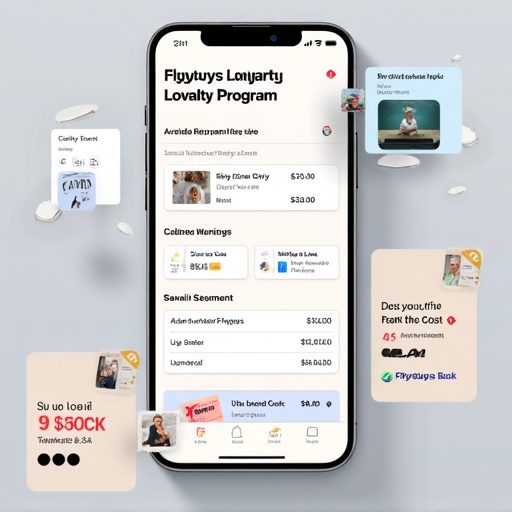
How to Build a Customer Loyalty Program App Like Flybuys: Complete Cost Guide

Introduction In today’s highly competitive retail and eCommerce market, customer loyalty is no longer just a “nice-to-have”—it is a strategic necessity. Apps like Flybuys in Australia have revolutionized how businesses retain customers, boost engagement, and increase repeat purchases. By rewarding users with points, cashback, and personalized offers, loyalty apps create a strong emotional and financial bond between customers and brands. According to Allied Market Research, the global loyalty management market is projected to reach $24 billion by 2030, driven by cloud technology, AI-powered personalization, and cross-industry partnerships. Developing a Flybuys-style customer loyalty program app requires careful planning, investment, and the right technology partner. In this comprehensive guide, we’ll cover: Key features your loyalty app must have Complete cost breakdown (from design to deployment) Factors influencing pricing Why TechOTD is the right partner for loyalty app development Detailed comparison table of features & costs FAQs for businesses considering loyalty solutions  Whether you’re a retailer, eCommerce platform, or tech startup, this guide will help you estimate costs, timelines, and strategies for building your next-gen loyalty program.  Key Features of a Flybuys-Style Loyalty App Building a loyalty app is more than just a points system—it’s about creating an ecosystem where customers feel valued and engaged. Here are the must-have features: User Registration & Profiles – Social login, personalized dashboards. Points Earning & Redemption – Track purchases, reward points, and redeem offers. Tiered Membership Levels – Bronze, Silver, Gold tiers with progressive perks. Personalized Offers & Notifications – AI-driven promotions powered by TechOTD AI solutions. Partner Integration – Collaboration with retail, travel, and service partners. Digital Wallet & Payment Integration – Secure transactions and rewards redemption. Analytics & Reporting – Data insights for businesses to optimize campaigns. Security & Compliance – GDPR, HIPAA, and PCI-DSS compliance for data protection. Gamification & Social Sharing – Leaderboards, badges, and referral bonuses. Multi-Platform Availability – iOS, Android, and Web with cross-platform frameworks.  For advanced app design & web integration, explore TechOTD’s Web Development services.  Cost Breakdown of Building a Loyalty Program App The total cost depends on features, integrations, and complexity. Below is a breakdown of typical expenses: Development Stage Description Estimated Cost (USD) Planning & Design Market research, competitor study, wireframes, UX/UI $5,000 – $12,000 Core Development Backend APIs, mobile app, cloud integration $20,000 – $50,000 Third-Party Integrations Payment gateways, CRM, partner APIs $5,000 – $15,000 Testing & Deployment QA, performance optimization, app store approvals $3,000 – $7,000 Ongoing Maintenance & Support Updates, hosting, bug fixes 15–20% of initial cost annually Total Cost Estimate: $35,000 – $80,000+ (depending on scale and features)  For scalable loyalty solutions, check TechOTD Partner Solutions.  Factors Affecting Loyalty App Costs App Complexity – Simple points-based apps cost less, while advanced AI-driven ones require higher investment. Loyalty Tier Design – Single-tier vs. multi-tier reward systems. AI & Personalization – Predictive offers and behavioral targeting. Integration Needs – POS systems, payment gateways, and eCommerce platforms. Security & Compliance – Meeting GDPR/HIPAA adds compliance costs. Platform Coverage – Native (iOS, Android) vs. Cross-platform. Industry Focus – Retail, travel, healthcare, or eCommerce-specific features.  Why Choose TechOTD for Loyalty App Development? TechOTD brings deep expertise in AI, cloud, and app development, offering end-to-end solutions that are secure, scalable, and innovative. Custom Web & App Development → Explore Web Development AI-Driven Personalization → AI Solutions Industry-Focused Expertise → eCommerce Loyalty Platforms Trusted Partnerships → TechOTD Partner Program Proven Track Record → About TechOTD 👉 With TechOTD as your development partner, you get future-ready loyalty apps designed to maximize ROI and customer engagement.  Key Takeaways Budget Required: $35K – $80K+ Timeline: 4–8 months Best Features: AI personalization, multi-tier rewards, secure payments Industries Benefiting Most: Retail, eCommerce, travel, hospitality, healthcare TechOTD Advantage: AI-driven, cloud-native, and scalable loyalty solutions  Conclusion Building a Flybuys-style loyalty program app is a game-changer for businesses looking to retain customers, increase engagement, and boost revenue. While initial costs vary, the long-term ROI is significant when done right. With the right features, security, and personalization strategies, your app can become the cornerstone of customer engagement. By partnering with TechOTD’s expert team, you gain a competitive edge with cutting-edge technology, AI-driven personalization, and industry-specific solutions.  Start your journey today—turn your customer base into loyal brand advocates with TechOTD. FAQ 1. How long does it take to build a loyalty program app?On average, 4–8 months, depending on features and integrations. 2. Can the app support multiple platforms?Yes, using cross-platform tools (Flutter, React Native) or native apps for iOS & Android. 3. Does TechOTD provide AI-driven personalization? Yes, with AI & Machine Learning solutions, TechOTD enables predictive offers and tailored promotions. 4. What ongoing costs should I expect?Annual costs include server hosting, maintenance, updates, and customer support (15–20% of initial cost). 5. How secure is user data in loyalty apps?Data is protected with end-to-end encryption, secure payment gateways, and compliance (GDPR, HIPAA).

Cloud, Uncategorized

Everything You Need to Know About Developing Cloud Digital Signage Software

Introduction Cloud digital signage software is at the forefront of driving smart, visually dynamic, and interactive communication for businesses worldwide. In a landscape where content must be current, targeted, and engaging, cloud-powered platforms are rapidly replacing legacy systems across retail, healthcare, corporates, hospitality, smart cities, and education. According to MarketsandMarkets, the global digital signage market is expected to grow from $24 billion in 2023 to over $36 billion by 2028, fueled by cloud adoption, AI personalization, and smart display technologies. Businesses are shifting to cloud-first solutions because they offer centralized control, instant updates, analytics, and scalability, which traditional systems cannot match. As we look toward 2025 and beyond, digital signage has evolved into a powerful business asset—enabling instant content delivery, personalized messaging, deep analytics, and seamless integration with other cloud and AI-powered tools. For businesses exploring digital growth, TechOTD’s cloud and AI-powered services offer tailored solutions across industries. What Is Cloud Digital Signage Software? Cloud digital signage software empowers organizations to remotely manage media content (videos, real-time data, interactive apps) via an internet-based platform, deploying it instantly to screens in any global location. Unlike on-premises systems, cloud signage delivers: Centralized management with secure, multi-user access Real-time content updates & scheduling Scalability for growing networks Cost-efficiency with SaaS subscription models Compatibility with kiosks, TVs, and media players Streamlined maintenance & updates 💡 Learn more about cloud-powered business transformation with TechOTD’s web development expertise. Key Features of Modern Cloud Digital Signage Cloud-Based CMS – Content upload, scheduling, approval workflows. Multi-Platform Support – Works across Android, Linux, Windows, smart TVs. AI-Enhanced Personalization – Dynamic ads powered by TechOTD AI solutions. Offline Functionality – Cached content ensures smooth playback. Data & App Integration – POS, CRM, and eCommerce integrations. Remote Monitoring – Troubleshooting and health checks. Accessibility Tools – Multi-language support & inclusivity features. Development Process: Step-by-Step Needs Analysis – Define requirements & industry-specific goals. Architecture Planning – APIs, microservices, high availability. UI/UX Design – Intuitive, drag-and-drop dashboards. Feature Development – CMS, player, scheduling tools. IoT Integration – Smart displays, kiosks, and sensors. Testing & Deployment – Security, performance, and compliance. Training & Support – Ongoing help from partners like TechOTD. Trends & Future of Cloud Digital Signage AI & Predictive Analytics – Smarter campaigns with TechOTD AI-driven tools. AR & VR Displays – Next-gen interactive customer experiences. 5G & Edge Computing – Real-time streaming at scale. Blockchain Advertising – Transparent ad tracking. Green Technology – Sustainability & eco-friendly displays. Challenges in Cloud Digital Signage Internet dependency Hardware compatibility Security compliance (GDPR, HIPAA) Staff adoption & training 👉 Businesses can overcome these challenges with expert consulting from TechOTD’s About Team. Use Cases Retail – Personalized ads & digital shelves Healthcare – Wayfinding & appointment boards Corporate – Internal communication dashboards Hospitality – Menu boards & concierge services Smart Cities – Transport schedules & public alerts 💡 For industry-focused solutions, see TechOTD’s eCommerce and digital services. Conclusion Developing cloud digital signage software in 2025 is about building smart, scalable platforms that combine cloud, AI, IoT, and immersive technologies. With partners like TechOTD’s development team, businesses can future-proof their digital communication and drive ROI at scale. cloud digital signage, signage software development, digital signage solutions, remote signage management, digital signage platform, AI digital signage, custom signage software, cloud visual communications, digital signage industry trends, web development for signage

Cloud

Building a Cloud-Powered Digital Signage Platform: Cost Breakdown & Key Considerations

Introduction Cloud-powered digital signage platforms are revolutionizing how businesses deliver dynamic content, advertising, and real-time updates across locations. In 2025, leveraging the cloud means scalable, displays—delivering engaging messages no matter the physical distance. However, building such a system requires careful cost analysis and planning. This post breaks down the main expenses involved and offers practical tips on key technological and strategic considerations for success. Cost Breakdown for a Cloud Digital Signage Platform Ideation & Planning Brainstorming, feature specification, and specialist consultation Typical cost: $500–$2,000 UI/UX Design Visual design, multi-screen layout, user journey planning Typical cost: $1,500–$5,000 Software Development Core CMS/backend, cloud integration, scheduling, user management Basic platform: $5,000–$15,000 Larger systems (with mobile apps, advanced analytics, custom integrations): Upwards of $30,000 App Store Submission For companion mobile apps (if any) Fees and adjustments: $100–$500 Hardware Displays (per unit): $300–$1,500 Commercial media players: $30 (basic sticks) to $800+ (professional grade) Wall mounts, cables: $20–$100 per screen Software Licensing (if using SaaS or third-party CMS) Subscription: $10–$20 per screen per month (most platforms) One-time license: $500–$5,000 Enterprise/custom: Negotiable based on scale Installation Professional setup: $100–$500 per location Maintenance & Updates Annual: $99–$300 per display (support, updates, hosting) Key Considerations Before You Build Scalability: Choose modular architecture and cloud providers that allow smooth scaling as you add new screens and locations. Content Management: Opt for a CMS that streamlines content upload, scheduling, approval, and integrates with live data (weather, news, social feeds). Connectivity: Reliable bandwidth and backup connectivity are crucial to ensure uninterrupted signage content delivery. Security: Enforce encryption, strong user authentication, and regular audits to protect sensitive data and the signage network. Hardware Compatibility: Ensure displays and media players are compatible and future-proofed for new formats and integrations (Android, ChromeOS, Windows, etc.). Cost Structure: Decide between SaaS (predictable subscription) and custom software (higher upfront, lower long-term costs for large deployments). Ongoing Support: Budget for yearly updates, support contracts, and proactive monitoring to reduce downtime and optimize performance. Content Creation: Factor in resources and tools for ongoing content design to maximize signage impact. Conclusion Building a cloud-powered digital signage platform in 2025 demands a clear-eyed approach to budgeting, tech stack selection, and system design. Expect a basic project to start around $10,000–$30,000 for software, with hardware and SaaS costs growing alongside your ambitions. Meticulous planning on security, connectivity, scalability, and content is vital. By choosing the right partners and defining your business goals early, you can build a resilient, efficient, and visually compelling signage network that drives engagement. Ready to launch or upgrade your cloud signage strategy? Consult digital signage experts for a tailored cost estimate and platform roadmap. FAQ How much does it cost to build a basic cloud-powered signage platform? Typically $10,000–$30,000 for software development, plus $300–$1,500 per display and $10–$20/month per screen for SaaS licensing. What are the recurring costs? Software subscriptions, annual support, content updates, and potential hardware upgrades make up the ongoing costs. Can I use existing TVs or do I need specific hardware? Commercial-grade displays and certified media players are strongly recommended for best performance and reliability. What are the top challenges with cloud signage? Ensuring network reliability, securing content, and creating engaging, relevant content regularly. What features are must-haves for modern deployments? Real-time updates, remote scheduling, analytics, multi-location management, and content integration with live feeds. cloud digital signage, digital signage cost, signage platform development, cloud cms, digital signage hardware, SaaS signage platform, digital signage security, visual communications, signage content management, business displays

Restaurent

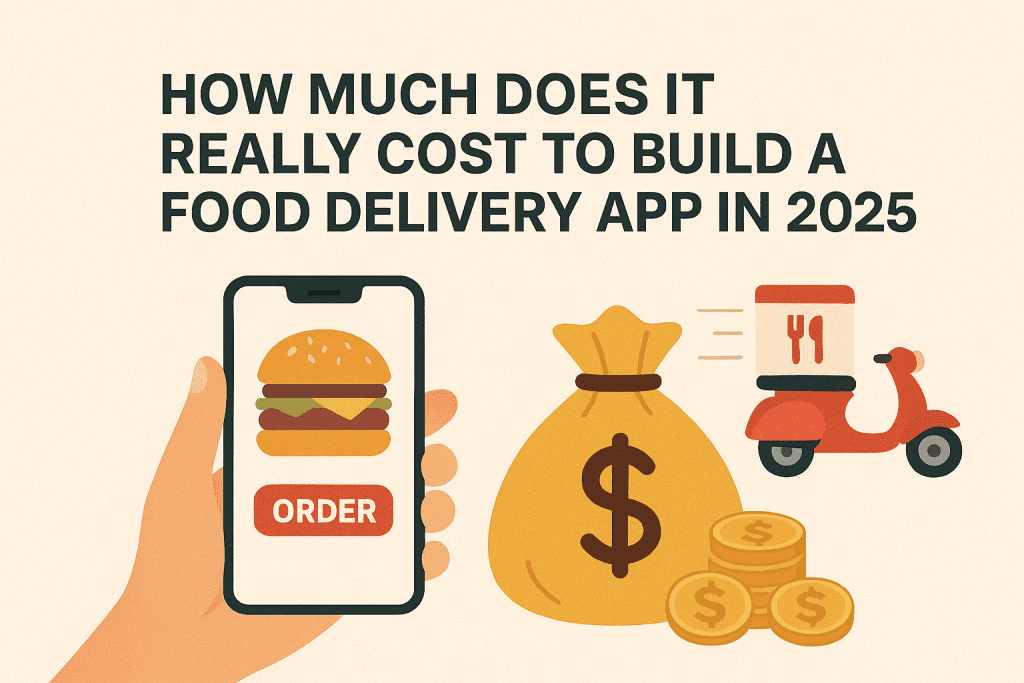
How Much Does It Really Cost to Build a Food Delivery App in 2025?

Introduction With the on-demand economy booming, building a food delivery app is one of the top business ideas in 2025. But before launching your own “next big thing” in food tech, a vital question arises: How much does it really cost to build a food delivery app in 2025? In this blog, we break down the main cost factors, must-have features, cost-saving strategies, and potential hidden expenses, empowering you with data to make smart investment decisions. Major Factors Affecting Food Delivery App Development Cost 1. App Type and Complexity Basic App: Simple UI, registration, menu, order, and payment. Mid-Level: Real-time tracking, ratings, push notifications, promo codes, admin dashboard. Advanced: AI-based recommendations, multi-location support, rider management, in-app chat, analytics dashboards, loyalty programs. 2. Platforms: iOS, Android, or Both Single-platform (iOS or Android) is cheaper. Cross-platform development with frameworks like Flutter saves cost versus developing natively on both. 3. UI/UX Design Custom illustrations, advanced animations, and streamlined design drive better user experience but also increase development hours. 4. Feature Set User App Features Restaurant App Features Delivery Partner Features Search & Menu browsing Order management Ride assignment Order placement Menu management Navigation/in-app map Payment integration Payments & reports Earning reports Real-time tracking Chat/support Order status updates Push notifications Analytics Push notifications 5. Backend, APIs, and Security Robust infrastructure, SSL security, and third-party API integrations (Google Maps, payment gateways) add to costs. 6. Location and Experience of Development Team US/Europe agencies: $80–$200/hr Eastern Europe/Asia: $20–$60/hr Average Cost Estimates for Food Delivery Apps in 2025     App Complexity Estimated Cost Range Basic (Single Platform) $10,000 – $20,000 Mid-Level (Single Platform) $20,000 – $45,000 Advanced (Both Platforms) $50,000 – $100,000+ Note: Costs vary by vendor rates, project scope, integrations, and timeframes. Hidden or Ongoing Costs to Consider App Store/Play Store fees Maintenance & Support (Bug fixes, updates): Usually 15–20% of initial cost per year Cloud hosting and infrastructure Third-party service fees (SMS, payment, etc.) Marketing & user acquisition How to Reduce Food Delivery App Development Costs Choose cross-platform solutions (like Flutter or React Native). Start with a Minimum Viable Product (MVP), then scale. Reuse existing modules or white-label solutions for speed and savings. Outsource to reputable, cost-effective development partners. Prioritize must-have features for version 1.0. Conclusion Building a food delivery app in 2025 can cost anywhere from $10,000 for a basic prototype up to $100,000+ for a highly advanced, market-ready product. The right approach is to clearly define your goals, prioritize features, and vet development partners carefully for both expertise and cost transparency. Investing smartly in quality development will pay off through smoother launches, fewer bugs, and better reviews. FAQ Q1: How long does it take to develop a food delivery app? A basic app can be built in 2–4 months; advanced solutions may take 6–12 months. Q2: Can I use no-code tools to build a food delivery app? Yes, but you may sacrifice scalability and custom features. Q3: What key features should my app have at launch? Seamless ordering, payment, real-time tracking, and push notifications. Q4: Are there ongoing costs after launch? Yes—maintenance, hosting, third-party services, and marketing. Q5: How can I ensure my app is competitive in 2025? Prioritize UX, performance, and integrations with the latest tech trends like AI and predictive analytics. Suggested Reading / Backlinks Food Delivery App Tech Guide – TechOTD How Blockchain is Optimizing Business Processes in Dubai – TechOTD Blog Predictive Analytics in Software Development – TechOTD Blog Mobile App Services at TechOTD

Technology

CNAPP: The Future of Cloud Security or Just Another Buzzword?

Introduction As enterprises rapidly shift to cloud-native applications, securing these dynamic environments is more complex than ever. CNAPP, or Cloud-Native Application Protection Platform, is a holistic security approach designed to unify cloud workload protection, compliance, and risk management. This blog examines whether CNAPP is the future cornerstone of cloud security or merely another buzzword. What is CNAPP? CNAPP merges several cloud security functions—Cloud Security Posture Management (CSPM), Cloud Workload Protection Platform (CWPP), vulnerability management, runtime protection, and compliance—into a single platform. Its goal is to provide continuous, automated security across multi-cloud and hybrid environments. Key Benefits of CNAPP   Benefit Description Why It Matters Unified Security Platform Integrates multiple security tools, reducing silos and complexity. Simplifies cloud security management. Improved Visibility & Automation Offers real-time insights and automated risk detection across cloud assets and workloads. Enhances rapid threat response and compliance tracking. DevSecOps Integration Embeds security into development pipelines, supporting continuous security without slowing innovation. Helps deliver secure apps faster. Comprehensive Risk Management Covers misconfigurations, vulnerabilities, and runtime threats in all cloud environments. Minimizes attack surface and breach possibilities. Compliance Simplification Automates audit and compliance reporting for regulatory standards such as GDPR, HIPAA, and PCI-DSS. Reduces manual effort and audit risks. Is CNAPP Just Another Buzzword? Critics argue CNAPP may be overhyped due to: Varying maturity across vendors Implementation complexity Risk of misinterpreting it as a silver bullet However, CNAPP is increasingly seen as a necessary evolution to address fragmented cloud security challenges and better align security with cloud-native architectures. The Future of CNAPP in Cloud Security With cloud adoption increasing, CNAPP’s role is expected to grow as a foundational security solution that: Improves integration and interoperability of cloud security tools Advances automation and threat detection techniques Supports emerging cloud technologies like containers and serverless Conclusion CNAPP represents an important evolution in cloud security, offering a unified and automated approach to protect complex cloud-native applications. While not without challenges, its benefits in visibility, compliance, and risk management position it as a strong contender to become a standard security framework. Organizations that embrace CNAPP thoughtfully will be better equipped to secure their cloud environments effectively and efficiently. FAQ Q1: What does CNAPP mean? Cloud-Native Application Protection Platform, an integrated cloud security framework. Q2: Which cloud security functions does CNAPP combine? CSPM, CWPP, vulnerability management, runtime protection, and compliance. Q3: Can CNAPP replace all existing cloud security tools? No, it complements and integrates with existing tools for better security coverage. Q4: Is CNAPP suitable for all cloud architectures? Yes, designed for multi-cloud and hybrid cloud environments. Q5: What companies offer CNAPP platforms? Several vendors like Palo Alto Networks, Prisma Cloud, and others provide CNAPP solutions.5 Key Benefits of Hiring a Dedicated Flutter App Development Team

Technology

5 Key Benefits of Hiring a Dedicated Flutter App Development Team

Introduction in today’s competitive mobile landscape, choosing the right development approach is essential. Flutter, Google’s powerful UI toolkit, is renowned for building performant cross-platform apps quickly. Hiring a dedicated Flutter app development team ensures focused expertise and superior results. This blog highlights five key benefits that make hiring a dedicated team the smart choice for your Flutter app project. For more tech insights, visit TechOTD Blog. Unleashing the Role of Data Analytics in Driving Smarter Banking Decisions Key Benefits of Hiring a Dedicated Flutter App Development Team Benefit Description Why It Matters Expertise and Specialization Dedicated teams bring deep Flutter expertise for quality and innovation. Ensures efficient problem-solving and advanced app features. Faster Time-to-Market Continuous focus speeds up development and iteration cycles. Capitalize quickly on market opportunities. Cost Efficiency Lower recruitment & overhead costs compared to full-time or freelance hiring. Better ROI and streamlined budgeting. Seamless Communication Regular updates and dedicated contacts improve project alignment. Reduces misunderstandings; boosts transparency. Scalability and Flexibility Easily scale team size or pivot features as business needs evolve. Adapt quickly to market and customer demands. 1. Expertise and Specialization A dedicated Flutter app development team possesses specialized skills focusing solely on Flutter, leading to innovative, high-quality applications. This dedicated knowledge contrasts with generalized teams who may lack Flutter-specific experience. For a deeper dive into application development trends, check out How Blockchain Integration is Optimizing Business Processes. 2. Faster Time-to-Market Dedicated teams work exclusively on your project, minimizing distractions and communication gaps. This singular focus results in faster development cycles and early market entry, giving your business a competitive edge. Learn more about agile development in Seamless Customer Journeys with AI. 3. Cost Efficiency Hiring a dedicated team avoids the hidden costs tied to recruitment, training, and infrastructure found in in-house teams. It also provides a predictable budget with fewer project delays, leading to overall savings. For insights on cost-related tech solutions, explore Predictive Analytics in Software Development.   4. Seamless Communication and Collaboration Effective communication is critical for app success. Dedicated teams maintain constant contact, provide timely updates, and align closely with your business goals. This collaboration ensures the app reflects your vision effectively. Related reading: Technology Impact on Education. 5. Scalability and Flexibility As your app grows, your development resources should too. Dedicated teams provide the ability to scale and pivot swiftly based on changing requirements without affecting ongoing processes. Understand platform options better in React Native vs Swift: Choosing the Right Framework. Conclusion Hiring a dedicated Flutter app development team is a strategic investment that offers technical expertise, accelerated delivery, cost savings, enhanced communication, and scalability. These benefits collectively empower businesses to launch compelling, high-performance apps that meet user expectations and adapt to market trends. For a comprehensive mobile app development service, visit TechOTD Mobile Apps Services. FAQ Q1: What is a dedicated Flutter app development team? A team of developers focused exclusively on Flutter app projects, possessing specialized skills and offering concentrated effort. Q2: Why is Flutter good for cross-platform apps? Flutter enables building apps for iOS and Android from a single codebase with native-like performance and beautiful UI. Q3: Is hiring a dedicated team more cost-effective? Yes, it reduces costs compared to in-house staff or multiple freelancers by streamlining workflows and cutting overhead. Q4: How often can I communicate with the team? Dedicated teams provide regular updates and have clear communication channels to ensure project transparency. Q5: Can the team size be adjusted as needed? Yes, dedicated teams offer flexibility to scale resources up or down depending on the project’s phase and requirements.

Blockchain & Technology

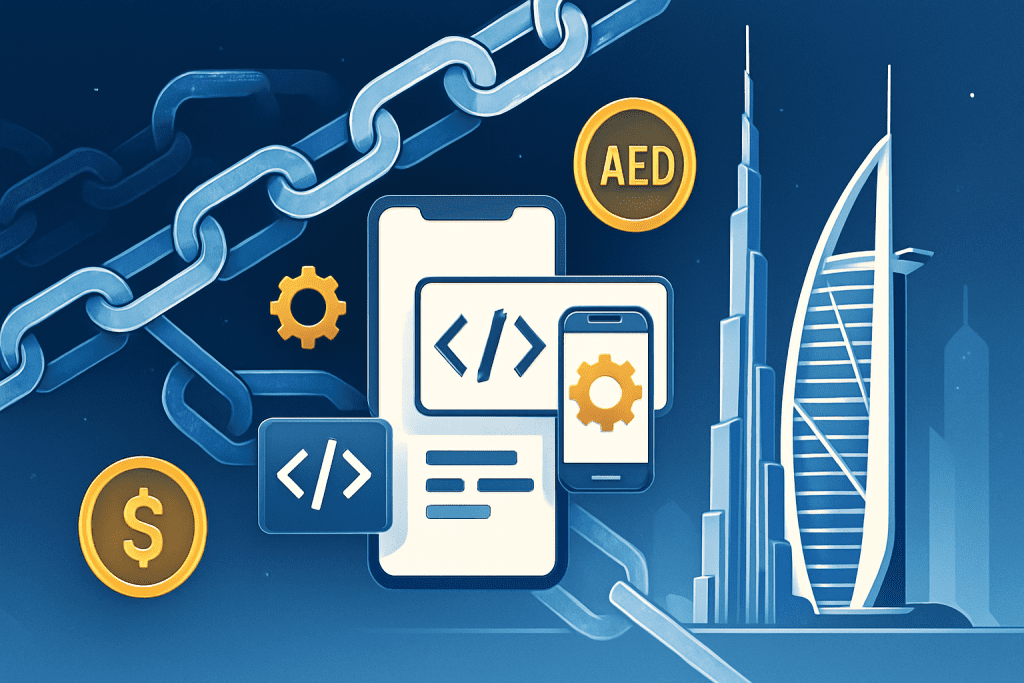
How Much Does It Cost to Build a Blockchain App in the UAE?

Introduction With the UAE fast becoming a blockchain innovation hub, businesses and startups increasingly ask: How much does it cost to build a blockchain app in the UAE? The answer isn’t simple, as costs vary widely depending on complexity, features, security, and compliance. From Dubai’s vision to be a blockchain-powered city to tax incentives and a pro-tech regulatory environment, the Emirates offers fertile ground for blockchain solutions. In this blog, we break down the pricing ranges, key cost drivers, and proven strategies to help you plan and budget for a successful blockchain app project in the UAE. Cost Breakdown: Blockchain App Development in the UAE Simple blockchain apps: AED 55,000–185,000 ($15,000–$50,000) Features: Basic wallets, simple smart contracts, document verification Timeline: 2–4 months Moderate apps: AED 185,000–555,000 ($50,000–$150,000) Features: DApps, supply chain tracking, healthcare records Timeline: 4–8 months Enterprise-level apps: AED 555,000–1,850,000+ ($150,000–$500,000+) Features: CBDC integration, cross-border payments, government or financial platforms Timeline: 8–18 months Maintenance costs: 15–25% of the initial budget per year for updates, security, and performance optimization Cost by Development Stage Planning & Discovery (5–10%): Market research, feasibility, compliance checks. AED 2,750–18,500 Design (15–20%): UI/UX, smart contract architecture. AED 8,250–37,000 Development (60–70%): Coding, integrations, security. AED 33,000–1,295,000 Deployment & Go-live (10–15%): Audits, training, launch. AED 5,500–27,750 Time and Effort Estimates Simple wallet app: 800–1,200 development hours, 3–4 developers, 2–4 months DeFi platform: 2,000–3,500 hours, 6–8 developers, 4–8 months Enterprise solution: 4,000–8,000+ hours, 10–15+ specialists, 8–18 months Key Factors Affecting Blockchain App Costs Complexity of features and UI/UX: More user roles, custom flows, or high-end dashboards increase costs Backend complexity: API integrations, cloud scalability, and real-time processing drive costs higher Third-party integrations: Payment gateways, KYC/AML, banking APIs, and IoT/AI services each add significant cost Security and compliance: Advanced encryption, regulatory measures (e.g. VARA, CBUAE licensing), and enterprise security have major cost impact Blockchain platform: Public blockchains are cheaper upfront; private/enterprise chains offer more control but cost 30–50% more Technology add-ons: AI can add 25–40% to base cost; IoT, analytics, or cross-chain features add 15–50% Hidden Costs Post-launch maintenance (15–20% yearly) Hosting: AED 1,500–18,500+ monthly depending on scale Marketing: AED 18,500–74,000+ monthly for competitive markets Legal & licensing: AED 18,500–74,000+ yearly Tips To Optimize Development Budget Start with a Minimum Viable Product (MVP) to enter the market faster—save 30–40% vs. building a full-featured solution Prioritize features that matter most now; add advanced modules as your business grows Use cross-platform development for broader reach and lower cost (40–60% savings over native apps) Automate repetitive processes and testing to cut labor costs Choose blockchain architecture (public, private, hybrid) that fits the business need and regulatory landscape Conclusion The cost to build a blockchain app in the UAE ranges from AED 55,000 to 1.85 million+ depending on the app’s complexity, features, and compliance factors. With careful planning, the right technology choices, and a strategic rollout, businesses can optimize their investment and harness the UAE’s dynamic blockchain ecosystem. Consider starting with an MVP, focus on essential features, and partner with experienced local developers to ensure smooth delivery and long-term success. Thinking of launching your blockchain app in the UAE? Consult with blockchain experts today to get a tailored estimate and take the first step in joining the country’s digital transformation. FAQ What is the average cost to build a blockchain app in the UAE? Costs typically range from AED 55,000–185,000 for simple apps and up to AED 1.85 million or more for complex, enterprise-grade solutions. What affects the cost of blockchain app development the most? The biggest cost drivers are app complexity, security requirements, compliance, third-party integrations, and the chosen blockchain platform. How long does it take to build a blockchain app? A simple app can be built in 2–4 months, while enterprise-level projects may take 8–18 months or longer. Should I choose Ethereum, Polygon, or a private chain for UAE apps? Ethereum is best for public apps, Polygon offers lower fees and better speed, and private blockchains suit regulated business needs. Are there hidden costs in blockchain app projects? Yes. Maintenance, hosting, marketing, and legal/licensing fees are recurring expenses that should be factored into your budget.

Blockchain & Technology

How Blockchain Integration is Optimizing Business Processes in Dubai

Introduction Dubai has rapidly positioned itself as a global leader in embracing innovative technologies, with blockchain integration at the forefront of this transformation. Businesses across the emirate are leveraging blockchain to streamline operations, improve transparency, and boost security. The result? Optimized business processes that enhance efficiency, reduce costs, and build trust with stakeholders. Here’s a detailed look at how blockchain integration is revolutionizing business processes in Dubai and why it’s a critical investment for the future. Explore more transformative technology solutions from TechOTD, where innovation and digital excellence meet. The Impact of Blockchain on Business Operations 1. Enhanced Transparency and Trust Blockchain’s decentralized ledger technology ensures every transaction or data entry is recorded transparently and immutably. Companies in Dubai now enjoy unmatched transparency in their supply chains, contract management, and financial transactions, which significantly reduces fraud and disputes. 2. Improved Efficiency and Automation Smart contracts automate routine and complex workflows, minimizing human intervention and accelerating processes. By integrating blockchain with AI and custom software solutions, Dubai businesses are achieving seamless, automated operations cutting down operational bottlenecks. 3. Secure Data Management In a world facing rising cyber threats, blockchain provides security with its cryptographic algorithms, protecting sensitive business and customer information. This is vital for Dubai’s thriving sectors like finance, real estate, and eCommerce (see eCommerce innovations). 4. Regulatory Compliance Made Easier Dubai’s regulatory framework increasingly encourages blockchain adoption, with government initiatives promoting transparent and verified digital record keeping. This helps businesses stay compliant effortlessly and ready for audits. 5. Cost Reduction Across the Board By streamlining processes such as cross-border payments, document verification, and inventory management, blockchain drastically cuts administrative and transactional costs. Businesses report higher ROI with blockchain projects supported by advanced AI-powered analytics. Real-World Blockchain Use Cases in Dubai Supply Chain Management: Dubai-based logistics companies use blockchain to track goods in real-time with end-to-end visibility, enhancing accountability and reducing delays. Trade Finance: Blockchain enables secure, fast, and transparent trade financing, revolutionizing Dubai’s role as a global trading hub. Real Estate: Blockchain simplifies property transactions, title management, and leasing agreements via tamper-proof records. E-commerce: Blockchain ensures secure, transparent, and efficient transactions, improving customer trust for Dubai’s growing online market. Government Services: Dubai’s blockchain initiatives enhance efficiency and transparency in services like licensing, customs clearance, and identity verification. How TechOTD Supports Blockchain Integration As Dubai businesses make blockchain a key part of their digital strategy, partnering with experienced developers is critical. TechOTD offers end-to-end blockchain integration services, from Feasibility Study to Deployment with ongoing support. Leveraging their expertise in AI, cloud, and software development (TechOTD web development), they help companies unlock blockchain’s full potential tailored to their unique needs. Explore partnership opportunities with TechOTD here to accelerate your blockchain journey. Conclusion Blockchain integration is not just a trend but a vital driver of optimized business processes in Dubai. Its benefits—transparency, efficiency, security, and cost reduction—empower businesses to compete globally while meeting local regulatory expectations. With trusted partners like TechOTD providing advanced digital and AI services, Dubai’s enterprises are well equipped for a future powered by decentralized technology. FAQ 1. What industries in Dubai benefit most from blockchain? Finance, real estate, logistics, eCommerce, and government sectors lead adoption. 2. How does blockchain improve supply chain transparency? By providing immutable real-time tracking accessible to all authorized parties. 3. Can blockchain solutions be integrated with existing IT systems? Yes, especially when combined with AI and custom web development for smooth workflows. 4. How can TechOTD help with blockchain adoption? TechOTD provides consulting, product design, development, deployment, and continuous support tailored to your business needs. 5. What is the typical timeline for blockchain integration? Timelines vary by project complexity, but TechOTD offers detailed estimates during the consultation phase.

finance

Large Language Models (LLMs) in Finance: Benefits, Applications, and Real Examples

Introduction The finance industry is undergoing a transformation fueled by advances in artificial intelligence, with Large Language Models (LLMs) playing a pivotal role. These sophisticated AI models, trained on vast amounts of textual data, have unlocked new opportunities to automate, analyze, and innovate across various financial sectors. Here’s an in-depth look at the benefits, applications, and real-world examples of LLMs in finance. Explore how TechOTD’s AI services can help your business leverage LLMs and other cutting-edge technologies to drive growth and efficiency. Benefits of LLMs in Finance Enhanced Data Processing: LLMs can quickly read, interpret, and summarize massive volumes of financial documents, reports, and news, significantly reducing manual effort. Improved Decision-Making: By extracting insights from unstructured data, LLMs provide a richer context for risk assessment, investment strategies, and compliance monitoring. Automated Customer Support: Chatbots powered by LLMs handle complex, natural conversations, offering personalized assistance 24/7 with high accuracy. Fraud Detection and Risk Management: LLMs analyze patterns and flag suspicious activities beyond standard rule-based systems, increasing security. Regulatory Compliance: Automate the review of regulatory updates, ensuring businesses remain compliant without exhaustive manual checks. Cost Efficiency: Automating document processing, customer inquiries, and report generation reduces operational costs and accelerates turnaround times. Applications of LLMs in Finance Research & Analytics: LLMs aggregate and interpret market data, earnings reports, and analyst notes to generate actionable insights. Customer Experience: AI-driven virtual assistants personalize banking, investment, and insurance services to individual customer needs. Document Automation: Contracts, loan applications, and policy documents are processed faster and with fewer errors using LLMs. Sentiment Analysis: Monitoring social media and news for sentiment trends helps financial institutions adjust strategies proactively. Portfolio Management: LLMs assist portfolio managers by synthesizing data and simulating scenarios for better asset allocation. Chatbots & Conversational AI: Enhance virtual agents with LLMs to support financial advice, fraud alerts, and routine queries. Real Examples of LLMs in Finance JP Morgan Chase: Utilizes LLM-powered chatbots to automate client communications and internal document analysis, saving countless work hours. Goldman Sachs: Applies LLMs for market sentiment analysis, leveraging news and social media data to anticipate market shifts. Bank of America: “Erica” chatbot uses LLM technology to enhance customer interactions, deliver financial advice, and speed up transaction processes. HSBC: Employs LLMs for compliance and regulatory report automation, reducing the risk of penalties. Capital One: Uses natural language processing to analyze customer feedback and improve product offerings rapidly. Getting Started with LLMs in Your Financial Business Adopting LLMs requires a strategic approach—from data assessment and model selection to secure deployment and continuous refinement. Partnering with an expert like TechOTD ensures you get customized AI solutions designed for your specific finance needs, backed by secure cloud and software development expertise (TechOTD Services). FAQ 1. Can LLMs replace human analysts in finance? LLMs augment analysts by automating routine tasks and providing insights, but human expertise remains crucial for strategic decisions. 2. How secure are LLM implementations in finance? With proper security protocols, encryption, and compliance standards, LLMs can be deployed safely in financial environments. 3. What types of financial documents can LLMs process? Contractual agreements, earnings reports, regulatory filings, loan applications, policy documents, and more. 4. Are LLM-powered chatbots suitable for all customer segments? Yes, they can be trained to handle diverse queries with personalized responses across demographics. 5. How does AI improve compliance in finance? By quickly analyzing regulatory changes and automating report generation, reducing human errors and audit risks.

How would you like me to respond?

Select a personality for your AI assistant

Normal
Happy
Sad
Angry

Your selection will affect how the AI assistant responds to your messages

Chat Assistant

Let's discuss your project!

Hear from our clients and why 3000+ businesses trust TechOTD

Tell us what you need, and we'll get back with a cost and timeline estimate

Scroll to Top