May 2026

App Development, Digital Transformation, Software development, Technology & Innovation

The Blueprint for Success: 5 Critical Things to Consider Before Developing a Mobile App

The Blueprint for Success: 5 Critical Things to Consider Before Developing a Mobile App The dream of “building an app” is often sparked by a single, brilliant idea. We imagine the interface, the viral downloads, and the impact it will have on users. However, in 2026, the app market is more crowded than ever. Success isn’t just about code; it’s about preparation. Developing a mobile app is a significant investment of time, money, and emotional energy. To ensure your project doesn’t just launch but thrives, here are the five foundational pillars you must consider. 1. Defining the “Problem-Solution” Fit Before you hire a developer or pick a color palette, you must ask: “What specific problem am I solving?” Many apps fail not because of bad code, but because they are “solutions in search of a problem.” Deep Market Research You need to understand your audience better than they understand themselves. User Personas: Who is your ideal user? Are they a busy professional looking for efficiency, or a student seeking entertainment? Competitor Gap Analysis: Look at the top three apps in your niche. Read their one-star reviews. What are they missing? That gap is your entry point. The “Jobs to Be Done” Framework: People don’t buy apps; they “hire” them to do a job. Make sure your app’s “job” is clear and essential. 2. Choosing the Right Technology Stack Your “tech stack” is the foundation of your house. If you choose the wrong one, scaling becomes an expensive nightmare. In Software development, this is one of the most debated topics. Native vs. Cross-Platform Native (Swift for iOS, Kotlin for Android): Best for high-performance apps, heavy graphic processing, or apps that need deep integration with phone hardware. Cross-Platform (Flutter, React Native): Ideal for startups that need to launch on both platforms quickly with a shared codebase. As we see in modern App Development, Flutter is increasingly popular for its beautiful, fast UI. Scalability and Backend Will your app crash if 10,000 people join at once? Consider using Cloud Computing and Technology like AWS or Google Cloud. A serverless architecture allows your app to grow automatically as your user base expands. 3. Prioritizing the “Humanized” UI/UX Design Design is not just how it looks; it’s how it works. A humanized app feels like an extension of the user’s hand. Reducing Cognitive Load The best apps don’t come with manuals. The 3-Click Rule: Can a user reach their goal in three taps or less? Micro-interactions: Those tiny animations when you “like” a post or pull-to-refresh make the app feel alive and responsive. Accessibility: Ensure your design is inclusive, with high-contrast modes and screen-reader compatibility. 4. Security and Data Privacy from Day One In an era of frequent data breaches, security cannot be an afterthought. If you are building in the Healthcare & Fitness or Fintech space, this is your #1 priority. The Trust Factor Data Encryption: Ensure all user data is encrypted both at rest and in transit. Compliance: Are you following GDPR, CCPA, or HIPAA regulations? Transparent Privacy Policies: Tell your users exactly what data you collect and why. In cybersecurity, transparency is the fastest way to build user loyalty. 5. Post-Launch Strategy: Marketing and Maintenance The “Launch” is only 10% of the journey. The remaining 90% is what happens after the app hits the store. App Store Optimization (ASO) If nobody can find your app, nobody can use it. Use relevant keywords, high-quality screenshots, and a compelling video preview to climb the rankings. The Feedback Loop Your first version (MVP) won’t be perfect. You need a system to collect user feedback and Data Analytics to track where users are dropping off. Regular updates and bug fixes show your audience that you are committed to their experience. Conclusion: Turning Vision into Reality Developing a mobile app is a marathon, not a sprint. By considering these five pillars—Problem Fit, Tech Stack, UX, Security, and Post-Launch Growth—you move from being an “ideator” to a “founder.”The Pedagogical Shift: Why E-Learning Design Left Flash Behind for Good


Digital Transformation, Software development, Technology, Technology & Innovation

The Pedagogical Shift: Why E-Learning Design Left Flash Behind for Good
The Pedagogical Shift: Why E-Learning Design Left Flash Behind for Good For over a decade, if you took an online course, you were likely interacting with Adobe Flash. It was the “magic wand” of instructional designers, allowing for clickable buttons, drag-and-drop interactions, and animations that made corporate training feel a little less like a chore. But the “Flash Era” of learning had a significant flaw: it was a walled garden. Today, we have moved into the era of E-Learning Design—a discipline that prioritizes the learner’s experience over flashy animations. The transition from Flash to HTML5-based design wasn’t just about code; it was about making education accessible to everyone, everywhere. 1. The “Aesthetic” Trap of the Flash Era In the early 2000s, E-learning was often about “The Wow Factor.” Designers used Flash to create complex, cinematic introductions and game-like interfaces. However, we soon realized that interactivity is not the same as engagement. A student might spend ten minutes clicking through a beautiful Flash animation but walk away without retaining the core lesson. Modern E-learning design focuses on Cognitive Load Theory—ensuring the “tech” stays out of the way so the “teaching” can happen. 2. Accessibility: The Human Right to Learn The biggest “human” failure of Flash was its lack of accessibility. Screen Readers: Flash was notoriously difficult for screen readers to interpret, effectively locking out visually impaired learners. Mobile Equity: When the “mobile revolution” happened, Flash couldn’t keep up. Learners who only had access to a smartphone or tablet (common in developing regions or for busy professionals) were left in the dark. Modern E-learning design uses HTML5 and Responsive Design. This means the course “flows” like water, fitting a 27-inch monitor just as comfortably as a 5-inch phone screen. This isn’t just a technical feature; it’s an act of inclusion. 3. Data-Driven Learning vs. The “Black Box” Flash was a “Black Box.” A teacher could see that a student “finished” a Flash module, but they couldn’t see how they struggled. The Flash Experience: Start -> Click Click -> Finish. The Modern Design Experience: Using xAPI and LRS (Learning Record Stores), modern E-learning design tracks every interaction. Did the student pause during the video? Did they struggle with the third question? This data allows us to humanize the support we give them, offering help exactly where they trip up. 4. The Rise of Microlearning Flash favored long, “heavy” modules that took minutes to load. In our modern, fast-paced world, we’ve pivoted to Microlearning. This is the art of breaking complex topics into 3-minute “bursts.” Modern design allows these modules to be searchable, bite-sized, and instantly available. It respects the learner’s time, which is the ultimate form of humanized design. 5. Conclusion: Designing for the Mind, Not the Browser The death of Flash was the birth of true Instructional Design. We stopped asking, “What can this software do?” and started asking, “What does the learner need?” As you continue to build out your blog on Software development, remember that the best technology is the one that disappears. HTML5 won because it became invisible, leaving only the knowledge behind.

App Development, Digital Transformation, Software development, Technology & Innovation

The Great Web Transition: Why HTML5 Won the War Against Flash

The Great Web Transition: Why HTML5 Won the War Against Flash If you spent any time on the internet in the early 2000s, you remember the “Loading…” bars. You remember the flashy intros, the interactive games on Newgrounds, and the specific frustration of being told your “Flash Player is out of date.” For over a decade, Adobe Flash was the king of the interactive web. But today, Flash is a ghost—a piece of digital archaeology. In its place stands HTML5, the open-standard backbone of the modern internet. The transition from Flash to HTML5 wasn’t just a technical upgrade; it was a fundamental shift in how we think about ownership, security, and the freedom of the web. 1. The Era of the Plugin: When Flash Was King To understand why HTML5 is so important, we have to remember what the web looked like before it. In the late 90s and early 2000s, HTML was “boring.” It was great for text and blue hyperlinks, but it couldn’t handle video or complex animations natively. The Flash Monopoly Adobe Flash (originally Macromedia Flash) solved this. It allowed developers to create “wrappers” that sat on top of the browser. Creative Freedom: For the first time, designers weren’t limited by grid layouts. Vector Graphics: It allowed for smooth animations that didn’t take up massive amounts of bandwidth. The Gaming Revolution: Flash gave birth to an entire generation of indie game developers who didn’t need a massive studio to publish their work. 2. The Turning Point: Steve Jobs and the “Thoughts on Flash” The death of Flash can be traced back to a specific moment in 2010. Steve Jobs, the then-CEO of Apple, published an open letter titled “Thoughts on Flash.” He famously refused to allow Flash on the iPhone and iPad, citing three major reasons that would eventually become Flash’s undoing: A. Battery Life and Performance Flash was a resource hog. It required heavy CPU processing, which drained mobile batteries in minutes. HTML5, being native to the browser, allowed for hardware acceleration, making it exponentially more efficient. B. Security Risks Because Flash was a “proprietary” plugin (owned entirely by Adobe), it was a black box. Hackers constantly found “zero-day” vulnerabilities in the Flash Player. Since the code wasn’t open-source, the world had to wait for Adobe to fix it, leaving millions of users at risk in the meantime. C. The Touch Interface Flash was built for the “PC Era.” It relied on rollovers and hover states that required a mouse cursor. HTML5 was built from the ground up for a Touch-First world, supporting gestures, swipes, and multi-touch interactions natively. 3. Why HTML5 is the Humanized Choice HTML5 isn’t owned by a single company. It belongs to the World Wide Web Consortium (W3C). This is why it “won.” It represents a democratic web where any browser—be it Chrome, Safari, or Firefox—can interpret the code the same way without needing a third-party download. The “No-Plugin” Experience From a user perspective, HTML5 is invisible. You don’t have to “install” the modern web. You just open a URL, and the video plays. The map interacts. The game loads. This reduction in friction is the ultimate “humanized” tech achievement. 4. Technical Comparison: Under the Hood Feature Adobe Flash HTML5 Ownership Proprietary (Adobe) Open Standard (W3C) Mobile Support Poor/Non-existent Excellent/Native Security Low (Frequent Patches) High (Browser-Level) SEO Hard to Index Search Engine Friendly Battery Impact High Drain Optimized 5. The Legacy: What We Lost and What We Gained While HTML5 is technically superior, the “death” of Flash was a bittersweet moment for digital culture. Preservation Efforts: Groups like The Internet Archive are working to preserve thousands of Flash games and animations that would otherwise be lost forever. The Rise of WebAssembly: As you explore Software development, you’ll see that HTML5 has now evolved into technologies like WebAssembly, which allow for even more complex, near-native performance in the browser. Conclusion: A Web Without Walls The victory of HTML5 over Flash was a victory for the Open Web. It proved that for technology to truly empower people, it must be accessible, secure, and shared. Today, as we build App Development projects and digital experiences, we stand on the shoulders of the HTML5 revolution. How Fleet Management Software Slashes Operational Costs

Automobile, Data Analytics, Real-Time Visibility, Technology & Innovation

How Fleet Management Software Slashes Operational Costs

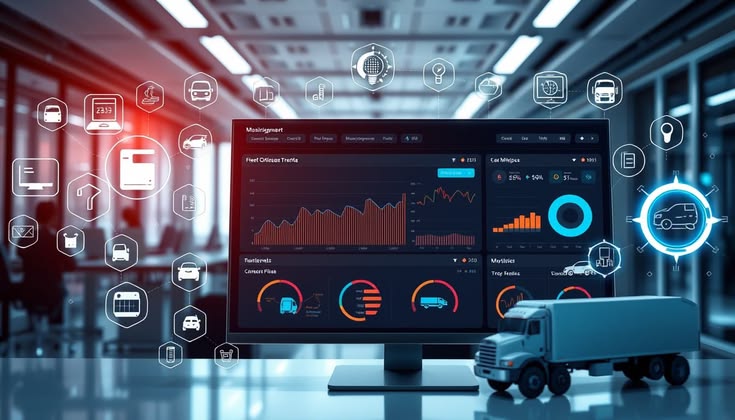
Driving Down the Bottom Line: How Fleet Management Software Slashes Operational Costs Managing a fleet is often described as trying to plug leaks in a sinking ship. Between fluctuating fuel prices, unexpected engine failures, and the rising cost of insurance, fleet managers are under constant pressure to do more with less. The introduction of Fleet Management Software (FMS) hasn’t just added a map to the dashboard; it has provided a financial scalpel. By turning raw data into actionable insights, FMS allows businesses to cut costs with surgical precision. 1. The Fuel Factor: Cutting Your Largest Expense Fuel usually accounts for nearly 30% of total fleet operating costs. FMS reduces this burden in three distinct ways: Eliminating Idling Did you know that a heavy-duty truck can burn roughly one gallon of fuel for every hour it idles? FMS tracks “dead time” and alerts managers when a driver leaves the engine running unnecessarily. By humanizing this data—explaining to drivers why idling matters—companies often see a 5–10% drop in fuel spend within the first month. Route Optimization It’s not just about getting from point A to point B; it’s about avoiding the traffic at point C. Innovative routing algorithms analyze historical traffic patterns and real-time accidents to ensure drivers take the most fuel-efficient path, reducing total mileage and wear on the tires. 2. Predictive Maintenance: Stopping the “Small” Problems A $50 sensor check is always cheaper than a $5,000 engine overhaul. FMS connects directly to the vehicle’s diagnostic port (OBD-II), allowing for Predictive Maintenance. Real-time Alerts: The software notifies the shop the moment a “Check Engine” light flickers, often before the driver even notices a change in performance. Scheduled Servicing: Instead of guessing when to change the oil based on a calendar, FMS uses actual mileage and engine hours to schedule service exactly when it’s needed—neither too early (wasting money) nor too late (risking damage). 3. The Humanized Side: Improving Driver Behavior We often forget that the most expensive part of a vehicle is the person behind the wheel. Aggressive driving—speeding, harsh braking, and rapid acceleration—can lower fuel economy by up to 33% at highway speeds. Gamification and Coaching Modern FMS provides “Driver Scorecards.” Instead of “spying” on drivers, managers can use this data to reward the safest, most efficient operators. This humanized approach reduces turnover and slashes the costs associated with accidents and insurance premiums. When drivers know their safety is being monitored for reward rather than punishment, the culture of the fleet shifts toward efficiency. 4. Total Cost of Ownership (TCO) and Lifecycle Management Every vehicle has a “sweet spot”—a point where it is most profitable before maintenance costs begin to outweigh its value. FMS tracks the lifecycle of every asset. It tells you exactly when to sell a van before it becomes a “money pit,” ensuring you always have the most cost-effective fleet on the road. 5. Reducing Administrative “Paper” Costs The hidden cost of fleet management is the hours spent on paperwork—IFTA fuel tax reporting, ELD compliance, and maintenance logs. FMS digitizes this entire process. Compliance: Automatically generating HOS (Hours of Service) reports prevents heavy fines. Labor Savings: By automating reports that used to take a manager 10 hours a week, you effectively “buy back” a quarter of their salary to focus on growth. Conclusion: Data as Your Most Valuable Asset Fleet management software isn’t just about “tracking trucks”; it’s about visibility. When you can see every drop of fuel, every minute of idling, and every harsh brake, you gain the power to control your destiny. In 2026, the most successful fleets aren’t the ones with the newest trucks; they are the ones with the best data.How to Develop an Innovative Social Commerce App: A Blueprint for Success

App Development, Digital Transformation, Mobile App Development

How to Develop an Innovative Social Commerce App: A Blueprint for Success

How to Develop an Innovative Social Commerce App: A Blueprint for Success The way we shop has fundamentally changed. We no longer just “go” shopping; we are always shopping. It happens while we’re scrolling through our feeds, watching a live stream, or chatting with friends. This intersection is where Social Commerce lives. If you are looking to build a social commerce app today, you aren’t just competing with Amazon; you’re competing for attention. To succeed, your blueprint must prioritize the human connection over the transaction. 1. Understanding the “Social” in Social Commerce Before writing a single line of code, you must understand that social commerce is driven by trust. In traditional e-commerce, trust is built through brand reputation. In social commerce, trust is built through peers, influencers, and community validation. The Power of Social Proof Your app should be designed to amplify social proof. This means integrating features like: Real-time Reviews: Not just text, but video testimonials from actual users. Community Circles: Allowing users to create private groups to share “wishlists” with friends. Interactive Polling: Letting followers vote on which outfit an influencer should buy. 2. The Core Features: Your Development Roadmap To hit that 3000-word depth and provide real value to your readers, your blog should break down the technical must-haves: A. Seamless In-App Checkout The biggest killer of social commerce is “Redirection Friction.” If a user has to leave your app to enter credit card details on a mobile website, you’ve lost them. Integration: Use Apple Pay, Google Pay, and localized digital wallets. Security: Ensure you highlight Data Privacy & Security measures to reassure your users. B. Livestreaming & Interactive Video Video is the language of social commerce. Implementing a low-latency livestreaming feature allows brands to sell in real-time, answering questions and creating “Flash Sale” urgency. C. AI-Driven Personalization Leverage Artificial Intelligence to ensure that no two social feeds look the same. The app should learn not just what a user likes, but what their community is buying. 3. Humanizing the UX: The “Joy” Factor Standard shopping apps are functional. Social commerce apps must be delightful. Gamification: Use “streaks,” badges, or reward points for sharing products with friends. Discovery over Search: Instead of a search bar, focus on a “Discovery Engine” that mimics the feeling of browsing a physical boutique with a friend. 4. The Business Side: Monetization and Growth How will your app survive? Transaction Fees: Taking a small percentage of each sale. Promoted Placements: Allowing small businesses to boost their products in the social feed. Subscription Tiers: Offering “VIP” community access or early drops for a monthly fee. 5. Overcoming the “Technical Debt” As you scale, you’ll encounter Technical Debt. This section of your blog should warn founders about the importance of a scalable backend—perhaps using Cloud Computing and Technology—to handle sudden surges in traffic during viral moments. 6. UX Psychology: Engineering “Impulse” and “Intention” Traditional e-commerce is built on Intention (I need a toaster, I search for a toaster). Social commerce is built on Discovery (I was watching a video, and now I want that jacket). Your UI must reflect this shift. The “Infinite Scroll” of Products Mirroring the UX of TikTok or Pinterest is a proven strategy. By using a vertical video feed as the primary interface, you keep users in a “flow state.” The “Buy” button should be persistent but non-intrusive—a subtle icon that expands when the user shows interest. Reducing Cognitive Load with One-Tap Checkout Every extra click in the checkout process reduces conversion by roughly 10%. To humanize the experience, implement: Vaulted Payment Info: Securely store card details after the first purchase so the next one is a single tap. Guest Checkout: Don’t force a 5-minute registration form on a first-time buyer. Let them buy first, and “Save their profile” later. 7. Trust & Security: The Invisible Foundation In Data Privacy & Security, trust is your most valuable currency. If users don’t feel their financial and social data is safe, they will never convert. Implementing End-to-End Encryption Social commerce apps often handle private messages between buyers and sellers. Ensuring these conversations are encrypted protects both parties from fraud and data leaks. Blockchain for Authenticity For high-end social commerce (like luxury fashion or collectibles), integrating Blockchain & Technology can provide a “Certificate of Authenticity.” This allows users to verify that the “pre-loved” Gucci bag they are buying from an influencer is 100% genuine. 8. Managing the “Technical Debt” of Innovation When you move fast to launch “innovative” features like AR (Augmented Reality) try-ons, you often accumulate Technical Debt. Refactoring Strategy: Plan for a “Maintenance Sprint” every 4 weeks to clean up code that was rushed during the feature launch. Documentation: Ensure your API integrations with payment gateways and social platforms are meticulously documented to prevent the system from breaking during future updates. Conclusion: The Future is Social Developing a social commerce app is an exercise in building a digital town square where people happen to shop. By following this blueprint, you move beyond “buying and selling” and start “connecting and thriving.”

Artificial Intelligence, Digital Transformation, Software development

10 Ways AI Is Transforming Engineering R&D — And How to Start Innovating Even Faster

Introduction In the history of engineering, progress has often been a game of “trial and error.” You build a prototype, you test it until it breaks, you analyze the failure, and you try again. This cycle, while effective, is incredibly slow and expensive. As we move through 2026, Artificial Intelligence has officially ended the era of “guesswork.” Engineering Research & Development (R&D) is no longer just about physical experimentation; it’s about high-velocity data synthesis. We aren’t just using AI to do things better—we are using it to do things that were previously impossible. Here are the 10 most disruptive ways AI is transforming the R&D landscape and a roadmap to help your team innovate even faster. 1. Generative Design: Beyond Human Imagination Traditionally, an engineer draws a part based on what they think will work. With Generative Design, the engineer defines the “goals” (weight, strength, material, and cost) and the AI generates thousands of potential solutions. Many of these designs look “organic” or “alien” because AI isn’t limited by human aesthetic biases. In 2026, these designs are optimized for 3D printing, creating parts that are 40% lighter but twice as strong as their traditionally manufactured counterparts. 2. Predictive Prototyping and Digital Twins Physical prototypes are the biggest bottleneck in R&D. By using Digital Twins—virtual replicas of a physical product—engineers can test a machine’s performance in a simulated environment before a single bolt is tightened. AI takes this further by predicting when a prototype will fail. By analyzing stress patterns in a virtual space, AI can identify microscopic fatigue points that a human tester might miss, saving months of laboratory time. 3. Accelerated Material Science Finding the “perfect” material for a new product used to take decades of lab work. AI is now being used to scan vast databases of chemical structures to predict the properties of new alloys or polymers. In 2026, we are seeing AI discover “Super-Materials” for batteries and semiconductors in weeks rather than years. This is the foundation of the green energy revolution, driven by AI-led R&D into more efficient solar cells and solid-state batteries. 4. NLP for Patent and Research Analysis One of the most tedious parts of R&D is the literature review. Engineers spend hundreds of hours reading through academic papers and patent filings to ensure they aren’t reinventing the wheel. Modern Natural Language Processing (NLP) tools can ingest millions of documents in seconds, summarizing the state of the art and identifying “whitespace”—areas where no one has patented a solution yet. This allows R&D teams to focus their creative energy on truly unique innovations. 5. Synthetic Data for Rare Failure Testing Sometimes, you need to know how a product reacts to a “one-in-a-million” event (like a specific type of engine surge). It’s impossible to replicate these events consistently in the real world. AI can generate Synthetic Data that mimics these rare scenarios perfectly. This allows for “Edge Case Testing” that makes products safer and more reliable without the need for dangerous or expensive physical tests. 6. Automated Simulation Tuning Software like ANSYS or Siemens Simcenter is essential for R&D, but setting up a simulation can be complex. AI now acts as an “Autopilot” for these simulations, automatically adjusting parameters and meshes to get the most accurate results with the least amount of computational power. 7. Real-Time Collaboration via “Live” R&D Dashboards In 2026, the R&D lab is no longer a silo. AI-driven project management tools, integrated with Product Lifecycle Management (PLM) software, allow for real-time updates. If a design change happens in the software, the procurement AI immediately updates the bill of materials and alerts the supply chain. 8. AI-Driven Quality Assurance (Visual Inspection) R&D doesn’t end at the design; it extends to how the design is manufactured. AI computer vision systems can now inspect prototypes at a microscopic level during the assembly process, identifying flaws that the human eye cannot see. This ensures that the R&D “Gold Standard” is actually maintained in production. 9. Thermal and Fluid Dynamic Optimization Optimizing how air or heat moves through a system (like a cooling fan or a car engine) is a mathematical nightmare. AI excels at these multi-variable problems. Neural networks are now being used to design “Heat Sinks” and “Aerodynamic Surfaces” that are perfectly tuned to the specific environmental conditions the product will face. 10. Autonomous Lab Robots The “physical” part of R&D is also being automated. AI-powered robotic arms can conduct repetitive chemical or mechanical tests 24/7 without fatigue. These “Self-Driving Labs” can run experiments overnight and have the results analyzed and summarized by the time the human engineers walk in the next morning. How to Start Innovating Even Faster Identifying the need is one thing; implementation is another. To accelerate your R&D in 2026, follow this roadmap: Step 1: Centralize Your Data AI is only as good as the data it eats. If your engineering notes are in paper journals and your CAD files are on local hard drives, your AI cannot help you. You must move to a Cloud-Native Integration model immediately. Step 2: Empower Your Engineers, Don’t Replace Them The goal of AI in R&D is to remove the “Drudge Work.” Let the AI handle the data entry, the basic simulations, and the literature reviews. This frees up your human engineers to do what they do best: Creative Problem Solving. Step 3: Invest in “AI-Ready” Hardware Traditional computers aren’t built for the “Matrix Math” required by AI. To innovate faster, your R&D department needs access to high-end GPUs or cloud-based AI instances to run generative designs and complex simulations in real-time. Conclusion: The Era of “Hyper-Innovation” We have entered the era of hyper-innovation. The companies that will win in 2026 are not the ones with the most engineers, but the ones who have the best Human-AI Collaboration. By automating the tedious and amplifying the creative, AI is turning the “dream” of the next big invention into a reality faster than we ever thought possible. The Shift to Continuous Background Screening in

Big Data, Data Analytics, Digital Transformation, Technology & Innovation

More Than Just Numbers: Constructing the Human Importance of Big Data

More Than Just Numbers: Constructing the Human Importance of Big Data In the early days of the digital revolution, we viewed data as a byproduct—digital exhaust that was left behind as we browsed the web or swiped our cards. Fast forward to today, and that “exhaust” has become the fuel for the modern world. However, when we talk about the Importance of Big Data, we often get bogged down in the “Big” (the zettabytes, the speed, the variety) and forget about the “Data” (the stories, the people, and the solutions). Constructing the importance of Big Data isn’t just a technical exercise; it’s a human one. It’s about how we use information to understand our world better and make life just a little bit easier for everyone. The Three Pillars of Big Data Significance To understand why Big Data matters, we have to look past the servers and into three specific areas of impact: Empowerment, Prediction, and Personalization. 1. Empowerment: Giving a Voice to the Silent Big Data allows us to see patterns that were previously invisible. For a small business owner, it means having the same level of market insight that was once reserved for billion-dollar corporations. By analyzing localized trends, they can compete on a global scale. This “democratization of information” is perhaps the most humanized aspect of the data revolution. 2. Prediction: Moving from Hindsight to Foresight The true value of data lies not in telling us what happened, but in suggesting what will happen. Public Safety: Cities use data to predict traffic congestion before it happens, reducing commute times and lowering stress for millions. Crisis Management: By tracking environmental data, we can predict natural disasters with higher accuracy, saving lives through early evacuation. 3. Personalization: The End of “One Size Fits All” We live in a world of infinite choice. Big Data acts as a filter, helping us find what we actually need. Whether it’s a medical treatment tailored to your specific genetic makeup or a streaming service recommending a movie that perfectly matches your mood, data makes the world feel smaller and more attentive to our individual needs. The “Human” V’s of Big Data In academic circles, Big Data is defined by the “V’s” (Volume, Velocity, Variety). But to truly construct its importance, we need to add a few more human-centric V’s: Value (The “So What?” Factor) Data is worthless if it doesn’t solve a problem. The importance of Big Data is constructed when it creates value—like reducing food waste in supply chains or helping a student find a learning path that fits their unique pace. Veracity (The Trust Factor) In an era of deepfakes and misinformation, the veracity (truthfulness) of data is our most important shield. Constructing a reliable data infrastructure is about building a foundation of trust between technology and the people who use it. Vulnerability (The Protection Factor) We cannot discuss the importance of data without discussing its defense. Data Privacy & Security is the silent partner of Big Data. As we collect more information, the responsibility to protect the “human” behind that data grows exponentially. Big Data in Action: Solving Global Challenges To reach a deeper understanding of this topic, we must look at how Big Data tackles the “unsolvable” problems of our time. Fighting Climate Change with Precision We are currently using Big Data to build a “Digital Twin” of the Earth. By feeding billions of sensor readings into massive models, scientists can simulate the impact of policy changes in real-time. This allows us to move away from “guessing” at environmental solutions and toward data-backed strategies that actually work. The Healthcare Renaissance In Healthcare & Fitness, Big Data is the difference between a generic prescription and a cure. By analyzing the health data of millions, researchers can identify rare side effects or discover new uses for existing medications in days rather than decades. The Future: From Big Data to “Smart” Data As we move further into 2026, the focus is shifting. We no longer care just about having more data; we care about having better data. The next phase of Big Data importance will be defined by Context. AI is helping us move beyond raw numbers to understand the “Why” behind the “What.” When data starts to understand human emotion, culture, and intent, we will see a new level of innovation in Artificial Intelligence that feels less like a machine and more like a partner. Conclusion: Constructing a Better World The importance of Big Data is not found in the size of the hard drive, but in the breadth of the impact. It is a tool for empathy, a weapon against inefficiency, and a roadmap for the future. As digital farmers, home automation enthusiasts, and healthcare innovators, we are all part of the construction crew. By focusing on the humanized application of these technologies, we ensure that the “Big Data” of tomorrow leads to a “Better World” today. Beyond the Chart: How Innovative Technologies are Empowering Population Health Management

Artificial Intelligence, Data Analytics, Digital Transformation, Healthcare & Fitness

Beyond the Chart: How Innovative Technologies are Empowering Population Health Management

Beyond the Chart: How Innovative Technologies are Empowering Population Health Management For decades, the healthcare system has been largely “reactive.” You get sick, you visit a doctor, and you receive a treatment. However, the tide is shifting toward a more holistic, proactive approach known as Population Health Management (PHM). At its core, PHM is about keeping people healthy before they ever need an ER visit. But managing the health of thousands—or millions—of individuals is a gargantuan task. This is where Innovative Technology steps in. We aren’t just talking about digital filing cabinets; we’re talking about an intelligent ecosystem that empowers providers to see the “whole person” behind the data point. The Human Face of Population Health When we discuss “population health,” it’s easy to get lost in spreadsheets and percentages. But population health is actually about the grandmother who avoids a hospital stay because a sensor caught her rising blood pressure early. It’s about the neighborhood with high asthma rates finally getting the air quality sensors and mobile clinics they need. Technology is the “bridge” that allows doctors to extend their reach beyond the four walls of the clinic. It humanizes medicine by allowing for personalization at scale. 1. Predictive Analytics: Seeing the Future Today The most powerful tool in the PHM arsenal is Predictive Analytics. By leveraging Machine Learning, healthcare systems can analyze historical data to identify which patients are at the highest risk for chronic diseases. Identifying the “Rising Risk” In a traditional model, resources are often focused on the “high-cost” patients who are already very ill. Predictive technology allows us to find the “Rising Risk” group—individuals who are currently stable but whose data signatures (missed appointments, fluctuating glucose, or even socio-economic factors) suggest they are headed for a crisis. Proactive Intervention: Instead of a surgery, the patient gets a call from a health coach. Resource Allocation: Hospitals can predict “surge” times for respiratory illnesses based on weather and pollution data. 2. The Internet of Medical Things (IoMT) and RPM Remote Patient Monitoring (RPM) has completely redefined the patient-provider relationship. Handheld devices and wearables have turned the home into a continuous stream of health insights. Continuous Care, Not Episodic Care With IoMT, a doctor doesn’t have to wait for a 6-month checkup to know how a patient is doing. Smart Scales: For heart failure patients, a sudden weight gain (fluid retention) can trigger an immediate medication adjustment. Wearable ECGs: Detecting arrhythmias in real-time while the patient goes about their daily life. Handheld Integration: Patients can sync their devices to their smartphones, giving them a sense of agency and “ownership” over their own health journey. 3. Artificial Intelligence and Social Determinants of Health (SDOH) We now know that clinical care only accounts for about 20% of a person’s health outcomes. The other 80% is determined by where they live, what they eat, and their access to transportation—the Social Determinants of Health. AI as a Social Advocate Innovative AI platforms are now being used to scan non-clinical data to help providers understand these barriers. Zip Code Analysis: AI can flag that a patient lives in a “food desert,” prompting the healthcare team to connect them with local food security programs. Natural Language Processing (NLP): AI can “read” a doctor’s typed notes to pick up on social cues—like a patient mentioning they can’t afford their bus pass—and automatically trigger a referral to a social worker. 4. Telehealth and the End of Geographic Barriers Technology & Innovation in telecommunications has made “distance” irrelevant. In population health, this is critical for reaching rural or underserved communities. Virtual Care Teams Telehealth isn’t just a video call; it’s a collaborative platform. A primary care doctor in a small town can instantly share data and video with a specialist in a major city. This ensures that the “population” being managed isn’t limited by their proximity to a skyscraper hospital. The Challenge: Data Silos and Privacy While the potential is infinite, the biggest hurdle is the Silo. Patient data is often trapped in different systems that don’t talk to each other. Interoperability: The future of PHM relies on Blockchain & Technology and unified API standards (like FHIR) to ensure that a patient’s data follows them wherever they go. Trust: To humanize this tech, we must ensure absolute Data Privacy & Security. Patients must feel that their data is being used to help them, not just track them. Conclusion: Empowering the Healers Ultimately, leveraging technology in population health management isn’t about replacing doctors with algorithms. It’s about removing the administrative noise so that healers can focus on healing. When we empower population health with data, we move from a world of “fixing what’s broken” to a world of “nurturing what’s whole.” That is the true promise of digital health transformation. The Command Center in Your Pocket: Mastering Home Automation and Security via Handheld Devices

Data Privacy & Security, data science, Lifestyle & Future Trends

The Command Center in Your Pocket: Mastering Home Automation and Security via Handheld Devices

The Command Center in Your Pocket: Mastering Home Automation and Security via Handheld Devices There was a time, not too long ago, when “home security” meant a heavy deadbolt and a prayer that you remembered to lock the back door. If you wanted to change the temperature, you walked to the hallway. If you wanted to dim the lights, you got up and flipped a switch. Today, that physical tether to our living spaces has been severed—not by magic, but by the seamless integration of home automation and security with handheld devices. We now carry our homes in our pockets. Whether you are at the office, on a beach halfway across the world, or simply snuggled under a duvet, you have total agency over your environment. The Evolution: From Passive Walls to Active Ecosystems Traditional home security was “reactive.” An alarm went off after a window broke. Modern smart security is “proactive.” It uses data, motion sensing, and real-time alerts to prevent incidents before they escalate. When we talk about handheld integration, we are talking about the democratization of control. You no longer need a dedicated security room with glowing monitors to keep an eye on things. Your smartphone, tablet, or even your smartwatch serves as the interface for a complex web of sensors and actuators. The Psychology of “Mobile-First” Security Why does handheld integration matter so much? It’s about the peace of mind. The “humanized” benefit of a smart home isn’t just about showing off a cool gadget; it’s about removing the nagging anxiety of “Did I leave the iron on?” or “Did the kids get home safe?” By shifting the control to a device you already carry 24/7, home security becomes a natural extension of your digital life rather than a chore you have to manage separately. The Core Pillars of Integrated Home Security To understand how your handheld device manages your home, we have to look at the different systems that “talk” to your phone. 1. Smart Surveillance: The Eyes That Never Sleep Gone are the days of grainy CCTV footage that you can only view on a VCR in the basement. Modern cameras—like those from Ring, Nest, or Arlo—stream 4K video directly to your handheld device. Real-time Alerts: Your phone pings you the second a package is dropped off. Two-Way Audio: You can tell a delivery driver where to hide a box or warn a trespasser they are being recorded—all via your phone’s microphone. Geofencing: Some systems recognize when your phone leaves a 500-meter radius of your house and automatically “arm” the cameras. 2. Intelligent Access Control: Beyond the Key Physical keys are a security liability; they can be lost, stolen, or copied. Smart locks integrate with your handheld device to provide: Digital Keys: Send a temporary “key” to a guest via text message. Activity Logs: Check your phone to see exactly what time your teenager got home. Remote Locking: If you realize at work that the front door is unlocked, one tap on your screen secures the house. 3. Environmental Sensors: Security from the Inside Security isn’t just about intruders; it’s about protecting the home from internal disasters. Smart Smoke/CO Detectors: Instead of just beeping at an empty house, these send an emergency notification to your phone, allowing you to call the fire department even if you aren’t home. Water Leak Sensors: Placed near water heaters or under sinks, these send an alert to your device the moment moisture is detected, preventing thousands of dollars in flood damage. Home Automation: Enhancing Security Through Lifestyle While “security” keeps things out, “automation” makes life easy. However, the two are deeply intertwined. The “Occupied” Illusion One of the best security features of an automated home is the ability to make it look like you’re there when you aren’t. Through your handheld device, you can set “Vacation Modes” that: Randomly turn lights on and off in different rooms. Open and close smart blinds at sunrise and sunset. Play audio (like a radio or simulated dog barking) to deter observers. Smart Lighting and Motion Integration Integration means that when your outdoor camera detects motion at 2:00 AM, your handheld device doesn’t just buzz; it triggers an automation where the hallway lights turn on and the front porch light flashes. This immediate response is often enough to scare away potential intruders before they even touch a door handle. The Handheld Interface: App Fatigue vs. Unified Hubs One of the biggest challenges in home automation is “App Fatigue.” If you have one app for your lights, one for your lock, and one for your camera, your handheld device becomes a cluttered mess. The Rise of Unified Hubs To truly “humanize” the experience, users are moving toward unified ecosystems: Apple HomeKit: Uses the “Home” app on iPhone/Apple Watch for a clean, consistent UI. Google Home: Deeply integrates with Android devices and Google Assistant. Samsung SmartThings: A massive ecosystem that connects thousands of third-party devices into one mobile dashboard. The goal is a Single Pane of Glass. You want to open one app and see the status of your entire “fortress” at a glance. Addressing the Elephant in the Room: Cybersecurity If your handheld device can unlock your front door, what happens if someone hacks your phone? This is where Data Privacy & Security becomes the most critical part of the conversation. Securing Your Mobile Command Center To keep your automated home safe, you must treat your handheld device with extreme caution: Biometric Authentication: Use FaceID or Fingerprint scanning to open your home automation apps. Two-Factor Authentication (2FA): Always enable 2FA so that even if someone gets your password, they can’t access your home cameras. End-to-End Encryption: Ensure your smart home brands encrypt the video and data traveling from your house to your phone. The Human Impact: Why We Do It At the end of the day, we don’t automate our homes because we are lazy. We do it because we value our time and our loved ones. For the Elderly: Handheld integration

Big Data, data science, Digital Transformation, Internet of Things, Technology & Innovation

Digital Farmers: Why Data is the New Seed for Harvesting Superior Results

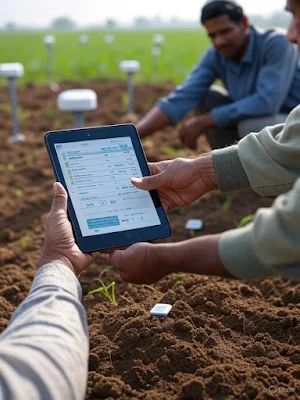
Digital Farmers: Why Data is the New Seed for Harvesting Superior Results For generations, farming was a game of intuition, tradition, and a fair bit of gambling with the weather. A farmer knew their land by the feel of the soil between their fingers and the color of the horizon at sunset. While that ancestral wisdom remains the heartbeat of agriculture, a new “crop” is being planted in fields across the globe: Data. The rise of the Digital Farmer isn’t about replacing the human element; it’s about empowering it. By harvesting billions of data points—from soil moisture levels to satellite imagery—modern growers are achieving results that were once considered impossible. The Dawn of the Data-Driven Acre In the past, if a field was thirsty, the whole field got water. If a pest was spotted in the north corner, the entire farm was sprayed with pesticides. This “blanket approach” was the only way to manage large-scale operations, but it was incredibly inefficient. Digital farming, or Precision Agriculture, changes the script. It allows farmers to treat every square meter of their land as an individual unit. By using sensors and GPS-guided machinery, a digital farmer can apply the exact amount of water, fertilizer, or seed needed for a specific spot. Why Data Matters More Than Ever We are currently facing a global challenge: feeding a population expected to reach 10 billion by 2050 while using less water and land than ever before. Data is the bridge. It allows for: Predictive Analysis: Knowing a drought is coming before the first leaf wilts. Resource Optimization: Reducing chemical runoff by only spraying where necessary. Yield Maximization: Finding the “sweet spot” for planting density. The Digital Toolkit: How Data is Collected To harvest results, you first have to harvest information. Digital farmers use a sophisticated ecosystem of tools to get a 360-degree view of their operations. 1. IoT Sensors (The Nervous System) Internet of Things (IoT) sensors are the “eyes and ears” on the ground. These small, rugged devices are buried in the soil or mounted on equipment to monitor: Soil Moisture: Preventing over-irrigation and saving millions of gallons of water. Nutrient Levels: Tracking Nitrogen, Phosphorus, and Potassium (NPK) in real-time. Temperature and Humidity: Predicting the risk of fungal outbreaks. 2. Satellite Imagery and Drones (The View From Above) High-resolution satellite data allows farmers to see “invisible” problems. Using Normalized Difference Vegetation Index (NDVI) imaging, farmers can spot areas where crops are stressed long before the human eye can detect a change in color. Drones take this a step further, providing centimeter-level accuracy for spot-spraying or counting livestock. 3. Telematics and Smart Machinery Modern tractors are essentially moving computers. They collect data on fuel consumption, engine health, and planting depth. When synced with the cloud, this data helps farm managers optimize their fleet’s performance and reduce downtime. From Big Data to Big Decisions: The Human Element Having data is one thing; knowing what to do with it is another. This is where the “humanized” side of digital farming shines. AI-driven platforms take the “noise” of raw data and turn it into Actionable Insights. Instead of looking at a spreadsheet of soil pH levels, a farmer receives a notification on their smartphone: “Zone B4 needs 5% more lime to reach peak yield potential. Schedule application for Tuesday before the rain?” This shift moves the farmer from a laborer to a Data Strategist. It reduces the crushing stress of uncertainty, allowing for a better work-life balance and more predictable financial outcomes. Overcoming the “Digital Divide” Transitioning to digital farming isn’t without its hurdles. For many, the “Data Harvest” feels out of reach due to: High Initial Costs: Smart machinery and sensor networks require significant upfront investment. Connectivity Issues: Many rural areas still lack the high-speed internet required to sync heavy data loads to the cloud. The Learning Curve: Farmers are experts in biology and mechanics, not necessarily data science. However, the industry is pivoting. Open-source data platforms and “as-a-service” models are making tech more accessible to small-scale farmers, ensuring that the digital revolution doesn’t leave the family farm behind. The Future: AI and Autonomous Harvests As we look toward the next decade, data will move from being a “tool” to being the “operator.” We are already seeing the rise of autonomous tractors and robotic weeders that identify and pluck weeds without a drop of herbicide. The goal isn’t a “farmer-less” world, but a world where the farmer is free to focus on the high-level health of the ecosystem, while the data handles the repetitive, granular tasks. Conclusion: Harvesting a Greener Tomorrow The digital farmer is a steward of both the land and the cloud. By embracing data, they are not just harvesting better results for their bank accounts; they are harvesting a more sustainable future for the planet. In the world of modern agriculture, the most valuable tool in the shed isn’t the plow—it’s the insight. When is the Best Time to Source On-Demand Developers? A Strategic 2026 Guide

How would you like me to respond?

Select a personality for your AI assistant

Normal
Happy
Sad
Angry

Your selection will affect how the AI assistant responds to your messages

Chat Assistant

Let's discuss your project!

Hear from our clients and why 3000+ businesses trust TechOTD

Tell us what you need, and we'll get back with a cost and timeline estimate

Scroll to Top