Introduction
In the history of engineering, progress has often been a game of “trial and error.” You build a prototype, you test it until it breaks, you analyze the failure, and you try again. This cycle, while effective, is incredibly slow and expensive.
As we move through 2026, Artificial Intelligence has officially ended the era of “guesswork.” Engineering Research & Development (R&D) is no longer just about physical experimentation; it’s about high-velocity data synthesis. We aren’t just using AI to do things better—we are using it to do things that were previously impossible.
Here are the 10 most disruptive ways AI is transforming the R&D landscape and a roadmap to help your team innovate even faster.
1. Generative Design: Beyond Human Imagination
Traditionally, an engineer draws a part based on what they think will work. With Generative Design, the engineer defines the “goals” (weight, strength, material, and cost) and the AI generates thousands of potential solutions.
Many of these designs look “organic” or “alien” because AI isn’t limited by human aesthetic biases. In 2026, these designs are optimized for 3D printing, creating parts that are 40% lighter but twice as strong as their traditionally manufactured counterparts.
2. Predictive Prototyping and Digital Twins
Physical prototypes are the biggest bottleneck in R&D. By using Digital Twins—virtual replicas of a physical product—engineers can test a machine’s performance in a simulated environment before a single bolt is tightened.
AI takes this further by predicting when a prototype will fail. By analyzing stress patterns in a virtual space, AI can identify microscopic fatigue points that a human tester might miss, saving months of laboratory time.
3. Accelerated Material Science
Finding the “perfect” material for a new product used to take decades of lab work. AI is now being used to scan vast databases of chemical structures to predict the properties of new alloys or polymers.
In 2026, we are seeing AI discover “Super-Materials” for batteries and semiconductors in weeks rather than years. This is the foundation of the green energy revolution, driven by AI-led R&D into more efficient solar cells and solid-state batteries.
4. NLP for Patent and Research Analysis
One of the most tedious parts of R&D is the literature review. Engineers spend hundreds of hours reading through academic papers and patent filings to ensure they aren’t reinventing the wheel.
Modern Natural Language Processing (NLP) tools can ingest millions of documents in seconds, summarizing the state of the art and identifying “whitespace”—areas where no one has patented a solution yet. This allows R&D teams to focus their creative energy on truly unique innovations.
5. Synthetic Data for Rare Failure Testing
Sometimes, you need to know how a product reacts to a “one-in-a-million” event (like a specific type of engine surge). It’s impossible to replicate these events consistently in the real world.
AI can generate Synthetic Data that mimics these rare scenarios perfectly. This allows for “Edge Case Testing” that makes products safer and more reliable without the need for dangerous or expensive physical tests.
6. Automated Simulation Tuning
Software like ANSYS or Siemens Simcenter is essential for R&D, but setting up a simulation can be complex. AI now acts as an “Autopilot” for these simulations, automatically adjusting parameters and meshes to get the most accurate results with the least amount of computational power.
7. Real-Time Collaboration via “Live” R&D Dashboards
In 2026, the R&D lab is no longer a silo. AI-driven project management tools, integrated with Product Lifecycle Management (PLM) software, allow for real-time updates. If a design change happens in the software, the procurement AI immediately updates the bill of materials and alerts the supply chain.
8. AI-Driven Quality Assurance (Visual Inspection)
R&D doesn’t end at the design; it extends to how the design is manufactured. AI computer vision systems can now inspect prototypes at a microscopic level during the assembly process, identifying flaws that the human eye cannot see. This ensures that the R&D “Gold Standard” is actually maintained in production.
9. Thermal and Fluid Dynamic Optimization
Optimizing how air or heat moves through a system (like a cooling fan or a car engine) is a mathematical nightmare. AI excels at these multi-variable problems. Neural networks are now being used to design “Heat Sinks” and “Aerodynamic Surfaces” that are perfectly tuned to the specific environmental conditions the product will face.
10. Autonomous Lab Robots
The “physical” part of R&D is also being automated. AI-powered robotic arms can conduct repetitive chemical or mechanical tests 24/7 without fatigue. These “Self-Driving Labs” can run experiments overnight and have the results analyzed and summarized by the time the human engineers walk in the next morning.
How to Start Innovating Even Faster
Identifying the need is one thing; implementation is another. To accelerate your R&D in 2026, follow this roadmap:
Step 1: Centralize Your Data
AI is only as good as the data it eats. If your engineering notes are in paper journals and your CAD files are on local hard drives, your AI cannot help you. You must move to a Cloud-Native Integration model immediately.
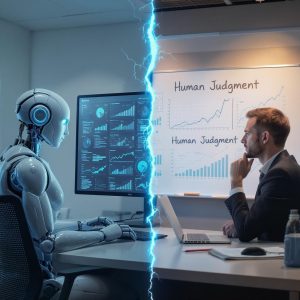
Step 2: Empower Your Engineers, Don’t Replace Them
The goal of AI in R&D is to remove the “Drudge Work.” Let the AI handle the data entry, the basic simulations, and the literature reviews. This frees up your human engineers to do what they do best: Creative Problem Solving.
Step 3: Invest in “AI-Ready” Hardware
Traditional computers aren’t built for the “Matrix Math” required by AI. To innovate faster, your R&D department needs access to high-end GPUs or cloud-based AI instances to run generative designs and complex simulations in real-time.
Conclusion: The Era of “Hyper-Innovation”
We have entered the era of hyper-innovation. The companies that will win in 2026 are not the ones with the most engineers, but the ones who have the best Human-AI Collaboration. By automating the tedious and amplifying the creative, AI is turning the “dream” of the next big invention into a reality faster than we ever thought possible.
The Shift to Continuous Background Screening in 2026