Digital Transformation

Business Analytics, Digital Transformation, Software development

Custom Software Development vs Ready-Made Solutions: Which is Better?

Custom Software Development vs. Ready-Made Solutions: Which is Better? Imagine walking into a high-end clothing boutique. On one rack, you find a beautiful, off-the-rack suit. It looks great, it’s available to take home today, and the price tag doesn’t break the bank. But when you try it on, the sleeves are just a fraction too long, and it pinches slightly across the shoulders. On the other side of the room, a master tailor stands ready to take your exact measurements. They promise a garment that will fit your body perfectly, moving with you like a second skin. The catch? It’s going to cost significantly more, and you won’t be wearing it out of the store for at least a few months. This is the exact dilemma business leaders face when standing at the digital crossroads: Do we buy a ready-made (SaaS) software solution, or do we build custom software from scratch? It’s one of the most expensive and consequential decisions an organization can make. Choosing the wrong path can lead to years of technical frustration, wasted capital, and operational bottlenecks. Let’s strip away the technical jargon and look at this choice through a practical, human lens to help you determine which route truly fits your business. 1. Defining the Contenders: Beyond the Buzzwords Before weighing the pros and cons, let’s clearly define what we are actually putting in the ring. ┌─────────────────────────────────────────────────────────────────────────┐ │ THE DIGITAL FORK │ └────────────────────────────────────┬────────────────────────────────────┘ │ ┌───────────────────────────┴───────────────────────────┐ ▼ ▼ ┌──────────────────────────────────┐ ┌──────────────────────────────────┐ │ CUSTOM SOFTWARE DEVELOPMENT │ │ READY-MADE / COMMERCIAL SASS │ ├──────────────────────────────────┤ ├──────────────────────────────────┤ │ Built from scratch for your │ │ Pre-built mass-market software │ │ exact business workflows. │ │ available via subscription. │ │ Example: A bespoke internal CRM. │ │ Example: Salesforce, HubSpot. │ └──────────────────────────────────┘ └──────────────────────────────────┘ Custom Software Development (Bespoke Solutions) Custom software is built from the ground up to satisfy your specific operational blueprints. You own the code, you control the feature roadmap, and every button, field, and automation workflow is designed to match how your team already works. Ready-Made Solutions (Off-the-Shelf / Commercial SaaS) Ready-made software is a pre-packaged product built to serve a broad, mass-market audience. These platforms are designed around industry “best practices.” They are instantly accessible, usually charged on a monthly per-user subscription model, and require you to adapt your business workflows to fit the software’s existing structure. 2. Ready-Made Solutions: The Case for Speed and Simplicity There is a reason why commercial software is a multi-billion-dollar industry. For many organizations, off-the-shelf platforms are an absolute lifesaver. The Immediate Gratification Factor If your business needs a project management tool today, you can sign up for an app, enter a credit card number, and have your entire team onboarding within an hour. There are no development cycles, no debugging phases, and no launch delays. You bypass the grueling architectural design phase completely. Predictable, Low Upfront Costs Building software requires significant upfront capital. Ready-made solutions flip this model on its head. You pay a predictable, monthly subscription fee. This makes cash flow management vastly easier for startups and mid-sized businesses that want to preserve capital for marketing or hiring. Shared Maintenance and Bulletproof Security When you buy into a major software platform, you aren’t just buying the code; you are buying their engineering team. A massive staff of developers, security experts, and QA testers are working behind the scenes 24/7 to patch vulnerabilities, roll out new features, and ensure the servers stay online. You don’t have to worry about server maintenance or breaking changes when an operating system updates. 3. The Dark Side of Off-the-Shelf Software While the low barrier to entry is incredibly attractive, off-the-shelf software often introduces quiet, long-term frictions that can stifle a company’s growth. The “Subscription Trap” and Scaling Costs Ready-made software looks cheap when you have five employees. But as your team scales to 50, 100, or 500 users, those monthly per-seat licensing fees balloon exponentially. Over a few years, you may find that your aggregate subscription costs surpass what it would have cost to build an entire proprietary platform from scratch—except you still don’t own the asset. Rigid Workflows and the “Frankenstein” Tech Stack Because ready-made tools are built for everyone, they aren’t uniquely optimized for anyone. Your team will inevitably encounter things they cannot change. To solve this, companies often buy another app to bridge the gap, then a third app to connect those two. Before you know it, your business is running on a fragile “Frankenstein” tech stack held together by complex integrations that break whenever one platform updates its API. Total Vendor Dependency When you rely entirely on an external software vendor, you surrender control over your digital infrastructure. If they decide to raise their subscription prices by 30%, remove a feature your team uses daily, or change their user interface completely, you have no choice but to accept it and bear the cost of retraining your workforce. 4. Custom Software: The Case for Total Control and Competitive Edge Custom software development is not a software purchase; it is a long-term strategic investment. Here is why companies choose to build rather than buy: Perfect Alignment with Your Unique Value Proposition Your business has unique processes that give you an edge over your competitors. If you force your team to use the exact same ready-made software that all your competitors use, you effectively homogenize your operations. Custom software bends to your workflows, accentuating your unique competitive advantages rather than flattening them. Absolute Ownership and Zero Licensing Fees When the development phase is complete, the software belongs entirely to your enterprise. It is a proprietary intellectual property asset that adds tangible valuation to your balance sheet. You can add 1,000 more users or expand into new territories without ever worrying about a vendor sending you a massive tier-upgrade invoice. Seamless, Native Integrations Instead of forcing multiple external apps to speak to one another through third-party connectors, custom platforms are built to natively sync with your existing legacy systems, databases, and machinery. This creates

Artificial Intelligence, Digital Transformation, Technology & Innovation

How AI-Powered Automation is Transforming Modern Businesses

How AI-Powered Automation is Transforming Modern Businesses We’ve all seen the sci-fi movies. A sleek, metallic robot sits at a desk, effortlessly typing at lightning speed, while human workers look on with a mix of awe and existential dread. For years, that was the mental image conjured up by the words “business automation.” It felt cold, distant, and frankly, a little terrifying. But if you walk into a modern, thriving business today, the reality of AI-powered automation looks completely different. It looks like an exhausted customer support manager finally getting to have dinner with their family because an AI assistant handled 80% of the routine evening queries. It looks like a graphic designer beating creative block because an AI tool helped them brainstorm fifty mood board concepts in five minutes. It looks like a small e-commerce founder predicting exactly how many sweaters to order for the winter rush without staying up until 3:00 AM buried in messy Excel spreadsheets. AI-powered automation isn’t about replacing the human heart of a business; it’s about giving humans their time, creativity, and sanity back. Let’s dive deep into how this quiet revolution is unfolding, why it matters, and how your business can ride the wave without losing its soul. 1. The Great Misconception: Automation vs. Augmentation Before we look at the data and strategies, we need to clear the air. There is a massive, lingering fear that automation equals termination. When traditional automation first arrived decades ago (think assembly lines or basic software macros), it was built to do repetitive, physical, or rule-based tasks. It followed a strict script: If X happens, do Y. It was rigid, and yes, it sometimes replaced human hands. AI-powered automation is entirely different. Instead of following a rigid script, artificial intelligence learns, adapts, and interprets context. It doesn’t just blindly move a digital file from Folder A to Folder B; it reads the file, understands that it’s an urgent invoice from a long-term supplier, flags a pricing discrepancy based on past data, and drafts a polite email to the vendor for a human to review. This is augmentation, not just automation. It’s about building a digital exoskeleton for your workforce. By taking the “robot tasks” out of human day jobs, we allow people to focus on what they do best: empathy, complex problem-solving, strategic thinking, and genuine human connection. 2. The Core Pillars of AI Transformation To understand how deeply this technology is weaving into the corporate fabric, we have to look at it through the lens of daily operations. AI transformation generally stands on four major pillars: ┌─────────────────────────────────────────┐ │ AI BUSINESS TRANSFORMATION │ └────────────────────┬────────────────────┘ │ ┌───────────────────┬─────────┴─────────┬───────────────────┐ ▼ ▼ ▼ ▼ ┌─────────────────┐ ┌─────────────────┐ ┌─────────────────┐ ┌─────────────────┐ │ Intelligent │ │ Cognitive │ │ Predictive │ │ Hyper- │ │ Workflows │ │ Support │ │ Analytics │ │ Personalization │ └─────────────────┘ └─────────────────┘ └─────────────────┘ └─────────────────┘ Pillar 1: Intelligent Workflows (RPA meets AI) Robotic Process Automation (RPA) has been around for a while, handling basic data entry. But when you inject AI into RPA, it gains “eyes” and “brains.” The Old Way: A human extracts data from scanned PDF invoices and types it into an ERP system. The AI Way: Intelligent Document Processing (IDP) reads the scanned document, understands unstructured text, extracts the relevant fields regardless of the invoice layout, and logs it instantly. Pillar 2: Cognitive Support and Communication We’ve moved past the era of the frustrating, broken chatbot that constantly loops back to “I didn’t catch that. Would you like to speak to an agent?” Large Language Models (LLMs) allow conversational AI to handle nuanced, emotional, and highly specific customer inquiries with incredible grace, mimicking human empathy while pulling data in real time. Pillar 3: Predictive Analytics and Forecasting Humans are great at looking at the past, but we struggle to calculate millions of variables to see the future. AI algorithms process historical data, macroeconomic trends, and social sentiment to predict market shifts, inventory needs, and even employee turnover before it happens. Pillar 4: Hyper-Personalization at Scale In marketing, sending a massive blast email to 50,000 people with the tag [First_Name] doesn’t cut it anymore. AI analyzes individual user behavior—what time they wake up, what they click on, what problems they face—to tailor dynamic web experiences and product recommendations for every single customer simultaneously. 3. Department by Department: AI in Action Let’s step out of the abstract and look at how AI-powered automation actually changes a typical Monday morning across different business departments. Customer Experience: From Reactive Firefighting to Proactive Care In a traditional setup, customer service teams are constantly drowning. They are measured by metrics like “Average Handle Time,” which subtly encourages them to rush people off the phone. AI turns customer care into a calm, proactive discipline. When a customer opens a live chat, AI evaluates the sentiment behind their words. If the customer is calm, the AI handles their return processing instantly. If the AI detects high frustration or complex emotional distress, it immediately routes the conversation to a senior human agent, along with a concise, bulleted summary of the customer’s interaction history and suggested solutions. The human agent doesn’t waste time asking, “Can you repeat your issue?” Instead, they step in as an empowered problem solver. Marketing and Content: The Ultimate Brainstorming Partner There is a lot of bad, robotic AI content flooding the web right now. That is what happens when people use AI poorly. When used correctly, AI is an incredible creative catalyst. Marketing teams use AI to analyze top-performing industry topics, generate content outlines, run multi-variant A/B testing on ad copy, and instantly translate local campaigns into dozens of languages while preserving cultural nuances. It acts as an assistant that takes care of the grueling draft phases, leaving creators free to inject authentic brand voice, real-life case studies, and emotional depth into the final product. Human Resources: Rehumanizing the Hiring and Onboarding Process It sounds ironic—using artificial intelligence to make human resources more human. But think about what HR managers actually

Cloud Computing and Technology, Digital Transformation, Software development

Migrating Legacy Systems to Cloud

The Enterprise Guide: Migrating Legacy Systems to the Cloud For modern enterprises, the question is no longer if they should modernize their infrastructure, but how. Decades-old software architectures—affectionately or frustratingly dubbed “legacy systems”—continue to anchor core business operations. These monoliths are stable, deeply integrated, and functionally proven. However, they are also expensive to maintain, isolated from modern ecosystem tools, and fundamentally incapable of scaling to meet the demands of a fast-moving market. Migrating legacy systems to the cloud is a complex technical evolution. It requires balancing data integrity, minimal operational downtime, shifting corporate cultures, and architectural transformations. This comprehensive guide serves as a production-ready manual for engineering teams, product managers, and enterprise architects tasked with moving monolithic, on-premise systems into a highly resilient, cloud-native architecture. 1. The Imperative for Modernization: Why Migrate? Maintaining legacy software carries a steep financial and operational tax that compounds every year. Understanding these specific pain points helps frame the entire migration strategy: The Financial Drain: On-premise data centers require continuous capital expenditure (CapEx) for hardware updates, physical security, cooling, and power redundancy. Cloud environments shift these costs to an operational expenditure (OpEx) model, allowing businesses to pay only for the exact computing resources they consume. The Talent Gap: Legacy systems often run on outdated programming frameworks, archaic database engines, or obsolete operating systems. Finding engineers who can maintain infrastructure from twenty years ago is becoming increasingly difficult and expensive. The Innovation Bottleneck: Monolithic architectures prevent modern engineering practices like Continuous Integration and Continuous Deployment (CI/CD). A minor change to a single module requires rebuilding and testing the entire system, stretching release cycles from hours to quarters. Data Silos: Legacy infrastructure struggles to interface with modern artificial intelligence, machine learning pipelines, and real-time big data analytics engines. This isolates your organization’s most valuable asset: its operational data. 2. Frameworks for the Move: The 7 Rs of Cloud Migration Every application in your enterprise portfolio does not need to be migrated in the exact same manner. The path you choose depends heavily on your budget, timeline, and long-term business goals. These options are categorized by Gartner’s widely adopted “Rs” model: Legacy System Evaluation | +——————-+——————-+ | | Low Effort / Low Value High Effort / High Value (Rehost / Replatform) (Refactor / Rearchitect) | | v v – Immediate savings – True cloud-native elasticity – Keeps monolithic debt – High engineering investment – Faster execution time – Massive performance rewards 1. Rehost (“Lift and Shift”) The Strategy: Moving your applications and databases from on-premise physical servers or local virtual machines directly to cloud-hosted virtual instances (like AWS EC2 or Azure VMs) with minimal to no changes to the underlying code. Pros: Rapid execution, minimal code risk, and immediate reduction in on-premise data center footprints. Cons: You migrate all your architectural debt along with the code. The application will not natively take advantage of cloud elasticity, autoscaling, or managed services, which can sometimes lead to higher cloud bills than anticipated. 2. Replatform (“Lift, Tinker, and Shift”) The Strategy: Introducing minor optimizations to the infrastructure layer during the move without modifying the core application logic. Example: Moving an on-premise, self-hosted Microsoft SQL Server instance over to a fully managed database service like Amazon RDS or Azure SQL Database. Pros: Eliminates the operational overhead of managing OS patching, backups, and physical scaling for that specific tier. 3. Refactor / Rearchitect The Strategy: Breaking down the monolithic application entirely and rewriting core components to adopt a cloud-native architecture. This typically involves migrating to microservices, utilizing serverless functions, or moving data operations to managed distributed databases. Pros: Unlocks the full power of the cloud—unmatched scalability, high fault tolerance, rapid development cycles, and optimized, granular resource costs. Cons: High upfront investment in engineering hours, extended project timelines, and high risk of introducing bugs during the code translation phase. 4. Re-architecting vs. Replacing or Retaining Beyond changing the code, teams must also consider three alternative pathways: Repurchase (“Drop and Replace”): Abandoning the custom legacy software altogether and shifting operations to a modern, cloud-native Software-as-a-Service (SaaS) provider (e.g., migrating an on-premise CRM to Salesforce). Retain: Keeping the application in its current environment. If an application is highly stable, requires rare updates, and faces strict regulatory hurdles on physical data isolation, the best immediate option may be to leave it alone. Retire: Documenting and safely shutting down applications that are no longer actively supporting core business operations. Migration assessments routinely discover that up to 10% to 15% of an enterprise IT portfolio is completely obsolete but still drawing power. 3. Step-by-Step Legacy Migration Blueprint A successful enterprise migration is broken down into four highly structured, sequential operational phases: Phase 1: Discovery and Assessment You cannot safely migrate what you do not understand. Legacy systems are notorious for undocumented dependencies. Inventory Collection: Use automated discovery tools (such as AWS Application Discovery Service or Azure Migrate) to map out every asset running in your current data center. Dependency Mapping: Map out exactly how applications communicate with each other. If you move Application A to the cloud but leave its primary database on-premise, network latency will severely degrade application performance. Total Cost of Ownership (TCO) Analysis: Calculate your current run rate (hardware leases, electricity, staffing, support contracts) against the projected cost of your future cloud footprint to validate the financial return on investment (ROI). Phase 2: Architecture Design and Security Setup Before a single line of code moves, your destination infrastructure environment must be securely established. Landing Zones: Create a secure, multi-account cloud environment utilizing infrastructure-as-code (IaC) tools like Terraform or AWS CloudFormation. Identity and Access Management (IAM): Integrate your corporate identity providers (like Okta or Active Directory) directly with cloud access controls using Single Sign-On (SSO) and the principle of least privilege. Network Topology: Establish secure communication channels between your remaining on-premise assets and your new cloud networks using high-throughput VPN Tunnels or dedicated lines like AWS Direct Connect or Azure ExpressRoute. Phase 3: Data Migration and Application Cutover Data migration is the most critical phase of

Artificial Intelligence, Digital Transformation, Software development

How We Built an AI CRM Platform

How We Built an AI CRM Platform: From Architecture to Autonomous Workflows Traditional Customer Relationship Management (CRM) systems are fundamentally broken. For decades, software like Salesforce, HubSpot, and Microsoft Dynamics operated as glorified, digital filing cabinets. They required sales representatives, account managers, and support agents to spend hours manually logging calls, updating pipeline stages, tagging emails, and calculating arbitrary deal probabilities. Instead of empowering teams to sell or support, the CRM became a heavy administrative burden. It was a reactive database—only as good as the data manually entered into it. When we set out to build our own next-generation CRM platform, we discarded the digital filing cabinet blueprint entirely. We asked a foundational question: What if the CRM wasn’t a passive repository, but an active, intelligent member of the team? We designed an AI-Native CRM Platform. Our system doesn’t wait for manual data entry; it autonomously captures ambient data streams (emails, calendar events, transcripts, product usage metrics), understands the deep semantic context of buyer behaviors, predicts precise pipeline risks, and executes complex follow-up workflows entirely on its own. Here is the exact engineering blueprint, architectural breakdown, and technical journey of how we built it. 1. Defining the Core AI Capabilities Before writing a single line of code, we mapped out the four pillars of intelligence our platform required to truly differentiate itself from legacy systems: ┌────────────────────────────────────────────────────────┐ │ AI CRM Platform Core Pillars │ ├───────────────────────────┬────────────────────────────┤ │ 1. Ambient Data Capture │ 2. Generative Execution │ │ • Zero manual data entry │ • Contextual auto-replies │ │ • Multimodal ingestion │ • Dynamic content scaling │ ├───────────────────────────┼────────────────────────────┤ │ 3. Predictive Insights │ 4. Autonomous Agents │ │ • Deep deal health scoring│ • Self-triggering tasks │ │ • Churn risk prevention │ • Multi-app orchestration │ └───────────────────────────┴────────────────────────────┘ Ambient Data Capture: The system must automatically ingest unstructured communications (IMAP/SMTP email exchanges, Google Calendar metadata, Zoom/Teams audio recordings) and transform them into structured CRM timeline events without human intervention. Generative Execution: Instead of providing rigid email templates, the system must write highly personalized, deeply contextual follow-ups based on the exact history of a specific B2B relationship. Predictive Insights: Moving past static lead scoring, the AI must evaluate deal velocity, stakeholder sentiment changes, and engagement metrics to output a dynamic, highly accurate win/loss probability matrix. Autonomous Agents: The CRM must feature “Agentic workflows” capable of routing leads, updating fields, notifying cross-functional teams, and triggering external app workflows using natural language instructions. 2. High-Level System Architecture Building an AI-native SaaS application requires a departure from traditional monolithic or standard microservice architectures. We had to design an infrastructure that balances fast, low-latency transactional operations (like loading an account page) with heavy, asynchronous machine learning computing tasks (like processing a two-hour sales call transcript). Our platform relies on a decoupled, event-driven architecture split into three primary layers: [ Data Ingestion Layer ] ──► (Kafka Event Bus) ──► [ AI Processing Engine ] │ │ ▼ ▼ ┌──────────────────┐ ┌──────────────────┐ │ PostgreSQL (OLTP)│ │ Vector DB (Qdrant│ └──────────────────┘ └──────────────────┘ The Transactional Layer (OLTP) For core application state management, user authentication, and standard relational records (Accounts, Contacts, Deals), we deployed a highly optimized PostgreSQL cluster. PostgreSQL ensures transactional integrity and handles structured relational data perfectly. The Streaming and Event Layer To handle the continuous influx of webhooks from integrated email providers, calendar clients, and voice over IP (VoIP) tools, we implemented Apache Kafka. Every single inbound email or communication is treated as an immutable event tossed onto the Kafka bus. This guarantees that our background AI models can consume data asynchronously without blocking the user interface. The Intelligence Layer (OLAP & Vector) For semantic search, retrieval-augmented generation (RAG), and similarity calculations, we paired PostgreSQL with Qdrant as our specialized vector database. Long-term analytic queries and machine learning model training run in isolated worker pools using Ray, ensuring that heavy model training never degrades standard web application performance. 3. Engineering the Ambient Data Capture Engine The first major technical hurdle was building a system that could eliminate manual entry. If a sales rep emails a prospect from their phone, the CRM must capture it, extract the semantic context, and update the pipeline instantly. We built an asynchronous ingestion pipeline running on Node.js/TypeScript workers. When a new email arrives via a secure OAuth IMAP hook, the text is immediately scrubbed of HTML noise, signature blocks, and security disclaimers using regular expressions and specialized NLP parsers. Once clean, the text is sent to our Embedding Pipeline: [Raw Clean Text] ──► [text-embedding-3-small] ──► [Vector Embeddings] ──► [Stored in Qdrant] We utilize OpenAI’s $text-embedding-3-small$ model to convert the raw unstructured text into a dense 1536-dimensional vector representation. This vector is then stored inside Qdrant, tagged with critical metadata like account_id, contact_id, and timestamp. Because everything is embedded semantically, users don’t need to search for exact keywords anymore. A sales manager can type, “Find accounts where the buyer complained about pricing last month,” and the system executes a vector cosine similarity search over the email embeddings to surfaces the exact interaction instantly: $$\text{Similarity} = \frac{A \cdot B}{\|A\| \|B\|}$$ 4. Building the RAG-Powered Conversational Layer A major feature of our platform is the conversational copilot—a sidebar where reps can ask complex questions about their accounts. To make this work without hallucinations, we built a highly robust Retrieval-Augmented Generation (RAG) pipeline. The RAG workflow operates through a multi-step execution cycle when a user queries the system (e.g., “Summarize our current relationship standing with Acme Corp”): ┌──────────────────────────────┐ │ User Query: “Acme Corp Summary”│ └──────────────┬───────────────┘ │ ▼ ┌──────────────────────────────┐ │ Hybrid Vector Search Engine │ └──────────────┬───────────────┘ │ ┌────────────────────┴────────────────────┐ ▼ ▼ ┌───────────────────────────┐ ┌───────────────────────────┐ │ Relational Data (Postgres)│ │ Semantic Data (Qdrant DB) │ │ • Open Deals & Values │ │ • Recent Email Sentiment │ │ • Direct Contact History │ │ • Call Transcript Context │ └─────────────┬─────────────┘ └─────────────┬─────────────┘ │ │ └────────────────────┬────────────────────┘ │ ▼ ┌──────────────────────────────┐ │ LLM Context Assembler Block │ └──────────────┬───────────────┘ │ ▼ ┌──────────────────────────────┐ │ Streaming UI Generation │ └──────────────────────────────┘ Context Retrieval: The query triggers a hybrid search engine.

cybersecurity, Data Privacy & Security, Digital Transformation

AI Fraud Detection Systems

AI Fraud Detection Systems: Safeguarding the Modern Supply Chain As global supply chains transition into hyper-connected, software-driven ecosystems, they open up unprecedented avenues for efficiency. However, this massive digital expansion has a dark side. The reliance on distributed networks, automated procurement, and digitized financial transactions has exposed organizations to sophisticated, multi-layered criminal exploits. Traditional rule-based fraud detection systems—which flag anomalies based on static, pre-configured thresholds—are completely ill-equipped to handle the speed and complexity of modern bad actors. Fraudsters constantly evolve their techniques, finding gaps between siloed logistics systems to execute invoice manipulation, cargo theft, and identity spoofing. To fight back, enterprises are deploying AI fraud detection systems. By embedding machine learning, deep learning, natural language processing, and graph analytics into core supply chain infrastructure, companies are transitioning from a defensive, post-event investigative posture to an automated, real-time preventative shield. 1. The Anatomy of Modern Supply Chain Fraud To understand why artificial intelligence is mandatory for modern risk management, we must first look at the unique, high-yield fraud vectors currently targeting global logistics and supply chain operations. ┌────────────────────────────────────────────────────────┐ │ Supply Chain Fraud Vectors │ └────┬───────────────────────┼───────────────────────┬───┘ │ │ │ ▼ ▼ ▼ ┌───────────────────────┐ ┌───────────────────────┐ ┌───────────────────────┐ │ Invoice & Billing │ │ Strategic Cargo │ │ Digital Identity │ │ • Ghost Vendors │ │ • Carrier Spoofing │ │ • Credential Theft │ │ • Duplicate Billing │ │ • Fictitious Pickups│ │ • Phishing Inbound │ └───────────────────────┘ └───────────────────────┘ └───────────────────────┘ Invoice Manipulation and Billing Anomalies With thousands of suppliers, sub-contractors, and third-party logistics (3PL) providers issuing digital invoices daily, corporate accounts payable departments are overwhelmed. Fraudsters exploit this high-volume environment by submitting duplicate invoices with minor alterations, inflating shipping volumes, adding arbitrary fuel surcharges, or routing payments to “ghost vendors” via compromised internal credentials. Strategic Cargo Theft and Carrier Spoofing Cargo theft has moved past physical hijacking on empty highways. Today’s criminals execute strategic cargo theft using digital identity theft. Fraudsters create fraudulent carrier profiles on digital freight broker boards, underbid legitimate carriers to win high-value loads (such as electronics or pharmaceuticals), and seamlessly pick up the freight from the warehouse dock—only to vanish entirely once the cargo is loaded onto their truck. Procurement Collusion and Kickbacks Internal bad actors can collude with external suppliers to manipulate the competitive bidding process. This includes sharing confidential competitor pricing data, deliberately formatting requests for proposals (RFPs) to favor a specific vendor, or approving subpar, over-priced raw materials in exchange for financial kickbacks. 2. Machine Learning vs. Legacy Rule-Based Systems For years, fraud prevention relied on static, “if-then” logical rules written by risk analysts. For example: “If an invoice amount exceeds $50,000 and originates from a new vendor country, flag it for manual review.” While helpful for catching basic errors, legacy systems create massive operational friction: The False Positive Avalanche: Rigid rules fail to account for legitimate, dynamic business volatility (e.g., a sudden surge in spot freight rates due to a port strike). This leads to an overwhelming volume of false positives that paralyze auditing teams. Inability to Adapt: If a fraudster alters their behavior slightly—such as submitting an illicit invoice for $49,999 instead of $50,000—the static rule fails entirely. AI fraud detection systems continuously learn from historical and streaming data. By analyzing thousands of behavioral, contextual, and transactional variables simultaneously, machine learning models establish a dynamic baseline of “normal” operational behavior. Instead of waiting for a hard threshold violation, the AI detects subtle, multi-dimensional correlations that point to malicious intent, adapting its defense mechanisms as fast as the fraudsters change their tactics. 3. Real-Time Transaction and Invoice Auditing One of the most immediate applications of AI in fraud prevention is automated, real-time invoice and payment auditing. When an enterprise processes hundreds of thousands of complex bills of lading, freight audits, and supplier invoices, manual oversight is statistically impossible. Advanced AI fraud engines run continuously in the background of Enterprise Resource Planning (ERP) and Transportation Management Systems (TMS). They leverage a multi-layered verification funnel: [Incoming Invoice Document] │ ▼ ┌──────────────────────────────┐ │ Computer Vision & NLP OCR │ ──► Extracts text, signatures, & metadata └──────────────┬───────────────┘ │ ▼ ┌──────────────────────────────┐ │ Behavioral Analysis Model │ ──► Cross-checks historical pacing & amounts └──────────────┬───────────────┘ │ ▼ ┌──────────────────────────────┐ │ Digital Forensic Validation │ ──► Analyzes metadata anomalies & PDF structures └──────────────────────────────┘ Natural Language Processing (NLP) & OCR: The AI instantly reads unstructured text across digital documents, extracting key entities like line-item details, addresses, tax IDs, and bank routing info. Behavioral Footprint Analysis: The system compares the new invoice against years of historical interaction data with that specific vendor. It flags the document if the payment terms have changed unexpectedly, if the billing velocity spikes unnaturally, or if the line-item pricing deviates from current macroeconomic market averages. Metadata Forensics: Sophisticated systems analyze the underlying code of digital files. If an invoice claims to be an original PDF generated by an established enterprise vendor, but the metadata reveals it was edited in a consumer photo-editing app minutes before submission, the AI automatically pauses the payment transaction and alerts the compliance team. 4. Graph Analytics and Sybil Network Detection In complex supply chain networks, fraudsters rarely operate using a single compromised account. Instead, syndicates deploy complex webs of shell companies, fake freight brokerages, and cloned digital carrier profiles to mask their tracks. This tactic is known as a Sybil attack. To expose these hidden relationships, AI platforms leverage Graph Analytics and Graph Neural Networks (GNNs). Unlike traditional databases that store data in isolated rows and columns, graph technology focuses entirely on the connections between data points (nodes). [Carrier Profile A] [Carrier Profile B] │ │ └───────────► [Shared Node] ◄───────┘ │ • Shared IP Address • Identical Bank Account • Cloned Device Fingerprint When a new carrier registers on a shipping portal, the GNN instantly maps its digital footprint against the global enterprise graph. It cross-references seemingly unrelated data fields: Is this new carrier utilizing the exact same physical IP address or device fingerprint as a vendor blacklisted six months ago? Does their listed

Digital Transformation, Software development, Technology & Business

Logistics Automation Software Trends

Logistics Automation Software Trends: Driving Efficiency in an Unpredictable World The global logistics landscape is undergoing a profound paradigm shift. For years, supply chain management focused on a singular, relentless pursuit: cost minimization through just-in-time efficiency. However, a relentless wave of global volatility—spanning geopolitical tensions, extreme climate events, localized labor shortages, and shifting trade policies—has exposed the fragile fault lines of traditional, rigid infrastructure. Today, survival and profitability require a foundational operational overhaul. The goal has shifted from building a reactive supply chain to engineering an intelligent, self-healing, and proactive network. At the heart of this radical transformation is software. Logistics automation is no longer just about deploying massive, fixed hardware or static conveyors. Instead, modern logistics is defined by software intelligence, interconnected ecosystems, and automated adaptability. As organizations strive to bridge the gap between real-time insights and immediate operational execution, let’s explore the core logistics automation software trends defining the industry. 1. The Rise of Agentic AI and Self-Healing Supply Chains Artificial Intelligence has officially graduated from a passive analytics tool into an active operational partner. Historically, AI in logistics was predictive—it analyzed historical datasets, identified patterns, and generated dashboards for human operators to interpret and act upon. While valuable, this traditional approach still left a costly gap of latency between identifying a disruption and executing a remedy. The current frontier belongs to Agentic AI and self-healing supply chains. Autonomous AI agents are integrated directly into core execution software, such as Transportation Management Systems (TMS) and Enterprise Resource Planning (ERP) engines. Instead of waiting for human intervention, these intelligent software agents possess the decision-making capabilities to autonomously execute solutions within predefined operational guardrails. [Disruption Detected: Port Closure] │ ▼ ┌──────────────────────────────┐ │ Agentic AI Evaluates Data │ └──────────────┬───────────────┘ │ ▼ ┌──────────────────────────────┐ │ Autonomously Reroutes Fleet │ └──────────────┬───────────────┘ │ ▼ ┌──────────────────────────────┐ │ Updates WMS & Notifies Crew │ └──────────────────────────────┘ For instance, if an ocean cargo liner faces an unexpected port closure due to severe weather, an agentic AI system doesn’t just trigger an alert flag on a dashboard. It actively evaluates real-time alternative routes, calculates the financial cost-to-serve implications, renegotiates dynamic freight spot rates with backup carriers, alters the digital customs paperwork, and re-sequences the downstream warehouse receiving schedule—all in a matter of seconds without human prompt. This shift to continuous, automated planning reduces latency to near zero, transforming unexpected bottlenecks from multi-day crises into seamlessly managed, minor operational adjustments. 2. Next-Generation WMS and Smart Warehousing As e-commerce demands continue to pressure fulfillment timelines, distribution centers can no longer operate using legacy, paper-reliant Warehouse Management Systems (WMS). Inbound and outbound logistics are converging under next-generation, cloud-native WMS platforms powered by generative AI and real-time edge processing. Modern WMS platforms are focusing heavily on dynamic optimization. Instead of relying on static zoning patterns, AI algorithms continuously monitor the physical flow of the warehouse floor. They dynamically re-slot fast-moving SKUs based on real-time order surges, balance picking labor across aisles to prevent congestion, and adjust picking strategies on the fly. Furthermore, a significant sub-trend is the rapid modernization of inbound automation software. Historically, outbound fulfillment took priority for automation investments. Today, the focus is equalizing. Advanced WMS platforms leverage machine vision software equipped with Neural Processing Units (NPUs) to handle complex inbound processes: Robotic De-palletization: Software guides robotic arms to identify, visually inspect, and de-stack highly irregular, mixed-SKU pallets. Instant Verification: Real-time AI vision scans barcodes and cross-references them against digital bills of lading in milliseconds, entirely bypassing manual clipboard validation. Predictive Workload Scheduling: By processing upstream transport delays, the WMS automatically adjusts warehouse staffing shifts before a delayed fleet arrived at the yard bay doors. 3. Orchestration Layers and Multi-Fleet Fleet Management Systems (FMS) Go into a modern fulfillment hub, and you will see an incredibly diverse ecosystem of automated hardware. You might see Autonomous Mobile Robots (AMRs) moving cases, Automated Guided Vehicles (AGVs) transporting heavy pallets, automated storage and retrieval systems (AS/RS) soaring up vertical racks, and human workers operating traditional forklifts. The primary challenge isn’t the individual performance of these machines; it is their coordination. Without a unifying brain, a warehouse becomes a multi-million-dollar digital traffic jam. This friction has driven the massive growth of Warehouse Execution Systems (WES) and comprehensive Software Orchestration Layers. These advanced software platforms act as a vendor-agnostic nervous system, sit cleanly above individual proprietary hardware controllers, and unify all automation subsystems into a singular, synchronized operational workflow. ┌──────────────────────────────────────┐ │ Software Orchestration Layer │ └────┬──────────────┬──────────────┬───┘ │ │ │ ▼ ▼ ▼ ┌───────┐ ┌───────┐ ┌───────┐ │ AMRs │ │ AS/RS │ │ AGVs │ └───────┘ └───────┘ └───────┘ Concurrently, Fleet Management Systems (FMS) have evolved far beyond basic dispatch scripting rules. Driven by live spatial data, modern FMS platforms control real-time traffic across the facility floor. They dynamically reroute AMRs away from congested corridors, prioritize charging schedules for robotic units based on upcoming order volumes, and coordinate seamless intersections where human workers and robotic fleets cross paths safely. The software ensures that predictable throughput and steady physical flow are maintained around the clock. 4. Robotics-as-a-Service (RaaS) Democratizing Automation For decades, the benefits of advanced warehouse robotics were reserved exclusively for enterprise giants with massive capital expenditure (CapEx) budgets. Smaller third-party logistics (3PL) providers and mid-sized e-commerce merchants were left locked out by the staggering upfront costs of automated infrastructure. Robotics-as-a-Service (RaaS) has completely flipped this model by shifting automation from a rigid capital expense to a flexible, scalable operational expense (OpEx). Under the RaaS software model, companies subscribe to cloud-hosted robotic management platforms while leasing physical robot fleets (like AMRs or autonomous sorting units) on a predictable monthly or volume-based payment structure. This trend has triggered the rise of what industry experts call “brownfield automation.” Rather than abandoning existing brick-and-mortar setups to build expensive, highly customized “greenfield” automated facilities, businesses are deploying RaaS software into their legacy, existing structures. Because modern AMRs rely on lidar, onboard edge processing, and computer vision software for navigation rather than fixed magnetic tracking tape embedded in floors, they can be deployed

Business, Digital Transformation, Technology

Industry Solution Blogs

The Ultimate Guide to Industry Solution Blogs: Driving B2B Authority and Conversions Imagine walking into a massive B2B tech convention. The room is buzzing. Thousands of booths are flashing neon lights, throwing free t-shirts at you, and shouting technical jargon about “cloud-native, AI-driven paradigms.” Now, imagine walking past all that noise into a quiet, structured room where an expert sits down with you, looks at your specific business problem, and says: “I know exactly why your supply chain is lagging, and here is a three-step blueprint to fix it using automated workflows.” Where would you spend your money? That quiet room is the digital equivalent of an Industry Solution Blog. While generic tech blogs scratch the surface of what a technology is, industry solution blogs dive deep into the how and why for specific sectors—whether that’s healthcare, logistics, retail, or finance. In this comprehensive guide, we will break down exactly how to craft these high-value pieces of content to build unstoppable authority, educate your audience, and turn casual readers into high-ticket B2B clients. 1. What Exactly is an Industry Solution Blog? To understand what an industry solution blog is, we first need to look at what it isn’t. It isn’t a press release about your company’s latest funding round. It isn’t a dry, academic whitepaper that requires a PhD to decode. And it certainly isn’t a superficial listicle generated by a basic AI prompt. An Industry Solution Blog is a highly targeted, deeply researched piece of content that addresses a specific business pain point within a distinct vertical and offers a clear, technology-driven remedy. The Anatomy of the Solution Framework When you write a solution blog, you are essentially guiding the reader through a transformative journey: [Current Fragmented State] ➔ [The Complication/Cost] ➔ [The Technological Bridge] ➔ [The Optimized Future State] Instead of simply explaining a tool like “Predictive Analytics,” an industry solution blog explains “How Predictive Analytics Reduces Equipment Downtime in Automotive Manufacturing by 34%.” It bridges the gap between raw technological capability and real-world business outcomes. 2. Why Generic Content is Dying (and Verticals are Winning) The internet is drowning in generic content. If you write an article titled “Top 5 Benefits of Cloud Computing,” you are competing with millions of legacy websites, massive tech publications, and AI search engines that can summarize those points in three seconds. Generic content no longer builds authority. Specificity builds authority. The Shift to Account-Based & Vertical Marketing Modern B2B buyers don’t buy software; they buy solutions to their industry-specific problems. A hospital administrator doesn’t care if a CRM has “great API integrations.” They care if it is HIPAA-compliant and can seamlessly sync with Epic EHR systems to reduce patient check-in times. When you pivot your content strategy toward industry solutions, several magical things happen: Higher Conversion Rates: Readers feel seen. When a retail executive reads about solving “last-mile delivery bottlenecks during peak holiday seasons,” they realize you understand their exact world. Lower Keyword Competition: Competing for “Machine Learning” is an uphill battle. Competing for “Machine Learning for Fraud Detection in Neo-Banking” is highly winnable. Shorter Sales Cycles: Your blog functions as a silent salesman, answering complex compliance, integration, and ROI questions before a sales call even happens. 3. How to Identify High-Value Industry Pain Points You cannot write a compelling industry solution blog from an ivory tower. You have to get your hands dirty and find out what keeps your target audience awake at 2:00 AM. Here is a humanized toolkit for uncovering those hidden pain points. Talk to Your Sales and Customer Success Teams Your internal teams are a goldmine of data. Sit down with them and ask: What are the top three objections prospects raise during demo calls? Where do clients typically get stuck during the onboarding phase? What specific phrases or jargon do they use when describing their frustrations? Mine Niche Forums and Communities B2B professionals don’t complain on TikTok; they complain on specialized forums. Spend time lurking in: Subreddits: e.g., r/sysadmin, r/healthit, r/logistics, r/devops. Quora & Industry Networks: Look for recurring technical roadblocks. LinkedIn Groups: Analyze the comments section of industry influencers to see what questions people are asking. Reverse-Engineer Competitor Case Studies Look at your competitors’ case studies. Don’t look at their successes—look at the problems their clients had before buying. Those “before” states are the exact topics you should be writing comprehensive solution blogs about. 4. Structure of a High-Converting Solution Blog A great industry solution blog balances storytelling with analytical depth. Here is a proven structural framework you can adapt for any vertical. +———————————————————–+ | 1. The Hook (Relatable, industry-specific scenario) | +———————————————————–+ | v +———————————————————–+ | 2. The Bleeding Wound (The real financial/operational cost)| +———————————————————–+ | v +———————————————————–+ | 3. The Paradigm Shift (Introducing the modern solution) | +———————————————————–+ | v +———————————————————–+ | 4. The Deep Dive (Tactical steps, architecture, features) | +———————————————————–+ | v +———————————————————–+ | 5. Proof & Real-World Impact (Data points, case studies) | +———————————————————–+ | v +———————————————————–+ | 6. The Actionable Conclusion & Contextual CTA | +———————————————————–+ The Hook (The Relatable Scenario) Start by painting a picture that proves you belong in the room. Bad: “In today’s fast-paced world, logistics is very important.” Good: “It’s 4:00 PM on Friday before Cyber Monday. Your warehouse management system suddenly drops connection with your primary shipping API. Orders are backing up, and every minute of downtime is costing you $12,000. If this sounds like a nightmare, it’s because legacy infrastructure isn’t built for modern e-commerce surges.” The Bleeding Wound (The Cost of Inaction) Don’t just mention the problem; quantify it. Explain what happens if the business decides to do nothing. Talk about compliance fines, employee burnout, customer churn, or lost revenue. The Paradigm Shift Introduce the core concept or technology that solves the issue. This isn’t where you pitch your specific product yet—this is where you educate them on the category of the solution (e.g., migrating from monolithic architecture to microservices). The Deep Dive (Tactical Execution) This is the meat of

Artificial Intelligence, Digital Transformation

Future of Search After AI

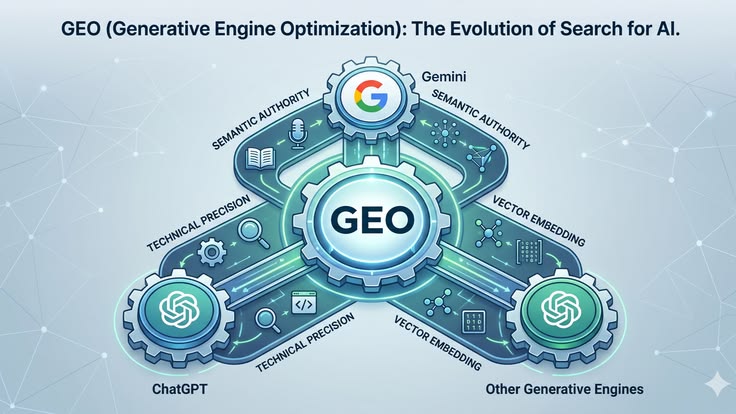
The Future of Search After AI: Navigating the Era of Generative Discovery For nearly three decades, the foundational mechanics of the internet relied on a simple, predictable contract: a user typed a sequence of keywords into a blank text box, an engine matched those strings against an index of web pages, and the user clicked a blue link to find their answer. This “rank-and-click” paradigm built empires, funded global digital media economies, and formed the bedrock of Search Engine Optimization (SEO). That contract has officially expired. We are living through the most volatile paradigm shift in the history of digital information architecture. The emergence of advanced Large Language Models (LLMs), conversational engines, and multi-modal assistants has transformed search engines from mere finding tools into synthesis tools. Instead of guiding users to a destination where an answer lives, search engines now read the destinations, extract the data, and build the answer themselves. Understanding the future of search after AI requires looking beyond simple keyword lists to understand Generative Engine Optimization (GEO), AI-native user behaviors, and the tactical steps required to keep your brand visible in a synthesized digital world. 1. The Anatomy of Modern AI Search Engines To understand where search is going, we must first look at how the dominant players are evolving their interfaces to merge traditional information retrieval with generative synthesis. [User Dynamic Intent] │ ▼ [Multi-Modal Vector Analysis] ──► [Real-Time Context Tuning] │ ▼ [Retrieval-Augmented Generation (RAG)] ──► [Vector DB & Core Index] │ ▼ [Synthesized Output Layer] ──► [Conversational Interface + Deep Citations] Google AI Overviews (formerly SGE) Google’s approach does not entirely discard the traditional web index; instead, it superimposes a generative summary layer above it. Using a sophisticated pipeline rooted in Retrieval-Augmented Generation (RAG), Google pulls a localized cluster of highly authoritative pages, processes their semantic contents in real-time, and generates an objective answer complete with dynamic link cards and inline citations. OpenAI Search & Conversational Disruptors Alternative models strip away the remnants of legacy SERPs entirely. They favor a natural, fluid conversational interface. Rather than treating each search as an isolated event, these engines retain memory, understand deep pronouns, and allow users to iteratively narrow down a complex task (e.g., “Find a hotel in Tokyo, narrow it down to options with gym access, and build a three-day itinerary around them”). Perplexity AI and the Answer Engine Revolution Perplexity pioneered the concept of the “Answer Engine.” It treats the web as a live vector database, summarizing diverse viewpoints and providing numbered citations for every factual claim. This setup shifts the user’s focus from evaluating website designs to evaluating the factual integrity of the synthesized information block. 2. From Keywords to Entities: The Semantic Shift In the pre-AI era, search engines were largely deterministic systems matching keywords. If your page contained the phrase “best enterprise data security software” a specific number of times alongside strong backlink signals, you ranked. In the post-AI ecosystem, search engines operate via vector embeddings and entity graphs. Vector Spaces: Mathematical representations where words, sentences, and entire concepts are plotted as coordinates based on their semantic proximity. Intent Resolution: AI engines understand the hidden intent behind a phrase, even if the user lacks the technical vocabulary to express it perfectly. Entity Relationships: The engine looks at your brand as a node within a massive knowledge network, assessing how it connects to defined industries, founders, products, and competitor nodes. Attribute / Metric Traditional Search Era Post-AI Search Era Interface Style Static Page Links Dynamic Synthesized Text & Media Optimization Focus Latent Semantic Indexing (LSI) Entity Realism & Information Gain User Interaction Query ➔ Fragmented Clicks Dialogue ➔ Final Resolution Primary Value Metric Raw Organic Traffic / CTR Share of Model (SoM) & Citations 3. The Death of Commodity Content and the Rise of Information Gain For years, the standard playbook for content marketing was to look at what already ranked on page one, combine the points into a longer article, and optimize the metadata. AI search engines have made this strategy completely obsolete. Because LLMs already possess a compressed model of all public information, they don’t need another blog post that restates standard industry definitions. If your content reads like a paraphrase of Wikipedia, the AI will absorb it into its training or retrieval data but will have zero incentive to link out to you. The new currency of digital visibility is Information Gain. Information Gain = Your Unique Insights – Publicly Available Training Data To achieve high information gain scores, content must feature: First-Party Data Matrices: Proprietary benchmarks, survey metrics, or internal operational statistics. Deep Case Studies: Verifiable narratives detailing an exact issue, the step-by-step execution taken, and the quantified results. Counter-Intuitive Frameworks: Expert perspectives that challenge common industry assumptions with logical, well-reasoned evidence. 4. The 6 Strategic Pillars of Generative Engine Optimization (GEO) To adapt to the future of search, digital strategies must pivot from classic SEO to Generative Engine Optimization (GEO). Here are the six pillars required to make your digital properties highly indexable for AI search bots. Pillar 1: The “Atomic Answer” Architecture AI agents search for information blocks that can be easily extracted and integrated into summaries. To optimize for this, build your pages using an atomic layout: The Definition Anchor: Directly under an H2 or H3 heading, write a 40-to-60-word declarative sentence defining the concept clearly. Avoid preamble or filler text. The Structural Breakdown: Immediately follow that definition with a bulleted list, an ordered sequence, or an HTML data table to make the information easy for machines to read. The Explanatory Context: Follow the structured data block with your deep-dive narrative, analysis, and supporting case examples. Pillar 2: Radical E-E-A-T and Digital Identity Mapping Because AI engines risk spreading hallucinations, their retrieval layers use strict quality filtering based on Experience, Expertise, Authoritativeness, and Trustworthiness (E-E-A-T). Author Identity Resolution: Every piece of informational content must be tied to a real person with a verifiable digital footprint. Use explicit schema to connect your author profiles to their

Artificial Intelligence, Digital Transformation, Technology & Innovation

What Is GEO (Generative Engine Optimization)?

What Is GEO (Generative Engine Optimization)? The Complete Guide to AI-First Search The digital marketing landscape is facing its most disruptive shift since the inception of the commercial internet. For decades, search engine optimization (SEO) has been the undisputed king of organic visibility. Businesses mastered the art of appealing to Google’s PageRank and crawler bots to land a spot on the coveted first page of “10 blue links.” However, user behavior is fundamentally changing. With the massive integration of Artificial Intelligence into our daily search habits—via Google’s AI Overviews, OpenAI’s SearchGPT, and conversational answer engines like Perplexity AI—users no longer want a list of websites to click through. They want direct, synthesized, and immediate answers to complex questions. To survive this transition, brands must pivot from traditional SEO to GEO (Generative Engine Optimization). GEO is the strategic practice of optimizing digital content so that Large Language Models (LLMs) and generative search systems pick your brand, cite your website, and recommend your products when answering a user’s conversational prompt. 1. How Generative Search Works: Under the Hood To optimize for an AI engine, you must understand how it retrieves information. Traditional engines map keywords to a massive database index. Generative engines use an architecture called Retrieval-Augmented Generation (RAG). [ User Complex Prompt ] │ ▼ [ RAG Search Layer ] ──> Scrapes & Aggregates Authoritative Web Sources │ ▼ [ LLM Context Window ] ──> Synthesizes & Formulates Cohesive Response │ ▼ [ Output: Conversational Answer + In-Text Citations ] When a user submits a complex prompt, the AI search engine doesn’t just guess an answer. It uses a RAG system to perform a lightning-fast web search for high-quality, relevant articles. It pulls the text from those top-performing pages and feeds them into the LLM’s context window. The LLM reads that aggregated data, synthesizes it, and formats a humanlike response, complete with in-text citations linking back to the source material. Your entire goal with GEO is to ensure your content is structured so perfectly that the RAG system extracts it, and the LLM trusts it enough to cite it. 2. Core Pillars of Generative Engine Optimization (GEO) According to empirical research on AI search visibility, standard keyword stuffing will actively hurt your performance in generative results. Instead, AI engines favor specific content characteristics: A. Authoritative and Statistical Inclusion LLMs are designed to minimize hallucinations (making things up). Because of this, their retrieval layers actively hunt for concrete facts, verified statistics, and primary research data. The Blueprint: Instead of writing vague statements like “Many companies use remote work software,” write with precision: “According to a 2026 Stanford study, 42% of the US labor force now works from home full-time.” B. Structural Fluency & Information Density AI models read text exponentially faster when it is organized logically. Messy walls of text make it difficult for the retrieval system to pull key facts cleanly. The Blueprint: Use explicit markdown formatting. Break down data into clear comparison tables, use highly descriptive H2 and H3 headings, and present actionable takeaways in bulleted lists. C. Direct Answer Architecture (The TL;DR Block) Generative engines want to answer the user as quickly as possible. If your article hides the main answer at the very bottom of a 2,000-word post, an AI bot will pass it over for a site that delivers immediate value. The Blueprint: Implement a “Direct Answer Block” or a summary box right beneath your main article title. Give the AI the exact definition or solution it needs to scrape instantly, then provide the deep-dive context below. 3. SEO vs. GEO: A Deep Comparison Matrix Feature / Metric Traditional SEO Generative Engine Optimization (GEO) User Search Style Short, fragmented phrases (e.g., “best wireless headphones”) Long, contextual prompts (e.g., “what are the best noise-canceling headphones for a small head on a 6-hour flight?”) Primary Goal Rank #1 in the organic search results list Become the primary cited source or product recommendation inside the AI response Content Focus Target keyword volume, search intent, and comprehensive topic coverage High information density, first-party data, and expert quotes Technical Driver XML sitemaps, clean URLs, and basic meta tags Advanced Schema Markup (Product, FAQ, Organization) and unblocked AI bots Primary Metric Search engine ranking positions (SERP) and raw organic clicks Share of Voice (SoV) in AI answers and referral traffic from AI subdomains 4. How to Optimize Your Website for the Big Three AI Engines Each major player in the AI search race handles data extraction slightly differently. A robust GEO strategy accounts for these unique preferences. 1. Google AI Overviews (Gemini) Google’s AI capabilities are native extensions of its core web index. Leverage EEAT: Experience, Expertise, Authoritativeness, and Trustworthiness are non-negotiable. Ensure your content features clear author biographies, links to verified social profiles, and expert credentials. Keep Core Web Vitals Flawless: If your page takes too long to load or render, Google’s real-time RAG engine will skip past your site to maintain its conversational speed. 2. OpenAI SearchGPT / ChatGPT Search OpenAI heavily weights real-time web discovery alongside its deeply integrated premium publisher partnerships. Digital PR and Third-Party Reviews: SearchGPT often pulls brand recommendations by looking at web sentiment. To show up as a recommended product, ensure your brand has consistent, positive mentions on third-party review platforms (like G2, Trustpilot, or industry forums). Verify Robot Permissions: Check your robots.txt file and make sure you haven’t blocked search crawlers like OAI-SearchBot. 3. Perplexity AI Perplexity operates as an aggressive real-time citation machine, aiming to act as the internet’s definitive bibliography. Be the Original Source: Perplexity prioritizes primary data over secondary aggregators. Focus on publishing original research, proprietary data sets, or case studies. Participate in Community Hubs: Perplexity frequently looks at Reddit and niche forums to gather real-world human consensus. Maintaining an active brand presence on these channels can pull your business directly into Perplexity’s citation loop. 5. Critical Mistakes to Avoid Relying on Generic AI Content Swarms: Mass-producing basic AI-generated text to build a massive blog footprint backfires in GEO. If your

cybersecurity, Digital Transformation, Software development, Technology & Innovation

Serverless Architecture Explained

Serverless Architecture Explained: The Ultimate Guide to Event-Driven, No-Ops Development For decades, deploying a software application followed a predictable, rigid formula: lease a physical server, configure the operating system, set up web servers, and pray your traffic estimations were accurate. If you undershot, your site crashed under unexpected load. If you overshot, you wasted thousands of dollars maintaining idle computing power. The cloud era mitigated this via virtualization and auto-scaling, but developers still had to manage, patch, secure, and scale those virtual machines. Serverless architecture completely shatters this paradigm. Despite the name, “serverless” doesn’t mean servers are no longer involved; it means developers are completely abstracted from them. The cloud vendor handles provisioning, scaling, maintaining, and upgrading the infrastructure automatically. You write the code; the cloud takes care of the rest. This 3,000+ word deep-dive will break down the mechanics, core components, operational benefits, patterns, pitfalls, and future outlook of serverless development to give you a definitive implementation blueprint. 1. Defining Serverless Architecture: The Core Pillars To understand serverless, we must look past the marketing hype and focus on its four foundational engineering characteristics: ┌────────────────────────────────────────────────────────┐ │ The 4 Pillars of Serverless │ ├───────────────────────────┬────────────────────────────┤ │ 1. Zero Infrastructure │ 2. Automated Hyper-Scaling │ │ Management │ (Scale-to-Zero) │ ├───────────────────────────┼────────────────────────────┤ │ 3. Pay-per-Use Billing │ 4. Built-in Fault │ │ (Down to the Millisecond)│ Tolerance │ └───────────────────────────┴────────────────────────────┘ Zero Infrastructure Management: Developers do not provision, patch, manage, or maintain underlying operating systems, runtimes, or container hardware. Automated Hyper-Scaling: The infrastructure automatically scales up or down in precise correlation to incoming traffic. If you receive one request, one instance runs. If you receive 100,000 simultaneous requests, the vendor instantly provisions thousands of execution environments. Scale-to-Zero (Pay-per-Use): When your application is idle, zero computing resources are active. You pay absolutely nothing for idle time. Billing is calculated down to the millisecond of actual execution time and memory consumed. Built-in Fault Tolerance: Serverless services inherently span multiple availability zones and regions by default, providing high availability without manual setup. 2. FaaS vs. BaaS: The Two Sides of Serverless Serverless architecture is broadly divided into two complementary conceptual spaces: Function-as-a-Service (FaaS) and Backend-as-a-Service (BaaS). Function-as-a-Service (FaaS) FaaS is the computational heartbeat of serverless. Instead of deploying a monolithic web application that sits running continuously, developers break application logic down into small, ephemeral, single-purpose functions. These functions are completely stateless and are triggered exclusively by specific system events (e.g., an HTTP request, a new file upload, or a database modification). Key Characteristics: Short lifespans (typically timed out after 15 minutes), stateless execution, and rapid startup times. Examples: AWS Lambda, Google Cloud Functions, Azure Functions. Backend-as-a-Service (BaaS) A serverless ecosystem cannot survive on stateless computation alone; it requires supporting cloud services that follow the exact same serverless scaling and billing principles. This is BaaS. Instead of deploying and managing a database cluster (like PostgreSQL) or a message broker (like RabbitMQ), developers leverage fully managed, API-driven cloud services. Databases: Serverless NoSQL or SQL options (e.g., Amazon DynamoDB, Google Cloud Firestore, Aurora Serverless). Authentication: Managed identity solutions (e.g., AWS Cognito, Auth0). Storage: Scalable object stores (e.g., Amazon S3, Google Cloud Storage). 3. The Lifecycle of an Event-Driven Serverless Function Unlike traditional server environments where an application loops continuously listening for requests on a port, serverless runs on a strictly event-driven architecture. ┌───────────┐ ┌───────────────┐ ┌───────────────────────┐ ┌────────────┐ │ Event │ ───> │ API Gateway / │ ───> │ Function Execution │ ───> │ BaaS / DB │ │ Trigger │ │ Event Router │ │ (Ephemeral Container) │ │ Write │ └───────────┘ └───────────────┘ └───────────────────────┘ └────────────┘ The Request Execution Chain: The Trigger: An external event occurs. For example, a user uploads a high-resolution image to a cloud storage bucket. The Routing: The cloud provider detects the bucket state change and maps it to a designated FaaS function handler. Container Provisioning: If no active container instance is waiting (a “cold start”), the provider initializes an isolated micro-container environment, loads your code package, and spins up the language runtime. Execution: The function executes its explicit single purpose (e.g., reads the image, resizes it into a thumbnail, and writes it back to another bucket). Teardown or Freeze: Once the function returns a response, the container is frozen for a brief period to handle immediate subsequent requests. If no other requests arrive, it is destroyed. 4. Comprehensive Architecture Comparison Architectural Metric Traditional Tiered (IaaS/PaaS) Serverless Architecture (FaaS/BaaS) Scaling Capacity Manual or rule-based auto-scaling (e.g., Scale when CPU > 70%). Takes minutes. Instantaneous, micro-second scaling matching request concurrency perfectly. Cost Efficiency Paid hourly/monthly per instance, regardless of actual load or idle status. Paid strictly per execution count, memory allocation, and run duration. Maintenance Overheads OS updates, security vulnerability patching, and runtime updates required. Vendor manages full OS, base images, software environments, and updates. State Management State can be easily held locally in server memory or local disk file sessions. Inherently stateless. State must be externalized to cache layers or databases. Max Execution Limits Indefinite. Long-running processes, cron jobs, and background workers run forever. Strict runtime limits (e.g., 15 minutes max per invocation on AWS Lambda). 5. Architectural Blueprints & Design Patterns Serverless shines brightest when combined with modern design patterns optimized for decentralized systems. Let’s look at three standard operational patterns. Pattern 1: The Modern REST API / Microservice In a serverless web API, traditional frameworks like Express.js or Spring Boot are replaced by decoupled event-handlers connected to an intelligent proxy gateway. [ Client Request ] ──> [ API Gateway ] ──> [ AWS Lambda ] ──> [ DynamoDB ] API Gateway: Acts as the public-facing router, handling SSL termination, rate limiting, CORS configurations, and routing public endpoints to explicit functions. Lambda Functions: Each endpoint route (e.g., POST /orders, GET /orders/{id}) executes an independent function, isolating failures completely. Pattern 2: Asynchronous Data Processing Pipelines Processing intensive operations asynchronously keeps frontend services responsive and prevents system bottlenecks. [ Large File Upload ] ──> [ S3 Bucket ] ──> [ S3 Event Trigger ] ──> [ Lambda Processor ] Execution:

How would you like me to respond?

Select a personality for your AI assistant

Normal
Happy
Sad
Angry

Your selection will affect how the AI assistant responds to your messages

Chat Assistant

Let's discuss your project!

Hear from our clients and why 3000+ businesses trust TechOTD

Tell us what you need, and we'll get back with a cost and timeline estimate

Scroll to Top