Digital Transformation

Digital Transformation, Technology & Innovation, telecom

The Business Impact of 5G and the Road to 6G Connectivity

The Business Impact of 5G and the Road to 6G Connectivity The world is becoming increasingly connected, and the technologies that power this connectivity are evolving at an unprecedented pace. Over the past few years, 5G has emerged as one of the most transformative technological advancements, promising faster speeds, lower latency, and the ability to connect billions of devices simultaneously. While many businesses are still exploring the full potential of 5G, discussions about 6G are already gaining momentum. Connectivity has become the foundation of modern business operations. From cloud computing and remote work to artificial intelligence and the Internet of Things (IoT), organizations depend on reliable, high-speed networks to remain competitive. As industries continue their digital transformation journeys, both 5G and the future transition to 6G are expected to redefine how businesses operate, innovate, and serve customers. Understanding the impact of these technologies is essential for organizations that want to stay ahead in a rapidly evolving digital landscape. Understanding 5G Technology 5G, or fifth-generation wireless technology, represents a significant upgrade from previous mobile network generations. Unlike 4G, which primarily focused on improving mobile internet speeds, 5G is designed to support a wide range of advanced applications and connected ecosystems. One of the most notable features of 5G is its ability to deliver extremely high data transfer speeds. Businesses can transmit large volumes of information in real time, enabling smoother communication, faster cloud access, and improved operational efficiency. Another critical advantage is ultra-low latency, which reduces the delay between sending and receiving information. This capability is particularly important for applications that require real-time responsiveness, such as autonomous vehicles, remote surgery, and industrial automation. Additionally, 5G can support a significantly larger number of connected devices compared to previous generations. This makes it ideal for environments where thousands or even millions of sensors, machines, and smart devices need to communicate simultaneously. How 5G Is Transforming Businesses The impact of 5G extends far beyond faster smartphone internet. Businesses across various sectors are leveraging this technology to create new opportunities and improve existing operations. Enhanced Remote Work and Collaboration The shift toward hybrid and remote work has increased the demand for reliable connectivity. 5G enables seamless video conferencing, faster file sharing, and real-time collaboration regardless of location. Employees can access cloud-based applications more efficiently, reducing delays and improving productivity. As organizations continue to embrace flexible work models, 5G provides the infrastructure needed to support distributed teams and digital workplaces. Accelerating the Internet of Things (IoT) The Internet of Things is one of the biggest beneficiaries of 5G technology. Smart devices generate enormous amounts of data, and 5G networks provide the bandwidth and reliability required to manage these connections effectively. Businesses can deploy large-scale IoT ecosystems for applications such as: Smart manufacturing Asset tracking Supply chain monitoring Smart agriculture Energy management Connected healthcare devices The ability to process and transmit data in real time enables organizations to make faster and more informed decisions. Revolutionizing Manufacturing Manufacturing is undergoing a major transformation through Industry 4.0 initiatives, and 5G plays a central role in this evolution. Factories equipped with connected sensors, autonomous robots, and intelligent monitoring systems can achieve greater efficiency and productivity. Real-time communication between machines allows manufacturers to optimize production processes, reduce downtime, and improve quality control. Predictive maintenance powered by IoT sensors helps identify potential equipment failures before they occur, minimizing disruptions and reducing maintenance costs. Improving Customer Experiences Customer expectations continue to rise, and businesses are seeking innovative ways to deliver personalized and engaging experiences. Retailers can use 5G-powered technologies such as augmented reality (AR) and virtual reality (VR) to create immersive shopping experiences. Customers can virtually try products, explore digital showrooms, and receive personalized recommendations in real time. Similarly, entertainment companies can deliver high-quality streaming services with minimal buffering, enhancing user satisfaction and engagement. Driving Innovation in Healthcare Healthcare organizations are leveraging 5G to improve patient care and operational efficiency. Real-time data sharing enables healthcare providers to access patient information instantly, facilitating faster diagnosis and treatment decisions. Telemedicine services become more reliable and effective, allowing doctors to consult with patients remotely without connectivity limitations. Advanced applications such as remote robotic surgery and AI-assisted diagnostics also benefit from the low latency and high reliability offered by 5G networks. Supporting Smart Cities Cities around the world are investing in smart infrastructure to improve transportation, energy management, public safety, and environmental monitoring. 5G provides the connectivity foundation for smart city initiatives by enabling real-time communication between sensors, cameras, vehicles, and public services. This results in more efficient resource utilization and improved quality of life for residents. Economic Benefits of 5G Adoption The adoption of 5G is generating significant economic opportunities for businesses and governments alike. Organizations that invest in 5G-enabled solutions can experience: Increased operational efficiency Reduced infrastructure costs Faster innovation cycles Enhanced customer engagement Improved workforce productivity New revenue streams Many businesses are also developing entirely new products and services that were not feasible under previous network limitations. As 5G ecosystems continue to mature, the economic impact is expected to expand across virtually every industry. Challenges in 5G Implementation Despite its advantages, implementing 5G is not without challenges. One of the primary concerns is infrastructure investment. Deploying 5G networks requires significant upgrades to existing telecommunications infrastructure, including additional base stations and advanced networking equipment. Cybersecurity is another important consideration. As more devices become connected, the potential attack surface for cyber threats increases. Businesses must implement robust security measures to protect sensitive data and critical systems. There are also concerns related to spectrum availability, regulatory compliance, and interoperability between different technologies and vendors. Organizations must carefully plan their adoption strategies to maximize benefits while managing risks. Looking Beyond 5G: The Emergence of 6G While 5G is still being rolled out globally, researchers and technology companies are already exploring the possibilities of 6G. 6G is expected to represent the next major leap in wireless communication. Although commercial deployment may still be years away, early research suggests that 6G could deliver speeds up to 100 times faster

Cloud Computing and Technology, Digital Transformation, Technology

The Rise of Edge Computing: Why Processing Data Closer Matters

The Rise of Edge Computing: Why Processing Data Closer Matters The digital world is generating more data than ever before. Every smartphone notification, smart home device, connected vehicle, industrial sensor, and online interaction contributes to an ever-growing stream of information. For years, businesses have relied on cloud computing to store, manage, and process this data. While cloud technology revolutionized the way organizations operate, the explosion of connected devices has revealed a critical challenge: speed. Imagine a self-driving car traveling at high speed. If it encounters an obstacle, it cannot afford to send data to a distant cloud server, wait for processing, and then receive instructions. Even a delay of a few milliseconds could have serious consequences. The same challenge exists in manufacturing plants, healthcare facilities, smart cities, and countless other environments where immediate decisions are essential. This is where edge computing enters the picture. Edge computing is changing how organizations process information by bringing computing power closer to where data is created. Instead of sending every piece of information to a centralized cloud, data can be analyzed and acted upon near the source itself. This shift is helping businesses improve performance, reduce latency, enhance security, and unlock entirely new possibilities for innovation. As technologies like artificial intelligence, the Internet of Things (IoT), and 5G continue to evolve, edge computing is rapidly becoming one of the most important pillars of modern digital infrastructure. Understanding Edge Computing At its core, edge computing refers to processing data near the device or location where it is generated rather than transmitting it to a centralized data center or cloud server. Traditionally, data generated by devices would travel across networks to cloud servers where it would be processed and stored. The results would then be sent back to the device or application. While this approach works well for many scenarios, it introduces delays that can become problematic when immediate responses are required. Edge computing addresses this challenge by moving computing resources closer to the “edge” of the network. The edge can be a local server, a gateway device, a factory machine, a retail system, or even the device itself. Rather than depending entirely on distant cloud infrastructure, edge devices can analyze information in real time and make decisions instantly. The cloud still plays an important role, but it becomes part of a larger ecosystem where processing is distributed intelligently. This approach significantly improves efficiency while enabling applications that would be difficult or impossible to support through cloud-only architectures. Why the Need for Edge Computing Is Growing The rise of edge computing is closely connected to the rapid growth of connected devices. Industry experts estimate that billions of IoT devices are now generating massive volumes of data every day. From wearable fitness trackers and smart thermostats to industrial robots and connected vehicles, these devices continuously produce information that requires processing. Sending every bit of this data to the cloud creates several challenges. First, network congestion becomes a concern. The more data that travels across networks, the greater the strain on bandwidth resources. Second, latency can negatively impact user experiences and operational efficiency. Applications requiring real-time responses cannot tolerate delays. Third, transmitting large volumes of data to the cloud increases costs associated with bandwidth and storage. Finally, organizations face growing concerns about privacy, security, and regulatory compliance. Edge computing helps solve these issues by allowing data to be processed locally while only transmitting relevant information to the cloud when necessary. As businesses continue to embrace digital transformation, the demand for faster and more intelligent processing is making edge computing increasingly valuable. The Latency Advantage One of the biggest reasons organizations invest in edge computing is latency reduction. Latency refers to the time it takes for data to travel from its source to a processing location and back again. Even small delays can create significant problems in certain applications. Consider a smart manufacturing facility where machines operate with incredible precision. Sensors continuously monitor temperature, pressure, vibration, and performance metrics. If a machine begins to malfunction, immediate action may be required to prevent costly downtime. With cloud-based processing, the delay involved in transmitting data could slow down response times. Edge computing enables instant analysis directly within the facility, allowing maintenance teams to address issues before they escalate. The same principle applies to autonomous vehicles, remote healthcare monitoring, financial trading systems, and augmented reality applications. By processing data closer to where it originates, organizations can achieve near-instant decision-making capabilities. Enhancing Real-Time Decision Making Modern businesses increasingly rely on real-time insights to remain competitive. Customers expect immediate responses. Operations demand continuous optimization. Systems need to adapt dynamically to changing conditions. Edge computing supports these requirements by enabling faster decision-making at the source. For example, a smart retail store can use edge-powered cameras and sensors to analyze customer behavior in real time. Store managers can monitor foot traffic, optimize product placement, and improve customer experiences without waiting for cloud-based analytics. Similarly, healthcare providers can use edge-enabled monitoring devices to track patient vitals continuously. If a patient’s condition changes suddenly, alerts can be generated instantly, potentially saving lives. The ability to process information in real time creates opportunities that extend far beyond simple efficiency improvements. It enables businesses to become more proactive, responsive, and intelligent. Edge Computing and the Internet of Things The Internet of Things and edge computing are closely connected technologies. IoT devices generate enormous amounts of data, much of which requires immediate analysis. Without edge computing, organizations would struggle to manage this growing information flow effectively. Imagine a smart city equipped with thousands of connected sensors monitoring traffic, air quality, public transportation, and energy usage. If every sensor continuously transmitted data to centralized cloud systems, network infrastructure could quickly become overwhelmed. Edge computing allows local processing to occur near these sensors. Relevant insights can be generated instantly while only critical data is sent to the cloud for long-term analysis. This approach improves performance, reduces network traffic, and enhances overall system reliability. As IoT adoption continues to accelerate, edge computing will

Artificial Intelligence, Digital Transformation, Technology

How Digital Twins Are Transforming Manufacturing and Smart Cities

How Digital Twins Are Transforming Manufacturing and Smart Cities Imagine being able to create an exact digital replica of a factory, a production line, a power grid, or even an entire city. Now imagine that this digital replica updates itself continuously using real-time data from sensors, machines, cameras, and connected devices. Engineers can test changes before implementing them, city planners can predict traffic congestion before it occurs, and manufacturers can identify equipment failures before they happen. This is the power of digital twin technology. Over the past few years, digital twins have evolved from an experimental concept into one of the most impactful technologies driving digital transformation. Organizations across industries are leveraging digital twins to improve efficiency, reduce costs, optimize operations, and make better decisions based on real-world data. As manufacturing facilities become smarter and cities become increasingly connected, digital twins are emerging as a critical technology that bridges the gap between the physical and digital worlds. Understanding how digital twins work and why they matter is essential for businesses, city planners, and technology leaders looking to stay competitive in an increasingly data-driven future. What Is a Digital Twin? A digital twin is a virtual representation of a physical object, process, system, or environment that continuously receives data from its real-world counterpart. Unlike traditional simulations that rely on static information, digital twins are dynamic. They constantly collect and analyze real-time data through sensors, Internet of Things (IoT) devices, software systems, and connected networks. The digital model mirrors the current condition of the physical asset and can predict future behavior based on historical and live data. For example, in a manufacturing plant, a digital twin of a machine can monitor temperature, vibration levels, energy consumption, and production output. If the system detects unusual behavior, it can alert operators before a costly breakdown occurs. Similarly, a digital twin of a city can monitor traffic flow, public transportation, energy consumption, water distribution, weather patterns, and infrastructure performance to help authorities make smarter decisions. The combination of IoT, artificial intelligence, cloud computing, big data analytics, and advanced visualization technologies has accelerated the adoption of digital twins across multiple sectors. Why Digital Twins Matter More Than Ever Today’s organizations face increasing pressure to improve operational efficiency while reducing costs and minimizing risks. Manufacturers must manage complex supply chains, maintain equipment reliability, and meet customer demands for faster production. City governments must address challenges such as population growth, traffic congestion, energy management, sustainability, and public safety. Traditional monitoring systems often provide limited visibility into operations. Digital twins offer a more comprehensive approach by providing a complete digital view of physical systems. This enables organizations to move from reactive decision-making to predictive and proactive management. Instead of fixing problems after they occur, organizations can anticipate issues and take action before disruptions happen. This shift is creating significant value across industries and transforming how physical assets are designed, managed, and optimized. The Role of Digital Twins in Modern Manufacturing Manufacturing is one of the industries experiencing the greatest impact from digital twin technology. Modern factories generate enormous amounts of operational data every day. Machines, robots, conveyors, sensors, and production systems continuously produce information that can be used to improve efficiency and productivity. Digital twins bring all this information together into a single intelligent model. Manufacturers can visualize operations in real time, identify inefficiencies, and test improvements without disrupting production. One of the most valuable applications is predictive maintenance. Equipment failures can cause expensive downtime and production delays. Traditional maintenance schedules often rely on fixed intervals, which may result in unnecessary servicing or unexpected breakdowns. Digital twins continuously monitor machine health and identify early warning signs of potential failures. This allows maintenance teams to perform repairs at the optimal time, reducing downtime and extending equipment lifespan. Production optimization is another major benefit. Manufacturers can simulate different production scenarios and evaluate their impact before implementing changes. Whether adjusting workflows, introducing new machinery, or redesigning assembly lines, digital twins help organizations make informed decisions with minimal risk. Quality control also improves significantly. By monitoring production processes in real time, digital twins can identify deviations that may affect product quality. This enables faster corrective actions and helps maintain consistent manufacturing standards. As competition increases and margins become tighter, these improvements can deliver substantial financial benefits. Enhancing Product Development and Innovation Digital twins are not only transforming factory operations but also revolutionizing product development. Traditionally, creating and testing physical prototypes requires significant time and resources. Digital twins enable engineers to evaluate product designs in virtual environments before building physical versions. Manufacturers can test performance, durability, safety, and functionality under various conditions using advanced simulations. This approach reduces development costs, accelerates innovation, and shortens time-to-market. For industries such as automotive, aerospace, electronics, and industrial equipment, digital twins provide a powerful way to improve product quality while reducing design risks. Companies can identify potential issues earlier in the development process and make adjustments before production begins. This creates a more efficient and cost-effective innovation cycle. Supply Chain Visibility and Optimization Global supply chains have become increasingly complex and vulnerable to disruptions. Manufacturers need better visibility into every stage of the supply chain to ensure smooth operations. Digital twins can create virtual models of supply chain networks, allowing organizations to track inventory, shipments, supplier performance, and logistics operations in real time. By analyzing supply chain data, businesses can identify bottlenecks, predict delays, and optimize inventory management. This improved visibility helps organizations respond more effectively to market fluctuations and unexpected disruptions. The ability to simulate different scenarios also supports strategic planning and risk management. As supply chain resilience becomes a top priority for businesses worldwide, digital twins are becoming an essential tool for operational success. How Digital Twins Are Powering Smart Cities The same technology that improves manufacturing efficiency is also helping cities become smarter, safer, and more sustainable. Urban populations continue to grow rapidly, creating increasing demands on infrastructure and public services. City planners face challenges related to transportation, energy consumption, environmental sustainability, housing, waste

Artificial Intelligence, Digital Transformation, Technology

AI-Powered Search vs Traditional Search Engines: What’s Changing?

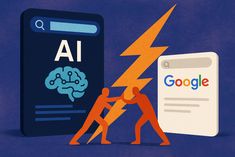
AI-Powered Search vs Traditional Search Engines: What’s Changing? The way we search for information online is undergoing one of the biggest transformations since the birth of the internet. For more than two decades, traditional search engines have been our gateway to the digital world. Whether we wanted to find a nearby restaurant, learn a new skill, research a topic, or compare products, search engines have always been the first stop. However, the rise of Artificial Intelligence has started a new chapter in the evolution of search technology. AI-powered search is changing how users interact with information, moving beyond simply displaying links and providing direct, conversational answers. From AI assistants and chatbots to intelligent search platforms integrated into browsers and applications, the search experience is becoming faster, smarter, and more personalized than ever before. But what exactly is changing? How does AI-powered search differ from traditional search engines? And what does this shift mean for businesses, content creators, and everyday users? Let’s explore. Understanding Traditional Search Engines Traditional search engines have dominated the internet for years. Their primary purpose is to help users discover relevant web pages based on keywords entered into a search box. When a user searches for something like “best laptops for students,” the search engine scans its index of billions of web pages and returns a list of links ranked according to relevance and authority. This process generally involves: Crawling websites Indexing content Ranking pages Displaying search results The user then clicks through multiple links to find the information they need. Traditional search has been highly effective because it provides access to a vast amount of information. However, it often requires users to visit several websites before finding a complete answer. For simple questions, this process may feel inefficient in today’s fast-paced digital environment. What Is AI-Powered Search? AI-powered search represents a significant evolution in information retrieval. Instead of simply presenting a list of links, AI search systems understand user intent, analyze context, and generate direct answers in natural language. These systems use advanced technologies such as: Natural Language Processing (NLP) Machine Learning Large Language Models (LLMs) Contextual Understanding Generative AI When users ask a question, AI-powered search can provide a summarized response, explain concepts, compare options, and even engage in follow-up conversations. For example, instead of searching: “Best smartphones under ₹30,000” Users can ask: “Which smartphone under ₹30,000 has the best camera and battery life for daily use?” An AI-powered system can analyze the query, understand the requirements, and provide a tailored recommendation instantly. This conversational approach makes information discovery significantly more intuitive. The Biggest Differences Between AI Search and Traditional Search Although both approaches aim to help users find information, they operate very differently. 1. Links vs Direct Answers Traditional search engines primarily provide lists of relevant links. Users must browse multiple websites to gather information and form conclusions. AI-powered search, on the other hand, often delivers a complete answer directly within the search interface. This reduces the need to open multiple tabs and saves valuable time. 2. Keyword Matching vs Intent Understanding Traditional search heavily relies on keywords. While modern search engines have become better at understanding language, keyword relevance remains a major factor. AI-powered search focuses more on understanding intent. It analyzes the meaning behind the query rather than just matching keywords. This allows users to ask questions naturally without worrying about specific search terms. 3. Static Results vs Conversational Interaction Traditional search results are generally static. If users need clarification, they must perform additional searches. AI-powered search creates an interactive experience. Users can ask follow-up questions, request explanations, or refine their search without starting over. This makes information gathering more efficient and user-friendly. 4. Information Gathering vs Information Synthesis Traditional search presents information from multiple sources. Users are responsible for reading and synthesizing the content. AI search performs much of this work automatically by combining information from various sources and presenting it in a summarized format. This significantly reduces research time. 5. One-Size-Fits-All vs Personalized Experiences AI systems can adapt responses based on context, previous interactions, and user preferences. This creates a more personalized experience compared to traditional search methods that often display similar results for everyone. Why AI-Powered Search Is Gaining Popularity The rapid adoption of AI search is not happening by accident. Several factors are driving this shift. Faster Access to Information Modern users expect instant answers. AI-powered search reduces the number of steps needed to find information, improving efficiency. Instead of reading multiple articles, users receive concise responses immediately. Better Understanding of Complex Queries People often struggle to find the right keywords when using traditional search. AI-powered systems understand natural language, making searches more intuitive. Users can communicate as if they were speaking to another person. Enhanced Productivity Professionals, students, researchers, and businesses are increasingly using AI search tools to accelerate workflows. Tasks that once required hours of research can now be completed in minutes. Improved User Experience The conversational nature of AI search creates a more engaging experience. Rather than searching repeatedly, users can refine questions naturally and receive increasingly relevant responses. How AI Search Is Impacting Businesses The shift toward AI-powered search is creating both opportunities and challenges for businesses. Changing SEO Strategies For years, businesses have optimized content to rank highly on search engine results pages. As AI search becomes more common, SEO strategies are evolving. Content creators now need to focus on: Answering user questions clearly Providing valuable insights Demonstrating expertise Creating trustworthy content Structuring information effectively High-quality content is becoming more important than ever. Increased Importance of Authority AI systems prioritize reliable and authoritative information. Businesses that consistently publish accurate, informative, and credible content are more likely to gain visibility. Building trust is becoming a competitive advantage. New Opportunities for Brand Visibility Although AI-generated answers may reduce clicks to websites in some cases, they also create opportunities for brands to be cited as trusted sources. Businesses that produce valuable content can strengthen their authority and reach broader audiences. Challenges Facing AI-Powered Search Despite

Artificial Intelligence, Business Intelligence, Digital Transformation, enterprise

Agentic AI: How Autonomous AI Agents Are Changing Business Workflows

Agentic AI: How Autonomous AI Agents Are Changing Business Workflows Artificial Intelligence has rapidly evolved from being a futuristic concept to becoming a critical component of modern business operations. Over the past few years, organizations have adopted AI-powered tools to automate repetitive tasks, improve customer experiences, and enhance decision-making. However, the latest advancement in this technological journey is Agentic AI—a new generation of AI systems capable of acting autonomously, making decisions, and completing complex workflows with minimal human intervention. Unlike traditional AI systems that require continuous prompts and instructions, Agentic AI can independently analyze situations, plan actions, execute tasks, and adapt based on outcomes. This shift represents one of the most significant developments in business technology, offering organizations unprecedented levels of efficiency, productivity, and scalability. As businesses face increasing competition and growing operational complexity, Agentic AI is emerging as a powerful solution capable of transforming how work gets done. From customer service and sales to software development and project management, autonomous AI agents are redefining business workflows across industries. In this article, we’ll explore what Agentic AI is, how it works, its business applications, benefits, challenges, and why it is poised to become a cornerstone of future enterprise operations. Understanding Agentic AI Agentic AI refers to artificial intelligence systems designed to operate as autonomous agents. These agents can perceive their environment, understand goals, create plans, make decisions, and take actions without requiring constant human supervision. Traditional AI tools generally perform specific tasks based on direct user input. For example, a chatbot may answer questions, or an AI image generator may create images based on prompts. Agentic AI goes several steps further. Instead of merely responding to commands, autonomous AI agents can: Understand objectives Break down complex tasks into smaller actions Gather necessary information Make decisions based on available data Execute workflows independently Learn from outcomes and adjust strategies This capability transforms AI from a passive assistant into an active digital worker capable of managing entire business processes. The Evolution from Traditional AI to Agentic AI The development of Agentic AI represents the next stage in the evolution of artificial intelligence. Traditional Automation Early automation systems followed predefined rules. They could execute repetitive tasks but lacked flexibility and intelligence. Examples include: Email automation Data entry automation Scheduled reporting systems Machine Learning Systems Machine learning introduced predictive capabilities. These systems could identify patterns and make recommendations based on data. Examples include: Recommendation engines Fraud detection systems Predictive analytics tools Generative AI Generative AI expanded AI capabilities by creating content such as text, images, code, and videos. Examples include: AI writing assistants Image generation platforms Coding assistants Agentic AI Agentic AI combines reasoning, planning, memory, and action capabilities. Instead of assisting users with individual tasks, autonomous agents can complete entire workflows from start to finish. This progression marks a fundamental shift from AI tools that simply respond to requests toward AI systems that actively pursue objectives. How Agentic AI Works To understand its business value, it’s important to know how Agentic AI functions. 1. Goal Understanding An AI agent begins by understanding the objective provided by the user or organization. For example: “Generate a market research report for the healthcare industry.” The agent interprets the request and identifies the required steps. 2. Planning The system creates a strategic plan to accomplish the objective. This may involve: Researching industry data Gathering competitor information Analyzing trends Creating visual reports Drafting conclusions 3. Execution The AI agent performs tasks independently using available tools and resources. It may: Search databases Access internal documents Analyze spreadsheets Generate reports Send notifications 4. Monitoring Throughout execution, the agent evaluates progress and adjusts actions when necessary. 5. Learning Advanced agents continuously improve performance by learning from previous experiences and outcomes. This combination of reasoning, planning, execution, and adaptation enables Agentic AI to handle increasingly sophisticated business processes. Why Businesses Are Embracing Agentic AI Organizations worldwide are investing heavily in Agentic AI because of its ability to improve operational efficiency while reducing costs. Several factors are driving adoption: Growing Data Volumes Businesses generate enormous amounts of data daily. Human teams often struggle to process and analyze this information efficiently. Agentic AI can monitor, analyze, and extract insights from large datasets in real time. Need for Faster Decision-Making Competitive markets require rapid responses. Autonomous agents can process information and make recommendations significantly faster than traditional workflows. Workforce Productivity Employees spend substantial time on repetitive administrative tasks. AI agents can automate these activities, allowing workers to focus on strategic and creative responsibilities. Cost Optimization Reducing manual effort leads to lower operational expenses while maintaining high levels of productivity. Business Applications of Agentic AI Agentic AI is transforming numerous departments across organizations. Customer Support Customer service is one of the most impactful areas for AI adoption. Autonomous agents can: Handle customer inquiries Resolve common issues Process refunds Escalate complex cases Provide 24/7 support This improves customer satisfaction while reducing support costs. Sales and Lead Generation Sales teams spend considerable time identifying prospects and nurturing leads. AI agents can: Research potential customers Qualify leads Schedule meetings Send follow-up emails Generate sales insights As a result, sales professionals can focus on closing deals rather than administrative work. Marketing Automation Marketing departments can leverage Agentic AI for: Content creation Campaign optimization Audience segmentation Competitor analysis Social media management AI agents continuously monitor performance and make adjustments to improve results. Human Resources HR teams are increasingly using AI agents to streamline recruitment and employee management. Applications include: Resume screening Candidate ranking Interview scheduling Employee onboarding Performance tracking This reduces hiring time and improves recruitment efficiency. Software Development Agentic AI is making a major impact in software engineering. AI agents can: Write code Detect bugs Conduct testing Generate documentation Monitor system performance Development teams benefit from faster release cycles and improved software quality. Finance and Accounting Financial departments use autonomous AI agents for: Invoice processing Expense tracking Financial forecasting Fraud detection Compliance monitoring These capabilities reduce errors and improve financial accuracy. Benefits of Agentic AI for Businesses Increased Productivity

Business Analytics, Business Intelligence, Data Analytics, Digital Transformation

The Role of Data Analytics in Business Growth and Decision-Making

The Role of Data Analytics in Business Growth and Decision-Making For generation after generation, the ultimate business icon was the “gut-instinct executive.” We’ve all seen this character celebrated in business memoirs and biographies—the visionary leader who walks into a high-stakes boardroom, ignores the paperwork, listens to their inner voice, and makes a massive, multi-million-dollar gamble that somehow pays off perfectly. It was a romantic, thrilling way to think about entrepreneurship. But if you peel back the curtain on the businesses that are consistently dominating their industries today, you’ll find that the era of relying entirely on blind gut feelings is officially over. Running a business in 2026 without data analytics is the equivalent of flying a commercial airliner in a dense storm with the windshield blacked out and the dashboard instruments turned off. You might feel like you’re moving in the right direction, but you are structurally blind to the terrain around you. Data analytics isn’t about burying your company under cold, intimidating mountains of mathematical equations or sterile code blocks. At its heart, data analytics is a deeply human pursuit: it is the act of turning raw, chaotic digital footprints into clear, actionable stories. It is the compass that takes the terrifying guesswork out of scaling a business. Let’s dive deep into the real-world role of data analytics, how it reshapes corporate decision-making, and how your enterprise can leverage it to fuel sustainable growth. 1. The Maturity Curve: Moving Beyond the Rearview Mirror Many organizations believe they are practicing data analytics simply because they review a monthly financial statement or track basic website traffic hits. But data analytics isn’t a single, static task; it is a progressive maturity curve. To truly unlock business growth, an organization must transition from looking backward to looking forward. ┌─────────────────────────────────────────┐ │ THE DATA ANALYTICS CONTINUUM │ └────────────────────┬────────────────────┘ │ ┌───────────────────┬─────────────┴─────────────┬───────────────────┐ ▼ ▼ ▼ ▼ ┌─────────────────┐ ┌─────────────────┐ ┌─────────────────┐ ┌─────────────────┐ │ Descriptive │ │ Diagnostic │ │ Predictive │ │ Prescriptive │ │ Analytics │ │ Analytics │ │ Analytics │ │ Analytics │ ├─────────────────┤ ├─────────────────┤ ├─────────────────┤ ├─────────────────┤ │ “What happened?”│ │ “Why did it │ │ “What is likely │ │ “How can we │ │ (The Past) │ │ happen?” │ │ to happen?” │ │ make it happen?”│ └─────────────────┘ └─────────────────┘ └─────────────────┘ └─────────────────┘ Phase 1: Descriptive Analytics (“What happened?”) This is the foundational baseline. It compiles historical data to show you the past. It looks like your basic QuickBooks reports, monthly sales totals, or social media engagement tallies. It tells you the state of the union, but it doesn’t explain the underlying mechanics. Phase 2: Diagnostic Analytics (“Why did it happen?”) This phase digs below the surface to uncover anomalies and correlations. If your sales suddenly dropped by 15% in May, diagnostic analytics isolates the variables: it cross-references the drop with a simultaneous technical glitch on your checkout page or a aggressive ad campaign launched by a direct competitor. Phase 3: Predictive Analytics (“What is likely to happen?”) This is where data begins to actively drive growth. By feeding historic patterns and current market variables into statistical models, businesses can forecast future consumer trends, seasonal demand spikes, and inventory constraints with incredible precision. Phase 4: Prescriptive Analytics (“How can we make it happen?”) The absolute peak of the curve. Prescriptive analytics doesn’t just predict a future scenario; it acts as an automated strategic advisor, testing thousands of simulations to recommend the exact business moves, pricing adjustments, or supply chain changes required to optimize your profit margin. 2. Transforming the Boardroom: From Loudest Opinion to Hard Truths We’ve all sat in business meetings that quickly devolved into an exhausting shouting match. The marketing director is convinced the company needs to spend more money on video ads because of a trend they saw online. The sales director insists that discounting the product tier is the only way to hit quarterly targets. Traditionally, the tie-breaking vote went to the HIPPO—the Highest Paid Person’s Opinion. Data analytics completely re-engineers this toxic cultural dynamic. When an organization embraces data fluency, decisions are democratized and stripped of personal ego. Instead of debating unverified assertions, team members bring clean, cross-verified data dashboards to the table. You no longer argue about whether a marketing campaign is “good” or “bad” based on subjective aesthetics. Instead, you look directly at your Customer Acquisition Cost (CAC), Lifetime Value (LTV) ratios, and drop-off points in the sales funnel. Data shifts the corporate focus away from who is right, and centers it squarely on what is right for the customer and the bottom line. 3. The Core Engines of Growth Driven by Analytics When deployed intentionally, data analytics operates as a high-powered engine that accelerates growth across three foundational pillars of your enterprise: Pillar 1: Radical Customer Closeness and Personalization In modern commerce, consumers leave a rich trail of digital breadcrumbs wherever they go. Analytics aggregates these touchpoints—what time they open your emails, how long they hover over a pricing tier, what questions they type into your support chat—to build highly accurate behavioral archetypes. Instead of treating your audience as a single, generic demographic block, you can dynamically tailor your web copy, product bundles, and outreach timing to match an individual’s exact position in the buying journey. This hyper-personalization builds deep customer loyalty and drastically drives up retention rates. Pillar 2: Identifying Hidden Operational Leaks Growth isn’t just about bringing more revenue in through the front door; it’s about stopping capital from quietly leaking out the back door. Operational data analytics continuously audits your internal workflows. It flags delivery trucks that are wasting fuel on inefficient routes, spots manufacturing machinery that is showing signs of mechanical wear before it suffers a costly breakdown, and highlights customer service issues that take up disproportionate team time. Cleaning up these quiet internal inefficiencies instantly maximizes your net margins. Pillar 3: Risk Mitigation and Market Navigation Expanding into a new market, launching a new product line, or altering your pricing strategy is inherently risky. Data analytics functions as a low-cost testing

Business, Business Analytics, Digital Transformation, Software development

5 Signs Your Business Needs a Custom Software Solution

5 Signs Your Business Needs a Custom Software Solution Every business starts out as a patchwork of temporary fixes. When you’re in the early stages of growth, adaptability is your superpower, and your digital toolkit reflects that. You manage client notes in a simple document, track your revenue on a basic spreadsheet, and coordinate your team through a chaotic group chat. As you grow, you naturally graduate to commercial, off-the-shelf software. You subscribe to a popular CRM, buy a project management tool, and adopt a standard invoicing app. For a while, this feels like an absolute triumph. But as your business continues to scale, a quiet transformation occurs. The software platforms that once felt like a sleek framework start feeling like a digital straightjacket. You find your team spending more time fighting the software—inventing strange workarounds and manually bridging data gaps—than actually moving the needle for your clients. How do you know when you’ve officially outgrown the mass market? When does staying with a commercial subscription stop saving you money and start actively choking your revenue? Let’s look at the 5 unmistakable signs that your business has crossed the line and desperately needs a proprietary, custom software solution. Sign 1: You’re Running an “Excel Archipelago” (Data is Fragmented) When you look at your team’s desktop monitors on a typical Tuesday afternoon, do you see five different browser tabs open just to complete a single customer order? Are your managers constantly exporting data from your sales platform into an Excel spreadsheet, cleaning it up manually, and then uploading it into your accounting software? This is what engineers call data fragmentation, but operationally, it feels like living on an archipelago of isolated digital islands. [Siloed Sales App] ──(Manual Export)──> [The Master Excel] ──(Manual Input)──> [Siloed Billing App] The Human Toll Your brilliant, high-salaried employees are effectively being used as human data-entry bridges. When information has to be manually copied and pasted across multiple independent systems, human error skyrockets. Orders get dropped, invoices go missing, and your leadership team loses access to a “single source of truth.” If you can’t see your real-time business metrics without a manual 3-hour data reconciliation, your software is actively failing you. Sign 2: You Are Forcing Your Unique Workflows into a Mass-Market Box Every business has a “secret sauce”—a specific operational blueprint, a unique customer onboarding checklist, or a proprietary inventory model that gives you an edge over your competitors. When you buy ready-made software, you are buying into their philosophy of how a business should operate. Off-the-shelf tools are built around generic industry best practices to satisfy millions of users simultaneously. The Human Toll If your software doesn’t natively support your unique process, you have two bad choices: bend your software through complex, fragile workarounds, or force your humans to change how they work to fit the app’s rigid fields. The moment you start changing your competitive, highly optimized real-world workflows to appease a software interface, you are giving away your market edge and homogenizing your brand. Sign 3: The “Subscription Tax” is Outgrowing a Developer’s Salary Commercial software models are incredibly attractive when your team is small. Paying $30 per user, per month for an operational platform feels like a minor expense. But as your company scales from a tight team of five to an enterprise of 50, 100, or 200 users, those per-seat licensing fees scale exponentially. ┌────────────────────────────────────────────────────────────────────────┐ │ THE SUBSCRIPTION SCALING TRAP │ ├────────────────────────────────────────────────────────────────────────┤ │ * 5 Users ➔ $150 / month ➔ $1,800 / year (Highly Affordable) │ │ * 50 Users ➔ $1,500 / month ➔ $18,000 / year (Noticeable Overhead) │ │ * 150 Users ➔ $4,500 / month ➔ $54,000 / year (Massive Annual Drain) │ └────────────────────────────────────────────────────────────────────────┘ The Human Toll You begin to notice an internal hesitation to hire new team members or give part-time contractors access to your systems simply because you don’t want to trigger a massive subscription tier upgrade. When your digital infrastructure costs punish you for growing your headcount, the financial model is broken. Over a multi-year horizon, your aggregate SaaS payments could easily fund a proprietary asset that you own outright. Sign 4: The Fragile “Frankenstein Tech Stack” Keeps Breaking To make your various ready-made software platforms talk to each other, you’ve likely built a network of third-party connectors, custom plugins, and automated API links. On paper, it looks like a fully automated system. In reality, it’s a fragile digital house of cards. The Human Toll Whenever one of your external vendors changes their API, updates their user interface, or experiences a server outage, your entire chain collapses. Your team enters panic mode, your operations halt, and you have to scramble to find a developer to patch the leak. Relying on an intricate, unmonitored mesh of third-party tools creates severe systemic instability that puts your daily customer experiences at risk. Sign 5: You’ve Hit a Concrete Operational Scaling Ceiling You have major ambitions for your business. You want to launch a new subscription tier, offer a revolutionary client portal, automate your fleet routes, or introduce dynamic, localized pricing matrices. But when you consult with your IT lead or review the settings of your off-the-shelf platforms, you encounter the exact same frustrating answer: “The system simply doesn’t support that feature.” The Human Toll Your growth strategy is suddenly being dictated by the feature roadmap of an external software vendor who doesn’t care about your business. If your technical setup prevents you from capitalizing on a hot market opportunity or optimizing your internal output, you have hit a technological glass ceiling. Custom software removes this barrier completely, acting as an elastic foundation that expands wherever your strategic vision takes you. Operational Comparison: Staying Put vs. Building Bespoke Before committing to a shift, let’s look at how navigating these signs impacts your operational metrics: Operational Dimension Continuing with Rigid Off-the-Shelf Tools Migrating to a Custom Software Solution Workflow Efficiency Low (Teams adapt their steps to match the software layout) Maximum (The software is custom-modeled to fit

Digital Transformation, Software development, Technology & Business

How SaaS Solutions are Revolutionizing Business Operations

How SaaS Solutions are Revolutionizing Business Operations If you take a stroll down memory lane to the business world of the early 2000s, setting up software for a growing company felt like planning a major construction project. First, you had to buy physical CD-ROMs or expensive licensing keys packed in giant cardboard boxes. Then, your IT technician spent days manually installing the program on every single desktop computer in the building. If a new version came out next year? You had to buy the new boxes, wipe the old systems, and repeat the entire grueling process all over again. Software was heavy, rigid, incredibly expensive, and tethered to the physical desks inside your office walls. Then came the quiet explosion of Software as a Service (SaaS). Instead of treating software like an expensive machine you have to buy, house, and repair yourself, SaaS turned software into a living, breathing utility that lives in the cloud. Today, revolutionary platforms like Slack, HubSpot, Zoom, and QuickBooks are accessible instantly through a simple web browser tab from any corner of the globe. SaaS hasn’t just changed how we pay for digital tools; it has fundamentally revolutionized how modern businesses function on a daily basis. Let’s dive deep into how the cloud software model is transforming modern business operations, breaking down bottlenecks, and helping companies scale with unprecedented agility. 1. The Death of the “Information Silo” In a traditional business infrastructure, different departments naturally turn into isolated islands. The sales team uses one offline database, the accounting department tracks invoices on a different local spreadsheet, and customer support logs client complaints in a physical binder. When your data is trapped in these local environments, it creates information silos. [Legacy Silos] Marketing (Isolated) ──X──> Sales (Isolated) ──X──> Support (Isolated) [SaaS Ecosystem] Marketing ──┬──> Unified Cloud Data Hub ──<──┬── Sales │ │ └─────────> Customer Support ────┘ SaaS ecosystems completely demolish these walls. Because these platforms run on centralized, real-time cloud databases, information flows smoothly across every department simultaneously. When a sales representative closes a deal in a SaaS CRM like Salesforce, the system instantly notifies the project management software to create an onboarding pipeline, alerts the accounting tool to auto-generate an invoice, and updates the customer service dashboard. Your entire enterprise finally acts as a single, fully synchronized organism. 2. Unprecedented Scalability and Elasticity Growing a traditional business used to mean taking massive financial gambles. If you wanted to double your workforce or expand your operations into a new territory, you had to preemptively invest tens of thousands of dollars in new software licenses, servers, and computers before making a single dime of new revenue. SaaS introduces the concept of operational elasticity. Because SaaS platforms operate on a subscription architecture, your software cost aligns perfectly with your actual, real-time business needs. Hiring a new team of ten remote workers next week? You simply click a button in your admin portal, add ten additional user seats to your subscription, and they gain full access to their digital workspaces within minutes. Facing a quiet seasonal downturn? You can easily scale down your user tiers or downgrade your feature plan to preserve your cash flow. This flexibility removes the traditional “growing pains” of expansion, allowing small startups to maintain the operational muscle of global conglomerates without the crushing overhead costs. 3. Continuous Innovation without System Downtime We’ve all experienced the dread of legacy software updates. In the past, running an enterprise system update meant scheduling an entire weekend of corporate shutdown, warnings to staff not to touch their computers, and a high probability of everything breaking by Monday morning. With SaaS solutions, the concept of a manual software update has become obsolete. ┌────────────────────────────────────────────────────────────────────────┐ │ THE LIFETIME EVOLUTION OF SAAS │ ├────────────────────────────────────────────────────────────────────────┤ │ * No local patches, manual updates, or system freezes │ │ * Overnight deployments handle security vulnerabilities automatically │ │ * New features, UI improvements, and tools roll out seamlessly │ │ * Codebases adapt continuously to changing operating web standards │ └────────────────────────────────────────────────────────────────────────┘ Because the software code lives on remote cloud servers managed by specialized vendor teams, optimization happens continuously behind the scenes. You log off on a Tuesday evening, and when you open your browser on Wednesday morning, you are greeted by a faster, more secure, and feature-rich interface. Your business instantly inherits the cutting-edge innovations of the global market without a single second of internal operational downtime. 4. Democratizing Enterprise Power for Small Businesses Historically, the corporate playing field was deeply uneven. Only massive enterprises could afford the sophisticated data analytics, automated marketing engines, and complex supply-chain logistics platforms required to dominate a market. SaaS has democratized the entire corporate landscape. Today, a passionate two-person startup operating out of a garage can sign up for the exact same advanced CRM, communication tools, and data analytics dashboards used by multinational corporations for a predictable fee of $30 a month. SaaS strips away the requirement for immense upfront capital, allowing small businesses to compete purely on the quality of their ideas, their operational speed, and their customer care. 5. Operational Trade-offs: SaaS Ecosystems vs. Legacy Software To truly appreciate the operational shift, let’s look at how SaaS solutions stack up against traditional on-premise installations across the metrics that impact your daily bottom line: Operational Metric Legacy On-Premise Software Modern Cloud SaaS Solutions Upfront Financial Investment High (Heavy software licensing + server hardware) Near Zero (Predictable, low monthly subscription) Deployment Speed Weeks to months of technical integration Instant (Account registration via a web browser) Remote Work Readiness Hard (Requires slow, complex corporate VPNs) Native (Secure login from any authorized internet device) Data Integrity & Backups Manual (High risk of data loss due to hardware crashes) Automatic (Continuous geo-redundant cloud backups) IT Team Overhead High (Internal staff required for maintenance) Minimal (Vendor engineers handle all systemic operations) 6. How to Build a Balanced, Productive SaaS Strategy While the world of SaaS offers incredible advantages, blindly signing up for every trendy tool you see on your social feed can

cybersecurity, Digital Transformation

The Importance of Cybersecurity for Growing Businesses

The Importance of Cybersecurity for Growing Businesses There is an old, comfortable illusion that many growing business owners quietly cling to: “We are too small to be a target.” It’s an understandable mindset. When you are focused on scaling your operations, hiring new talent, hitting your quarterly revenue targets, and expanding your market footprint, cybersecurity can feel like an insurance policy you’ll get around to buying “later.” You assume that cybercriminals are only interested in launching complex, movie-style digital heists against massive multinational banks or Fortune 500 tech giants. But if you look at the actual telemetry of modern digital threats, the reality is starkly different. Hackers don’t just target the giants; in fact, they actively look for mid-sized, growing enterprises. Why? Because growing businesses possess valuable corporate data, financial resources, and customer records, but they rarely have the enterprise-grade digital defenses or dedicated security teams that larger corporations use to lock their digital doors. To a cybercriminal, a scaling business is the ultimate sweet spot: high value, low resistance. In today’s interconnected ecosystem, cybersecurity isn’t an IT problem—it is a core business continuity strategy. Let’s look at the true impact of digital threats on growing enterprises and how you can safeguard your scaling engine without paralyzing your operational velocity. 1. The Real Cost of a Breach: Beyond the Ransom Note When most leaders think about a cyberattack, they picture a dramatic ransomware screen demanding a bitcoin payment to unlock their files. While the direct financial extortion is terrifying, it is often just the tip of a very large, destructive iceberg. For a growing business, the secondary, cascading consequences of a security breach are what truly threaten its survival: The Crushing Weight of Operational Downtime When a network is compromised, your business stops. Your sales team can’t access the CRM, your warehouse can’t track shipments, your billing department can’t process payments, and your employees are left sitting at their desks unable to perform basic tasks. For a scaling business operating on tight margins, even three to four days of complete operational paralysis can cause devastating cash flow blockages. The Irreparable Erosion of Brand Trust It takes years of flawless service, execution, and genuine care to build a stellar corporate reputation. It takes a single afternoon to destroy it. If you have to send an email to your hard-earned clients explaining that their personal details, financial records, or proprietary project blueprints were exposed to the dark web because your systems lacked basic protections, a significant percentage of those clients will immediately pivot to a competitor who guarantees data safety. The Regulatory and Legal Legal Minefield Data privacy regulations are no longer optional guidelines. Frameworks like GDPR, CCPA, and regional data protection acts carry heavy statutory fines for organizations that fail to implement reasonable security safeguards. Additionally, class-action lawsuits from compromised users or breach-of-contract penalties from your major B2B enterprise clients can result in legal fees that drain your expansion capital entirely. 2. The Anatomy of Modern Threats Facing Scaling Enterprises Cyber threats have evolved past simple automated viruses. Today’s attack vectors are highly social, coordinated, and designed to exploit the natural gaps that appear when an organization is growing rapidly. ┌────────────────────────────────────────────────────────────────────────┐ │ THE TRIPLE-THREAT MATRIX │ ├────────────────────────────────────────────────────────────────────────┤ │ 1. Business Email Compromise (BEC) ➔ Socially engineering wire transfers │ │ 2. Ransomware & Double Extortion ➔ Encrypting and leaking sensitive data│ │ 3. Soft Supply Chain Infiltration ➔ Weaponizing third-party integrations │ └────────────────────────────────────────────────────────────────────────┘ Business Email Compromise (BEC) & Spear-Phishing Hackers are excellent researchers. They monitor LinkedIn to see who your new accounting hires are. They will spoof the email address of the CEO or an established vendor, waiting for a chaotic Friday afternoon to send an urgent, convincing email: “We need to update the routing details for this vendor invoice immediately before the weekend shipment goes out.” Because the company is scaling fast and lacks strict payment verification guardrails, the money is wired away—never to be recovered. Ransomware and Double Extortion Modern ransomware doesn’t just lock your systems; it uses a technique called Double Extortion. First, the hackers quietly exfiltrate your private corporate records, financial models, and customer agreements over several weeks. Then, they encrypt your live local systems. If you refuse to pay the ransom because you have clean off-site system backups, they threaten to leak your most sensitive corporate data directly onto public forums, forcing your hand through reputational blackmail. Infiltration via the Supply Chain As your business grows, you naturally start integrating your digital systems with third-party vendors, logistics partners, and freelance contractors. Hackers often target these smaller, external entities to find a backdoor path into your core network. If an external marketing agency with access to your primary cloud storage uses weak, unmonitored passwords, your entire enterprise database is put at risk. 3. Shifting Focus: The Zero Trust Security Blueprint The traditional way of thinking about network security was the “Castle and Moat” strategy. You built a strong firewall (the moat) around your office network. Anyone inside the building was automatically trusted, while everyone outside was viewed with suspicion. In a modern business world defined by remote workforces, cloud-hosted SaaS platforms, and mobile devices, the physical office perimeter has effectively dissolved. [Old Strategy: Castle & Moat] Firewall Perimeter ──> Trust Everyone Inside (High Internal Risk) [Modern Strategy: Zero Trust] Continuous Verification ──> Never Trust, Always Verify (Every Device/User) Growing businesses must shift to a Zero Trust Architecture. The foundational guiding principle of Zero Trust is simple: Never trust, always verify. It assumes that threats can originate from anywhere, meaning every single user, device, and application session must be continuously authenticated, authorized, and validated before accessing corporate resources. 4. Operational Comparison: Reactive vs. Proactive Protection Security Dimension Reactive Cybersecurity (Legacy Approach) Proactive Cyber Resilience (Growth-Minded) Identity Protection Simple static passwords changed once a year. Multi-Factor Authentication (MFA) + Biometrics. Data Accessibility Broad access permissions across all employees. Principle of Least Privilege (Strict role-based limits). Employee Training A single onboarding video during hiring week. Continuous phishing simulations &

Cloud Computing and Technology, Digital Transformation, Technology & Business

How Cloud Computing Helps Businesses Reduce Costs and Improve Efficiency

How Cloud Computing Helps Businesses Reduce Costs and Improve Efficiency Think back to the early days of setting up a business. If you wanted to run a professional operation, your office required a dedicated, locked room down the hallway. Inside that room, a massive, noisy server rack buzzed away 24/7, generating heat, eating up electricity, and demanding constant attention. You had to pay an IT consultant thousands of dollars just to set it up, and if a hard drive crashed at 2:00 AM on a Sunday, your entire business ground to a halt until Monday morning. For decades, owning and managing physical hardware was simply the tax you paid to play the game of modern business. But if you look at the most successful, agile companies thriving today, that noisy server room has completely vanished. It hasn’t been replaced by a bigger machine; it has evaporated into the cloud. Cloud computing has fundamentally rewritten the rules of corporate economics. It has transformed IT infrastructure from a rigid, expensive, and stressful capital burden into a fluid, on-demand utility—much like electricity or water. Let’s dive deep into the practical, human reality of how shifting to the cloud slashes business expenses, unlocks massive operational efficiency, and how your enterprise can maximize these benefits. 1. The Financial Paradigm Shift: CapEx vs. OpEx To understand how the cloud cuts costs, we have to look past the technology and look at the accounting ledger. Traditional IT infrastructure relies heavily on Capital Expenditure (CapEx). The cloud flips this model entirely into Operational Expenditure (OpEx). [Traditional IT (CapEx)] ──> Massive Upfront Cash ──> Rigid Servers ──> High Maintenance Costs [Cloud Computing (OpEx)] ──> Zero Upfront Cash ──> Scale On-Demand ──> Pay Only for What You Use The Heavy Burden of Over-Provisioning When you buy physical servers, you have to build for your absolute worst-case scenario. If you are an e-commerce business that gets 90% of your traffic during the holiday rush, you have to buy enough physical hardware to handle that peak load. That means for the other 11 months of the year, 80% of your expensive server power sits completely idle, collecting dust and draining your bank account. The Pay-As-You-Go Freedom Cloud computing completely eliminates this waste. If your traffic spikes on Black Friday, the cloud dynamically scales up your processing capacity within seconds to handle the rush. The moment the rush ends, the system automatically scales back down. You pay only for the exact computing units you consumed during those specific hours. 2. Direct Ways the Cloud Cuts Business Expenses Let’s look at the concrete, unmistakable ways moving to the cloud preserves your cash flow: Elimination of Hardware Life Cycles Physical servers don’t last forever. They overheat, degrade, and become obsolete every three to five years. When you migrate to the cloud, the burden of buying, maintaining, and upgrading physical hardware shifts entirely to cloud giants (like AWS, Microsoft Azure, or Google Cloud). You never have to write a massive check for server replacements ever again. Drastic Reductions in Energy and Real Estate Physical servers are gluttons for electricity. They require constant power to run and massive, industrial-grade cooling systems to keep from overheating. Additionally, dedicating office square footage to store server racks chips away at your commercial real estate budget. The cloud completely erases these utility overheads from your monthly bills. Minimizing Emergency IT Consulting Fees When your internal physical network breaks down, repairing it requires emergency calls to specialized hardware engineers who charge astronomical hourly rates. Cloud providers guarantee up to 99.99% uptime backed by strict Service Level Agreements (SLAs). Their world-class engineering teams are monitoring the infrastructure around the clock, saving you from costly emergency repairs. 3. Supercharging Operational Efficiency While saving money is fantastic, the true superpower of cloud computing is how it accelerates your daily business velocity. It clears away the administrative and technical friction that slows your team down. True Global Collaboration and Borderless Work Before the cloud, if an employee needed a critical corporate file, they had to be physically sitting at their office desk or wrestling with a slow, frustrating VPN connection. Today, the cloud acts as a single, unfragmented source of truth. Whether your team members are collaborating from a corporate headquarters, a home office, or a coffee shop halfway across the world, they can securely access, edit, and share real-time data simultaneously. The Speed of Innovation (Zero Deployment Drag) In a traditional setup, if your development team wants to test a brilliant new software feature or launch a creative marketing campaign micro-site, they have to wait weeks for the IT department to manually configure a testing environment. In the cloud, developers can spin up sandboxed testing environments with a few clicks. If the project succeeds, it can go live globally in minutes. If it fails, the environment is torn down instantly without wasting a single dime of capital. This speed allows small businesses to out-maneuver massive, slow-moving competitors. 4. Operational Trade-offs: A Balanced Reality Check Efficiency Factor Traditional On-Premise IT Cloud Computing Ecosystems Deployment Time Weeks to months (Ordering, wiring, configuring) Immediate (On-demand virtual provisioning) Disaster Recovery High risk (Requires manual backup drives) Automatic (Continuous geo-redundant replication) System Maintenance Internal team handles patches, fixes, and updates Handled automatically by the provider Data Mobility Low (Tethered to physical locations/VPNs) High (Secure access from any approved device) 5. Security, Resilience, and Disaster Recovery A lingering, human fear among many business owners is: “If my data isn’t physically sitting in a box inside my building, is it truly safe?” The reality is that your data is significantly safer in a tier-one cloud data center than it is on a server in your office closet. Small business server rooms are vulnerable to local power surges, bursting water pipes, physical theft, and basic office fires. Automated, Geo-Redundant Backups If a natural disaster hits your physical office, your local backups could be wiped out instantly. Cloud computing utilizes geo-redundancy. Your data is encrypted and mirrored across multiple geographically isolated data centers.

How would you like me to respond?

Select a personality for your AI assistant

Normal
Happy
Sad
Angry

Your selection will affect how the AI assistant responds to your messages

Chat Assistant

Let's discuss your project!

Hear from our clients and why 3000+ businesses trust TechOTD

Tell us what you need, and we'll get back with a cost and timeline estimate

Scroll to Top