September 2025

aws

Understanding Amazon Glacier: A Comprehensive Guide

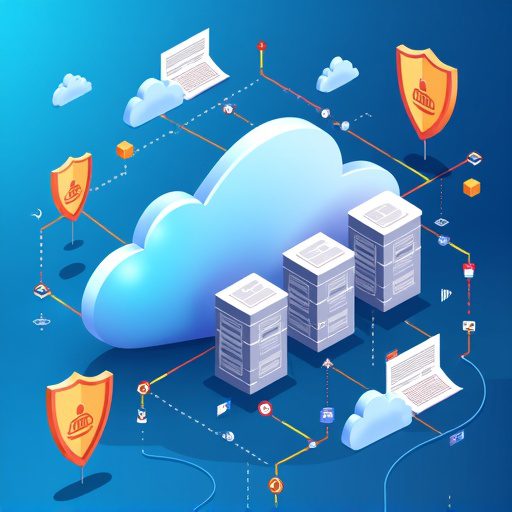
Introduction In today’s data-driven world, businesses and organizations generate vast volumes of data that must be stored securely and cost-effectively. For data that is rarely accessed but must be preserved—such as backups, archives, and compliance records—cloud providers offer specialized storage solutions optimized for long-term retention at low cost. Amazon Glacier, now part of Amazon S3 Glacier, is a premier service designed for this purpose. This comprehensive blog guides readers through the fundamentals of Amazon Glacier, its features, use cases, costs, retrieval options, security, and integration in modern cloud ecosystems. It provides practical insights for enterprises seeking efficient archival strategies while referencing advanced AI, blockchain, and predictive analytics solutions from TechOTD AI Services and TechOTD Blog. What Is Amazon Glacier? Amazon Glacier is a cloud-based, long-term storage service provided by Amazon Web Services (AWS), optimized for cold data—data that is infrequently accessed but must be retained reliably for months or years. It provides ultra-low cost storage, high durability, and robust security, making it ideal for archiving, backups, and compliance. Amazon Glacier is distinct from standard Amazon S3 storage, as it is tailored to lower costs in exchange for longer retrieval times. It uses storage containers called vaults to organize data archives, each archive representing files or datasets stored securely in the cloud. Key Features of Amazon Glacier 1. Cost Efficiency for Long-Term Storage Amazon Glacier offers some of the lowest storage prices in the cloud industry, with costs as low as $0.004 per GB per month, enabling enterprises to archive large datasets affordably compared to on-premises or high-performance cloud storage. 2. High Durability and Availability Provides 99.999999999% durability (11 nines), ensuring data safety. Data is redundantly stored across multiple geographically diverse AWS Availability Zones. Ensures 99.9% availability for accessing archives when needed. 3. Flexible Retrieval Options Understanding that archival data is rarely needed instantly, Amazon Glacier offers tiered retrieval speeds to balance cost and urgency: Expedited Retrieval: Data available in 1–5 minutes (higher cost). Standard Retrieval: Data available in 3–5 hours (moderate cost). Bulk Retrieval: Data available within 5–12 hours (lowest cost). 4. Security and Compliance Data is encrypted in transit and at rest using AES-256 encryption. Offers configurable access policies and integrates with AWS Identity and Access Management (IAM). Supports compliance with standards like GDPR, HIPAA, and others. 5. Unlimited Storage Capacity and Scalability Users can store unlimited archives in multiple vaults per AWS account. Seamlessly scales to meet growing data retention needs. 6. Integration with AWS Ecosystem Works in concert with Amazon S3 lifecycle policies, automating data migration from standard S3 storage to Glacier based on rules. Integration with AWS Storage Gateway, DataSync, and AWS Backup enhances data management workflows. Compatible with AWS monitoring tools like CloudWatch and CloudTrail for governance. How Amazon Glacier Stores and Organizes Data Archives: Individual files or datasets stored. Vaults: Containers that hold archives, analogous to folders. Vaults enable management of access control, notifications, and data lifecycle policies. Each archive is assigned a globally unique ID and can be retrieved or deleted as needed. Use Cases of Amazon Glacier Data Archival for Compliance Organizations in finance, healthcare, and government store regulatory data needing long-term retention securely and cost-effectively. Backup and Disaster Recovery Glacier serves as an affordable, durable backup target for on-premises systems and AWS workloads, ensuring business continuity. Media Archiving Media companies archive raw footage, completed projects, and historical digital assets without incurring high storage costs. Scientific and Research Data Storage Large datasets from experiments or observations are retained for future analysis while managing storage budgets. Cost Considerations and Pricing Storage fees are minimal relative to other AWS storage classes. Retrieval fees vary depending on speed and amount of data. Additional charges apply for data transfer and requests. Lifecycle transition policies help optimize cost by automating data movement. Getting Started with Amazon Glacier Configure vaults through AWS Management Console or AWS CLI. Upload archives programmatically via AWS SDKs or APIs. Define retrieval policies tailored to access frequency. Monitor usage and retrieval metrics with AWS monitoring services. Enhancing Archival Strategies with AI and Analytics Integrating AI and predictive analytics can optimize data lifecycle management in the cloud by forecasting access patterns and automating tiering policies, minimizing cost and maximizing efficiency. Learn about AI-enabled storage management and analytics at TechOTD AI Services and TechOTD Predictive Analytics. Conclusion Amazon Glacier offers a robust, secure, and ultra-cost-effective solution for long-term cloud data archiving and backup. Its guaranteed durability, integrated security controls, flexible retrieval options, and deep integration with the AWS ecosystem make it ideal for enterprises managing growing volumes of cold data. With the addition of AI and analytics-informed data strategies, organizations can further optimize storage costs and compliance with evolving business requirements
app technology comparison

PHP vs Python

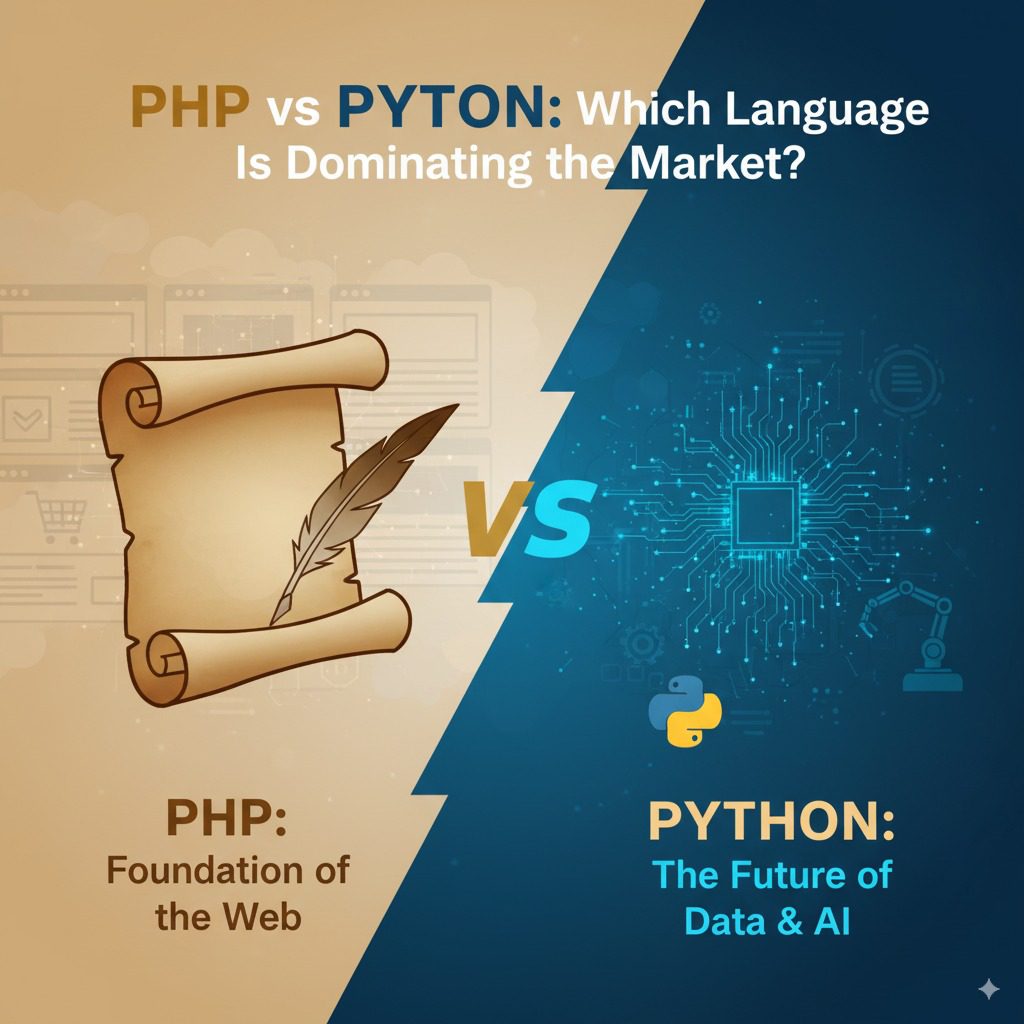
Introduction Choosing the right programming language is a pivotal decision in software development, affecting project outcomes, developer productivity, and long-term maintenance. Among the most widely used programming languages today, PHP and Python spark continuous debates. Both languages have significant market presence, unique strengths, and vibrant communities, but which one is truly dominating the market? This extensive blog dives deep into the technological capabilities, market trends, developer preferences, and industry applications of PHP and Python. It further explores their roles in shaping modern development, backed by insights from AI, blockchain, and analytics innovations featured on TechOTD AI Services and TechOTD Blog. Overview of PHP and Python PHP: The Backbone of Web Development Developed in the mid-1990s, PHP (Hypertext Preprocessor) is a server-side scripting language traditionally used for web development. It powers popular content management systems like WordPress and Drupal and remains a dominant language for building dynamic web pages. Strong integration with HTML and databases. Massive ecosystem of frameworks like Laravel and Symfony. Emphasis on rapid web application development. Python: The Multipurpose Powerhouse Python, created in the late 1980s, has grown into a versatile, general-purpose programming language acclaimed for simplicity and readability. It spans multiple domains including web development, data science, machine learning, automation, and more. Rich standard library and extensive third-party packages. Support for AI, machine learning, data analytics, and more. Popular frameworks like Django and Flask for web. Market Share and Popularity Trends According to industry reports, Python has seen exponential growth over the past decade, emerging as one of the world’s most popular programming languages. PHP retains a strong position in web hosting environments but has experienced slower growth, slightly overshadowed by newer languages. Python ranks consistently high in developer surveys, favored for its ease of learning and broad applicability in AI and analytics fields TechOTD AI Solutions. Technical Strengths and Feature Comparison Feature PHP Python Syntax C-style, relatively straightforward Clean, readable, highly intuitive Web Development Traditionally dominant with LAMP stack Strong with Django, Flask Versatility Mainly web scripting Web, AI, ML, automation, scripting Performance Decent for Web Comparable, with faster implementations possible Learning Curve Moderate Easy for beginners Community & Support Large, mature Diverse, rapidly growing AI & Data Science Limited native support Extensive libraries and frameworks Popular Use Cases CMS, e-commerce, blogging AI, scientific computing, web apps Industry Use Cases Driving Popularity PHP Use Cases Content Management Systems (WordPress, Joomla). E-Commerce platforms (Magento). Small to medium web applications. Legacy system maintenance and integration. Python Use Cases Artificial Intelligence and Machine Learning. Data Science and Analytics. Web Application Development. Scripting and Automation. Emerging blockchain and IoT applications. Developer Experience and Ecosystem PHP offers rich server-side web hosting options and mature tools, but developers sometimes find its ecosystem fragmented. Python’s straightforward syntax attracts beginners and experienced developers alike, fostering faster prototyping and project iterations. Both languages have vibrant communities but Python’s growth is more evident in trending domains like AI and big data Predictive Analytics TechOTD. Market Demand and Career Outlook Python’s versatility creates strong demand across industries from finance to healthcare to tech giants. PHP remains relevant for web-specialized roles, especially in agencies and companies maintaining legacy sites. Demand for Python skills outpaces PHP for new projects, yet PHP skills remain a valuable asset. Integration with Modern Technologies Python leads in AI integration, advanced analytics, and automation, supported by frameworks and cloud services TechOTD AI Blog. PHP is increasingly used alongside JavaScript frameworks for rich web interfaces and integrates with blockchain solutions in niche applications TechOTD Blockchain Integration. Conclusion Python currently holds a dominant position in the global programming landscape, driven by AI, data science, and diverse application domains. Its simplicity, versatility, and growing ecosystem make it a preferred choice for new projects and emerging technologies. PHP remains an indispensable workhorse for web development, powering a significant portion of the internet. It thrives in legacy systems and specialized web applications but faces challenges expanding beyond those niches.

app technology comparison

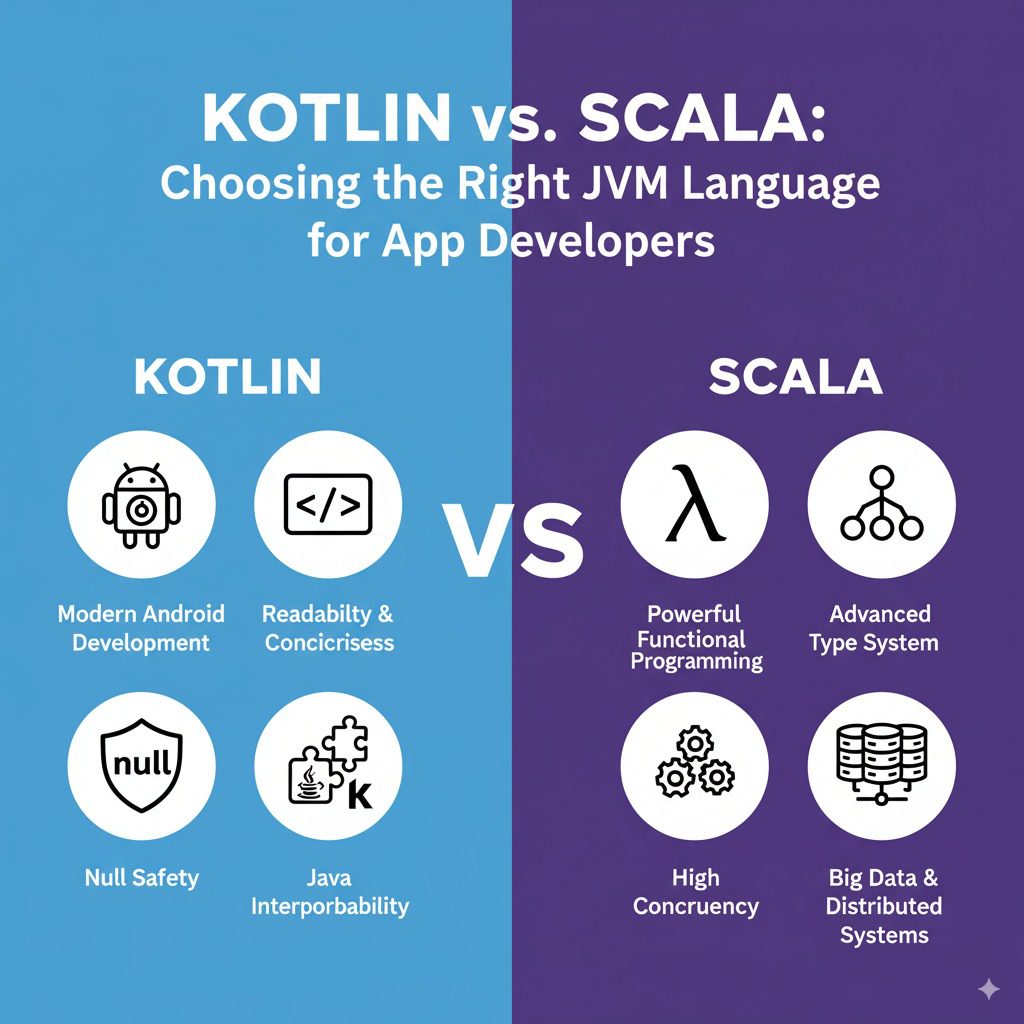
Kotlin vs Scala: Choosing the Right JVM Language for App Developers

Introduction In the diverse and dynamic Java Virtual Machine (JVM) ecosystem, selecting the right programming language is a crucial decision for app developers. Among the premier choices, Kotlin and Scala stand out as powerful JVM languages offering unique features, developer experiences, and application potentials. Businesses and developers often ponder which language better suits their needs—from mobile app development to big data processing and enterprise applications. This extensive blog examines the strengths and considerations of Kotlin and Scala, outlining key differences, industry use cases, community support, and ecosystem compatibility. With integrated insights on advanced technologies such as AI, blockchain, and predictive analytics from TechOTD AI Services, this guide aims to empower app developers and technology leaders to choose the ideal JVM language. Background on JVM Languages The Java Virtual Machine provides a platform-neutral environment enabling various languages to run on multiple operating systems seamlessly. JVM compatibility allows Kotlin, Scala, and Java to interoperate, sharing tooling, libraries, and runtime advantages. Understanding the design philosophy and ecosystem dynamics surrounding Kotlin and Scala is essential for informed decision-making. Learn about AI and JVM language applications at TechOTD AI Blog. Kotlin: Modern, Pragmatic, and Android-Focused Language Overview Developed by JetBrains and officially endorsed by Google for Android, Kotlin is a statically typed language designed to be concise, safe, and fully interoperable with Java. Focus on simplicity and readability. Supports functional programming features alongside object-oriented paradigms. Null safety and coroutines for asynchronous programming improve developer safety and productivity. Strengths of Kotlin Android Excellence: Native support and extensive tooling make Kotlin the preferred choice for Android app development TechOTD Mobile Apps. Concise Syntax: Less boilerplate code than Java, improving maintainability. Strong Tooling Integration: Exceptional support in IntelliJ IDEA, Android Studio, and Gradle. Coroutines: Efficient async programming for responsive UI and backend services. Safety Features: Null safety reduces runtime exceptions. Ideal Use Cases Android application development. Backend services using frameworks like Ktor or Spring Boot. Multiplatform projects targeting iOS, JVM, JavaScript with Kotlin Multiplatform. Data science and scripting through integration with JVM tools. Scala: Powerful, Expressive, and Big Data-Ready Language Overview Scala was created to enrich Java with concise syntax, powerful functional programming capabilities, and advanced type system features, aiming for seamless JVM interoperability. Blends object-oriented and functional programming paradigms. Supports advanced features such as pattern matching, implicits, and macros. Strong presence in big data, distributed computing, and complex backend systems. Strengths of Scala Functional Programming: Modern functional constructs offer flexibility and safety. Rich Type System: Enables precise modeling of domain logic. Big Data Ecosystem: Widely adopted with Apache Spark, Kafka, and Akka for analytics and real-time processing. Conciseness and Expressiveness: Reduces code verbosity with powerful abstractions. Compatibility: Runs on JVM with Java interoperability. Ideal Use Cases Big data and analytics applications. Complex backend systems requiring concurrency and scalability. Distributed systems development. Enterprise applications needing expressive domain modeling. Comparing Kotlin and Scala: A Feature Breakdown Aspect Kotlin Scala Learning Curve Gentler, easier for Java developers Steeper, requires functional paradigm understanding Syntax Complexity Simpler, concise More complex, expressive Performance Comparable to Java Comparable, can optimize with advanced features Functional Programming Supported, but limited Extensive support Android Support Primary JVM language for Android Limited support in Android ecosystem Tooling Fantastic IDE integration Good but occasionally slower builds Community and Ecosystem Rapidly growing, strong in mobile/devops Mature, especially in big data and backend Deployment Size Smaller, better suited for mobile Larger JVM footprints Ecosystem and Community Support Kotlin enjoys strong backing from JetBrains and Google, ensuring ongoing investments and modern tooling TechOTD Blog. Scala has an established base with academic and enterprise support, particularly within big data frameworks like Apache Spark. Both languages benefit from seamless Java interoperability, enabling gradual adoption and integration. Integration with AI, Blockchain, and Predictive Analytics Kotlin, with its modern syntax and multiplatform capabilities, is increasingly used in AI-driven mobile apps and blockchain projects TechOTD AI Services. Scala’s functional programming and big data compatibility make it ideal for building predictive analytics pipelines and blockchain data processing TechOTD Blockchain Integration. Explore predictive analytics development techniques leveraging JVM languages at TechOTD Predictive Analytics. Implementation Best Practices Planning and Skill Assessment Evaluate team expertise and project requirements before choosing. Prototype Development Build small proof-of-concept projects to validate feasibility. Code Quality and Maintenance Prioritize clean, readable, and maintainable code; Kotlin’s simpler syntax may aid this. Testing and CI/CD Leverage JVM testing frameworks and continuous integration for robust delivery. Community Engagement Participate in forums and learn from open-source projects to accelerate learning and troubleshooting. Future Trends in JVM Language Development Kotlin is expanding with multiplatform capabilities supporting iOS, JS, and native apps. Scala continues evolving with Scala 3, simplifying syntax and enhancing language consistency. Both languages are incorporating improved tooling for AI, blockchain, and cloud-native applications. Growing adoption of JVM languages in government, finance, healthcare, and IoT. Conclusion Choosing between Kotlin and Scala depends on project goals, developer expertise, and application needs. Kotlin shines in mobile-first, agile, and straightforward backend apps, while Scala excels in complex, data-intensive, and functional programming domains. Both contribute significantly to modern JVM ecosystems and enable powerful, scalable applications.

React native doveploment

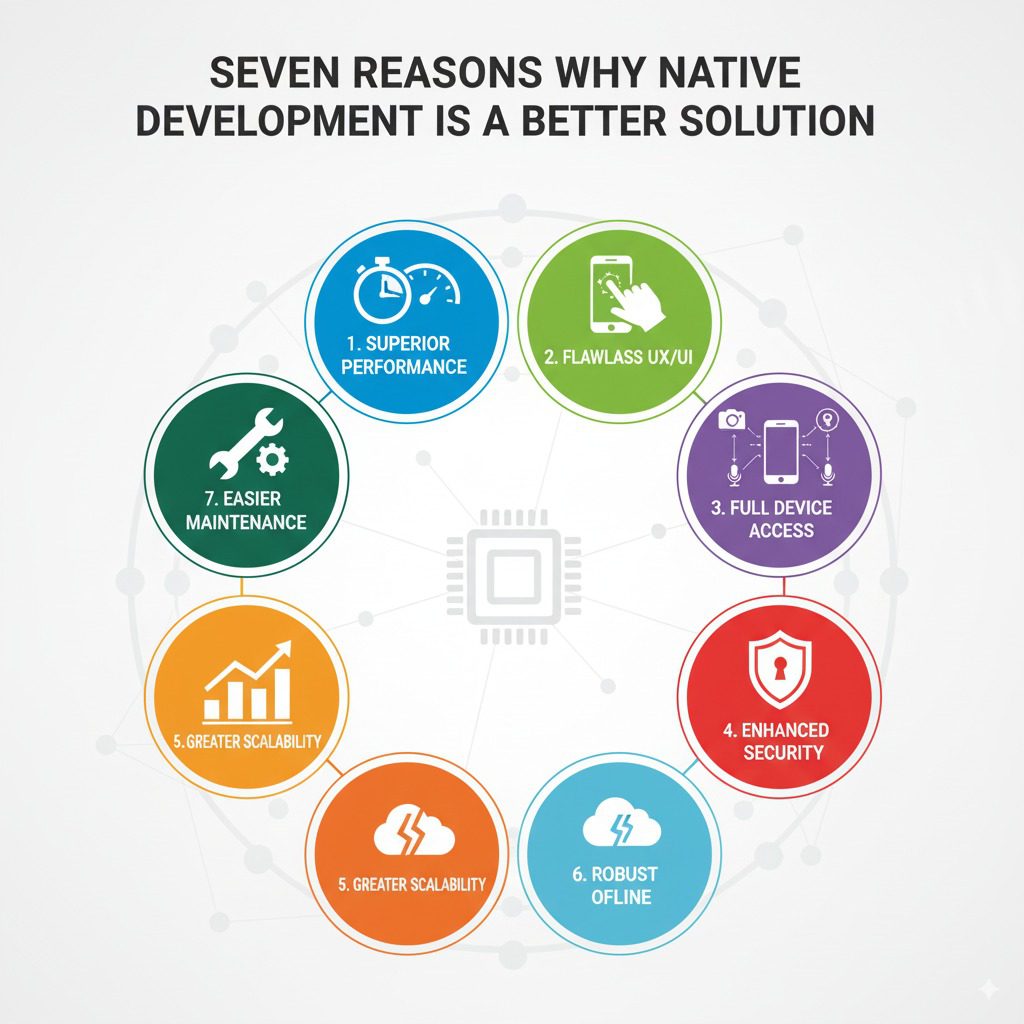
Seven Reasons Why Native Development is a Better Solution

Introduction As the mobile app ecosystem continues to evolve, businesses face a critical decision when choosing app development approaches. Among the various methodologies—native, hybrid, cross-platform—native app development remains the gold standard for delivering superior performance, user experience, and long-term scalability. Native development focuses on building apps specifically for a particular operating system (iOS or Android) using platform-specific languages and tools. This in-depth blog explores seven compelling reasons why native development is the better choice for businesses aiming to create impactful, resilient mobile applications. It integrates insights on AI integration, blockchain, and emerging technologies from TechOTD AI Services, along with best practices and strategic guidance drawn from TechOTD’s vast repository of technology leadership content. Reason 1: Superior Performance and Responsiveness Native apps benefit from direct access to device-specific hardware and OS features, resulting in high-performance apps with smooth animations and quick responsiveness. Native code executes faster than cross-platform or hybrid frameworks that rely on webviews or interpreters. Real-time processing of graphics, gestures, and touch inputs offers a fluid user experience critical for gaming, multimedia, and complex enterprise apps. Explore AI-powered performance optimizations within native applications at TechOTD AI Blog. Reason 2: Access to Device Features and Latest APIs Native development provides full access to device capabilities such as cameras, GPS, biometric sensors, and advanced APIs updated regularly by Apple and Google. This ensures apps leverage new hardware innovations like Face ID, LiDAR, or motion controls immediately without waiting for third-party framework updates. Native apps can utilize platform-specific SDKs and tools for push notifications, payment integration, and security enhancements. Learn about seamless multi-technology integration, including blockchain, at TechOTD Blockchain Integration. Reason 3: Enhanced Security and Compliance Native apps benefit from robust security implementations underpinning mobile operating systems, ensuring compliance with stringent data protection regulations. Developers can implement platform-specific encryption, secure key storage, and biometric authentication. Native apps are less vulnerable to common web-based security threats impacting hybrid apps. For advanced AI-driven security and data privacy, visit TechOTD AI Services. Reason 4: Better User Experience (UX) Alignment Native development ensures adherence to design guidelines and UX principles specific to each platform, enhancing user familiarity and satisfaction. App navigation, gestures, interface elements, and typography are optimized for iOS or Android standards. Native app experiences feel more intuitive and seamless, directly affecting user retention and engagement. Discover how predictive analytics can further tailor UX at TechOTD Predictive Analytics. Reason 5: Scalability and Maintainability While cross-platform tools promise faster initial development, native apps provide long-term scalability, maintainability, and stability. Native codebases facilitate easier debugging, upgrades, and integration of complex features evolving with business needs. Platform-specific updates, SDKs, and emerging technologies can be incorporated without compatibility issues. Understand structured software development approaches from TechOTD How We Work. Reason 6: Superior Offline Capabilities and Connectivity Native apps handle offline scenarios and incremental sync with greater precision using local data storage and background processing capabilities. This is crucial for industries like banking, healthcare, and travel where connectivity may be intermittent. Native apps can better manage push notifications, background tasks, and real-time updates with optimized battery consumption. AI-powered backend optimizations enhancing connectivity experiences are explored on TechOTD AI Blog. Reason 7: Future-Proofing with Emerging Technologies Native platforms serve as primary environments for rapid innovations involving 5G, AR/VR, machine learning, blockchain, and IoT integrations. Early access and native SDK support ensure apps capitalize on new tech leaps for competitive differentiation. Examples include AI-based real-time voice assistants, blockchain-secured transactions, and AR-powered customer experiences. Stay updated with cutting-edge developments at TechOTD Blog. Comparative Insights: Native vs Cross-Platform Aspect Native Cross-Platform/Hybrid Performance High, optimized for platform Moderate, especially for graphics Access to Device Features Full Limited or delayed support Security Platform-grade Increased vulnerabilities UX Quality Platform-consistent, polished Sometimes generic or inconsistent Development Speed Longer per platform Faster for multi-platform Maintenance Easier long-term Can become complex over time Emerging Tech Support Immediate Often delayed Real-World Case Studies and Success Stories Globally recognized enterprises including banks, manufacturers, and retailers choose native development to power critical apps, mitigate risks, and innovate rapidly. AI integrations in native apps have delivered breakthrough improvements in operational efficiency and customer engagement. Explore comprehensive AI and blockchain implementations at TechOTD AI and Blockchain Services. Implementation Best Practices for Native Development Define clear platform-specific requirements and target demographics. Embrace Agile development cycles with continuous testing and feedback. Leverage native performance profiling and analytics tools for iterative improvements. Ensure cross-functional collaboration among UX/UI, developers, and business teams. Plan for ongoing updates to support OS evolution and emerging technologies. Conclusion Choosing native app development is a strategic investment in superior performance, security, and long-term innovation potential. It aligns closely with platform advancements and emerging technologies, helping enterprises deliver exceptional mobile experiences that stand the test of time.

machine learning

Machine Learning in Banking – Use Cases and Implementation Process

Introduction The banking industry is rapidly embracing machine learning (ML) to enhance operational efficiency, manage risk, detect fraud, and deliver personalized customer experiences. As financial institutions face increasing competition, regulatory complexities, and evolving customer expectations, ML innovations are becoming central to banking digital transformation. This comprehensive blog explores prominent use cases of machine learning in banking, its business impact, and the structured implementation process, supported by current insights and examples from leading institutions and fintech innovators. Key Use Cases of Machine Learning in Banking 1. Fraud Detection and Risk Management Fraud detection is arguably the most critical application of ML in banking. Machine learning models analyze millions of transactions in real-time, identifying abnormal patterns and preventing unauthorized activities earlier and more accurately than traditional rule-based systems. Behavioral analytics track anomalies like unusual transaction locations or atypical spending. Models dynamically adapt to emerging fraud tactics without explicit reprogramming. Banks like Citi use ML-driven anomaly detection for enhanced transaction security. 2. Personalized Customer Experiences ML enables hyper-personalization by analyzing customer behavior, preferences, and financial histories to tailor products, services, and recommendations. Robo-advisors provide customized investment advice based on risk tolerance. Targeted financial products improve customer engagement and retention. AI-driven virtual assistants offer real-time support and guidance addressing individual needs. 3. Process Automation and Operational Efficiency ML automates back-office processes such as loan underwriting, document verification, compliance monitoring, and reconciliation, reducing human errors and increasing throughput. Optical Character Recognition (OCR) converts handwritten documents for digital processing. Robotic Process Automation (RPA) combined with ML streamlines regulatory compliance tasks. Automation shortens loan approval cycles and improves customer onboarding. 4. Conversational Banking and Virtual Assistants AI-powered chatbots and intelligent virtual assistants enhance customer service by providing 24/7 support for routine inquiries, transaction assistance, and fraud alerts. Natural Language Processing (NLP) allows human-like interactions. Automations reduce call center load and improve response times. Virtual agents assist with bill payments, balance checks, and card controls. 5. Algorithmic Trading and Investment Analysis ML models identify complex market trends using diverse datasets including news sentiment, social media, and historical prices, enabling data-driven trading strategies. High-frequency trading bots optimize transactional timing and portfolio performance. Predictive analytics improve risk forecasting and asset allocation. Fintech firms leverage advanced ML to outperform traditional trading approaches. Business Impact of Machine Learning in Banking Enhanced Security: ML reduces financial crime impact and regulatory penalties. Improved Customer Loyalty: Personalized offerings increase satisfaction and retention. Operational Cost Savings: Automation lowers manual processing costs. Accelerated Innovation: Agile data-driven decision-making supports new product launches. Increased Competitive Advantage: Banks implementing ML lead fintech innovation. Explore advanced AI solutions fostering risk management and customer personalization at TechOTD AI Services. Implementing Machine Learning in Banking: A Structured Process Step 1: Business Needs Assessment Identify critical banking processes that benefit from ML, such as fraud detection or customer segmentation. Define clear goals and success metrics aligned with strategic priorities. Step 2: Data Collection and Evaluation Gather relevant datasets spanning transactions, customer profiles, operational logs, and external market data. Data quality and completeness are paramount for effective ML models. Step 3: Model Development and Training Develop ML models tailored to use cases, including supervised classification for fraud, clustering for customer segmentation, and NLP for chatbots. Choose algorithms suitable for the complexity and dataset size. Employ techniques such as cross-validation and hyperparameter tuning. Leverage cloud platforms to manage computational demands efficiently TechOTD Cloud Solutions. Step 4: Model Testing and Validation Rigorous testing using historical and simulated data ensures models meet accuracy, precision, and fairness criteria before deployment. Step 5: Deployment and Integration Deploy ML models into banking systems, integrated with transactional platforms, CRM, and compliance tools for streamlined workflows. Use APIs for system communication. Ensure real-time inference capability for critical applications. Step 6: Monitoring and Maintenance Continue monitoring model performance, retraining with new data and adapting to evolving patterns such as new fraud tactics or regulatory changes. Challenges and Considerations Data Privacy and Security: Ensuring compliance with regulations like GDPR while leveraging sensitive customer data. Model Interpretability: Addressing regulatory needs for transparent, explainable AI decisions. Legacy Systems Integration: Bridging newer ML systems with traditional banking infrastructure. Organizational Readiness: Cultivating skilled teams and fostering ML adoption culture. Learn about overcoming challenges with expert consulting at TechOTD How We Work. Future Trends in Machine Learning for Banking Agentic AI: Autonomous AI agents driving higher-level decision making. Federated Learning: Enhancing privacy by training models collaboratively without sharing raw data. Continual Learning: Models that adapt continuously with minimal human intervention. Cross-Industry Data Integration: Leveraging diverse data sources for holistic financial insights. Enhanced NLP Capabilities: More sophisticated conversational banking and sentiment analysis. Stay updated on AI and ML advances at the TechOTD Blog. Conclusion Machine learning is revolutionizing banking by enabling data-driven risk management, operational efficiency, and personalized customer journeys. Financial institutions that strategically implement ML processes and technologies stand poised to lead industry innovation, enhance profitability, and improve regulatory compliance.

Mobile App Development

The Business Benefits of Choosing Aerospike Database

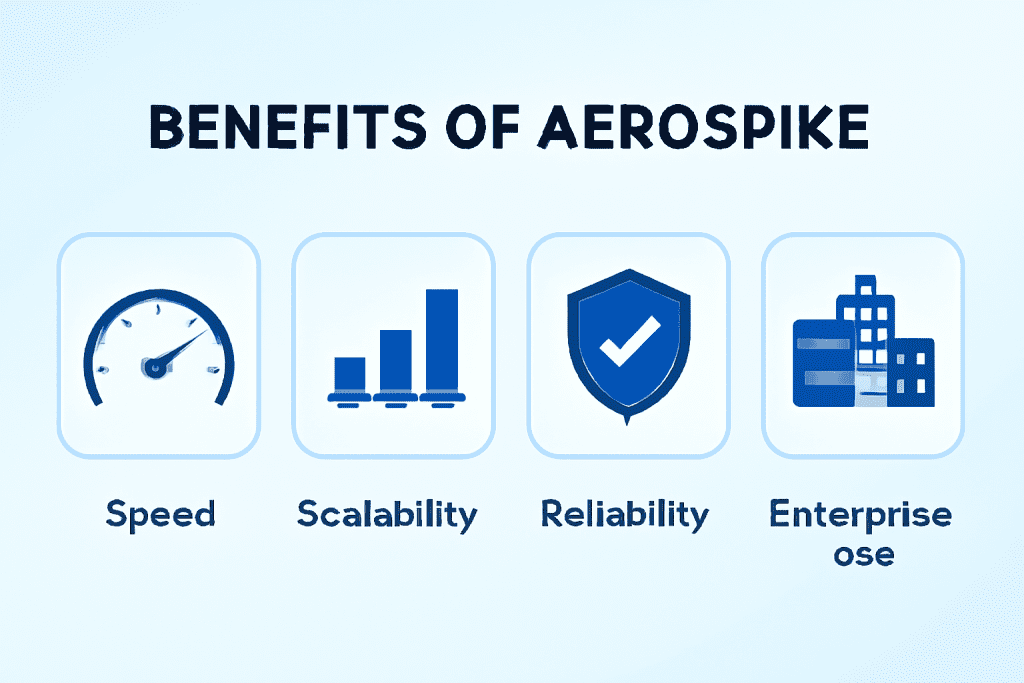
Introduction In today’s data-driven business landscape, organizations demand databases that deliver high performance, scalability, and reliability while processing vast volumes of real-time data. Aerospike, a modern NoSQL distributed database, excels in these areas, providing enterprises the foundation they need to innovate, optimize operations, and enhance customer experiences. This comprehensive blog explores the multifaceted business benefits of choosing Aerospike Database. It discusses key technical advantages, diverse industry use cases, and how Aerospike integrates with emerging technologies like AI, blockchain, and predictive analytics. Strategic backlinks to TechOTD AI Services and other relevant TechOTD content enrich the discussion for readers seeking to elevate their technology strategies. Why Aerospike? Key Business Advantages 1. Ultra-High Performance and Low Latency Aerospike is engineered for real-time, high-speed transactions at scale. Its Hybrid Memory Architecture leverages both RAM and persistent flash storage, dramatically reducing latency and enabling billions of transactions per day. Businesses can deliver instant personalization, fraud detection, and dynamic pricing, critical in sectors like retail, ad tech, and finance. Explore AI-driven real-time personalization and fraud prevention strategies at TechOTD AI Services. 2. Extreme Scalability and Reliability Aerospike’s distributed architecture supports automatic sharding and replication across multiple nodes and data centers, ensuring horizontal scalability and high availability without performance degradation. This reliability is vital for applications requiring 99.999% uptime such as telecom, gaming, and banking. Real-world case studies are available via TechOTD Blog. 3. Simplified Data Architecture By combining key-value and document store capabilities, Aerospike simplifies data models and reduces infrastructure complexity. This simplification accelerates development cycles and reduces operational costs and risks. Learn about lean and agile development in mobile apps at TechOTD Mobile Apps. 4. Enterprise-Grade Security and Compliance Aerospike includes multi-layer security features such as encryption at rest/in transit, access control, and audit logging, supporting regulatory requirements like GDPR and HIPAA. Enhanced data security integrates seamlessly with blockchain technologies to ensure immutable, secure transactions TechOTD Blockchain Integration. 5. Native Cloud and Hybrid Deployment Flexibility Aerospike supports deployment across public clouds, private clouds, and on-premises environments, providing flexibility aligned with IT strategy and regulatory mandates. Hybrid cloud architectures enable the best of scalability and control, a focus area covered extensively by TechOTD Cloud Blogs. Industry Use Cases Empowered by Aerospike   Retail & E-Commerce: Real-Time Personalization and Inventory Management Aerospike powers instant personalization at scale by managing user sessions and product catalogs with minimal latency. Faster inventory updates and order processing improve customer satisfaction and operational efficiency. Financial Services: Fraud Detection and Risk Analytics Aerospike enables ultra-fast transaction processing and real-time anomaly detection, reducing fraud and credit risks. AI-driven analytics running on Aerospike data accelerate decision-making TechOTD Large Language Models in Finance. Ad Tech: Real-Time Bidding and Audience Segmentation Aerospike’s capability to handle massive read/write loads supports real-time bidding platforms and audience analytics, increasing ad revenue and precision. Telecommunications: Session Management and Network Optimization High-availability and low-latency session data management improve call quality and subscriber experience. Gaming & Entertainment: Leaderboards and In-Game Analytics Real-time game state updates and analytics tracking enable responsive multiplayer experiences and personalized gameplay. Integration with AI, Blockchain, and Predictive Analytics Aerospike integrates seamlessly with AI and machine learning pipelines, enabling fast data ingestion and retrieval critical for training and inference at scale. For comprehensive AI integration strategies, see TechOTD AI Services. Blockchain enhances Aerospike’s secure data framework for use cases requiring transparency and trust TechOTD Blockchain Integration. Predictive analytics leverage Aerospike’s performance to deliver timely insights, enhancing operational decision-making TechOTD Predictive Analytics. Operational Excellence and Developer Productivity Aerospike comes with advanced management tools, monitoring, and automation features that reduce downtime and manual effort. Its powerful query language and APIs accelerate developer productivity, supporting agile methodologies TechOTD Mobile App Development. Challenges and Mitigation Learning Curve: Adopting new database technologies requires training, but developer-friendly resources and consulting can ease transition TechOTD How We Work. Integration Complexity: Aerospike integrates with popular data platforms and analytics tools to ease ecosystem compatibility. Future Outlook As edge computing and 5G expand, Aerospike’s low latency and edge adaptability position it for emerging workloads. Continued AI and blockchain feature integration will boost Aerospike’s role in next-gen applications. Stay updated with TechOTD insights on evolving technology at TechOTD Blog. Conclusion Choosing Aerospike Database offers enterprises a high-performance, scalable, and reliable platform crucial for modern data-intensive applications. Its unique architecture supports business agility, innovation, and operational excellence across sectors. Key Benefits Summary: Real-time, low-latency data processing Unmatched scalability and availability Simplified data models and reduced complexity Robust security compliance and blockchain synergy Hybrid and cloud deployment flexibility Proven multi-industry use cases and AI integration

Cloud, Uncategorized

Unleashing the Potential of Cloud for the Insurance Industry

Introduction The insurance industry is undergoing a radical transformation fueled by digital technologies, with cloud computing playing a pivotal role. The cloud enables insurance companies to modernize IT infrastructure, enhance customer experience, boost operational efficiency, and accelerate innovation. As insurers strive to meet rising customer expectations, regulatory demands, and growing data complexities, embracing cloud solutions becomes crucial to stay competitive. This blog explores the profound impact of cloud computing on the insurance sector, detailing benefits, use cases, challenges, and future trends. Throughout the discussion, it integrates relevant insights on artificial intelligence, blockchain, predictive analytics, and digital transformation from the TechOTD AI Services and TechOTD Blog resources. The Digital Imperative in Insurance Traditional insurance models are heavily reliant on legacy systems that are costly to maintain and rigid in meeting new consumer and market demands. Digital disruption has dictated an urgent need to adopt scalable, flexible, and agile IT architectures — and cloud computing provides this foundation. Insurers face increasing pressures to: Deliver personalized, on-demand services Analyze vast amounts of customer and risk data Accelerate product development and go-to-market cycles Ensure compliance and data security Optimize costs Cloud computing answers these imperatives with on-demand computing power, storage, and access to advanced technologies such as AI and blockchain. Core Benefits of Cloud Computing for Insurance 1. Scalability and Flexibility Cloud platforms allow insurers to scale infrastructure dynamically based on demand, supporting fluctuating workloads like claims processing during disasters or new product launches without expensive over-provisioning. 2. Cost Efficiency By shifting to cloud models, insurance companies reduce capital expenditure and operations costs related to on-premises infrastructure, benefiting from pay-as-you-go pricing and reduced hardware investments. 3. Enhanced Data Analytics and AI Integration Cloud environments enable integration with AI-driven analytics tools that process big data for risk assessment, fraud detection, and customer insights—boosting predictive capabilities and personalized insurance offerings. Explore advanced AI solutions tailored for insurance at TechOTD AI Services. 4. Improved Customer Experience Cloud-powered customer portals, mobile apps, and chatbots offer real-time access to policy information, claims status, and personalized support, enhancing satisfaction and loyalty. Relevant AI-driven customer journey strategies can be found at TechOTD Seamless AI Customer Journeys. 5. Regulatory Compliance and Security Cloud service providers increasingly offer robust security, encryption, and compliance certifications that help insurers meet stringent data protection regulations in diverse markets. 6. Faster Innovation and Time to Market Cloud platforms enable rapid development and deployment pipelines that accelerate innovation, allowing insurers to stay ahead in competitive landscapes through agile product launches. Transformative Use Cases in Insurance Cloud-Based Claims Management Digitizing claims on the cloud facilitates automated workflows, real-time status updates, faster approvals, and fraud detection through integrated AI analytics. Risk Modeling and Underwriting Cloud-powered big data analytics enable insurers to better predict and price risk dynamically by ingesting multiple data sources across geographic and demographic segments. Customer Self-Service Portals and Mobile Apps Cloud-hosted portals provide centralized, secure access to insurance products and services, empowering customers digitally while reducing service costs. Insights on building effective mobile apps are detailed at TechOTD Mobile Apps. Blockchain for Policy Management and Fraud Prevention Combining blockchain with cloud infrastructure supports tamper-proof policy records, secure transactions, and enhanced transparency in claims processing. Detailed exploration at TechOTD Blockchain Integration. Predictive Analytics to Combat Fraud and Improve Retention Cloud data platforms integrated with predictive analytics software help proactively identify suspicious claims and optimize customer retention strategies. Challenges and Strategic Solutions Data Migration Complexity Moving legacy data to the cloud is complex but can be simplified through phased migration strategies and cloud-native redesigns (see the generated image above). Security Concerns Insurance companies need layered security approaches combining cloud vendor safeguards, encryption, access controls, and continuous monitoring. Regulatory Compliance Collaborating with cloud providers offering region-specific compliance certifications and conducting rigorous audits mitigates regulatory risks. Cultural and Organizational Change Driving cloud adoption requires cultural shifts towards agility, continuous learning, and DevOps practices supported by leadership (see the generated image above). For structured digital transformation, explore TechOTD How We Work. Future Trends in Cloud Computing for Insurance Increased Adoption of AI and Machine Learning: More cloud-based AI solutions will enhance automation and personalization. Expansion of Hybrid and Multi-Cloud Strategies: Insurers will balance private and public clouds for optimal performance and security. Greater Integration of Blockchain: Enhancing trust, transparency, and efficiency in insurance processes. Focus on Edge Computing: Combining cloud and edge to manage IoT-enabled insurance use cases such as telematics and connected home devices. Cloud-Native Application Development: Accelerating innovation cycles through microservices architecture and containerization. Stay updated on technology trends at TechOTD Blog. Key Takeaways: Cloud enables scalable, agile, and cost-effective IT modernization. AI and predictive analytics supercharge data-driven decisions. Blockchain enhances security, transparency, and trust. Multi-cloud and edge architectures balance innovation and regulation. Enterprise cultural adoption is critical for successful cloud transformation. Conclusion Cloud computing is dramatically reshaping the insurance industry by delivering scalable infrastructure, enhanced analytics capabilities, improved customer experiences, and cost efficiencies. Insurers who leverage the cloud alongside AI, blockchain, and edge technologies are best positioned to innovate, adapt, and lead in a digital-first market.

Digital Transformation

Why Mobile Edge Computing is Critical for Enterprises in the 5G Era

Introduction The arrival of 5G wireless technology is revolutionizing enterprise connectivity, promising multi-gigabit speeds, ultra-low latency, and support for billions of connected devices. However, to truly unlock the transformative potential of 5G, enterprises must integrate Mobile Edge Computing (MEC) into their digital infrastructure. 5G edge computing moves computation and data processing closer to where data is generated—at the “edge” of the network—enabling faster response times, greater security, and empowering real-time business innovation. Explore how AI-powered Mobile Edge Computing solutions can transform business processes at TechOTD AI Services. What is Mobile Edge Computing (MEC)? Mobile Edge Computing (MEC) is a network architecture that brings computing, storage, and analytics capabilities out of centralized data centers and closer to the physical location of devices and users. This proximity accelerates data processing and decision-making—critical in the 5G edge computing era where speed, responsiveness, and high-bandwidth are no longer optional but foundational to enterprise competitiveness. The Symbiosis of 5G and Mobile Edge Computing Ultra-low Latency: 5G networks promise sub-millisecond latency. Mobile Edge Computing (MEC) is essential for achieving these targets since only local processing can deliver true real-time responses for autonomous vehicles, telemedicine, and AR/VR solutions. High Bandwidth Utilization: With 5G’s massive data throughput, 5G edge computing prevents bottlenecks and network congestion. Reliability & Resilience: MEC in 5G networks reduces reliance on continual cloud connectivity, making operations more robust against outages and delivering superior quality of service. Key Benefits of Mobile Edge Computing for Enterprises Real-Time Data ProcessingProcessing data locally enables ultra-fast analytics required for applications like predictive maintenance, intelligent video surveillance, and automated supply chains. ✅ Example: A smart factory uses 5G edge computing with MEC to process IoT sensor data, optimizing equipment performance and reducing downtime—without sending all data to the cloud. Enhanced Security & PrivacyBy handling sensitive data close to its source, Mobile Edge Computing minimizes interception risks. Industries like healthcare and finance benefit from localized compliance and data residency. Reduced Network Congestion & CostsOffloading computation from central servers to the edge decreases backhaul requirements, making MEC in 5G both cost-efficient and scalable. Greater Scalability & FlexibilityMobile Edge Computing enables modular deployment of enterprise apps, scaling easily across retail, logistics, and smart cities. Industry Use Cases of Mobile Edge Computing Manufacturing: Smart factories rely on 5G edge computing for predictive analytics, digital twins, and real-time equipment monitoring. Retail: Edge-enabled personalization, AR shopping, and real-time customer engagement enhance user experience. Healthcare: Secure telemedicine, real-time imaging, and patient monitoring with Mobile Edge Computing in healthcare. Logistics & Transportation: Smart fleet management and navigation powered by MEC and 5G. Smart Cities: IoT-driven traffic management, safety, and environmental monitoring with edge computing in 5G networks. Conclusion Mobile Edge Computing (MEC) is critical for enterprises in the 5G era because it enables: Ultra-low latency, reliable, and scalable real-time applications Enhanced data security, privacy, and compliance Cost-effective handling of massive, distributed data flows Seamless integration with AI, IoT, and blockchain technologies Robust digital transformation strategies powering growth and innovation

Restaurent

Boosting Customer Loyalty with Restaurant Mobile Apps: A Complete Guide

Introduction In today’s competitive restaurant landscape, customer loyalty is a critical driver of sustained success. Loyal customers return more frequently, spend more per visit, and become brand advocates. One of the most effective ways for restaurants—whether small neighborhood eateries or large chains—to boost customer loyalty is by investing in mobile apps. These apps provide convenient, personalized, and engaging experiences that keep customers coming back. This comprehensive guide explores how restaurant mobile apps elevate loyalty programs, enhance customer engagement, and deliver measurable business outcomes. It covers strategic app features, technology integrations, real-world best practices, and future trends. For innovative AI-powered personalization strategies, explore TechOTD AI Services. The Importance of Customer Loyalty in Restaurants Loyal customers drive a significant portion of revenue for restaurants; studies show that acquiring new customers costs five times more than retaining existing ones. Mobile apps enable direct communication with customers, personalized rewards, and seamless ordering—cornerstones of modern loyalty initiatives. Explore how AI enhances customer journeys and loyalty at TechOTD Seamless AI Customer Journeys. Core Benefits of Mobile Apps for Loyalty Building Direct Control Over Customer Engagement By owning their mobile app, restaurants can bypass third-party platforms, reducing fees and controlling branding and messaging. Personalized Rewards and Offers Apps enable tailored loyalty programs using AI-driven insights to offer rewards aligned to customer preferences and behavior. Learn about AI predictive analytics aiding such personalization at TechOTD Predictive Analytics. Convenience and Frictionless Experience Mobile ordering, payment, and delivery integration reduce friction and increase repeat visits. Data-Driven Marketing and Optimization Apps collect valuable data for analytics, enabling data-backed decision-making in menu, promotions, and operations. Essential Loyalty Features for Restaurant Mobile Apps Reward Points and Tiered Programs Customers earn points on every purchase, with higher tiers unlocking exclusive perks. Personalized Notifications and Offers Push notifications tailored through behavioral data increase app engagement and repeat orders. Seamless Mobile Ordering and Payments Integrated secure payment gateways and easy reordering streamline the customer journey. Referral Programs Encourage users to invite friends with incentives, expanding customer reach. Feedback and Reviews Allow customers to provide feedback directly to improve service and build trust. Social Media Integration Share rewards, special events, and user-generated content easily via social platforms. Technology Innovations Driving Loyalty Apps Artificial Intelligence AI enables hyper-personalized offerings, smarter chatbots, and predictive customer insights. Blockchain Blockchain technology assures transparent and tamper-proof loyalty points management and secure transactions, reducing fraud risks. Learn how blockchain optimizes business processes at TechOTD Blockchain Blog. Predictive Analytics Predict customer lifetime value, churn risk, and tailor retention campaigns for maximum effectiveness. Mobile Payment Innovations Integration with digital wallets and contactless payments accelerates checkout and improves user experience. Building a Successful Loyalty App: Best Practices Understand Your Customer Base Leverage data and surveys to design rewards that resonate. Simple and Transparent Rewards Ensure customers easily understand how to earn and redeem points. Engage Through Gamification Introduce levels, badges, challenges, and leaderboards for fun and motivation. Omnichannel Integration Seamlessly connect app loyalty with in-store and online experiences. Continuous Feedback and Improvement Use app analytics and customer feedback for ongoing enhancements. For expert strategies and implementation, explore TechOTD How We Work. Case Studies: Loyalty Success with Mobile Apps Chain Restaurant A increased repeat customer sales by 40% post app launch. Local Café B grew its user base by 60% using targeted push notifications and rewards. Delivery Service Provider C improved delivery retention rates through app-based incentives. Challenges and Solutions User Adoption Encourage downloads with sign-up incentives and integrate app promotion in every touchpoint. Technical Scalability Choose the right tech stack for seamless scaling and integration with POS systems. Read about selecting mobile development frameworks at TechOTD React Native vs Swift. Data Privacy and Security Implement rigorous security measures and transparent privacy policies to build trust. Balancing Cost and ROI Begin with a Minimum Viable Product (MVP) focused on core loyalty features and iterate. Future Trends in Restaurant Loyalty Apps Voice-activated ordering and loyalty management Augmented reality experiences for in-store engagement AI-driven dynamic pricing and personalized menus Integration with smart home devices and IoT Discover emerging AI trends impacting industries at TechOTD AI Blog. Key Takeaways: Loyalty drives revenue and reduces customer acquisition costs. Mobile apps enable robust, data-driven loyalty programs. AI and blockchain enhance personalization and security. Strategic app development and marketing maximize adoption. Continuous innovation is vital for sustained success. For tailored mobile app development services and AI-powered solutions, visit TechOTD Mobile Apps. Conclusion Mobile apps are indispensable tools for boosting customer loyalty in today’s restaurant market. They empower restaurants with direct customer relationships, personalized engagement, and operational efficiencies needed to thrive.

Restaurent

Why Small Restaurants Should Invest in Mobile Apps – Not Just Big Chains

Introduction In the digital age, the restaurant industry has experienced a paradigm shift. While big chains have long embraced mobile apps for ordering, loyalty programs, and personalized marketing, small restaurants often overlook this powerful tool due to misconceptions about cost, complexity, or necessity. However, investing in a mobile app is no longer a luxury reserved for large brands—it is a strategic imperative that can level the playing field and catalyze growth for small eateries. This blog explores why mobile apps are crucial for small restaurants, the benefits they unlock, how mobile technology drives customer engagement and operational efficiency, and best practices for building apps tailored to small business needs. For cutting-edge technological integrations, explore TechOTD AI Services. Why Mobile Apps Matter for Small Restaurants Changing Consumer Behavior Today’s customers increasingly prefer mobile ordering and digital engagement. According to studies, over 60% of food orders are now made through mobile devices, with consumers valuing convenience, speed, and personalized experiences. Small restaurants that fail to capitalize on this shift risk losing market share to competitors with digital tools. Explore how personalized customer journeys powered by AI improve retention: seamless AI customer experiences. Direct Customer Engagement and Loyalty Mobile apps enable small restaurants to engage customers directly, bypassing third-party aggregators who charge high fees. Apps facilitate loyalty programs, push notifications for promotions, and personalized recommendations, encouraging repeat business and brand affinity. Businesses leveraging AI and predictive analytics for targeted marketing see significant ROI gains—learn more at TechOTD Predictive Analytics. Competitive Differentiation Mobile apps give small eateries a professional edge, enabling seamless ordering, real-time updates, and engaging user experiences that rivals large chains. A custom app reflects a commitment to customer satisfaction and modern convenience. TechOTD’s mobile app services specialize in tailored solutions for SMBs. Core Benefits of Mobile Apps for Small Restaurants Increased Convenience and Order Accuracy Apps streamline the ordering process, minimizing errors common in phone orders, and letting customers customize their meals easily. Operational Efficiency Automating orders through an app reduces staff workload, allowing teams to focus on food preparation and service quality. Enhanced Marketing Capabilities Restaurants can target customers based on preferences, order history, and location, executing high ROI campaigns with push notifications and special offers. Data-Driven Insights Mobile apps capture valuable customer data, enabling analytics that drive menu optimization, sales forecasting, and personalized experiences. Features Essential for Small Restaurant Apps Easy Ordering System with customizable menus Loyalty and Rewards Programs Multiple Payment Gateways including digital wallets Real-time Order Tracking Push Notifications and Offers Table Reservations and Waitlist Management User Reviews and Feedback Social Media Integration Offline Mode for Areas with Poor Connectivity Overcoming Concerns and Challenges Cost and Development Concerns With platforms leveraging React Native and Flutter, and scalable cloud services like Azure and AWS, the cost and complexity of app development for small businesses have drastically reduced. For detailed insights on choosing mobile frameworks, see React Native vs Swift guide. User Adoption Effective marketing, seamless UX, and incentives drive app downloads and engagement. Small restaurants should combine their app strategy with in-store promotions and digital marketing. Maintenance and Scaling Partnering with expert service providers, like those featured on TechOTD How We Work, ensures apps remain performant and up to date. Case Studies: Small Restaurant Success Stories with Apps Small eateries worldwide have reported increased revenue, customer satisfaction, and operational improvements after launching apps. A local café increased repeat orders by 35% through an app-based loyalty program. A family-owned pizzeria streamlined delivery and pickup orders, reducing wait times by 25%. The Future: AI and Blockchain in Restaurant Apps AI-driven personalized menus, chatbots for customer service, and dynamic pricing models improve customer engagement. Blockchain technologies optimize supply chains and payment security. Discover how blockchain is revolutionizing business processes at TechOTD Blockchain Integration. Explore AI innovations powering business transformation at TechOTD AI Blog. Key Points: Mobile ordering trends increasingly favor app usage. Mobile apps foster direct engagement and loyalty. Cost-effective technologies reduce app development barriers. Data analytics unlock growth opportunities. AI and blockchain will further transform the restaurant experience. For expert help in building and scaling your restaurant’s mobile app, explore TechOTD mobile app solutions. Conclusion Mobile apps offer small restaurants far-reaching benefits: enhanced customer engagement, operational efficiency, and competitive advantage. Today’s technology ecosystem makes building and maintaining apps accessible and affordable for SMBs looking to embrace digitalization. Key Points: Mobile ordering trends increasingly favor app usage. Mobile apps foster direct engagement and loyalty. Cost-effective technologies reduce app development barriers. Data analytics unlock growth opportunities. AI and blockchain will further transform the restaurant experience. For expert help in building and scaling your restaurant’s mobile app, explore TechOTD mobile app solutions.

How would you like me to respond?

Select a personality for your AI assistant

Normal
Happy
Sad
Angry

Your selection will affect how the AI assistant responds to your messages

Chat Assistant

Let's discuss your project!

Hear from our clients and why 3000+ businesses trust TechOTD

Tell us what you need, and we'll get back with a cost and timeline estimate

Scroll to Top