Industry 4.0

Artificial Intelligence, Educational Technology

How Edge AI Is Powering the Next Generation of Smart Devices

How Edge AI Is Powering the Next Generation of Smart Devices Artificial Intelligence has become one of the most influential technologies of the modern digital era. Over the past few years, AI applications have evolved from cloud-based systems to more efficient and responsive solutions capable of operating directly on devices. This shift has given rise to Edge AI, a transformative technology that is changing the way smart devices function and interact with users. From smartphones and smart speakers to industrial robots and healthcare monitoring systems, Edge AI is enabling devices to process information locally instead of relying entirely on remote cloud servers. This approach is making devices faster, smarter, more secure, and capable of delivering real-time experiences that were previously difficult to achieve. As businesses and consumers continue to demand intelligent technologies that provide instant responses while protecting sensitive data, Edge AI is emerging as a critical component of next-generation smart devices. Understanding how this technology works and why it matters can help organizations and individuals prepare for the future of connected technology. What Is Edge AI? Edge AI refers to the deployment of artificial intelligence algorithms directly on hardware devices located at the “edge” of a network. Instead of sending data to cloud data centers for processing, the device itself performs AI computations locally. The term “edge” refers to devices positioned close to where data is generated. Examples include: Smartphones Smart cameras Smartwatches Industrial sensors Autonomous vehicles Medical devices Smart home appliances Retail monitoring systems By integrating AI capabilities directly into these devices, organizations can significantly reduce the need for constant cloud communication while improving performance and responsiveness. For example, when a smartphone uses facial recognition to unlock instantly, much of the processing happens directly on the device rather than being sent to a remote server. This local processing is a practical example of Edge AI in action. Why Edge AI Is Gaining Momentum Several technological developments are driving the rapid adoption of Edge AI across industries. The growth of Internet of Things (IoT) devices has resulted in billions of connected systems generating enormous amounts of data every day. Sending all this information to centralized cloud environments can create bandwidth limitations, increase costs, and introduce delays. At the same time, consumers have become more concerned about privacy and data security. Organizations are looking for ways to process information without exposing sensitive data to external servers. Advancements in AI chips, neural processing units (NPUs), and specialized hardware accelerators have also made it possible to run sophisticated AI models on compact devices with limited power consumption. These factors have created the ideal environment for Edge AI to flourish. How Edge AI Works Edge AI combines machine learning models with specialized hardware capable of performing complex calculations efficiently. The process generally follows these steps: Data Collection Sensors, cameras, microphones, and connected components collect information from the surrounding environment. Local Processing The device processes the data using embedded AI models. Instead of transmitting raw data to a cloud server, the analysis occurs locally. Decision Making Based on the processed information, the AI model makes decisions or predictions in real time. Action Execution The device performs the necessary action immediately, such as sending alerts, adjusting settings, recognizing objects, or responding to voice commands. Optional Cloud Synchronization Some devices periodically connect to cloud platforms for updates, training improvements, or data backups while keeping most real-time operations local. This architecture dramatically improves efficiency while reducing dependency on internet connectivity. Key Benefits of Edge AI The increasing popularity of Edge AI is largely driven by the advantages it offers over traditional cloud-based AI systems. Faster Response Times One of the biggest advantages of Edge AI is reduced latency. When data must travel to a cloud server and back, delays can occur. In applications such as autonomous vehicles or industrial automation, even a few milliseconds can be critical. By processing data directly on the device, Edge AI delivers immediate responses that improve user experiences and operational efficiency. Enhanced Privacy and Security Data privacy has become a major concern for businesses and consumers. Edge AI helps address these concerns by keeping sensitive information on the device rather than transmitting it across networks. For example: Medical devices can analyze patient data locally. Security cameras can identify threats without storing footage in the cloud. Smartphones can process biometric information without external servers. This approach reduces exposure to cyber threats and helps organizations comply with data protection regulations. Reduced Bandwidth Usage Transmitting large amounts of data to cloud platforms requires significant network resources. Edge AI minimizes bandwidth consumption because only relevant insights or summarized information need to be transmitted. This capability is particularly valuable in remote environments where network connectivity may be limited or expensive. Improved Reliability Many smart devices operate in environments where internet connectivity is inconsistent. Since Edge AI functions locally, devices can continue working even when network access is unavailable. This reliability is essential for industries such as manufacturing, transportation, healthcare, and defense. Lower Operational Costs Cloud computing costs can increase rapidly as organizations process larger volumes of data. By performing AI tasks at the edge, companies can reduce cloud storage, bandwidth expenses, and server processing requirements. This cost efficiency makes AI deployment more accessible for businesses of all sizes. Edge AI in Smartphones Modern smartphones are among the most common examples of Edge AI. Manufacturers increasingly incorporate AI accelerators that enable advanced features such as: Facial recognition Voice assistants Real-time translation Photography enhancement Predictive text suggestions Battery optimization Spam call detection Because these capabilities run directly on the device, users experience faster performance while maintaining greater privacy. The latest generation of smartphones continues to demonstrate how Edge AI can improve everyday digital experiences without relying heavily on cloud infrastructure. Smart Homes Powered by Edge AI The smart home ecosystem is rapidly evolving thanks to Edge AI technologies. Smart devices can now make intelligent decisions locally rather than waiting for cloud instructions. Examples include: Smart Security Systems AI-powered cameras can detect suspicious activities, recognize faces, and differentiate between
Manufacturing, Technology

Smart Factories and Industry 4.0: The Future of Manufacturing Operations

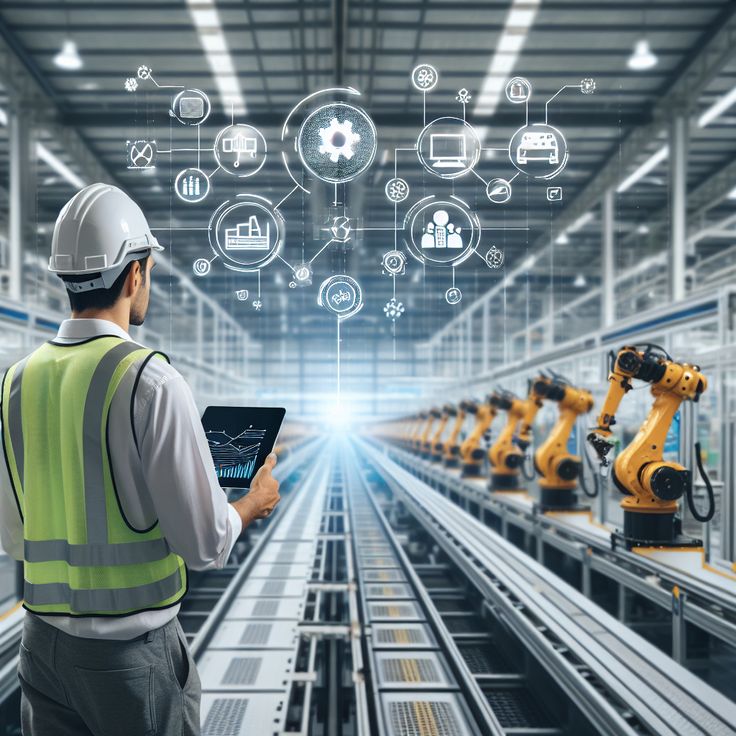
Smart Factories and Industry 4.0: The Future of Manufacturing Operations Manufacturing has always been a driving force behind economic growth and industrial development. From the steam-powered machines of the First Industrial Revolution to the computer-controlled production systems of the modern era, manufacturing has continuously evolved to meet changing market demands. Today, the industry is experiencing another major transformation known as Industry 4.0, a technological revolution that is redefining how factories operate, produce goods, and interact with supply chains. At the heart of this transformation lies the concept of the smart factory. Unlike traditional manufacturing facilities that rely heavily on manual monitoring and isolated systems, smart factories use interconnected technologies such as Artificial Intelligence (AI), the Internet of Things (IoT), cloud computing, robotics, and advanced analytics to create highly intelligent and automated production environments. As global competition intensifies and customer expectations continue to rise, manufacturers are under increasing pressure to improve efficiency, reduce costs, enhance product quality, and accelerate innovation. Smart factories provide a solution by enabling real-time visibility, predictive decision-making, and seamless communication across the entire production ecosystem. The combination of Industry 4.0 technologies and smart manufacturing practices is not simply improving existing processes; it is fundamentally changing how products are designed, manufactured, delivered, and maintained. Organizations that embrace this shift are positioning themselves for long-term success in an increasingly digital and connected world. Understanding Industry 4.0 Industry 4.0 represents the fourth industrial revolution, characterized by the integration of digital technologies into manufacturing and industrial operations. It connects machines, systems, and people through intelligent networks that enable autonomous decision-making and real-time data exchange. The first industrial revolution introduced mechanization through steam power. The second brought mass production through electricity and assembly lines. The third revolution introduced computers and automation. Industry 4.0 builds upon these developments by creating smart, connected, and data-driven manufacturing environments. The primary goal of Industry 4.0 is to create a seamless flow of information across all aspects of manufacturing operations. This allows organizations to respond quickly to changing conditions, optimize production processes, and improve overall performance. Smart factories serve as the practical implementation of Industry 4.0 principles. They combine digital technologies with traditional manufacturing processes to create adaptive and intelligent production systems capable of self-monitoring and self-optimization. What Is a Smart Factory? A smart factory is a highly digitized manufacturing facility where machines, sensors, software systems, and employees work together through connected networks to improve productivity and efficiency. In a smart factory, production equipment continuously generates data that is analyzed in real time. This information helps manufacturers identify inefficiencies, predict equipment failures, optimize workflows, and maintain consistent product quality. Unlike traditional factories where decisions often rely on manual intervention and historical reports, smart factories use real-time insights to support immediate action. Machines can communicate with each other, adjust production schedules automatically, and even detect potential issues before they impact operations. The result is a manufacturing environment that is more flexible, efficient, and responsive to customer needs. Key Technologies Powering Smart Factories The success of smart factories depends on several advanced technologies working together to create an interconnected manufacturing ecosystem. Internet of Things (IoT) The Internet of Things forms the foundation of Industry 4.0. IoT devices and sensors collect data from machines, production lines, and industrial equipment. These sensors monitor various parameters such as temperature, pressure, vibration, energy consumption, and machine performance. The collected data provides valuable insights into operational conditions and production efficiency. By connecting physical assets to digital systems, IoT enables real-time visibility across manufacturing operations and supports proactive decision-making. Artificial Intelligence and Machine Learning Artificial Intelligence plays a critical role in transforming raw manufacturing data into actionable insights. AI algorithms can analyze large volumes of information, identify patterns, and predict future outcomes. Machine learning systems continuously improve their accuracy by learning from historical and real-time data. Manufacturers use AI for predictive maintenance, quality control, demand forecasting, inventory optimization, and production planning. These capabilities help reduce downtime, improve product quality, and increase operational efficiency. Industrial Robotics Modern industrial robots have become increasingly intelligent, flexible, and collaborative. Unlike traditional robots designed for repetitive tasks, advanced robotic systems can adapt to changing production requirements and work alongside human employees. These collaborative robots, often called cobots, enhance productivity while improving workplace safety. Robots are widely used for assembly, welding, packaging, material handling, and inspection processes, allowing manufacturers to maintain high levels of accuracy and consistency. Cloud Computing Cloud computing provides the infrastructure needed to store, process, and analyze vast amounts of manufacturing data. By leveraging cloud platforms, manufacturers can access information from multiple locations, improve collaboration, and scale operations without significant infrastructure investments. Cloud-based systems also enable remote monitoring and management of manufacturing facilities, making it easier to oversee global production networks. Digital Twins A digital twin is a virtual representation of a physical asset, process, or production system. Digital twins allow manufacturers to simulate real-world conditions, test different scenarios, and evaluate potential improvements without disrupting actual operations. By creating accurate digital models of machines and production lines, organizations can optimize performance, reduce risks, and accelerate innovation. Big Data Analytics Manufacturing environments generate enormous volumes of data every day. Big data analytics helps organizations extract valuable insights from this information by identifying trends, detecting anomalies, and uncovering opportunities for improvement. Data-driven decision-making enables manufacturers to optimize production schedules, reduce waste, improve resource utilization, and enhance overall performance. Benefits of Smart Factories The adoption of smart factory technologies offers numerous advantages that extend across all aspects of manufacturing operations. Increased Operational Efficiency Automation and real-time monitoring help eliminate bottlenecks and streamline production processes. Manufacturers can identify inefficiencies quickly and make adjustments before they impact productivity. This leads to higher output and improved resource utilization. Reduced Downtime Unexpected equipment failures can result in costly production interruptions. Predictive maintenance solutions use AI and IoT data to identify potential issues before they cause breakdowns. Maintenance activities can be scheduled proactively, reducing downtime and extending equipment lifespan. Improved Product Quality Smart factories use advanced inspection systems, machine vision, and AI-powered analytics to detect

Cloud Computing and Technology, Digital Transformation, Technology

The Rise of Edge Computing: Why Processing Data Closer Matters

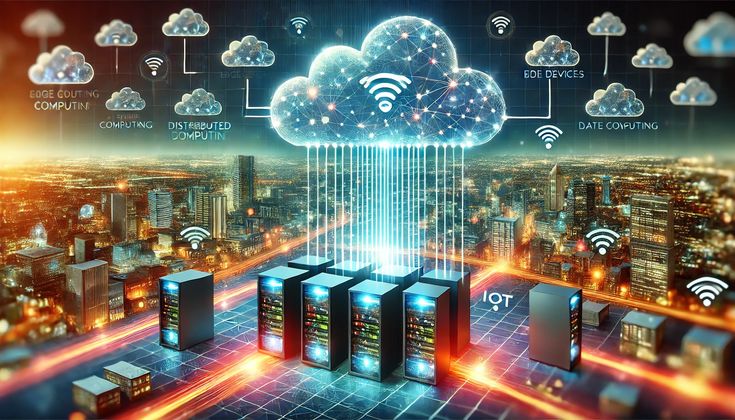
The Rise of Edge Computing: Why Processing Data Closer Matters The digital world is generating more data than ever before. Every smartphone notification, smart home device, connected vehicle, industrial sensor, and online interaction contributes to an ever-growing stream of information. For years, businesses have relied on cloud computing to store, manage, and process this data. While cloud technology revolutionized the way organizations operate, the explosion of connected devices has revealed a critical challenge: speed. Imagine a self-driving car traveling at high speed. If it encounters an obstacle, it cannot afford to send data to a distant cloud server, wait for processing, and then receive instructions. Even a delay of a few milliseconds could have serious consequences. The same challenge exists in manufacturing plants, healthcare facilities, smart cities, and countless other environments where immediate decisions are essential. This is where edge computing enters the picture. Edge computing is changing how organizations process information by bringing computing power closer to where data is created. Instead of sending every piece of information to a centralized cloud, data can be analyzed and acted upon near the source itself. This shift is helping businesses improve performance, reduce latency, enhance security, and unlock entirely new possibilities for innovation. As technologies like artificial intelligence, the Internet of Things (IoT), and 5G continue to evolve, edge computing is rapidly becoming one of the most important pillars of modern digital infrastructure. Understanding Edge Computing At its core, edge computing refers to processing data near the device or location where it is generated rather than transmitting it to a centralized data center or cloud server. Traditionally, data generated by devices would travel across networks to cloud servers where it would be processed and stored. The results would then be sent back to the device or application. While this approach works well for many scenarios, it introduces delays that can become problematic when immediate responses are required. Edge computing addresses this challenge by moving computing resources closer to the “edge” of the network. The edge can be a local server, a gateway device, a factory machine, a retail system, or even the device itself. Rather than depending entirely on distant cloud infrastructure, edge devices can analyze information in real time and make decisions instantly. The cloud still plays an important role, but it becomes part of a larger ecosystem where processing is distributed intelligently. This approach significantly improves efficiency while enabling applications that would be difficult or impossible to support through cloud-only architectures. Why the Need for Edge Computing Is Growing The rise of edge computing is closely connected to the rapid growth of connected devices. Industry experts estimate that billions of IoT devices are now generating massive volumes of data every day. From wearable fitness trackers and smart thermostats to industrial robots and connected vehicles, these devices continuously produce information that requires processing. Sending every bit of this data to the cloud creates several challenges. First, network congestion becomes a concern. The more data that travels across networks, the greater the strain on bandwidth resources. Second, latency can negatively impact user experiences and operational efficiency. Applications requiring real-time responses cannot tolerate delays. Third, transmitting large volumes of data to the cloud increases costs associated with bandwidth and storage. Finally, organizations face growing concerns about privacy, security, and regulatory compliance. Edge computing helps solve these issues by allowing data to be processed locally while only transmitting relevant information to the cloud when necessary. As businesses continue to embrace digital transformation, the demand for faster and more intelligent processing is making edge computing increasingly valuable. The Latency Advantage One of the biggest reasons organizations invest in edge computing is latency reduction. Latency refers to the time it takes for data to travel from its source to a processing location and back again. Even small delays can create significant problems in certain applications. Consider a smart manufacturing facility where machines operate with incredible precision. Sensors continuously monitor temperature, pressure, vibration, and performance metrics. If a machine begins to malfunction, immediate action may be required to prevent costly downtime. With cloud-based processing, the delay involved in transmitting data could slow down response times. Edge computing enables instant analysis directly within the facility, allowing maintenance teams to address issues before they escalate. The same principle applies to autonomous vehicles, remote healthcare monitoring, financial trading systems, and augmented reality applications. By processing data closer to where it originates, organizations can achieve near-instant decision-making capabilities. Enhancing Real-Time Decision Making Modern businesses increasingly rely on real-time insights to remain competitive. Customers expect immediate responses. Operations demand continuous optimization. Systems need to adapt dynamically to changing conditions. Edge computing supports these requirements by enabling faster decision-making at the source. For example, a smart retail store can use edge-powered cameras and sensors to analyze customer behavior in real time. Store managers can monitor foot traffic, optimize product placement, and improve customer experiences without waiting for cloud-based analytics. Similarly, healthcare providers can use edge-enabled monitoring devices to track patient vitals continuously. If a patient’s condition changes suddenly, alerts can be generated instantly, potentially saving lives. The ability to process information in real time creates opportunities that extend far beyond simple efficiency improvements. It enables businesses to become more proactive, responsive, and intelligent. Edge Computing and the Internet of Things The Internet of Things and edge computing are closely connected technologies. IoT devices generate enormous amounts of data, much of which requires immediate analysis. Without edge computing, organizations would struggle to manage this growing information flow effectively. Imagine a smart city equipped with thousands of connected sensors monitoring traffic, air quality, public transportation, and energy usage. If every sensor continuously transmitted data to centralized cloud systems, network infrastructure could quickly become overwhelmed. Edge computing allows local processing to occur near these sensors. Relevant insights can be generated instantly while only critical data is sent to the cloud for long-term analysis. This approach improves performance, reduces network traffic, and enhances overall system reliability. As IoT adoption continues to accelerate, edge computing will

Artificial Intelligence, Digital Transformation, Technology

How Digital Twins Are Transforming Manufacturing and Smart Cities

How Digital Twins Are Transforming Manufacturing and Smart Cities Imagine being able to create an exact digital replica of a factory, a production line, a power grid, or even an entire city. Now imagine that this digital replica updates itself continuously using real-time data from sensors, machines, cameras, and connected devices. Engineers can test changes before implementing them, city planners can predict traffic congestion before it occurs, and manufacturers can identify equipment failures before they happen. This is the power of digital twin technology. Over the past few years, digital twins have evolved from an experimental concept into one of the most impactful technologies driving digital transformation. Organizations across industries are leveraging digital twins to improve efficiency, reduce costs, optimize operations, and make better decisions based on real-world data. As manufacturing facilities become smarter and cities become increasingly connected, digital twins are emerging as a critical technology that bridges the gap between the physical and digital worlds. Understanding how digital twins work and why they matter is essential for businesses, city planners, and technology leaders looking to stay competitive in an increasingly data-driven future. What Is a Digital Twin? A digital twin is a virtual representation of a physical object, process, system, or environment that continuously receives data from its real-world counterpart. Unlike traditional simulations that rely on static information, digital twins are dynamic. They constantly collect and analyze real-time data through sensors, Internet of Things (IoT) devices, software systems, and connected networks. The digital model mirrors the current condition of the physical asset and can predict future behavior based on historical and live data. For example, in a manufacturing plant, a digital twin of a machine can monitor temperature, vibration levels, energy consumption, and production output. If the system detects unusual behavior, it can alert operators before a costly breakdown occurs. Similarly, a digital twin of a city can monitor traffic flow, public transportation, energy consumption, water distribution, weather patterns, and infrastructure performance to help authorities make smarter decisions. The combination of IoT, artificial intelligence, cloud computing, big data analytics, and advanced visualization technologies has accelerated the adoption of digital twins across multiple sectors. Why Digital Twins Matter More Than Ever Today’s organizations face increasing pressure to improve operational efficiency while reducing costs and minimizing risks. Manufacturers must manage complex supply chains, maintain equipment reliability, and meet customer demands for faster production. City governments must address challenges such as population growth, traffic congestion, energy management, sustainability, and public safety. Traditional monitoring systems often provide limited visibility into operations. Digital twins offer a more comprehensive approach by providing a complete digital view of physical systems. This enables organizations to move from reactive decision-making to predictive and proactive management. Instead of fixing problems after they occur, organizations can anticipate issues and take action before disruptions happen. This shift is creating significant value across industries and transforming how physical assets are designed, managed, and optimized. The Role of Digital Twins in Modern Manufacturing Manufacturing is one of the industries experiencing the greatest impact from digital twin technology. Modern factories generate enormous amounts of operational data every day. Machines, robots, conveyors, sensors, and production systems continuously produce information that can be used to improve efficiency and productivity. Digital twins bring all this information together into a single intelligent model. Manufacturers can visualize operations in real time, identify inefficiencies, and test improvements without disrupting production. One of the most valuable applications is predictive maintenance. Equipment failures can cause expensive downtime and production delays. Traditional maintenance schedules often rely on fixed intervals, which may result in unnecessary servicing or unexpected breakdowns. Digital twins continuously monitor machine health and identify early warning signs of potential failures. This allows maintenance teams to perform repairs at the optimal time, reducing downtime and extending equipment lifespan. Production optimization is another major benefit. Manufacturers can simulate different production scenarios and evaluate their impact before implementing changes. Whether adjusting workflows, introducing new machinery, or redesigning assembly lines, digital twins help organizations make informed decisions with minimal risk. Quality control also improves significantly. By monitoring production processes in real time, digital twins can identify deviations that may affect product quality. This enables faster corrective actions and helps maintain consistent manufacturing standards. As competition increases and margins become tighter, these improvements can deliver substantial financial benefits. Enhancing Product Development and Innovation Digital twins are not only transforming factory operations but also revolutionizing product development. Traditionally, creating and testing physical prototypes requires significant time and resources. Digital twins enable engineers to evaluate product designs in virtual environments before building physical versions. Manufacturers can test performance, durability, safety, and functionality under various conditions using advanced simulations. This approach reduces development costs, accelerates innovation, and shortens time-to-market. For industries such as automotive, aerospace, electronics, and industrial equipment, digital twins provide a powerful way to improve product quality while reducing design risks. Companies can identify potential issues earlier in the development process and make adjustments before production begins. This creates a more efficient and cost-effective innovation cycle. Supply Chain Visibility and Optimization Global supply chains have become increasingly complex and vulnerable to disruptions. Manufacturers need better visibility into every stage of the supply chain to ensure smooth operations. Digital twins can create virtual models of supply chain networks, allowing organizations to track inventory, shipments, supplier performance, and logistics operations in real time. By analyzing supply chain data, businesses can identify bottlenecks, predict delays, and optimize inventory management. This improved visibility helps organizations respond more effectively to market fluctuations and unexpected disruptions. The ability to simulate different scenarios also supports strategic planning and risk management. As supply chain resilience becomes a top priority for businesses worldwide, digital twins are becoming an essential tool for operational success. How Digital Twins Are Powering Smart Cities The same technology that improves manufacturing efficiency is also helping cities become smarter, safer, and more sustainable. Urban populations continue to grow rapidly, creating increasing demands on infrastructure and public services. City planners face challenges related to transportation, energy consumption, environmental sustainability, housing, waste

Machines that mimic human gestures and expressions
Uncategorized

The Future of Automation and Robotics: Transforming Industries and Everyday Life

Introduction Automation and robotics are no longer futuristic ideas—they’re a living, breathing reality that’s reshaping industries, transforming workplaces, and redefining how humans interact with machines. From self-driving cars to automated manufacturing lines, robots and intelligent systems are now embedded in nearly every sector. As we enter a new era of Industry 5.0, the collaboration between humans and robots is becoming the cornerstone of innovation. Automation is not just about replacing human labor but about enhancing efficiency, safety, and precision while freeing people for more creative and strategic work. What is Automation and Robotics? Automation refers to the use of technology to perform tasks with minimal human intervention. It involves systems or machines that follow predefined instructions or adapt based on data input.Example: Automated billing systems, robotic assembly lines, and smart home devices. Robotics is a specialized branch of engineering that deals with designing, constructing, and operating robots — machines capable of carrying out complex actions autonomously or semi-autonomously.Example: Industrial robots assembling cars, surgical robots in hospitals, and drones for logistics. When combined, automation and robotics create a powerful synergy that drives speed, accuracy, and cost-effectiveness across industries. Applications Across Industries 1. Manufacturing and Industry 4.0 Robotics in manufacturing has been a game-changer. Automated robotic arms, precision sensors, and AI-powered quality checks ensure products are made faster, safer, and with fewer defects. Example: Car manufacturers like Tesla and Toyota use fully automated production lines with minimal human supervision. Impact: Reduced labor costs, enhanced production rates, and consistent quality. 2. Healthcare and Surgery In healthcare, robotic automation enables precision and minimal invasiveness. Example: The Da Vinci Surgical System assists surgeons with high-precision movements. Impact: Shorter recovery times, smaller incisions, and greater surgical accuracy. 3. Agriculture Robotics is revolutionizing agriculture with smart drones and automated harvesters. Example: Drones monitor crop health, soil quality, and irrigation. Impact: Higher yields, reduced waste, and optimized resource usage. 4. Logistics and Warehousing Automated guided vehicles (AGVs), conveyor systems, and robotic sorters manage large warehouses like those of Amazon or Flipkart. Impact: Improved delivery speed, error reduction, and 24/7 operations. 5. Retail and Customer Service From robotic baristas to self-checkout counters and chatbots, automation is enhancing customer experience and operational efficiency. Example: Walmart uses robots to scan shelves and track inventory. 6. Defense and Security Autonomous drones and surveillance robots are improving national security and battlefield safety. Impact: Risk reduction for soldiers and enhanced decision-making through real-time data analysis. AI and Machine Learning in Robotics Modern robotics heavily relies on Artificial Intelligence (AI) and Machine Learning (ML) to learn from data and make decisions. Robots can now adapt to changing environments and perform complex cognitive tasks like facial recognition or navigation. Collaborative robots (cobots) work safely alongside humans, learning through continuous feedback loops. This integration of AI allows robots to go beyond repetitive tasks and step into roles that demand problem-solving and adaptability. Benefits of Automation and Robotics ✅ Increased productivity and operational efficiency ✅ Reduced human error ✅ Enhanced workplace safety ✅ Lower operational costs ✅ 24/7 operation capability ✅ Consistent quality and output Challenges and Concerns Job Displacement:Automation can replace certain repetitive or manual jobs, leading to workforce restructuring. High Initial Costs:Robotics systems require significant capital investment for setup and maintenance. Cybersecurity Risks:Connected robots can be vulnerable to hacking and data theft. Ethical Dilemmas:The growing autonomy of robots raises questions about accountability, privacy, and human control. The Future of Automation and Robotics The next decade will see humans and robots working together in harmony. Robots will become more intelligent, intuitive, and emotionally aware through AI-driven empathy and neural interfaces. Key Emerging Trends: Humanoid Robots: Machines that mimic human gestures and expressions (e.g., Sophia the Robot). Soft Robotics: Robots made with flexible materials for delicate tasks like food handling. Autonomous Vehicles: Self-driving logistics fleets reducing delivery times and accidents. Industry 5.0: Human-centric automation, where technology empowers—not replaces—humans. The goal is no longer full automation but collaboration, enabling people to focus on creativity, innovation, and decision-making while robots handle the repetitive groundwork. Conclusion Automation and robotics represent the backbone of future innovation. While challenges remain—like cost, ethics, and employment shifts—the benefits are undeniable.Industries that embrace this transformation will thrive in speed, safety, and scale, while those resisting it risk falling behind. The ultimate vision?A world where robots and humans work side-by-side, leveraging each other’s strengths to achieve unprecedented progress. FAQs Q1. How is automation different from robotics?Automation refers to using technology to perform tasks with minimal human input, while robotics specifically involves machines that can execute those tasks physically or intelligently. Q2. Will automation lead to job loss?While some repetitive roles may be automated, new opportunities are emerging in robot maintenance, programming, and AI management. Q3. What are the main industries using robotics today?Manufacturing, logistics, healthcare, agriculture, and defense are leading adopters of robotics technology. Q4. What is the role of AI in modern robotics?AI enables robots to learn from data, adapt to environments, and make intelligent decisions — making them more autonomous and useful across diverse tasks. Q5. What does Industry 5.0 mean?Industry 5.0 focuses on collaboration between humans and robots, emphasizing creativity, personalization, and sustainability rather than full automation.

How would you like me to respond?

Select a personality for your AI assistant

Normal
Happy
Sad
Angry

Your selection will affect how the AI assistant responds to your messages

Chat Assistant

Let's discuss your project!

Hear from our clients and why 3000+ businesses trust TechOTD

Tell us what you need, and we'll get back with a cost and timeline estimate

Scroll to Top