DevSecOps

Artificial Intelligence, Cloud Computing and Technology, Software development, Technology & Innovation

Beyond the Hype: The Pragmatic Architect’s Guide to Microservices, Serverless, and Edge AI in 2026

Introduction: The Great Architectural Rebalancing of 2026 For nearly a decade, the tech industry operated under a collective delusion: that scalability was a problem everyone had, and that copying the infrastructure charts of Netflix or Google was the only path to engineering salvation. We sliced simple web apps into dozens of distributed microservices, built complex asynchronous event pipelines for low-traffic CRUD applications, and treated physical or local compute resources as relic storage spaces from a bygone era. Fast forward to 2026, and the architectural pendulum has swung decisively back toward pragmatism. The landscape we navigate today is defined not by framework dogmatism, but by rigid constraints. Cloud costs have escalated to the point where “FinOps” is no longer just a buzzword but a core engineering requirement. Regulatory frameworks like the EU AI Act and global data protection laws have made blind data ingestion a massive liability. Meanwhile, the absolute explosion of artificial intelligence has introduced a computing paradigm that traditional centralized cloud infrastructures simply cannot sustain economically or logistically. [ Centralized Cloud ] <— High Latency & Escalating Costs | v +—————————+ | MODERN ARCHITECTURE | —> [ Modular Monolith ] (Core Business Logic) | BALANCING | —> [ Serverless FaaS ] (Ephemeral / Event Workloads) +—————————+ | v [ Localized Edge AI ] <— Low Latency, High Privacy (NPUs / SLMs) Modern architecture is no longer about choosing a single deployment style and making it your entire engineering personality. Instead, it is an exercise in intelligent division: keeping core, transactional business logic tight and low-overhead; offloading ephemeral, event-driven tasks to serverless runtimes; and pushing heavy machine learning inference straight to the edge where data originates. This comprehensive guide is designed to help you navigate this decentralized reality. We will dissect the technical mechanics, the financial trade-offs, and the practical implementation patterns of the three pillars defining systems design today: the resurrected Modular Monolith, constrained Serverless, and Edge AI. Section 1: The Resurgence of the Modular Monolith If you told a room full of enterprise architects in 2018 that the hottest architectural trend in 2026 would be the monolith, you would have been laughed out of the room. Yet, here we are. The industry-wide migration back to single-deployable units is not a regression—it is an evolution driven by an understanding of coordination overhead. The Hidden Tax of Microservices Microservices promised autonomous teams, isolated deployments, and independent scaling. What they delivered for many mid-sized organizations was a sprawling web of network latencies, distributed tracing nightmares, and an organizational tax paid in continuous integration bottlenecks. When a single conceptual feature change requires coordinated pull requests across five different repositories, managed by three different teams, you haven’t decoupled your architecture; you have merely decoupled your text files while keeping your deployment dependencies tightly bound by an unstable network layer. Every network boundary introduced between components forces engineers to solve complex distributed systems problems: Implementing two-phase commits or Saga patterns for distributed transactions. Navigating data consistency models (eventual vs. strong consistency). Paying the performance penalty of serialization, network transit, and deserialization over HTTP/REST or even gRPC. Managing independent database instances that prevent simple SQL JOIN operations, leading to inefficient application-level data stitching. The Anatomy of a Modular Monolith The modular monolith solves the organizational and structural problems of large codebases without introducing network-induced failure modes. It is defined as a single deployable artifact containing highly isolated, independent modules with strictly enforced internal logical boundaries. +———————————————————————–+ | MODULAR MONOLITH | | | | +——————-+ In-Memory +——————-+ | | | Order Module | —————–> | Inventory Module | | | | (Private Domain) | (Public Interface) | (Private Domain) | | | +——————-+ +——————-+ | | | | | | v v | | +—————————————————————–+ | | | Isolated Schema Database Engine | | | | [Order Tables] [Inventory Tables] | | | +—————————————————————–+ | +———————————————————————–+ In a well-architected modular monolith, modules communicate using in-memory function calls or language-level interfaces, not network hops. However, they strictly respect domain separation: Database Schema Isolation: Modules do not cross-query tables belonging to other modules. If the OrderModule needs data from the InventoryModule, it must request it via the InventoryModule‘s public code interface. At the database layer, this can be enforced using separate database schemas or logical prefixes within a shared database instance. Strict Public Interfaces: Internal module implementation details are hidden behind explicit entry points (facades or public API contracts). Languages with robust module systems (such as Java’s module system, Go’s workspace layouts, or Rust’s visibility modifiers) are leveraged to block unauthorized cross-module imports at compile-time. Independent Data Models: Even if an object like a “User” is used across the system, the BillingModule and the SupportModule maintain their own distinct code definitions of a user, containing only the fields relevant to their domain. Implementing Hard Boundaries: Code Example Consider a typical backend layout structured using modern architectural patterns where boundaries are checked by automated linting or compilation rules: Go // package inventory/public_api.go package inventory type ProductAvailability struct { ProductID string IsAvailable bool StockCount int } // Only this interface and its types are accessible to external modules type Service interface { CheckStock(productID string) (ProductAvailability, error) } // package order/processor.go package order import “myproject/inventory” type OrderProcessor struct { inventoryService inventory.Service // Injected via constructor } func (op *OrderProcessor) Process(order Order) error { // Communication happens via direct, lightning-fast in-memory call avail, err := op.inventoryService.CheckStock(order.ProductID) if err != nil || !avail.IsAvailable { return ErrStockUnavailable } // Proceed with processing… return nil } By ensuring that dependencies point strictly to interfaces rather than raw database access or concrete structural implementations, teams can split a modular monolith into separate microservices in a matter of days if a specific component truly develops unique scaling demands. It acts as the ultimate pragmatic starting point. Section 2: Serverless Under Constraint – Overcoming Cold Starts and Vendor Lock-in Serverless computing (Functions-as-a-Service, or FaaS) has undergone a dramatic transformation. The early days of serverless were marked by naive enthusiasm: write a function, dump it on AWS Lambda

Artificial Intelligence, cybersecurity, Technology, Technology & Innovation

The New Cybersecurity Frontier: Defending Against AI-Driven Exploits and Autonomous Threats

The New Cybersecurity Frontier: Defending Against AI-Driven Exploits and Autonomous Threats The battleground of digital security has shifted from static defenses to dynamic, algorithmic warfare. For decades, the foundational rules of cybersecurity revolved around predictable patterns. A human attacker wrote malicious code, a security researcher analyzed its signature, and an enterprise deployed a patch or an antivirus definition to block it. This cat-and-mouse game was bounded by the limits of human speed, requiring human hours to discover vulnerabilities, write exploits, and configure defenses. That era has officially drawn to a close. The consumerization and rapid maturation of advanced artificial intelligence frameworks have handed both adversaries and defenders a radically new toolset. Today, security professionals are no longer just fighting human threat actors; they are confronting autonomous, self-learning software agents capable of executing multi-stage attacks at network speeds. When machine learning models can instantly scan millions of lines of code for zero-day vulnerabilities, dynamically mutate payload signatures to evade behavioral detection, and generate hyper-personalized social engineering campaigns at an industrial scale, traditional defensive measures collapse. The infrastructure of tomorrow cannot be protected by the manual workflows of yesterday. Understanding this new paradigm requires looking deep into how weaponized artificial intelligence operates, where it breaches existing defenses, and how enterprises must adapt to survive. The Anatomy of an AI-Driven Cyberattack To defend against an automated adversary, engineering teams must dissect how machine learning alters the traditional cyberkill chain. In a conventional attack blueprint, an offensive operation requires weeks of manual reconnaissance. Attackers trace network perimeters, map out employee organizational charts on professional networks, and carefully audit public-facing infrastructure for unpatched software versions. Artificial intelligence compresses this reconnaissance phase from weeks to seconds. Large language models and specialized code-analysis patterns can ingest massive swaths of public and private data, mapping out corporate attack surfaces with terrifying precision. An automated scanning agent can systematically probe an enterprise’s entire cloud footprint, identifying subtle logic flaws or forgotten API endpoints that a human analyst might overlook during a routine security audit. Once a vulnerability is identified, the weaponization phase begins. Historically, modifying an exploit to bypass a specific endpoint detection and response system required deep assembly-level knowledge and hours of trial and error. Weaponized AI models automate this entirely through a process known as polymorphic code mutation. The malicious agent evaluates the target environment’s defenses and dynamically alters its own structure—changing variable names, modifying execution flows, and encrypting payloads uniquely for that specific machine—ensuring that signature-based antivirus tools remain completely blind to the threat. The execution phase introduces the concept of autonomous decision-making in the wild. Traditional malware relies on a continuous back-and-forth connection with an external command-and-control server to receive instructions from a human operator. This network traffic is highly visible and often triggers behavioral alarms within modern network monitoring suites. An AI-driven malicious agent, however, carries its neural net logic directly within its payload. It can make independent, real-time decisions inside a compromised network—such as choosing when to lie dormant to avoid detection, which high-value databases to target for lateral movement, and how to quietly exfiltrate data without triggering data loss prevention systems. The Weaponization of Large Language Models and Deepfakes Beyond pure code execution, the intersection of generative artificial intelligence and social engineering represents one of the most immediate financial hazards to modern enterprises. Social engineering has always relied on human psychology, but it was historically limited by language barriers, stylistic inconsistencies, and the sheer time required to engage with targets. Generative text models have completely democratized the production of flawless phishing campaigns. Phishing emails used to be easy to spot, often plagued by broken grammar, generic greetings, and suspicious formatting. Today, specialized malicious LLMs can generate perfectly written, context-aware correspondence tailored to a specific target’s industry jargon, corporate hierarchy, and historical writing style. By scraping an executive’s public presentations, blog posts, and social media presence, an automated agent can construct emails that are virtually indistinguishable from legitimate corporate communications, drastically increasing the success rate of business email compromise attacks. Simultaneously, the maturation of synthetic audio and video generation—commonly referred to as deepfakes—has added an entirely new dimension to identity theft and corporate fraud. Threat actors no longer rely solely on written words to trick financial departments into executing fraudulent wire transfers. They deploy real-time voice cloning tools during active phone calls, mimicking the exact cadence, tone, and vocal characteristics of a company’s Chief Financial Officer or Chief Executive Officer. In advanced scenarios, attackers execute highly coordinated multi-media deceptions. They schedule video conference calls where an AI-generated avatar of a trusted corporate leader directs a mid-level manager to bypass standard verification protocols for an urgent, confidential corporate acquisition. The psychological impact of seeing a familiar face and hearing a familiar voice completely bypasses the traditional skepticism employees have been trained to maintain, revealing that the human element remains the most vulnerable interface in the corporate security stack. Vulnerabilities Inherent in the AI Lifecycle As companies rush to integrate artificial intelligence into their own products and internal workflows, they inadvertently introduce an entirely new category of software vulnerabilities. These are not standard software bugs like buffer overflows or SQL injections; they are flaws native to the data structures, training pipelines, and architectural design of machine learning systems. The first major vulnerability is data poisoning. Machine learning models are entirely products of the data they consume during training. If a threat actor managed to subtly corrupt the training dataset of an enterprise model—for instance, by injecting malicious code samples labeled as benign into an automated code-review model—the resulting neural network would inherently inherit that blind spot. The model would systematically approve malicious patterns in production, creating an architectural vulnerability that is incredibly difficult to detect through standard source-code analysis. The second critical risk vector is prompt injection, which specifically targets applications built on top of large language models. Because these systems process user inputs and system instructions within the same linguistic context window, an attacker can craft input strings that overwrite the model’s core

Software development, Technology & Innovation

CI/CD Pipeline Best Practices

CI/CD Pipeline Best Practices: The Definitive Guide to Building Bulletproof Automation If you’ve ever hit the “deploy” button with your eyes closed, holding your breath and praying to the software gods that nothing breaks, you’re not alone. We’ve all been there. In the early days of development, moving code from a local machine to a live server was a high-stakes gamble. It involved chaotic manual file transfers, brittle scripts, and an overwhelming amount of guesswork. The introduction of Continuous Integration and Continuous Deployment (CI/CD) promised to fix all of that. It offered a world where every code change travels safely down a pristine, automated assembly line straight into production. But here’s the harsh reality: simply having a CI/CD pipeline isn’t enough. A poorly designed pipeline is worse than manual deployment. It acts as a force multiplier for bad habits, automatically pushing broken code, security vulnerabilities, and configuration errors to production at supersonic speeds. If your build times are stretching past 45 minutes, your automated tests are flaky, or your developers are constantly bypassing the system, your pipeline is a bottleneck, not an accelerator. To transform your delivery workflow into an enterprise-grade engine, you need to move past basic automation and embrace architectural excellence. This comprehensive guide breaks down the definitive CI/CD pipeline best practices to help your engineering team ship stable, secure code multiple times a day with absolute confidence. 1. The Blueprint of a World-Class CI/CD Pipeline Before diving into specific best practices, let’s map out what a mature, modern CI/CD architecture actually looks like. Think of your pipeline as a series of progressive quality gates. Code enters as raw, unverified text and emerges as a fully monitored, production-ready application container. [ DEVELOPER ] Pushes Code / Opens Pull Request │ ▼ ┌────────────────────────────────────────────────────────┐ │ 1. THE COMMIT GATE (Continuous Integration) │ │ • Code Linting & Static Analysis (SAST) │ │ • High-Speed Unit Testing │ │ • Dependency Vulnerability Scanning │ └───────────┬────────────────────────────────────────────┘ │ (Passes) ▼ ┌────────────────────────────────────────────────────────┐ │ 2. THE ARTIFACT GATE (Build & Package) │ │ • Deterministic Container Compilation (Docker) │ │ • Container Image Security Scanning │ │ • Push to Secure Immutable Image Registry │ └───────────┬────────────────────────────────────────────┘ │ (Passes) ▼ ┌────────────────────────────────────────────────────────┐ │ 3. THE VALIDATION GATE (Continuous Delivery) │ │ • Automated IaC Environment Provisioning │ │ • Integration & End-to-End User Testing │ │ • Performance & Load Profiling │ └───────────┬────────────────────────────────────────────┘ │ (Passes) ▼ ┌────────────────────────────────────────────────────────┐ │ 4. THE DEPLOYMENT GATE (Continuous Deployment) │ │ • Canary Release / Blue-Green Progression │ │ • Automated Drift Detection & Observability Rollback│ └────────────────────────────────────────────────────────┘ Every stage of this blueprint must be optimized for speed, clarity, and isolation. If a failure occurs at the Commit Gate, the pipeline should abort immediately, giving the developer instant feedback before expensive cloud infrastructure is spun up down the line. 2. Commit and Integration Practices (The CI Foundation) The foundational philosophy of Continuous Integration is simple: integrate early and integrate often. The longer code sits isolated on a developer’s branch, the more painful the eventual merger will be. Shift to Trunk-Based Development For years, long-lived feature branches and complex merging strategies (like traditional GitFlow) were the industry norm. However, these models inherently create massive integration bottlenecks. Developers work in isolation for weeks, resulting in epic code review sessions and devastating “merge conflicts” that derail entire release schedules. Modern high-performing teams utilize Trunk-Based Development. In this workflow: Developers commit their changes to a single, central branch (usually named main or trunk) frequently, often multiple times a day. Feature branches are short-lived, lasting no more than 24 to 48 hours. This constant integration ensures that the entire engineering team is always working on top of the latest single source of truth. If a code conflict occurs, it’s tiny and easily resolved in minutes, rather than days. Treat Build Failures as Production Outages A CI pipeline is completely useless if developers get into the habit of ignoring broken builds. If your pipeline notification channel is filled with red error marks that everyone ignores because “Oh, that test always fails on Fridays,” your automated safety net has collapsed. Adopt a strict team culture where fixing a broken build is the highest priority task. If a commit breaks the pipeline, all engineering focus shifts to either fixing the underlying issue immediately or reverting the breaking commit. A broken main branch stops the assembly line; keeping it pristine ensures that the path to production remains open for everyone at all times. Commit Once, Build Once A terrifyingly common anti-pattern is compiling code or rebuilding application binaries multiple times as they progress through different pipeline environments. For example, building a Docker image for staging, and then building an entirely separate Docker image from the same source code when moving to production. This completely invalidates your testing. How do you prove that a subtle dependency change or compiler variance didn’t slip into the production build that wasn’t present during staging validation? The rule is absolute: Build your binaries, packages, or container images exactly once early in the pipeline. Package that build as an immutable asset, tag it with a unique cryptographic identifier (like a Git commit SHA), and store it in an artifact repository. That exact identical asset must be promoted through staging, pre-production, and production without ever being recompiled. 3. Optimizing for Speed: The 10-Minute Rule Speed is the lifeblood of software delivery automation. If a developer has to wait an hour to see if their code change passed automated validation, they will switch context. They’ll grab coffee, check social media, or start writing entirely new features. By the time the pipeline notifies them of an error, they’ve lost their train of thought, and fixing the bug takes twice as long. The gold standard for engineering organizations is the 10-Minute Rule: Your commit pipeline (from pushing code to receiving an integration pass/fail notification) should take less than ten minutes. Here is how you engineer a lightning-fast pipeline: Parallelize Test Execution Don’t run your test suites sequentially on a single runner

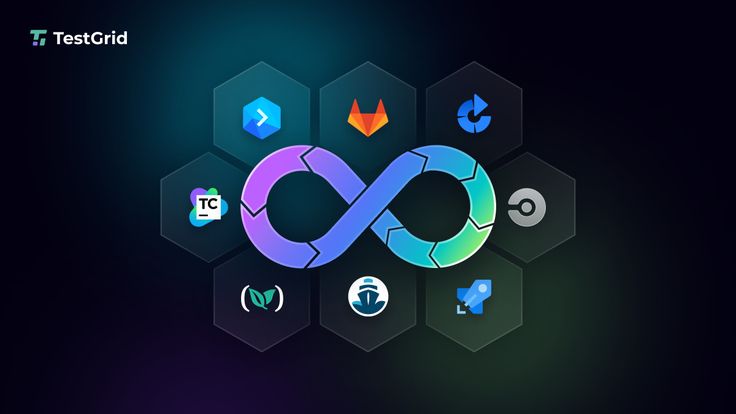
DevOps process showing collaboration, automation, and CI/CD pipelines in modern software development.
DEVOPs

DevOps in 2025: Bridging Development and Operations for Smarter Software Delivery

Introduction In the fast-paced world of software, speed and reliability define success. That’s where DevOps comes in — a powerful approach that unites Development (Dev) and Operations (Ops) to deliver high-quality applications faster and more efficiently. By 2025, DevOps isn’t just a methodology; it’s a culture of collaboration, automation, and continuous improvement that drives digital transformation across industries. What Is DevOps? DevOps is a software engineering practice that integrates development and IT operations teams to shorten the software development lifecycle and ensure continuous delivery with high quality. It focuses on: Collaboration: Breaking silos between teams. Automation: Streamlining repetitive tasks. Continuous Integration/Continuous Deployment (CI/CD): Delivering updates frequently and reliably. Why DevOps Matters in 2025 As organizations scale digitally, agility and efficiency are more important than ever. Faster Releases: Frequent and automated deployments. Improved Quality: Automated testing reduces errors. Greater Collaboration: Developers and operations share responsibility. Business Agility: Quick adaptation to user feedback and market trends. Key Principles of DevOps Collaboration and Communication: Shared ownership between teams. Automation: From code integration to deployment. Continuous Testing: Detect bugs early with automated QA. Monitoring and Feedback: Real-time tracking of performance and issues. Security Integration (DevSecOps): Embedding security into every stage. Popular DevOps Tools in 2025 Category Tools Description Version Control Git, GitHub, GitLab Manage and track code versions CI/CD Jenkins, CircleCI, GitHub Actions Automate build, test, and deploy Containerization Docker, Kubernetes Deploy apps consistently across environments Monitoring Prometheus, Grafana Real-time tracking of app performance Infrastructure as Code (IaC) Terraform, Ansible Automate infrastructure management Cloud Integration AWS, Azure DevOps Host, scale, and manage pipelines The Future of DevOps The future of DevOps is powered by AI, automation, and cloud-native development. AI-Driven Monitoring: Predict system failures before they occur. Serverless Architecture: Deploy apps without managing servers. ChatOps: Real-time collaboration through chat platforms like Slack. Sustainable DevOps: Optimizing infrastructure for lower energy use. Conclusion DevOps represents the perfect balance between innovation and reliability. By combining collaboration, automation, and continuous feedback, it empowers teams to build, test, and deploy faster than ever before. In 2025 and beyond, DevOps will remain the foundation of agile, scalable, and secure software delivery — the key to digital success. “DevOps isn’t a tool or a team — it’s a mindset that builds better software, together.” FAQ Section Q1. What is DevOps in simple terms?It’s a collaboration between developers and operations teams to deliver software faster and more reliably. Q2. What tools are used in DevOps?Popular tools include Git, Jenkins, Docker, Kubernetes, and Terraform. Q3. How does DevOps differ from Agile?Agile focuses on development cycles; DevOps extends that to deployment and operations. Q4. What is CI/CD in DevOps?It’s a process of continuously integrating code and deploying updates automatically. Q5. Why is DevOps important?It enhances efficiency, reduces downtime, and improves product quality.

DEVOPs

DevOps at Scale: Strategies for Enterprise-Wide Modernization

Introduction In the fast-paced digital era, enterprises must evolve their software development and delivery models to remain competitive and responsive. DevOps at scale has emerged as an essential approach, enabling organizations to modernize their entire IT landscape, drive automation, foster collaboration, and accelerate innovation. This blog explores strategies and best practices for successfully implementing DevOps across large enterprises, tackling challenges while maximizing business value. Explore advanced AI-driven transformation capabilities at TechOTD AI Services. Understanding Enterprise DevOps at Scale What is DevOps at Scale? DevOps at scale refers to adopting and integrating DevOps principles—collaboration, automation, continuous integration, continuous delivery—across complex, distributed, and often global enterprise IT environments. Enterprises face unique challenges like legacy systems, multiple teams, regulatory demands, and extensive toolchains. Why Modernize with DevOps? Accelerated time to market for software products Improved software quality and reliability through automation Enhanced collaboration across development, operations, and security teams Scalable and repeatable deployment pipelines for global operations Better alignment between IT and business goals The TechOTD blog dives deeper into how organizations embrace such transformations. Core Strategies for Enterprise-Wide DevOps Modernization 1. Establish a Strong Foundation with Scalable CI/CD Pipelines Centralized, automated continuous integration and delivery pipelines are critical for managing complex software releases. Tools like Jenkins, Azure DevOps, and GitLab enable efficient build, test, and deployment workflows. Standardize coding, security, and compliance practices Automate pipeline monitoring and incident response Use pipeline-as-code for versioned and reproducible deployments 2. Cultivate a Collaborative and Transparent Culture Culture is the heart of DevOps success at scale. Break down silos to encourage communication and shared ownership Form cross-functional, self-service teams covering development, QA, operation, and security Adopt frameworks like CALMS (Culture, Automation, Lean, Measurement, Sharing) to assess maturity and guide improvements Use collaboration tools integrated with workflow management for transparency Learn more about AI’s role in enabling collaboration at TechOTD AI page. 3. Automate Infrastructure and Configuration Management In large enterprises, manual provisioning slows progress and introduces errors. Implement Infrastructure as Code (IaC) using Terraform, Ansible, or Puppet Use cloud-native services and container orchestration (Kubernetes) for scalable infrastructure Automate environment provisioning, configuration, and monitoring for consistency Explore DevOps automation tools at TechOTD’s resources. 4. Adopt Microservices and Modular Architectures Breaking monolithic applications into smaller, independently deployable services enables faster, parallel development and deployment, which fits well with scaled DevOps pipelines. Enables independent scaling and troubleshooting Facilitates incremental modernization of legacy apps Simplifies cross-team development and integration 5. Embed Security Using DevSecOps Principles Security is paramount in enterprise environments, especially with complex compliance requirements. Integrate continuous security testing into CI/CD pipelines Automate vulnerability scanning and compliance checks Establish governance frameworks for risk management Blockchain technology can enhance traceability and compliance auditing, as covered in TechOTD Blockchain blog. 6. Measure and Monitor Performance Continuously Continuous monitoring with tools like Grafana, Prometheus, and ELK stack helps detect anomalies, improve reliability, and optimize resource use. Implement logging, metrics collection, and alerting Use metrics like deployment frequency, mean time to recovery (MTTR), and error rates to measure success Leverage AI-powered analytics for predictive insights Further examples and best practices are detailed in TechOTD Predictive Analytics blog. 7. Invest in Skills Development and Change Management Train teams on new tools, practices, and cultural values regularly Foster a learning mindset encouraging experimentation and failure recovery Communicate benefits organization-wide to build buy-in and reduce resistance See TechOTD’s How We Work for insights on effective consulting and change management. Overcoming Common Challenges in Scaling DevOps Legacy Systems and Technical Debt Use incremental modernization and parallel DevOps adoption Containerize legacy apps selectively for easier integration Managing Complexity Across Distributed Teams Define clear roles and responsibilities Implement centralized DevOps management platforms Security and Compliance Across Regions Develop automated compliance pipeline checks Use policy-as-code and audit trails Discover more challenges and solutions in the detailed TechOTD Enterprise DevOps Guide. Real-World Examples and Use Cases Amazon Pioneered large-scale DevOps automation enabling multiple daily deployments, supporting rapid innovation and global scale. Netflix Uses advanced CI/CD, chaos engineering, and real-time monitoring to ensure high availability and rapid feature delivery. Future Trends: AI-Enabled DevOps at Scale AI and machine learning optimize automated testing, deployment decisions, and predictive maintenance, driving smarter, faster DevOps. Intelligent automation for environment provisioning AI-powered anomaly detection and incident management Natural language interfaces simplifying DevOps operations Discover the future of AI in DevOps at TechOTD AI and NLP. Conclusion Enterprise-wide DevOps modernization is a transformative journey that requires a balanced approach of strategy, culture, technology, and continuous improvement. By following the outlined strategies, enterprises can unlock agility, reliability, and innovation at scale. For detailed strategies, case studies, and consulting support, visit TechOTD and explore services like mobile app development.

DEVOPs

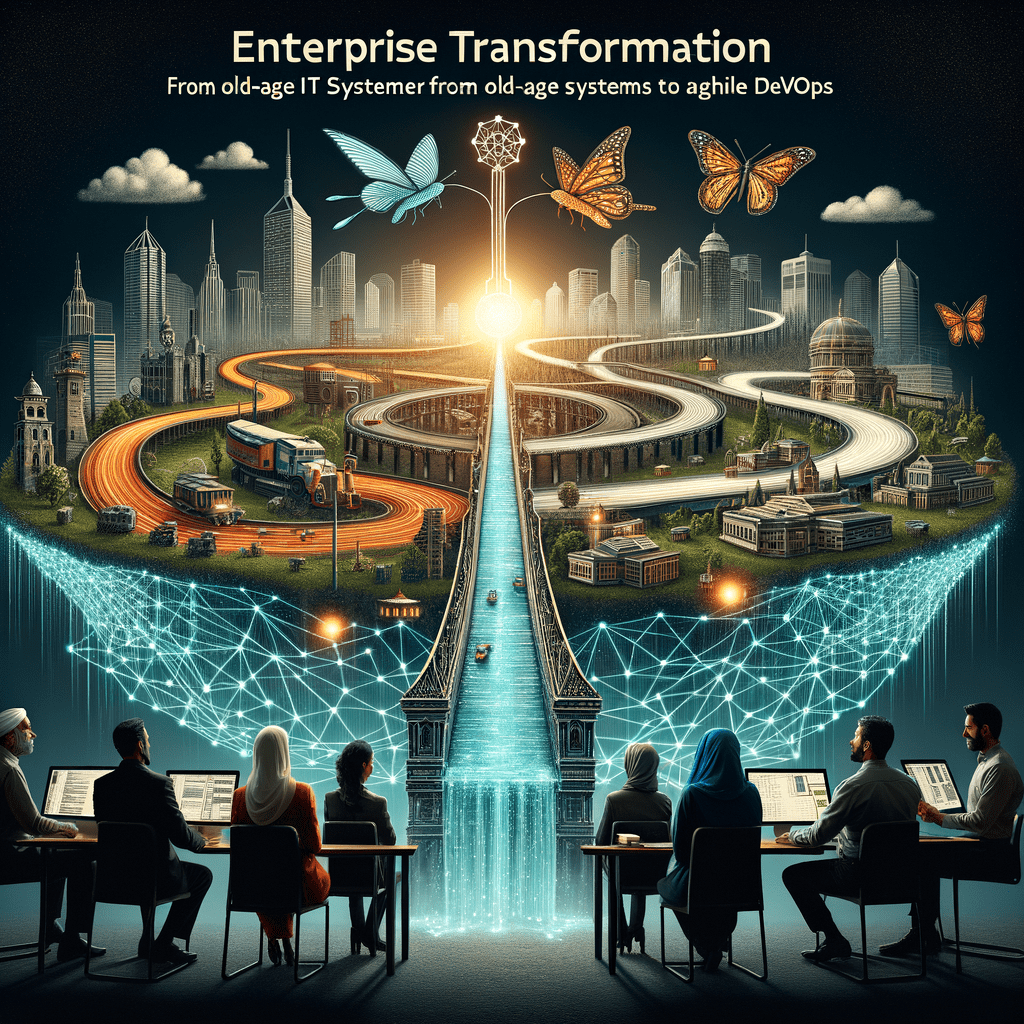
From Legacy to Agility: The Enterprise Roadmap to DevOps Transformation

Introduction In the rapidly evolving technology landscape, enterprises are compelled to shift from traditional legacy systems and processes to agile, efficient, and automated DevOps practices. This transformation is not merely a technological upgrade but a profound cultural and operational evolution, driving faster delivery, improved collaboration, and enhanced customer satisfaction. This blog explores a comprehensive roadmap for enterprises moving from legacy to agility through DevOps transformation, enriched with insights and best practices. Explore related AI-driven business transformation services at TechOTD AI Services. Legacy systems, often characterized by siloed teams, manual processes, and fragmented workflows, limit innovation and rapid delivery. Modern enterprises require integration, automation, and continuous feedback loops — hallmarks of DevOps. Challenges include: Rigid architectures Slow release cycles Understanding Legacy Systems and the Need for DevOps Transformation Risk of errors and downtime Communication gaps between development, operations, and security teams DevOps fosters agility by breaking down silos, automating workflows, and fostering a culture of collaboration and continuous improvement. For a deep dive into DevOps and digital transformation trends, visit the TechOTD Blog. The Enterprise DevOps Transformation Roadmap 1. Assess and Audit Current State Begin by thoroughly evaluating existing infrastructure, workflows, and organizational culture. Map current development and operations processes Identify bottlenecks, silos, and manual steps Understand team dynamics and toolchains This assessment provides a baseline for tailored transformation strategies. 2. Define Vision, Objectives, and KPIs Develop a clear vision and goals aligned with business outcomes. Establish measurable KPIs such as deployment frequency, lead time, and uptime Prioritize initiatives that deliver maximum value Build stakeholder consensus for change 3. Build the Right Team and Culture Culture and people are central to successful DevOps transformation. Form cross-functional DevOps teams including development, operations, QA, and security Promote collaboration, transparency, and shared ownership Invest in training and continuous learning Explore how AI can support team productivity and collaboration on TechOTD AI Integration. 4. Implement Automation and Toolchain Automation drives efficiency and quality. Automate testing, builds, deployments, and infrastructure provisioning Use CI/CD pipelines to enable rapid and reliable delivery Integrate security practices with DevSecOps for compliance and risk mitigation Discover advanced automation and predictive analytics at TechOTD Predictive Analytics. 5. Incremental Modernization and Migration Legacy systems can be modernized incrementally: Introduce containerization and microservices architecture Migrate applications and data gradually to cloud environments Use APIs and integrations to maintain interoperability Blockchain-based transparency and workflow optimization can complement DevOps processes; see insights at Blockchain Integration in Business. 6. Continuous Monitoring, Feedback, and Improvement Ongoing monitoring of performance and security metrics is essential. Deploy tools for logging, metrics, and alerting Enable rapid incident response and root cause analysis Foster continuous feedback loops for team and process improvement 7. Scale and Sustain Expand DevOps practices across teams and projects Refine workflows based on evolving needs and technology Maintain governance, compliance, and change management Learn about how TechOTD ensures smooth implementation through How We Work. Business Benefits of DevOps Transformation Cultural Shift: Enhanced collaboration and shared responsibility improve morale and productivity. Operational Efficiency: Automated pipelines reduce errors and accelerate releases. Agility: Rapid response to market demands and customer needs. Cost Savings: Reduced manual effort and optimized cloud resource usage. Improved Customer Experience: Faster delivery of features and improved uptime enhance satisfaction. Further advantages and implementation challenges are discussed in TechOTD’s Enterprise Technology Blogs. Overcoming Common Challenges Legacy inertia and resistance Use change management strategies to promote mindset shifts Foster open communication and leadership buy-in Tool and technology selection Evaluate scalability, integration capabilities, and team readiness Provide ongoing training and support Security and compliance concerns Adopt DevSecOps to embed security into pipelines Ensure adherence to regulations through automation and monitoring Learn more about navigating such challenges in the detailed TechOTD DevOps Guide and Seamless Customer Journeys with AI. Future Outlook: AI and Beyond in DevOps Artificial intelligence and machine learning play an increasing role in DevOps: Intelligent automation of testing and deployments Predictive analysis for system health and fault prediction Enhanced incident management through AI-driven insights Explore AI’s impact on IT and DevOps workflows in TechOTD’s comprehensive AI Solutions. Conclusion Shifting from legacy systems to an agile DevOps model is a strategic imperative for enterprises aiming to thrive in a digital-first world. By adopting a phased, measured, and culturally-aware approach, organizations unlock innovation, speed, and resilience. For more detailed resources and expert consulting, visit TechOTD and explore their offerings to support your DevOps transformation journey

Technology

CNAPP: The Future of Cloud Security or Just Another Buzzword?

Introduction As enterprises rapidly shift to cloud-native applications, securing these dynamic environments is more complex than ever. CNAPP, or Cloud-Native Application Protection Platform, is a holistic security approach designed to unify cloud workload protection, compliance, and risk management. This blog examines whether CNAPP is the future cornerstone of cloud security or merely another buzzword. What is CNAPP? CNAPP merges several cloud security functions—Cloud Security Posture Management (CSPM), Cloud Workload Protection Platform (CWPP), vulnerability management, runtime protection, and compliance—into a single platform. Its goal is to provide continuous, automated security across multi-cloud and hybrid environments. Key Benefits of CNAPP   Benefit Description Why It Matters Unified Security Platform Integrates multiple security tools, reducing silos and complexity. Simplifies cloud security management. Improved Visibility & Automation Offers real-time insights and automated risk detection across cloud assets and workloads. Enhances rapid threat response and compliance tracking. DevSecOps Integration Embeds security into development pipelines, supporting continuous security without slowing innovation. Helps deliver secure apps faster. Comprehensive Risk Management Covers misconfigurations, vulnerabilities, and runtime threats in all cloud environments. Minimizes attack surface and breach possibilities. Compliance Simplification Automates audit and compliance reporting for regulatory standards such as GDPR, HIPAA, and PCI-DSS. Reduces manual effort and audit risks. Is CNAPP Just Another Buzzword? Critics argue CNAPP may be overhyped due to: Varying maturity across vendors Implementation complexity Risk of misinterpreting it as a silver bullet However, CNAPP is increasingly seen as a necessary evolution to address fragmented cloud security challenges and better align security with cloud-native architectures. The Future of CNAPP in Cloud Security With cloud adoption increasing, CNAPP’s role is expected to grow as a foundational security solution that: Improves integration and interoperability of cloud security tools Advances automation and threat detection techniques Supports emerging cloud technologies like containers and serverless Conclusion CNAPP represents an important evolution in cloud security, offering a unified and automated approach to protect complex cloud-native applications. While not without challenges, its benefits in visibility, compliance, and risk management position it as a strong contender to become a standard security framework. Organizations that embrace CNAPP thoughtfully will be better equipped to secure their cloud environments effectively and efficiently. FAQ Q1: What does CNAPP mean? Cloud-Native Application Protection Platform, an integrated cloud security framework. Q2: Which cloud security functions does CNAPP combine? CSPM, CWPP, vulnerability management, runtime protection, and compliance. Q3: Can CNAPP replace all existing cloud security tools? No, it complements and integrates with existing tools for better security coverage. Q4: Is CNAPP suitable for all cloud architectures? Yes, designed for multi-cloud and hybrid cloud environments. Q5: What companies offer CNAPP platforms? Several vendors like Palo Alto Networks, Prisma Cloud, and others provide CNAPP solutions.5 Key Benefits of Hiring a Dedicated Flutter App Development Team

App Development

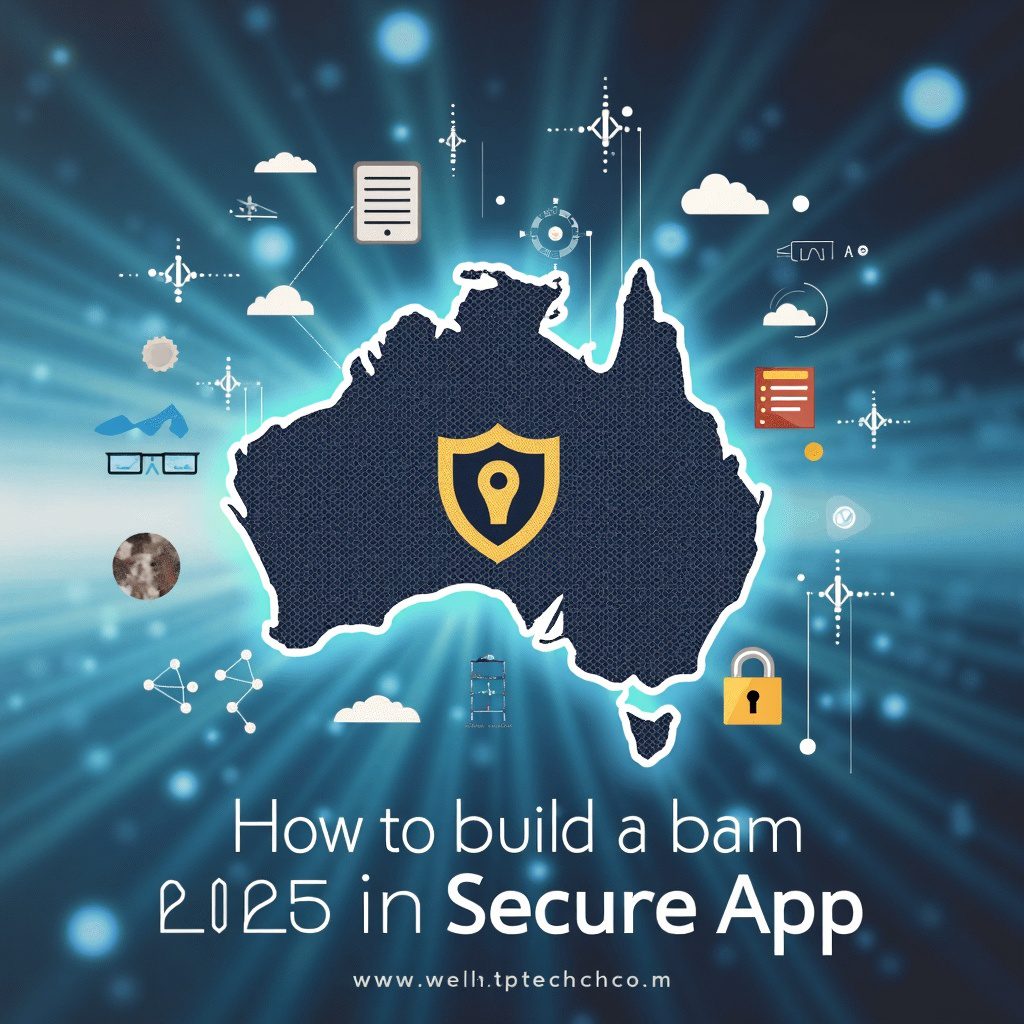
How to Build a Secure App in Australia in 2025: All You Need to Know

Introduction As Australia steps up its digital transformation, app security is now a primary concern for startups, corporates, and government-backed platforms alike. With advanced cyber threats and strict national regulations, building a secure app in 2025 means much more than encrypting logins—it requires a holistic, compliance-driven approach that covers every stage of the software lifecycle. This guide covers everything you need to know, from regulations and technical controls to security-first DevOps and ongoing maintenance. Key Australian Security Regulations and Frameworks Privacy Act 1988 & APPs: The foundation of data privacy in Australia. Your app must comply with 13 Australian Privacy Principles, covering data collection, storage, consent, access, and correction. Cyber Security Bill 2024: Part of Australia’s national strategy—mandates regular security testing and proactive strategies across all digital services. Consumer Data Right (CDR): Grants users power over their data and enforces encrypted, permission-based sharing (especially for fintech, energy, health, and telecom apps). ACSC Essential Eight: Critical mitigation strategies from the Australian Cyber Security Centre, such as application whitelisting, multi-factor authentication (MFA), and prompt patching. Core Features for Securing an Australian App End-to-End Encryption: Encrypt all data in transit (user–server, API, third party) and at rest (device, cloud) using robust algorithms. Multi-Factor Authentication (MFA): Integrate frameworks for MFA, with support for biometrics and one-time passwords. Role-Based Access Control (RBAC): Restrict user and admin permissions based on roles, minimizing access to sensitive data. Secure APIs: Use HTTPS, OAuth 2.0, JWT tokens, and strict input validation to prevent API exploits. Comprehensive Logging and Monitoring: Track user actions and anomalies for rapid detection, audits, and incident response. Patching and Upgrades: Keep dependencies current and patch vulnerabilities quickly, including those in third-party code. Compliance Dashboards: Centralize reporting for legal audits and provide automated alerts for non-compliance. Secure App Development Lifecycle Planning: Embed security and compliance goals from day one. Map data flows, model threats, and document all regulatory requirements. Development: Enforce secure coding practices, code reviews, static and dynamic code analysis, and minimize hardcoded secrets. Testing: Use SAST, DAST, and regular penetration testing. Validate your app against all current regulatory checklists. Deployment: Harden infrastructure, enforce API keys/credentials management, enable HTTPS everywhere, and use infrastructure-as-code for secure, repeatable builds. Ongoing Maintenance: Monitor for threats 24/7, apply critical security patches, and train your development team on the latest exploits and mitigations. Include real incident and breach response plans in policy documents. 2025 Security Trends for Australian Apps AI and ML Threat Intelligence: Use AI-powered monitoring for real-time anomaly detection and automated response. Cloud Security Posture Management (CSPM): Automated review of your cloud setup for misconfigurations or vulnerabilities. DevSecOps: Integrate security into your CI/CD pipeline to catch vulnerabilities before release. Post-Quantum Cryptography: Begin evaluating quantum-resistant encryption, especially for finance and government apps. Software Supply Chain Security: Monitor and document all third-party libraries/SBOMs to patch supply-chain threats rapidly. Overcoming Common Challenges Evolving Threats: Proactively adopt AI-based security solutions and maintain strong ties with cybersecurity experts and Australian government resources. User Experience vs. Security: Use frictionless MFA (biometrics), smart session management, and clear notifications to balance security with user delight. Multi-Jurisdictional Compliance: Architect your app for modular compliance, making it easy to adjust for international rules (like GDPR or CCPA) when expanding. Conclusion Building a secure app in Australia in 2025 means thoroughly integrating regulatory compliance, technical controls, and proactive threat intelligence into your development process. Start with security at the planning stage, close every gap with modern frameworks and ongoing audits, and always act on the principle that securing your users’ data is the cornerstone of building trust, credibility, and long-term business success. For expert support, compliance consulting, and secure digital product development, consider partnering with industry leaders such as TechOTD. FAQ 1. What are must-haves for secure app development in Australia? End-to-end encryption, role-based access, secure coding, regular audits, compliance with the Privacy Act, and ongoing threat monitoring. 2. Which regulations are most important for my app? The Privacy Act 1988, Cyber Security Bill 2024, Consumer Data Right, and ACSC’s Essential Eight are crucial for all major industries. 3. Is compliance optional? Absolutely not—non-compliance risks fines, lawsuits, reputation loss, and app bans. 4. How do I keep up with threats? Adopt DevSecOps, use AI-based monitoring, engage in regular training, and partner with security experts. 5. Can my team do this alone? Many choose to work with specialist partners for compliance  and complex technical challenges. Review TechOTD’s web and AI offerings for expert help.

How would you like me to respond?

Select a personality for your AI assistant

Normal
Happy
Sad
Angry

Your selection will affect how the AI assistant responds to your messages

Chat Assistant

Let's discuss your project!

Hear from our clients and why 3000+ businesses trust TechOTD

Tell us what you need, and we'll get back with a cost and timeline estimate

Scroll to Top