

DeFi

A futuristic infographic titled 'BLOCKCHAIN & TECHNOLOGY,' showing a central blockchain icon connected to other technologies like AI, IoT, Cybersecurity, DeFi, NFTs, and Web3.
Blockchain & Technology

Blockchain’s Role in Building Tomorrow’s Tech

Introduction What do AI, cybersecurity, and the future of the internet (Web3) have in common? They all have critical problems with trust, security, and centralization. Blockchain technology is emerging as the key solution to all three. It’s the invisible architecture that provides the security for our data, the transparency for our transactions, and the ownership of our digital assets. Let’s dive into the technology ecosystem that blockchain is building right now. What is Blockchain? At its simplest, a blockchain is a secure, digital ledger that is shared among many computers in a network. Once a piece of information (a “block”) is added to the ledger, it is linked to the previous block using cryptography, creating a “chain.” This structure makes it immutable, meaning once data is recorded, it is extremely difficult to change or remove. Core Components Decentralization: Instead of one person or company controlling the ledger (like a single bank), the ledger is copied and spread across many computers. This means no single entity has control, and there is no single point of failure. Cryptography: Every transaction is secured and verified using advanced math. This ensures that only the rightful owner can access their assets and that all records are authentic. Blocks: These are the “pages” of the ledger. Each block contains a batch of recent, verified transactions. Consensus Mechanism: This is the “rulebook” that the network follows to agree on which transactions are valid and can be added to the chain (e.g., Proof-of-Work or Proof-of-Stake). The Big Trends: Web3, DeFi, and NFTs Blockchain is the foundational technology for several major trends: Web3: This is the idea of a new, decentralized internet. Web1 was the “read-only” internet (static websites). Web2 is the “read-write” internet we use today (social media, user-generated content), but it’s controlled by large tech companies. Web3 aims to be a “read-write-own” internet, where users control their own data and identity using blockchain. DeFi (Decentralized Finance): This is an entire ecosystem of financial applications built on blockchain. It aims to recreate traditional financial systems (like lending, borrowing, and trading) without the need for intermediaries like banks. Users interact directly with smart contracts. NFTs (Non-Fungible Tokens): An NFT is a unique digital certificate of ownership for an asset (like a piece of digital art, a collectible, or even a real-world item). “Non-fungible” means it’s one-of-a-kind and cannot be replaced by another, unlike a dollar bill, which is fungible. This ownership is recorded and verifiable on the blockchain. Blockchain’s Integration with Other Technologies Blockchain doesn’t exist in a bubble. Its real power is unlocked when combined with other technologies. 1. Artificial Intelligence (AI) Data Integrity: AI models are only as good as the data they’re trained on. Blockchain can provide an immutable, verifiable audit trail for AI training data, ensuring it hasn’t been tampered with and proving its origin. Decentralized AI: It enables “Federated Learning,” where an AI model can be trained across multiple devices without the users’ private data ever leaving their device. The blockchain is used to log and verify the model’s updates, protecting user privacy. 2. Internet of Things (IoT) Security: IoT networks often have thousands of simple devices (like sensors) that are vulnerable to hacking. Blockchain can create a secure, decentralized network for these devices to communicate directly and verifiably, preventing a central server from being hacked. Traceability: For supply chains, an IoT sensor can log a package’s temperature and location to a blockchain at every step. This creates a tamper-proof record that all parties (the producer, the shipper, the customer) can trust. 3. Cybersecurity Decentralized Identity: Instead of relying on Google or Facebook to log in to websites, blockchain allows for Self-Sovereign Identity (SSI). You would control your own digital identity, stored securely, and grant specific, temporary access to services that need to verify it. Mitigating Attacks: By decentralizing data storage, blockchain can help prevent large-scale data breaches. It also makes systems more resilient to Distributed Denial of Service (DDoS) attacks, as there is no single central server to overwhelm Conclusion In conclusion, blockchain has evolved far beyond its origins in cryptocurrency. It is now the essential “trust layer” for the next generation of technology. By providing a decentralized, immutable, and transparent ledger, it solves the critical vulnerabilities in our current systems. It’s the thread that securely connects AI models to verifiable data, enables IoT devices to communicate without a central point of failure, and provides the very foundation for a user-owned internet in Web3, DeFi, and NFTs. As we move forward, it’s clear that blockchain isn’t just another technology in the stack; it’s the fundamental architecture the future is being built on. FAQ Q1: What is blockchain in the simplest terms? Blockchain is a digital ledger, like a shared notebook, that is duplicated and spread across many computers. Once a transaction (a “block”) is added to this notebook, it’s cryptographically linked to the one before it, creating a “chain.” This structure makes the data immutable, meaning it’s nearly impossible to change or tamper with. Q2: Isn’t blockchain just for Bitcoin and cryptocurrency? No. While Bitcoin was the first major application, it’s just one use case. Blockchain is the underlying technology that enables cryptocurrencies, but its core value is in providing a secure and decentralized way to record any kind of data. It’s now being used in supply chains, healthcare, voting systems, cybersecurity, and more. Q3: What’s the difference between Blockchain and Web3? Think of blockchain as the tool and Web3 as the movement. Blockchain is the specific technology (a decentralized ledger). Web3 is the broader vision for a new, decentralized internet built using tools like blockchain, crypto, and decentralized networks. Web3’s goal is to shift control from large tech companies to individual users. Q4: How does blockchain work with Artificial Intelligence (AI)? Blockchain can be seen as the “source of truth” for AI. Data Integrity: It provides a tamper-proof log of the data used to train an AI model, so you can verify its origin and quality. Privacy: It enables federated learning,

Blockchain & Technology, Uncategorized

An Entrepreneur’s Guide on Blockchain Technology and Its Uses

Introduction Blockchain technology is rapidly transforming the way businesses operate and engage with customers worldwide. For entrepreneurs, understanding blockchain’s fundamentals and practical applications is crucial to leveraging its potential for innovation, security, and efficiency. Blockchain’s decentralized, transparent, and tamper-proof nature brings new possibilities in finance, supply chain, healthcare, real estate, and beyond. This guide dives deep into what blockchain is, how it works, entrepreneurial opportunities it offers, and strategies for deploying blockchain solutions successfully. What is Blockchain Technology? Blockchain is a decentralized digital ledger that records transactions across multiple computers in a way that prevents alterations retroactively. Unlike traditional centralized databases, blockchain distributes data to enhance security, transparency, and trust. Key Features of Blockchain Decentralization: No single entity controls the database. Immutability: Once recorded, data cannot be changed or deleted. Transparency: Transactions are visible to all network participants. Security: Cryptographic techniques ensure data integrity and authentication. Smart Contracts: Automated agreements that execute when predefined conditions are met. Blockchain’s revolutionary architecture enables trustless transactions and collaborates with other technologies such as AI and IoT for smarter business processes (TechOTD AI). How Blockchain Works: A Simplified Explanation At its core, a blockchain consists of a chain of blocks, each containing batches of verified transactions. When a new transaction occurs: It is broadcast to a peer-to-peer network of nodes. These nodes validate the transaction using consensus mechanisms such as Proof of Work or Proof of Stake. Validated transactions are grouped into a block and added to the chain chronologically. The distributed ledger is updated across all nodes simultaneously, ensuring synchronization. This process prevents fraud and establishes a permanent, auditable record. Entrepreneurial Applications of Blockchain Entrepreneurs stand to gain from blockchain in various sectors by solving traditional business challenges like fraud, inefficiency, and lack of transparency. Finance and Payments Cryptocurrencies: Decentralized digital currencies enable borderless payments and lower transaction fees. Decentralized Finance (DeFi): Offers lending, borrowing, and investment platforms without intermediaries. Fraud Prevention: Immutable ledgers combat identity theft and financial fraud. Supply Chain Management Provenance Tracking: Blockchain verifies product origin and handling through transparent records. Counterfeit Mitigation: Assures authenticity across complex supply chains. Efficiency: Automates reconciliation and reduces paperwork with smart contracts (blockchain integration Dubai). Healthcare Patient Records: Secure sharing of medical data with privacy compliance assurance. Drug Traceability: Track and verify pharmaceuticals to prevent counterfeit drugs. Research Collaboration: Trusted platforms for clinical trials data sharing. Real Estate Property Transactions: Streamlines title transfers and notarization via smart contracts. Fractional Ownership: Enables micro-investments and liquidity in real estate markets. Digital Identity Allows self-sovereign identity management where users control access to personal data securely. Benefits of Blockchain for Entrepreneurs Entrepreneurs leveraging blockchain technologies enjoy multiple advantages: Increased Transparency and Trust: Builds credibility with customers and partners. Improved Security and Reduced Fraud: Mitigates cyber risks effectively. Operational Efficiency: Automates workflows, reducing manual errors and delays. Cost Savings: Cuts intermediaries and transaction costs. Access to New Markets: Cryptocurrencies and DeFi open global customer bases. Innovative Business Models: Enables tokenization, decentralization, and new monetization avenues (TechOTD Services). How to Implement Blockchain in Your Business Implementing blockchain requires a strategic approach blending technology assessment, product design, and ongoing support: Analyze Business Needs: Determine pain points suited for blockchain solutions (How We Work). Evaluate Data and Infrastructure: Ensure necessary data quality and system compatibility. Design the Blockchain Product: Define architecture, blockchain type (public/private/consortium), and select the right tech stack (Ethereum, Hyperledger, etc.). Develop and Test: Collaborate with experienced developers for prototyping, testing, and refinement. Deployment and Integration: Integrate with existing systems securely, possibly using cloud platforms. Ongoing Support and Optimization: Monitor, update, and optimize blockchain solutions continuously (TechOTD AI Deployment). Challenges and Considerations for Entrepreneurs While blockchain offers powerful benefits, entrepreneurs must be aware of common challenges: Regulatory and Compliance Risks: Stay updated with evolving laws in different regions. Scalability Issues: Public blockchains sometimes face throughput and latency constraints. Energy Consumption: Proof of Work blockchains consume significant energy; prefer sustainable protocols. Technical Complexity: Expertise needed to develop and manage blockchain infrastructure. Integration with Legacy Systems: Can be complex and costly. User Adoption: Requires educating stakeholders on new processes and trust models. Address these issues with expert consultation and phased implementation. Future Trends: Blockchain Plus AI and Beyond The future of entrepreneurship lies in combining blockchain with emerging technologies: AI-Driven Smart Contracts: More autonomous, adaptive contracts with predictive functions (seamless AI customer journeys). Decentralized Autonomous Organizations (DAOs): Innovating business governance without centralized control. Interoperability Protocols: Connecting multiple blockchains for seamless data and asset transfers. Blockchain for IoT Security: Enhancing device trustworthiness and data integrity. Predictive Analytics on Blockchain Data: Unique insights via secure, decentralized data pools (predictive analytics guide). Conclusion Blockchain technology is more than a buzzword; it is a foundational innovation enabling entrepreneurs to create more secure, transparent, and efficient businesses. By understanding blockchain’s core principles, entrepreneurial opportunities, benefits, and challenges, business leaders can chart a clear course for digital transformation. Embracing blockchain alongside AI, IoT, and predictive analytics unlocks unprecedented potential for innovation and competitive advantage in a rapidly evolving marketplace. For entrepreneurs ready to embark on their blockchain journey, partnering with experts like TechOTD ensures access to premium AI, blockchain, and custom software development services tailored to specific business needs and scaling goals. Book a consultation today to harness blockchain’s power for your enterprise: TechOTD AI Services.

Blockchain & Technology

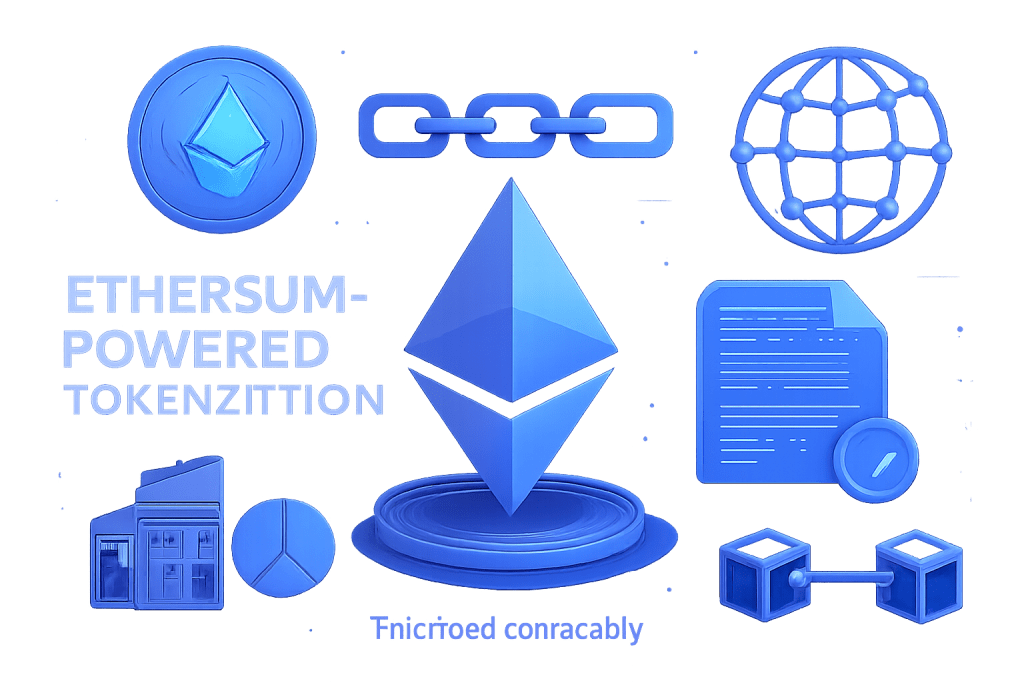
Ethereum Tokenization in 2025

Introduction Tokenization is transforming the world of finance—turning real-world assets like stocks, bonds, real estate, and commodities into programmable digital securities. By 2025, Ethereum has emerged as the backbone for this new wave, making security tokens more accessible, transparent, and efficient than ever before. This blog explores how Ethereum is powering institutional adoption, what’s driving the surge in security tokens, and how technical advances and regulatory clarity are unlocking trillion-dollar opportunities for businesses, investors, and fintech innovators. Data Analytics in Banking: Transforming Finance in 2025   What Is Tokenization, and Why Does It Matter in 2025?   Tokenization is the process of converting rights to an asset into a digital token on a blockchain. With security tokens, these digital assets follow strict legal and regulatory frameworks, combining blockchain transparency with the safeguards of traditional finance. Why it matters: Improved liquidity & 24/7 trading Fractional ownership and instant settlement Lower transaction costs and fewer intermediaries Greater transparency and auditability Improved access for global retail and institutional investors Key Trends Shaping Ethereum Tokenization   1. Regulatory Clarity and Institutional Adoption Security tokens are no longer experimental. As of 2025, global regulators have established clear frameworks for tokenized securities, enabling traditional banks, asset managers, and major trading platforms to enter the space confidently. Major institutions are deploying capital at scale and demanding industrial-strength tokenization platforms. 2. Ethereum: The Platform of Choice Mature Standards: ERC-3643 and ERC-1400, designed specifically for compliance and transfer restrictions, are widely used for security token management. On-Chain Compliance: Automation of KYC/AML and transfer validations through smart contracts. Interoperability: Seamless integration with DeFi, Layer-2 solutions, other blockchains, and real-world financial infrastructure. 3. Growing Tokenization Use Cases Tokenized Treasuries: Over $24 billion in real-world assets (RWAs) are already tokenized—including U.S. Treasuries (the largest category), real estate, and private equity. New Asset Categories: Equity, credit funds, and even IP rights are joining the tokenized economy. Programmable Compliance: Smart contracts automate rule enforcement, dividend payouts, voting, and more. How Security Tokens Work on Ethereum   Asset Selection: Real-world asset (e.g., stock, real estate) is chosen for tokenization. Token Standardization: Security tokens are created using ERC-3643, ERC-1400, or ERC-1404—which enforce compliance and transfer rules at the smart contract level. Custody & Compliance: Assets are held by licensed custodians. On-chain KYC/AML controls who can hold or trade tokens. Issuance & Trading: Tokens are issued, managed, and traded digitally on compliant exchanges and marketplaces—enabling instant, global liquidity. Reporting & Analytics: Immutable audit logs, real-time reporting, privacy features (with zero-knowledge proofs), and AI-powered anomaly detection. Benefits of Ethereum-Powered Tokenization     Efficiency: Near-instant settlement, automated compliance, and fewer intermediaries cut costs and speed up processes. Transparency: Blockchain’s auditability reduces fraud, manual errors, and regulatory risk. Programmability: Automated dividends, voting, or redemption logic embedded in smart contracts. Accessibility: Fractional ownership democratizes investment in previously illiquid or exclusive asset classes. Challenges and What’s Ahead   Scalability: Layer-2s and rollups address throughput and cost concerns. Privacy & Security: Zero-knowledge cryptography and robust custody solutions balance transparency with confidentiality. Interoperability: Bridges, modular architectures, and evolving standards let tokens move across platforms and chains. Market Education: As the benefits become clearer, financial institutions, governments, and investors are accelerating adoption. Real-World Examples Making Waves   Apollo Global’s On-Chain Credit Fund: Tokenized funds operational on Ethereum. Robinhood & eToro: Offering tokenized equity in private companies exclusively on Ethereum. Major Banks & Agencies: Adopting tokenization for bonds, funds, and supply chain finance. Conclusion Ethereum tokenization in 2025 is ushering in an era where security tokens are foundational to the next generation of capital markets. Backed by regulatory clarity, technical maturity, and rising institutional demand, Ethereum is enabling programmable, borderless, and transparent assets that redefine access to investment and unlock new models for global finance. Ready to harness blockchain for financial innovation? Discover tailored tokenization, smart contract, and decentralized finance solutions for your enterprise at TechOTD, or explore AI-powered smart contract analytics and integration with TechOTD AI, custom development services, and more. FAQ 1. What are security tokens? Security tokens are digital representations of ownership in assets like stocks, funds, or real estate, issued and traded on blockchain networks under regulatory compliance. 2. Why is Ethereum preferred for tokenization? Ethereum offers mature standards (ERC-3643, ERC-1400), programmable compliance, a vibrant DeFi ecosystem, and proven reliability. 3. What assets are being tokenized in 2025? U.S. Treasuries, real estate, private equity, credit funds, and even intellectual property rights. 4. How does compliance work on-chain? Smart contracts automate transfer restrictions, KYC/AML, cap tables, and reporting, with audit trails and privacy layers. 5. Can retail investors participate? Yes, as regulatory clarity spreads, access is broadening—fractional ownership opens doors to global retail and institutional investors.

How would you like me to respond?

Select a personality for your AI assistant

Normal
Happy
Sad
Angry

Your selection will affect how the AI assistant responds to your messages

Chat Assistant

Let's discuss your project!

Hear from our clients and why 3000+ businesses trust TechOTD

Tell us what you need, and we'll get back with a cost and timeline estimate

Scroll to Top