Cloud Computing

Modern data center with servers representing AWS cloud computing
aws

Understanding AWS Cloud Computing: A Complete Beginner’s Guide

Introduction In today’s digital era, cloud computing has become the foundation of modern IT infrastructure — and Amazon Web Services (AWS) stands tall as its undisputed leader. From small startups to Fortune 500 giants, businesses worldwide rely on AWS to build, scale, and innovate faster than ever before. But what exactly is AWS? How does it work? And why has it become so essential for the global tech ecosystem? This detailed guide breaks down AWS Cloud Computing in simple terms — exploring its services, advantages, architecture, and how it’s shaping the future of business and technology. What is AWS (Amazon Web Services)? Amazon Web Services (AWS) is a cloud computing platform developed by Amazon that provides on-demand IT resources over the internet on a pay-as-you-go basis. Instead of purchasing expensive hardware or managing physical servers, users can rent computing power, storage, databases, and other services from AWS and scale them as needed. In short, AWS allows you to: Build and host applications Store and process data Analyze large datasets Deploy AI and machine learning models Create global-scale systems — all without owning any physical infrastructure How AWS Cloud Computing Works AWS operates on a shared infrastructure model, which means multiple customers share the same underlying hardware and resources securely through virtualization. The AWS ecosystem consists of three main layers: Infrastructure as a Service (IaaS): Virtual servers, storage, and networking (e.g., EC2, S3). Platform as a Service (PaaS): Managed environments for application development (e.g., AWS Elastic Beanstalk). Software as a Service (SaaS): Ready-to-use cloud-based software applications. You can manage everything through: AWS Management Console (Web UI) AWS CLI (Command Line Interface) AWS SDKs (for programming languages) Key AWS Services Explained AWS offers 200+ fully featured services — here are some of the most popular ones categorized for better understanding 👇 1. Compute Services These handle your application’s processing power. Amazon EC2 (Elastic Compute Cloud): Virtual servers that run applications. AWS Lambda: Serverless computing — runs code automatically when triggered. Elastic Beanstalk: Automatically deploys and manages web applications. ECS / EKS: Manage Docker containers and Kubernetes clusters. 2. Storage Services For storing and retrieving any amount of data anytime. Amazon S3 (Simple Storage Service): Scalable object storage for files, images, backups. Amazon EBS: Persistent block storage for EC2 instances. Amazon Glacier / S3 Glacier Deep Archive: Long-term data archiving at low cost. 3. Database Services Fully managed databases for different needs. Amazon RDS: Relational databases like MySQL, PostgreSQL, Oracle, SQL Server. Amazon DynamoDB: Fast NoSQL database for real-time applications. Amazon Redshift: Data warehousing and analytics. 4. Security and Identity AWS Identity and Access Management (IAM): Manage user permissions and roles. AWS Shield & WAF: Protection against DDoS and web attacks. AWS KMS: Manage encryption keys for data protection. 5. Networking and Content Delivery Amazon VPC (Virtual Private Cloud): Isolated cloud network environment. Route 53: Domain name service and routing. AWS CloudFront: Global content delivery network (CDN) for faster website loading. 6. Artificial Intelligence & Machine Learning AWS provides advanced AI capabilities through easy-to-use APIs and frameworks. Amazon SageMaker: Build, train, and deploy machine learning models. AWS Lex: Natural language chatbot framework (used in Alexa). AWS Rekognition: Image and video recognition API. AWS Polly: Text-to-speech service. 7. Developer and Management Tools AWS CloudFormation: Automate resource deployment using templates. AWS CloudWatch: Monitor system health and performance. AWS CodeBuild / CodePipeline: Continuous integration and deployment tools. Benefits of Using AWS Cloud Computing Scalability and FlexibilityInstantly scale up or down based on demand. Perfect for growing startups and large enterprises alike. Cost-Effective (Pay-as-You-Go)No upfront investment — pay only for what you use. Reliability and AvailabilityAWS operates data centers in multiple Availability Zones (AZs) worldwide ensuring 99.99% uptime. Security and ComplianceAdvanced encryption, network isolation, and compliance with international standards like ISO and GDPR. Global ReachWith over 30 regions worldwide, AWS delivers low-latency experiences anywhere. Integration and EcosystemSeamless integration with third-party apps and other AWS services. Real-World Examples of AWS in Action 1. Netflix Netflix runs its entire global streaming infrastructure on AWS, using EC2, S3, and CloudFront to deliver videos to millions of users in real time. 2. Amazon.com Naturally, Amazon itself uses AWS to power e-commerce operations, analytics, and logistics automation. 3. NASA NASA uses AWS to store and analyze satellite data, making it available for researchers worldwide. 4. Capital One The financial giant uses AWS for secure cloud-based banking applications, fraud detection, and data analysis. AWS Pricing Explained AWS follows a pay-as-you-go model, meaning you only pay for the computing resources you use.Pricing depends on: Service type (e.g., EC2 vs. S3) Usage time (per hour or per second) Region (data center location) Data transfer and storage You can also use: AWS Free Tier: Try 100+ services free for 12 months. AWS Pricing Calculator: Estimate monthly costs before deploying. Challenges of AWS Despite its power, AWS isn’t perfect. Common challenges include: Complex pricing structure. Learning curve for beginners. Over-dependence on one provider (vendor lock-in). Cost overruns if resources aren’t monitored properly. The Future of AWS AWS is rapidly evolving beyond traditional cloud computing. Emerging trends include: Serverless computing becoming mainstream. AI and ML integration across services. Quantum computing development (via Amazon Braket). Sustainability initiatives, making AWS data centers carbon-neutral. AWS is no longer just infrastructure — it’s an innovation ecosystem that powers the digital transformation of the modern world. Conclusion AWS Cloud Computing has revolutionized the way organizations build, deploy, and scale applications. With its vast array of services, global reach, and flexible pricing, AWS remains the go-to platform for startups, enterprises, and developers alike. Whether you’re launching a new app, running data analytics, or exploring AI, AWS gives you the tools, flexibility, and speed to innovate at scale — all from the cloud. Frequently Asked Questions (FAQs) Q1. What is AWS Cloud Computing? Answer: AWS (Amazon Web Services) is a comprehensive cloud platform that provides on-demand access to IT resources like servers, storage, databases, and software — all accessible over the internet on a pay-as-you-go basis. It helps organizations build and scale applications without


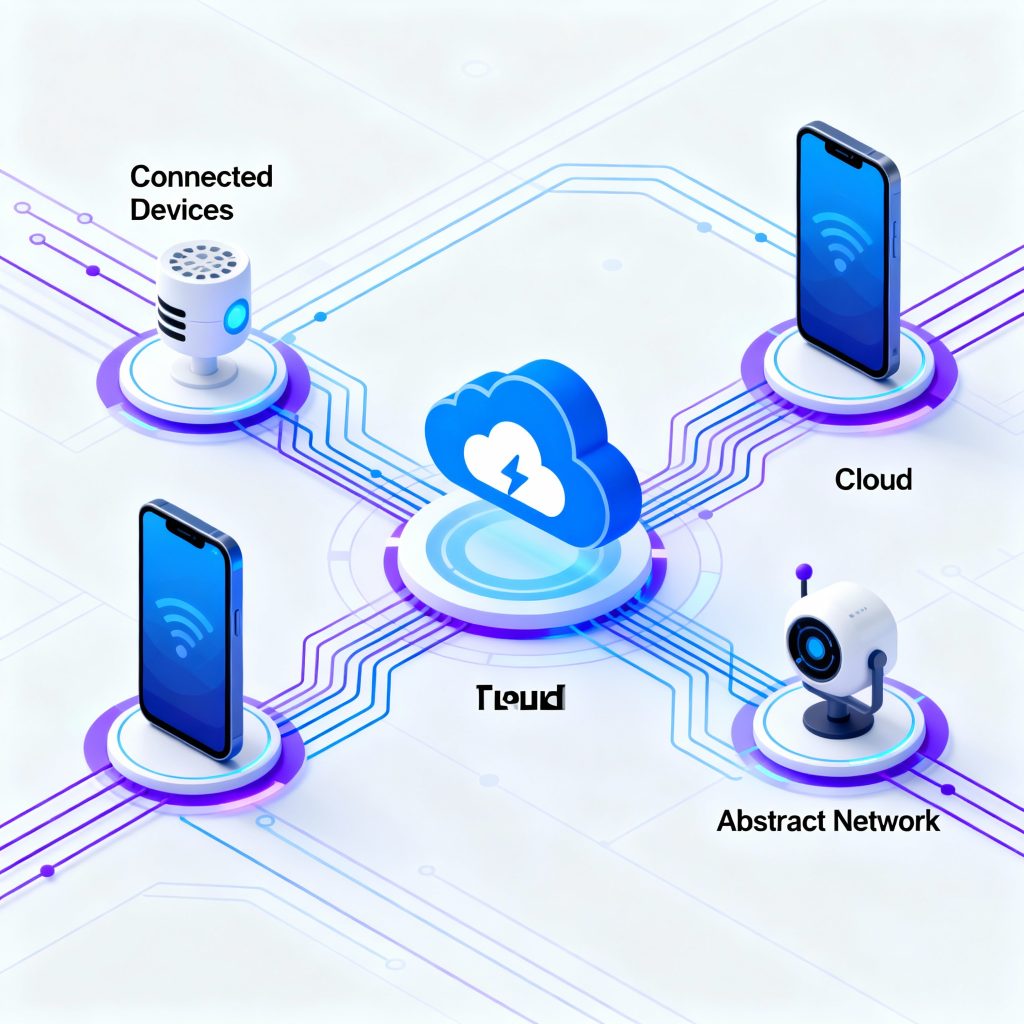
Digital cloud network symbolizing data storage and online connectivity.
Cloud Computing and Technology

The Role of Cloud Computing in Digital Transformation

Introduction In today’s rapidly evolving digital world, cloud computing has emerged as the foundation of transformation across industries. From startups to Fortune 500 companies, organizations are migrating their systems, applications, and data to the cloud to unlock agility, scalability, and innovation. Digital transformation is not merely about adopting technology — it’s about reimagining how a business operates, delivers value, and interacts with customers. Cloud computing makes this possible by providing on-demand access to computing resources that drive automation, data analytics, and artificial intelligence — without the constraints of physical infrastructure. This blog explores how cloud computing is shaping the digital era, its benefits, key technologies, challenges, and its indispensable role in driving business modernization. What is Cloud Computing? Cloud computing refers to the delivery of computing services — such as servers, storage, databases, networking, software, and analytics — over the internet (“the cloud”). Instead of owning and maintaining hardware, organizations rent access from cloud providers like Amazon Web Services (AWS), Microsoft Azure, and Google Cloud Platform (GCP). Cloud computing enables flexibility, cost-efficiency, and scalability, making it easier for companies to innovate and compete globally. The Three Main Types of Cloud Computing Infrastructure as a Service (IaaS):Provides virtualized computing resources like servers, storage, and networking.Example: AWS EC2, Google Compute Engine. Platform as a Service (PaaS):Offers a platform for developers to build, run, and manage applications without managing infrastructure.Example: Microsoft Azure App Service, Heroku. Software as a Service (SaaS):Delivers software applications via the internet on a subscription basis.Example: Google Workspace, Salesforce, Zoom. Cloud Deployment Models Public Cloud: Services offered over the internet, accessible to multiple users. (e.g., AWS, Azure) Private Cloud: Dedicated cloud infrastructure for a single organization, offering greater control and security. Hybrid Cloud: A combination of public and private clouds for flexibility and workload optimization. Multi-Cloud: Using multiple cloud providers to avoid vendor lock-in and improve resilience. The Role of Cloud Computing in Digital Transformation 1. Enabling Agility and Innovation Cloud platforms allow businesses to deploy and scale applications instantly. Developers can test new ideas faster without waiting for physical infrastructure, fostering a culture of innovation. 2. Empowering Data Analytics and AI Cloud computing provides scalable storage and computational power for big data analytics, machine learning, and AI-driven insights.Companies can analyze massive datasets in real-time to improve decision-making and customer personalization. 3. Enhancing Collaboration and Productivity Cloud tools like Google Workspace, Microsoft 365, and Slack enable real-time collaboration across teams worldwide, boosting productivity and connectivity. 4. Strengthening Cybersecurity Modern cloud platforms offer advanced encryption, identity management, and AI-powered threat detection to protect sensitive data.For example, Microsoft Azure Security Center continuously monitors cloud environments for vulnerabilities. 5. Cost Efficiency and Scalability Cloud computing eliminates the need for large upfront hardware investments. Businesses pay only for the resources they use, scaling up or down as demand changes. 6. Supporting Remote Work The pandemic accelerated the shift to remote work — and cloud-based tools made it possible. Employees can securely access applications and files from anywhere, anytime. 7. Business Continuity and Disaster Recovery Cloud providers offer redundancy and backup solutions, ensuring business continuity even in the face of system failures or disasters. Real-World Examples of Cloud-Driven Digital Transformation 1. Netflix Netflix uses AWS to stream video content globally. Cloud scalability allows it to handle millions of users simultaneously while analyzing viewing patterns for recommendations. 2. Airbnb Airbnb relies on cloud computing for hosting its marketplace, managing bookings, and processing real-time analytics to enhance user experiences. 3. NASA NASA uses the cloud to store and share space exploration data securely and efficiently across research teams worldwide. 4. Spotify Spotify leverages Google Cloud for AI-driven music recommendations, improving user engagement and retention. Benefits of Cloud Computing in Digital Transformation Scalability: Easily adjust computing resources based on demand. Flexibility: Deploy applications and services faster across multiple regions. Innovation: Accelerates AI, IoT, and data analytics capabilities. Reduced Costs: Cuts hardware and maintenance expenses. Security and Compliance: Offers robust security frameworks with global compliance standards. Sustainability: Cloud providers use energy-efficient data centers, reducing carbon footprints. Challenges in Cloud Adoption Data Privacy and Compliance: Handling sensitive information across borders can raise legal issues. Vendor Lock-In: Dependence on one provider may limit flexibility. Downtime and Service Reliability: Internet outages can disrupt access to cloud services. Security Risks: Misconfigurations or weak access controls may lead to breaches. Cost Management: Unmonitored usage can lead to unexpected expenses. Emerging Trends in Cloud Computing 1. Multi-Cloud Strategies Organizations are increasingly adopting multi-cloud environments to avoid dependence on a single provider and enhance resilience. 2. Edge Computing Integration Combining cloud and edge computing allows data to be processed closer to the source for faster response times. 3. Serverless Architecture Developers can deploy code without managing servers, improving scalability and reducing operational costs. 4. Cloud-Native Applications Microservices and containerization (via Docker and Kubernetes) enable faster, more agile software development. 5. AI-Driven Cloud Management AI helps optimize cloud performance, automate resource allocation, and detect security threats proactively. Cloud Computing and Sustainability Cloud computing is playing a crucial role in achieving green IT goals. Major providers are investing in renewable energy and energy-efficient data centers.For example, Google Cloud aims to run entirely on carbon-free energy by 2030, setting a benchmark for sustainable digital transformation. Conclusion Cloud computing is the backbone of digital transformation — enabling businesses to become more agile, data-driven, and customer-focused.It breaks traditional IT barriers, accelerates innovation, and empowers organizations to adapt to rapidly changing markets. As companies continue to embrace cloud-based ecosystems, the future will belong to those who combine the power of cloud, AI, and edge technologies to deliver smarter, faster, and more sustainable digital solutions. FAQs 1. What role does cloud computing play in digital transformation? Cloud computing provides flexible, scalable, and cost-effective IT infrastructure that enables digital transformation across industries. 2. How does cloud computing improve business efficiency? It automates operations, enhances collaboration, and allows rapid deployment of applications without large capital investment. 3. What are examples of cloud-based tools used in business? Google Workspace, AWS, Microsoft Azure, Salesforce, and Slack

Data analytics dashboard displaying visual graphs and metrics for business performance.
Big Data

Big Data Analytics: Powering Smarter Decisions in the Digital Age

Introduction In the modern world, data is often referred to as the “new oil” — a resource that drives innovation, business growth, and strategic decision-making. However, unlike oil, data’s value depends on how effectively it is analyzed and interpreted. This is where Big Data Analytics comes into play. From personalized recommendations on Netflix to predictive maintenance in manufacturing, Big Data has transformed the way organizations operate. By turning massive volumes of raw data into actionable insights, companies can make faster, smarter, and more confident decisions. In this blog, we’ll explore what Big Data Analytics is, its key components, real-world applications, benefits, challenges, and the future trends shaping this powerful field. What is Big Data Analytics? Big Data Analytics is the process of examining large and complex data sets — often too vast for traditional processing systems — to uncover hidden patterns, correlations, trends, and insights. It involves using advanced technologies like machine learning, artificial intelligence (AI), cloud computing, and data visualization to make sense of massive data generated every second. The 5Vs of Big Data: Volume: The huge amount of data generated from sources like social media, IoT devices, and transactions. Velocity: The speed at which new data is created and needs to be processed. Variety: The different formats of data — structured, semi-structured, and unstructured. Veracity: The reliability and accuracy of data. Value: The insights and business impact derived from analyzing the data. Types of Big Data Analytics Descriptive Analytics: Answers “What happened?” by summarizing historical data (e.g., monthly sales reports). Diagnostic Analytics: Answers “Why did it happen?” by identifying causes and relationships. Predictive Analytics: Answers “What might happen?” using statistical models and forecasting. Prescriptive Analytics: Answers “What should we do next?” by recommending actions based on predictive insights. Together, these analytics types empower organizations to move from hindsight to foresight, enabling smarter business strategies. How Big Data Analytics Works The process involves several key steps: Data Collection: Gathering data from sources such as IoT devices, social media, transactions, and sensors. Data Storage: Using platforms like Hadoop, Apache Spark, or cloud databases to store massive datasets. Data Processing: Cleaning and transforming raw data into usable formats. Data Analysis: Applying algorithms and tools like Python, R, or Power BI to extract insights. Visualization: Presenting data through dashboards and reports to support decision-making. Real-World Applications of Big Data Analytics 1. Healthcare Hospitals and research institutions use Big Data to predict disease outbreaks, personalize treatment plans, and improve patient care.Example: Analyzing patient histories and genetics helps doctors prescribe customized medicines for better outcomes. 2. Retail Retail giants like Amazon and Walmart use analytics to track customer preferences, optimize inventory, and personalize shopping experiences.Example: Big Data predicts buying behavior, allowing targeted ads and product recommendations. 3. Finance Banks and financial institutions use Big Data to detect fraud, assess credit risk, and enhance customer engagement.Example: Real-time fraud detection systems analyze thousands of transactions per second to flag anomalies. 4. Manufacturing Predictive analytics helps manufacturers forecast equipment failures and perform maintenance before breakdowns occur.Example: GE uses Big Data in its “Industrial Internet” to monitor and optimize production equipment globally. 5. Transportation Public and private transport companies analyze data from GPS, sensors, and ticketing systems to improve route efficiency and reduce congestion.Example: Uber uses real-time analytics to match drivers with passengers and set dynamic pricing. 6. Education Educational institutions use data analytics to track student performance, improve learning outcomes, and design adaptive learning programs. Benefits of Big Data Analytics Better Decision-Making: Real-time insights support quick and accurate strategic choices. Operational Efficiency: Identifies inefficiencies and optimizes workflows. Enhanced Customer Experience: Personalizes services based on data-driven behavior analysis. Fraud Detection: Monitors unusual activities and reduces financial risks. Innovation and Competitive Edge: Uncovers new opportunities and emerging market trends. Challenges in Big Data Analytics Data Privacy and Security: Managing sensitive information securely is a major concern. Data Quality Issues: Incomplete or inaccurate data leads to misleading insights. Integration Difficulties: Combining data from multiple systems and formats can be complex. Skill Gaps: There’s a shortage of skilled data analysts and data scientists. Infrastructure Costs: Building and maintaining large-scale data systems can be expensive. Emerging Technologies Shaping the Future of Big Data 1. Artificial Intelligence (AI) and Machine Learning AI automates data processing and enables predictive modeling with higher accuracy. 2. Edge Computing Brings data processing closer to the data source, reducing latency and bandwidth usage. 3. Cloud Analytics Cloud-based solutions make Big Data Analytics more scalable and accessible for businesses of all sizes. 4. Real-Time Analytics Organizations can now act instantly on insights — from fraud detection to dynamic pricing. 5. Data Fabric and Integration Platforms These unify disparate data sources, enabling seamless data sharing across departments. Big Data and Ethics As organizations handle massive amounts of user data, ethical considerations become essential. Businesses must ensure transparency, consent, and fairness in how they collect and analyze data. Implementing strong data governance frameworks and adhering to privacy laws like GDPR and CCPA are vital to maintaining public trust. Conclusion Big Data Analytics is revolutionizing industries, empowering organizations to make data-driven decisions that lead to innovation, efficiency, and growth. As AI, machine learning, and cloud technologies evolve, data analytics will become even more intelligent and accessible. However, success lies in balancing technology with ethical responsibility, ensuring that the power of data serves humanity positively. In the coming years, companies that embrace Big Data Analytics will not just predict the future — they’ll help create it. FAQs 1. What is Big Data Analytics used for? It’s used to analyze large datasets to uncover insights, trends, and patterns that help organizations make better decisions. 2. Which industries use Big Data Analytics the most? Healthcare, finance, retail, manufacturing, and transportation are leading sectors using Big Data for innovation and optimization. 3. How does Big Data improve business performance? It helps companies understand customer behavior, reduce costs, detect fraud, and predict future trends for better strategic planning. 4. What are the main tools for Big Data Analytics? Popular tools include Apache Hadoop, Spark, Tableau, Power

5G network tower with digital signal visualization representing next-generation wireless technology.
telecom

The Future of 5G and Connectivity

Introduction The world is becoming increasingly connected, and 5G technology stands at the center of this transformation. As the fifth generation of wireless communication, 5G promises to revolutionize the way people and devices interact. It offers lightning-fast speeds, ultra-low latency, and the capacity to support billions of connected devices simultaneously. From smart cities and autonomous vehicles to remote surgeries and immersive AR/VR experiences, the potential of 5G extends far beyond mobile networks. This blog explores the future of 5G and connectivity, how it differs from previous generations, its applications across industries, the challenges ahead, and how it will shape the digital world in the coming decade. What is 5G and How Does It Work? 5G is the fifth generation of cellular network technology, succeeding 4G LTE. It is designed to deliver: Higher data speeds (up to 100x faster than 4G) Lower latency (as low as 1 millisecond) Greater network reliability Increased capacity to connect multiple devices simultaneously 5G networks operate on three frequency bands: Low-band: Wide coverage but lower speed (similar to 4G). Mid-band: Balanced speed and coverage, ideal for cities. High-band (mmWave): Extremely fast but limited coverage — perfect for high-density areas like stadiums or urban centers. This combination ensures a flexible, scalable network that can adapt to different environments and user demands. Key Features of 5G Technology Ultra-Low Latency: Enables real-time communication, crucial for remote surgeries or autonomous vehicles. Massive Device Connectivity: Supports the Internet of Things (IoT) ecosystem, connecting sensors, wearables, and smart home devices seamlessly. Enhanced Speed and Bandwidth: Delivers gigabit-level download and upload speeds. Energy Efficiency: Uses advanced network slicing and intelligent routing to reduce power consumption. Network Slicing: Allows telecom providers to create customized virtual networks for specific industries — e.g., healthcare, logistics, or gaming. How 5G Will Transform Industries 1. Healthcare 5G will redefine telemedicine, remote patient monitoring, and robotic surgeries. Doctors can perform procedures remotely with near-zero latency. Real-time data sharing between medical devices will improve diagnostics and treatment accuracy. 2. Manufacturing Through smart factories, 5G enables machine-to-machine communication, real-time analytics, and predictive maintenance. This leads to reduced downtime, increased productivity, and improved worker safety. 3. Transportation 5G supports autonomous vehicles by enabling real-time communication between cars, infrastructure, and cloud systems. It ensures faster decision-making and enhances traffic management, making roads safer and more efficient. 4. Entertainment and Gaming Ultra-fast speeds and minimal lag will revolutionize online gaming, virtual reality (VR), and augmented reality (AR) experiences. Cloud gaming platforms like NVIDIA GeForce NOW and Xbox Cloud Gaming will perform seamlessly on 5G networks. 5. Smart Cities From intelligent traffic control to real-time surveillance and energy management, 5G will power smart city infrastructures, improving the quality of life for citizens and reducing environmental impact. 6. Agriculture 5G-powered drones and IoT sensors can monitor soil, crops, and livestock health. Real-time data analysis helps farmers optimize irrigation, reduce waste, and boost yield efficiency. The Role of 5G in Global Connectivity 5G is not just about speed — it’s about empowering connectivity across regions that were previously underserved. Rural areas will gain better internet access, enabling remote learning, telehealth, and small business growth. Moreover, 5G will pave the way for global IoT networks, connecting billions of smart devices — from wearables to industrial robots — enabling a fully digital ecosystem. Challenges in 5G Implementation Despite its potential, 5G faces several challenges: High Infrastructure Costs: Setting up 5G networks requires new base stations and fiber optics, which are expensive. Limited Coverage: High-frequency bands have shorter ranges, demanding dense network deployment. Security Concerns: With increased connectivity, the risk of cyber threats and data breaches rises. Energy Consumption: While efficient, the initial rollout phase requires more power to support dense network nodes. Regulatory and Spectrum Issues: Allocation of 5G spectrum bands varies across countries, slowing global adoption. Future Trends and Innovations in 5G 6G on the Horizon: Expected around 2030, 6G will build on 5G with speeds up to 1 Tbps and integration of AI-driven communication. AI and Edge Computing Integration: 5G will combine with edge computing to process data closer to the source, minimizing latency further. Extended Reality (XR): 5G will enable ultra-realistic AR/VR experiences in education, design, and remote collaboration. Autonomous Ecosystems: Smart logistics, drone deliveries, and automated vehicles will flourish under reliable 5G networks. Sustainable Networks: Energy-efficient 5G infrastructure and renewable-powered data centers will help reduce carbon footprints. Conclusion The future of 5G and connectivity promises a hyperconnected world where speed, intelligence, and reliability converge. As industries adopt this next-gen technology, we’ll witness new innovations that reshape how we live, work, and communicate. While challenges like cost and infrastructure remain, the benefits of 5G will far outweigh them — ushering in an era of digital transformation, real-time interaction, and limitless possibilities. FAQs 1. What makes 5G different from 4G? 5G offers much faster speeds, lower latency, and higher connection density than 4G, enabling real-time communication and smart device integration. 2. How will 5G affect everyday users? Consumers will experience faster downloads, smoother streaming, and improved mobile gaming, along with better connectivity for IoT devices. 3. Which industries will benefit the most from 5G? Healthcare, manufacturing, transportation, entertainment, and smart city infrastructure will see the most transformative effects from 5G. 4. What are the security concerns in 5G networks? Since 5G connects more devices, it increases the attack surface for hackers, making data encryption and network monitoring critical. 5. When will 5G become mainstream globally? By 2027–2030, 5G is expected to become widely available worldwide as infrastructure expands and device compatibility improves.

Digital transformation concept with business technology, AI data flow, and cloud computing network.
Uncategorized

Digital Transformation in 2025: How Technology Is Redefining Business and Innovation

Introduction The world is changing — and it’s happening at digital speed. Digital transformation has evolved from being a buzzword to a fundamental necessity for every business. It’s not just about adopting new technologies but about reimagining how organizations operate, deliver value, and connect with customers. In 2025, companies that embrace digital transformation are leading markets, while those that resist it risk falling behind. From cloud computing to AI-driven automation, digital innovation is redefining the global economy. What Is Digital Transformation? Digital transformation is the integration of digital technologies into all areas of business, changing how companies operate and deliver value. It involves adopting new tools, automating processes, and building a culture that embraces continuous innovation. Key aspects include: Technology Adoption: Using AI, cloud, and analytics. Process Optimization: Automating workflows and operations. Cultural Change: Encouraging adaptability and innovation. Core Technologies Powering Digital Transformation Artificial Intelligence (AI): Enables automation, predictions, and personalization. Cloud Computing: Offers scalability and remote accessibility. Internet of Things (IoT): Connects devices for real-time data exchange. Big Data Analytics: Transforms raw data into actionable insights. Blockchain: Adds transparency and security to transactions. 5G Networks: Enables faster, more reliable digital experiences. Benefits of Digital Transformation Speed & Agility: Faster decision-making and innovation. Customer Satisfaction: Real-time personalization and engagement. Cost Efficiency: Automation reduces operational expenses. Business Continuity: Cloud services ensure resilience and scalability. Sustainability: Digital solutions minimize resource waste and paper usage. Challenges in Digital Transformation While transformation offers benefits, it also brings challenges: Cybersecurity Risks: Increased digital exposure demands stronger protection. Legacy Systems: Outdated technology slows innovation. Cultural Resistance: Employees may fear change or automation. High Initial Costs: Digital tools require upfront investment. The Future of Digital Transformation The next phase of transformation focuses on AI-first ecosystems, automation, and sustainability. Hyper-Automation: Everything that can be automated will be. Green IT: Businesses are adopting eco-friendly digital solutions. AI-Driven Decision Making: Predictive insights guide leadership. Metaverse Integration: Blending digital and physical experiences. Conclusion Digital transformation is not just a technological upgrade — it’s a mindset shift. In 2025, success depends on how quickly businesses adapt to change, leverage data, and deliver value through innovation. As AI, cloud computing, and automation continue to evolve, one thing is clear: “Digital transformation is the bridge between today’s challenges and tomorrow’s possibilities.” FAQ Section Q1. What is digital transformation in simple terms?It’s the process of using technology to improve how businesses operate and serve customers. Q2. Which technologies drive digital transformation?AI, cloud computing, IoT, big data, and automation. Q3. Why is digital transformation important?It enhances efficiency, innovation, and customer satisfaction while reducing costs. Q4. What are common challenges?Cybersecurity, cost, and cultural resistance to change. Q5. Is digital transformation only for big companies?No — small and medium businesses also benefit from automation and cloud tools.

Digital cloud representing Amazon Web Services and global cloud infrastructure.
aws, Cloud Computing and Technology

AWS Explained: How Amazon Web Services Powers the Cloud in 2025

Introduction In a world where every app, website, and business runs on the cloud, one name stands out — Amazon Web Services (AWS). From startups to global enterprises, AWS has become the foundation for innovation, scalability, and performance. As of 2025, AWS powers over 30% of the global cloud market, offering everything from basic storage to advanced artificial intelligence. This blog explores what AWS is, how it works, and why it continues to lead the cloud revolution. What is AWS (Amazon Web Services)? AWS is a cloud computing platform developed by Amazon, offering on-demand computing services such as servers, storage, databases, and machine learning — all accessible over the internet. Key Features: Scalability: Expand resources as your business grows. Pay-as-you-go: Pay only for what you use. Global Infrastructure: Data centers in 32 regions worldwide. Reliability: 99.99% uptime backed by Amazon’s global network. Core AWS Services You Should Know AWS provides over 200 services across computing, storage, databases, networking, and more. Here are the essentials: Category Service Description Compute EC2 Virtual servers for running applications Storage S3 Object storage for files, backups, and data lakes Database RDS Managed relational database service Networking VPC Isolated network for secure cloud deployment Serverless Lambda Run code without managing servers AI/ML SageMaker Build, train, and deploy machine learning models Security IAM Manage user access and permissions securely Why AWS Dominates the Cloud Market Here’s why AWS remains the top choice for developers and businesses: Massive Ecosystem: From gaming to AI to IoT, AWS supports every industry. Global Reach: 99 Availability Zones across 32 regions. Cost Efficiency: Pay-as-you-go model saves infrastructure costs. Innovation: Continuous updates with AI, blockchain, and edge computing. Security: End-to-end encryption, compliance, and monitoring tools. AWS Security and Compliance Security is AWS’s top priority. Identity & Access Management (IAM): Role-based control for users. Encryption: Protect data in transit and at rest. Compliance: Meets ISO, GDPR, HIPAA, and DPDP standards. Monitoring: Tools like CloudTrail and GuardDuty track activities in real time. The Future of AWS: Trends in 2025 and Beyond AWS continues to lead innovation in: AI and Generative Models Quantum Computing (Braket) Sustainability with Green Data Centers Edge Computing for Faster IoT Cloud-Native Development with Kubernetes (EKS) The next phase of AWS is all about intelligent automation, zero-latency networks, and sustainable innovation. Conclusion AWS is more than just cloud storage — it’s the backbone of digital transformation. With its unmatched scalability, security, and global reach, it enables businesses to innovate faster and smarter. As cloud computing evolves, AWS continues to redefine how we build, deploy, and manage technology — one click at a time. “Build the future in the cloud — powered by AWS.” FAQ Section Q1. What is AWS mainly used for?AWS provides cloud infrastructure for hosting, computing, storage, and app development. Q2. Is AWS free for beginners?Yes, AWS offers a Free Tier with limited services for 12 months. Q3. Which companies use AWS?Netflix, Adobe, NASA, Airbnb, and many startups rely on AWS for scalable cloud solutions. Q4. How is AWS different from Azure or Google Cloud?AWS offers broader service coverage, global infrastructure, and earlier market dominance. Q5. Can I learn AWS without coding?Absolutely — many AWS tools (like S3 and RDS) require little or no programming knowledge.

Digital Transformation

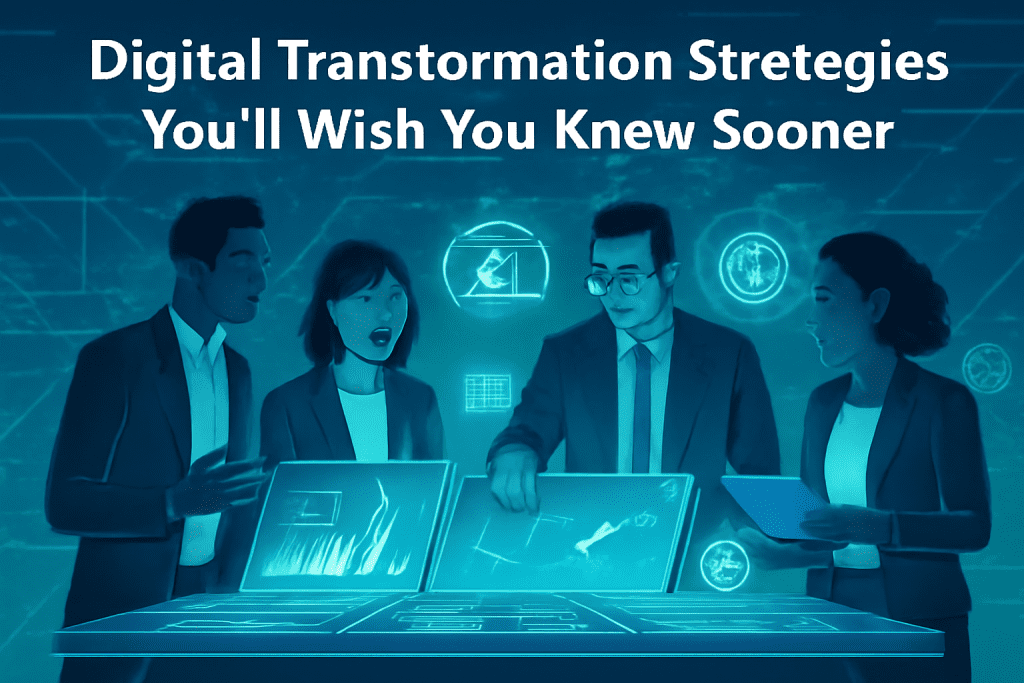
Digital Transformation Strategies You’ll Wish You Knew Sooner

Introduction Digital transformation is no longer a buzzword—it’s a fundamental push shaping how organizations deliver value, innovate, and stay competitive in rapidly evolving markets. Yet, most businesses face unexpected hurdles, costly investments, and missed opportunities simply because they overlook key strategies that drive real results. This blog reveals the digital transformation strategies that lead to lasting impact—and that you’ll wish you applied earlier. 1. Prioritize Integration, Not Just Implementation Many organizations make the mistake of deploying digital tools in silos. Instead, develop integrative solutions that easily connect systems, streamline workflows, and enable cross-functional collaboration. A well-connected digital ecosystem powers automation and improves operational efficiency. 2. Embrace User-Centric Innovation Digital platforms must be user-friendly—whether for customers or employees. Intuitive design and robust usability testing result in higher adoption and satisfaction. Focus innovations on real needs, ensuring technology enhances daily work and customer experiences. 3. Run Parallel Systems During Transition Avoid downtime by maintaining legacy systems while experimenting with new digital solutions. This reduces operational risks and enables safe, staged modernization, such as piloting AI-powered processes alongside manual workflows before full migration. 4. Move Away from Legacy Technologies—Smartly Don’t let outdated infrastructure slow growth. Upgrade and automate with cloud platforms, scalable data analytics, and AI-powered tools. This move strengthens flexibility and helps future-proof the business without the pain of abrupt change. 5. Invest in R&D and Continuous Learning Allocate resources for digital R&D and organizational upskilling. Businesses that foster ongoing learning and innovation outperform their peers, especially when embracing technologies like AI, IoT, and predictive analytics to gain actionable insights. 6. Use Data Analytics for Real-Time Optimization Integrate real-time data analytics platforms to monitor KPIs, optimize workflows, and enable informed, proactive decision-making. Data-driven transformation leads to better forecasting and agile business development. 7. Build a Digital-First Culture Digital success depends on people as much as technology. Encourage a culture of experimentation, resilience, and collaboration. Cross-functional teams and digital champions accelerate transformation and break down silos. 8. Strengthen Ecosystem Partnerships Collaborate with tech, data, and value chain partners to address complexity and deliver superior customer outcomes. Ecosystem strategies enable differentiated service offerings and unlock additional value. 9. Automate Where It Matters Most Automate core processes—customer support, supply chain, and operations—with AI and digital solutions. Automation reduces manual workloads, minimizes errors, and frees up resources for value-driven initiatives. Conclusion The most effective digital transformation strategies are not about implementing more technology, but about creating integrated, user-focused, data-driven, and agile organizations. By putting these proven strategies into practice sooner, leaders can unlock new business opportunities, drive innovation, and avoid the pitfalls that stall progress. For actionable guidance, explore AI-driven transformation and continuous improvement resources with TechOTD AI Services and stay updated via the TechOTD Blog.

Healthcare & Fitness

Cloud Infrastructure and DevOps in Healthcare Apps

Introduction The intersection of cloud infrastructure and DevOps is revolutionizing how healthcare applications are built, deployed, and maintained, making healthcare systems more agile, compliant, and patient-centered. These advances empower providers to store vast amounts of sensitive data securely, deliver real-time services to patients worldwide, and quickly innovate in response to emerging needs and regulatory guidelines. Explore how AI-powered healthcare applications are transforming patient experiences and operations—see more on cloud-based AI services and their integration journey. The Role of Cloud Infrastructure in Healthcare Apps Scalability and Flexibility Cloud platforms such as AWS, Azure, and Google Cloud enable healthcare organizations to scale resources up or down dynamically, adapting to fluctuating workloads, seasonal spikes, or pandemic-driven surges in demand. This elasticity is essential for electronic health records (EHR), big data analytics, telemedicine, and remote monitoring applications. Multicloud and hybrid architectures are gaining traction, allowing seamless integration to meet stringent compliance needs and local storage guidelines. Private clouds cater to high-security environments such as large hospitals and research institutions, while public clouds efficiently handle analytics, appointments, and remote care. For a detailed breakdown of cloud-driven innovation in healthcare, visit TechOTD’s main blog. Secure Data Storage and Compliance Sensitive medical data demands the highest levels of security and compliance. Cloud vendors offer HIPAA- and GDPR-compliant solutions that maintain data privacy, encryption, and integrity. End-to-end encryption, auditing, and identity management are embedded in modern cloud services. Automated backups and disaster recovery protocols minimize downtime and data loss. To understand how TechOTD addresses privacy and compliance in healthcare, see the Privacy & Cookies policy. Accelerating Digital Health with AI and Analytics Cloud infrastructure empowers healthcare organizations to leverage advanced AI, machine learning, and predictive analytics. Key applications include: Standardizing precision diagnostics with massive image datasets, Predicting patient risks using trend analysis and real-time telemetry, Automating administrative documentation with NLP engines. Discover feature-rich use cases in predictive analytics on TechOTD’s dedicated analytics page. Enabling Telehealth and Remote Patient Monitoring The adoption of telemedicine surged during the COVID-19 pandemic, with cloud platforms facilitating: Real-time video consultations, Remote patient monitoring using IoT wearables, Synchronous data sharing among care teams. Integration details for mobile healthcare solutions are documented in TechOTD’s mobile app services section. DevOps: The Engine of Continuous Healthcare Innovation What Is DevOps in Healthcare? DevOps combines software development (Dev) and IT operations (Ops) to foster automation, collaboration, and rapid deployments. In healthcare, this approach: Shortens application release cycles, Ensures continuous integration and delivery (CI/CD), Facilitates ongoing feedback and quality improvements. Explore practical examples of workflow optimization on the TechOTD blog. Key Benefits of DevOps for Healthcare Faster Time to Market Automates deployments, enabling rapid roll-out of new features and critical patches. Provides a competitive edge in launching telehealth and AI-driven apps. Improved Patient Outcomes Supports continuous monitoring and rapid issue resolution, which enhances clinical reliability and patient trust. Real-time data analytics drive timely decisions at the point of care. Security and Compliance Implements DevSecOps to integrate security into every phase of the application lifecycle. Ensures adherence to sector-specific regulations (HIPAA, GDPR, etc.) using automated compliance checks. See TechOTD’s structured approach to secure software on their How We Work page. Cost and Resource Efficiency Applies Infrastructure as Code (IaC) principles, minimizing manual tasks and human error. Optimizes cloud spend by enabling demand-driven resource allocation. Case studies on cost savings and operational improvements can be found in TechOTD’s blog industry section. AI and Predictive Analytics Support Maintains stable environments for AI/ML-powered healthcare applications. Accelerates the development of smart diagnostics, triaging, and personalized medicine. For examples of large language models in regulated sectors, see LLMs in Finance. Implementing Cloud and DevOps for Healthcare Apps: A Step-by-Step Roadmap 1. Assess Business Needs and Regulatory Requirements Conduct a deep analysis of the existing tech ecosystem and compliance landscape. Evaluate suitability for cloud migration and DevOps adoption. Explore a real-world blueprint on TechOTD’s services overview. 2. Data Strategy and Cloud Architecture Selection Identify sensitive and non-sensitive datasets. Choose optimal cloud deployment models: public, private, hybrid, or multicloud. 3. Develop Secure, Scalable Applications Using DevOps Practices Implement CI/CD pipelines for all healthcare modules: EHRs, billing, telemedicine, and connected health IoT solutions. Automate testing, code reviews, and compliance checks to guarantee quality and security. 4. Integrate AI, Analytics, and Automation Leverage cloud APIs and frameworks for real-time analytics, predictive insights, and automated workflows. Explore how AI supports preventive care and operational efficiency in TechOTD’s AI service models. 5. Continuous Monitoring, Maintenance, and Support Use cloud-based monitoring tools (e.g., Grafana, Azure Monitor) for uptime, performance, and security event tracking. Establish mechanisms for ongoing maintenance, data retraining, and customer support. For workflow strategies, check out customer journey mapping with AI. Emerging Trends and Future Directions AI-Powered Healthcare and Predictive Care Increasing adoption of generative AI, chatbots for patient triage, and risk stratification tools. Integration of real-time wearable IoT data with cloud-hosted analytics engines. Get a comprehensive review of technology trends in healthcare and beyond at TechOTD’s blog. Blockchain Integration for Secure Health Data Blockchain ensures transparent, immutable transaction logging, critical for audit trails in clinical trials, medication administration, and consent management. Find an in-depth analysis at TechOTD’s blockchain blog post. Regulatory Evolution and Interoperability Ongoing standards development for seamless data exchange (HL7 FHIR, DICOM) and international interoperability. Enhanced focus on privacy-preserving machine learning and federated learning architectures. Challenges in Cloud and DevOps Adoption Legacy systems and data silos limiting seamless migration. Addressing complex multi-region compliance and data residency requirements. Upfront investments in talent, training, and DevOps/Cloud tooling. Best practices, pitfalls, and CRM integration insights can be found at TechOTD’s mobile app frameworks guide. Conclusion: Cloud and DevOps as Healthcare’s Innovation Backbone The synergy of cloud infrastructure and DevOps is shaping a future where healthcare is more agile, resilient, and patient-focused than ever before. With ongoing advancements in AI, predictive analytics, and compliance automation, healthcare providers are set to deliver faster, more effective, and more personalized care. For more guidance, industry news, and in-depth resources, visit: Privacy & AI Solutions TechOTD Blog Home How We Work at TechOTD Predictive Analytics Features Mobile Application Services Advanced Industry Insights Customer-Centric AI Journeys LLMs in Finance Use Cases Technology for Modern Education Gadgets for

How would you like me to respond?

Select a personality for your AI assistant

Normal
Happy
Sad
Angry

Your selection will affect how the AI assistant responds to your messages

Chat Assistant

Let's discuss your project!

Hear from our clients and why 3000+ businesses trust TechOTD

Tell us what you need, and we'll get back with a cost and timeline estimate

Scroll to Top