
Cloud Computing

Artificial Intelligence, Digital Transformation, Software development, Technology

Navigating the Next Tech Horizon: A Human Guide to the Innovations Reshaping Our Digital World

Introduction:- Remember when “the future” meant having a computer in your pocket? Today, we carry the processing power of a mid-90s supercomputer in our jeans, and yet we find ourselves standing on the precipice of an even more radical shift. The tech world isn’t just evolving; it’s rewriting its foundational code. As we navigate through 2026, the conversations around technology have shifted from basic automation to deep, systemic intelligence. We are no longer just building better tools; we are co-authoring a new reality with our machines. From the way developers write software to how global enterprises secure their data in the cloud, the digital landscape is undergoing a massive paradigm shift. Let’s pull back the curtain on the massive shifts defining the tech world today—broken down not just in code, but in human terms. 1. The Future of AI: Beyond the Chatbot Hype For a couple of years, the world was obsessed with generative AI that could write poems or generate quirky images. But the honeymoon phase is over. The future of AI isn’t about chatbots that mimic human speech; it’s about Agentic AI—autonomous systems capable of reasoning, planning, and executing complex workflows without constant human hand-holding. From Prompting to Partnering Early AI required meticulous prompting. If you didn’t phrase your question perfectly, the output was useless. Today, AI has developed contextual awareness. We are moving from a “command-and-control” dynamic to a truly collaborative partnership. Autonomous Agents: Imagine an AI assistant that doesn’t just book a flight when asked, but monitors your calendar, anticipates a business conflict, negotiates a rescheduled meeting with a client’s AI assistant, and books the optimal flight based on your historical preferences—all in the background. Multimodal Maturity: AI now naturally processes voice, video, text, and physical gestures simultaneously. This has broken down the barriers between digital intent and physical execution. The Human Element: Emotional Intelligence (EQ) Meets AI As AI handles the heavy analytical lifting, the premium on human emotional intelligence has skyrocketed. The most successful implementations of AI aren’t those that replace humans, but those that augment human empathy, creativity, and ethical judgment. We are the directors; AI is the ultimate crew. 2. Next-Gen Software Development: The Democratization of Code The software engineering landscape is experiencing its most significant disruption since the invention of high-level programming languages. Next-gen software development is defined by a symbiosis between human intuition and AI-driven development engines. The Rise of the “Architect” Mindset Writing syntax—the actual typing of loops, brackets, and boilerplate code—is increasingly being handled by AI co-pilots. Does this mean software engineers are obsolete? Absolutely not. Instead, their role has elevated. [Traditional Development] ──> Focus on Syntax, Debugging, & Boilerplate [Next-Gen Development] ──> Focus on Architecture, System Design, & Security Developers are transitioning from code writers to system architects. The value shifts from knowing how to write a function to understanding how systems interact, scale, and remain secure. Low-Code, No-Code, and the Citizen Developer We are seeing a massive democratization of technology. Business analysts, healthcare professionals, and educators are now building sophisticated enterprise applications using natural language interfaces. By bridging the gap between an idea and a working application, innovation is no longer bottlenecked by the availability of software engineering teams. 3. Cloud Computing Trends: The Distributed Cloud and Edge Renaissance The cloud is no longer a distant, centralized data center owned by a tech giant. Current cloud computing trends point toward a hyper-distributed model where data processing happens exactly where it makes the most sense. Edge Computing Comes of Age With the proliferation of IoT devices, smart cities, and autonomous vehicles, sending data back to a central cloud server introduces unacceptable latency. Example: An autonomous vehicle traveling at 60 mph cannot wait 200 milliseconds for a cloud server to process a “stop” command. The decision must happen at the “edge”—directly within the vehicle’s onboard processing unit. Sovereign Clouds and Data Privacy Geopolitics has firmly entered the cloud space. Nations and regions are demanding that their citizens’ data remain within geographical boundaries, governed by local laws. This has led to the rise of sovereign clouds, forcing global enterprises to rethink their infrastructure to ensure compliance without sacrificing performance. 4. Cyber Resilience: Shifting from Defense to Survival In the modern tech ecosystem, a data breach is no longer a matter of if, but when. Because of this harsh reality, the conversation has shifted from traditional cybersecurity (building taller walls) to cyber resilience (how well you can take a punch and keep standing). The Zero Trust Imperative The old security model assumed that everything inside a corporate network was safe. Today’s decentralized workforce has thoroughly shattered that perimeter. “Zero Trust” operates on a simple, human-like skepticism: Never trust, always verify. Every user, device, and connection must continuously prove its identity and authorization. Preparing for the Quantum Leap While practical quantum computers are still on the horizon, the cryptographic threat they pose is already reshaping current security strategies. Bad actors are actively harvesting encrypted data today, intending to decrypt it years later when quantum computing matures. Progressive organizations are already implementing Post-Quantum Cryptography (PQC) to ensure their data remains secure tomorrow. 5. Digital Transformation 2026: The Cultural Revolution True digital transformation 2026 isn’t about buying new software or migrating to the cloud just to tick a box. It is fundamentally a cultural shift that requires organizations to fundamentally reimagine how they deliver value to humans. Breaking Down Silos For decades, IT departments lived in isolation, speaking a language the rest of the business couldn’t comprehend. True digital transformation breaks these walls down. Technology is now deeply woven into every department—from HR using predictive analytics for talent retention, to marketing utilizing real-time AI generation for hyper-personalized campaigns. The Sustainability Metric Modern digital transformation is no longer just measured in ROI (Return on Investment), but also in its environmental impact. Data centers consume massive amounts of electricity and water. Forward-thinking companies are auditing their “digital carbon footprint,” optimizing their code for energy efficiency, and choosing cloud providers that run entirely on renewable

Artificial Intelligence, Cloud Computing and Technology, Software development, Technology & Innovation

Beyond the Hype: The Pragmatic Architect’s Guide to Microservices, Serverless, and Edge AI in 2026

Introduction: The Great Architectural Rebalancing of 2026 For nearly a decade, the tech industry operated under a collective delusion: that scalability was a problem everyone had, and that copying the infrastructure charts of Netflix or Google was the only path to engineering salvation. We sliced simple web apps into dozens of distributed microservices, built complex asynchronous event pipelines for low-traffic CRUD applications, and treated physical or local compute resources as relic storage spaces from a bygone era. Fast forward to 2026, and the architectural pendulum has swung decisively back toward pragmatism. The landscape we navigate today is defined not by framework dogmatism, but by rigid constraints. Cloud costs have escalated to the point where “FinOps” is no longer just a buzzword but a core engineering requirement. Regulatory frameworks like the EU AI Act and global data protection laws have made blind data ingestion a massive liability. Meanwhile, the absolute explosion of artificial intelligence has introduced a computing paradigm that traditional centralized cloud infrastructures simply cannot sustain economically or logistically. [ Centralized Cloud ] <— High Latency & Escalating Costs | v +—————————+ | MODERN ARCHITECTURE | —> [ Modular Monolith ] (Core Business Logic) | BALANCING | —> [ Serverless FaaS ] (Ephemeral / Event Workloads) +—————————+ | v [ Localized Edge AI ] <— Low Latency, High Privacy (NPUs / SLMs) Modern architecture is no longer about choosing a single deployment style and making it your entire engineering personality. Instead, it is an exercise in intelligent division: keeping core, transactional business logic tight and low-overhead; offloading ephemeral, event-driven tasks to serverless runtimes; and pushing heavy machine learning inference straight to the edge where data originates. This comprehensive guide is designed to help you navigate this decentralized reality. We will dissect the technical mechanics, the financial trade-offs, and the practical implementation patterns of the three pillars defining systems design today: the resurrected Modular Monolith, constrained Serverless, and Edge AI. Section 1: The Resurgence of the Modular Monolith If you told a room full of enterprise architects in 2018 that the hottest architectural trend in 2026 would be the monolith, you would have been laughed out of the room. Yet, here we are. The industry-wide migration back to single-deployable units is not a regression—it is an evolution driven by an understanding of coordination overhead. The Hidden Tax of Microservices Microservices promised autonomous teams, isolated deployments, and independent scaling. What they delivered for many mid-sized organizations was a sprawling web of network latencies, distributed tracing nightmares, and an organizational tax paid in continuous integration bottlenecks. When a single conceptual feature change requires coordinated pull requests across five different repositories, managed by three different teams, you haven’t decoupled your architecture; you have merely decoupled your text files while keeping your deployment dependencies tightly bound by an unstable network layer. Every network boundary introduced between components forces engineers to solve complex distributed systems problems: Implementing two-phase commits or Saga patterns for distributed transactions. Navigating data consistency models (eventual vs. strong consistency). Paying the performance penalty of serialization, network transit, and deserialization over HTTP/REST or even gRPC. Managing independent database instances that prevent simple SQL JOIN operations, leading to inefficient application-level data stitching. The Anatomy of a Modular Monolith The modular monolith solves the organizational and structural problems of large codebases without introducing network-induced failure modes. It is defined as a single deployable artifact containing highly isolated, independent modules with strictly enforced internal logical boundaries. +———————————————————————–+ | MODULAR MONOLITH | | | | +——————-+ In-Memory +——————-+ | | | Order Module | —————–> | Inventory Module | | | | (Private Domain) | (Public Interface) | (Private Domain) | | | +——————-+ +——————-+ | | | | | | v v | | +—————————————————————–+ | | | Isolated Schema Database Engine | | | | [Order Tables] [Inventory Tables] | | | +—————————————————————–+ | +———————————————————————–+ In a well-architected modular monolith, modules communicate using in-memory function calls or language-level interfaces, not network hops. However, they strictly respect domain separation: Database Schema Isolation: Modules do not cross-query tables belonging to other modules. If the OrderModule needs data from the InventoryModule, it must request it via the InventoryModule‘s public code interface. At the database layer, this can be enforced using separate database schemas or logical prefixes within a shared database instance. Strict Public Interfaces: Internal module implementation details are hidden behind explicit entry points (facades or public API contracts). Languages with robust module systems (such as Java’s module system, Go’s workspace layouts, or Rust’s visibility modifiers) are leveraged to block unauthorized cross-module imports at compile-time. Independent Data Models: Even if an object like a “User” is used across the system, the BillingModule and the SupportModule maintain their own distinct code definitions of a user, containing only the fields relevant to their domain. Implementing Hard Boundaries: Code Example Consider a typical backend layout structured using modern architectural patterns where boundaries are checked by automated linting or compilation rules: Go // package inventory/public_api.go package inventory type ProductAvailability struct { ProductID string IsAvailable bool StockCount int } // Only this interface and its types are accessible to external modules type Service interface { CheckStock(productID string) (ProductAvailability, error) } // package order/processor.go package order import “myproject/inventory” type OrderProcessor struct { inventoryService inventory.Service // Injected via constructor } func (op *OrderProcessor) Process(order Order) error { // Communication happens via direct, lightning-fast in-memory call avail, err := op.inventoryService.CheckStock(order.ProductID) if err != nil || !avail.IsAvailable { return ErrStockUnavailable } // Proceed with processing… return nil } By ensuring that dependencies point strictly to interfaces rather than raw database access or concrete structural implementations, teams can split a modular monolith into separate microservices in a matter of days if a specific component truly develops unique scaling demands. It acts as the ultimate pragmatic starting point. Section 2: Serverless Under Constraint – Overcoming Cold Starts and Vendor Lock-in Serverless computing (Functions-as-a-Service, or FaaS) has undergone a dramatic transformation. The early days of serverless were marked by naive enthusiasm: write a function, dump it on AWS Lambda

Artificial Intelligence

AI Agents vs Traditional Automation: What’s Changing in 2026?

Introduction:- Automation has been a cornerstone of digital transformation for decades. Businesses have long relied on software to eliminate repetitive tasks, reduce operational costs, and improve efficiency. From manufacturing lines to customer relationship management systems, traditional automation has helped organizations streamline workflows and maintain consistency. However, the technological landscape in 2026 is undergoing a significant shift. Organizations are no longer satisfied with systems that simply follow predefined rules. They increasingly require software that can understand context, adapt to changing situations, make informed decisions, and collaborate with humans. This demand has accelerated the adoption of AI agents, one of the most influential developments in modern artificial intelligence. Unlike traditional automation, AI agents are designed to reason, plan, and act toward specific goals. They can analyze large amounts of information, interact with multiple applications, learn from feedback, and even coordinate with other AI systems. Rather than replacing simple automation, AI agents expand what automation can achieve by handling more dynamic and complex tasks. This article explores how AI agents differ from traditional automation, why organizations are investing in intelligent systems, and how businesses can prepare for the next generation of digital operations. Understanding Traditional Automation Traditional automation refers to software that performs predefined actions based on fixed rules. These systems execute workflows exactly as they were programmed, making them highly reliable for repetitive processes. Examples include: Automated invoice generation Payroll processing Scheduled email campaigns Data backups Manufacturing assembly lines Basic customer support chatbots Rule-based approval workflows The primary advantage of traditional automation is consistency. Once configured correctly, it performs the same task repeatedly with minimal errors. It is ideal for environments where processes rarely change. However, these systems have clear limitations. They cannot interpret ambiguous information, adapt to unexpected scenarios, or make decisions beyond their programmed rules. If the business process changes, developers often need to redesign or update the automation. What Are AI Agents? AI agents are intelligent software systems capable of perceiving information, reasoning about it, making decisions, and taking actions to achieve defined objectives. Unlike conventional automation tools, AI agents do not rely solely on fixed rules. They use technologies such as large language models, machine learning, natural language processing, retrieval systems, and external tools to solve problems dynamically. For example, an AI customer support agent can: Read a customer’s email. Identify the issue and urgency. Search internal documentation. Check order status. Draft a personalized response. Escalate complex cases when necessary. Learn from user feedback over time. Instead of executing a single scripted workflow, the agent evaluates the situation and chooses the most appropriate action. Traditional Automation vs AI Agents Feature Traditional Automation AI Agents Decision-making Rule-based Context-aware Learning No Yes, through AI models and feedback Flexibility Low High Handles unstructured data Limited Excellent Human-like communication Minimal Advanced Adaptability Requires reprogramming Can adjust to changing inputs Best suited for Repetitive tasks Complex, evolving workflows Why 2026 Marks a Turning Point Several technological trends have converged to make AI agents practical at scale. Large language models have become significantly more capable, enabling agents to understand natural language and generate useful responses. Cloud infrastructure now provides the computing power needed to run advanced AI workloads efficiently. Businesses have also accumulated vast amounts of digital data, creating opportunities for AI systems to deliver meaningful insights and automation. At the same time, organizations are under pressure to improve productivity, reduce costs, and respond faster to customer expectations. AI agents address these needs by automating tasks that previously required human judgment. Real-World Business Applications Customer Service Modern AI agents can resolve support tickets, summarize conversations, translate languages, and personalize responses while maintaining a consistent customer experience. Software Development Development teams use AI agents to generate code, review pull requests, identify bugs, write documentation, and automate testing. These capabilities accelerate delivery while allowing engineers to focus on architecture and innovation. Cybersecurity Security operations centers increasingly deploy AI agents to monitor logs, detect anomalies, investigate suspicious behavior, and recommend remediation steps. This helps analysts respond more quickly to emerging threats. Cloud Operations Cloud management platforms benefit from AI agents that optimize infrastructure, monitor resource utilization, predict outages, and recommend cost-saving opportunities. They can assist administrators in maintaining reliable and scalable environments. Healthcare Hospitals and healthcare providers use intelligent agents to organize patient records, assist with appointment scheduling, summarize clinical notes, and support administrative workflows, enabling staff to spend more time on patient care. Benefits of AI Agents Organizations adopting AI agents are seeing improvements in several areas: Increased productivity through intelligent task automation. Faster decision-making based on real-time data. Improved customer experiences with personalized interactions. Reduced operational costs by minimizing manual work. Better scalability across departments. Continuous learning and optimization through AI-driven feedback loops. These advantages make AI agents an important part of digital transformation strategies across industries. AI Governance in 2026: Balancing Innovation and Regulation  

Data Privacy & Security, Digital Transformation, Technology

Digital Sovereignty: Why Countries Want Greater Control Over Their Data

Digital Sovereignty: Why Countries Want Greater Control Over Their Data The digital economy has become one of the most valuable assets of the modern world. Every day, governments, businesses, and individuals generate enormous amounts of data through online transactions, cloud applications, social media platforms, connected devices, and artificial intelligence systems. Data now drives decision-making, economic growth, innovation, and national security. As technology becomes increasingly integrated into every aspect of society, many countries are asking a critical question: Who controls the data? This question has led to the rise of a concept known as digital sovereignty, a growing movement that seeks to give nations greater authority over their digital assets, infrastructure, and data. Governments worldwide are introducing policies and regulations designed to ensure that sensitive information remains protected and accessible according to national laws and interests. In 2026, digital sovereignty is no longer a niche policy discussion. It has become a central issue shaping technology strategies, international relations, cloud computing investments, and cybersecurity initiatives around the globe. What Is Digital Sovereignty? Digital sovereignty refers to a country’s ability to control its digital infrastructure, data, technologies, and online activities according to its own laws and regulations. The concept extends beyond simple data storage. It encompasses: Data ownership and governance Cloud infrastructure control Cybersecurity management Artificial intelligence regulation Digital identity systems Critical technology supply chains National internet policies In practical terms, digital sovereignty means ensuring that a country’s most important digital resources are not entirely dependent on foreign companies or governments. As digital technologies become essential to national economies, countries increasingly view data as a strategic resource similar to energy, natural resources, or critical infrastructure. Why Data Has Become a Strategic National Asset For decades, oil was often described as the world’s most valuable resource. Today, many experts argue that data has taken its place. Data powers: Artificial intelligence models Financial systems Healthcare innovation Smart city initiatives National defense systems E-commerce platforms Public services The more data organizations collect, the more effectively they can optimize operations, understand customer behavior, and develop new technologies. Because of its value, governments are becoming increasingly concerned about where data is stored, who has access to it, and how it is used. Countries recognize that losing control over critical data could create economic, political, and security vulnerabilities. The Growing Importance of Data Localization One of the most visible aspects of digital sovereignty is data localization. Data localization policies require certain types of information to be stored and processed within national borders. Governments implement these policies for several reasons: National Security Protection Sensitive government information, military data, and critical infrastructure records must remain protected from external threats. Storing such information domestically allows governments to apply local security standards and oversight. Regulatory Compliance Countries often require businesses to comply with local privacy laws and regulations. Domestic data storage simplifies enforcement and legal accountability. Economic Development Local data centers create jobs, attract technology investments, and strengthen national digital ecosystems. As a result, many nations are investing heavily in domestic cloud infrastructure. Cybersecurity Concerns Are Driving Sovereignty Efforts Cyberattacks continue to grow in both frequency and sophistication. Governments face threats from: State-sponsored hackers Cybercriminal organizations Ransomware groups Espionage operations Supply chain attacks When critical systems rely heavily on foreign technology providers, governments may have limited visibility into potential risks. Digital sovereignty initiatives help countries strengthen cybersecurity by: Building secure national infrastructure Developing local cybersecurity expertise Establishing stronger data protection controls Reducing dependency on external providers As cyber warfare becomes an increasingly important national security issue, governments view digital control as a strategic necessity. The Role of Cloud Computing in Digital Sovereignty Cloud computing has transformed the way organizations store and process data. Major cloud providers offer scalability, reliability, and cost efficiency that many organizations cannot achieve independently. However, cloud adoption has also raised concerns about sovereignty. Many governments worry about: Foreign jurisdiction over stored data Cross-border data transfers Access requests from foreign authorities Dependence on a small number of global providers To address these concerns, cloud vendors are introducing sovereign cloud solutions that provide greater transparency, local control, and compliance capabilities. These offerings are becoming increasingly attractive to governments, healthcare organizations, financial institutions, and regulated industries. Artificial Intelligence and Sovereign Data Artificial intelligence has added a new dimension to digital sovereignty discussions. AI systems rely heavily on data for training and operation. Governments are concerned about several issues: Control of Training Data Countries want assurance that sensitive national data is not being used without permission to train foreign AI models. AI Governance Governments seek to establish rules regarding how AI systems are developed, deployed, and monitored. National Competitiveness Access to high-quality data can influence a country’s ability to compete in AI innovation. As AI becomes a key driver of economic growth, digital sovereignty strategies increasingly include AI infrastructure and data governance frameworks. How Different Regions Are Approaching Digital Sovereignty Countries are pursuing digital sovereignty in different ways based on their priorities and regulatory environments. Europe European nations have emphasized privacy protection, data governance, and regulatory compliance. The region has introduced comprehensive regulations designed to strengthen control over personal data while promoting transparency and accountability. European policymakers often focus on reducing strategic dependence on non-European technology providers. Asia-Pacific Many countries in the Asia-Pacific region are investing heavily in domestic cloud infrastructure, cybersecurity programs, and AI development. Several governments have introduced data localization requirements to enhance national security and economic resilience. North America While cloud adoption remains widespread, discussions around critical infrastructure protection, cybersecurity, and AI governance continue to influence digital sovereignty initiatives. Governments increasingly recognize the importance of maintaining control over strategic digital assets. Middle East The Middle East has become a major hub for digital transformation projects. Many countries are building advanced data centers and cloud ecosystems to support economic diversification and strengthen national digital capabilities. The Economic Impact of Digital Sovereignty Digital sovereignty is creating significant economic opportunities. Growth of Local Data Centers Demand for domestic data storage is driving investments in: Data center construction Renewable energy integration Cloud infrastructure

Cloud Computing and Technology, Digital Transformation

How Cloud-Native Technologies Are Accelerating Digital Transformation

How Cloud-Native Technologies Are Accelerating Digital Transformation Digital transformation is no longer just a strategic initiative—it has become a necessity for businesses that want to remain competitive in a rapidly evolving digital landscape. Organizations across industries are continuously seeking ways to improve efficiency, deliver better customer experiences, and adapt quickly to changing market demands. At the center of this transformation lies a powerful approach known as cloud-native technology. Cloud-native technologies are fundamentally changing how businesses develop, deploy, and manage applications. Unlike traditional IT infrastructures that often struggle with scalability and flexibility, cloud-native solutions are designed specifically for modern cloud environments. They allow organizations to innovate faster, respond to customer needs more effectively, and create digital experiences that drive business growth. As companies continue their digital transformation journeys, cloud-native technologies are becoming one of the most important enablers of innovation, agility, and long-term success. Understanding Cloud-Native Technologies Cloud-native technologies refer to a collection of practices, architectures, and tools that enable organizations to build and run applications optimized for cloud environments. Instead of relying on large, monolithic systems, cloud-native applications are built using smaller, independent components that can be developed, deployed, and updated separately. Key cloud-native principles include: Microservices architecture Containerization DevOps practices Continuous Integration and Continuous Deployment (CI/CD) Automation and orchestration Dynamic scalability Resilience and fault tolerance By leveraging these principles, organizations can create highly flexible systems capable of adapting to changing business requirements without disrupting operations. Why Digital Transformation Requires Cloud-Native Approaches Traditional technology infrastructures often create challenges for organizations attempting to modernize their operations. Legacy systems can be expensive to maintain, difficult to scale, and slow to adapt to new opportunities. Digital transformation demands speed, flexibility, and innovation. Businesses need technology environments that support rapid development cycles, seamless integration, and real-time responsiveness. Cloud-native technologies provide these capabilities by enabling organizations to move beyond the limitations of traditional infrastructure. Whether launching a new digital service, expanding into new markets, or improving customer experiences, cloud-native platforms allow businesses to respond faster and more efficiently. Faster Application Development and Deployment One of the most significant advantages of cloud-native technologies is the ability to accelerate software development and deployment. In traditional development environments, releasing new features or updates often requires extensive testing, infrastructure preparation, and lengthy deployment processes. This can delay innovation and reduce an organization’s ability to compete effectively. Cloud-native environments support automated development pipelines through CI/CD practices. Developers can write code, test applications, and deploy updates quickly and reliably. Automated workflows reduce manual effort while minimizing errors. As a result, businesses can: Deliver new features faster Respond quickly to market demands Improve product quality Reduce development bottlenecks Accelerate innovation cycles This speed enables organizations to maintain a competitive advantage in fast-moving industries. Enhanced Scalability for Growing Businesses Modern businesses often experience fluctuating workloads. Traffic spikes during promotional campaigns, seasonal events, or product launches can place enormous pressure on IT infrastructure. Cloud-native technologies address this challenge through dynamic scalability. Resources can automatically scale up or down based on demand, ensuring optimal performance without overprovisioning infrastructure. For example, an e-commerce platform experiencing a surge in online shoppers during a major sale can automatically allocate additional computing resources. Once demand decreases, resources can be scaled back to reduce costs. This flexibility provides several benefits: Improved application performance Better customer experiences Reduced infrastructure costs Efficient resource utilization Support for business growth Scalability becomes a strategic advantage rather than a technical challenge. Improved Business Agility In today’s business environment, agility is critical. Organizations must quickly adapt to changing customer expectations, market conditions, and technological advancements. Cloud-native architectures support agility by enabling independent development and deployment of services. Teams can update specific components without affecting the entire application. This modular approach allows businesses to: Experiment with new ideas faster Launch products more quickly Implement changes with minimal risk Respond rapidly to customer feedback Adapt to market opportunities Greater agility empowers organizations to innovate continuously rather than relying on lengthy development cycles. The Role of Microservices in Digital Transformation Microservices have become a cornerstone of cloud-native development. Instead of building a single large application, organizations divide applications into smaller, specialized services. Each service performs a specific function and operates independently. This architecture offers numerous advantages: Easier maintenance Faster development Better scalability Improved fault isolation Greater flexibility For example, an online banking application may have separate microservices for account management, payments, authentication, and customer support. Updates to one service can occur independently without impacting the others. This approach significantly enhances an organization’s ability to innovate and evolve digital services. Containerization Simplifies Modern Application Management Containers are another key component of cloud-native technology. Containerization packages applications along with their dependencies into lightweight, portable units that can run consistently across different environments. Benefits of containerization include: Faster deployment Consistent performance Improved portability Efficient resource usage Simplified infrastructure management Containers eliminate many of the compatibility issues that traditionally occur when moving applications between development, testing, and production environments. Popular orchestration platforms help organizations manage large numbers of containers efficiently, enabling reliable operation at scale. Strengthening DevOps Culture Digital transformation is not only about technology—it also involves organizational culture and processes. Cloud-native technologies strongly support DevOps practices by encouraging collaboration between development and operations teams. This collaborative approach improves communication, automation, and overall efficiency. Organizations adopting DevOps often experience: Faster release cycles Improved software quality Reduced operational costs Better incident response Higher customer satisfaction By integrating development and operational workflows, businesses can accelerate innovation while maintaining reliability and security. Enhancing Customer Experiences Customer expectations continue to rise in the digital era. Users demand fast, reliable, and personalized experiences across websites, mobile applications, and digital services. Cloud-native technologies help organizations meet these expectations by providing: Faster application performance Higher availability Improved reliability Real-time updates Personalized digital experiences Because cloud-native applications can be updated frequently without significant downtime, businesses can continuously improve user experiences based on customer feedback and analytics. Enhanced customer experiences often lead to greater engagement, loyalty, and revenue growth. Supporting Innovation Through Automation Automation is one of the most powerful drivers

Software development, Technology

Green Software Development: Building Sustainable Digital Solutions

Green Software Development: Building Sustainable Digital Solutions As businesses continue to embrace digital transformation, the environmental impact of technology is becoming a growing concern. While discussions around sustainability often focus on electric vehicles, renewable energy, and eco-friendly manufacturing, software itself also plays a significant role in energy consumption. Every application, website, cloud service, and digital platform requires computing resources, which consume electricity and contribute to carbon emissions. This growing awareness has given rise to a new approach known as Green Software Development. The concept focuses on designing, building, and maintaining software in ways that minimize energy consumption and reduce environmental impact while still delivering excellent user experiences. As organizations worldwide strengthen their sustainability commitments, green software development is rapidly becoming an important part of modern digital strategies. The idea is simple yet powerful: software should not only be functional and scalable but also environmentally responsible. Developers, architects, and businesses are now exploring ways to create digital products that perform efficiently while consuming fewer resources. Green software development is transforming how organizations think about technology. Instead of measuring success solely through speed, functionality, and profitability, companies are increasingly considering the environmental footprint of their digital solutions as well. Understanding Green Software Development Green software development refers to the practice of creating software applications that use computing resources efficiently, reducing energy consumption and carbon emissions throughout their lifecycle. This includes everything from coding practices and software architecture to infrastructure selection and deployment strategies. Traditional software development often prioritizes functionality and performance without considering how much energy an application consumes. As applications become more complex and data-intensive, inefficient software can significantly increase power consumption in data centers, cloud environments, and user devices. Green software development aims to solve this challenge by integrating sustainability into every stage of software creation. The objective is not only to reduce environmental impact but also to improve operational efficiency and lower infrastructure costs. Modern organizations are realizing that sustainable software practices benefit both the planet and their bottom line. Reduced energy consumption often translates directly into lower operating expenses, making green development an attractive business strategy. Why Sustainability Matters in Software Development The technology industry has become one of the largest consumers of electricity worldwide. Massive data centers power cloud services, streaming platforms, artificial intelligence systems, and business applications used by billions of people every day. As digital adoption continues to increase, so does the energy required to support these services. Every search query, video stream, API request, and software transaction consumes computational resources. Many organizations have ambitious environmental goals that include reducing carbon emissions and improving energy efficiency. Since software directly influences how computing resources are utilized, developers now play a critical role in achieving sustainability objectives. Customers are also becoming more environmentally conscious. Businesses that demonstrate commitment to sustainable practices often strengthen their brand reputation and gain a competitive advantage in the marketplace. Governments and regulatory bodies across the globe are introducing sustainability initiatives that encourage organizations to reduce their environmental impact. Green software development helps businesses align with these evolving expectations. Core Principles of Green Software Development Green software development is guided by several key principles that focus on reducing resource consumption while maintaining functionality and performance. Energy Efficiency Applications should perform tasks using the least amount of energy possible. Efficient algorithms, optimized code, and streamlined processes help reduce computational requirements. Developers can improve energy efficiency by minimizing unnecessary calculations, reducing background processing, and optimizing database queries. Even small improvements can create significant energy savings when applications operate at scale. Carbon Awareness Carbon-aware software takes into account the environmental impact of computing activities. Some organizations schedule energy-intensive processes during periods when renewable energy sources are more available. By understanding the carbon intensity of different regions and cloud environments, businesses can make smarter decisions about where and when workloads are executed. Resource Optimization Efficient use of hardware resources is a fundamental component of sustainable software development. Applications that consume excessive CPU power, memory, storage, or network bandwidth contribute to higher energy usage. Resource optimization ensures that software utilizes available infrastructure effectively without unnecessary waste. Hardware Efficiency Extending the lifespan of devices and infrastructure contributes to sustainability. Software designed to run efficiently on existing hardware reduces the need for frequent upgrades and electronic waste. Applications that require fewer hardware resources can continue functioning effectively on older devices, supporting both environmental and economic goals. The Role of Cloud Computing in Green Software Development Cloud computing has become a major enabler of sustainable software practices. Leading cloud providers invest heavily in energy-efficient infrastructure, renewable energy projects, and advanced cooling technologies. Organizations can reduce their environmental footprint by leveraging cloud services that automatically scale resources based on demand. Instead of running underutilized servers continuously, businesses can allocate computing power only when needed. Cloud-native architectures further support sustainability by enabling efficient resource management through containers, serverless computing, and microservices. Serverless computing is particularly beneficial because resources are consumed only when applications are actively executing tasks. This minimizes idle energy consumption and improves overall efficiency. Businesses that carefully select cloud providers with strong sustainability commitments can significantly reduce the carbon impact of their digital operations. Writing Energy-Efficient Code The quality of software code directly affects energy consumption. Poorly optimized applications often require more processing power and infrastructure resources than necessary. Developers can build energy-efficient software by following best practices such as: Reducing unnecessary computations Optimizing loops and algorithms Minimizing memory usage Improving database performance Reducing redundant API calls Compressing data transfers Eliminating unused code Efficient coding practices not only reduce energy consumption but also improve application responsiveness and scalability. For example, an optimized search algorithm can process data more quickly while consuming fewer computational resources. Across millions of user interactions, these improvements can generate substantial environmental benefits. Sustainable Software Architecture Software architecture plays a crucial role in determining an application’s environmental impact. Monolithic systems often require large amounts of infrastructure resources even when only a small portion of the application is being used. Modern architectural approaches provide more efficient alternatives. Microservices

Cloud Computing and Technology, Digital Transformation, Technology

The Rise of Edge Computing: Why Processing Data Closer Matters

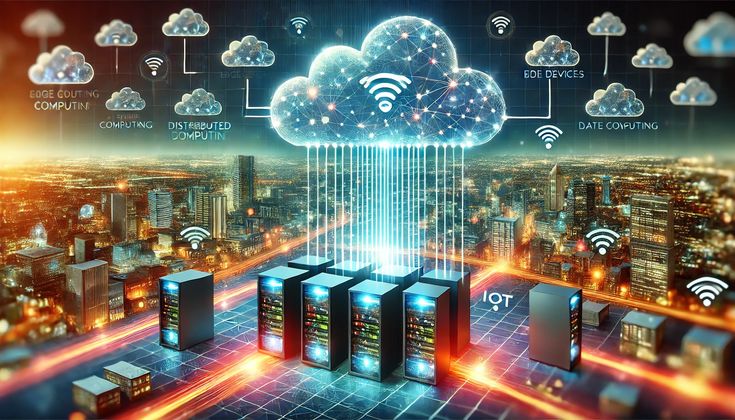
The Rise of Edge Computing: Why Processing Data Closer Matters The digital world is generating more data than ever before. Every smartphone notification, smart home device, connected vehicle, industrial sensor, and online interaction contributes to an ever-growing stream of information. For years, businesses have relied on cloud computing to store, manage, and process this data. While cloud technology revolutionized the way organizations operate, the explosion of connected devices has revealed a critical challenge: speed. Imagine a self-driving car traveling at high speed. If it encounters an obstacle, it cannot afford to send data to a distant cloud server, wait for processing, and then receive instructions. Even a delay of a few milliseconds could have serious consequences. The same challenge exists in manufacturing plants, healthcare facilities, smart cities, and countless other environments where immediate decisions are essential. This is where edge computing enters the picture. Edge computing is changing how organizations process information by bringing computing power closer to where data is created. Instead of sending every piece of information to a centralized cloud, data can be analyzed and acted upon near the source itself. This shift is helping businesses improve performance, reduce latency, enhance security, and unlock entirely new possibilities for innovation. As technologies like artificial intelligence, the Internet of Things (IoT), and 5G continue to evolve, edge computing is rapidly becoming one of the most important pillars of modern digital infrastructure. Understanding Edge Computing At its core, edge computing refers to processing data near the device or location where it is generated rather than transmitting it to a centralized data center or cloud server. Traditionally, data generated by devices would travel across networks to cloud servers where it would be processed and stored. The results would then be sent back to the device or application. While this approach works well for many scenarios, it introduces delays that can become problematic when immediate responses are required. Edge computing addresses this challenge by moving computing resources closer to the “edge” of the network. The edge can be a local server, a gateway device, a factory machine, a retail system, or even the device itself. Rather than depending entirely on distant cloud infrastructure, edge devices can analyze information in real time and make decisions instantly. The cloud still plays an important role, but it becomes part of a larger ecosystem where processing is distributed intelligently. This approach significantly improves efficiency while enabling applications that would be difficult or impossible to support through cloud-only architectures. Why the Need for Edge Computing Is Growing The rise of edge computing is closely connected to the rapid growth of connected devices. Industry experts estimate that billions of IoT devices are now generating massive volumes of data every day. From wearable fitness trackers and smart thermostats to industrial robots and connected vehicles, these devices continuously produce information that requires processing. Sending every bit of this data to the cloud creates several challenges. First, network congestion becomes a concern. The more data that travels across networks, the greater the strain on bandwidth resources. Second, latency can negatively impact user experiences and operational efficiency. Applications requiring real-time responses cannot tolerate delays. Third, transmitting large volumes of data to the cloud increases costs associated with bandwidth and storage. Finally, organizations face growing concerns about privacy, security, and regulatory compliance. Edge computing helps solve these issues by allowing data to be processed locally while only transmitting relevant information to the cloud when necessary. As businesses continue to embrace digital transformation, the demand for faster and more intelligent processing is making edge computing increasingly valuable. The Latency Advantage One of the biggest reasons organizations invest in edge computing is latency reduction. Latency refers to the time it takes for data to travel from its source to a processing location and back again. Even small delays can create significant problems in certain applications. Consider a smart manufacturing facility where machines operate with incredible precision. Sensors continuously monitor temperature, pressure, vibration, and performance metrics. If a machine begins to malfunction, immediate action may be required to prevent costly downtime. With cloud-based processing, the delay involved in transmitting data could slow down response times. Edge computing enables instant analysis directly within the facility, allowing maintenance teams to address issues before they escalate. The same principle applies to autonomous vehicles, remote healthcare monitoring, financial trading systems, and augmented reality applications. By processing data closer to where it originates, organizations can achieve near-instant decision-making capabilities. Enhancing Real-Time Decision Making Modern businesses increasingly rely on real-time insights to remain competitive. Customers expect immediate responses. Operations demand continuous optimization. Systems need to adapt dynamically to changing conditions. Edge computing supports these requirements by enabling faster decision-making at the source. For example, a smart retail store can use edge-powered cameras and sensors to analyze customer behavior in real time. Store managers can monitor foot traffic, optimize product placement, and improve customer experiences without waiting for cloud-based analytics. Similarly, healthcare providers can use edge-enabled monitoring devices to track patient vitals continuously. If a patient’s condition changes suddenly, alerts can be generated instantly, potentially saving lives. The ability to process information in real time creates opportunities that extend far beyond simple efficiency improvements. It enables businesses to become more proactive, responsive, and intelligent. Edge Computing and the Internet of Things The Internet of Things and edge computing are closely connected technologies. IoT devices generate enormous amounts of data, much of which requires immediate analysis. Without edge computing, organizations would struggle to manage this growing information flow effectively. Imagine a smart city equipped with thousands of connected sensors monitoring traffic, air quality, public transportation, and energy usage. If every sensor continuously transmitted data to centralized cloud systems, network infrastructure could quickly become overwhelmed. Edge computing allows local processing to occur near these sensors. Relevant insights can be generated instantly while only critical data is sent to the cloud for long-term analysis. This approach improves performance, reduces network traffic, and enhances overall system reliability. As IoT adoption continues to accelerate, edge computing will

Cloud Computing and Technology, Digital Transformation, Technology & Business

How Cloud Computing Helps Businesses Reduce Costs and Improve Efficiency

How Cloud Computing Helps Businesses Reduce Costs and Improve Efficiency Think back to the early days of setting up a business. If you wanted to run a professional operation, your office required a dedicated, locked room down the hallway. Inside that room, a massive, noisy server rack buzzed away 24/7, generating heat, eating up electricity, and demanding constant attention. You had to pay an IT consultant thousands of dollars just to set it up, and if a hard drive crashed at 2:00 AM on a Sunday, your entire business ground to a halt until Monday morning. For decades, owning and managing physical hardware was simply the tax you paid to play the game of modern business. But if you look at the most successful, agile companies thriving today, that noisy server room has completely vanished. It hasn’t been replaced by a bigger machine; it has evaporated into the cloud. Cloud computing has fundamentally rewritten the rules of corporate economics. It has transformed IT infrastructure from a rigid, expensive, and stressful capital burden into a fluid, on-demand utility—much like electricity or water. Let’s dive deep into the practical, human reality of how shifting to the cloud slashes business expenses, unlocks massive operational efficiency, and how your enterprise can maximize these benefits. 1. The Financial Paradigm Shift: CapEx vs. OpEx To understand how the cloud cuts costs, we have to look past the technology and look at the accounting ledger. Traditional IT infrastructure relies heavily on Capital Expenditure (CapEx). The cloud flips this model entirely into Operational Expenditure (OpEx). [Traditional IT (CapEx)] ──> Massive Upfront Cash ──> Rigid Servers ──> High Maintenance Costs [Cloud Computing (OpEx)] ──> Zero Upfront Cash ──> Scale On-Demand ──> Pay Only for What You Use The Heavy Burden of Over-Provisioning When you buy physical servers, you have to build for your absolute worst-case scenario. If you are an e-commerce business that gets 90% of your traffic during the holiday rush, you have to buy enough physical hardware to handle that peak load. That means for the other 11 months of the year, 80% of your expensive server power sits completely idle, collecting dust and draining your bank account. The Pay-As-You-Go Freedom Cloud computing completely eliminates this waste. If your traffic spikes on Black Friday, the cloud dynamically scales up your processing capacity within seconds to handle the rush. The moment the rush ends, the system automatically scales back down. You pay only for the exact computing units you consumed during those specific hours. 2. Direct Ways the Cloud Cuts Business Expenses Let’s look at the concrete, unmistakable ways moving to the cloud preserves your cash flow: Elimination of Hardware Life Cycles Physical servers don’t last forever. They overheat, degrade, and become obsolete every three to five years. When you migrate to the cloud, the burden of buying, maintaining, and upgrading physical hardware shifts entirely to cloud giants (like AWS, Microsoft Azure, or Google Cloud). You never have to write a massive check for server replacements ever again. Drastic Reductions in Energy and Real Estate Physical servers are gluttons for electricity. They require constant power to run and massive, industrial-grade cooling systems to keep from overheating. Additionally, dedicating office square footage to store server racks chips away at your commercial real estate budget. The cloud completely erases these utility overheads from your monthly bills. Minimizing Emergency IT Consulting Fees When your internal physical network breaks down, repairing it requires emergency calls to specialized hardware engineers who charge astronomical hourly rates. Cloud providers guarantee up to 99.99% uptime backed by strict Service Level Agreements (SLAs). Their world-class engineering teams are monitoring the infrastructure around the clock, saving you from costly emergency repairs. 3. Supercharging Operational Efficiency While saving money is fantastic, the true superpower of cloud computing is how it accelerates your daily business velocity. It clears away the administrative and technical friction that slows your team down. True Global Collaboration and Borderless Work Before the cloud, if an employee needed a critical corporate file, they had to be physically sitting at their office desk or wrestling with a slow, frustrating VPN connection. Today, the cloud acts as a single, unfragmented source of truth. Whether your team members are collaborating from a corporate headquarters, a home office, or a coffee shop halfway across the world, they can securely access, edit, and share real-time data simultaneously. The Speed of Innovation (Zero Deployment Drag) In a traditional setup, if your development team wants to test a brilliant new software feature or launch a creative marketing campaign micro-site, they have to wait weeks for the IT department to manually configure a testing environment. In the cloud, developers can spin up sandboxed testing environments with a few clicks. If the project succeeds, it can go live globally in minutes. If it fails, the environment is torn down instantly without wasting a single dime of capital. This speed allows small businesses to out-maneuver massive, slow-moving competitors. 4. Operational Trade-offs: A Balanced Reality Check Efficiency Factor Traditional On-Premise IT Cloud Computing Ecosystems Deployment Time Weeks to months (Ordering, wiring, configuring) Immediate (On-demand virtual provisioning) Disaster Recovery High risk (Requires manual backup drives) Automatic (Continuous geo-redundant replication) System Maintenance Internal team handles patches, fixes, and updates Handled automatically by the provider Data Mobility Low (Tethered to physical locations/VPNs) High (Secure access from any approved device) 5. Security, Resilience, and Disaster Recovery A lingering, human fear among many business owners is: “If my data isn’t physically sitting in a box inside my building, is it truly safe?” The reality is that your data is significantly safer in a tier-one cloud data center than it is on a server in your office closet. Small business server rooms are vulnerable to local power surges, bursting water pipes, physical theft, and basic office fires. Automated, Geo-Redundant Backups If a natural disaster hits your physical office, your local backups could be wiped out instantly. Cloud computing utilizes geo-redundancy. Your data is encrypted and mirrored across multiple geographically isolated data centers.

cybersecurity, Digital Transformation, Software development, Technology & Innovation

Serverless Architecture Explained

Serverless Architecture Explained: The Ultimate Guide to Event-Driven, No-Ops Development For decades, deploying a software application followed a predictable, rigid formula: lease a physical server, configure the operating system, set up web servers, and pray your traffic estimations were accurate. If you undershot, your site crashed under unexpected load. If you overshot, you wasted thousands of dollars maintaining idle computing power. The cloud era mitigated this via virtualization and auto-scaling, but developers still had to manage, patch, secure, and scale those virtual machines. Serverless architecture completely shatters this paradigm. Despite the name, “serverless” doesn’t mean servers are no longer involved; it means developers are completely abstracted from them. The cloud vendor handles provisioning, scaling, maintaining, and upgrading the infrastructure automatically. You write the code; the cloud takes care of the rest. This 3,000+ word deep-dive will break down the mechanics, core components, operational benefits, patterns, pitfalls, and future outlook of serverless development to give you a definitive implementation blueprint. 1. Defining Serverless Architecture: The Core Pillars To understand serverless, we must look past the marketing hype and focus on its four foundational engineering characteristics: ┌────────────────────────────────────────────────────────┐ │ The 4 Pillars of Serverless │ ├───────────────────────────┬────────────────────────────┤ │ 1. Zero Infrastructure │ 2. Automated Hyper-Scaling │ │ Management │ (Scale-to-Zero) │ ├───────────────────────────┼────────────────────────────┤ │ 3. Pay-per-Use Billing │ 4. Built-in Fault │ │ (Down to the Millisecond)│ Tolerance │ └───────────────────────────┴────────────────────────────┘ Zero Infrastructure Management: Developers do not provision, patch, manage, or maintain underlying operating systems, runtimes, or container hardware. Automated Hyper-Scaling: The infrastructure automatically scales up or down in precise correlation to incoming traffic. If you receive one request, one instance runs. If you receive 100,000 simultaneous requests, the vendor instantly provisions thousands of execution environments. Scale-to-Zero (Pay-per-Use): When your application is idle, zero computing resources are active. You pay absolutely nothing for idle time. Billing is calculated down to the millisecond of actual execution time and memory consumed. Built-in Fault Tolerance: Serverless services inherently span multiple availability zones and regions by default, providing high availability without manual setup. 2. FaaS vs. BaaS: The Two Sides of Serverless Serverless architecture is broadly divided into two complementary conceptual spaces: Function-as-a-Service (FaaS) and Backend-as-a-Service (BaaS). Function-as-a-Service (FaaS) FaaS is the computational heartbeat of serverless. Instead of deploying a monolithic web application that sits running continuously, developers break application logic down into small, ephemeral, single-purpose functions. These functions are completely stateless and are triggered exclusively by specific system events (e.g., an HTTP request, a new file upload, or a database modification). Key Characteristics: Short lifespans (typically timed out after 15 minutes), stateless execution, and rapid startup times. Examples: AWS Lambda, Google Cloud Functions, Azure Functions. Backend-as-a-Service (BaaS) A serverless ecosystem cannot survive on stateless computation alone; it requires supporting cloud services that follow the exact same serverless scaling and billing principles. This is BaaS. Instead of deploying and managing a database cluster (like PostgreSQL) or a message broker (like RabbitMQ), developers leverage fully managed, API-driven cloud services. Databases: Serverless NoSQL or SQL options (e.g., Amazon DynamoDB, Google Cloud Firestore, Aurora Serverless). Authentication: Managed identity solutions (e.g., AWS Cognito, Auth0). Storage: Scalable object stores (e.g., Amazon S3, Google Cloud Storage). 3. The Lifecycle of an Event-Driven Serverless Function Unlike traditional server environments where an application loops continuously listening for requests on a port, serverless runs on a strictly event-driven architecture. ┌───────────┐ ┌───────────────┐ ┌───────────────────────┐ ┌────────────┐ │ Event │ ───> │ API Gateway / │ ───> │ Function Execution │ ───> │ BaaS / DB │ │ Trigger │ │ Event Router │ │ (Ephemeral Container) │ │ Write │ └───────────┘ └───────────────┘ └───────────────────────┘ └────────────┘ The Request Execution Chain: The Trigger: An external event occurs. For example, a user uploads a high-resolution image to a cloud storage bucket. The Routing: The cloud provider detects the bucket state change and maps it to a designated FaaS function handler. Container Provisioning: If no active container instance is waiting (a “cold start”), the provider initializes an isolated micro-container environment, loads your code package, and spins up the language runtime. Execution: The function executes its explicit single purpose (e.g., reads the image, resizes it into a thumbnail, and writes it back to another bucket). Teardown or Freeze: Once the function returns a response, the container is frozen for a brief period to handle immediate subsequent requests. If no other requests arrive, it is destroyed. 4. Comprehensive Architecture Comparison Architectural Metric Traditional Tiered (IaaS/PaaS) Serverless Architecture (FaaS/BaaS) Scaling Capacity Manual or rule-based auto-scaling (e.g., Scale when CPU > 70%). Takes minutes. Instantaneous, micro-second scaling matching request concurrency perfectly. Cost Efficiency Paid hourly/monthly per instance, regardless of actual load or idle status. Paid strictly per execution count, memory allocation, and run duration. Maintenance Overheads OS updates, security vulnerability patching, and runtime updates required. Vendor manages full OS, base images, software environments, and updates. State Management State can be easily held locally in server memory or local disk file sessions. Inherently stateless. State must be externalized to cache layers or databases. Max Execution Limits Indefinite. Long-running processes, cron jobs, and background workers run forever. Strict runtime limits (e.g., 15 minutes max per invocation on AWS Lambda). 5. Architectural Blueprints & Design Patterns Serverless shines brightest when combined with modern design patterns optimized for decentralized systems. Let’s look at three standard operational patterns. Pattern 1: The Modern REST API / Microservice In a serverless web API, traditional frameworks like Express.js or Spring Boot are replaced by decoupled event-handlers connected to an intelligent proxy gateway. [ Client Request ] ──> [ API Gateway ] ──> [ AWS Lambda ] ──> [ DynamoDB ] API Gateway: Acts as the public-facing router, handling SSL termination, rate limiting, CORS configurations, and routing public endpoints to explicit functions. Lambda Functions: Each endpoint route (e.g., POST /orders, GET /orders/{id}) executes an independent function, isolating failures completely. Pattern 2: Asynchronous Data Processing Pipelines Processing intensive operations asynchronously keeps frontend services responsive and prevents system bottlenecks. [ Large File Upload ] ──> [ S3 Bucket ] ──> [ S3 Event Trigger ] ──> [ Lambda Processor ] Execution:

App Development, DEVOPs, Software development

DevOps Automation Explained

DevOps Automation Explained: The Ultimate Guide to Accelerating Software Delivery In the fast-paced world of modern software development, speed, agility, and reliability are no longer optional—they are critical to survival. If your team is still manually deploying code, configuring servers by hand, or running test scripts line by line, you are falling behind. Enter DevOps Automation. It’s the engine that powers high-performing engineering teams, transforming chaotic, siloed workflows into streamlined, automated delivery pipelines. But automation isn’t just about replacing human effort with scripts; it’s about shifting culture, breaking down traditional silos between developers and operations, and building a resilient ecosystem where software can be built, tested, and shipped at scale with minimal friction. Whether you are an engineering lead looking to scale your infrastructure, a developer tired of dealing with “it works on my machine” bugs, or a business leader aiming to outpace the competition, this comprehensive guide will break down everything you need to know about DevOps automation. 1. What is DevOps Automation? (Beyond the Buzzwords) To truly understand DevOps automation, we first need to strip away the marketing jargon. At its core, DevOps is a cultural and technical philosophy aimed at unifying software development (Dev) and IT operations (Ops). Historically, these two teams operated in complete isolation: Developers were incentivized to move fast, ship new features, and push boundaries. Operations teams were incentivized to maintain system stability, minimize downtime, and resist risky changes. This inherent tension created a massive bottleneck. Code would sit waiting for manual security reviews, server setups took weeks, and deployments were high-stress, late-night events prone to human error. +———————————–+ | Traditional Siloed Model | | [Dev Team] ——> [Ops Team] | | (Move Fast) Wall (Maintain) | | of Chaos | +———————————–+ VS +———————————–+ | DevOps Loop Model | | (Plan -> Build -> Test -> | | Deploy -> Monitor -> Feedback) | | Continuous & Automated | +———————————–+ DevOps automation is the practice of injecting technology across this entire lifecycle to automate repetitive, manual tasks. It bridges the gap between these teams, allowing software to flow from a developer’s laptop to production seamlessly, safely, and predictably. Why Automation is the Heart of DevOps Without automation, DevOps is just a nice idea. You can tell your teams to collaborate more, but if their tools and processes don’t support that collaboration, they will default to old habits. Automation provides the shared framework—the “single source of truth”—that allows both development and operations to achieve their goals simultaneously: speed and stability. 2. The Core Pillars of a DevOps Automation Framework A mature DevOps automation strategy isn’t built overnight. It spans across several distinct but interconnected phases, often referred to as the continuous delivery pipeline. Let’s break down these essential pillars. Continuous Integration (CI) Continuous Integration is the practice of automating the integration of code changes from multiple contributors into a single software project. Instead of developers working in isolation on massive feature branches for weeks, they merge their code back into a central repository (like GitHub or GitLab) frequently—often multiple times a day. Every time code is pushed, an automated CI server takes over. It automatically triggers: Code Compilation: Building the application to ensure there are no syntax or structural compilation errors. Automated Testing: Running unit tests and code linters to verify that the new changes don’t break existing functionality or violate code quality standards. By catching bugs early in the development cycle, CI prevents the dreaded “integration hell” that happens when teams try to merge massive amounts of conflicting code right before a major release. Continuous Delivery (CD) & Continuous Deployment While CI handles getting code into a stable, buildable state, Continuous Delivery and Continuous Deployment (often collectively called CD) handle getting that code into production. Continuous Delivery: In a CD workflow, every successful code change that passes the CI pipeline is automatically built and packaged. It is then automatically deployed to a staging or testing environment. However, the final push to the live production environment requires a manual human trigger (e.g., clicking a “Deploy” button). Continuous Deployment: This takes automation a step further. There is no manual intervention. If a code change passes every single automated test in the pipeline, it is automatically deployed directly to production. [ Code Change ] │ ▼ ┌────────────────────────┐ │ Continuous Integration │ -> Code Merged, Built, & Unit Tested └──────────┬─────────────┘ │ (Passes) ▼ ┌────────────────────────┐ │ Continuous Delivery │ -> Staging Deployment & Advanced Testing └──────────┬─────────────┘ │ ├─► (Manual Approval) ──► [ Production ] (Continuous Delivery) │ └─► (Automated Push) ──► [ Production ] (Continuous Deployment) Infrastructure as Code (IaC) Traditionally, provisioning servers, configuring networks, and setting up databases required operations teams to manually click through cloud consoles or run terminal commands on individual machines. This approach is slow, unscalable, and heavily prone to configuration drift (where environments that are supposed to be identical slowly become different over time). Infrastructure as Code solves this by treating your infrastructure exactly like software code. You define your servers, storage, networks, and configurations in descriptive configuration files (using formats like YAML or JSON). These files are stored in version control alongside your application code. When you need to spin up a new environment, an IaC tool reads the configuration and provisions the exact infrastructure automatically. This guarantees that your development, staging, and production environments are identical replicas, eliminating environment-specific bugs entirely. Continuous Monitoring and Logging Automation doesn’t stop once code is live in production. In fact, that’s where some of the most critical automation begins. Automated monitoring and logging tools constantly track the health, performance, and security of your applications and infrastructure in real-time. Instead of waiting for users to tweet about a crash or submit a support ticket, automated monitoring systems use predictive alerts to notify engineering teams the moment performance begins to degrade—such as spikes in CPU usage, memory leaks, or an unusual rise in 500 error codes. Advanced monitoring systems can even trigger automated remediation scripts, like spinning up additional cloud servers to handle unexpected traffic spikes or

How would you like me to respond?

Select a personality for your AI assistant

Normal
Happy
Sad
Angry

Your selection will affect how the AI assistant responds to your messages

Chat Assistant

Let's discuss your project!

Hear from our clients and why 3000+ businesses trust TechOTD

Tell us what you need, and we'll get back with a cost and timeline estimate

Scroll to Top