Educational Technology

Artificial Intelligence, Digital Transformation, Educational Technology

AI Workflow Automation for Enterprises

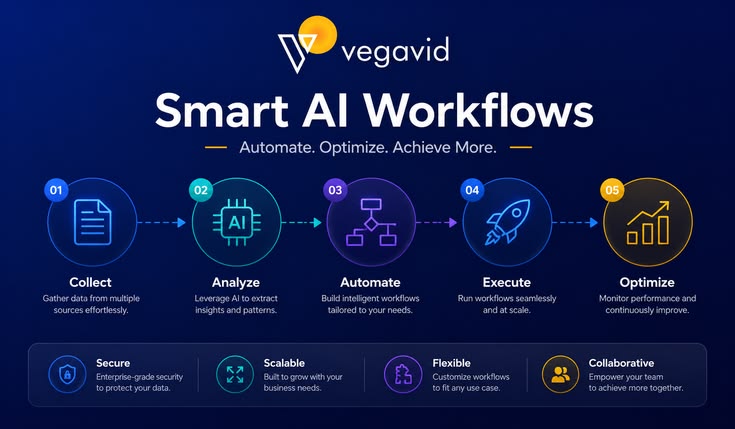
AI Workflow Automation for Enterprises: The Ultimate Blueprint for Scalable Digital Transformation (2026) The global corporate landscape has decisively moved past the experimental phase of artificial intelligence. Today, the core operational differentiator between market leaders and lagging firms isn’t just the adoption of AI—it’s orchestration. Enterprises are no longer looking for isolated AI chatbots to summarize emails. Instead, they are demanding end-to-end AI Workflow Automation: complex, self-healing, multi-agent systems that integrate with legacy infrastructure, automate decision-making pipelines, and fundamentally redefine human-machine collaboration. This comprehensive guide serves as an enterprise-grade blueprint for tech executives, operations leaders, and digital transformation architects looking to deploy scalable AI automation across their organizational fabric. 1. Defining Enterprise AI Workflow Automation To build an effective automation strategy, we must first distinguish modern AI workflow automation from legacy systems. For over a decade, Robotic Process Automation (RPA) served as the backbone of operational efficiency. RPA excels at deterministic, rule-based tasks: “If data arrives in Form A, copy it exactly into Field B.” However, the moment a user submits an unformatted invoice, an unexpected error code pops up, or an email contains nuanced human emotion, traditional RPA breaks down. +———————————————————————–+ | THE AUTOMATION EVOLUTION | +———————————————————————–+ | LEGACY RPA | MODERN AI | | “Deterministic & Rigid” | “Probabilistic & Adaptive” | | • Rule-bound execution | • Contextual understanding | | • Breaks on unstructured data| • Learns from edge cases | | • Requires static formats | • Handles text, voice, and video | +———————————————————————–+ Modern Enterprise AI Automation shifts the paradigm from deterministic to probabilistic. Backed by Large Language Models (LLMs), vision systems, and specialized embedding models, these workflows possess cognitive context. They don’t just move data; they comprehend data, make judgment calls based on corporate playbooks, learn from edge cases, and seamlessly pass control to human supervisors when structural thresholds are crossed. 2. The Architecture of an Automated AI Workflow An enterprise-grade AI workflow is rarely built on a single, isolated prompt. It is a layered, multi-component architecture engineered to maximize accuracy, data security, and execution speed. Layer 1: Data Ingestion and Semantic Parsing Every automated pipeline begins with data. The ingestion layer utilizes advanced optical character recognition (OCR), speech-to-text engines, and computer vision to ingest unstructured assets—such as raw PDFs, audio recordings of client calls, complex internal spreadsheets, or customer emails—and normalize them into structured JSON schemas. Layer 2: Vector Infrastructure and Corporate Memory To prevent the underlying models from hallucinating or losing track of corporate standards, workflows use Retrieval-Augmented Generation (RAG) systems tied to low-latency vector databases. When a new transaction or support ticket enters the pipeline, the system extracts semantic embeddings, queries the vector infrastructure for relevant corporate historical data, and constructs a highly contextual prompt. Layer 3: The Multi-Agent Orchestration Core Instead of relying on one massive, generalized AI model to handle an entire process, modern architectures break workflows down into discrete, specialized AI Agents. [Ingested Customer Ticket] | v +——————————+ | Orchestrator Agent | +——————————+ / | \ +————————+ | +————————-+ | v | +———————–+ +——————–+ +———————–+ | Data Extraction Agent | | Legal Compliance | | Quality Assurance | | | | Agent | | Agent | +———————–+ +——————–+ +———————–+ | | | +————————+ | +————————-+ \ | / v +——————————+ | Final Response / Action | +——————————+ The Orchestrator Agent: Receives the inbound payload, analyzes intent, and maps out an execution plan. The Specialist Agents: Micro-tuned models dedicated to singular tasks. For example, in an insurance claims pipeline, one agent extracts medical billing codes, a second agent cross-references the claim against policy terms, and a third agent checks for historical patterns of fraud. The Critic/Validator Agent: A separate model designed specifically to stress-test the output of the specialist agents against strict regulatory constraints before any action is committed. Layer 4: System Integration and Actuation (Tool Use) An AI that can only output text is a passive advisor. True automation requires action. Through unified API gateways, enterprise AI frameworks interact directly with core business software: writing data directly into SAP ERP systems, updating customer records in Salesforce, or pushing alerts to Microsoft Teams and Slack. 3. High-Impact Enterprise Use Cases While AI automation can be applied universally, organizations see the fastest, highest-margin returns on investment (ROI) by targeting data-heavy, communication-intensive friction points. A. Supply Chain Logistics and Vendor Management The Friction Point: Managing thousands of global vendor invoices, bills of lading, customs declarations, and shifting spot-market price quotes. The AI Automation Solution: An autonomous agent continually monitors shared procurement inboxes. When an invoice arrives, the agent automatically extracts line items, matches them against existing purchase orders (POs) within Oracle or NetSuite, verifies customs compliance documentation via RAG, flags discrepancies to a human logistics manager, and pre-approves flawless entries for payment execution. B. Legal and Financial Compliance Auditing The Friction Point: Reviewing multi-hundred-page commercial contracts, loan applications, or regulatory fillings for subtle non-compliance risks. The AI Automation Solution: Legal teams deploy specialized analysis pipelines where contracts are run through automated safety scripts. The workflow flags clauses that deviate from standard corporate positions, automatically generates alternative, compliant legal phrasing, and highlights potential financial liabilities—reducing initial contract review timelines by over 80%. C. Hyper-Personalized Global Customer Operations The Friction Point: Scaling localized customer care across multiple continents without ballooning headcounts or degrading response quality. The AI Automation Solution: Multimodal AI pipelines ingest inbound customer issues across voice, chat, and email. By recognizing user intent and tone natively, the system resolves routine technical support, processes exchanges inside the billing database, drafts highly localized, context-aware email resolutions, and seamlessly escalates frustrated or VIP accounts to human agents with a fully summarized case history. 4. Selecting the Core AI Infrastructure Stack Building an enterprise pipeline requires selecting an foundational model provider that aligns with your operational realities, technical constraints, and data security requirements. Capability / Metric OpenAI (GPT-4o / o1 Ecosystem) Anthropic (Claude 3.5 Suite) Google Cloud (Gemini Enterprise) Primary Structural Strength Elite tool usage, complex logic, massive developer market. Highly articulate prose,


Diverse students using AI-powered tablets in modern classroom with holographic learning interfaces and teacher providing personalized guidance
Educational Technology

How AI is Transforming Education Systems

Introduction Imagine classrooms where every student learns at their perfect pace, teachers focus on inspiration rather than paperwork, and education adapts instantly to individual needs. This isn’t science fiction it’s AI transforming education systems right now. From personalized learning algorithms that boost retention by 30% to intelligent tutoring systems providing 24/7 support, artificial intelligence is rewriting the rules of education. In 2026, AI handles grading, predicts student success, and creates custom curricula freeing educators for what matters most: human connection. Yet this transformation brings challenges too data privacy concerns, digital divides, and ethical questions about AI replacing teachers. This comprehensive guide explores how AI is transforming education systems, revealing practical applications, real-world results, and actionable insights for schools embracing tomorrow’s learning revolution today. Conclusion AI is transforming education systems from rigid one-size-fits-all models into dynamic, personalized learning ecosystems that prepare students for 21st-century challenges. By automating administrative burdens, enabling adaptive learning, and providing unprecedented insights, AI empowers educators to focus on mentorship while students master skills at their optimal pace. The global AI education market, projected to exceed $20B by 2027, signals this revolution’s unstoppable momentum. Forward-thinking institutions embracing AI-driven education today will shape tomorrow’s innovators. Ready to lead educational transformation? Start with pilot programs, teacher training, and ethical AI frameworks. The future of learning belongs to those who act now your students deserve nothing less. FAQ Q1: How does AI personalize learning experiences? A: AI analyzes student performance data to create custom learning paths, adjusting content difficulty and pace in real-time. Platforms like Khan Academy report 30% better outcomes. Q2: Will AI replace human teachers? A: No AI handles repetitive tasks (grading, admin) while teachers focus on mentorship, creativity, and emotional support. AI enhances, never replaces, human connection. Q3: What are AI education implementation challenges? A: Data privacy, digital divides, teacher training gaps, and ethical bias concerns. Success requires robust policies and equitable access strategies. Q4: Which AI tools improve student engagement most? A: Intelligent tutors, gamified learning apps, and VR simulations boost engagement 75% by making abstract concepts interactive and fun. Q5: How does AI help special needs students? A: AI provides tailored content for diverse learning styles, real-time feedback, and accessibility tools reducing dropout risk by 18%.

AI handles grading so educators mentor, and data analytics predict at-risk learners early
Educational Technology

How Technology is Changing Education

Introduction Technology has transformed education from static classrooms into dynamic, personalized learning ecosystems where AI tutors, immersive VR labs, and mobile platforms deliver real-time adaptive instruction to billions of learners worldwide. These tools now bridge access gaps, boost retention through gamified experiences, and prepare students for AI-driven careers, making education more inclusive and effective than ever before. In April 2026, schools leverage AR/VR for virtual field trips and simulations while mobile apps provide anytime learning with AI-powered personalization. This shift addresses traditional limitations like one-size-fits-all teaching and geographic barriers. Just two decades ago, education meant chalkboards and textbooks. Today, 6.8 billion mobile users access AI-driven platforms, AR overlays make math tangible, and global virtual collaborations connect students across continents. The global EdTech market exceeds $400 billion, driven by post-pandemic hybrid models and AI personalization that addresses individual learning gaps with surgical precision. These shifts solve core problems: low engagement (traditional methods retain just 10-20%), access barriers for remote students, and teacher overload. VR/AR simulations enable risk-free labs, AI handles grading so educators mentor, and data analytics predict at-risk learners early. Yet challenges remain—the digital divide affects 44% without reliable internet, teacher training lags, and screen fatigue demands balance. This guide explores 2026’s transformative technologies, real-world impacts, equity solutions, and implementation strategies for schools and parents. Whether you’re an educator seeking VR tools or a policymaker planning digital infrastructure, understand how technology makes learning engaging, equitable, and future-proof. AI-Powered Personalization AI now acts as virtual tutors that adapt lessons to individual learning styles, paces, and knowledge gaps in real time. Platforms analyze student performance across subjects and generate custom exercises, explanations, and even motivational feedback tailored to each learner. Key benefits include: Real-time progress tracking with predictive analytics. Automated grading and feedback, freeing teachers for mentorship. Multilingual support reaching non-native speakers instantly. Studies show AI-assisted learning boosts retention by 35-47% compared to traditional methods. Immersive AR/VR Learning Augmented Reality overlays interactive 3D models onto textbooks while Virtual Reality transports students inside historical events or molecular structures. Classrooms use affordable VR headsets for risk-free science experiments and anatomy dissections. VR retention rates reach 75% versus 10% for reading alone. AR makes abstract math and physics tangible through manipulable holograms. Global virtual field trips eliminate travel costs for under-resourced schools. Mobile-First Learning Platforms With 6.8 billion mobile users, education has gone pocket-sized. Apps deliver micro-lessons, gamified quizzes, and collaborative projects accessible 24/7. Popular 2026 implementations: AI study companions with voice interaction. Peer-to-peer knowledge sharing via social learning networks. Offline-capable content for remote areas. Data-Driven Administration Technology streamlines school operations through digital platforms for enrollment, attendance, and parent communication. Predictive analytics identify at-risk students early, enabling targeted interventions. Challenges and Equity Despite progress, the digital divide persists—56% global internet access creates uneven opportunities. Teacher training lags behind tools, and screen fatigue affects young learners. Solutions gaining traction: Low-cost shared devices and offline apps. Hybrid models blending tech with hands-on learning. Government subsidies for rural connectivity. Conclusion Technology has made education more engaging, accessible, and effective, with AI, AR/VR, and mobile platforms leading 2026’s transformation. Schools succeeding today invest in teacher training, equitable access, and balanced tech-human instruction to maximize benefits while addressing gaps. Start exploring these tools in your classroom or institution—future-ready education begins with one adaptive lesson. FAQ How does AI improve learning outcomes? AI personalizes content to match individual needs, providing instant feedback and adapting difficulty, which research shows increases retention by 35-47%. Are VR/AR tools affordable for schools? Costs dropped 70% since 2023; cloud-based VR and smartphone AR now serve most classrooms with shared headsets under $50 per student. What is mobile learning’s biggest advantage? Anytime, anywhere access—students in remote areas complete full courses via offline apps, closing access gaps. Does technology replace teachers? No, it enhances them—teachers shift to facilitation while AI handles repetitive tasks, improving mentor-student relationships. How can schools address the digital divide? Invest in low-cost devices, offline content, and teacher training; public-private partnerships provide subsidized connectivity.

Educational Technology

7 Reasons Why Education Startups Fail & Ways to Avoid Them

Introduction The EdTech industry promises to transform education through technology, offering innovative learning experiences and scalable solutions. However, despite rapid growth and significant investment inflows, many education startups fail within the first few years. Understanding the common reasons for failure and how to overcome them is crucial for entrepreneurs aiming for long-term success and impact. This blog explores 7 key reasons why education startups often struggle, supported by market insights, and offers actionable strategies for thriving in this competitive sector. For deeper understanding of AI-powered education technology and digital transformation, explore TechOTD’s AI Services and their technology blog. 1. Poor Market Research Many education startups jump into product development without a solid grasp of the market dynamics, user needs, and ecosystem realities. They often mistake excitement for demand, leading to products that don’t solve real educational challenges or fit into school environments. How to avoid: Conduct thorough market and competitor analysis. Engage educators, learners, and administrators early for feedback. Validate product ideas with pilot studies or MVPs to ensure real-world applicability. 2. Lack of Patience Education adoption cycles are significantly slower than in other industries. Schools and institutions require time to trial, accept, and integrate new tools into rigid curriculums and budgets. Many startups fail because they expect rapid growth and give up prematurely. How to avoid: Set realistic expectations about timelines (often 5-10 years for widespread adoption). Focus on steady user engagement milestones rather than quick scaling. 3. Unclear Distinction Between Users and Buyers Confusing the end-users (students, teachers) with paying customers (schools, parents, districts) often leads to misaligned marketing, pricing, and product design strategies. Solutions must cater to the needs of all stakeholder groups in education. How to avoid: Map out all stakeholders and their specific requirements. Design your product and outreach strategies accordingly. 4. Overuse of Technology Without Educational Value EdTech startups sometimes focus on trendy technologies—AR, VR, AI—without ensuring these add tangible learning benefits. This increases costs and complexity, alienating users if technology does not improve outcomes. How to avoid: Prioritize pedagogical effectiveness over novelty. Pilot technology features to prove value before wide release. 5. Lack of Transparency and Collaboration with Educators Failing to involve teachers and educational institutions in development leads to lack of buy-in and resistance. Attempts to replace educators or disregard classroom realities often doom products. How to avoid: Collaborate with educators throughout development cycles. Create transparent, teacher-friendly products that complement teaching. 6. Too Many Features Leading to Complexity Feature overload makes platforms confusing and hampers usability. Startups with cluttered apps or platforms struggle with adoption and retention. How to avoid: Develop a minimal viable product (MVP) focusing on a core problem. Use data analytics to guide gradual feature expansion based on user needs. 7. Insufficient User Training and Support Lack of onboarding, training, and responsive support leads users to abandon even the best platforms. Many EdTech startups underestimate the training needs of educators and learners. How to avoid: Invest in comprehensive training resources and support systems. Continuously collect user feedback to improve usability and support. Conclusion Success in education technology requires more than innovative ideas or strong funding. It demands deep market knowledge, collaboration with educators, simple yet powerful product design, and long-term commitment. By avoiding these common pitfalls and leveraging strategic partnerships, EdTech startups can create impactful and sustainable solutions that transform learning. For expert guidance, explore how TechOTD combines AI, product development, and education insights to support startups in the education sector. Discover more tips and digital trends on the TechOTD Blog. FAQs Q1: Why do many EdTech startups fail within the first 5 years? Lack of proper market research and misunderstanding the slow adoption cycles in education are major reasons. Q2: How important is teacher collaboration? Critical. Products must align with educators’ needs and workflows to gain acceptance. Q3: Should startups always use the latest technology? No. Technology should be adopted only when it adds educational value. Q4: How can startups sustain long-term growth? By focusing on core user needs, iterative development, and investing in user training. Q5: What initial steps should EdTech startups take for product development? Conduct thorough market validation, develop an MVP, and engage educators from the start

Educational Technology

How Much Does It Cost to Develop a Language Learning App Like Babbel?

Introduction In today’s digitally connected world, language learning apps like Babbel are transforming the way millions achieve fluency. Whether you’re a startup or an established brand, creating a powerful language learning app can unlock global reach and sustainable revenue streams. But the burning question for most businesses is: How much does it cost to develop an app like Babbel? This comprehensive guide breaks down the investment needed, important features, and cost factors—with top tips on choosing the right development partner for your project. Looking for expert guidance and end-to-end app development? Check out TechOTD’s solutions for web & mobile development, AI tools, and digital transformation expertise. What Drives the Cost of a Language Learning App Like Babbel? Multiple elements affect the cost of developing a feature-rich language learning app: Core Features: Login, onboarding, course creation, quizzes, real-time chat, spaced repetition, progress tracking, leaderboards. AI-Powered Personalization: Adaptive lessons, AI tutors, pronunciation analysis, and content recommendations using AI services. Design Complexity: Custom illustrations, animations, gamification, and user-centric flow. Platform Choice: Native (iOS, Android), cross-platform, or web build. Backend & Database: Secure user data storage, content management, and analytics dashboards. Integration Needs: Payment gateways, social sharing, cloud hosting, and third-party APIs. Maintenance & Updates: Ongoing costs for bug fixes, new features, and scaling. Team Size, region, and expertise also influence total expenses. Estimated Cost Breakdown for Developing a Babbel-Style App Here’s a high-level estimate based on industry benchmarks and customized app dev projects: 1. MVP/BASIC APP Features: Login, course catalog, lessons, audio/video, simple quizzes, progress tracking. Timeframe: 3–5 months Cost Range: $40,000 – $70,000 2. FULL-FEATURED APP Advanced AI: Speech recognition, adaptive learning, spaced repetition, in-app purchases, gamified UX, analytics dashboard. Multi-platform (iOS + Android + Web). Timeframe: 6–12 months Cost Range: $80,000 – $200,000 3. ENTERPRISE-GRADE/SCALABLE SOLUTION Everything above plus real-time tutoring/video calls, admin/teacher portals, custom integrations, cloud hosting, compliance (GDPR), heavy analytics. Timeframe: 10–15 months Cost Range: $200,000 – $400,000+ Additional Factors Design & UX: $10,000 – $30,000 AI & Machine Learning: Adds $20,000 – $70,000 depending on complexity. Cloud Services (e.g., AWS, Azure): Usage-based monthly costs. Maintenance & Scaling: 15-20% of initial development cost per year. Ready to take the next step? Leverage TechOTD’s AI expertise and partner network to accelerate your project. Top Features That Impact App Development Cost User Registration & Profiles: Social sign-in, data protection. Interactive Lessons: Modular courses, contextual practice. Audio/Video Support: Native pronunciation, listening drills. Gamification: Points, streaks, badges, leaderboards. AI-Powered Feedback: Real-time corrections and adaptive content AI-driven solutions. Push Notifications: Engagement boosters. Subscription & Payment Gateway: Monetization via in-app purchases eCommerce capability. Offline Access: Downloadable lessons for learning anywhere. Analytics Dashboard: For learners and admins. Scalable Cloud Infrastructure: Secure, global app access Cloud Solutions. Why Invest in a Custom Language Learning App Now? EdTech Growth: Post-pandemic, user engagement with learning apps has soared. Market Opportunity: Demand spans students, businesses, and lifelong learners. Scalability: Cloud-native, AI-driven apps can reach worldwide audiences and drive recurring subscriptions. Personalization: Stand out by offering smart, adaptive features. Brand Authority: Custom apps build trust and customer loyalty. Conclusion Developing a language learning app like Babbel is a significant but rewarding investment. Costs vary widely based on features, platforms, and technical choices, but with the right plan and a seasoned partner like TechOTD, you can deliver a standout solution for the booming EdTech market. Ready to transform your app idea into a scalable, AI-powered learning platform? Contact TechOTD’s team to explore a tailored roadmap, discuss budgets, or book a free consultation! FAQ 1. Can I build a language app for less than $50,000? Yes, but you’ll need to start with a minimum viable product (MVP) focusing on core features and expand over time. 2. What drives up development costs the most? AI-powered features (like speech recognition, adaptive learning), complex design/UX, multi-platform builds, and real-time features (e.g., video calls). 3. How long does it take to develop a Babbel-style app? Anywhere from 4 to 15 months, depending on scale and feature set. 4. What about maintenance and updates? Plan for annual maintenance (budgets start at 15% of development cost) to keep your app running smoothly. 5. Can TechOTD help with AI/ML features and secure cloud hosting? Absolutely! TechOTD specializes in AI integration and scalable cloud solutions.

Educational Technology

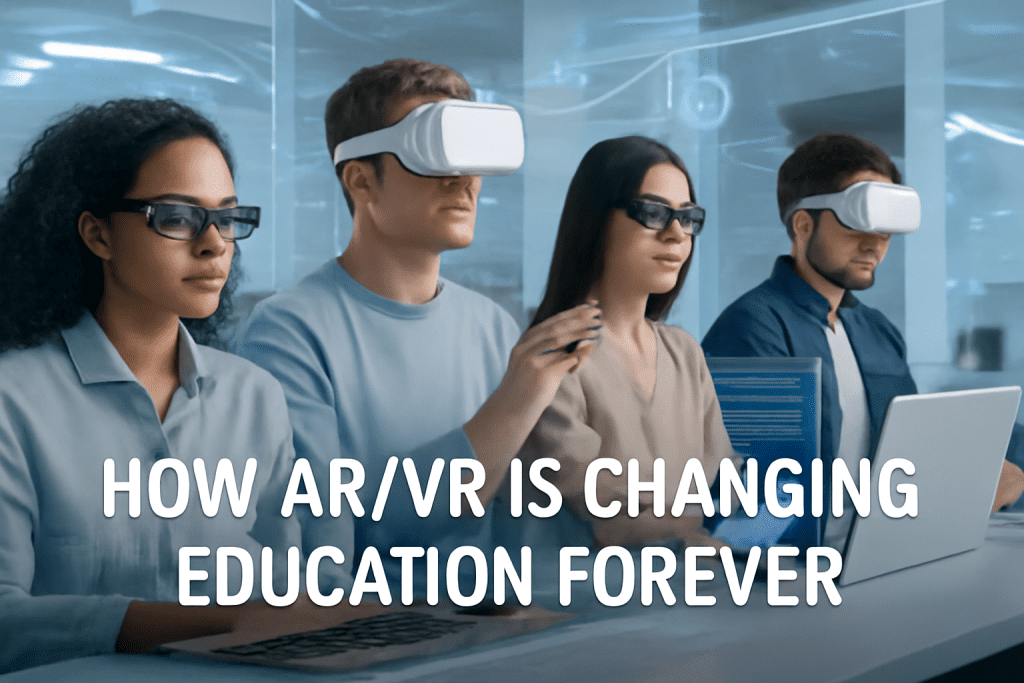
How AR/VR is Changing Education Forever

Introduction Augmented Reality (AR) and Virtual Reality (VR) are revolutionizing education, creating immersive, interactive environments that go far beyond traditional textbooks and lectures. From elementary schools introducing fun, 3D models in classrooms to universities using advanced VR simulations for medical training, AR/VR is making learning more engaging, effective, and accessible for all―forever transforming how students experience knowledge. What is AR and VR in Education?          .   Augmented Reality(AR): Integrates digital elements—like images, text, or 3D models—into the real world, viewed               through devices such as tablets, smartphones, or smart glasses. Virtual Reality (VR): Fully immerses users in a digital environment, typically via headsets, enabling “learning by doing,” simulation, and exploration far beyond the classroom’s physical walls. How AR/VR is Transforming Learning 1. Enhanced Engagement & Motivation Interactive AR/VR lessons make complex and abstract topics fun and tangible—students retain more information and develop a love for learning. Gamified elements and hands-on experiences break the monotony of rote learning. 2. Improved Understanding of Complex Concepts 3D models let students visualize everything from atoms to the solar system, and even human anatomy, enhancing their grasp of difficult subjects. Virtual field trips allow students to “visit” historical sites, disaster zones, or far-off planets—without leaving their school. 3. Safe, Experiential Learning VR simulations provide a risk-free way to practice real-world skills, such as surgery, engineering, or scientific experiments, improving practical skills with zero danger. 4. Personalized & Differentiated Learning Tailored AR/VR scenarios adapt to individual learning speeds and preferences, catering to diverse learning needs and styles. 5. Increased Collaboration and Social Skills Multi-user VR classrooms and AR projects encourage teamwork, communication, and collaborative problem-solving—even when students are remote. Real-World Examples Elementary Schools: AR sandboxes for geography; interactive 3D flashcards for biology; chemistry visualizations through AR cubes. Colleges/Universities: VR simulations for medical training; AR to study brain functions and psychological phenomena. Vocational Training: Virtual reality labs for mechanics, engineers, and healthcare professionals to practice skills before entering real workplaces. Distance/Online Learning: Students from around the world attend the same immersive VR classrooms, making quality education globally accessible. Benefits at a Glance Benefit AR Example VR Example Higher Student Engagement 3D interactive models in class Immersive field trips Improved Knowledge Retention AR flashcards, games Simulated hands-on lab work Accessibility Translation & instant guides Attend remote classrooms Collaboration & Social Learning Group AR projects Multi-user VR lessons Safe Practice for Risky Scenarios Step-by-step AR guides VR medical & engineering sims Personalized Learning Adaptive AR quizzes Branching VR scenarios How to Use AR/VR in Your Education Setting Start with available AR apps and tools—many offer free trials for classrooms (like Google Expeditions and ClassVR). Identify complex topics or skills in your curriculum where AR/VR can add value. Train teachers and students on using devices and software for maximum impact. Foster collaboration by creating group VR projects or AR-based treasure hunts/assignments. Regularly assess learning outcomes and adapt experiences for continued progress. Conclusion AR/VR is much more than a tech trend—it’s a paradigm shift in education. By merging virtual and real worlds, educators make learning vivid, memorable, and personalized for every student. As AR and VR tools become more accessible, their role in classrooms will only grow, ensuring that education everywhere is more engaging, relevant, and future-ready. FAQ Q1: What is the difference between AR and VR in education? A1: AR overlays digital information on the real world, enhancing what you see; VR immerses users in a completely virtual environment, allowing “hands-on” practice and exploration. Q2: Is AR/VR expensive for schools to implement? A2: Costs are dropping as technology evolves. Many AR apps work on smartphones/tablets. VR headsets are becoming more affordable, and many companies offer education discounts and ready-to-use lesson packages. Q3: How does AR/VR affect student learning outcomes? A3: Research shows AR/VR increases engagement, improves memory retention by nearly 9%, and supports diverse learners, especially those with special needs or remote access challenges. Q4: Can AR/VR be used for online or distance education? A4: Yes! VR classrooms enable students worldwide to learn together, while AR tools support remote, interactive, and collaborative activities. Q5: Will AR/VR replace teachers? A5: No. AR/VR is a tool to enhance teaching, not replace it. Human guidance, support, and expertise remain crucial for effective learning outcomes.

How would you like me to respond?

Select a personality for your AI assistant

Normal
Happy
Sad
Angry

Your selection will affect how the AI assistant responds to your messages

Chat Assistant

Let's discuss your project!

Hear from our clients and why 3000+ businesses trust TechOTD

Tell us what you need, and we'll get back with a cost and timeline estimate

Scroll to Top