Author name: Kirti Sharma

android devlopment

How to Get Your App Featured in the Play Store: A Step-by-Step Guide

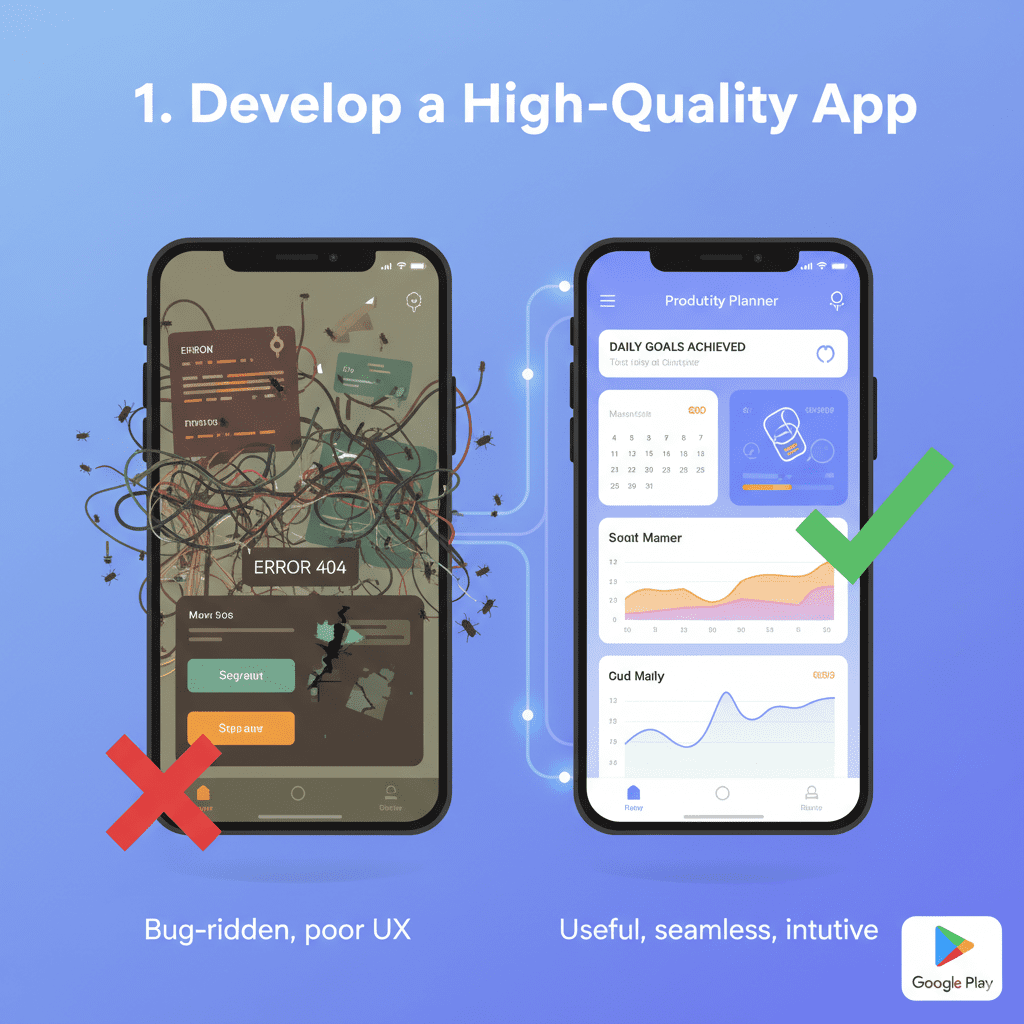
Introduction Mobile applications have become an integral part of our daily lives, with millions of apps available on the Google Play Store. But standing out in such a crowded marketplace is no easy task. One of the most effective ways to get your app noticed, drive massive downloads, and build brand credibility is by getting it featured in the Play Store. A featured app enjoys prime placement, significantly increasing its visibility and credibility among users. However, the path to earning this coveted spot requires strategic planning, optimization, and continuous improvement. In this detailed guide, we’ll walk you through the step-by-step process of how to get your app featured on the Play Store. Whether you’re a startup, developer, or business owner, these actionable strategies will help you maximize your chances. Step 1: Understand What It Means to Be Featured When an app gets featured in the Play Store, it is highlighted by Google in special collections such as Editor’s Choice, Top Apps, or Trending Sections. Featured apps often experience exponential growth in downloads, better user engagement, and increased revenue. However, this isn’t something you can simply pay for—it requires compliance with Google’s standards and providing an exceptional user experience. Google evaluates apps based on several factors: Quality and usability Innovative features User engagement and retention Compliance with Play Store policies Strong app store optimization (ASO) Before moving forward, familiarize yourself with Google’s Play Store Guidelines and ensure your app meets the fundamental requirements. Step 2: Build a High-Quality App The first step toward being featured is to build a high-quality app that users love. Google prioritizes apps that deliver an excellent user experience. Key aspects to focus on: Smooth Performance: Ensure the app runs without crashes, slowdowns, or bugs. Intuitive UI/UX: Simple, clean design that’s easy to navigate. Unique Value Proposition: Your app should solve a real problem or deliver entertainment in an innovative way. Compatibility: Support a wide range of devices and screen sizes. High-performing apps are more likely to be recommended by Google editors. Step 3: Optimize App Store Listing (ASO) App Store Optimization is crucial for discoverability and plays a key role in getting featured. Best practices include: Title & Description: Use clear, keyword-rich titles and descriptions. Icon & Graphics: A professional app icon, promotional images, and engaging screenshots are essential. Promo Video: Add a high-quality demo video that explains the app. Localized Content: Translate your app’s content into different languages to reach a global audience. ASO not only increases downloads but also signals to Google that your app is relevant and user-friendly. Step 4: Maintain Strong Ratings and Reviews Google pays close attention to user feedback. Apps with consistent 4.5+ ratings and positive reviews have a much higher chance of being featured. Tips to achieve this: Encourage satisfied users to leave reviews. Respond promptly to negative feedback. Continuously update the app to fix bugs and improve features. Add in-app prompts for reviews at the right time (e.g., after a positive user experience). User trust and satisfaction directly influence your app’s visibility. Step 5: Ensure Compliance with Google Policies Google enforces strict policies to ensure apps are safe and trustworthy. Any violation can hurt your chances of getting featured—or worse, get your app removed. Key policies to follow: Content Guidelines: No offensive, misleading, or harmful content. Ad Policies: Avoid intrusive or misleading ads. Data Privacy: Be transparent about user data collection and ensure compliance with GDPR and other regulations. Apps that respect privacy and follow ethical practices stand out. Step 6: Leverage Google Play Features Google provides developers with tools and features that, when implemented, can improve your app’s chances of being featured: Android App Bundles for optimized delivery. Instant Apps that allow users to try your app without installing. Material Design Guidelines to enhance the visual appeal. Google Play Billing Library for smooth in-app purchases. Incorporating these features shows Google that your app is modern and user-centric. Step 7: Drive Engagement and Retention It’s not just about downloads—Google wants apps that keep users engaged over the long term. Strategies include: Push notifications with personalized content. Reward systems, gamification, and loyalty programs. Frequent updates with new features. Building communities around your app (forums, social media groups). The higher your engagement and retention rates, the more likely you are to get featured. Step 8: Build a Strong Marketing Strategy Google looks at overall brand presence. Apps with solid marketing campaigns often gain attention faster. Effective marketing strategies: Social Media Promotion: Leverage platforms like Instagram, LinkedIn, and Twitter. Content Marketing: Publish blogs and guides related to your app’s niche. Influencer Partnerships: Collaborate with industry influencers. Press Coverage: Reach out to media and tech blogs. For inspiration, check out resources like TechOTD Blog where technology and app development trends are covered extensively. Step 9: Connect with Google’s Editorial Team Sometimes, direct communication can help. You can pitch your app to Google Play’s editorial team via the Google Play Console. Share what makes your app unique, its growth metrics, and how it provides value to users. While there’s no guarantee, having a direct pitch can increase your visibility. Step 10: Keep Updating and Innovating Finally, the most sustainable way to get noticed is by continuously improving your app. Release regular updates with fresh features. Monitor analytics and adapt based on user behavior. Stay ahead of competitors by adding cutting-edge technologies like AI, Blockchain, and Predictive Analytics. For example, platforms like AI Solutions at TechOTD and Blockchain Business Process Integration showcase how adopting innovative technologies can help apps stand out in competitive markets. Additional Tips to Maximize Your Chances Showcase your app in case studies and reports, similar to how Large Language Models in Finance are documented. Focus on customer journeys and experience excellence, like this AI-driven customer service blog. Explore emerging technologies and trends such as Best Gadgets for Programmers 2025 or Predictive Analytics Software. Understand the impact of technology in various domains, as explained in Tech’s Role in Education. Stay updated with framework comparisons like React Native vs Swift. Learn

Artificial Intelligence

Creating Hyper-Personalized Banking with AI: Cost, ROI, and Use Cases

 Introduction The banking industry is witnessing one of the most profound technological revolutions in its history. Artificial Intelligence (AI) is at the core of this transformation, enabling hyper-personalized banking experiences that go far beyond simple customer greetings. In 2025, AI personalization allows banks to predict customer needs, recommend relevant products in real-time, and create seamless customer journeys that boost loyalty and profitability. This blog will explore the cost structures, ROI, benefits, and real-world use cases of AI-driven hyper-personalization in banking, while also examining challenges and the future of this trend. (Internal backlink: How Blockchain Integration is Optimizing Business Processes in Dubai) Discover how hyper-personalized banking with AI transforms customer experiences in 2025. Learn about cost, ROI, benefits, and top AI banking use cases The Imperative for Hyper-Personalization in Banking Modern customers no longer compare banks with other banks—they compare them with Netflix, Amazon, and Spotify. They expect the same level of personalization in financial services as they do in e-commerce and entertainment. Banks that fail to deliver risk losing relevance. Key Drivers: Customer Expectations: 75% of customers prefer financial institutions that provide personalized services. Competitive Edge: McKinsey reports banks leveraging AI personalization see up to 40% more revenue than peers. Efficiency & Loyalty: AI reduces friction, improves experience, and decreases churn. (Internal backlink: Seamless Customer Journeys with AI – The Future of Service Excellence) The Role of AI in Hyper-Personalized Banking AI enables banks to process vast datasets and uncover patterns that traditional analytics miss. Here are the core AI technologies powering hyper-personalization: Machine Learning (ML): Predicts customer behavior from transaction and interaction data. Natural Language Processing (NLP): Enables AI chatbots and assistants for conversational support. Predictive Analytics: Anticipates customer needs such as loan or credit offers. Robo-Advisors: Delivers personalized investment advice at scale. Generative AI: Creates contextual responses for customer service and marketing. (Internal backlink: Large Language Models in Finance – Benefits, Applications, and Real Examples) Cost of Implementing AI-Powered Personalization The cost of AI adoption in banking depends on scale, integration, and compliance requirements. Here’s a breakdown: Project Level Features Estimated Cost (USD) Timeline Basic / MVP Chatbots, rule-based recommendations $40,000 – $100,000 4–6 months Mid-Range NLP, predictive analytics, CRM integration $100,000 – $200,000 6–8 months Advanced End-to-end personalization, fraud AI $200,000 – $400,000 8–12 months Enterprise Full-stack, multi-system deployment $400,000 – $600,000+ 12–18 months Cost Factors: Legacy system integration. Cloud vs. on-premises deployment. AI model customization. Security & compliance (GDPR, RBI, etc.). (Internal backlink: Predictive Analytics Software Development: Features, Benefits, Use Cases, Process, and Cost) ROI of AI Hyper-Personalization Banks usually achieve ROI in 12–24 months, driven by: Revenue Uplift: 15–30% growth via cross-selling and upselling. Customer Retention: Reduced churn due to personalized experiences. Operational Efficiency: Automation in support, onboarding, and loan approvals reduces manual costs. Fraud Prevention: AI anomaly detection reduces fraud losses. Example Case: A global bank that deployed AI personalization in loans and onboarding saw: 27% increase in cross-sell revenue. 20% drop in customer attrition. ROI realized in 14 months. (Internal backlink: Technology Impact on Education – An Ultimate Guide for CEOs) Popular AI Use Cases in Banking Personalization Use Case AI Features Benefits Personal Finance Management (PFM) Smart budgeting, alerts Improved financial wellness Product Recommendations Predictive analytics Higher conversions Customer Service NLP chatbots 24/7 personalized support Fraud Detection Real-time anomaly detection Lower fraud losses Credit Scoring Alternative data models Inclusive lending Investment Advice Robo-advisors Personalized portfolios Transaction Categorization Auto-tagging with ML Better insights Marketing & Communication Personalized campaigns Stronger engagement (Internal backlink: Best Gadgets for Programmers in 2025) Real-World Example: AI-Powered Micro-Personalization A leading Asian bank adopted AI micro-personalization strategies: Customer nudges increased engagement by 34%. Loan acceptance rates rose by 19%. Non-performing assets decreased by 11%. This proves how AI-driven strategies shift banking from transactional to relationship-based engagement. (Internal backlink: React Native vs Swift – Choosing the Right Mobile App Framework) Meta Title: Creating Hyper-Personalized Banking with AI in 2025 – Cost, ROI & Use Cases Benefits of Hyper-Personalization with AI For Customers Tailored experiences aligned with lifestyle & financial goals. Proactive alerts for savings, credit, and investment. Enhanced financial literacy via AI-guided advice. For Banks Higher loyalty and lower churn. Revenue diversification via upsell & cross-sell. Improved fraud detection and compliance monitoring. (Internal backlink: Mobile App Development Services) Key Implementation Challenges Data Privacy & Trust: Compliance with GDPR, RBI, and local frameworks. Legacy Systems: Integration hurdles with outdated infrastructure. Talent Gap: Need for skilled AI engineers and data scientists. Change Management: Bank-wide adoption requires cultural and operational shifts. (Internal backlink: How We Work – TechOTD) Looking Ahead: The Future of AI-Powered Personalization By 2030, AI banking will evolve into anticipatory financial ecosystems. Key advancements include: Voice-enabled AI banking assistants. Generative AI-driven financial coaching. Predictive life-event-based recommendations. Unified financial ecosystems integrating health, travel, and lifestyle. The shift will be from responsive banking to proactive, predictive, and journey-based financial guidance. AI banking, hyper-personalization banking, personalized banking 2025, AI ROI banking, AI transformation cost, digital banking, predictive analytics, robo-advisors, AI banking use cases, customer engagement banking, fintech trends 2025 Conclusion AI-driven hyper-personalization in banking is no longer optional—it is the foundation for growth, customer trust, and long-term relevance. While implementation costs range from $40,000 to $600,000+, the ROI within 12–24 months makes it one of the most impactful investments banks can make in 2025. Institutions must adopt AI responsibly, ensuring compliance, transparency, and ethical use of customer data. FAQs Q1: How much does AI personalization cost for banks? Between $40,000 and $600,000+, depending on scope and integration. Q2: How quickly can ROI be achieved? Typically within 12–24 months. Q3: What is the top AI use case in 2025? Personal financial management (PFM), followed by personalized lending and investments. Q4: Is data privacy a concern? Yes, compliance with regulations like GDPR and RBI guidelines is crucial. Q5: Can small banks implement AI personalization? Yes, modular and cloud-based AI solutions make it accessible even for regional banks. Backlinks TechOTD Blog How Blockchain Integration is Optimizing Business Processes in Dubai Large Language Models in Finance Seamless

Internet of Things, Uncategorized

Exploring the Landscape of IoT Connectivity Technologies: Benefits, Use Cases, and Challenges

Introduction The Internet of Things (IoT) is no longer a future vision—it’s an essential driver of digital transformation in 2025, fueling everything from smart homes to smart cities, factories, healthcare, and more. At the heart of IoT’s growth lies connectivity—the bridge between billions of devices sensing, sharing, and acting on data. The choice of IoT connectivity technology profoundly shapes project costs, speed, coverage, scalability, and security. Let’s explore the main categories of IoT connectivity, their benefits, real-world use cases, and the critical challenges organizations face while deploying at scale. Types of IoT Connectivity Technologies Technology Range Power Usage Speed Typical Use Cases Wi-Fi Short-Medium High High Smart homes, offices, retail systems Bluetooth Short Low Moderate Wearables, medical sensors, asset tags Zigbee/Z-Wave Short Very low Low Smart homes, automation, lighting Cellular (2G-5G) High Moderate-High High Vehicles, public infrastructure LPWAN (LoRaWAN, NB-IoT) Long Ultra-low Low-Moderate Agriculture, utilities, remote assets Satellite Global High Moderate Remote monitoring, maritime, aviation Ethernet Local Low Very High Industrial, manufacturing plants RFID/NFC Ultra-short Low Low Inventory tracking, access control Benefits of IoT Connectivity Technologies Seamless Data Exchange: IoT connectivity enables always-on, real-time data transfer—powering automation and intelligent decisions. Interoperability: Modern standards like Wi-Fi, Bluetooth, and LPWAN protocols allow devices from various manufacturers to collaborate across industries. Scalability: Cellular and LPWAN technologies support millions of simultaneous device connections, vital for smart cities and industrial IoT. Remote Management: Satellite, LPWAN, and cellular make it possible to manage assets far from conventional networks, unlocking new remote and global applications. Energy Efficiency: Protocols like Zigbee, Bluetooth Low Energy, and LoRaWAN are optimized for low power, making battery-powered sensor networks practical. Practical Use Cases Across Industries Smart Cities: Traffic lights, surveillance cameras, air quality sensors, and public safety systems use cellular, LPWAN, and Wi-Fi to create intelligent, responsive cities—like Seoul’s AI-based traffic management. Manufacturing & Industry (IIoT): Predictive maintenance, robotics, and digital twins use Ethernet, Wi-Fi, and increasingly 5G for real-time machine status, cutting downtime and increasing efficiency. Healthcare: Wearable medical devices and patient monitoring rely on Bluetooth, Wi-Fi, and cellular for constant health updates and remote diagnostics. Agriculture: LoRaWAN and NB-IoT connect soil sensors, weather stations, and livestock trackers across wide expanses, enabling precision farming and livestock management. Automotive: Cellular and satellite enable fleet tracking, vehicle telemetry, and autonomous driving features, supporting safety and optimal logistics. Retail & Logistics: RFID, NFC, and Wi-Fi drive inventory management, cashless payments, and supply chain transparency. Key Challenges in IoT Connectivity Security & Privacy: With so many endpoints and constant data transfer, IoT is a high-value target for cyberattacks. Securing the pipeline, authenticating devices, and safeguarding sensitive data are top priorities. Interoperability: Diverse protocols, proprietary systems, and inconsistent standards can make large-scale integration complex and costly. Power Management: Many IoT devices are deployed in inaccessible locations. Ensuring sufficient battery life or energy harvesting is a technical hurdle. Scalability and Cost: Cellular and satellite offer global range but often with higher subscription and operational costs. Scaling networks without excessive costs requires careful planning. Network Congestion & Latency: As millions of devices transmit simultaneously, ensuring low-latency, reliable communication—especially in mission-critical scenarios—can be difficult. The rollout of 5G and AI-enhanced traffic management are addressing these challenges. Conclusion The evolving IoT landscape in 2025 is powered by a diverse suite of connectivity technologies—each with unique trade-offs. Organizations planning IoT deployments should assess their use case requirements for scale, range, energy, and cost, then select the right connectivity mix. Despite challenges, the benefits—greater efficiency, actionable insight, seamless automation, and new business models—are transforming industries and daily life. FAQs Q1: What’s the best IoT connectivity technology for smart agriculture? LPWAN technologies like LoRaWAN and NB-IoT offer long range and low energy use, ideal for fields and remote sites. Q2: Are 5G and IoT linked? Yes. 5G’s speed and low latency are unlocking real-time, large-scale IoT, such as connected vehicles and smart cities. Q3: What is the main security concern with IoT connectivity? The vast attack surface created by billions of endpoints, making robust network security essential. Q4: Can IoT devices work offline? Some do, but most applications require regular connectivity for updates, control, or analytics. Q5: Which technology is most energy-efficient for battery-powered IoT sensors? LoRaWAN, Zigbee, and Bluetooth LE are top choices due to their low-power protocols.

Technology

Website Maintenance Cost in India 2025: Comprehensive Guide

Introduction In 2025, website maintenance has moved from a mere afterthought to a strategic necessity for Indian businesses of all sizes. A well-maintained website ensures security, speed, customer trust, and compliance with ever-evolving technology and SEO standards. India’s cost advantage still holds, but expectations for quality, AI-enabled monitoring, and proactive optimization have never been higher. This blog covers everything you need to know about website maintenance costs in India for 2025, from basic pricing to the latest trends and budgeting tips. For expert AI-driven support, check out TechOTD’s AI Solutions and their in-depth technology blog. Why Website Maintenance Matters in 2025 Security: Protect customer data and prevent cyber-attacks. Performance: Ensure fast load times, uptime, and modern user experience. SEO Health: Maintain rankings via updates and performance optimization. Compliance: Stay updated for privacy laws (GDPR, IT Act) and web accessibility. Brand Trust: Regular content, error-free navigation, and technical reliability. Key Components of Website Maintenance Component Typical Cost (Monthly) Description Domain Renewal ₹75 – ₹200 Annual payment for domain ownership Hosting ₹125 – ₹8,000+ Shared, VPS, or dedicated, based on traffic SSL Certificate ₹0 – ₹10,000 Security certificate, some hostings provide free CMS & Plugin Updates ₹500 – ₹3,000 WordPress, custom CMS, extensions/plugins update Backups ₹250 – ₹1,000 Automated regular backups Content Updates ₹1,000 – ₹10,000 Visuals/text, product additions, blog posts Security Monitoring ₹500 – ₹6,000 Malware scans, firewall, vulnerability fixes Performance Checks ₹500 – ₹3,000 Speed, mobile, usability optimization Professional Support ₹1,500 – ₹15,000 Tech support, troubleshooting, reporting Average Website Maintenance Costs in India (2025) Website Type Monthly Cost Range (₹) Yearly Cost Range (₹) Personal Blog 500 – 2,000 6,000 – 24,000 Small Business Website 2,500 – 8,000 30,000 – 96,000 Corporate Website 6,000 – 15,000 72,000 – 180,000 E-commerce Store 8,000 – 20,000 96,000 – 2,40,000 Custom Web Application 15,000 – 50,000+ 1,80,000 – 6,00,000+ Key Factors Affecting Website Maintenance Cost Site Complexity: More pages and interactive features mean higher cost. Traffic Volume: High-traffic sites need robust hosting, backups, and tech support. Platform: WordPress, custom code, Shopify, and enterprise CMS each require a different approach. Frequency of Updates: Regular blog, shop, or news updates add to content costs. AI Automation: AI tools can reduce manual labor but may require initial setup investment. AI’s Role in Website Maintenance (2025) Task Manual (2020s) AI (2025) Uptime Monitoring Ping tools Predictive downtime alerts SEO Audits Manual scans AI-based anomaly & ranking checks Plugin/Update Checks Manually scheduled Automated compatibility, risk scans Security Scheduled scans AI-powered, real-time threat detection Performance Optimization Manual audits Automated, real-time adjustment scripts AI can cut manual maintenance work by up to 50%. Learn more about AI-driven development at TechOTD’s AI page. Maintenance Plan Options in India Plan Type Services Included Best For Basic/Self-Maintenance Hosting, renewals, limited updates Portfolio, personal blog SMB Plan Upgrades, backups, basic support Small/medium business, startups E-commerce Plan Security, daily backups, product updates Online retailers, WooCommerce sites Enterprise/Custom 24/7 support, advanced analytics, scaling Large corporate, custom web apps AI-enabled Maintenance Proactive alerts, SEO/UX automation Tech-forward businesses, high-traffic How to Optimize Website Maintenance Budget Outsource routine tasks to a professional agency for efficiency. Use AI tools for monitoring, detection, and basic analysis (See TechOTD workflow). Combine essential features; don’t overpay for unnecessary extras. Plan for yearly budgeting, not just month-to-month. Ask for bundled deals for hosting, domain, and SSL. Key Points Table Key Aspect Typical Cost Notes Domain & SSL ₹900 – ₹10,000/year Domain renewal & security Hosting ₹1,500 – ₹1,00,000/year Shared, VPS, or dedicated Basic WordPress site ₹5,000 – ₹10,000/month Plugins, content, backups E-commerce store ₹10,000 – ₹20,000/month More updates, security, and support AI-enabled tools Upfront ₹5,000 – ₹30,000+ Reduces long-term manual cost Emergency support ₹500 – ₹5,000/case Optional, ad-hoc Outsourcing agency ₹2,500 – ₹50,000+/month Based on depth & frequency Conclusion Website maintenance is not a luxury but a necessity for any serious business in India in 2025. Investing in a robust plan ensures ongoing performance, security, and growth potential. With new advancements in AI, predictive analytics, and security, partnering with reliable technology providers like TechOTD helps streamline updates and reduce risk. Be proactive about your website’s upkeep to maximize ROI and customer satisfaction. For tailored digital solutions and cost management tips, visit the TechOTD blog. FAQs Q1: What is the minimum website maintenance cost in India for 2025? For a personal or basic site, expect around ₹500–₹2,000 per month. Q2: Will AI reduce maintenance costs? Yes. Automation and predictive tools can cut routine work by up to 50%. Q3: Is outsourcing maintenance a good idea? For most businesses, yes—it ensures uptime, security, and expert coverage. Q4: How often should I update my site? Core systems and plugins: monthly; content as needed for SEO. Q5: What factors increase maintenance cost the most? High traffic, ecommerce functionality, frequent updates, and custom coded features.

Apple Ecosystem

Apple’s Project Mulberry: AI Health App Coming in 2025

Introduction Apple is poised to disrupt healthcare once again with its ambitious Project Mulberry—a groundbreaking initiative set to launch as part of iOS 19.4 in 2025. Project Mulberry combines the power of artificial intelligence, wearable hardware, and advanced health analytics to create an AI-powered health coach that aims to make personalized wellness guidance accessible to everyone, right from their Apple devices. What is Project Mulberry? Project Mulberry is Apple’s code name for a comprehensive revamp of its Health app. Central to this initiative is an AI-driven health coach designed to act as a virtual doctor by leveraging health data from the iPhone, Apple Watch, and other Apple devices. The app’s AI agent is trained with the help of real physicians and will offer proactive, tailored health recommendations related to fitness, nutrition, sleep, mental health, and more. Key Features AI Health Coach: An intelligent assistant that analyzes user metrics such as heart rate, sleep cycles, activity levels, and blood oxygen to provide actionable health advice. Revamped Health App: Shifts from being a passive data archive to an active health management tool with a completely redesigned user interface and workflows. Food & Nutrition Tracking: Detailed logging of meals and nutrition, akin to dedicated diet-tracking apps, for personalized dietary recommendations. Workout Form Analysis: Uses the iPhone camera to analyze workout form in real time and provide immediate feedback, integrating tightly with Apple’s Fitness+ content. Educational Content: Delivers expert videos and resources from leading doctors and wellness professionals, potentially as part of a “Health+” service upgrade. Proactive Wellness Plans: AI-powered, customized daily or weekly plans to improve physical and mental well-being, plus motivational nudges for sustainable habit change. Full Apple Ecosystem Integration: Seamlessly combines data from Apple Watch, iPhone, and likely AirPods, offering a holistic, cross-device wellness experience. Benefits of Project Mulberry Personalized Health Guidance: Offers expert-backed, personalized tips and plans without frequent doctor visits, making health management more accessible. Improved Health Outcomes: Data-driven recommendations can encourage good habits and lower the risk of chronic conditions. Convenience & Motivation: Centralizes health data and AI-driven insights within the familiar Apple ecosystem, maintaining user engagement and accountability. Educational Empowerment: Users receive medical explanations and actionable health information, empowering them to make better decisions. Scalable Access: With Apple’s vast device base, AI health coaching can reach millions, democratizing proactive wellness support. When and Where Will It Launch? Project Mulberry is expected to debut with iOS 19.4 in spring or summer 2025, initially in the United States, with plans to expand globally subject to regulatory approvals. While Apple has not made an official announcement, leading industry sources like Bloomberg confirm that the project is very real and under advanced testing. Apple’s Vision for Healthcare Apple CEO Tim Cook has repeatedly highlighted health as possibly the company’s greatest contribution to humanity. By blending cutting-edge AI, proprietary hardware, and expert healthcare partnerships, Project Mulberry could create a medical “first-responder”—a proactive advisor that empowers users to optimize wellness and seek clinical care only when needed. Challenges and Considerations Regulatory Compliance: Expanding to new markets will require rigorous vetting and compliance with local health data and privacy laws. Accuracy and Trust: Apple’s AI will be judged by its ability to deliver safe, accurate, and unbiased health guidance. Integration with Clinical Care: The app is positioned to supplement—not replace—doctors, focusing on guiding users toward healthier choices and professional help when necessary. Conclusion Project Mulberry is set to transform consumer health management. By making AI-powered, expert-driven health advice an integral part of daily life, Apple could both improve global health outcomes and set a new standard for digital wellness. With its expected rollout in 2025, the healthcare and tech industries are watching closely to see whether Apple can once again redefine an industry with innovation, privacy, and user-centric design at its core.

Education & Learning

My First Steps into the Tech World: A Journey with TechOTD Solution Pvt Ltd

Introduction: My First Step into the Tech World Embarking on my journey into the tech world was both exciting and intimidating. Like most beginners, I faced the uncertainty of not knowing where to start, which skills would be most valuable, and how to grow in such a vast and dynamic field. Technology is constantly evolving, and stepping into this ever-changing environment felt like walking into a maze without a map. However, joining TechOTD Solution Pvt Ltd marked a turning point that helped me transform my hesitation into determination. At TechOTD, I was welcomed into a culture that values curiosity, learning, and innovation. The organization’s focus on cutting-edge technologies, especially AI-powered solutions, exposed me to the real impact of technology on businesses and everyday life. I quickly realized that this was not just about learning programming languages or tools—it was about understanding how technology could solve real-world problems and create meaningful change. The most valuable aspect of my experience has been the supportive environment. Guidance from mentors and collaboration with skilled professionals gave me the confidence to take on challenges that once felt overwhelming. Through hands-on projects, I was able to apply theoretical knowledge in practical scenarios, bridging the gap between learning and implementation. This not only deepened my technical understanding but also helped me develop problem-solving, teamwork, and communication skills—qualities essential for growth in the tech industry. Each day at TechOTD feels like a step forward into the future of technology. Whether it is exploring machine learning models, working with innovative applications, or simply learning new ways of thinking, I find myself motivated to keep pushing boundaries. The journey is no longer just about “surviving” in tech but about thriving in it, with a sense of purpose and vision for the future. Looking back, I see my first step into the tech world not as a leap into uncertainty, but as the beginning of an exciting adventure. With every challenge I face and every skill I acquire, I am shaping not only my career but also my contribution to the ever-expanding world of technology From Confused to Confident: My AI Journey Artificial Intelligence (AI) once seemed like a distant, intimidating concept—something reserved only for experts. When I first encountered it, I struggled to grasp how machines could “think” or “learn.” However, my journey with TechOTD Solution Pvt Ltd completely transformed this perception. Through structured training programs and continuous guidance, I was introduced to the core principles of AI in a way that felt approachable and practical. Learning about machine learning, natural language processing, and computer vision opened my eyes to the endless possibilities AI offers. These technologies were not just theoretical topics but powerful tools to analyze data, recognize patterns, and create intelligent systems. What fascinated me most was witnessing how AI is shaping industries such as healthcare, finance, and education, making processes more efficient and solutions more impactful. The shift came when I started applying AI techniques to real-world projects. Moving from a passive learner to an active contributor gave me confidence in both my skills and my ability to solve problems creatively. Each project became an opportunity to grow, and every challenge taught me resilience. Today, I see AI not as an intimidating subject, but as a platform where innovation meets possibility—and where I can make a meaningful impact. 🧠 How AI Tools Are Helping Me AI tools have been instrumental in accelerating my learning and productivity. Some of the key ways they aid me include: Automating Mundane Tasks: AI-powered automation tools free up time from repetitive coding and testing, allowing focus on creative problem-solving. Enhancing Coding Efficiency: Intelligent code completion and debugging assistants guide me toward better software practices. Data Processing and Analytics: AI-driven visualization tools help me interpret complex datasets, uncovering actionable insights quickly. Natural Language Processing: Tools that enable interaction with unstructured text data empower me to build smarter conversational agents and recommendation systems. Continuous Learning: AI platforms offer personalized learning paths, recommending resources tailored to my current skills and goals. These tools have significantly shortened my learning curve and increased my contribution to TechOTD’s projects. Key Points Summary Topic Description Benefits Resources & Links My First Tech Step Initial challenges and motivations joining TechOTD Supportive environment, exposure to cutting-edge technology TechOTD AI From Confused to Confident Learning AI fundamentals and applying real-world projects Accelerated skill development, hands-on experience TechOTD Blog AI Tools Assistance Usage of AI tools for automation, coding help, data analytics, NLP, and learning Increased productivity, better code quality, smarter data insights TechOTD AI Tools Insights Career Growth with TechOTD Structured mentorship, collaborative culture, and industry exposure Confidence building, skill expansion, job readiness How We Work Digital Transformation Impact of AI and emerging tech across industries Opportunity to solve real problems and innovate rapidly Blockchain Optimization My Experience with TechOTD’s AI-Driven Projects Working on projects at TechOTD has helped me move beyond theory and understand the true business value of AI. Deploying machine learning models in finance applications taught me how predictive insights can improve decision-making, while developing intelligent chatbots showed me the power of enhancing customer experiences through automation. Each project provided practical exposure, reinforcing my technical knowledge and sharpening my problem-solving skills. More importantly, these experiences demonstrated how AI is not just about innovation but also about creating real business impact. Through them, the digital future felt less abstract and more achievable, shaping my confidence as a tech professional. The company’s focus on innovation and continual learning helps me stay updated with emerging AI trends, including the application of large language models (LLMs) in finance and customer service, as detailed on their AI blog. Navigating Challenges in Learning AI Like any rapidly evolving field, mastering Artificial Intelligence has not been without challenges. When I first started, the steep learning curve often felt intimidating. The complex mathematics, algorithms, and unfamiliar terminologies seemed overwhelming, creating self-doubt about whether I could ever grasp these advanced concepts. Every new topic introduced multiple layers of abstraction, and initially, it felt like trying to solve a puzzle without all the pieces.

enterprice

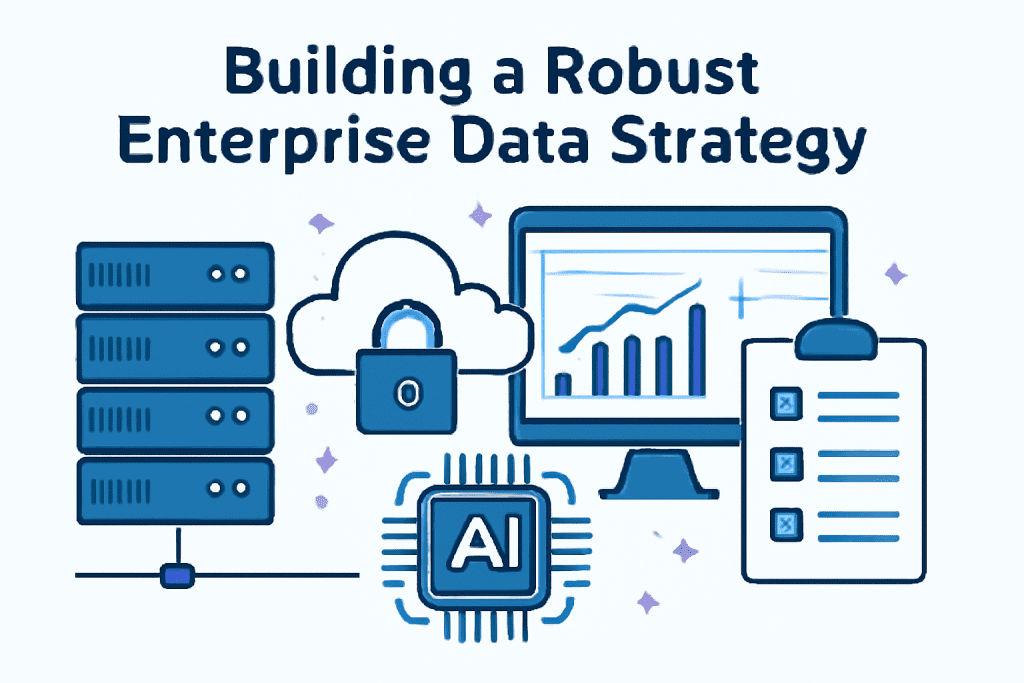
Building a Robust Enterprise Data Strategy: Benefits, Use Cases, Process, Costs & Best Practices

Introduction In today’s data-driven world, a robust enterprise data strategy is essential for organizations seeking to unlock the full potential of their data assets. It provides a comprehensive roadmap for managing, governing, and leveraging data to drive innovation, improve decision-making, ensure compliance, and gain a competitive advantage. This blog explores the benefits, use cases, key processes, costs, and best practices involved in building an effective enterprise data strategy. For further insights into AI-powered data solutions and digital transformation, visit TechOTD’s AI Services and explore their technology blog. Benefits of a Robust Enterprise Data Strategy Informed Decision-Making: Having reliable, consistent data reduces errors and enables rapid, strategic business choices across all organizational levels. Improved Operational Efficiency: Streamlining data access and integration eliminates duplication and redundant manual efforts, allowing employees to focus on value-added tasks. Regulatory Compliance & Risk Management: Implementing governance frameworks ensures compliance with critical regulations such as GDPR, HIPAA, and PCI-DSS, minimizing costly penalties and protecting customer privacy. Enhanced Customer Experience: Organizations gain a 360-degree customer view with unified data, enabling personalization, targeted marketing, and superior service. Data Security and Risk Mitigation: Strong data security policies protect sensitive information from unauthorized access and data breaches. Scalability and Future-Readiness: A good data strategy builds scalable infrastructure that adapts easily to growing data and emerging technologies. Cost Savings: Reducing redundant systems and improving data quality lowers overall IT costs and operational expenses. Use Cases for Enterprise Data Strategy Customer Analytics and Personalization: Tailoring marketing campaigns and services based on unified customer data insights. Fraud Detection and Risk Assessment: Combining real-time data streams across departments for proactive fraud prevention. Predictive Maintenance: Leveraging data to predict failures and reduce downtime in manufacturing and operations. Regulatory Reporting and Audit Readiness: Automated data lineage and governance ensure smooth compliance reporting. Product and Market Innovation: Data-driven R&D accelerates new product development and market adaptation. The Process of Building an Enterprise Data Strategy Planning and Goal Setting: Align data strategy objectives with business goals such as reducing churn, speeding time-to-market, or enhancing customer satisfaction. Current State Assessment: Audit existing data systems to identify redundancies, quality issues, and shadow IT. Future State Vision: Define the ideal “trusted, scalable, and compliant” data environment tailored to business needs. Roadmap Development: Develop structured implementation plans prioritizing quick wins and strategic initiatives. Implementation: Deploy governance, data quality, integration, and security processes aligned with roadmap milestones. Monitoring and Continuous Improvement: Track adoption metrics, data quality, and compliance, refining strategy as business evolves. Cost of Enterprise Data Strategy The investment varies widely based on scale, complexity, industry regulations, and existing infrastructure. Key cost drivers include: Integration and Migration: Consolidating legacy systems and data silos can consume 40-50% of initial budgets. Technology and Tools: Cloud platforms offer flexible spending models; on-premises solutions require higher upfront costs. Governance and Training: Developing policies, training personnel, and managing compliance are ongoing investments. Talent: Skilled data engineers, scientists, and governance experts are essential and can be a significant expense. Many organizations allocate between 3-6% of their IT budget to data strategy-related initiatives. Best Practices Start with High-Value Use Cases: Focus on domains with measurable ROI to build momentum. Invest in Data Lineage Early: Trace and document data origins to boost trust and audit readiness. Integrate Compliance into Pipelines: Address privacy and security during data ingestion, not as an afterthought. Balance Governance with Innovation: Create “innovation zones” for experimental AI or data products without sacrificing control. Prioritize Metadata Management: Catalog and document data thoroughly for easy discovery and security. Measure Adoption, Not Just Implementation: Encourage culture shifts through training, metrics, and leadership incentives. Design for Change: Utilize modular architectures anticipating evolving regulations and technologies. How TechOTD Supports Enterprise Data Strategy At TechOTD, we combine AI expertise, cloud infrastructure, and agile methodologies to build tailored enterprise data strategies that enhance operational resilience and unlock growth opportunities. Learn more about our mobile app and AI services. Conclusion A robust enterprise data strategy is vital to navigate today’s complex data landscape and drive sustainable business success. By aligning data initiatives with business goals, embedding governance and compliance, and prioritizing scalability and adoption, organizations can unlock significant value from their data assets. Partnering with experts like TechOTD ensures a structured, effective implementation that powers innovation and competitive advantage. Explore the latest trends and insights in data strategy and AI on the TechOTD Blog. FAQs Q1: What is an enterprise data strategy? A plan that aligns data management, governance, and analytics capabilities with business objectives to maximize data value. Q2: How does a data strategy improve operational efficiency? By reducing data silos, duplication, and manual errors, enabling faster, informed decision-making. Q3: What industries benefit most from enterprise data strategies? Finance, healthcare, retail, manufacturing, and telecom are leading adopters due to heavy data use and regulation. Q4: Can AI be integrated with an enterprise data strategy? Yes, clean, governed data is essential to drive AI and machine learning initiatives effectively. Q5: How much does an enterprise data strategy cost? The investment varies, but companies typically allocate 3-6% of their IT budgets toward data strategy initiatives.

Blockchain & Technology, Uncategorized

Blockchain in Gaming: Potential, Limitations, and Real-World Examples

Introduction Blockchain technology is reshaping multiple industries, and gaming is one of its most promising frontiers. Leveraging decentralization, immutability, and tokenization, blockchain offers gamers and developers new opportunities for asset ownership, monetization, and security. However, as transformative as blockchain is, the gaming sector also faces challenges in scalability, adoption, and regulation. This blog explores the potential of blockchain in gaming, the key limitations developers and players encounter, and highlights notable real-world blockchain gaming examples. For more on how blockchain and AI technologies optimize business processes, check out TechOTD’s insights. The Potential of Blockchain in Gaming 1. True Ownership of In-Game Assets Blockchain enables players to own digital assets as NFTs (Non-Fungible Tokens), proving uniqueness and enabling transfer or sale outside game ecosystems. This shifts control from gaming companies to players themselves, increasing asset value and player investment. 2. Play-to-Earn Models Games built on blockchain incorporate play-to-earn (P2E) mechanics, allowing players to earn cryptocurrency or tokens through gameplay, enhancing engagement and opening new revenue streams. 3. Enhanced Security and Fraud Prevention Blockchain’s immutable ledgers prevent hacking, duplication, and fraud in asset ownership and transactions, safeguarding both players and developers from exploitative practices. 4. Interoperability and Portability Players can utilize digital assets across multiple games and platforms due to the interoperability offered by blockchain standards, enhancing user experience and expanding markets for developers. 5. Smart Contracts for Automation Self-executing smart contracts automate in-game transactions, rewards, and agreements, reducing developer workload and improving transparency and fairness. Limitations of Blockchain in Gaming 1. Scalability and Performance Issues Blockchain networks face speed limitations and high transaction fees, which may cause lags or costly operations unsuitable for real-time gaming experiences. 2. Regulatory and Legal Uncertainties Evolving legal frameworks create uncertainty around token classifications, player earnings, and digital asset rights, complicating compliance for game developers and players alike. 3. Steep Learning Curve and Adoption Barriers Many gamers and developers remain unfamiliar with setting up wallets or interacting with blockchain, limiting player base and market reach. 4. Player Retention Concerns Some blockchain games prioritize financial rewards over gameplay quality, which can lead to poor long-term player engagement. Real-World Examples of Blockchain Gaming 1. Axie Infinity A leader in the blockchain gaming space, Axie Infinity features collectible fantasy creatures (Axies) as NFTs, offering a compelling play-to-earn experience with millions of active users worldwide. Despite a major security breach in 2022, it remains a benchmark for P2E success. 2. The Sandbox A virtual metaverse where users own digital land and assets, The Sandbox empowers players to create and monetize content, integrating brand partnerships and decentralized governance with its native token, SAND. 3. Gods Unchained This free-to-play trading card game offers players true ownership of digital cards as NFTs, enabling secondary market trading and strategic gameplay similar to physical collectibles. 4. Splinterlands A blockchain-based card game emphasizing strategic deck-building and NFTs, it awards players with native tokens and supports cross-blockchain compatibility, fostering broad player access. 5. Illuvium An open-world RPG with high-quality graphics and NFT-based creatures, Illuvium integrates play-to-earn models and immersive gameplay, marking a premium blockchain gaming experience. Conclusion Blockchain technology holds transformative potential for gaming by introducing real ownership, new monetization models, improved security, and cross-platform interoperability. Yet challenges around scalability, legal regulations, and adoption remain critical hurdles. By learning from existing blockchain games and addressing these limitations, developers can innovate compelling, player-centric experiences that redefine digital gaming economies. Stay ahead with blockchain trends and AI-powered digital innovation insights on TechOTD’s blog. FAQs Q1: What is unique about blockchain gaming? True digital asset ownership, play-to-earn economics, and decentralized control set blockchain games apart. Q2: What are the biggest challenges? Scalability issues, legal uncertainties, and ensuring engaging gameplay beyond financial incentives. Q3: Can players trade assets outside the game? Yes, NFT ownership allows trading on decentralized marketplaces beyond the native game ecosystem. Q4: How do smart contracts improve blockchain gaming? They automate transactions and rewards transparently, reducing bugs and developer intervention. Q5: Are blockchain games mainstream yet? While growing fast, blockchain gaming is still emerging with big players like Sony investing but mass adoption remains in progress

Education app developement

How Much Does It Cost to Develop a Language Learning App Like Babbel?

Introduction Language learning apps have become an indispensable tool for millions worldwide, and Babbel stands out as one of the top platforms, offering engaging, personalized lessons in over 14 languages. If you’re an entrepreneur or business looking to develop a language learning app with similar features and user experience, understanding the development costs, factors affecting them, and what goes into building such an app is crucial. This blog provides a detailed overview of the typical costs involved in building a language learning app like Babbel, the key features that influence pricing, and strategic insights to help plan your project effectively. For broader insights on AI-driven app development and technology trends, check out TechOTD’s AI services and visit their technology blog. What Makes Babbel Unique? Babbel offers a scientifically backed methodology focusing on conversational learning, bite-sized lessons (10–15 minutes), speech recognition, and personalized learning paths. Key features include: Real-life conversation practice with audio and interactive exercises Speech recognition for pronunciation feedback Review and spaced repetition systems for vocabulary retention Structured grammar lessons and cultural context materials Offline learning capability on multiple devices Subscription-based access with continuous content updates. Key Features Affecting Development Cost 1. Platform and Device Compatibility Deciding whether to launch on iOS, Android, or both affects development time and cost. Cross-platform frameworks like React Native may reduce costs but might affect performance. 2. User Registration and Profiles Basic signup, social media integration, and personalized learning dashboards add complexity. 3. Course Content Management Ability to manage a vast database of multimedia lessons, quizzes, and real-time updates. 4. Speech Recognition and AI Integration Implementing AI-powered speech recognition for real-time feedback adds significantly to development costs. 5. Gamification Elements Features like badges, leaderboards, and rewards enhance engagement but increase design and coding demands. 6. Payment Systems Subscription management with secure payment gateways integration is critical for monetization. 7. Offline Mode Allowing users to download lessons and access them without internet adds storage and syncing complexities.   Estimated Cost Breakdown Basic Language Learning App: Includes core functionalities such as user registration, lesson viewing, and standard quizzes. Estimated cost: $30,000 – $50,000 Development Time: 3-6 months Mid-Level App with Advanced Features: Incorporates speech recognition, gamification, and personalized learning paths. Estimated cost: $50,000 – $100,000 Development Time: 6-9 months Advanced App with AI and Live Tutoring: Features live classes, real-time AI interactions, and extensive content management. Estimated cost: $100,000 – $300,000+ Development Time: 9-12+ months. Other Factors Influencing Cost Design Complexity: Custom UI/UX can increase costs depending on polish and responsiveness. Development Team Location: Offshore teams can lower costs but may require robust management frameworks. Maintenance and Updates: Ongoing costs including content upgrades, bug fixes, and feature additions. Marketing and Launch: Budget separately for app store optimization, user acquisition, and branding efforts. How AI Enhances Language Learning Apps AI and machine learning enable hyper-personalization, better speech analysis, and more engaging content delivery. Investing in AI-driven components may raise initial costs but improves user retention and satisfaction significantly. Explore AI app development possibilities in TechOTD’s AI services. Conclusion Building a language learning app like Babbel is a substantial investment that balances feature richness, platform choice, and user experience. Starting with an MVP focusing on core features can control costs and validate market demand. As the app scales, adding AI and interactive elements enhances appeal and competitive edge. Consulting experienced development partners such as TechOTD can ensure a smooth project journey from concept to launch. Stay informed on app development trends via TechOTD’s blog. FAQs Q1: What is the average cost to develop a language learning app? Between $30,000 and $300,000 depending on features, platform, and AI integration. Q2: How long does it take to build an app like Babbel? Typically 3 to 12 months depending on complexity. Q3: Can AI improve language learning apps? Yes, AI enhances personalization, speech recognition, and learner engagement. Q4: What monetization strategies do apps like Babbel use? Subscription models, freemium access, and in-app purchases. Q5: Should startups build native or cross-platform apps? Both have pros and cons; cross-platform reduces costs, native apps offer better performance.

How would you like me to respond?

Select a personality for your AI assistant

Normal
Happy
Sad
Angry

Your selection will affect how the AI assistant responds to your messages

Chat Assistant

Let's discuss your project!

Hear from our clients and why 3000+ businesses trust TechOTD

Tell us what you need, and we'll get back with a cost and timeline estimate

Scroll to Top