June 2026

App Development

1. Sketching the User Experience (UX Wireframing) in Detail We talked about sketching before, but let’s elaborate on why this is the most crucial phase. When you skip wireframing, you end up writing “spaghetti code” because your design changes every time you compile the app. The Psychology of UI You aren’t just drawing boxes; you are predicting human behavior. Users are incredibly impatient. If they cannot figure out how to use your app within the first three seconds, they will uninstall it. The Thumb Zone: Think about how you hold your phone. The most important interactive elements (like the “Submit” or “Checkout” buttons) need to be at the bottom of the screen where a thumb can easily reach them. Information Hierarchy: Your eyes naturally read top-to-bottom, left-to-right. The most critical data points from your backend models should dominate the top third of your screen. Prototyping Tools: Move past pen and paper quickly. Use free tools like Figma or Penpot to create clickable prototypes. This lets you tap through dummy screens on your actual phone before writing a single line of JavaScript. Pro Tip: Never design in isolation. Hand your clickable Figma prototype to a friend, give them a task (e.g., “update the profile picture”), and watch where they get stuck. 2. Architecting the Backend and Database Engine When you are coming from writing local Python scripts, the backend is your comfort zone. But in robust app development, your backend needs to serve hundreds or thousands of simultaneous requests without crashing. REST APIs vs. GraphQL Your mobile app (the client) needs to talk to your server. How do they communicate? REST APIs: This is the traditional route. You create specific endpoints for specific data. For example, GET /users/profile fetches the user data. It is reliable, heavily documented, and great for starting out. GraphQL: This is the modern heavyweight. Instead of hitting multiple endpoints, your app sends a single query asking for exactly what it needs, and the server responds with only that data. It saves massive amounts of mobile bandwidth. Database Selection Your choice of database dictates how fast your app feels. Relational (SQL): Use PostgreSQL or MySQL if your data is highly structured (like financial transactions or user accounts). Non-Relational (NoSQL): Use MongoDB or Firebase if your data is unstructured or needs real-time syncing (like a live chat application or a dynamic social feed). 3. Designing a Highly Responsive Frontend Let’s talk about the actual code that renders the interface. Native development (Swift/Kotlin) gives you the absolute maximum performance, but cross-platform frameworks are the gold standard for solo developers and startups. State Management: The Heart of the Frontend This is where most beginners get stuck. “State” is just the current condition of your app. Is the user logged in? Is the dark mode switch toggled? Is the shopping cart empty? When you use a framework like React Native, managing this state efficiently is everything. If you fetch data from your backend, you need a reliable way to distribute that data to all the different screens in your app without constantly re-fetching it. The Best Tools for the Job React Native: It uses JavaScript. If you know web development, you can pick this up in a weekend. It has a massive library of pre-built UI components. Flutter: Created by Google, it uses the Dart language. It is incredibly fast and renders custom animations smoother than almost anything else on the market. 4. Rigorous Integration and Performance Testing You cannot deploy an app just because it works on your perfect, high-speed Wi-Fi network at home. Real-world users are on 3G networks in subway tunnels. Your app needs to handle failure gracefully. Building a Testing Pipeline Error Handling: What happens if your Python backend takes 10 seconds to respond? Your app shouldn’t just freeze. You need to code loading spinners, skeleton screens, and friendly error pop-ups. Memory Leaks: Mobile phones have limited RAM. If your app opens a bunch of background processes (like constantly pinging a GPS location) and never closes them, the phone’s operating system will forcefully kill your app. CI/CD (Continuous Integration / Continuous Deployment): Set up GitHub Actions. Every time you push new code, a server should automatically run your tests to make sure you didn’t accidentally break a core feature. 5. Deployment and Continuous Monitoring Getting your app into the Apple App Store or Google Play Store is a project in itself. They have strict guidelines, and if your app feels like a cheap wrapper for a website, it will be rejected. The Launch Mechanics Certificates and Signing: Both Apple and Google require you to cryptographically sign your app to prove you are the verified developer. This prevents malicious actors from impersonating your software. App Store Optimization (ASO): This is SEO for the app store. You need compelling screenshots, a keyword-rich description, and a clear preview video to convince people to hit the “Download” button. Post-Launch Analytics Once the app is live, you are flying blind unless you install telemetry. Crashlytics: Tools like Firebase Crashlytics tell you exactly which line of code caused the app to crash for a user in another country. Usage Tracking: Mixpanel or Amplitude can show you exactly where users are dropping off. If 80% of people quit your app at the registration screen, you know exactly what you need to fix in your next update. Final Thoughts on Scaling Transitioning into full-stack app development is a marathon, not a sprint. You are moving from writing linear scripts that run once, to building living, breathing ecosystems that run continuously. Take it one module at a time. Build the wireframe. Then build the database. Then connect the two. Before you know it, you will have an app on your phone that you built from the ground up.

android devlopment

Unlocking Core Android Concepts

1. Ditch the Java, Embrace Kotlin                                                                                                        Let’s get the biggest elephant out of the room first. If you will read the older tutorials, they all will tell you to learn Java. Honestly? Skip it. Google made Kotlin the official language for Android app development a few years ago. It’s clean, modern, and saves you from writing hundreds of lines of useless boilerplate code. If you enjoy the clean syntax of Python or the flexibility of JavaScript, you are going to pick up Kotlin incredibly fast. It practically protects you from common app-crashing errors right out of the box. 2. Grab Your Tools: Android Studio You can’t build a house without a hammer. For us, that hammer is Android Studio (an external link to get you started!). It’s the official IDE, and it does heavy lifting for you. It downloads the Android SDK, sets up your emulators (so you can test apps on a virtual phone on your screen), and handles all the messy build configurations. Setup is basically just clicking “Next” a few times. 3. Build the UI with Jetpack Compose This is where things get genuinely fun. Remember the old days of writing clunky XML files to design screens? We don’t do that anymore. Today, Android app development uses Jetpack Compose. It’s a declarative way to build user interfaces. You just write Kotlin code to describe what you want, and the system draws it. If you want a button that updates a counter, you just tell Compose: “Here is a button, and here is the text that shows my counter variable.” When the variable changes, the UI updates itself automatically. It’s so much more intuitive than the old way. 4. Structure Your Brain (and Your App) When you’re hacking together a quick script, you can throw everything into one file. But for a mobile app, you need architecture. We use something called MVVM (Model-View-ViewModel). Model: This grabs your data (like fetching stock prices or pulling info from a database). View: Your Jetpack Compose UI. ViewModel: The brain in the middle that passes data from the Model to the View. Keeping these separate means your app won’t crash when you simply rotate your phone screen. You can check out our internal guide on software architecture principles for a deeper dive into why keeping your code clean matters. 5. Start Small, Dream Big You don’t need to build the next Instagram on day one. Start by building a simple to-do list or a fitness tracker to log those heavy back and leg day sessions. The key to mastering Android app development is consistent, daily iteration. What do you think? Want to fire up Android Studio this weekend and try getting a simple “Hello World” onto your screen?

Blockchain & Technology, Digital Transformation, Educational Technology, enterprise

Blockchain Beyond Cryptocurrency: Real-World Enterprise Applications

Introduction When most people hear the word blockchain, their minds immediately jump to cryptocurrencies like Bitcoin. While digital currencies played a significant role in introducing blockchain to the world, the technology has evolved far beyond its original purpose. Today, organizations across industries are leveraging blockchain to improve transparency, security, efficiency, and trust in business operations. From managing global supply chains to securing healthcare records and streamlining financial transactions, blockchain is emerging as a powerful tool for enterprise transformation. As businesses continue their digital transformation journeys, blockchain is increasingly becoming a strategic technology rather than merely a foundation for cryptocurrencies. This article explores how blockchain is being applied in real-world enterprise environments, the benefits it offers, the challenges organizations face, and what the future holds for this revolutionary technology. Understanding Blockchain Technology At its core, blockchain is a distributed digital ledger that records transactions across multiple computers. Unlike traditional databases controlled by a central authority, blockchain stores information in a decentralized manner. Each transaction is grouped into a block, and once verified, it becomes linked to the previous block, forming a chain of records. This structure creates an immutable and transparent history of transactions that cannot be altered without consensus from the network. Several characteristics make blockchain particularly valuable for enterprises: Transparency and auditability Enhanced security through cryptography Decentralized data management Reduced risk of fraud Improved trust among stakeholders Automation through smart contracts These capabilities have encouraged organizations to explore blockchain applications beyond digital currencies. Why Enterprises Are Investing in Blockchain Modern businesses operate in increasingly complex ecosystems involving suppliers, customers, partners, regulators, and service providers. Managing information across these networks often creates inefficiencies, duplication, and security risks. Blockchain addresses many of these challenges by providing a shared source of truth that all authorized participants can trust. Organizations are investing in blockchain because it can: Reduce operational costs Improve transaction speed Enhance transparency Strengthen cybersecurity Increase regulatory compliance Eliminate unnecessary intermediaries Improve customer trust As a result, blockchain adoption is growing across various sectors, including finance, healthcare, manufacturing, logistics, retail, and government services. Supply Chain Management and Traceability One of the most successful enterprise applications of blockchain is supply chain management. Traditional supply chains involve multiple parties, including manufacturers, distributors, suppliers, transportation providers, and retailers. Tracking products throughout this journey can be difficult, especially when data is stored in separate systems. Blockchain creates a shared ledger where every participant can record and verify information in real time. Product Traceability Companies can track products from raw material sourcing to final delivery. This visibility helps organizations verify authenticity, prevent counterfeiting, and ensure compliance with industry standards. For example, food producers can trace agricultural products back to their source within seconds. If contamination occurs, affected products can be identified and removed quickly, reducing risks and costs. Improved Transparency Customers increasingly demand information about where products originate and how they are manufactured. Blockchain enables businesses to provide transparent records regarding: Product origins Manufacturing processes Transportation history Sustainability practices Ethical sourcing standards This transparency strengthens consumer confidence and brand reputation. Reduced Fraud Counterfeit goods cost businesses billions of dollars annually. Blockchain records make it significantly more difficult for fraudulent products to enter legitimate supply chains. Smart Contracts and Business Automation Smart contracts are self-executing digital agreements stored on a blockchain. These contracts automatically perform actions when predefined conditions are met, reducing the need for manual intervention. Automating Payments Businesses can automate supplier payments when goods are delivered and verified. This eliminates delays and minimizes administrative overhead. Streamlining Procurement Procurement processes often involve extensive paperwork and approvals. Smart contracts can automatically: Verify purchase orders Confirm deliveries Trigger payments Update inventory systems This automation reduces processing time and human error. Insurance Claims Processing Insurance companies can use smart contracts to automatically process claims when specific conditions are verified. For example, travel insurance policies can issue compensation immediately when a flight delay is confirmed through trusted data sources. Blockchain in Financial Services Although blockchain originated within the financial sector, enterprise applications extend far beyond cryptocurrency trading. Cross-Border Payments Traditional international payments often involve multiple intermediaries and lengthy processing times. Blockchain networks can facilitate faster and more cost-effective cross-border transactions by reducing dependency on intermediary institutions. Trade Finance Trade finance processes frequently rely on paper-based documentation and manual verification. Blockchain helps digitize: Letters of credit Shipping documents Trade agreements Payment records This improves efficiency while reducing fraud and administrative costs. Fraud Prevention Financial institutions are adopting blockchain to strengthen transaction security and reduce fraudulent activities. The technology’s immutable records create reliable audit trails that make unauthorized alterations extremely difficult. Digital Identity Verification Banks and financial organizations can use blockchain-based identity systems to streamline customer verification procedures while enhancing privacy and security. Healthcare and Medical Records Management Healthcare organizations generate massive amounts of sensitive data. Managing patient records securely while ensuring accessibility remains a major challenge. Secure Patient Records Blockchain allows healthcare providers to store and share patient information securely. Authorized medical professionals can access accurate records while maintaining strict privacy controls. Improved Interoperability Medical records are often fragmented across multiple systems and providers. Blockchain can create unified patient histories accessible across healthcare networks, improving care coordination. Drug Supply Chain Verification Counterfeit medications represent a serious global concern. Blockchain enables pharmaceutical companies to track medications throughout the supply chain, ensuring authenticity and patient safety. Clinical Research Researchers can use blockchain to maintain transparent and tamper-proof records of clinical trial data, enhancing trust and regulatory compliance. Digital Identity and Access Management Identity verification is becoming increasingly important in the digital economy. Traditional identity systems often expose users to data breaches and identity theft. Blockchain-based identity solutions allow individuals to maintain greater control over their personal information. Self-Sovereign Identity Users can manage and share verified credentials without relying entirely on centralized databases. Benefits include: Enhanced privacy Reduced identity fraud Simplified verification processes Better user control Enterprise Access Control Organizations can use blockchain to manage employee credentials, system access permissions, and authentication processes more securely. Blockchain in Real Estate Real estate transactions typically

Software development, Technology, Technology & Innovation

The Future of Wearable Technology: Beyond Smartwatches

The Future of Wearable Technology: Beyond Smartwatches Wearable technology has become a major part of modern life. Just a decade ago, wearable devices were mostly limited to fitness bands that counted steps and tracked basic activity. Today, smartwatches can monitor heart rates, detect falls, measure blood oxygen levels, and even perform electrocardiograms. However, the wearable technology industry is rapidly moving beyond smartwatches. In 2026, the next generation of wearable devices is transforming how people interact with technology, manage their health, communicate, and experience the digital world. From smart glasses and AI-powered assistants to smart clothing and health-monitoring patches, wearable technology is becoming more intelligent, less intrusive, and more integrated into everyday life. As advancements in artificial intelligence, sensors, connectivity, and materials science continue to accelerate, the future of wearable technology promises experiences that were once considered science fiction. The Evolution of Wearable Technology The journey of wearable technology began with simple devices designed to track physical activity. Over time, improvements in miniaturization, battery efficiency, and wireless communication allowed manufacturers to create more sophisticated products. The first wave of wearables focused on fitness tracking. The second wave introduced smartwatches capable of delivering notifications, supporting mobile payments, and monitoring health metrics. Today, the industry is entering its third wave, where wearable devices are becoming proactive companions rather than passive tools. Modern wearables are increasingly capable of understanding user behavior, predicting needs, and providing personalized recommendations through artificial intelligence. Instead of simply collecting data, future wearables will help users make informed decisions about their health, productivity, and daily routines. Why the Smartwatch Is No Longer the Center of Innovation Although smartwatches remain popular, they face several limitations. Small screens restrict user interactions, battery life remains a challenge, and constant notifications can contribute to digital fatigue. Technology companies are now exploring alternative wearable formats that provide richer experiences while reducing dependence on smartphones and traditional screen-based interfaces. The goal is not to replace smartwatches entirely but to create an ecosystem of specialized wearable devices that work together seamlessly. Smart Glasses: The Next Major Computing Platform One of the most promising developments in wearable technology is the rise of smart glasses. Unlike traditional screens that require users to look down at a phone or smartwatch, smart glasses place information directly within the user’s field of vision. This creates a more natural and immersive way of interacting with digital content. Future smart glasses are expected to offer: Real-time navigation overlays Instant language translation Hands-free communication AI-powered personal assistance Enhanced workplace productivity Augmented reality experiences Advancements in display technology are making smart glasses lighter, more stylish, and more practical for everyday use. As battery performance improves and artificial intelligence becomes more capable, smart glasses could eventually become the primary interface for digital interactions. AI-Powered Wearables Are Becoming Personal Assistants Artificial intelligence is rapidly becoming the driving force behind wearable innovation. Future wearable devices will do far more than collect information. They will analyze behavior patterns, understand user preferences, and proactively offer assistance. Imagine a wearable device that: Detects signs of stress before you notice them Suggests breaks during long work sessions Provides personalized fitness coaching Recommends dietary adjustments Schedules meetings based on energy levels Offers contextual information during conversations These capabilities are becoming possible through advanced machine learning models that process data directly on devices or through secure cloud platforms. AI-powered wearables are transforming technology from a reactive tool into a proactive companion. The Rise of Smart Clothing Smart clothing is emerging as one of the most exciting areas of wearable technology. Instead of wearing separate devices, users may soon wear garments embedded with intelligent sensors. These textiles can continuously monitor various physiological and environmental conditions without requiring additional accessories. Potential applications include: Heart rate monitoring Respiratory tracking Muscle activity analysis Posture correction Temperature regulation Athletic performance optimization For athletes, smart clothing can provide detailed performance insights. For healthcare providers, it can enable continuous patient monitoring. For everyday users, it can offer health tracking without the inconvenience of multiple devices. As flexible electronics become more affordable, smart clothing could become a mainstream technology over the next decade. Wearable Health Technology Is Revolutionizing Healthcare Healthcare remains one of the most impactful applications of wearable technology. Current wearable devices already track: Heart rate Sleep quality Blood oxygen levels Physical activity Stress indicators Future generations of wearables are expected to monitor even more advanced health metrics, including: Continuous blood pressure tracking Non-invasive glucose monitoring Hydration levels Early disease detection Respiratory health indicators Mental wellness metrics Continuous monitoring allows healthcare professionals to identify health risks before symptoms become severe. This shift from reactive healthcare to preventive healthcare has the potential to improve outcomes while reducing medical costs. Wearable health technology could become a critical component of personalized medicine in the coming years. Smart Rings Are Gaining Popularity Smart rings represent another growing category within wearable technology. These compact devices provide many of the same benefits as smartwatches while offering a more discreet form factor. Modern smart rings can track: Sleep patterns Activity levels Heart rate variability Stress levels Recovery metrics Because they are lightweight and comfortable, smart rings appeal to users who prefer minimalistic technology. As sensor technology continues to improve, smart rings may become powerful health-monitoring tools capable of delivering highly accurate biometric data. Brain-Computer Interfaces and Neural Wearables Perhaps the most futuristic area of wearable technology involves brain-computer interfaces (BCIs). These systems allow direct communication between the human brain and digital devices. Although still in the early stages of development, neural wearables could eventually enable: Hands-free device control Enhanced accessibility for people with disabilities Faster communication Advanced gaming experiences Cognitive monitoring Personalized learning systems Researchers and technology companies are investing heavily in this field because of its potential to redefine human-computer interaction. While widespread adoption may still be years away, neural wearables represent one of the most transformative possibilities for the future. Wearable Technology in the Workplace Businesses are increasingly adopting wearable technology to improve productivity, safety, and efficiency. Industrial wearables can help workers by: Providing real-time instructions

Artificial Intelligence, Software development, Technology & Innovation

Green AI: Making Artificial Intelligence More Sustainable

Green AI: Making Artificial Intelligence More Sustainable Artificial Intelligence (AI) has become one of the most transformative technologies of the modern era. From powering virtual assistants and recommendation systems to driving autonomous vehicles and advanced medical diagnostics, AI is changing the way individuals, businesses, and governments operate. However, as AI systems become more powerful and widespread, concerns about their environmental impact are growing. Training and operating large AI models require significant computing power, which in turn consumes vast amounts of electricity. Data centers housing AI infrastructure operate around the clock, contributing to energy consumption and carbon emissions. As organizations increasingly adopt AI solutions, the need for sustainable practices has become more important than ever. This is where Green AI comes into the picture. Green AI focuses on developing, deploying, and maintaining artificial intelligence systems in ways that minimize environmental impact while maximizing efficiency. It represents a growing movement within the technology industry aimed at balancing innovation with sustainability. What Is Green AI? Green AI refers to the practice of designing artificial intelligence systems that prioritize energy efficiency, resource optimization, and environmental sustainability. Unlike traditional AI development, which often focuses solely on achieving higher performance and accuracy, Green AI also considers the environmental costs associated with training and running AI models. The concept encourages researchers and organizations to measure not only the effectiveness of AI systems but also the resources required to build and operate them. This includes factors such as electricity consumption, carbon emissions, hardware utilization, and computational efficiency. Green AI promotes the idea that technological progress should not come at the expense of the environment. Instead, innovation should be aligned with sustainable development goals. Why Sustainability Matters in AI Artificial intelligence models are becoming increasingly complex. Modern generative AI systems often require enormous datasets and thousands of powerful processors to train effectively. Training a single large-scale AI model can consume as much electricity as hundreds of households use over several months. As AI adoption accelerates across industries, energy demand is expected to rise significantly. Without sustainable practices, the environmental footprint of AI could become a major concern. Several factors highlight the importance of sustainability in AI: Rising Energy Consumption AI workloads demand substantial computing resources. Large language models, image generation systems, and deep learning networks require extensive processing power that translates directly into increased energy usage. Growing Data Center Footprint Data centers serve as the backbone of AI infrastructure. These facilities consume massive amounts of electricity for both computing and cooling systems. As AI applications expand, data center energy requirements continue to increase. Carbon Emissions In regions where electricity is generated from fossil fuels, AI operations contribute to greenhouse gas emissions. Reducing these emissions is critical to achieving global climate goals. Resource Utilization Manufacturing AI hardware such as GPUs and specialized chips requires valuable natural resources. Sustainable AI practices help maximize the lifespan and efficiency of these technologies. The Evolution of Green AI The discussion around Green AI gained momentum as researchers began examining the environmental costs of training increasingly large machine learning models. While advancements in AI delivered impressive results, many experts questioned whether the pursuit of marginal performance improvements justified the significant increase in computational requirements. As awareness grew, researchers started advocating for greater transparency regarding the energy consumption and carbon footprint of AI systems. This shift encouraged organizations to consider efficiency as a key performance metric alongside accuracy. Today, Green AI has evolved into a broader movement that includes sustainable infrastructure, energy-efficient algorithms, responsible hardware design, and environmentally conscious deployment strategies. Key Principles of Green AI Energy Efficiency One of the primary goals of Green AI is reducing the amount of energy required to train and operate AI models. Developers achieve this through optimized algorithms, efficient architectures, and improved hardware utilization. Resource Optimization Green AI encourages maximizing the use of existing computational resources. Instead of constantly scaling infrastructure, organizations focus on improving efficiency and eliminating waste. Transparency Researchers are increasingly reporting computational costs alongside model performance metrics. This transparency helps stakeholders make informed decisions about AI development practices. Sustainable Infrastructure Green AI supports the use of renewable energy sources, efficient cooling systems, and environmentally friendly data center designs. Long-Term Environmental Responsibility The movement promotes balancing technological innovation with ecological responsibility, ensuring that future AI advancements remain sustainable. How Green AI Reduces Environmental Impact Efficient Model Design Developers are creating AI architectures that achieve comparable results with fewer parameters and lower computational requirements. Smaller and more efficient models consume less energy during both training and inference. Model Compression Techniques Techniques such as pruning, quantization, and knowledge distillation help reduce model size while maintaining performance. These methods decrease computational demands and energy consumption. Transfer Learning Rather than training models from scratch, transfer learning allows developers to build upon existing pre-trained models. This significantly reduces training time and resource requirements. Optimized Training Processes Advanced training strategies improve efficiency by reducing unnecessary computations. Better scheduling and workload management contribute to lower energy usage. Edge Computing Running AI applications closer to users through edge devices reduces the need for constant communication with centralized data centers. This can lower network energy consumption and improve efficiency. The Role of Renewable Energy in Green AI Renewable energy plays a crucial role in making AI more sustainable. Many technology companies are investing heavily in solar, wind, and hydroelectric power to support their AI operations. By powering data centers with renewable energy, organizations can significantly reduce the carbon footprint associated with AI workloads. Some companies are even designing data centers in locations where renewable energy resources are abundant. The integration of clean energy sources allows AI innovation to continue while minimizing environmental impact. Green Data Centers: The Foundation of Sustainable AI Data centers are at the heart of modern AI systems. Making these facilities more sustainable is essential for achieving Green AI objectives. Energy-Efficient Cooling Cooling systems often account for a significant portion of data center energy consumption. Modern facilities use advanced cooling technologies, including liquid cooling and intelligent climate control systems. Smart Energy Management

Cloud Computing and Technology, Educational Technology, Technology

The Evolution of Smart Factories: Industry 5.0 and Human-Machine Collaboration

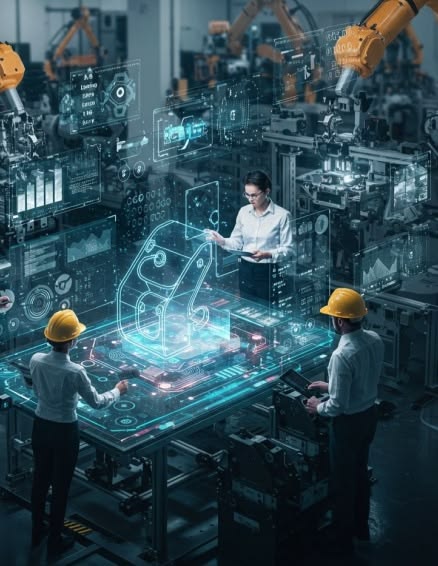
Introduction The manufacturing industry has experienced several technological revolutions over the past century. From the introduction of mechanized production systems during the First Industrial Revolution to the emergence of automation and digital technologies in Industry 4.0, each phase has fundamentally changed how products are designed, manufactured, and delivered. Today, the world is entering a new era known as Industry 5.0. Unlike Industry 4.0, which primarily focused on automation, connectivity, and efficiency, Industry 5.0 places humans back at the center of industrial operations. It emphasizes collaboration between people and advanced technologies such as artificial intelligence, robotics, machine learning, digital twins, and the Industrial Internet of Things (IIoT). Smart factories are no longer designed to replace human workers. Instead, they are evolving into intelligent environments where humans and machines work together to achieve greater productivity, creativity, sustainability, and innovation. This shift is reshaping the future of manufacturing and creating opportunities for organizations to build more resilient, adaptive, and human-centric production systems. Understanding the Journey from Industry 4.0 to Industry 5.0 Industry 4.0 introduced technologies that transformed traditional factories into highly connected digital ecosystems. Sensors, cloud computing, big data analytics, and autonomous machines enabled manufacturers to automate repetitive tasks and optimize production processes. While Industry 4.0 delivered significant efficiency improvements, many organizations discovered that complete automation was not always the ideal solution. Human expertise, creativity, problem-solving abilities, and emotional intelligence remained essential in many industrial environments. Industry 5.0 emerged as a response to this realization. Rather than focusing solely on automation, Industry 5.0 aims to create a balanced relationship between human workers and intelligent machines. The goal is not to replace people but to empower them with advanced technologies that enhance their capabilities and improve decision-making. This approach recognizes that the most successful factories of the future will combine the strengths of both humans and machines. What Is a Smart Factory? A smart factory is a manufacturing facility that uses digital technologies to monitor, analyze, and optimize production processes in real time. Unlike traditional factories, smart factories can continuously collect data from machines, equipment, and production lines. This data is then processed using AI and analytics tools to improve efficiency, reduce downtime, and support better decision-making. Key characteristics of a smart factory include: Real-time data collection and monitoring Connected machines and devices Predictive maintenance systems Automated production workflows AI-powered analytics Digital twins and simulations Advanced robotics Cloud-based manufacturing platforms With the introduction of Industry 5.0, smart factories are becoming more human-centric, enabling workers to collaborate effectively with intelligent systems. The Core Principles of Industry 5.0 Industry 5.0 is built around three major principles: Human-Centric Manufacturing The human-centric approach focuses on improving the role of workers within industrial environments. Technology is designed to support people rather than replace them. Employees are empowered with AI-driven tools, augmented reality systems, and collaborative robots that assist them in performing complex tasks more efficiently. This creates a workplace where technology enhances human capabilities while improving job satisfaction and workplace safety. Sustainability Sustainability has become a critical priority for modern manufacturers. Industry 5.0 encourages organizations to reduce waste, optimize resource consumption, and minimize environmental impact. Smart factories can use AI and analytics to monitor energy usage, reduce emissions, and improve production efficiency. Sustainable manufacturing practices help businesses meet regulatory requirements while supporting global environmental goals. Resilience Recent global disruptions have highlighted the importance of resilient supply chains and manufacturing systems. Industry 5.0 emphasizes adaptability and flexibility, enabling factories to respond quickly to changing market conditions, supply chain disruptions, and customer demands. Advanced analytics and digital technologies allow manufacturers to identify potential risks and take proactive measures before problems escalate. Human-Machine Collaboration: The Foundation of Industry 5.0 One of the most significant aspects of Industry 5.0 is the concept of human-machine collaboration. Instead of operating independently, humans and machines work together as partners. Machines excel at tasks involving speed, precision, data processing, and repetitive operations. Humans contribute creativity, innovation, critical thinking, and emotional intelligence. When combined, these strengths create a highly efficient and adaptable manufacturing environment. Examples of human-machine collaboration include: Robots assisting workers with heavy lifting AI systems supporting quality control inspections Augmented reality guiding technicians during maintenance Machine learning tools providing production recommendations Digital assistants helping operators make informed decisions This collaborative approach enables organizations to achieve higher productivity while maintaining human oversight and expertise. The Rise of Collaborative Robots (Cobots) Collaborative robots, commonly known as cobots, are among the most important technologies driving Industry 5.0. Unlike traditional industrial robots that operate within isolated safety cages, cobots are designed to work directly alongside human employees. Cobots can perform repetitive, physically demanding, or dangerous tasks while allowing workers to focus on higher-value activities. Benefits of cobots include: Improved worker safety Increased productivity Reduced physical strain Faster production cycles Greater operational flexibility Easier deployment and programming Manufacturers across industries are adopting cobots to create safer and more efficient work environments. As technology continues to advance, cobots are becoming more intelligent and capable of adapting to changing production requirements. Artificial Intelligence in Smart Factories Artificial intelligence serves as the brain of modern smart factories. AI systems can analyze massive amounts of operational data and identify patterns that would be difficult for humans to detect. Applications of AI in manufacturing include: Predictive Maintenance AI algorithms can predict equipment failures before they occur. By analyzing machine performance data, manufacturers can schedule maintenance proactively, reducing downtime and repair costs. Quality Control Computer vision systems powered by AI can inspect products with remarkable accuracy. Defects can be identified in real time, ensuring higher product quality and reducing waste. Production Optimization AI can continuously evaluate production processes and recommend improvements. This helps manufacturers maximize efficiency while minimizing resource consumption. Demand Forecasting Machine learning models can predict market demand and optimize production schedules accordingly. This reduces inventory costs and improves supply chain management. AI is becoming an essential component of Industry 5.0, helping organizations make smarter and faster decisions. Digital Twins and Virtual Manufacturing Digital twin technology is transforming how manufacturers design and manage industrial operations.

Data Privacy & Security, Digital Transformation, Technology

Digital Sovereignty: Why Countries Want Greater Control Over Their Data

Digital Sovereignty: Why Countries Want Greater Control Over Their Data The digital economy has become one of the most valuable assets of the modern world. Every day, governments, businesses, and individuals generate enormous amounts of data through online transactions, cloud applications, social media platforms, connected devices, and artificial intelligence systems. Data now drives decision-making, economic growth, innovation, and national security. As technology becomes increasingly integrated into every aspect of society, many countries are asking a critical question: Who controls the data? This question has led to the rise of a concept known as digital sovereignty, a growing movement that seeks to give nations greater authority over their digital assets, infrastructure, and data. Governments worldwide are introducing policies and regulations designed to ensure that sensitive information remains protected and accessible according to national laws and interests. In 2026, digital sovereignty is no longer a niche policy discussion. It has become a central issue shaping technology strategies, international relations, cloud computing investments, and cybersecurity initiatives around the globe. What Is Digital Sovereignty? Digital sovereignty refers to a country’s ability to control its digital infrastructure, data, technologies, and online activities according to its own laws and regulations. The concept extends beyond simple data storage. It encompasses: Data ownership and governance Cloud infrastructure control Cybersecurity management Artificial intelligence regulation Digital identity systems Critical technology supply chains National internet policies In practical terms, digital sovereignty means ensuring that a country’s most important digital resources are not entirely dependent on foreign companies or governments. As digital technologies become essential to national economies, countries increasingly view data as a strategic resource similar to energy, natural resources, or critical infrastructure. Why Data Has Become a Strategic National Asset For decades, oil was often described as the world’s most valuable resource. Today, many experts argue that data has taken its place. Data powers: Artificial intelligence models Financial systems Healthcare innovation Smart city initiatives National defense systems E-commerce platforms Public services The more data organizations collect, the more effectively they can optimize operations, understand customer behavior, and develop new technologies. Because of its value, governments are becoming increasingly concerned about where data is stored, who has access to it, and how it is used. Countries recognize that losing control over critical data could create economic, political, and security vulnerabilities. The Growing Importance of Data Localization One of the most visible aspects of digital sovereignty is data localization. Data localization policies require certain types of information to be stored and processed within national borders. Governments implement these policies for several reasons: National Security Protection Sensitive government information, military data, and critical infrastructure records must remain protected from external threats. Storing such information domestically allows governments to apply local security standards and oversight. Regulatory Compliance Countries often require businesses to comply with local privacy laws and regulations. Domestic data storage simplifies enforcement and legal accountability. Economic Development Local data centers create jobs, attract technology investments, and strengthen national digital ecosystems. As a result, many nations are investing heavily in domestic cloud infrastructure. Cybersecurity Concerns Are Driving Sovereignty Efforts Cyberattacks continue to grow in both frequency and sophistication. Governments face threats from: State-sponsored hackers Cybercriminal organizations Ransomware groups Espionage operations Supply chain attacks When critical systems rely heavily on foreign technology providers, governments may have limited visibility into potential risks. Digital sovereignty initiatives help countries strengthen cybersecurity by: Building secure national infrastructure Developing local cybersecurity expertise Establishing stronger data protection controls Reducing dependency on external providers As cyber warfare becomes an increasingly important national security issue, governments view digital control as a strategic necessity. The Role of Cloud Computing in Digital Sovereignty Cloud computing has transformed the way organizations store and process data. Major cloud providers offer scalability, reliability, and cost efficiency that many organizations cannot achieve independently. However, cloud adoption has also raised concerns about sovereignty. Many governments worry about: Foreign jurisdiction over stored data Cross-border data transfers Access requests from foreign authorities Dependence on a small number of global providers To address these concerns, cloud vendors are introducing sovereign cloud solutions that provide greater transparency, local control, and compliance capabilities. These offerings are becoming increasingly attractive to governments, healthcare organizations, financial institutions, and regulated industries. Artificial Intelligence and Sovereign Data Artificial intelligence has added a new dimension to digital sovereignty discussions. AI systems rely heavily on data for training and operation. Governments are concerned about several issues: Control of Training Data Countries want assurance that sensitive national data is not being used without permission to train foreign AI models. AI Governance Governments seek to establish rules regarding how AI systems are developed, deployed, and monitored. National Competitiveness Access to high-quality data can influence a country’s ability to compete in AI innovation. As AI becomes a key driver of economic growth, digital sovereignty strategies increasingly include AI infrastructure and data governance frameworks. How Different Regions Are Approaching Digital Sovereignty Countries are pursuing digital sovereignty in different ways based on their priorities and regulatory environments. Europe European nations have emphasized privacy protection, data governance, and regulatory compliance. The region has introduced comprehensive regulations designed to strengthen control over personal data while promoting transparency and accountability. European policymakers often focus on reducing strategic dependence on non-European technology providers. Asia-Pacific Many countries in the Asia-Pacific region are investing heavily in domestic cloud infrastructure, cybersecurity programs, and AI development. Several governments have introduced data localization requirements to enhance national security and economic resilience. North America While cloud adoption remains widespread, discussions around critical infrastructure protection, cybersecurity, and AI governance continue to influence digital sovereignty initiatives. Governments increasingly recognize the importance of maintaining control over strategic digital assets. Middle East The Middle East has become a major hub for digital transformation projects. Many countries are building advanced data centers and cloud ecosystems to support economic diversification and strengthen national digital capabilities. The Economic Impact of Digital Sovereignty Digital sovereignty is creating significant economic opportunities. Growth of Local Data Centers Demand for domestic data storage is driving investments in: Data center construction Renewable energy integration Cloud infrastructure

Artificial Intelligence, Educational Technology

How Edge AI Is Powering the Next Generation of Smart Devices

How Edge AI Is Powering the Next Generation of Smart Devices Artificial Intelligence has become one of the most influential technologies of the modern digital era. Over the past few years, AI applications have evolved from cloud-based systems to more efficient and responsive solutions capable of operating directly on devices. This shift has given rise to Edge AI, a transformative technology that is changing the way smart devices function and interact with users. From smartphones and smart speakers to industrial robots and healthcare monitoring systems, Edge AI is enabling devices to process information locally instead of relying entirely on remote cloud servers. This approach is making devices faster, smarter, more secure, and capable of delivering real-time experiences that were previously difficult to achieve. As businesses and consumers continue to demand intelligent technologies that provide instant responses while protecting sensitive data, Edge AI is emerging as a critical component of next-generation smart devices. Understanding how this technology works and why it matters can help organizations and individuals prepare for the future of connected technology. What Is Edge AI? Edge AI refers to the deployment of artificial intelligence algorithms directly on hardware devices located at the “edge” of a network. Instead of sending data to cloud data centers for processing, the device itself performs AI computations locally. The term “edge” refers to devices positioned close to where data is generated. Examples include: Smartphones Smart cameras Smartwatches Industrial sensors Autonomous vehicles Medical devices Smart home appliances Retail monitoring systems By integrating AI capabilities directly into these devices, organizations can significantly reduce the need for constant cloud communication while improving performance and responsiveness. For example, when a smartphone uses facial recognition to unlock instantly, much of the processing happens directly on the device rather than being sent to a remote server. This local processing is a practical example of Edge AI in action. Why Edge AI Is Gaining Momentum Several technological developments are driving the rapid adoption of Edge AI across industries. The growth of Internet of Things (IoT) devices has resulted in billions of connected systems generating enormous amounts of data every day. Sending all this information to centralized cloud environments can create bandwidth limitations, increase costs, and introduce delays. At the same time, consumers have become more concerned about privacy and data security. Organizations are looking for ways to process information without exposing sensitive data to external servers. Advancements in AI chips, neural processing units (NPUs), and specialized hardware accelerators have also made it possible to run sophisticated AI models on compact devices with limited power consumption. These factors have created the ideal environment for Edge AI to flourish. How Edge AI Works Edge AI combines machine learning models with specialized hardware capable of performing complex calculations efficiently. The process generally follows these steps: Data Collection Sensors, cameras, microphones, and connected components collect information from the surrounding environment. Local Processing The device processes the data using embedded AI models. Instead of transmitting raw data to a cloud server, the analysis occurs locally. Decision Making Based on the processed information, the AI model makes decisions or predictions in real time. Action Execution The device performs the necessary action immediately, such as sending alerts, adjusting settings, recognizing objects, or responding to voice commands. Optional Cloud Synchronization Some devices periodically connect to cloud platforms for updates, training improvements, or data backups while keeping most real-time operations local. This architecture dramatically improves efficiency while reducing dependency on internet connectivity. Key Benefits of Edge AI The increasing popularity of Edge AI is largely driven by the advantages it offers over traditional cloud-based AI systems. Faster Response Times One of the biggest advantages of Edge AI is reduced latency. When data must travel to a cloud server and back, delays can occur. In applications such as autonomous vehicles or industrial automation, even a few milliseconds can be critical. By processing data directly on the device, Edge AI delivers immediate responses that improve user experiences and operational efficiency. Enhanced Privacy and Security Data privacy has become a major concern for businesses and consumers. Edge AI helps address these concerns by keeping sensitive information on the device rather than transmitting it across networks. For example: Medical devices can analyze patient data locally. Security cameras can identify threats without storing footage in the cloud. Smartphones can process biometric information without external servers. This approach reduces exposure to cyber threats and helps organizations comply with data protection regulations. Reduced Bandwidth Usage Transmitting large amounts of data to cloud platforms requires significant network resources. Edge AI minimizes bandwidth consumption because only relevant insights or summarized information need to be transmitted. This capability is particularly valuable in remote environments where network connectivity may be limited or expensive. Improved Reliability Many smart devices operate in environments where internet connectivity is inconsistent. Since Edge AI functions locally, devices can continue working even when network access is unavailable. This reliability is essential for industries such as manufacturing, transportation, healthcare, and defense. Lower Operational Costs Cloud computing costs can increase rapidly as organizations process larger volumes of data. By performing AI tasks at the edge, companies can reduce cloud storage, bandwidth expenses, and server processing requirements. This cost efficiency makes AI deployment more accessible for businesses of all sizes. Edge AI in Smartphones Modern smartphones are among the most common examples of Edge AI. Manufacturers increasingly incorporate AI accelerators that enable advanced features such as: Facial recognition Voice assistants Real-time translation Photography enhancement Predictive text suggestions Battery optimization Spam call detection Because these capabilities run directly on the device, users experience faster performance while maintaining greater privacy. The latest generation of smartphones continues to demonstrate how Edge AI can improve everyday digital experiences without relying heavily on cloud infrastructure. Smart Homes Powered by Edge AI The smart home ecosystem is rapidly evolving thanks to Edge AI technologies. Smart devices can now make intelligent decisions locally rather than waiting for cloud instructions. Examples include: Smart Security Systems AI-powered cameras can detect suspicious activities, recognize faces, and differentiate between

Artificial Intelligence, cybersecurity, Technology

The Future of Cybersecurity in the Age of Generative AI

The Future of Cybersecurity in the Age of Generative AI The cybersecurity landscape is undergoing a dramatic transformation. As organizations continue to embrace digital technologies, cloud computing, remote work, and interconnected systems, cyber threats are becoming increasingly sophisticated. At the same time, a new technological revolution is reshaping how businesses defend themselves against these threats: Generative Artificial Intelligence (Generative AI). Generative AI has rapidly evolved from a fascinating innovation into a powerful business tool capable of creating content, analyzing data, automating processes, and assisting with complex decision-making. While much of the public attention has focused on AI-generated text, images, and videos, one of its most significant impacts is emerging in the field of cybersecurity. Generative AI is creating both opportunities and challenges. On one hand, it enables organizations to detect threats faster, automate security operations, and strengthen defenses against cybercriminals. On the other hand, malicious actors are leveraging the same technology to launch more convincing phishing attacks, develop advanced malware, and exploit vulnerabilities at unprecedented speeds. As businesses prepare for the future, understanding the relationship between generative AI and cybersecurity has become essential. The future of digital security will be defined by how effectively organizations can harness AI while managing the risks it introduces. Understanding Generative AI in Cybersecurity Generative AI refers to artificial intelligence systems capable of creating new content, generating responses, producing code, and learning patterns from massive datasets. Unlike traditional AI systems that primarily analyze information, generative AI can actively create solutions, recommendations, and predictions based on its training. In cybersecurity, this capability opens new possibilities for threat detection, incident response, vulnerability management, and security automation. AI systems can analyze vast amounts of security data, identify suspicious activities, and provide actionable insights in real time. Security teams are increasingly overwhelmed by the volume of alerts generated by modern networks. Generative AI helps reduce this burden by filtering irrelevant alerts, prioritizing threats, and assisting analysts in understanding complex attack patterns. This shift allows security professionals to focus on strategic decision-making rather than spending valuable time on repetitive tasks. The Growing Complexity of Cyber Threats Cybercriminals continue to evolve their methods as organizations strengthen their defenses. Traditional cybersecurity approaches often struggle to keep pace with the scale and speed of modern attacks. Attack surfaces have expanded significantly due to cloud adoption, Internet of Things (IoT) devices, remote work environments, and digital transformation initiatives. Every connected device and application introduces potential vulnerabilities that attackers can exploit. Modern threats include: Advanced phishing campaigns Ransomware attacks Supply chain compromises Zero-day vulnerabilities Insider threats Credential theft Social engineering attacks The increasing sophistication of these threats requires equally advanced defense mechanisms. Generative AI provides organizations with the ability to analyze complex environments continuously and identify emerging risks before they become major incidents. AI-Powered Threat Detection and Prevention One of the most promising applications of generative AI in cybersecurity is threat detection. Traditional security systems often rely on predefined rules and known attack signatures. While effective against familiar threats, these systems may struggle to identify new or evolving attack techniques. Generative AI can analyze patterns across networks, endpoints, user behavior, and application activity to detect anomalies that may indicate malicious activity. For example, if an employee suddenly accesses sensitive data from an unusual location or begins transferring large volumes of information, AI systems can recognize the abnormal behavior and trigger alerts. The benefits include: Faster threat identification Reduced false positives Improved accuracy Real-time monitoring Continuous learning capabilities By identifying threats earlier in the attack lifecycle, organizations can minimize damage and reduce recovery costs. Automating Security Operations Security operations centers (SOCs) face significant challenges due to staffing shortages and increasing workloads. Many organizations struggle to hire enough cybersecurity professionals to manage growing security demands. Generative AI can help bridge this gap by automating routine tasks and supporting security teams. AI-driven automation can assist with: Log analysis Incident classification Threat intelligence gathering Vulnerability assessment Security reporting Compliance monitoring Instead of manually reviewing thousands of alerts each day, analysts can rely on AI-powered systems to summarize incidents, recommend actions, and prioritize critical threats. This automation improves efficiency while enabling security teams to respond more quickly to potential attacks. The Role of Generative AI in Incident Response When a cyberattack occurs, rapid response is critical. Every minute of delay can increase financial losses, operational disruptions, and reputational damage. Generative AI can significantly accelerate incident response processes. AI systems can analyze attack data, identify affected systems, determine the likely attack path, and generate recommended remediation steps. Security teams can use AI-generated insights to: Investigate incidents faster Contain threats more effectively Reduce downtime Improve recovery processes Document incidents automatically As AI technologies continue to mature, organizations may increasingly rely on autonomous response systems capable of taking immediate defensive actions without human intervention. Predictive Cybersecurity and Risk Assessment One of the most exciting developments in AI-driven security is predictive threat analysis. Rather than simply reacting to attacks after they occur, organizations can use generative AI to anticipate future threats. By analyzing historical attack data, vulnerability trends, industry intelligence, and global threat activity, AI systems can identify potential risks before they are exploited. Predictive cybersecurity enables businesses to: Prioritize security investments Patch vulnerabilities proactively Strengthen high-risk systems Improve risk management strategies Reduce attack exposure This proactive approach represents a significant shift from traditional reactive security models. How Cybercriminals Are Using Generative AI While generative AI offers powerful defensive capabilities, it also provides new tools for cybercriminals. Attackers are increasingly using AI technologies to enhance their operations and improve attack success rates. Some malicious applications include: AI-Generated Phishing Attacks Traditional phishing emails often contain grammatical errors and suspicious language. Generative AI can produce highly convincing messages that closely resemble legitimate communications. These personalized attacks can be tailored to specific individuals, making them significantly harder to detect. Advanced Social Engineering AI can generate realistic conversations, fake identities, and persuasive messages designed to manipulate victims into revealing sensitive information. Automated Malware Development Cybercriminals may use AI-assisted coding tools to create malware variants more quickly and

Data Privacy & Security, Technology

Quantum Computing: Are We Closer to a Commercial Breakthrough?

Quantum Computing: Are We Closer to a Commercial Breakthrough? For decades, quantum computing has been viewed as one of the most promising yet elusive technologies in the world. Scientists, researchers, and technology companies have invested billions of dollars into developing machines that can solve problems beyond the capabilities of traditional computers. While the concept sounds futuristic, the reality is that quantum computing is steadily moving closer to practical commercial use. In recent years, advancements in quantum hardware, error correction, and quantum algorithms have accelerated progress at an impressive pace. Major technology companies, startups, governments, and research institutions are racing to unlock the true potential of this revolutionary technology. As a result, businesses across industries are beginning to ask an important question: Are we finally approaching a commercial breakthrough in quantum computing? The answer is not entirely straightforward. While quantum computers are becoming more powerful and reliable, significant challenges still remain before they can deliver widespread commercial value. However, the progress achieved over the past few years suggests that the quantum era may arrive sooner than many experts originally expected. Understanding Quantum Computing Before discussing commercial breakthroughs, it is important to understand what makes quantum computing different from classical computing. Traditional computers process information using bits that exist in either a 0 or 1 state. Every application, website, software program, and digital service relies on billions of these bits performing calculations. Quantum computers, on the other hand, use quantum bits, commonly known as qubits. Unlike classical bits, qubits can exist in multiple states simultaneously through a phenomenon called superposition. They can also become interconnected through entanglement, allowing information to be processed in entirely new ways. These unique properties enable quantum computers to perform certain calculations exponentially faster than traditional systems. Problems that might take conventional supercomputers thousands of years to solve could potentially be completed within hours or minutes using a sufficiently advanced quantum computer. This extraordinary computational power is what makes quantum computing one of the most exciting technological frontiers of the 21st century. Why Quantum Computing Matters Quantum computing is not simply about making computers faster. Instead, it represents an entirely different approach to problem-solving. Many real-world challenges involve enormous numbers of variables and possible outcomes. Classical computers often struggle with these highly complex calculations because the number of possibilities grows exponentially. Quantum computers have the potential to tackle problems in areas such as: Drug discovery Materials science Financial modeling Supply chain optimization Artificial intelligence Climate simulation Cryptography Energy management Logistics planning Advanced manufacturing The ability to process vast combinations of data simultaneously could transform industries and create opportunities that are impossible with current computing systems. The Journey from Theory to Reality The concept of quantum computing originated in the 1980s when physicists began exploring how quantum mechanics could be applied to information processing. For many years, progress was largely theoretical. Researchers developed mathematical models and algorithms while struggling to build physical quantum systems capable of stable operation. Throughout the 1990s and early 2000s, scientific breakthroughs laid the foundation for modern quantum computing. However, practical implementations remained limited because qubits were extremely fragile and difficult to control. The past decade has seen remarkable advancements in hardware development. Companies and research institutions have significantly increased qubit counts while improving stability and computational performance. Today, quantum computers are no longer laboratory curiosities. Cloud-based quantum platforms allow developers, researchers, and businesses to experiment with quantum systems from virtually anywhere in the world. This accessibility has accelerated innovation and expanded interest in commercial applications. Major Players Driving Quantum Innovation The race toward commercial quantum computing involves a diverse ecosystem of technology giants, startups, governments, and academic institutions. Several organizations are leading the charge through significant investments in research and development. IBM IBM has emerged as one of the most influential companies in quantum computing. Through its quantum cloud services and roadmap for scalable quantum systems, the company continues to push the boundaries of quantum hardware and software development. IBM’s long-term vision focuses on creating fault-tolerant quantum computers capable of solving practical business problems. Google Google gained global attention when its researchers demonstrated a milestone known as quantum supremacy. The company showed that a quantum processor could perform a specific calculation faster than a traditional supercomputer. Although the demonstration had limited practical applications, it highlighted the growing capabilities of quantum systems. Microsoft Microsoft is pursuing a unique approach to quantum computing through its focus on topological qubits and quantum software development. The company’s strategy emphasizes building a complete quantum ecosystem that includes hardware, programming tools, and cloud-based services. Amazon Amazon provides quantum computing access through cloud platforms that allow businesses and researchers to experiment with multiple quantum technologies. This approach reduces barriers to entry and helps organizations explore quantum solutions without purchasing specialized hardware. Quantum Startups In addition to major technology companies, numerous startups are driving innovation. Organizations specializing in quantum hardware, software, networking, and security are attracting substantial investments from venture capital firms and governments. These startups are contributing fresh ideas and accelerating the development of commercial quantum applications. Recent Breakthroughs Accelerating Progress Several technological breakthroughs have significantly improved the prospects for commercial quantum computing. Improved Qubit Stability One of the biggest challenges in quantum computing is maintaining qubit stability. Quantum states are highly sensitive to environmental interference, leading to computational errors. Researchers have made substantial progress in extending coherence times, allowing qubits to remain operational for longer periods. Advancements in Error Correction Error correction is essential for building reliable quantum systems. Recent innovations have demonstrated more effective methods for detecting and correcting quantum errors. These advancements bring the industry closer to achieving fault-tolerant quantum computing. Scalable Architectures Developers are designing new architectures that enable larger quantum processors. Scalability is critical because practical commercial applications often require thousands or even millions of high-quality qubits. Progress in chip design, fabrication techniques, and quantum networking is helping researchers move toward this goal. Quantum Software Development The growth of quantum software frameworks has expanded access to quantum computing. Developers can now create and test quantum

How would you like me to respond?

Select a personality for your AI assistant

Normal
Happy
Sad
Angry

Your selection will affect how the AI assistant responds to your messages

Chat Assistant

Let's discuss your project!

Hear from our clients and why 3000+ businesses trust TechOTD

Tell us what you need, and we'll get back with a cost and timeline estimate

Scroll to Top