
June 2026

Cloud Computing and Technology, Digital Transformation, Technology, Technology & Innovation

The Future of Web Architecture: Why Edge Computing and Backendless Frameworks Are Redefining Scalability

The Future of Web Architecture: Why Edge Computing and Backendless Frameworks Are Redefining Scalability The internet is undergoing a quiet but radical structural transformation. For decades, the standard blueprint for building a web application followed a predictable, centralized path. A user in Tokyo would open a browser, click a button, and send a request across continents to a massive data center located in Northern Virginia or Ireland. The server would process the request, query a central database, format the data, and send it all the way back. While fiber-optic cables and content delivery networks optimized this journey, the fundamental limitation remained: physical distance equals latency. In a digital economy where a 100-millisecond delay can slash conversion rates by double digits, relying entirely on centralized cloud warehouses is no longer a viable strategy for hyper-scale applications. At the same time, the operational overhead of managing backend infrastructure has become an unnecessary burden for modern development teams. The traditional duties of provision, scaling, patching, and maintaining database connections are increasingly viewed as friction. To solve these compounding challenges, two architectural paradigms have converged to create a new blueprint for the web: Edge Computing and Backendless Frameworks. Together, they are shifting the center of gravity of the internet away from centralized mega-data centers and placing it directly at the perimeter of the network, mere miles—or sometimes millimeters—away from the end user. This is not just an incremental upgrade to server infrastructure; it is a fundamental re-engineering of how data is processed, stored, and delivered across the globe. The Limits of Centralized Cloud Infrastructure To understand where web architecture is going, we must first analyze the breaking points of where it has been. The rise of cloud computing giants in the late 2000s revolutionized the tech industry by turning hardware into software. Instead of buying physical racks, companies rented virtual machines. This centralized model brought unprecedented convenience, but it introduced structural inefficiencies that are now catching up to modern engineering demands. The first issue is the speed of light. Data cannot travel faster than the laws of physics allow. When an application requires complex server-side rendering or dynamic database lookups, a round-trip journey to a central cloud region introduces an unavoidable floor of latency. As applications become more interactive, relying on real-time data streaming, collaborative interfaces, and instant feedback loops, this regional latency becomes a jarring user experience bottleneck. The second bottleneck is data egress and bandwidth congestion. Centralized architectures require that every single interaction, no matter how trivial, be pushed to the core network. As billions of internet-of-things devices, smartphones, and smart appliances flood the internet with telemetry and media data, backhauling this raw information to central data centers creates immense network strain and skyrocketing cloud bills. Finally, centralized systems present a concentrated blast radius for failures. When a primary cloud region experiences a routing misconfiguration or power outage, thousands of dependent services across the globe go dark simultaneously. The internet becomes brittle when its intelligence is concentrated in only a handful of geographic zones. Demystifying Edge Computing Edge computing flips the centralized model on its head by moving compute and storage capabilities out of distant data centers and into localized nodes positioned directly at the network’s perimeter. These nodes are embedded within cellular towers, regional internet service providers, and content delivery network points of presence. Instead of acting as passive pipes that merely cache static images and style sheets, modern edge networks operate as distributed mini-computers capable of executing complex code on the fly. When a user interacts with an edge-native application, their request is intercepted by the physically closest node. If code execution is required, it happens right there. By processing data at the edge, the round-trip time across the backbone of the internet is completely eliminated. Latency drops from hundreds of milliseconds to single digits. Crucially, edge computing changes how we handle data security and compliance. Instead of transmitting sensitive user information across sovereign borders to a centralized server, data can be sanitized, filtered, and anonymized locally at the edge. If local regulations require that citizen data remain within specific geographic boundaries, edge nodes can enforce these compliance rules dynamically, ensuring data sovereignty without sacrificing application performance. The Rise of Backendless and Serverless Frameworks Simultaneously, the development philosophy of “Backendless” architecture has matured from a niche experimental approach into an enterprise-grade standard. To clear up a common misconception: backendless does not mean there is no backend. It means that developers no longer build, manage, or maintain custom backend infrastructure or dedicated server instances. In a traditional setup, an engineering team spends significant time writing boilerplate code for authentication, session management, database scaling, file uploads, and API routing. They must configure load balancers to handle traffic spikes and set up monitoring tools to catch server crashes. Backendless frameworks abstract this entire layer away. Instead of writing a continuous monolithic server application, developers leverage managed, highly specialized micro-utilities and BaaS (Backend-as-a-Service) ecosystems. Authentication is handled by fully managed identity providers; file storage is offloaded to intelligent object storage systems; and custom business logic is broken down into modular, event-driven functions that execute only when explicitly triggered. This shift radically alters the economics of software development. Traditional servers run continuously, charging businesses for idle CPU cycles even when no users are online. Backendless architectures operate on a strict pay-as-you-go model. If an application receives zero traffic overnight, the infrastructure costs zero. When a massive spike of a million concurrent users hits the application, the underlying platform automatically provisions the necessary micro-resources instantly, scaling down just as quickly when the surge subsides. Developers are freed from the anxieties of infrastructure management, allowing them to focus exclusively on refining user experiences and frontend product value. The Convergence: Computational Edge Meets Managed Backends The true magic happens where edge computing and backendless frameworks intersect. For a long time, serverless functions suffered from a major flaw known as “cold starts.” Because cloud providers had to dynamically spin up a virtual container or runtime environment when a

Artificial Intelligence, Software development, Technology & Innovation

AI Agents vs. Traditional Automation: What’s Changing in 2026?

Introduction: The Evolution from Rules to Reasoning For decades, digital transformation was defined by a single, unwavering engineering paradigm: determinism. If you wanted a machine to execute a task, you had to explicitly map out every single variable, branch, and conditional statement beforehand. If an input deviated by even a single character from the expected schema, the automation would crash. This rigid framework birthed the massive market for Robotic Process Automation (RPA) and standard backend API integrations. By 2026, this deterministic wall has completely crumbled. We are currently witnessing a massive architectural migration from standard rule-based workflows to autonomous AI Agents. Unlike traditional software that simply accelerates data transmission across static structures, AI agents possess a cognitive layer. They don’t just execute instructions; they reason, interpret intent, adapt to unpredictable runtime changes, and dynamically formulate their own execution paths. This guide explores the deep technical divides between these two methodologies, maps out the core mechanics of agentic systems, and provides an enterprise blueprint for managing this massive shift. Section 1: Defining the Technical Boundary To understand this architectural evolution, we must establish clear technical boundaries between traditional automation and an actual AI agent. Traditional Automation: Rule-Based Systems Traditional automation operates entirely on if-this-then-that (IFTTT) execution graphs. A software engineer constructs a explicit pipeline using tools like Selenium, UiPath, or custom cron jobs. The software intercepts an input, references a hardcoded template or static database schema, maps fields explicitly, and routes the data to a destination API. The software has zero contextual understanding of the data it manipulates. If a vendor changes a button’s CSS selector on a billing portal, or if an invoice shifts a line item by five pixels, the script breaks. It cannot problem-solve because its world consists exclusively of binary conditions and explicitly coded paths. AI Agents: Goal-Oriented Systems An AI Agent is a software entity that leverages a Large Language Model (LLM) or Large Multimodal Model (LMM) as its central processing unit, running inside a continuous, stateful loop. Instead of receiving a step-by-step instruction set, an agent is given an objective, a set of constraints, and access to an array of external tools. The agent evaluates the current state of its environment, breaks down the main objective into an ordered series of sub-tasks, selects the appropriate tool for the immediate sub-task, analyzes the output of that tool, and continuously modifies its strategy based on real-time feedback. It handles unstructured data natively because it interprets semantic meaning rather than just looking for exact string matches. Section 2: Architectural Comparison: Static Pipelines vs. Cognitive Loops The foundational code paths of these two systems look fundamentally different under the hood. The Linear Pipeline Structure Traditional automation relies on linear or predictable branching logic. The execution flow looks like this: [Inbound Webhook] —> [Parse Exact JSON Schema] —> [Conditional Branching] —> [Write to Destination API] If any link in this chain encounters an anomaly, the execution thread fails, records an error log, and requires human intervention to patch the underlying code. The Agentic Cognitive Loop An autonomous AI agent runs within a non-linear, dynamic cognitive loop, often structured around the OODA Loop (Observe, Orient, Decide, Act) framework: +—————————————+ | Goal Formulation | +—————————————+ | v +———————————————+ —–> | Perception & Observation (Ingest Context) | | +———————————————+ | | | v | +———————————————+ | | Reasoning & Planning (LLM Evaluation) | | +———————————————+ | | | v | +———————————————+ | | Tool Selection & Execution (Take Action) | | +———————————————+ | | +—————————–+ The Core Pillars of Agent Architecture 1. The Planning Core The planning engine decomposes the primary target into manageable milestones. Modern agents utilize advanced prompt-engineering frameworks like Chain-of-Thought (CoT) or Tree-of-Thoughts (ToT) to explore multiple reasoning paths simultaneously, evaluating the probability of success for each direction before executing code. 2. Contextual Memory Systems Agents rely on two distinct memory tiers to maintain consistency over long-running operations: Short-Term Memory: Managed directly via the model’s active context window, keeping track of immediate conversational turns, tool outputs, and local state variables. Long-Term Memory: Powered by an external vector database or graph database. The agent saves past executions, successful problem-solving strategies, and corporate guidelines, retrieving them via semantic search whenever a similar task boundary arises. 3. Tool Utilization (Function Calling) Tools are the hands of the agent. A tool can be a database connection, an internal API, a web scraper, or a command-line terminal. The agent reads the documentation of these tools (written in clear, natural language schemas), determines which tool matches the current sub-task, formats the payload dynamically, executes the call, and parses the returned data to determine the next course of action. Section 3: In-Depth Comparison Matrix Technical Capability Traditional Automation (RPA/APIs) Autonomous AI Agents (2026 Paradigm) Input Type Access Strictly Structured (JSON, XML, CSV) Fully Unstructured (Audio, Video, PDFs, Free Text) Execution Paths Static, Pre-compiled, Deterministic Dynamic, Emergent, Goal-Oriented Error Handling Hardcoded try/catch blocks; immediate crash Autonomous Self-Healing and Error Correction Maintenance Profile High overhead; breaks on UI/API changes Self-adapting; updates strategies based on UI shifts Data Processing Exact string matching and regex parsers Semantic interpretation and conceptual mapping Compute Overhead Negligible; ultra-lightweight execution Substantial; high dependency on token throughput and inference speeds Section 4: Deep Dive into Multi-Agent Orchestration Systems As enterprise environments scale up, relying on a single, massive monolithic agent becomes inefficient. The complexity of managing massive context windows and disparate tool sets introduces latency and hallucinations. The industry has shifted heavily toward Multi-Agent Systems (MAS). In a multi-agent framework, complex corporate operations are divided among specialized, narrow AI agents that communicate with each other over structured protocol buses. +———————————–+ | Enterprise Controller | | (Manager/Router Agent) | +———————————–+ | +———————–+———————–+ | | v v +———————–+ +———————–+ | Security Audit Agent | | Data Extraction Agent | | – Validates Code | <== (Internal Bus) => | – Parses Documents | | – Monitors Regs | | – Cleans Inbound APIs| +———————–+ +———————–+ The Hierarchical Topology In this architecture, a Manager Agent intercepts user intents

Cloud Computing and Technology, Software development, Technology

The Ultimate Guide to WebAssembly (Wasm) at the Edge: Architecting the Next Generation of Serverless Applications

Introduction: The Paradigm Shift in Web Architecture For over a decade, cloud computing has followed a predictable trajectory: centralization followed by hyper-scale consolidation. Massive data centers owned by a handful of cloud giants became the default execution environments for modern software. However, as the demand for real-time data processing, ultra-low latency user experiences, and localized data privacy skyrocketed, the limitations of centralized cloud infrastructures became glaringly obvious. Sending a request from a mobile device in Mumbai to a data center in northern Virginia, processing it, and sending it back introduces physical, speed-of-light latency limitations that no amount of bandwidth optimization can fix. This reality birthed Edge Computing—the practice of running application logic as physically close to the end-user as possible, distributed across thousands of Points of Presence (PoPs) globally. Yet, as developers rushed to deploy applications to the edge, they hit a massive technical wall: our existing virtualization technologies were never built for this. Virtual Machines (VMs) are too heavy, taking minutes to provision and consuming gigabytes of memory. Docker containers, while highly portable, still carry significant overhead, require full operating system isolation layers, and suffer from “cold start” latencies that break the core promise of edge performance. Enter WebAssembly (Wasm). Originally designed to run high-performance compiled code inside web browsers, Wasm has broken out of the sandbox and migrated rapidly to the server side. When combined with edge computing, WebAssembly provides a lightweight, hyper-secure, instantly executing runtime that consumes a fraction of the resources required by traditional containers. It represents nothing short of a generational shift in how we architect, deploy, and scale backend applications. This comprehensive guide explores the intersection of WebAssembly and Edge Computing. We will break down its underlying mechanics, analyze how it compares to traditional virtualization, map out real-world architectural blueprints, and evaluate the current ecosystem to prepare your engineering teams for a serverless future. Section 1: Understanding WebAssembly (Wasm) Beyond the Browser To appreciate why WebAssembly is revolutionary for backend and edge architectures, we must first dismantle the misconception that it is merely a front-end optimization tool. What is WebAssembly? At its core, WebAssembly is a binary instruction format for a stack-based virtual machine. It is designed as a portable compilation target for high-level programming languages like C, C++, Rust, Go, and Zig, enabling deployment on the web and server environments alike at near-native execution speed. Wasm operates as a low-level, assembly-like language with a compact binary format. When you write code in a language like Rust or Go, instead of compiling it into machine-specific assembly (like x86_64 or ARM64), you compile it into a .wasm file. This binary file contains platform-agnostic code that can run on any host machine equipped with a WebAssembly runtime. The Core Design Principles of Wasm Wasm was built from day one on four non-negotiable pillars: Speed and Efficiency: Wasm code compiles down to a compact binary format that can be parsed and executed at near-native speed. By leveraging common hardware capabilities across platforms, the runtime can just-in-time (JIT) or ahead-of-time (AOT) compile the binary into lightning-fast machine code. Security by Default: Wasm executes within a highly restricted, sandboxed environment. A Wasm module cannot access the host machine’s file system, network, memory, or operating system APIs unless those capabilities are explicitly and granularly granted by the runtime. Open and Verifiable: Wasm is designed to be parsed, inspected, and debugged in a human-readable text format (.wat), ensuring transparency and safety during execution. Hardware and Language Agnostic: It does not matter whether your underlying server runs an Intel Xeon processor, an AMD EPYC chip, or an Apple Silicon ARM core. The same Wasm binary runs identical operations everywhere, completely decoupling the application logic from the underlying infrastructure. The Evolution to the Server Side If Wasm was designed to give web browsers the horsepower to run complex games, video editors, and CAD software, how did it end up on backend edge nodes? The breakthrough came with the realization that the web browser is actually one of the most hostile runtime environments imaginable. It must execute untrusted, arbitrary code downloaded from the internet while keeping the host user’s operating system completely safe. If a technology can achieve near-native execution speed while maintaining absolute, ironclad sandbox security inside a browser, it is perfectly suited for cloud multi-tenancy. In a multi-tenant cloud environment, providers run code from thousands of different customers on the exact same physical server. Traditionally, they used heavy VMs or complex container orchestration systems to keep those customers isolated from one another. Wasm offers a way to achieve this exact same isolation at a software level, without the massive hardware abstraction overhead. Section 2: Why Edge Computing Demands Wasm Edge computing sounds ideal in theory: distribute your application across 200 cities worldwide so that every user is less than 10 milliseconds away from an execution node. However, implementing this model with traditional infrastructure exposes severe architectural pain points. Wasm addresses these challenges directly. The Problem with Edge Constraints Unlike centralized data centers, which feature seemingly infinite pools of power, cooling, and rack space, edge nodes are often resource-constrained. They may be small server arrays in regional telecom hubs, retail backrooms, or embedded devices out in the field. When distributing microservices to hundreds of edge nodes, you face two primary resource constraints: Memory Footprint: Running thousands of isolated customer containers requires significant RAM overhead for OS kernels, runtimes, and shared libraries. Cold Start Latency: In serverless architectures, code scales down to zero when not in use to save resources. When a new request arrives, the system must spin up the execution environment. For traditional containers, this “cold start” can take anywhere from several hundred milliseconds to multiple seconds—completely neutralizing the latency benefits of edge deployment. How Wasm Solves the Edge Crisis WebAssembly changes the mathematical equation of edge computing through three key performance characteristics: +——————————————————————-+ | Wasm Edge Advantages | +——————————————————————-+ | 1. Microsecond Cold Starts -> Instantly boots up in < 10µs | | 2. Minimal Memory Footprint -> Individual modules

Artificial Intelligence

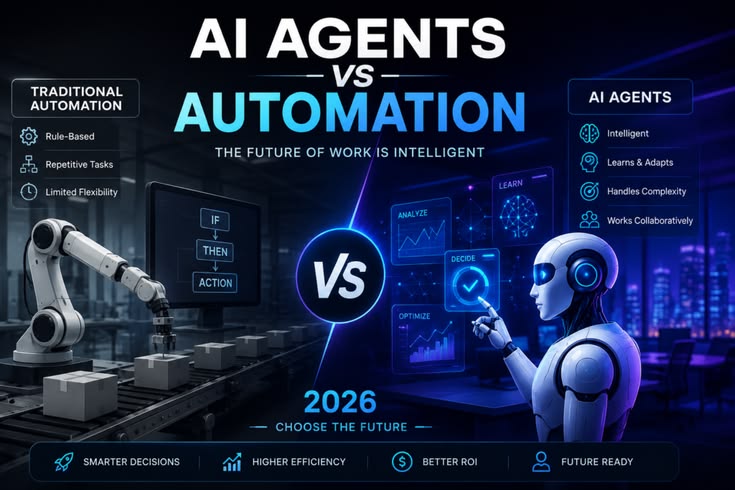
AI Agents vs Traditional Automation: What’s Changing in 2026?

Introduction:- Automation has been a cornerstone of digital transformation for decades. Businesses have long relied on software to eliminate repetitive tasks, reduce operational costs, and improve efficiency. From manufacturing lines to customer relationship management systems, traditional automation has helped organizations streamline workflows and maintain consistency. However, the technological landscape in 2026 is undergoing a significant shift. Organizations are no longer satisfied with systems that simply follow predefined rules. They increasingly require software that can understand context, adapt to changing situations, make informed decisions, and collaborate with humans. This demand has accelerated the adoption of AI agents, one of the most influential developments in modern artificial intelligence. Unlike traditional automation, AI agents are designed to reason, plan, and act toward specific goals. They can analyze large amounts of information, interact with multiple applications, learn from feedback, and even coordinate with other AI systems. Rather than replacing simple automation, AI agents expand what automation can achieve by handling more dynamic and complex tasks. This article explores how AI agents differ from traditional automation, why organizations are investing in intelligent systems, and how businesses can prepare for the next generation of digital operations. Understanding Traditional Automation Traditional automation refers to software that performs predefined actions based on fixed rules. These systems execute workflows exactly as they were programmed, making them highly reliable for repetitive processes. Examples include: Automated invoice generation Payroll processing Scheduled email campaigns Data backups Manufacturing assembly lines Basic customer support chatbots Rule-based approval workflows The primary advantage of traditional automation is consistency. Once configured correctly, it performs the same task repeatedly with minimal errors. It is ideal for environments where processes rarely change. However, these systems have clear limitations. They cannot interpret ambiguous information, adapt to unexpected scenarios, or make decisions beyond their programmed rules. If the business process changes, developers often need to redesign or update the automation. What Are AI Agents? AI agents are intelligent software systems capable of perceiving information, reasoning about it, making decisions, and taking actions to achieve defined objectives. Unlike conventional automation tools, AI agents do not rely solely on fixed rules. They use technologies such as large language models, machine learning, natural language processing, retrieval systems, and external tools to solve problems dynamically. For example, an AI customer support agent can: Read a customer’s email. Identify the issue and urgency. Search internal documentation. Check order status. Draft a personalized response. Escalate complex cases when necessary. Learn from user feedback over time. Instead of executing a single scripted workflow, the agent evaluates the situation and chooses the most appropriate action. Traditional Automation vs AI Agents Feature Traditional Automation AI Agents Decision-making Rule-based Context-aware Learning No Yes, through AI models and feedback Flexibility Low High Handles unstructured data Limited Excellent Human-like communication Minimal Advanced Adaptability Requires reprogramming Can adjust to changing inputs Best suited for Repetitive tasks Complex, evolving workflows Why 2026 Marks a Turning Point Several technological trends have converged to make AI agents practical at scale. Large language models have become significantly more capable, enabling agents to understand natural language and generate useful responses. Cloud infrastructure now provides the computing power needed to run advanced AI workloads efficiently. Businesses have also accumulated vast amounts of digital data, creating opportunities for AI systems to deliver meaningful insights and automation. At the same time, organizations are under pressure to improve productivity, reduce costs, and respond faster to customer expectations. AI agents address these needs by automating tasks that previously required human judgment. Real-World Business Applications Customer Service Modern AI agents can resolve support tickets, summarize conversations, translate languages, and personalize responses while maintaining a consistent customer experience. Software Development Development teams use AI agents to generate code, review pull requests, identify bugs, write documentation, and automate testing. These capabilities accelerate delivery while allowing engineers to focus on architecture and innovation. Cybersecurity Security operations centers increasingly deploy AI agents to monitor logs, detect anomalies, investigate suspicious behavior, and recommend remediation steps. This helps analysts respond more quickly to emerging threats. Cloud Operations Cloud management platforms benefit from AI agents that optimize infrastructure, monitor resource utilization, predict outages, and recommend cost-saving opportunities. They can assist administrators in maintaining reliable and scalable environments. Healthcare Hospitals and healthcare providers use intelligent agents to organize patient records, assist with appointment scheduling, summarize clinical notes, and support administrative workflows, enabling staff to spend more time on patient care. Benefits of AI Agents Organizations adopting AI agents are seeing improvements in several areas: Increased productivity through intelligent task automation. Faster decision-making based on real-time data. Improved customer experiences with personalized interactions. Reduced operational costs by minimizing manual work. Better scalability across departments. Continuous learning and optimization through AI-driven feedback loops. These advantages make AI agents an important part of digital transformation strategies across industries. AI Governance in 2026: Balancing Innovation and Regulation  

Artificial Intelligence, Business Intelligence, Digital Transformation, Technology

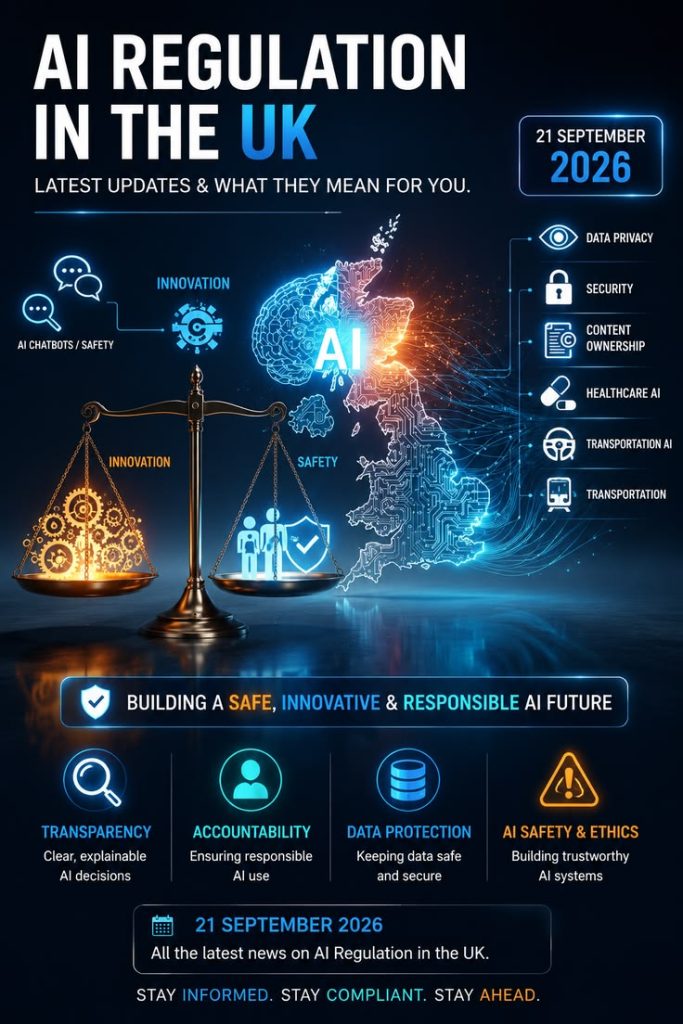
AI Governance in 2026: Balancing Innovation and Regulation

AI Governance in 2026: Balancing Innovation and Regulation Artificial intelligence has rapidly evolved from an emerging technology into a critical business and societal tool. From automating business operations and improving healthcare outcomes to powering advanced research and enhancing customer experiences, AI is transforming nearly every industry. However, as AI systems become more powerful and influential, concerns surrounding transparency, accountability, privacy, bias, and security continue to grow. In 2026, AI governance has become one of the most important topics in the technology landscape. Governments, regulators, technology companies, and enterprises are working together to create frameworks that encourage innovation while ensuring AI is developed and deployed responsibly. The challenge is clear: how can society unlock the enormous benefits of AI without exposing individuals, businesses, and governments to unnecessary risks? The answer lies in effective AI governance. What Is AI Governance? AI governance refers to the policies, standards, regulations, and organizational practices used to guide the development, deployment, and management of artificial intelligence systems. Its primary objectives include: Ensuring AI systems operate ethically Promoting transparency and accountability Protecting user privacy Reducing bias and discrimination Strengthening cybersecurity Maintaining regulatory compliance Building public trust Unlike traditional software governance, AI governance must address unique challenges associated with machine learning, generative AI, autonomous decision-making, and continuously evolving algorithms. As organizations increasingly rely on AI-powered systems for critical decisions, governance frameworks are becoming essential components of modern business operations. Why AI Governance Matters More Than Ever The rapid adoption of generative AI and autonomous systems has dramatically increased the importance of governance. Organizations are now using AI for: Financial decision-making Hiring and recruitment Healthcare diagnostics Customer service automation Cybersecurity monitoring Supply chain optimization Legal research Business intelligence While these applications offer significant benefits, they also introduce potential risks. An AI system that generates inaccurate information can damage a company’s reputation. A biased algorithm can lead to discrimination claims. Weak AI security controls can expose sensitive data to cybercriminals. Without proper governance, AI can become a liability instead of a competitive advantage. Businesses are realizing that governance is not merely about compliance—it is about creating sustainable and trustworthy AI ecosystems. The Global Push for AI Regulation One of the biggest developments in 2026 is the increasing focus on AI regulation worldwide. Governments recognize that artificial intelligence is reshaping economies, national security, labor markets, and public services. As a result, regulators are introducing policies designed to manage AI risks while encouraging innovation. Several key areas are receiving attention: Risk-Based AI Classification Many governments are adopting risk-based approaches to AI oversight. Under this model, AI applications are categorized according to their potential impact. Examples include: Low-Risk Systems Chatbots Recommendation engines Productivity assistants Medium-Risk Systems Customer service automation Business analytics platforms Educational AI tools High-Risk Systems Medical diagnosis systems Financial approval algorithms Law enforcement technologies Critical infrastructure management systems The higher the risk level, the stricter the governance requirements become. This approach helps regulators avoid unnecessary restrictions on innovation while focusing oversight where it is needed most. Transparency Requirements AI transparency has become a major regulatory priority. Users increasingly want to know: How AI systems make decisions What data is being used Whether content was AI-generated How organizations monitor AI outputs Transparency requirements are encouraging businesses to provide clearer explanations of AI-driven decisions and maintain detailed documentation of their AI models. Data Protection and Privacy AI systems require large amounts of data to function effectively. This has raised concerns about: User consent Data ownership Personal information protection Cross-border data transfers Governments are introducing stricter data governance rules to ensure AI systems respect privacy rights while still enabling innovation. Organizations that fail to comply may face significant financial penalties and reputational damage. Enterprise AI Governance Becomes a Strategic Priority In 2026, AI governance is no longer just the responsibility of compliance departments. It has become a boardroom issue. Executives recognize that poorly managed AI initiatives can create legal, financial, and operational risks. As a result, organizations are establishing dedicated AI governance programs that include: AI ethics committees Risk management teams Compliance officers Data governance specialists Cybersecurity professionals Legal advisors These teams work together to ensure AI projects align with business objectives, regulatory requirements, and ethical standards. Companies that implement robust governance frameworks are often able to deploy AI more confidently and at greater scale. Ethical AI Takes Center Stage Ethical AI has become one of the defining themes of AI governance. Businesses understand that compliance alone is not enough. Users expect AI systems to operate fairly, responsibly, and transparently. Ethical AI initiatives focus on several key principles. Fairness AI systems should treat all individuals fairly and avoid discriminatory outcomes. Organizations are investing in bias detection tools and model auditing processes to identify and mitigate unfair decision-making. Accountability There must be clear responsibility for AI-generated outcomes. Businesses are establishing governance structures that define who is accountable when AI systems make errors or produce harmful results. Human Oversight Despite significant advances in automation, human involvement remains critical. Many organizations require human review for high-impact decisions involving: Employment Healthcare Financial services Legal matters This ensures AI supports decision-making rather than replacing human judgment entirely. Transparency Users should understand when they are interacting with AI systems and how important decisions are made. Transparent AI helps build trust and reduces concerns about hidden algorithms influencing outcomes. The Rise of AI Audits Just as financial audits help ensure accountability in business operations, AI audits are becoming increasingly common. AI audits evaluate: Model performance Bias levels Security controls Regulatory compliance Data quality Decision-making processes Organizations are conducting regular assessments to verify that AI systems continue operating as intended. Independent third-party audits are also gaining popularity because they provide additional credibility and transparency. In many industries, AI auditing is becoming a standard governance practice. Managing Generative AI Risks Generative AI remains one of the most transformative technologies of the decade. Businesses are using AI tools to create: Marketing content Software code Product designs Business reports Customer communications Educational materials However, generative AI introduces unique governance challenges. Hallucinations AI models can

Artificial Intelligence, Business Analytics, enterprice

The Impact of Agentic AI on Enterprise Productivity

The Impact of Agentic AI on Enterprise Productivity Artificial Intelligence has evolved rapidly over the past few years. What started as chatbots, recommendation engines, and predictive analytics has now entered a new phase known as Agentic AI. Unlike traditional AI systems that primarily respond to commands or analyze data, Agentic AI can independently plan, execute, monitor, and optimize tasks to achieve specific goals. As organizations continue their digital transformation journeys, Agentic AI is emerging as one of the most influential technologies reshaping enterprise productivity. Businesses are no longer looking at AI merely as a tool that assists employees; instead, they are deploying AI agents capable of acting as digital workers that can handle complex workflows with minimal human intervention. From customer service and IT operations to finance, marketing, and supply chain management, Agentic AI is helping enterprises operate more efficiently, reduce costs, improve decision-making, and unlock new levels of productivity. As we move through 2026, companies across industries are recognizing that the future of work will involve close collaboration between humans and autonomous AI agents. Understanding Agentic AI Agentic AI refers to artificial intelligence systems that possess the ability to act autonomously toward achieving predefined objectives. Unlike conventional AI applications that require constant prompts or supervision, Agentic AI can make decisions, initiate actions, adapt to changing environments, and complete multi-step tasks independently. For example, a traditional AI chatbot may answer customer questions based on available information. An Agentic AI system, however, can handle an entire customer support process—from receiving the request and identifying the issue to processing refunds, updating records, and following up with customers. The key capabilities that distinguish Agentic AI include: Goal-oriented decision-making Autonomous workflow execution Continuous learning and adaptation Multi-step task management Context awareness Integration with enterprise systems Proactive problem-solving These characteristics enable Agentic AI to function more like a virtual employee rather than a simple software application. Why Enterprises Are Adopting Agentic AI Organizations are under increasing pressure to improve efficiency, reduce operational expenses, and maintain competitiveness in rapidly changing markets. Traditional automation solutions can handle repetitive tasks, but they often struggle with complex processes that require decision-making and adaptability. Agentic AI fills this gap by bringing intelligence and autonomy to business operations. Several factors are driving enterprise adoption: Growing Operational Complexity Modern businesses manage enormous volumes of data, processes, and interactions. Human teams often struggle to keep up with increasing complexity. Agentic AI can process information at scale and coordinate multiple tasks simultaneously. Demand for Faster Decision-Making Markets move quickly, and delays can be costly. AI agents analyze data in real time and provide immediate actions or recommendations, helping organizations respond more rapidly to opportunities and challenges. Workforce Productivity Challenges Many industries continue to face talent shortages and increasing workloads. Agentic AI helps organizations maximize productivity without significantly expanding headcount. Cost Optimization Businesses are continuously seeking ways to reduce expenses. AI agents can automate labor-intensive processes, reducing operational costs while maintaining service quality. Digital Transformation Initiatives Organizations investing in cloud computing, analytics, and automation increasingly view Agentic AI as a natural extension of their digital transformation strategies. Workflow Automation Beyond Traditional RPA Robotic Process Automation (RPA) has been used for years to automate repetitive tasks. However, RPA systems generally follow predefined rules and struggle when unexpected situations arise. Agentic AI enhances automation by introducing intelligence into workflows. For example, instead of simply processing invoices according to fixed rules, an AI agent can: Identify anomalies Communicate with vendors Request missing information Resolve exceptions Complete approvals automatically This significantly reduces manual intervention and accelerates business processes. Enhanced Employee Productivity One of the most important benefits of Agentic AI is its ability to augment human workers. Employees often spend significant time on administrative tasks such as: Data entry Scheduling Reporting Documentation Research Information retrieval AI agents can handle these responsibilities, allowing employees to focus on strategic, creative, and high-value work. Rather than replacing workers, Agentic AI often acts as a productivity multiplier, enabling teams to accomplish more with the same resources. Faster Decision-Making Data-driven decision-making has become essential for modern enterprises. However, analyzing large datasets can be time-consuming. Agentic AI systems continuously monitor: Market trends Customer behavior Operational performance Financial metrics Supply chain activities They can identify patterns, generate insights, and recommend actions in real time. Executives and managers benefit from faster access to actionable intelligence, improving organizational agility and responsiveness. Improved Customer Service Operations Customer experience has become a major competitive differentiator. Agentic AI is transforming customer support by enabling intelligent automation. AI agents can: Resolve support tickets Handle account updates Process refunds Schedule appointments Escalate complex issues Follow up with customers Because these systems operate around the clock, businesses can provide faster and more consistent service while reducing support costs. Knowledge Management and Information Access Large enterprises often struggle with fragmented information spread across multiple systems. Employees may spend considerable time searching for documents, policies, procedures, and data. Agentic AI can act as an intelligent knowledge assistant that: Retrieves relevant information Summarizes documents Generates reports Provides recommendations Answers internal queries This improves productivity by reducing time spent searching for information. Supply Chain Optimization Supply chain management involves numerous interconnected activities, making it an ideal environment for Agentic AI deployment. AI agents can: Monitor inventory levels Predict demand fluctuations Optimize procurement Coordinate logistics Identify supply chain risks Recommend corrective actions These capabilities help organizations improve efficiency while minimizing disruptions. Financial Operations Efficiency Finance departments often deal with repetitive and time-consuming processes. Agentic AI can streamline activities such as: Invoice processing Expense management Budget forecasting Financial reporting Compliance monitoring Fraud detection As a result, finance teams can focus more on strategic planning and business growth initiatives. IT Operations and Infrastructure Management Enterprise IT environments continue to grow in complexity. Agentic AI is increasingly being used to manage infrastructure and support operations. AI agents can: Detect system anomalies Monitor performance Resolve incidents Apply security updates Allocate resources Predict failures This proactive approach improves system reliability while reducing operational workloads. Marketing and Sales Productivity Marketing and sales teams are

Artificial Intelligence, Business Intelligence, Data Analytics

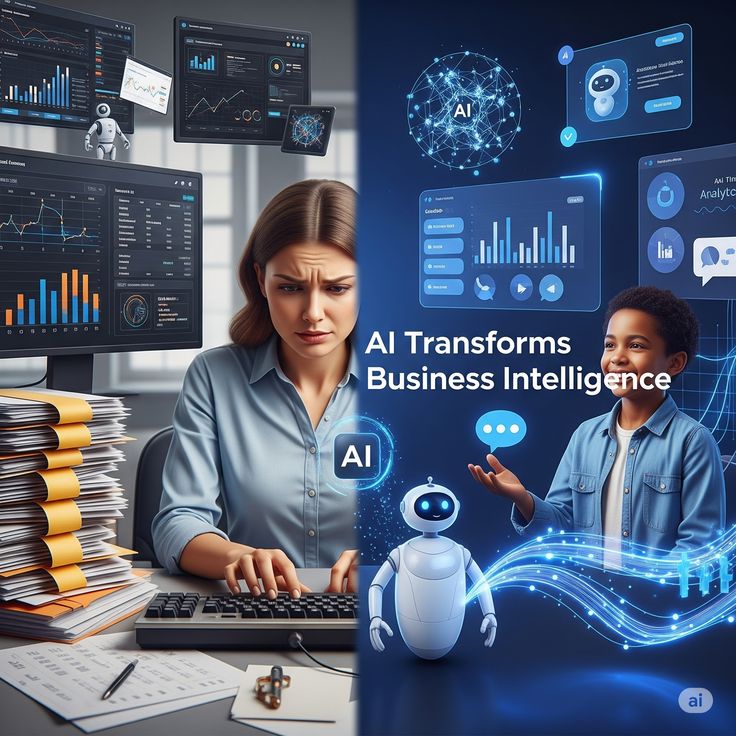
How AI Is Revolutionizing Business Intelligence and Analytics

Introduction In today’s digital economy, businesses generate massive amounts of data every second. From customer interactions and sales transactions to website activity and operational metrics, organizations have access to more information than ever before. However, collecting data alone is not enough. The real challenge lies in transforming that data into actionable insights that drive better business decisions. This is where Artificial Intelligence (AI) is changing the landscape of Business Intelligence (BI) and analytics. Traditional BI systems helped organizations analyze historical data and create reports. AI-powered BI takes this a step further by uncovering hidden patterns, predicting future outcomes, automating analysis, and providing real-time recommendations. As companies strive to remain competitive in rapidly changing markets, AI-driven business intelligence is becoming a critical tool for growth, efficiency, and innovation. What Is Business Intelligence? Business Intelligence refers to the technologies, processes, and strategies used to collect, analyze, and visualize business data. The primary goal of BI is to help organizations make informed decisions based on accurate information. Traditional BI solutions typically focus on: Data collection and storage Reporting and dashboards Performance monitoring Historical data analysis Trend identification While these capabilities remain valuable, modern businesses require deeper insights and faster decision-making. AI addresses these needs by enhancing the capabilities of conventional BI platforms. The Growing Role of AI in Business Intelligence Artificial Intelligence enables machines to analyze data, learn from patterns, and make predictions with minimal human intervention. When integrated with business intelligence systems, AI helps organizations move from descriptive analytics to predictive and prescriptive analytics. Instead of simply answering questions like: “What happened?” AI-powered systems can answer: “Why did it happen?” “What is likely to happen next?” “What actions should we take?” This shift allows businesses to become more proactive rather than reactive. Automated Data Analysis One of the biggest advantages of AI in business intelligence is automation. Traditional data analysis often requires teams of analysts to collect data, clean datasets, create reports, and identify trends manually. This process can take hours or even days. AI-powered analytics platforms can automate many of these tasks by: Cleaning and organizing data Detecting anomalies Identifying trends Generating reports Highlighting important insights Automation reduces human error and enables organizations to analyze larger volumes of data much faster. For example, a retail company can automatically monitor thousands of products and instantly identify unusual changes in sales patterns without requiring manual investigation. Predictive Analytics: Looking Into the Future Predictive analytics is one of the most impactful applications of AI in business intelligence. Using historical data and machine learning algorithms, AI can forecast future outcomes with impressive accuracy. Businesses use predictive analytics to: Forecast sales demand Predict customer behavior Estimate inventory requirements Identify market trends Reduce operational risks For instance, an e-commerce company can predict which products will experience increased demand during upcoming seasons and adjust inventory levels accordingly. This proactive approach helps organizations improve efficiency and reduce costs. Real-Time Decision Making Modern businesses operate in fast-moving environments where decisions often need to be made instantly. Traditional BI systems typically rely on periodic reports, which may already be outdated by the time they are reviewed. AI-driven analytics platforms continuously process incoming data and provide real-time insights. Benefits include: Faster response to market changes Improved customer service Immediate detection of operational issues Better financial monitoring Enhanced risk management For example, financial institutions can detect suspicious transactions in real time and prevent fraudulent activities before significant damage occurs. Enhanced Data Visualization Data visualization is a core component of business intelligence. AI is making dashboards smarter and easier to understand by automatically identifying key insights and presenting them in visually meaningful ways. Advanced BI tools can: Highlight critical trends automatically Generate dynamic charts and graphs Explain data patterns in plain language Customize dashboards for different users Instead of manually searching through hundreds of charts, decision-makers receive instant summaries of the most important business developments. This significantly improves productivity and decision quality. Natural Language Queries One of the most user-friendly innovations in AI-powered business intelligence is Natural Language Processing (NLP). NLP allows users to interact with BI systems using everyday language. Rather than writing complex database queries, users can simply ask questions such as: “What were our top-selling products last month?” “Why did sales decline in the northern region?” “Which customer segment generated the highest revenue?” The system then analyzes data and provides answers instantly. This capability makes data analysis accessible to employees without technical expertise, promoting a stronger data-driven culture throughout the organization. Improving Customer Insights Understanding customer behavior is essential for business success. AI-powered analytics helps organizations gain deeper insights into customer preferences, buying patterns, and engagement trends. Businesses can analyze: Purchase history Website interactions Social media activity Customer feedback Support requests By combining these data sources, AI creates a comprehensive customer profile that enables personalized experiences. Organizations can use these insights to: Improve marketing campaigns Increase customer retention Enhance product recommendations Deliver personalized services As a result, businesses can strengthen customer relationships and drive higher revenue. Fraud Detection and Risk Management Many industries face increasing challenges related to fraud and risk. AI significantly improves risk management by continuously monitoring transactions and identifying suspicious behavior. Machine learning algorithms can detect unusual patterns that may indicate: Financial fraud Cybersecurity threats Compliance violations Operational risks Unlike traditional rule-based systems, AI continuously learns and adapts to emerging threats. This capability helps organizations reduce financial losses and improve security. Supply Chain Optimization Supply chain management generates enormous amounts of operational data. AI-powered business intelligence solutions help companies optimize supply chains through advanced analytics and forecasting. Key benefits include: Demand prediction Inventory optimization Supplier performance monitoring Logistics planning Cost reduction For example, manufacturers can predict supply shortages before they occur and take preventive action to avoid production delays. This leads to greater efficiency and improved customer satisfaction. Personalized Business Strategies Every business operates under unique conditions and objectives. AI enables organizations to develop personalized strategies based on their specific data and performance metrics. Instead of relying solely on industry averages, companies can make decisions based on:

Artificial Intelligence, Digital Transformation, Educational Technology

Multimodal AI Explained: The Future of Human-Computer Interaction

Introduction Artificial Intelligence has evolved rapidly over the past decade, moving from simple rule-based systems to highly sophisticated models capable of understanding and generating human-like content. One of the most significant breakthroughs in recent years is the emergence of Multimodal AI, a technology that allows machines to process and understand multiple forms of data simultaneously, including text, images, audio, video, and even sensor inputs. Traditional AI systems typically specialize in a single type of input. For example, a chatbot processes text, while an image recognition system analyzes pictures. Multimodal AI changes this paradigm by combining different data types into a unified understanding. This advancement is paving the way for a new era of human-computer interaction where technology can communicate more naturally, understand context better, and provide richer experiences. As businesses, developers, and consumers increasingly adopt AI-powered tools, Multimodal AI is expected to become one of the defining technologies of the next decade. From virtual assistants and healthcare applications to autonomous vehicles and smart workplaces, its influence is already being felt across industries. What Is Multimodal AI? Multimodal AI refers to artificial intelligence systems that can process and interpret information from multiple sources or modalities simultaneously. These modalities include: Text Images Audio Video Sensor Data Gestures and Physical Inputs Humans naturally use multiple senses to understand the world. For example, during a conversation, we listen to words, observe facial expressions, and interpret body language at the same time. Multimodal AI aims to replicate this ability by integrating different forms of information into a single intelligent system. Instead of analyzing data in isolation, Multimodal AI combines various inputs to gain a deeper understanding of context and intent. This enables more accurate decision-making and more natural interactions between humans and machines. The Evolution of Human-Computer Interaction Human-computer interaction has undergone several major transformations over the years. Command-Line Interfaces Early computers relied on text-based commands. Users needed technical knowledge to communicate with machines effectively. Graphical User Interfaces The introduction of graphical interfaces made computers more accessible. Users could interact through windows, icons, and menus instead of memorizing commands. Touch-Based Interaction The rise of smartphones and tablets introduced touchscreens, making interaction more intuitive and mobile. Voice Assistants Virtual assistants brought voice recognition into mainstream technology, allowing users to perform tasks through spoken commands. Multimodal Interaction Today, AI systems are moving beyond single-input methods. Users can speak, type, upload images, share videos, and interact naturally with intelligent systems that understand all these inputs together. This shift represents one of the most significant changes in the history of computing. How Multimodal AI Works At its core, Multimodal AI combines information from different data sources and processes them through advanced machine learning models. The process generally involves several steps: Data Collection The AI gathers data from multiple sources such as text documents, images, microphones, cameras, and sensors. Data Processing Each data type undergoes specialized processing: Natural Language Processing for text Computer Vision for images and videos Speech Recognition for audio Sensor Analysis for environmental inputs Data Fusion The processed information is combined into a unified representation that allows the AI to understand relationships between different inputs. Contextual Understanding The AI analyzes the combined information to determine meaning, intent, and context. Response Generation Based on its understanding, the system generates an appropriate output, which could be text, speech, images, recommendations, or actions. This integrated approach enables more intelligent and context-aware interactions. Why Multimodal AI Is Important The significance of Multimodal AI lies in its ability to bridge the gap between human communication and machine understanding. Improved Accuracy Using multiple data sources reduces ambiguity and improves decision-making. For example, a voice command combined with visual context allows an AI assistant to better understand what a user is requesting. Better User Experiences Interactions become more natural because users can communicate in the way that feels most comfortable. Enhanced Context Awareness Multimodal systems understand situations more effectively by considering multiple signals simultaneously. Increased Accessibility People with different abilities can interact with technology using speech, images, gestures, or text. More Human-Like Communication By understanding various forms of input, AI systems can engage in conversations and interactions that closely resemble human communication. Key Technologies Powering Multimodal AI Several advanced technologies contribute to the development of multimodal systems. Natural Language Processing NLP enables machines to understand, interpret, and generate human language. Computer Vision Computer vision allows AI systems to analyze images, videos, objects, faces, and environments. Speech Recognition Speech technologies convert spoken language into machine-readable formats. Deep Learning Neural networks help identify complex patterns across multiple data types. Generative AI Models Modern generative models can create text, images, audio, and video content from various inputs. Large Language Models Advanced language models provide the reasoning and contextual understanding necessary for multimodal applications. Together, these technologies create AI systems capable of understanding and generating rich, multi-format content. Real-World Applications of Multimodal AI Healthcare Healthcare organizations are using Multimodal AI to analyze medical records, diagnostic images, laboratory reports, and physician notes simultaneously. Benefits include: Faster diagnosis Improved treatment planning Better patient monitoring Enhanced medical research Doctors can receive more comprehensive insights by combining information from multiple sources. Customer Service Businesses are implementing AI-powered support systems that understand: Customer messages Voice conversations Uploaded screenshots Product photos This allows customer service teams to resolve issues faster and improve customer satisfaction. Education Educational platforms use Multimodal AI to create personalized learning experiences. Students can: Ask questions verbally Submit handwritten assignments Upload images Receive customized explanations This makes learning more interactive and accessible. Autonomous Vehicles Self-driving vehicles rely heavily on multimodal intelligence. They combine information from: Cameras Radar systems LiDAR sensors GPS data Traffic information This comprehensive understanding helps vehicles navigate safely. Smart Assistants Next-generation AI assistants can process text, voice, images, and video simultaneously. Users may simply take a picture, ask a question, and receive an accurate response without needing to provide detailed descriptions. Retail and E-Commerce Retailers use Multimodal AI for: Visual product searches Personalized recommendations Inventory management Customer behavior analysis Shoppers can upload images of products they like

Artificial Intelligence, Business Intelligence

The Rise of AI Employees: Will Digital Workers Become Mainstream?

The Rise of AI Employees: Will Digital Workers Become Mainstream? Artificial Intelligence has already transformed the way businesses operate, from automating repetitive tasks to enhancing customer experiences. However, a new evolution in AI technology is beginning to reshape workplaces on a much larger scale: AI employees. Unlike traditional software tools that assist workers with specific tasks, AI employees are designed to function more like digital coworkers. They can manage workflows, communicate with customers, analyze data, make recommendations, and even execute complex business processes with minimal human intervention. As organizations continue to seek greater efficiency, lower operational costs, and improved productivity, AI employees are rapidly moving from experimental projects to practical business solutions. Technology leaders, startups, and enterprise organizations are investing heavily in AI-powered agents that can perform roles traditionally handled by humans. This shift raises important questions. Will digital workers become a standard part of every organization? How will they impact jobs and workplace dynamics? What benefits and challenges do they bring? Understanding the rise of AI employees provides valuable insight into the future of work and the next phase of digital transformation. Understanding AI Employees The term “AI employee” refers to an artificial intelligence system capable of performing work-related tasks autonomously or semi-autonomously. These systems go beyond simple automation tools because they can understand context, learn from interactions, make decisions, and adapt to changing business requirements. AI employees often leverage advanced technologies such as machine learning, natural language processing, large language models, and workflow automation platforms. They can interact with humans through chat interfaces, email, voice communication, and enterprise software systems. Unlike traditional automation software, AI employees can handle more dynamic responsibilities, including: Responding to customer inquiries Scheduling meetings Managing project workflows Conducting research Generating reports Processing business documents Supporting sales operations Assisting human resources teams Monitoring cybersecurity threats Managing inventory and supply chains The growing capabilities of AI systems are enabling businesses to treat them as active contributors rather than passive tools. Why Businesses Are Adopting AI Employees Organizations face increasing pressure to remain competitive while controlling costs and improving operational efficiency. AI employees offer several advantages that make them attractive to businesses of all sizes. Increased Productivity One of the primary reasons companies adopt AI employees is productivity improvement. Digital workers can operate continuously without breaks, allowing organizations to complete tasks faster and maintain around-the-clock operations. Routine administrative activities that once consumed significant employee time can now be handled automatically, enabling human workers to focus on strategic and creative responsibilities. Cost Efficiency Hiring, training, and retaining employees involves substantial expenses. While AI systems require investment, they can significantly reduce operational costs over time by automating repetitive processes and minimizing manual workloads. For businesses managing large volumes of customer interactions, transactions, or documentation, AI employees can provide substantial financial benefits. Faster Decision-Making AI employees can process vast amounts of data within seconds. This capability enables organizations to make informed decisions more quickly than traditional methods. From analyzing market trends to identifying operational bottlenecks, AI-powered systems can generate insights that help leaders respond to opportunities and challenges in real time. Improved Customer Service Modern consumers expect instant responses and personalized experiences. AI employees can deliver both. Digital customer service agents can answer questions, resolve common issues, and guide customers through processes at any time of day. This enhances customer satisfaction while reducing the workload on support teams. Scalability Human teams often require significant resources to expand operations. AI employees can scale much more efficiently. Whether a company experiences seasonal demand spikes or rapid business growth, AI-powered systems can often adapt without requiring large increases in staffing. The Evolution from Chatbots to Digital Workers Many people associate AI in business with chatbots, but AI employees represent a major advancement beyond traditional conversational systems. Early chatbots followed scripted workflows and could only answer predefined questions. Their capabilities were limited and often frustrating for users. Today’s AI employees can: Understand complex requests Maintain conversational context Access multiple business systems Complete multi-step tasks Generate original content Learn from interactions Collaborate with human employees This evolution has transformed AI from a customer support tool into a versatile workforce solution capable of contributing across entire organizations. Industries Leading the Adoption of AI Employees Several industries are already embracing AI employees and demonstrating how digital workers can create measurable value. Customer Service Customer support remains one of the largest areas for AI adoption. AI employees can manage inquiries, process requests, provide technical assistance, and resolve common issues without human intervention. This reduces response times and improves service availability. Healthcare Healthcare organizations use AI employees to support administrative operations, appointment scheduling, patient communication, and medical documentation. These systems help reduce administrative burdens and allow healthcare professionals to focus more on patient care. Financial Services Banks and financial institutions increasingly rely on AI employees for fraud detection, risk analysis, compliance monitoring, and customer assistance. The ability to analyze large datasets quickly makes AI particularly valuable in the financial sector. Human Resources Recruitment and employee management involve many repetitive tasks that AI employees can handle efficiently. Digital workers assist with resume screening, candidate communication, interview scheduling, onboarding, and employee support. Marketing Marketing teams are leveraging AI employees to create content, analyze campaign performance, conduct audience research, and personalize customer engagement strategies. These capabilities help organizations improve marketing effectiveness while reducing manual effort. Manufacturing Manufacturers use AI employees to monitor equipment performance, optimize production schedules, predict maintenance needs, and improve supply chain operations. The result is greater operational efficiency and reduced downtime. How AI Employees Are Changing Workplace Roles The introduction of AI employees does not necessarily mean the elimination of human workers. Instead, it often changes how work is performed. Employees increasingly spend less time on repetitive administrative tasks and more time on activities that require creativity, critical thinking, emotional intelligence, and strategic planning. Many organizations are adopting a collaborative model where humans and AI employees work together. For example: Sales representatives use AI to analyze customer data. Marketers use AI to generate campaign ideas. Project managers use

cybersecurity, Digital Transformation, Educational Technology, enterprise

Zero Trust Security: Why Organizations Are Adopting It Faster Than Ever

Zero Trust Security: Why Organizations Are Adopting It Faster Than Ever Cybersecurity has never been more important than it is today. Organizations across the globe are facing an unprecedented number of cyber threats, ranging from ransomware attacks and phishing campaigns to insider threats and sophisticated nation-state cyber operations. As businesses continue to embrace cloud computing, remote work, digital transformation, and interconnected technologies, traditional security models are proving increasingly inadequate. For decades, organizations relied on perimeter-based security strategies. The assumption was simple: anything inside the corporate network could be trusted, while anything outside should be treated as a potential threat. Firewalls, VPNs, and network segmentation formed the backbone of enterprise security. However, the modern digital environment has fundamentally changed this approach. Employees access company resources from multiple devices and locations. Applications reside in public and private clouds. Third-party vendors require network access. Sensitive data moves continuously between platforms and users. In this new reality, the concept of trust based solely on network location no longer works. This is where Zero Trust Security comes into the picture. Zero Trust has rapidly evolved from a cybersecurity concept into one of the most widely adopted security frameworks worldwide. Organizations of all sizes are investing heavily in Zero Trust architectures to protect their digital assets, strengthen compliance, and reduce cyber risks. But what exactly is Zero Trust Security, and why are organizations adopting it faster than ever before? Let’s explore. Understanding Zero Trust Security Zero Trust Security is a cybersecurity framework built on a simple but powerful principle: “Never Trust, Always Verify.” Unlike traditional security models that automatically trust users and devices inside a corporate network, Zero Trust assumes that every user, device, application, and connection could potentially be compromised. Under a Zero Trust model, no entity receives automatic trust, regardless of whether it is inside or outside the network perimeter. Every access request must be continuously verified before access is granted. This verification process typically includes: Identity verification Device authentication Access control policies User behavior analysis Multi-factor authentication Continuous monitoring The objective is to minimize risk by ensuring that only authorized users can access specific resources under predefined conditions. The Evolution of Cybersecurity Threats One of the biggest reasons organizations are embracing Zero Trust is the dramatic evolution of cyber threats. Modern cybercriminals have become more sophisticated than ever. Today’s attackers use advanced techniques such as: Ransomware-as-a-Service (RaaS) AI-powered phishing attacks Credential theft Supply chain attacks Insider threats Cloud account compromises Social engineering campaigns Many of these attacks bypass traditional security defenses because they exploit trusted accounts and legitimate access credentials. When attackers successfully steal login credentials, they can often move freely across traditional networks without triggering security alerts. Zero Trust eliminates this weakness by requiring verification at every stage of access. Even if an attacker compromises one account, they cannot automatically gain unrestricted access to sensitive systems. This significantly reduces the attack surface and limits potential damage. Why Traditional Security Models Are Failing The traditional “castle-and-moat” approach to cybersecurity was designed for a different era. In the past: Employees worked primarily from offices. Applications were hosted on-premises. Data remained within corporate networks. Devices were company-managed. Today, none of these assumptions consistently apply. Modern enterprises operate in highly distributed environments where: Employees work remotely. Applications run in multiple clouds. Data resides across various platforms. Contractors and vendors require access. Employees use personal devices. As a result, the network perimeter has effectively disappeared. Organizations can no longer rely solely on perimeter defenses because users and data exist far beyond traditional boundaries. Zero Trust addresses this challenge by focusing on identities, devices, and access rather than network location. The Core Principles of Zero Trust Security While Zero Trust implementations vary between organizations, most frameworks follow several key principles. Verify Every User Every user must authenticate before accessing resources. Authentication methods may include: Passwords Biometrics Security tokens Multi-factor authentication Identity verification is performed continuously rather than only during login. Least Privilege Access Users receive only the minimum access necessary to perform their tasks. This approach reduces risk because compromised accounts cannot access systems beyond their authorized permissions. Least privilege significantly limits lateral movement during cyberattacks. Continuous Monitoring Security teams continuously monitor user activities, devices, and network traffic. Behavior analytics help identify unusual patterns that may indicate malicious activity. Suspicious behavior triggers additional verification or access restrictions. Assume Breach Zero Trust operates under the assumption that breaches can occur at any time. Instead of focusing solely on prevention, organizations prioritize detection, containment, and response. This mindset improves resilience against sophisticated attacks. Device Security Verification Access decisions consider device health and security status. Devices may be evaluated based on: Operating system updates Antivirus status Encryption settings Security compliance Compromised or non-compliant devices may be denied access. The Remote Work Revolution Accelerated Adoption The global shift toward remote and hybrid work has dramatically accelerated Zero Trust adoption. Employees now access corporate resources from: Home offices Coffee shops Airports Co-working spaces Mobile devices Traditional VPN-based security approaches struggle to secure this distributed workforce effectively. Organizations need a security framework that protects users regardless of location. Zero Trust enables secure access by verifying users and devices rather than relying on network boundaries. As remote work becomes a permanent part of business operations, Zero Trust continues to gain momentum. Cloud Computing and Zero Trust Cloud adoption is another major driver behind the rise of Zero Trust Security. Modern organizations increasingly rely on: Software-as-a-Service (SaaS) Infrastructure-as-a-Service (IaaS) Platform-as-a-Service (PaaS) Cloud environments introduce new security challenges because resources are distributed across multiple providers and locations. Traditional security architectures often lack visibility and control in these environments. Zero Trust helps organizations secure cloud assets through: Strong identity management Granular access controls Continuous authentication Micro-segmentation Cloud workload protection This approach improves security without sacrificing flexibility. The Role of Multi-Factor Authentication Multi-factor authentication (MFA) has become a cornerstone of Zero Trust Security. Passwords alone are no longer sufficient. Attackers frequently obtain credentials through: Phishing attacks Data breaches Malware Credential stuffing MFA requires users to provide additional verification

How would you like me to respond?

Select a personality for your AI assistant

Normal
Happy
Sad
Angry

Your selection will affect how the AI assistant responds to your messages

Chat Assistant

Let's discuss your project!

Hear from our clients and why 3000+ businesses trust TechOTD

Tell us what you need, and we'll get back with a cost and timeline estimate

Scroll to Top