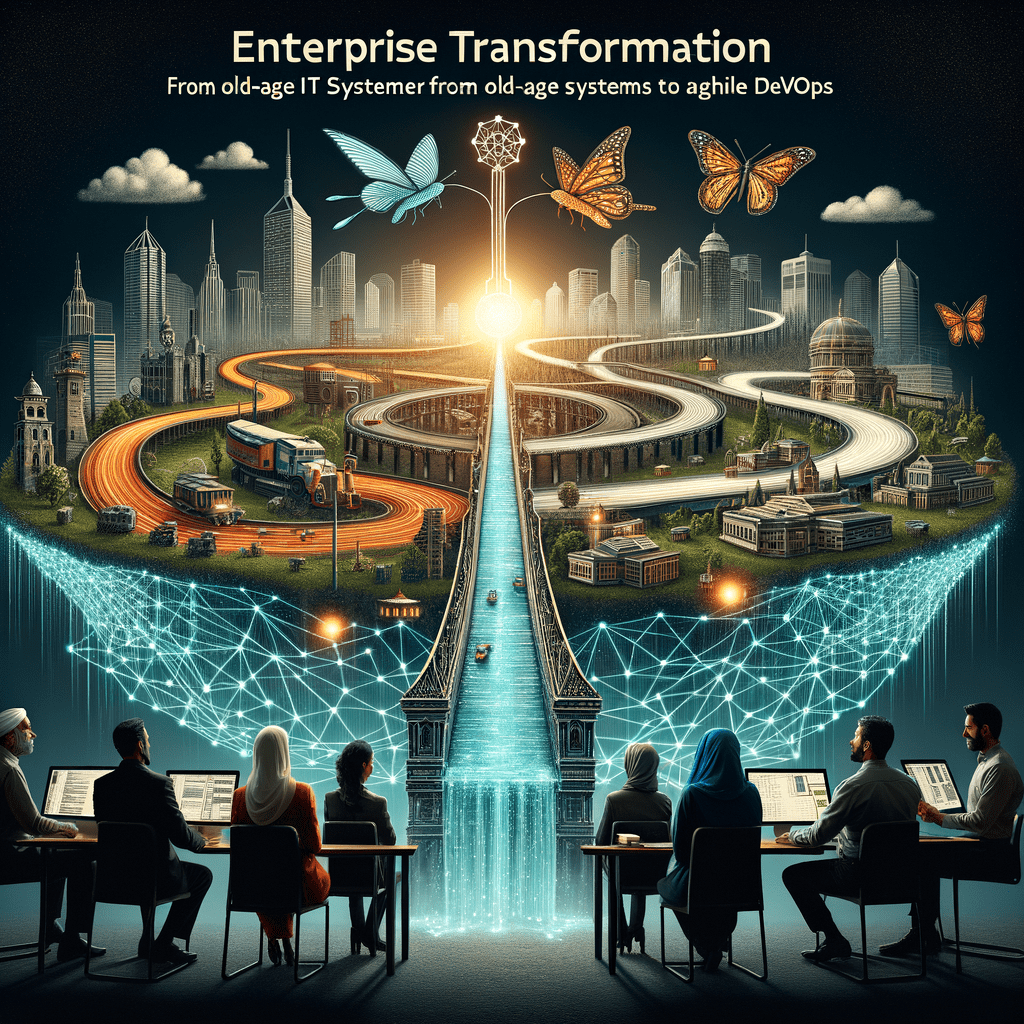
DevOps at Scale: Strategies for Enterprise-Wide Modernization
Introduction In the fast-paced digital era, enterprises must evolve their software development and delivery models to remain competitive and responsive. DevOps at scale has emerged as an essential approach, enabling organizations to modernize their entire IT landscape, drive automation, foster collaboration, and accelerate innovation. This blog explores strategies and best practices for successfully implementing DevOps across large enterprises, tackling challenges while maximizing business value. Explore advanced AI-driven transformation capabilities at TechOTD AI Services. Understanding Enterprise DevOps at Scale What is DevOps at Scale? DevOps at scale refers to adopting and integrating DevOps principles—collaboration, automation, continuous integration, continuous delivery—across complex, distributed, and often global enterprise IT environments. Enterprises face unique challenges like legacy systems, multiple teams, regulatory demands, and extensive toolchains. Why Modernize with DevOps? Accelerated time to market for software products Improved software quality and reliability through automation Enhanced collaboration across development, operations, and security teams Scalable and repeatable deployment pipelines for global operations Better alignment between IT and business goals The TechOTD blog dives deeper into how organizations embrace such transformations. Core Strategies for Enterprise-Wide DevOps Modernization 1. Establish a Strong Foundation with Scalable CI/CD Pipelines Centralized, automated continuous integration and delivery pipelines are critical for managing complex software releases. Tools like Jenkins, Azure DevOps, and GitLab enable efficient build, test, and deployment workflows. Standardize coding, security, and compliance practices Automate pipeline monitoring and incident response Use pipeline-as-code for versioned and reproducible deployments 2. Cultivate a Collaborative and Transparent Culture Culture is the heart of DevOps success at scale. Break down silos to encourage communication and shared ownership Form cross-functional, self-service teams covering development, QA, operation, and security Adopt frameworks like CALMS (Culture, Automation, Lean, Measurement, Sharing) to assess maturity and guide improvements Use collaboration tools integrated with workflow management for transparency Learn more about AI’s role in enabling collaboration at TechOTD AI page. 3. Automate Infrastructure and Configuration Management In large enterprises, manual provisioning slows progress and introduces errors. Implement Infrastructure as Code (IaC) using Terraform, Ansible, or Puppet Use cloud-native services and container orchestration (Kubernetes) for scalable infrastructure Automate environment provisioning, configuration, and monitoring for consistency Explore DevOps automation tools at TechOTD’s resources. 4. Adopt Microservices and Modular Architectures Breaking monolithic applications into smaller, independently deployable services enables faster, parallel development and deployment, which fits well with scaled DevOps pipelines. Enables independent scaling and troubleshooting Facilitates incremental modernization of legacy apps Simplifies cross-team development and integration 5. Embed Security Using DevSecOps Principles Security is paramount in enterprise environments, especially with complex compliance requirements. Integrate continuous security testing into CI/CD pipelines Automate vulnerability scanning and compliance checks Establish governance frameworks for risk management Blockchain technology can enhance traceability and compliance auditing, as covered in TechOTD Blockchain blog. 6. Measure and Monitor Performance Continuously Continuous monitoring with tools like Grafana, Prometheus, and ELK stack helps detect anomalies, improve reliability, and optimize resource use. Implement logging, metrics collection, and alerting Use metrics like deployment frequency, mean time to recovery (MTTR), and error rates to measure success Leverage AI-powered analytics for predictive insights Further examples and best practices are detailed in TechOTD Predictive Analytics blog. 7. Invest in Skills Development and Change Management Train teams on new tools, practices, and cultural values regularly Foster a learning mindset encouraging experimentation and failure recovery Communicate benefits organization-wide to build buy-in and reduce resistance See TechOTD’s How We Work for insights on effective consulting and change management. Overcoming Common Challenges in Scaling DevOps Legacy Systems and Technical Debt Use incremental modernization and parallel DevOps adoption Containerize legacy apps selectively for easier integration Managing Complexity Across Distributed Teams Define clear roles and responsibilities Implement centralized DevOps management platforms Security and Compliance Across Regions Develop automated compliance pipeline checks Use policy-as-code and audit trails Discover more challenges and solutions in the detailed TechOTD Enterprise DevOps Guide. Real-World Examples and Use Cases Amazon Pioneered large-scale DevOps automation enabling multiple daily deployments, supporting rapid innovation and global scale. Netflix Uses advanced CI/CD, chaos engineering, and real-time monitoring to ensure high availability and rapid feature delivery. Future Trends: AI-Enabled DevOps at Scale AI and machine learning optimize automated testing, deployment decisions, and predictive maintenance, driving smarter, faster DevOps. Intelligent automation for environment provisioning AI-powered anomaly detection and incident management Natural language interfaces simplifying DevOps operations Discover the future of AI in DevOps at TechOTD AI and NLP. Conclusion Enterprise-wide DevOps modernization is a transformative journey that requires a balanced approach of strategy, culture, technology, and continuous improvement. By following the outlined strategies, enterprises can unlock agility, reliability, and innovation at scale. For detailed strategies, case studies, and consulting support, visit TechOTD and explore services like mobile app development.