Enterprise AI

Artificial Intelligence

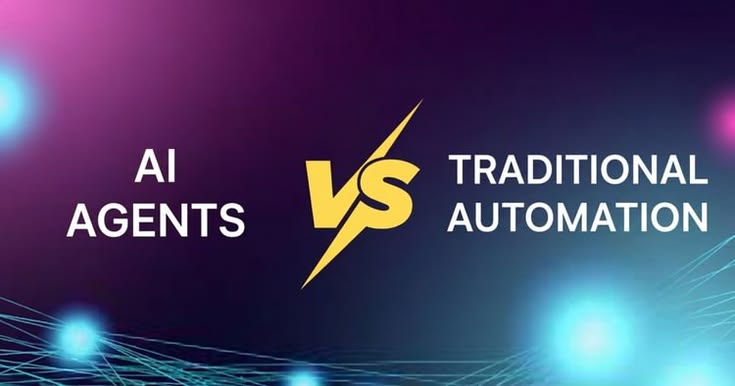
AI Agents vs Traditional Automation: What’s Changing in 2026?

Introduction:- Automation has been a cornerstone of digital transformation for decades. Businesses have long relied on software to eliminate repetitive tasks, reduce operational costs, and improve efficiency. From manufacturing lines to customer relationship management systems, traditional automation has helped organizations streamline workflows and maintain consistency. However, the technological landscape in 2026 is undergoing a significant shift. Organizations are no longer satisfied with systems that simply follow predefined rules. They increasingly require software that can understand context, adapt to changing situations, make informed decisions, and collaborate with humans. This demand has accelerated the adoption of AI agents, one of the most influential developments in modern artificial intelligence. Unlike traditional automation, AI agents are designed to reason, plan, and act toward specific goals. They can analyze large amounts of information, interact with multiple applications, learn from feedback, and even coordinate with other AI systems. Rather than replacing simple automation, AI agents expand what automation can achieve by handling more dynamic and complex tasks. This article explores how AI agents differ from traditional automation, why organizations are investing in intelligent systems, and how businesses can prepare for the next generation of digital operations. Understanding Traditional Automation Traditional automation refers to software that performs predefined actions based on fixed rules. These systems execute workflows exactly as they were programmed, making them highly reliable for repetitive processes. Examples include: Automated invoice generation Payroll processing Scheduled email campaigns Data backups Manufacturing assembly lines Basic customer support chatbots Rule-based approval workflows The primary advantage of traditional automation is consistency. Once configured correctly, it performs the same task repeatedly with minimal errors. It is ideal for environments where processes rarely change. However, these systems have clear limitations. They cannot interpret ambiguous information, adapt to unexpected scenarios, or make decisions beyond their programmed rules. If the business process changes, developers often need to redesign or update the automation. What Are AI Agents? AI agents are intelligent software systems capable of perceiving information, reasoning about it, making decisions, and taking actions to achieve defined objectives. Unlike conventional automation tools, AI agents do not rely solely on fixed rules. They use technologies such as large language models, machine learning, natural language processing, retrieval systems, and external tools to solve problems dynamically. For example, an AI customer support agent can: Read a customer’s email. Identify the issue and urgency. Search internal documentation. Check order status. Draft a personalized response. Escalate complex cases when necessary. Learn from user feedback over time. Instead of executing a single scripted workflow, the agent evaluates the situation and chooses the most appropriate action. Traditional Automation vs AI Agents Feature Traditional Automation AI Agents Decision-making Rule-based Context-aware Learning No Yes, through AI models and feedback Flexibility Low High Handles unstructured data Limited Excellent Human-like communication Minimal Advanced Adaptability Requires reprogramming Can adjust to changing inputs Best suited for Repetitive tasks Complex, evolving workflows Why 2026 Marks a Turning Point Several technological trends have converged to make AI agents practical at scale. Large language models have become significantly more capable, enabling agents to understand natural language and generate useful responses. Cloud infrastructure now provides the computing power needed to run advanced AI workloads efficiently. Businesses have also accumulated vast amounts of digital data, creating opportunities for AI systems to deliver meaningful insights and automation. At the same time, organizations are under pressure to improve productivity, reduce costs, and respond faster to customer expectations. AI agents address these needs by automating tasks that previously required human judgment. Real-World Business Applications Customer Service Modern AI agents can resolve support tickets, summarize conversations, translate languages, and personalize responses while maintaining a consistent customer experience. Software Development Development teams use AI agents to generate code, review pull requests, identify bugs, write documentation, and automate testing. These capabilities accelerate delivery while allowing engineers to focus on architecture and innovation. Cybersecurity Security operations centers increasingly deploy AI agents to monitor logs, detect anomalies, investigate suspicious behavior, and recommend remediation steps. This helps analysts respond more quickly to emerging threats. Cloud Operations Cloud management platforms benefit from AI agents that optimize infrastructure, monitor resource utilization, predict outages, and recommend cost-saving opportunities. They can assist administrators in maintaining reliable and scalable environments. Healthcare Hospitals and healthcare providers use intelligent agents to organize patient records, assist with appointment scheduling, summarize clinical notes, and support administrative workflows, enabling staff to spend more time on patient care. Benefits of AI Agents Organizations adopting AI agents are seeing improvements in several areas: Increased productivity through intelligent task automation. Faster decision-making based on real-time data. Improved customer experiences with personalized interactions. Reduced operational costs by minimizing manual work. Better scalability across departments. Continuous learning and optimization through AI-driven feedback loops. These advantages make AI agents an important part of digital transformation strategies across industries. AI Governance in 2026: Balancing Innovation and Regulation  
Artificial Intelligence, Business Intelligence, Digital Transformation, Technology

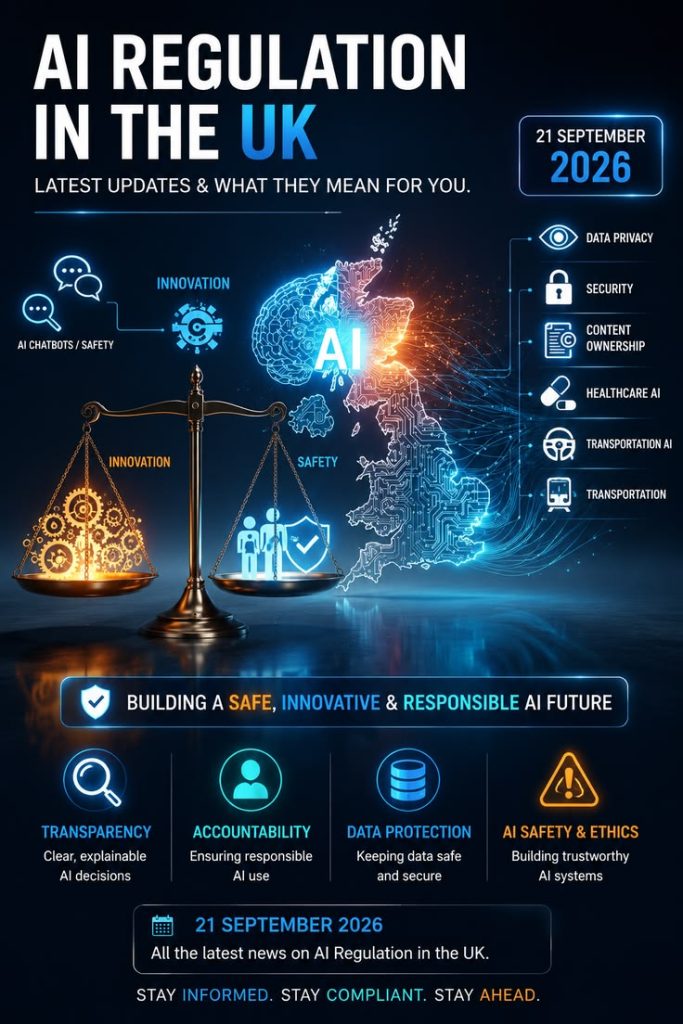
AI Governance in 2026: Balancing Innovation and Regulation

AI Governance in 2026: Balancing Innovation and Regulation Artificial intelligence has rapidly evolved from an emerging technology into a critical business and societal tool. From automating business operations and improving healthcare outcomes to powering advanced research and enhancing customer experiences, AI is transforming nearly every industry. However, as AI systems become more powerful and influential, concerns surrounding transparency, accountability, privacy, bias, and security continue to grow. In 2026, AI governance has become one of the most important topics in the technology landscape. Governments, regulators, technology companies, and enterprises are working together to create frameworks that encourage innovation while ensuring AI is developed and deployed responsibly. The challenge is clear: how can society unlock the enormous benefits of AI without exposing individuals, businesses, and governments to unnecessary risks? The answer lies in effective AI governance. What Is AI Governance? AI governance refers to the policies, standards, regulations, and organizational practices used to guide the development, deployment, and management of artificial intelligence systems. Its primary objectives include: Ensuring AI systems operate ethically Promoting transparency and accountability Protecting user privacy Reducing bias and discrimination Strengthening cybersecurity Maintaining regulatory compliance Building public trust Unlike traditional software governance, AI governance must address unique challenges associated with machine learning, generative AI, autonomous decision-making, and continuously evolving algorithms. As organizations increasingly rely on AI-powered systems for critical decisions, governance frameworks are becoming essential components of modern business operations. Why AI Governance Matters More Than Ever The rapid adoption of generative AI and autonomous systems has dramatically increased the importance of governance. Organizations are now using AI for: Financial decision-making Hiring and recruitment Healthcare diagnostics Customer service automation Cybersecurity monitoring Supply chain optimization Legal research Business intelligence While these applications offer significant benefits, they also introduce potential risks. An AI system that generates inaccurate information can damage a company’s reputation. A biased algorithm can lead to discrimination claims. Weak AI security controls can expose sensitive data to cybercriminals. Without proper governance, AI can become a liability instead of a competitive advantage. Businesses are realizing that governance is not merely about compliance—it is about creating sustainable and trustworthy AI ecosystems. The Global Push for AI Regulation One of the biggest developments in 2026 is the increasing focus on AI regulation worldwide. Governments recognize that artificial intelligence is reshaping economies, national security, labor markets, and public services. As a result, regulators are introducing policies designed to manage AI risks while encouraging innovation. Several key areas are receiving attention: Risk-Based AI Classification Many governments are adopting risk-based approaches to AI oversight. Under this model, AI applications are categorized according to their potential impact. Examples include: Low-Risk Systems Chatbots Recommendation engines Productivity assistants Medium-Risk Systems Customer service automation Business analytics platforms Educational AI tools High-Risk Systems Medical diagnosis systems Financial approval algorithms Law enforcement technologies Critical infrastructure management systems The higher the risk level, the stricter the governance requirements become. This approach helps regulators avoid unnecessary restrictions on innovation while focusing oversight where it is needed most. Transparency Requirements AI transparency has become a major regulatory priority. Users increasingly want to know: How AI systems make decisions What data is being used Whether content was AI-generated How organizations monitor AI outputs Transparency requirements are encouraging businesses to provide clearer explanations of AI-driven decisions and maintain detailed documentation of their AI models. Data Protection and Privacy AI systems require large amounts of data to function effectively. This has raised concerns about: User consent Data ownership Personal information protection Cross-border data transfers Governments are introducing stricter data governance rules to ensure AI systems respect privacy rights while still enabling innovation. Organizations that fail to comply may face significant financial penalties and reputational damage. Enterprise AI Governance Becomes a Strategic Priority In 2026, AI governance is no longer just the responsibility of compliance departments. It has become a boardroom issue. Executives recognize that poorly managed AI initiatives can create legal, financial, and operational risks. As a result, organizations are establishing dedicated AI governance programs that include: AI ethics committees Risk management teams Compliance officers Data governance specialists Cybersecurity professionals Legal advisors These teams work together to ensure AI projects align with business objectives, regulatory requirements, and ethical standards. Companies that implement robust governance frameworks are often able to deploy AI more confidently and at greater scale. Ethical AI Takes Center Stage Ethical AI has become one of the defining themes of AI governance. Businesses understand that compliance alone is not enough. Users expect AI systems to operate fairly, responsibly, and transparently. Ethical AI initiatives focus on several key principles. Fairness AI systems should treat all individuals fairly and avoid discriminatory outcomes. Organizations are investing in bias detection tools and model auditing processes to identify and mitigate unfair decision-making. Accountability There must be clear responsibility for AI-generated outcomes. Businesses are establishing governance structures that define who is accountable when AI systems make errors or produce harmful results. Human Oversight Despite significant advances in automation, human involvement remains critical. Many organizations require human review for high-impact decisions involving: Employment Healthcare Financial services Legal matters This ensures AI supports decision-making rather than replacing human judgment entirely. Transparency Users should understand when they are interacting with AI systems and how important decisions are made. Transparent AI helps build trust and reduces concerns about hidden algorithms influencing outcomes. The Rise of AI Audits Just as financial audits help ensure accountability in business operations, AI audits are becoming increasingly common. AI audits evaluate: Model performance Bias levels Security controls Regulatory compliance Data quality Decision-making processes Organizations are conducting regular assessments to verify that AI systems continue operating as intended. Independent third-party audits are also gaining popularity because they provide additional credibility and transparency. In many industries, AI auditing is becoming a standard governance practice. Managing Generative AI Risks Generative AI remains one of the most transformative technologies of the decade. Businesses are using AI tools to create: Marketing content Software code Product designs Business reports Customer communications Educational materials However, generative AI introduces unique governance challenges. Hallucinations AI models can
Artificial Intelligence, Business Analytics, enterprice

The Impact of Agentic AI on Enterprise Productivity

The Impact of Agentic AI on Enterprise Productivity Artificial Intelligence has evolved rapidly over the past few years. What started as chatbots, recommendation engines, and predictive analytics has now entered a new phase known as Agentic AI. Unlike traditional AI systems that primarily respond to commands or analyze data, Agentic AI can independently plan, execute, monitor, and optimize tasks to achieve specific goals. As organizations continue their digital transformation journeys, Agentic AI is emerging as one of the most influential technologies reshaping enterprise productivity. Businesses are no longer looking at AI merely as a tool that assists employees; instead, they are deploying AI agents capable of acting as digital workers that can handle complex workflows with minimal human intervention. From customer service and IT operations to finance, marketing, and supply chain management, Agentic AI is helping enterprises operate more efficiently, reduce costs, improve decision-making, and unlock new levels of productivity. As we move through 2026, companies across industries are recognizing that the future of work will involve close collaboration between humans and autonomous AI agents. Understanding Agentic AI Agentic AI refers to artificial intelligence systems that possess the ability to act autonomously toward achieving predefined objectives. Unlike conventional AI applications that require constant prompts or supervision, Agentic AI can make decisions, initiate actions, adapt to changing environments, and complete multi-step tasks independently. For example, a traditional AI chatbot may answer customer questions based on available information. An Agentic AI system, however, can handle an entire customer support process—from receiving the request and identifying the issue to processing refunds, updating records, and following up with customers. The key capabilities that distinguish Agentic AI include: Goal-oriented decision-making Autonomous workflow execution Continuous learning and adaptation Multi-step task management Context awareness Integration with enterprise systems Proactive problem-solving These characteristics enable Agentic AI to function more like a virtual employee rather than a simple software application. Why Enterprises Are Adopting Agentic AI Organizations are under increasing pressure to improve efficiency, reduce operational expenses, and maintain competitiveness in rapidly changing markets. Traditional automation solutions can handle repetitive tasks, but they often struggle with complex processes that require decision-making and adaptability. Agentic AI fills this gap by bringing intelligence and autonomy to business operations. Several factors are driving enterprise adoption: Growing Operational Complexity Modern businesses manage enormous volumes of data, processes, and interactions. Human teams often struggle to keep up with increasing complexity. Agentic AI can process information at scale and coordinate multiple tasks simultaneously. Demand for Faster Decision-Making Markets move quickly, and delays can be costly. AI agents analyze data in real time and provide immediate actions or recommendations, helping organizations respond more rapidly to opportunities and challenges. Workforce Productivity Challenges Many industries continue to face talent shortages and increasing workloads. Agentic AI helps organizations maximize productivity without significantly expanding headcount. Cost Optimization Businesses are continuously seeking ways to reduce expenses. AI agents can automate labor-intensive processes, reducing operational costs while maintaining service quality. Digital Transformation Initiatives Organizations investing in cloud computing, analytics, and automation increasingly view Agentic AI as a natural extension of their digital transformation strategies. Workflow Automation Beyond Traditional RPA Robotic Process Automation (RPA) has been used for years to automate repetitive tasks. However, RPA systems generally follow predefined rules and struggle when unexpected situations arise. Agentic AI enhances automation by introducing intelligence into workflows. For example, instead of simply processing invoices according to fixed rules, an AI agent can: Identify anomalies Communicate with vendors Request missing information Resolve exceptions Complete approvals automatically This significantly reduces manual intervention and accelerates business processes. Enhanced Employee Productivity One of the most important benefits of Agentic AI is its ability to augment human workers. Employees often spend significant time on administrative tasks such as: Data entry Scheduling Reporting Documentation Research Information retrieval AI agents can handle these responsibilities, allowing employees to focus on strategic, creative, and high-value work. Rather than replacing workers, Agentic AI often acts as a productivity multiplier, enabling teams to accomplish more with the same resources. Faster Decision-Making Data-driven decision-making has become essential for modern enterprises. However, analyzing large datasets can be time-consuming. Agentic AI systems continuously monitor: Market trends Customer behavior Operational performance Financial metrics Supply chain activities They can identify patterns, generate insights, and recommend actions in real time. Executives and managers benefit from faster access to actionable intelligence, improving organizational agility and responsiveness. Improved Customer Service Operations Customer experience has become a major competitive differentiator. Agentic AI is transforming customer support by enabling intelligent automation. AI agents can: Resolve support tickets Handle account updates Process refunds Schedule appointments Escalate complex issues Follow up with customers Because these systems operate around the clock, businesses can provide faster and more consistent service while reducing support costs. Knowledge Management and Information Access Large enterprises often struggle with fragmented information spread across multiple systems. Employees may spend considerable time searching for documents, policies, procedures, and data. Agentic AI can act as an intelligent knowledge assistant that: Retrieves relevant information Summarizes documents Generates reports Provides recommendations Answers internal queries This improves productivity by reducing time spent searching for information. Supply Chain Optimization Supply chain management involves numerous interconnected activities, making it an ideal environment for Agentic AI deployment. AI agents can: Monitor inventory levels Predict demand fluctuations Optimize procurement Coordinate logistics Identify supply chain risks Recommend corrective actions These capabilities help organizations improve efficiency while minimizing disruptions. Financial Operations Efficiency Finance departments often deal with repetitive and time-consuming processes. Agentic AI can streamline activities such as: Invoice processing Expense management Budget forecasting Financial reporting Compliance monitoring Fraud detection As a result, finance teams can focus more on strategic planning and business growth initiatives. IT Operations and Infrastructure Management Enterprise IT environments continue to grow in complexity. Agentic AI is increasingly being used to manage infrastructure and support operations. AI agents can: Detect system anomalies Monitor performance Resolve incidents Apply security updates Allocate resources Predict failures This proactive approach improves system reliability while reducing operational workloads. Marketing and Sales Productivity Marketing and sales teams are

Artificial Intelligence, Business Intelligence, Data Analytics

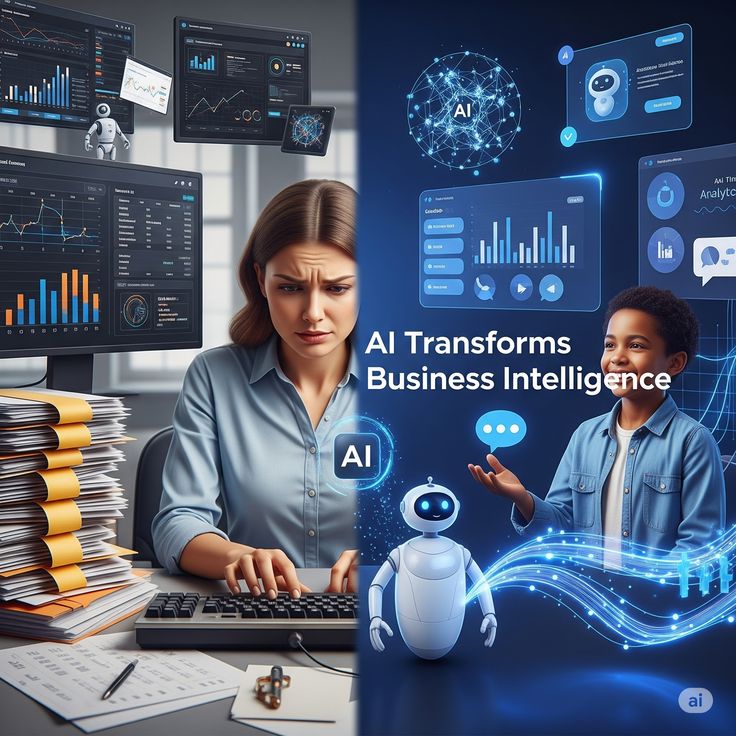
How AI Is Revolutionizing Business Intelligence and Analytics

Introduction In today’s digital economy, businesses generate massive amounts of data every second. From customer interactions and sales transactions to website activity and operational metrics, organizations have access to more information than ever before. However, collecting data alone is not enough. The real challenge lies in transforming that data into actionable insights that drive better business decisions. This is where Artificial Intelligence (AI) is changing the landscape of Business Intelligence (BI) and analytics. Traditional BI systems helped organizations analyze historical data and create reports. AI-powered BI takes this a step further by uncovering hidden patterns, predicting future outcomes, automating analysis, and providing real-time recommendations. As companies strive to remain competitive in rapidly changing markets, AI-driven business intelligence is becoming a critical tool for growth, efficiency, and innovation. What Is Business Intelligence? Business Intelligence refers to the technologies, processes, and strategies used to collect, analyze, and visualize business data. The primary goal of BI is to help organizations make informed decisions based on accurate information. Traditional BI solutions typically focus on: Data collection and storage Reporting and dashboards Performance monitoring Historical data analysis Trend identification While these capabilities remain valuable, modern businesses require deeper insights and faster decision-making. AI addresses these needs by enhancing the capabilities of conventional BI platforms. The Growing Role of AI in Business Intelligence Artificial Intelligence enables machines to analyze data, learn from patterns, and make predictions with minimal human intervention. When integrated with business intelligence systems, AI helps organizations move from descriptive analytics to predictive and prescriptive analytics. Instead of simply answering questions like: “What happened?” AI-powered systems can answer: “Why did it happen?” “What is likely to happen next?” “What actions should we take?” This shift allows businesses to become more proactive rather than reactive. Automated Data Analysis One of the biggest advantages of AI in business intelligence is automation. Traditional data analysis often requires teams of analysts to collect data, clean datasets, create reports, and identify trends manually. This process can take hours or even days. AI-powered analytics platforms can automate many of these tasks by: Cleaning and organizing data Detecting anomalies Identifying trends Generating reports Highlighting important insights Automation reduces human error and enables organizations to analyze larger volumes of data much faster. For example, a retail company can automatically monitor thousands of products and instantly identify unusual changes in sales patterns without requiring manual investigation. Predictive Analytics: Looking Into the Future Predictive analytics is one of the most impactful applications of AI in business intelligence. Using historical data and machine learning algorithms, AI can forecast future outcomes with impressive accuracy. Businesses use predictive analytics to: Forecast sales demand Predict customer behavior Estimate inventory requirements Identify market trends Reduce operational risks For instance, an e-commerce company can predict which products will experience increased demand during upcoming seasons and adjust inventory levels accordingly. This proactive approach helps organizations improve efficiency and reduce costs. Real-Time Decision Making Modern businesses operate in fast-moving environments where decisions often need to be made instantly. Traditional BI systems typically rely on periodic reports, which may already be outdated by the time they are reviewed. AI-driven analytics platforms continuously process incoming data and provide real-time insights. Benefits include: Faster response to market changes Improved customer service Immediate detection of operational issues Better financial monitoring Enhanced risk management For example, financial institutions can detect suspicious transactions in real time and prevent fraudulent activities before significant damage occurs. Enhanced Data Visualization Data visualization is a core component of business intelligence. AI is making dashboards smarter and easier to understand by automatically identifying key insights and presenting them in visually meaningful ways. Advanced BI tools can: Highlight critical trends automatically Generate dynamic charts and graphs Explain data patterns in plain language Customize dashboards for different users Instead of manually searching through hundreds of charts, decision-makers receive instant summaries of the most important business developments. This significantly improves productivity and decision quality. Natural Language Queries One of the most user-friendly innovations in AI-powered business intelligence is Natural Language Processing (NLP). NLP allows users to interact with BI systems using everyday language. Rather than writing complex database queries, users can simply ask questions such as: “What were our top-selling products last month?” “Why did sales decline in the northern region?” “Which customer segment generated the highest revenue?” The system then analyzes data and provides answers instantly. This capability makes data analysis accessible to employees without technical expertise, promoting a stronger data-driven culture throughout the organization. Improving Customer Insights Understanding customer behavior is essential for business success. AI-powered analytics helps organizations gain deeper insights into customer preferences, buying patterns, and engagement trends. Businesses can analyze: Purchase history Website interactions Social media activity Customer feedback Support requests By combining these data sources, AI creates a comprehensive customer profile that enables personalized experiences. Organizations can use these insights to: Improve marketing campaigns Increase customer retention Enhance product recommendations Deliver personalized services As a result, businesses can strengthen customer relationships and drive higher revenue. Fraud Detection and Risk Management Many industries face increasing challenges related to fraud and risk. AI significantly improves risk management by continuously monitoring transactions and identifying suspicious behavior. Machine learning algorithms can detect unusual patterns that may indicate: Financial fraud Cybersecurity threats Compliance violations Operational risks Unlike traditional rule-based systems, AI continuously learns and adapts to emerging threats. This capability helps organizations reduce financial losses and improve security. Supply Chain Optimization Supply chain management generates enormous amounts of operational data. AI-powered business intelligence solutions help companies optimize supply chains through advanced analytics and forecasting. Key benefits include: Demand prediction Inventory optimization Supplier performance monitoring Logistics planning Cost reduction For example, manufacturers can predict supply shortages before they occur and take preventive action to avoid production delays. This leads to greater efficiency and improved customer satisfaction. Personalized Business Strategies Every business operates under unique conditions and objectives. AI enables organizations to develop personalized strategies based on their specific data and performance metrics. Instead of relying solely on industry averages, companies can make decisions based on:

Artificial Intelligence, cybersecurity, Educational Technology, Technology

The Rise of Personal AI Assistants: Beyond Chatbots

The Rise of Personal AI Assistants: Beyond Chatbots Artificial Intelligence has rapidly evolved over the last few years, moving far beyond simple chatbots that could only answer basic questions or follow scripted commands. In 2026, personal AI assistants are becoming smarter, more personalized, and significantly more capable than ever before. They are no longer limited to responding to text prompts; instead, they are transforming into intelligent digital companions that can understand user preferences, manage tasks, automate workflows, and even make recommendations based on individual needs. From helping professionals manage their schedules to assisting students with learning and supporting businesses with daily operations, personal AI assistants are becoming an integral part of modern life. As advancements in machine learning, natural language processing, and generative AI continue to accelerate, these assistants are reshaping the way people interact with technology. Understanding the Evolution of AI Assistants The first generation of AI assistants focused primarily on basic voice commands and simple information retrieval. Users could ask for weather updates, set reminders, or search the internet. While these features were useful, the assistants often struggled with context, personalization, and complex requests. Today’s AI assistants are vastly different. They can understand conversations, remember preferences, learn from user interactions, and provide more meaningful responses. Modern AI systems are capable of handling multiple tasks simultaneously, analyzing data, generating content, and assisting with decision-making. This evolution has transformed AI assistants from reactive tools into proactive digital partners that can anticipate user needs and provide relevant support before being asked. What Makes Modern AI Assistants Different? The biggest difference between traditional chatbots and modern AI assistants is personalization. Instead of treating every interaction as a separate conversation, advanced AI assistants build contextual understanding over time. They can remember preferred writing styles, frequently used applications, work schedules, and personal interests. This enables them to deliver responses and recommendations that feel more relevant and tailored to individual users. For example, an AI assistant helping a marketing professional might automatically suggest content ideas based on industry trends, schedule social media posts, and summarize important emails. Meanwhile, a student using the same assistant may receive personalized study plans, learning resources, and exam preparation support. The ability to adapt to individual needs is making AI assistants significantly more valuable across different use cases. The Shift from Chat to Action One of the most important developments in personal AI technology is the transition from conversation-based assistance to action-based assistance. Modern AI assistants are increasingly capable of performing tasks instead of merely providing instructions. Rather than explaining how to complete a process, they can often execute portions of the workflow directly. Examples include: Scheduling meetings automatically Managing emails Organizing files and documents Generating reports Creating presentations Drafting content Tracking project deadlines Managing customer interactions This shift allows users to focus on higher-value work while routine tasks are handled by AI systems. As integration with software platforms continues to improve, AI assistants are becoming capable of interacting with multiple applications simultaneously, creating seamless digital workflows. Personalized Productivity and Time Management Productivity is one of the areas where personal AI assistants are creating the greatest impact. Modern professionals often deal with information overload, endless notifications, and growing workloads. AI assistants help reduce this burden by organizing information and prioritizing tasks. Instead of manually reviewing hundreds of emails, users can receive AI-generated summaries highlighting only the most important messages. Meeting transcripts can be automatically generated and converted into actionable tasks. Calendar management can be optimized based on priorities and availability. These capabilities allow individuals to spend less time managing work and more time focusing on meaningful activities. As AI becomes more context-aware, productivity assistance will become increasingly proactive, helping users identify opportunities, risks, and deadlines before they become problems. AI Assistants in Education Education is another sector experiencing significant transformation through personal AI assistants. Students can now access personalized tutoring experiences that adapt to their learning pace and knowledge level. AI assistants can explain difficult concepts, generate practice questions, create study schedules, and provide instant feedback. Unlike traditional learning resources, AI-powered educational tools can adjust their teaching methods based on student performance. If a learner struggles with a specific topic, the assistant can provide additional explanations and targeted exercises. Teachers are also benefiting from AI technology. Administrative tasks such as grading, lesson planning, and content creation can be streamlined, allowing educators to spend more time supporting students. As educational AI systems continue to improve, personalized learning experiences are expected to become more accessible worldwide. The Role of AI Assistants in Business Businesses are increasingly deploying AI assistants to improve efficiency and reduce operational costs. Customer support teams use AI assistants to handle routine inquiries, allowing human agents to focus on more complex issues. Sales teams leverage AI to analyze customer behavior, generate leads, and personalize communication. Project managers benefit from AI-generated status reports, automated documentation, and workflow tracking. Human resources departments use AI assistants for recruitment support, employee onboarding, and internal communication. The growing ability of AI systems to interact with enterprise software platforms is enabling organizations to automate processes that previously required significant human effort. As a result, businesses can improve productivity while maintaining a high level of service quality. The Emergence of AI Agents A major trend driving the future of personal AI assistants is the rise of AI agents. Unlike traditional assistants that respond only when prompted, AI agents can independently perform tasks, monitor objectives, and take action within defined boundaries. For example, an AI agent might: Monitor market trends Track project progress Analyze customer feedback Generate reports automatically Schedule follow-up actions Coordinate multiple software tools These capabilities represent a significant step toward autonomous digital assistants capable of managing entire workflows. While human oversight remains essential, AI agents are increasingly functioning as virtual team members rather than simple software tools. Privacy and Data Security Challenges As AI assistants become more personalized, concerns regarding privacy and data security are becoming increasingly important. Personalized experiences require access to user information, including schedules, preferences, communication history, and behavioral patterns.

Artificial Intelligence, Business Analytics, Business Intelligence, Data Privacy & Security, Digital Transformation

AI Agents in 2026: How Autonomous Systems Are Transforming Business Operations

Introduction Artificial Intelligence has moved far beyond simple chatbots and recommendation engines. In 2026, AI agents are becoming one of the most influential technologies shaping modern businesses. These intelligent systems are capable of understanding goals, making decisions, performing tasks, and even coordinating with other software tools with minimal human intervention. What once required teams of employees and multiple software platforms can now be managed by autonomous AI systems that work continuously and efficiently. The rise of AI agents marks a significant shift in how organizations approach productivity, operations, and decision-making. Rather than serving only as assistants, AI systems are increasingly acting as digital workers that can execute complex workflows, analyze large volumes of information, and adapt to changing business conditions in real time. As companies continue to invest in automation and digital transformation, AI agents are emerging as a critical component of business strategy. Their ability to reduce operational costs, improve efficiency, and accelerate innovation is changing the way organizations operate across industries. What Are AI Agents? AI agents are autonomous software systems designed to perform tasks on behalf of users or organizations. Unlike traditional automation tools that follow predefined rules, AI agents can understand context, learn from interactions, make decisions, and take actions to achieve specific objectives. These systems combine advanced artificial intelligence technologies such as large language models, machine learning, natural language processing, and workflow automation. They can interact with applications, access databases, communicate with users, and execute tasks without requiring constant human supervision. For example, an AI agent can receive a request to prepare a market research report, gather information from multiple sources, analyze trends, generate insights, create a presentation, and deliver the final report automatically. Instead of performing one isolated function, it manages an entire process from start to finish. This capability is what makes AI agents fundamentally different from conventional software automation solutions. Why AI Agents Are Gaining Momentum in 2026 Several factors are contributing to the rapid adoption of AI agents across industries. Businesses are generating more data than ever before, creating a growing need for systems that can process and interpret information quickly. At the same time, organizations face increasing pressure to improve efficiency while reducing operational costs. Advancements in generative AI and large language models have significantly improved the reasoning and decision-making abilities of AI systems. Modern AI agents can understand complex instructions, maintain context across multiple tasks, and interact naturally with both humans and software applications. Cloud computing infrastructure has also made it easier for businesses to deploy and scale AI-powered solutions. Organizations no longer need extensive hardware investments to access advanced AI capabilities. The combination of these technological developments has created an environment where AI agents can deliver measurable business value across a wide range of functions. How AI Agents Work At their core, AI agents operate through a cycle of perception, reasoning, action, and learning. First, the agent gathers information from its environment. This may include user requests, business data, emails, documents, databases, or external sources. Next, the system analyzes the information and determines the best course of action based on predefined objectives. Advanced reasoning models help the agent evaluate different possibilities and choose appropriate responses. Once a decision is made, the AI agent executes the required actions. This may involve sending emails, updating records, generating reports, scheduling meetings, processing transactions, or interacting with other software systems. Finally, the agent learns from outcomes and feedback to improve future performance. Over time, this continuous learning process helps the system become more effective and accurate. This ability to independently manage workflows makes AI agents particularly valuable in complex business environments. Transforming Customer Service Operations Customer service is one of the areas experiencing the most significant impact from AI agents. Traditional customer support often involves long wait times, repetitive inquiries, and high operational costs. AI agents are helping organizations overcome these challenges by providing instant, personalized, and scalable support. Modern AI customer service agents can understand customer questions, access relevant information, resolve issues, process requests, and escalate complex cases when necessary. They operate around the clock, ensuring customers receive assistance whenever needed. Beyond answering questions, AI agents can proactively identify potential issues, recommend solutions, and follow up with customers to ensure satisfaction. Businesses using AI-powered customer support systems are reporting faster response times, improved customer experiences, and reduced service costs. Revolutionizing Human Resources Management Human Resources departments are increasingly adopting AI agents to streamline administrative tasks and improve employee experiences. Recruitment is one area where these systems are delivering significant benefits. AI agents can screen resumes, schedule interviews, communicate with candidates, and identify suitable applicants based on specific job requirements. Employee onboarding processes are also becoming more efficient. AI agents can guide new hires through documentation, answer common questions, provide training materials, and ensure compliance requirements are completed. In addition, AI systems can assist with performance evaluations, workforce planning, employee engagement initiatives, and professional development recommendations. By automating routine administrative work, HR teams can focus more on strategic initiatives and employee relationships. Enhancing Sales and Marketing Performance Sales and marketing teams are using AI agents to improve customer engagement, generate leads, and optimize campaigns. AI-powered sales agents can identify potential customers, analyze purchasing behavior, personalize outreach efforts, and recommend next steps for sales representatives. These capabilities help organizations improve conversion rates and accelerate revenue growth. Marketing teams benefit from AI agents that can create content, monitor campaign performance, analyze audience behavior, and adjust strategies based on real-time insights. For example, an AI agent may automatically identify underperforming advertisements, suggest improvements, allocate budgets more effectively, and generate detailed performance reports. This level of automation allows businesses to respond more quickly to market changes and customer preferences. Improving Financial Operations Financial management is another area where AI agents are creating substantial value. Organizations handle large volumes of financial data every day, making accuracy and efficiency critical. AI agents can automate invoice processing, expense management, budgeting, forecasting, and financial reporting. These systems can identify unusual transactions, detect potential fraud, and alert financial teams to

Artificial Intelligence, Data Privacy & Security

The Rise of Private AI: Why Businesses Want More Control Over Their Data

The Rise of Private AI: Why Businesses Want More Control Over Their Data Artificial Intelligence has become one of the most transformative technologies of the modern business era. From automating routine processes and generating content to analyzing massive datasets and enhancing customer experiences, AI is helping organizations operate more efficiently than ever before. However, as AI adoption accelerates, a new concern has emerged alongside the excitement: data privacy. Businesses today generate and store enormous volumes of sensitive information. Customer records, financial data, intellectual property, strategic plans, employee information, and proprietary research are among the most valuable assets an organization possesses. While public AI platforms offer impressive capabilities, many companies are becoming increasingly cautious about how their data is processed, stored, and used. This growing concern has led to the rise of Private AI, an approach that allows organizations to harness the power of artificial intelligence while maintaining greater control over their data. Rather than sending sensitive information to public AI services, businesses are exploring private AI environments that prioritize security, compliance, and ownership. As digital transformation continues to reshape industries, Private AI is quickly becoming a critical component of enterprise technology strategies. Understanding Private AI Private AI refers to artificial intelligence systems that operate within a controlled environment owned or managed by an organization. These systems can be deployed on-premises, within private cloud infrastructure, or through dedicated environments that ensure data remains isolated from public systems. Unlike public AI platforms that often rely on shared infrastructure and external data processing, Private AI enables businesses to retain control over where their information resides, who can access it, and how it is used. The objective is simple: gain the benefits of advanced AI capabilities without exposing sensitive business data to unnecessary risks. Private AI solutions can include: Self-hosted large language models Private generative AI assistants Secure machine learning environments Enterprise AI platforms with dedicated infrastructure Industry-specific AI systems designed for regulated sectors This model is becoming increasingly attractive as organizations seek to balance innovation with security and regulatory compliance. Why Businesses Are Prioritizing Data Control Data has become one of the most valuable assets in the modern economy. As AI systems require access to large datasets for analysis and decision-making, organizations want assurance that their information remains protected. Several factors are driving the shift toward Private AI. Protecting Sensitive Information Many businesses handle confidential data that cannot be shared outside approved environments. Financial institutions manage customer transactions, healthcare providers process medical records, and technology companies store proprietary intellectual property. Using public AI systems may raise concerns about data exposure, accidental leaks, or unauthorized access. Private AI allows organizations to keep critical information within secure boundaries. For industries where trust is essential, maintaining complete control over sensitive data is often non-negotiable. Meeting Regulatory Requirements Governments and regulatory bodies worldwide are introducing stricter data protection laws. Regulations such as GDPR, industry-specific compliance frameworks, and national privacy laws require organizations to demonstrate responsible data handling practices. Businesses operating across multiple regions face increasing pressure to comply with diverse regulatory requirements. Private AI environments provide greater transparency and control, helping organizations meet compliance obligations more effectively. By knowing exactly where data is stored and processed, businesses can reduce regulatory risks and avoid costly penalties. Safeguarding Intellectual Property For many organizations, proprietary information represents a significant competitive advantage. Product designs, research findings, source code, business strategies, and internal documentation are assets that businesses cannot afford to expose. As generative AI tools become more integrated into daily workflows, concerns have emerged about how submitted data may be used by external systems. Private AI offers a solution by ensuring sensitive business knowledge remains within the organization’s own ecosystem. This level of protection is particularly important for industries driven by innovation and intellectual property. The Growing Trust Challenge in AI Despite the remarkable capabilities of AI, trust remains one of the biggest barriers to adoption. Business leaders often ask critical questions: Who owns the data used by the AI system? Where is the information stored? Can external parties access company data? How is the data protected? What happens if a security breach occurs? These concerns become even more significant when AI systems are used for mission-critical operations. Private AI helps address these trust issues by providing greater visibility and governance over AI operations. Organizations can establish clear policies regarding data access, model training, monitoring, and security controls. When employees and customers trust how AI is being implemented, adoption tends to increase significantly. How Private AI Improves Security Cybersecurity threats continue to evolve at an alarming pace. Data breaches can lead to financial losses, reputational damage, legal consequences, and operational disruptions. Private AI strengthens security through several mechanisms. Controlled Access Organizations can define who has access to AI systems and what information can be processed. Role-based permissions reduce the risk of unauthorized access and internal misuse. Enhanced Monitoring Private environments enable businesses to monitor AI activity more closely. Security teams can track interactions, detect anomalies, and respond quickly to potential threats. Reduced Data Exposure Keeping data within private infrastructure minimizes the need to transmit sensitive information across external networks, reducing potential attack surfaces. Custom Security Policies Businesses can implement security measures aligned with their specific needs, including encryption, authentication, network isolation, and auditing capabilities. These controls provide a level of protection that many organizations consider essential for enterprise-scale AI adoption. The Role of Private AI in Highly Regulated Industries Certain industries face particularly strict requirements regarding privacy and data protection. Healthcare Healthcare organizations manage highly sensitive patient information. AI can assist with diagnostics, patient engagement, medical research, and operational efficiency, but privacy concerns remain paramount. Private AI allows healthcare providers to leverage AI while maintaining compliance with healthcare regulations and safeguarding patient trust. Financial Services Banks and financial institutions process vast amounts of confidential customer data. Fraud detection, risk analysis, and customer support increasingly rely on AI technologies. Private AI helps financial organizations maintain strict security standards while improving operational performance. Government and Public Sector Government agencies often handle classified

Artificial Intelligence, Business Intelligence

AI Agents in the Workplace: From Assistants to Autonomous Decision Makers

AI Agents in the Workplace: From Assistants to Autonomous Decision Makers Artificial Intelligence has already transformed the way businesses operate, but a new generation of AI technology is pushing workplace innovation even further. While most people are familiar with AI assistants that answer questions, schedule meetings, or help draft emails, today’s AI agents are becoming capable of much more. They can analyze information, make decisions, execute tasks, and continuously learn from outcomes with minimal human intervention. The shift from AI assistants to autonomous AI agents represents one of the most significant technological developments of the decade. Organizations across industries are exploring how these intelligent systems can streamline operations, improve customer experiences, and increase efficiency while reducing operational costs. As businesses continue their digital transformation journeys, AI agents are quickly becoming valuable team members rather than just software tools. Understanding how AI agents work, what benefits they offer, and the challenges they present is essential for organizations looking to remain competitive in an increasingly AI-driven world. Understanding AI Agents Traditional AI assistants are designed to respond to user requests. They wait for instructions, process queries, and provide outputs based on predefined interactions. Examples include virtual assistants that answer customer questions, generate content, or help employees find information. AI agents, however, take things a step further. Instead of simply responding to commands, they can independently plan, execute, monitor, and optimize tasks to achieve specific objectives. These systems are goal-oriented and capable of making decisions based on real-time data and changing circumstances. An AI agent typically combines several capabilities: Natural language understanding Data analysis and interpretation Decision-making logic Task execution Continuous learning and adaptation Integration with business systems and applications This combination allows AI agents to function more like digital coworkers than traditional software applications. The Evolution of Workplace AI The journey of workplace AI has evolved through several distinct phases. Initially, businesses used rule-based automation systems to handle repetitive tasks. These systems followed fixed instructions and could not adapt to unexpected situations. The next phase introduced AI-powered assistants capable of understanding human language and providing intelligent responses. These tools improved productivity by helping employees access information more efficiently. Today, AI agents represent the latest stage of this evolution. Rather than simply assisting users, they can independently complete complex workflows that previously required human involvement. This transition is changing how organizations think about productivity, workforce management, and operational efficiency. Businesses are moving from asking, “How can AI help employees?” to asking, “Which tasks can AI complete on its own?” How AI Agents Are Transforming the Workplace AI agents are being deployed across various departments and business functions. Their ability to operate autonomously enables organizations to automate increasingly sophisticated processes. Customer Service and Support Customer service is one of the areas experiencing the greatest impact from AI agents. Traditional chatbots could answer basic questions, but modern AI agents can handle entire customer interactions from start to finish. They can: Understand customer intent Access customer records Resolve issues automatically Process refunds Escalate complex cases when necessary Follow up after resolution This reduces response times while improving customer satisfaction and lowering operational costs. Human Resources HR departments are increasingly using AI agents to manage administrative tasks and improve employee experiences. AI agents can: Screen resumes Schedule interviews Answer employee questions Assist with onboarding Track compliance requirements Generate HR reports By automating routine activities, HR professionals can focus on strategic initiatives such as talent development and employee engagement. Sales and Marketing Sales and marketing teams generate large amounts of data daily. AI agents help transform this data into actionable insights. These systems can: Identify sales opportunities Qualify leads Personalize marketing campaigns Monitor customer behavior Predict purchasing trends Optimize advertising strategies As a result, businesses can improve conversion rates and create more targeted customer experiences. Finance and Accounting Financial operations require accuracy, speed, and compliance. AI agents are becoming valuable assets in managing these responsibilities. Applications include: Invoice processing Expense management Financial forecasting Fraud detection Budget analysis Regulatory compliance monitoring By automating these tasks, organizations reduce errors and improve financial decision-making. IT Operations and Cybersecurity Modern IT environments are highly complex, making them ideal candidates for AI-driven automation. AI agents can: Monitor networks continuously Detect anomalies Respond to security threats Troubleshoot system issues Manage software updates Optimize infrastructure performance This proactive approach helps organizations strengthen security and minimize downtime. The Rise of Autonomous Decision-Making One of the most transformative aspects of AI agents is their growing ability to make decisions independently. Autonomous decision-making does not mean replacing human judgment entirely. Instead, AI agents handle routine and data-intensive decisions while humans maintain oversight of strategic and high-risk choices. For example, an AI agent managing inventory can automatically reorder products when stock levels fall below predefined thresholds. It can analyze sales trends, supplier performance, and seasonal demand to determine the optimal purchasing strategy without requiring constant human intervention. Similarly, in customer service environments, AI agents can decide the best course of action for resolving common issues based on historical outcomes and customer preferences. As AI systems become more sophisticated, their decision-making capabilities will continue expanding across industries. Benefits of AI Agents in the Workplace Organizations adopting AI agents are experiencing a wide range of benefits that extend beyond simple automation. Increased Productivity AI agents work around the clock without breaks, allowing businesses to complete tasks faster and more consistently. Employees spend less time on repetitive work and more time on high-value activities. Improved Accuracy Human errors can lead to costly mistakes, especially in areas such as finance, compliance, and data management. AI agents help reduce errors by following standardized processes and analyzing data systematically. Faster Decision-Making Businesses generate enormous volumes of data every day. AI agents can process this information in real time, enabling quicker and more informed decisions. Cost Reduction Automating routine tasks reduces labor costs and improves operational efficiency. Organizations can achieve more with existing resources while maintaining service quality. Enhanced Customer Experiences Customers increasingly expect instant responses and personalized interactions. AI agents can deliver consistent, high-quality

Artificial Intelligence, Business Intelligence, Digital Transformation, enterprise

Agentic AI: How Autonomous AI Agents Are Changing Business Workflows

Agentic AI: How Autonomous AI Agents Are Changing Business Workflows Artificial Intelligence has rapidly evolved from being a futuristic concept to becoming a critical component of modern business operations. Over the past few years, organizations have adopted AI-powered tools to automate repetitive tasks, improve customer experiences, and enhance decision-making. However, the latest advancement in this technological journey is Agentic AI—a new generation of AI systems capable of acting autonomously, making decisions, and completing complex workflows with minimal human intervention. Unlike traditional AI systems that require continuous prompts and instructions, Agentic AI can independently analyze situations, plan actions, execute tasks, and adapt based on outcomes. This shift represents one of the most significant developments in business technology, offering organizations unprecedented levels of efficiency, productivity, and scalability. As businesses face increasing competition and growing operational complexity, Agentic AI is emerging as a powerful solution capable of transforming how work gets done. From customer service and sales to software development and project management, autonomous AI agents are redefining business workflows across industries. In this article, we’ll explore what Agentic AI is, how it works, its business applications, benefits, challenges, and why it is poised to become a cornerstone of future enterprise operations. Understanding Agentic AI Agentic AI refers to artificial intelligence systems designed to operate as autonomous agents. These agents can perceive their environment, understand goals, create plans, make decisions, and take actions without requiring constant human supervision. Traditional AI tools generally perform specific tasks based on direct user input. For example, a chatbot may answer questions, or an AI image generator may create images based on prompts. Agentic AI goes several steps further. Instead of merely responding to commands, autonomous AI agents can: Understand objectives Break down complex tasks into smaller actions Gather necessary information Make decisions based on available data Execute workflows independently Learn from outcomes and adjust strategies This capability transforms AI from a passive assistant into an active digital worker capable of managing entire business processes. The Evolution from Traditional AI to Agentic AI The development of Agentic AI represents the next stage in the evolution of artificial intelligence. Traditional Automation Early automation systems followed predefined rules. They could execute repetitive tasks but lacked flexibility and intelligence. Examples include: Email automation Data entry automation Scheduled reporting systems Machine Learning Systems Machine learning introduced predictive capabilities. These systems could identify patterns and make recommendations based on data. Examples include: Recommendation engines Fraud detection systems Predictive analytics tools Generative AI Generative AI expanded AI capabilities by creating content such as text, images, code, and videos. Examples include: AI writing assistants Image generation platforms Coding assistants Agentic AI Agentic AI combines reasoning, planning, memory, and action capabilities. Instead of assisting users with individual tasks, autonomous agents can complete entire workflows from start to finish. This progression marks a fundamental shift from AI tools that simply respond to requests toward AI systems that actively pursue objectives. How Agentic AI Works To understand its business value, it’s important to know how Agentic AI functions. 1. Goal Understanding An AI agent begins by understanding the objective provided by the user or organization. For example: “Generate a market research report for the healthcare industry.” The agent interprets the request and identifies the required steps. 2. Planning The system creates a strategic plan to accomplish the objective. This may involve: Researching industry data Gathering competitor information Analyzing trends Creating visual reports Drafting conclusions 3. Execution The AI agent performs tasks independently using available tools and resources. It may: Search databases Access internal documents Analyze spreadsheets Generate reports Send notifications 4. Monitoring Throughout execution, the agent evaluates progress and adjusts actions when necessary. 5. Learning Advanced agents continuously improve performance by learning from previous experiences and outcomes. This combination of reasoning, planning, execution, and adaptation enables Agentic AI to handle increasingly sophisticated business processes. Why Businesses Are Embracing Agentic AI Organizations worldwide are investing heavily in Agentic AI because of its ability to improve operational efficiency while reducing costs. Several factors are driving adoption: Growing Data Volumes Businesses generate enormous amounts of data daily. Human teams often struggle to process and analyze this information efficiently. Agentic AI can monitor, analyze, and extract insights from large datasets in real time. Need for Faster Decision-Making Competitive markets require rapid responses. Autonomous agents can process information and make recommendations significantly faster than traditional workflows. Workforce Productivity Employees spend substantial time on repetitive administrative tasks. AI agents can automate these activities, allowing workers to focus on strategic and creative responsibilities. Cost Optimization Reducing manual effort leads to lower operational expenses while maintaining high levels of productivity. Business Applications of Agentic AI Agentic AI is transforming numerous departments across organizations. Customer Support Customer service is one of the most impactful areas for AI adoption. Autonomous agents can: Handle customer inquiries Resolve common issues Process refunds Escalate complex cases Provide 24/7 support This improves customer satisfaction while reducing support costs. Sales and Lead Generation Sales teams spend considerable time identifying prospects and nurturing leads. AI agents can: Research potential customers Qualify leads Schedule meetings Send follow-up emails Generate sales insights As a result, sales professionals can focus on closing deals rather than administrative work. Marketing Automation Marketing departments can leverage Agentic AI for: Content creation Campaign optimization Audience segmentation Competitor analysis Social media management AI agents continuously monitor performance and make adjustments to improve results. Human Resources HR teams are increasingly using AI agents to streamline recruitment and employee management. Applications include: Resume screening Candidate ranking Interview scheduling Employee onboarding Performance tracking This reduces hiring time and improves recruitment efficiency. Software Development Agentic AI is making a major impact in software engineering. AI agents can: Write code Detect bugs Conduct testing Generate documentation Monitor system performance Development teams benefit from faster release cycles and improved software quality. Finance and Accounting Financial departments use autonomous AI agents for: Invoice processing Expense tracking Financial forecasting Fraud detection Compliance monitoring These capabilities reduce errors and improve financial accuracy. Benefits of Agentic AI for Businesses Increased Productivity

Artificial Intelligence, Digital Transformation, Technology & Innovation

OpenAI vs Claude vs Gemini for Business Application

OpenAI vs. Claude vs. Gemini: The Ultimate Guide to Choosing the Best AI for Business (2026) The corporate landscape has completely moved past the “Should we use AI?” phase. Today, the defining question is: “Which AI ecosystem will power our business infrastructure?” Choosing an enterprise AI partner isn’t like picking a productivity app; it’s closer to selecting your cloud infrastructure or ERP system. The AI engine you integrate into your workflows will dictate how you process data, automate customer service, generate code, and scale operations. Three clear giants dominate the enterprise landscape: OpenAI, Anthropic (Claude), and Google (Gemini). Each has evolved distinct architectural strengths, compliance frameworks, and pricing models. This comprehensive guide cuts through the marketing hype to help you decide which model suite is the right fit for your business applications. 1. Executive Summary: The Core Philosophy of Each Giant To understand which AI fits your organization, you must first understand the core philosophical and architectural focus of the engineering teams behind them. +———————————————————————–+ | ENTERPRISE AI LANDSCAPE | +———————————–+———————————–+ | OPENAI | ANTHROPIC | | “The Raw Power & Agentic | “The Secure, Analytical | | Innovator” | Deep Thinker” | | Best for: Autonomous workflows, | Best for: Legal, compliance, | | raw reasoning, ecosystem size. | massive document analysis. | +———————————–+———————————–+ | v +——————————-+ | GOOGLE GEMINI | | “The Native Multimodal | | & Ecosystem Giant” | | Best for: Video processing, | | Workspace integration, scale.| +——————————-+ OpenAI: The Ecosystem Pioneer OpenAI remains the market benchmark. Its philosophy centers on raw cognitive power, agentic frameworks (models that can take action), and maintaining a massive developer ecosystem. If your business needs cutting-edge reasoning, complex tool usage, or a vast marketplace of pre-built integrations, OpenAI is the default starting point. Anthropic (Claude): The Safe Intellectual Founded by former OpenAI researchers concerned with safety, Anthropic treats AI alignment and data safety as a primary feature, not a secondary checkbox. Claude is designed to be highly articulate, resistant to jailbreaks, and exceptionally skilled at processing vast quantities of nuanced text without losing the plot. Google (Gemini): The Multimodal Infrastructure Giant Google took its time, but its Gemini ecosystem is a technical marvel built on a massive scale. Gemini’s core differentiators are native multimodality (trained on audio, video, code, and text simultaneously) and an unprecedented context window. If your business relies on Google Workspace, needs to process hours of video at once, or requires massive data throughput, Gemini is a formidable contender. 2. Technical Performance & Reasoning Capabilities When deploying AI into production, “reasoning” translates directly to accuracy, low hallucination rates, and the ability to follow complex logic (like financial auditing or code generation). Coding and Structural Logic OpenAI (GPT-4o / o1 series): Excel at complex logic and multi-step reasoning. OpenAI’s reasoning-focused models are built specifically to “think” before they respond, making them incredible for complex architecture planning and debugging. Claude (Claude 3.5 Sonnet): Claude 3.5 Sonnet has set a historic benchmark for software engineering tasks. It doesn’t just write code; it understands how code architectures interact, making it the preferred engine for enterprise software development and automated refactoring. Gemini (Gemini 1.5 Pro): Highly competent at coding, particularly when analyzing an entire, massive repository all at once due to its context window. However, for standalone, complex code logic, it occasionally falls just short of Claude’s precision. Nuance, Tone, and Content Generation Claude: The undisputed winner for human-like prose. It avoids the stereotypical, overly enthusiastic “AI voice” that OpenAI models often output. For marketing, complex PR drafts, legal briefs, and editorial work, Claude feels genuinely collaborative and highly professional. OpenAI: Fast and efficient, but tends to produce text that requires heavier human editing to strip out corporate buzzwords and artificial transitions. Gemini: Excellent for structured reports, translations, and summaries, leaning toward a clean, functional, and highly informative tone. 3. The Battle of the Context Window The context window dictates how much data an AI can hold in its working memory during a single conversation session. This is a crucial metric for business applications dealing with large data sheets, legal code, or long audio/video recordings. Model / Metric OpenAI (GPT-4o) Claude (3.5 Sonnet) Gemini (1.5 Pro) Context Window (Tokens) 128,000 200,000 2,000,000+ Approximate Equivalent ~96,000 words ~150,000 words ~1.5 million words Best Used For Dynamic chat, fast queries, tool switching Multi-chapter book analysis, legal contract bundles Hours of video, entire codebases, massive databases Why Gemini Dominates the Context Era Gemini’s 2-million-token context window is a paradigm shift for enterprise applications. Enterprise Example: A compliance department can upload an hour-long video of a board meeting, alongside a 500-page regulatory document, and ask Gemini: “At what timestamp did the discussion conflict with Section 4 of the uploaded regulations?” Gemini can parse this natively and instantly. Claude’s Strategic Middle Ground While Claude’s 200k window is smaller than Gemini’s, its “Needle in a Haystack” retrieval accuracy is nearly flawless. Claude excels at maintaining deep conceptual comprehension across an entire corporate knowledge base without hallucinating details. 4. Native Multimodality: Text, Audio, and Video Modern enterprise data isn’t just text stored in databases; it’s sales calls (audio), product demonstrations (video), and design blueprints (images). [Input Data: Text/Audio/Video] —> [Native Multimodal Engine] —> [Unified Business Insight] Google Gemini: Built from the ground up to process multiple mediums natively. It doesn’t transcribe audio to text before reading it; it hears the intonation. It reads video frame-by-frame, tracking movement, text-on-screen, and audio cues simultaneously. This makes it an elite tool for media companies, surveillance analytics, and customer call centers. OpenAI: Features highly impressive, ultra-low-latency voice capabilities (GPT-4o audio mode). It is ideal for building conversational voice agents, customer support hotlines, and real-time translation tools. Its image understanding is superb for OCR (Optical Character Recognition) and scanning data sheets. Claude: Possesses elite visual processing for charts, graphs, and technical schematics. If your business needs to turn financial PDF charts into clean Excel data, Claude handles it with extreme precision, though it lacks native audio/video processing. 5. Security, Compliance, and Data

How would you like me to respond?

Select a personality for your AI assistant

Normal
Happy
Sad
Angry

Your selection will affect how the AI assistant responds to your messages

Chat Assistant

Let's discuss your project!

Hear from our clients and why 3000+ businesses trust TechOTD

Tell us what you need, and we'll get back with a cost and timeline estimate

Scroll to Top