
Distributed Computing

Digital lock representing cybersecurity protection and network defense
cybersecurity

Cybersecurity Trends for 2025: Safeguarding the Digital Future

Introduction In the digital age, data is the new currency — and cybercriminals know it. As technology evolves, so do cyber threats, making cybersecurity one of the most critical priorities for businesses, governments, and individuals. With billions of devices connected through 5G, cloud computing, and the Internet of Things (IoT), the attack surface for cybercriminals has expanded like never before. According to industry estimates, global cybercrime costs are projected to reach $10.5 trillion annually by 2025, making cybersecurity not just a technical issue, but a global economic concern. As we step into 2025, the world of cybersecurity is being reshaped by artificial intelligence, automation, and quantum computing — both as tools for protection and as new sources of risk. Let’s dive deep into the trends defining the future of digital defense. Why Cybersecurity Matters More Than Ever Modern businesses operate in an ecosystem of interconnected technologies — from cloud-based services to remote work systems and AI-powered analytics. While these innovations improve efficiency, they also introduce vulnerabilities. Recent high-profile incidents — like ransomware attacks on hospitals, supply chain breaches, and phishing-driven data theft — highlight the urgent need for proactive and adaptive cybersecurity measures. Cybersecurity in 2025 is no longer about building walls; it’s about creating intelligent, self-healing defense systems that can anticipate and neutralize threats in real time. Top Cybersecurity Trends for 2025 1.  AI and Machine Learning in Cyber Defense Artificial Intelligence (AI) and Machine Learning (ML) have become the backbone of modern cybersecurity systems. AI algorithms detect unusual patterns and stop attacks before they happen. ML models learn from previous threats to improve detection accuracy. Predictive analytics help identify potential vulnerabilities in advance. Example:AI-driven tools like Darktrace and CrowdStrike use ML to monitor network traffic and detect anomalies faster than any human analyst could. However, attackers are also using AI — creating “smart malware” capable of adapting to traditional defenses, making this an ongoing technological arms race. 2.  Zero-Trust Architecture (ZTA) Becomes the Standard The Zero-Trust Model operates on one simple rule: “Never trust, always verify.” Instead of assuming internal users or devices are safe, ZTA continuously validates every access request using identity, context, and behavior analysis. By 2025, zero-trust frameworks will become a mandatory standard for enterprises — especially in hybrid work environments where employees connect from multiple devices and locations. Key Components of ZTA: Multi-Factor Authentication (MFA) Continuous user validation Least-privilege access Micro-segmentation of networks 3.  Human-Centered Security Awareness Training Human error remains one of the biggest cybersecurity risks. Phishing emails, weak passwords, and social engineering attacks still cause most data breaches. In 2025, companies are shifting from technical defenses to behavioral cybersecurity training — using gamified learning, simulated attacks, and AI-based education platforms to train employees to recognize threats. Example:Platforms like KnowBe4 and Cofense use real-world simulations to reduce phishing susceptibility by over 70%. 4.  Cloud Security and Shared Responsibility With businesses migrating to cloud-first strategies, the cloud has become both a target and a defense frontier. Cloud providers (like AWS, Azure, and Google Cloud) secure infrastructure, but users are responsible for data protection, access control, and compliance — a concept known as the shared responsibility model. By 2025, we’ll see: Greater use of cloud-native security tools Enhanced data encryption and tokenization Real-time identity and access management (IAM) 5.  Cybersecurity Mesh Architecture (CSMA) Introduced by Gartner, Cybersecurity Mesh Architecture connects security tools through an integrated framework. Instead of isolated systems, it creates a centralized policy layer where all applications, networks, and data points communicate securely. By 2025, over 60% of organizations are expected to adopt CSMA to unify their cybersecurity infrastructure. 6.  Quantum-Resistant Encryption Quantum computing, while promising for research and innovation, poses a serious threat to traditional encryption algorithms like RSA and ECC. To counter this, companies are developing quantum-resistant algorithms that can withstand attacks from future quantum computers. Organizations like NIST are already standardizing Post-Quantum Cryptography (PQC), ensuring data remains secure in a post-quantum era. 7.   Rise of Managed Security Service Providers (MSSPs) As cyber threats grow more complex, small and medium businesses (SMBs) often lack the expertise to handle them. By 2025, the demand for MSSPs — external cybersecurity experts providing 24/7 monitoring, compliance management, and incident response — will skyrocket. This approach offers affordable, scalable protection for companies without building large internal security teams. 8.  Data Privacy Regulations Tighten Worldwide Governments across the world are enforcing stricter data protection laws — like GDPR (Europe), CCPA (California), and DPDP Act (India). By 2025, more nations will introduce regulations demanding transparency in how companies collect, store, and use personal data. Privacy-by-design and encryption-by-default will become standard in all major digital products. 9.  Blockchain for Cybersecurity Blockchain technology is emerging as a powerful tool for cybersecurity. Its decentralized and immutable nature makes it ideal for: Securing identity management Verifying transactions Preventing tampering in data exchanges By 2025, blockchain-based identity verification and supply chain security solutions will see mass adoption across finance, logistics, and healthcare. 10.  Automation and SOAR (Security Orchestration, Automation, and Response) With thousands of alerts generated daily, human analysts can’t keep up. That’s where SOAR platforms come in — automating repetitive tasks like incident classification, response, and reporting. This improves efficiency, reduces human error, and ensures 24/7 vigilance.  Real-World Example: AI-Driven Threat Detection A financial institution in Singapore deployed an AI-based threat monitoring system that analyzes 100 million transactions daily.The system detects fraud within seconds and automatically isolates suspicious accounts — saving millions in potential losses. This case proves how AI, combined with automation, is redefining modern cyber defense. Challenges Ahead Despite advancements, the cybersecurity landscape in 2025 faces several challenges: Evolving threat actors: Hackers use AI and deepfake technology to bypass defenses. Shortage of skilled professionals: The global cybersecurity workforce gap exceeds 3 million experts. Cost of compliance: Meeting international data laws increases financial strain on small firms. Complex multi-cloud environments: Managing security across multiple cloud providers adds complexity. The Future of Cybersecurity Beyond 2025 By the late 2020s, cybersecurity will evolve from being reactive to predictive and autonomous. Emerging
Digital Transformation

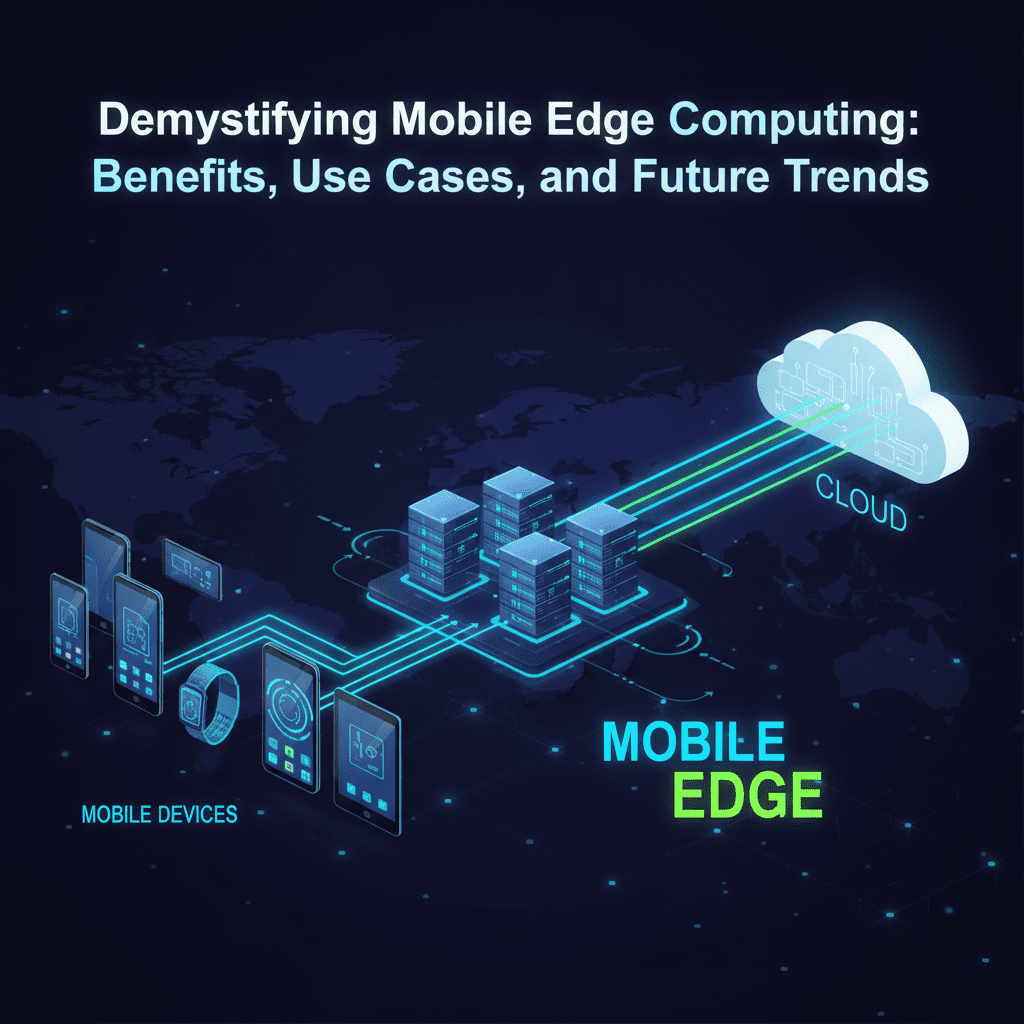
Demystifying Mobile Edge Computing: Benefits, Use Cases, and Future Trends

Introduction In the rapidly evolving digital landscape, Mobile Edge Computing (MEC) has become a critical technology, ushering in new capabilities beyond traditional cloud computing paradigms. By processing data closer to the source—at the edge of the network—MEC dramatically improves data processing speed, reduces latency, enhances security, and fuels innovation across industries. This comprehensive blog demystifies MEC with a deep dive into its benefits, practical use cases, and future trends shaping enterprise strategies. It also highlights key technological integrators such as AI, blockchain, and predictive analytics explored extensively by TechOTD and its related resources. What is Mobile Edge Computing? Mobile Edge Computing (MEC) pushes computing power and data storage closer to end users and connected devices, typically at or near cellular base stations, IoT gateways, or local data centers. Unlike central cloud data centers that might be geographically distant, MEC provides ultra-low latency and real-time processing capabilities. This proximity is a game changer for applications requiring speed, reliability, and privacy. MEC works symbiotically with 5G, AI, and IoT to enable seamless, intelligent experiences across multiple sectors. Benefits of Mobile Edge Computing 1. Ultra-Low Latency and Real-Time Processing By processing data at the edge, MEC reduces the time needed to transmit data to distant cloud servers and back. This latency reduction is essential for use cases like autonomous driving, remote surgery, and live video analytics. 2. Enhanced Data Privacy and Security MEC minimizes data traveling over public networks, reducing exposure risks. Enterprises can enforce data residency and compliance directly on edge nodes, critical for healthcare, finance, and government. 3. Bandwidth Optimization and Cost Savings Edge processing filters and aggregates data locally, reducing network congestion and lowering bandwidth costs—a vital benefit as IoT devices and data volumes surge. 4. Improved Reliability and Resilience MEC enables critical systems to function locally even if the central cloud or wide-area network connectivity is disrupted, offering business continuity and superior service quality. 5. Scalability and Flexibility Modular edge deployments allow enterprises to add or upgrade capacity closer to users and devices, supporting dynamic workloads and new services faster than traditional cloud-only models. Key Use Cases of MEC Across Industries Manufacturing: Smart Factories and Predictive Maintenance MEC combined with IoT sensors enables immediate processing of operational data, facilitating real-time monitoring, predictive maintenance, and automation in factories — minimizing downtime and maximizing productivity. Retail: Personalized In-Store Experiences Retailers use MEC for instant data analytics supporting personalized promotions, inventory management, and frictionless payment processing at the store edge, enhancing customer experience. Healthcare: Remote Monitoring and Diagnostics In healthcare, MEC allows processing of medical imaging and patient data locally for faster, secure diagnostics and telehealth services while ensuring compliance with privacy regulations. Transportation and Logistics: Autonomous and Connected Fleets Edge computing enables rapid data analysis for connected vehicles and fleets, supporting route optimization, safety monitoring, and compliance in real-time. Smart Cities: Responsive Public Infrastructure Citywide IoT systems use MEC to process environmental data, traffic flows, and public safety signals locally, enabling fast responses and efficient resource management. Integration with AI and Blockchain Technologies Artificial Intelligence at the Edge Integrating AI with MEC allows for real-time, context-aware decision making on devices or local nodes without sending data back to the cloud. This accelerates innovation in predictive analytics, image recognition, and anomaly detection. Explore advanced AI applications in enterprises at TechOTD AI Services and TechOTD AI Blog. Blockchain for Enhanced Security and Transparency Blockchain technology complements MEC by providing decentralized, tamper-proof transaction records and supply chain transparency, ideal for secure edge operations. Learn more about blockchain’s transformative business role at TechOTD Blockchain Integration. Best Practices for MEC Implementation Evaluate Business Needs and Edge Readiness: Identify workloads that gain most from edge processing to ensure efficient deployment and ROI. Prioritize Security: Implement comprehensive security protocols including data encryption, authentication, and zero-trust models at all edge points. Adopt Hybrid Cloud-Edge Architecture: Combine centralized cloud resources with edge nodes for balance between scalability and low latency. Use Automation and AI for Resource Optimization: Employ AI-driven management tools for predictive maintenance, load balancing, and anomaly detection. Partner with Experienced Vendors: Collaborate with technology providers skilled in edge deployments to ensure seamless integration and ongoing support and TechOTD How We Work. Future Trends in Mobile Edge Computing Advances in On-Device AI: Smaller, more capable AI models running independently on edge devices for privacy and speed. Industry-Specific MEC Solutions: Vertical customization for health, manufacturing, retail, and other sectors. Edge Orchestration and Automation: Automated deployment, scaling, and self-healing edge systems reducing OPEX. Integration with 6G and Beyond: As next-gen networks evolve, MEC will expand with wider network slices and higher bandwidths. Expansion of Smart Cities and IoT: Growing urban infrastructure and IoT devices will increase MEC demand exponentially. Stay current on technology impact with TechOTD Blog and explore mobile and AI app development strategies at TechOTD Mobile Apps. Key Takeaways: MEC drastically reduces latency by processing data near the source. Security and data privacy improve through decentralized processing. Reduces network load and operational costs for enterprises. Industry use cases span manufacturing, retail, healthcare, transport, and smart cities. AI and blockchain technologies amplify MEC capabilities. Hybrid cloud-edge architectures offer flexible, scalable designs. Automation and orchestration will drive future MEC innovations Conclusion Mobile Edge Computing is no longer a futuristic concept but a necessary foundation for enterprises embracing digital transformation in the 5G era. By bringing compute power and intelligence closer to data sources, MEC accelerates innovation, enhances security, optimizes networks, and delivers real-time insights that fuel competitive advantage. Enterprises equipped with strategic MEC integration, supported by AI, blockchain, and predictive analytics, will unlock new business models and efficiencies—leading the charge into a connected, intelligent future.

How would you like me to respond?

Select a personality for your AI assistant

Normal
Happy
Sad
Angry

Your selection will affect how the AI assistant responds to your messages

Chat Assistant

Let's discuss your project!

Hear from our clients and why 3000+ businesses trust TechOTD

Tell us what you need, and we'll get back with a cost and timeline estimate

Scroll to Top