From Legacy to Agility: The Enterprise Roadmap to DevOps Transformation
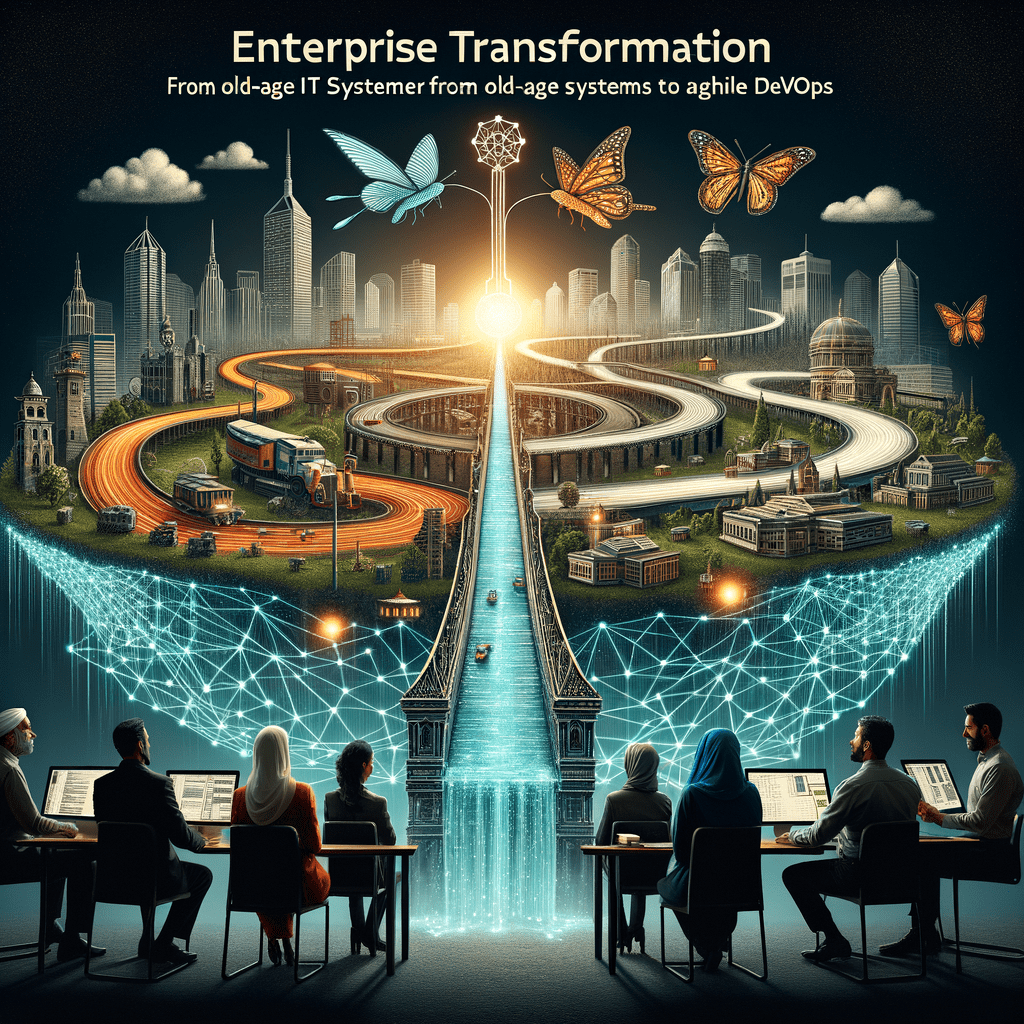
Introduction In the rapidly evolving technology landscape, enterprises are compelled to shift from traditional legacy systems and processes to agile, efficient, and automated DevOps practices. This transformation is not merely a technological upgrade but a profound cultural and operational evolution, driving faster delivery, improved collaboration, and enhanced customer satisfaction. This blog explores a comprehensive roadmap for enterprises moving from legacy to agility through DevOps transformation, enriched with insights and best practices. Explore related AI-driven business transformation services at TechOTD AI Services. Legacy systems, often characterized by siloed teams, manual processes, and fragmented workflows, limit innovation and rapid delivery. Modern enterprises require integration, automation, and continuous feedback loops — hallmarks of DevOps. Challenges include: Rigid architectures Slow release cycles Understanding Legacy Systems and the Need for DevOps Transformation Risk of errors and downtime Communication gaps between development, operations, and security teams DevOps fosters agility by breaking down silos, automating workflows, and fostering a culture of collaboration and continuous improvement. For a deep dive into DevOps and digital transformation trends, visit the TechOTD Blog. The Enterprise DevOps Transformation Roadmap 1. Assess and Audit Current State Begin by thoroughly evaluating existing infrastructure, workflows, and organizational culture. Map current development and operations processes Identify bottlenecks, silos, and manual steps Understand team dynamics and toolchains This assessment provides a baseline for tailored transformation strategies. 2. Define Vision, Objectives, and KPIs Develop a clear vision and goals aligned with business outcomes. Establish measurable KPIs such as deployment frequency, lead time, and uptime Prioritize initiatives that deliver maximum value Build stakeholder consensus for change 3. Build the Right Team and Culture Culture and people are central to successful DevOps transformation. Form cross-functional DevOps teams including development, operations, QA, and security Promote collaboration, transparency, and shared ownership Invest in training and continuous learning Explore how AI can support team productivity and collaboration on TechOTD AI Integration. 4. Implement Automation and Toolchain Automation drives efficiency and quality. Automate testing, builds, deployments, and infrastructure provisioning Use CI/CD pipelines to enable rapid and reliable delivery Integrate security practices with DevSecOps for compliance and risk mitigation Discover advanced automation and predictive analytics at TechOTD Predictive Analytics. 5. Incremental Modernization and Migration Legacy systems can be modernized incrementally: Introduce containerization and microservices architecture Migrate applications and data gradually to cloud environments Use APIs and integrations to maintain interoperability Blockchain-based transparency and workflow optimization can complement DevOps processes; see insights at Blockchain Integration in Business. 6. Continuous Monitoring, Feedback, and Improvement Ongoing monitoring of performance and security metrics is essential. Deploy tools for logging, metrics, and alerting Enable rapid incident response and root cause analysis Foster continuous feedback loops for team and process improvement 7. Scale and Sustain Expand DevOps practices across teams and projects Refine workflows based on evolving needs and technology Maintain governance, compliance, and change management Learn about how TechOTD ensures smooth implementation through How We Work. Business Benefits of DevOps Transformation Cultural Shift: Enhanced collaboration and shared responsibility improve morale and productivity. Operational Efficiency: Automated pipelines reduce errors and accelerate releases. Agility: Rapid response to market demands and customer needs. Cost Savings: Reduced manual effort and optimized cloud resource usage. Improved Customer Experience: Faster delivery of features and improved uptime enhance satisfaction. Further advantages and implementation challenges are discussed in TechOTD’s Enterprise Technology Blogs. Overcoming Common Challenges Legacy inertia and resistance Use change management strategies to promote mindset shifts Foster open communication and leadership buy-in Tool and technology selection Evaluate scalability, integration capabilities, and team readiness Provide ongoing training and support Security and compliance concerns Adopt DevSecOps to embed security into pipelines Ensure adherence to regulations through automation and monitoring Learn more about navigating such challenges in the detailed TechOTD DevOps Guide and Seamless Customer Journeys with AI. Future Outlook: AI and Beyond in DevOps Artificial intelligence and machine learning play an increasing role in DevOps: Intelligent automation of testing and deployments Predictive analysis for system health and fault prediction Enhanced incident management through AI-driven insights Explore AI’s impact on IT and DevOps workflows in TechOTD’s comprehensive AI Solutions. Conclusion Shifting from legacy systems to an agile DevOps model is a strategic imperative for enterprises aiming to thrive in a digital-first world. By adopting a phased, measured, and culturally-aware approach, organizations unlock innovation, speed, and resilience. For more detailed resources and expert consulting, visit TechOTD and explore their offerings to support your DevOps transformation journey