data security

Blockchain & Technology, Digital Transformation, Educational Technology, enterprise

Blockchain Beyond Cryptocurrency: Real-World Enterprise Applications

Introduction When most people hear the word blockchain, their minds immediately jump to cryptocurrencies like Bitcoin. While digital currencies played a significant role in introducing blockchain to the world, the technology has evolved far beyond its original purpose. Today, organizations across industries are leveraging blockchain to improve transparency, security, efficiency, and trust in business operations. From managing global supply chains to securing healthcare records and streamlining financial transactions, blockchain is emerging as a powerful tool for enterprise transformation. As businesses continue their digital transformation journeys, blockchain is increasingly becoming a strategic technology rather than merely a foundation for cryptocurrencies. This article explores how blockchain is being applied in real-world enterprise environments, the benefits it offers, the challenges organizations face, and what the future holds for this revolutionary technology. Understanding Blockchain Technology At its core, blockchain is a distributed digital ledger that records transactions across multiple computers. Unlike traditional databases controlled by a central authority, blockchain stores information in a decentralized manner. Each transaction is grouped into a block, and once verified, it becomes linked to the previous block, forming a chain of records. This structure creates an immutable and transparent history of transactions that cannot be altered without consensus from the network. Several characteristics make blockchain particularly valuable for enterprises: Transparency and auditability Enhanced security through cryptography Decentralized data management Reduced risk of fraud Improved trust among stakeholders Automation through smart contracts These capabilities have encouraged organizations to explore blockchain applications beyond digital currencies. Why Enterprises Are Investing in Blockchain Modern businesses operate in increasingly complex ecosystems involving suppliers, customers, partners, regulators, and service providers. Managing information across these networks often creates inefficiencies, duplication, and security risks. Blockchain addresses many of these challenges by providing a shared source of truth that all authorized participants can trust. Organizations are investing in blockchain because it can: Reduce operational costs Improve transaction speed Enhance transparency Strengthen cybersecurity Increase regulatory compliance Eliminate unnecessary intermediaries Improve customer trust As a result, blockchain adoption is growing across various sectors, including finance, healthcare, manufacturing, logistics, retail, and government services. Supply Chain Management and Traceability One of the most successful enterprise applications of blockchain is supply chain management. Traditional supply chains involve multiple parties, including manufacturers, distributors, suppliers, transportation providers, and retailers. Tracking products throughout this journey can be difficult, especially when data is stored in separate systems. Blockchain creates a shared ledger where every participant can record and verify information in real time. Product Traceability Companies can track products from raw material sourcing to final delivery. This visibility helps organizations verify authenticity, prevent counterfeiting, and ensure compliance with industry standards. For example, food producers can trace agricultural products back to their source within seconds. If contamination occurs, affected products can be identified and removed quickly, reducing risks and costs. Improved Transparency Customers increasingly demand information about where products originate and how they are manufactured. Blockchain enables businesses to provide transparent records regarding: Product origins Manufacturing processes Transportation history Sustainability practices Ethical sourcing standards This transparency strengthens consumer confidence and brand reputation. Reduced Fraud Counterfeit goods cost businesses billions of dollars annually. Blockchain records make it significantly more difficult for fraudulent products to enter legitimate supply chains. Smart Contracts and Business Automation Smart contracts are self-executing digital agreements stored on a blockchain. These contracts automatically perform actions when predefined conditions are met, reducing the need for manual intervention. Automating Payments Businesses can automate supplier payments when goods are delivered and verified. This eliminates delays and minimizes administrative overhead. Streamlining Procurement Procurement processes often involve extensive paperwork and approvals. Smart contracts can automatically: Verify purchase orders Confirm deliveries Trigger payments Update inventory systems This automation reduces processing time and human error. Insurance Claims Processing Insurance companies can use smart contracts to automatically process claims when specific conditions are verified. For example, travel insurance policies can issue compensation immediately when a flight delay is confirmed through trusted data sources. Blockchain in Financial Services Although blockchain originated within the financial sector, enterprise applications extend far beyond cryptocurrency trading. Cross-Border Payments Traditional international payments often involve multiple intermediaries and lengthy processing times. Blockchain networks can facilitate faster and more cost-effective cross-border transactions by reducing dependency on intermediary institutions. Trade Finance Trade finance processes frequently rely on paper-based documentation and manual verification. Blockchain helps digitize: Letters of credit Shipping documents Trade agreements Payment records This improves efficiency while reducing fraud and administrative costs. Fraud Prevention Financial institutions are adopting blockchain to strengthen transaction security and reduce fraudulent activities. The technology’s immutable records create reliable audit trails that make unauthorized alterations extremely difficult. Digital Identity Verification Banks and financial organizations can use blockchain-based identity systems to streamline customer verification procedures while enhancing privacy and security. Healthcare and Medical Records Management Healthcare organizations generate massive amounts of sensitive data. Managing patient records securely while ensuring accessibility remains a major challenge. Secure Patient Records Blockchain allows healthcare providers to store and share patient information securely. Authorized medical professionals can access accurate records while maintaining strict privacy controls. Improved Interoperability Medical records are often fragmented across multiple systems and providers. Blockchain can create unified patient histories accessible across healthcare networks, improving care coordination. Drug Supply Chain Verification Counterfeit medications represent a serious global concern. Blockchain enables pharmaceutical companies to track medications throughout the supply chain, ensuring authenticity and patient safety. Clinical Research Researchers can use blockchain to maintain transparent and tamper-proof records of clinical trial data, enhancing trust and regulatory compliance. Digital Identity and Access Management Identity verification is becoming increasingly important in the digital economy. Traditional identity systems often expose users to data breaches and identity theft. Blockchain-based identity solutions allow individuals to maintain greater control over their personal information. Self-Sovereign Identity Users can manage and share verified credentials without relying entirely on centralized databases. Benefits include: Enhanced privacy Reduced identity fraud Simplified verification processes Better user control Enterprise Access Control Organizations can use blockchain to manage employee credentials, system access permissions, and authentication processes more securely. Blockchain in Real Estate Real estate transactions typically

Digital lock representing cybersecurity protection and network defense
cybersecurity

Cybersecurity Trends for 2025: Safeguarding the Digital Future

Introduction In the digital age, data is the new currency — and cybercriminals know it. As technology evolves, so do cyber threats, making cybersecurity one of the most critical priorities for businesses, governments, and individuals. With billions of devices connected through 5G, cloud computing, and the Internet of Things (IoT), the attack surface for cybercriminals has expanded like never before. According to industry estimates, global cybercrime costs are projected to reach $10.5 trillion annually by 2025, making cybersecurity not just a technical issue, but a global economic concern. As we step into 2025, the world of cybersecurity is being reshaped by artificial intelligence, automation, and quantum computing — both as tools for protection and as new sources of risk. Let’s dive deep into the trends defining the future of digital defense. Why Cybersecurity Matters More Than Ever Modern businesses operate in an ecosystem of interconnected technologies — from cloud-based services to remote work systems and AI-powered analytics. While these innovations improve efficiency, they also introduce vulnerabilities. Recent high-profile incidents — like ransomware attacks on hospitals, supply chain breaches, and phishing-driven data theft — highlight the urgent need for proactive and adaptive cybersecurity measures. Cybersecurity in 2025 is no longer about building walls; it’s about creating intelligent, self-healing defense systems that can anticipate and neutralize threats in real time. Top Cybersecurity Trends for 2025 1.  AI and Machine Learning in Cyber Defense Artificial Intelligence (AI) and Machine Learning (ML) have become the backbone of modern cybersecurity systems. AI algorithms detect unusual patterns and stop attacks before they happen. ML models learn from previous threats to improve detection accuracy. Predictive analytics help identify potential vulnerabilities in advance. Example:AI-driven tools like Darktrace and CrowdStrike use ML to monitor network traffic and detect anomalies faster than any human analyst could. However, attackers are also using AI — creating “smart malware” capable of adapting to traditional defenses, making this an ongoing technological arms race. 2.  Zero-Trust Architecture (ZTA) Becomes the Standard The Zero-Trust Model operates on one simple rule: “Never trust, always verify.” Instead of assuming internal users or devices are safe, ZTA continuously validates every access request using identity, context, and behavior analysis. By 2025, zero-trust frameworks will become a mandatory standard for enterprises — especially in hybrid work environments where employees connect from multiple devices and locations. Key Components of ZTA: Multi-Factor Authentication (MFA) Continuous user validation Least-privilege access Micro-segmentation of networks 3.  Human-Centered Security Awareness Training Human error remains one of the biggest cybersecurity risks. Phishing emails, weak passwords, and social engineering attacks still cause most data breaches. In 2025, companies are shifting from technical defenses to behavioral cybersecurity training — using gamified learning, simulated attacks, and AI-based education platforms to train employees to recognize threats. Example:Platforms like KnowBe4 and Cofense use real-world simulations to reduce phishing susceptibility by over 70%. 4.  Cloud Security and Shared Responsibility With businesses migrating to cloud-first strategies, the cloud has become both a target and a defense frontier. Cloud providers (like AWS, Azure, and Google Cloud) secure infrastructure, but users are responsible for data protection, access control, and compliance — a concept known as the shared responsibility model. By 2025, we’ll see: Greater use of cloud-native security tools Enhanced data encryption and tokenization Real-time identity and access management (IAM) 5.  Cybersecurity Mesh Architecture (CSMA) Introduced by Gartner, Cybersecurity Mesh Architecture connects security tools through an integrated framework. Instead of isolated systems, it creates a centralized policy layer where all applications, networks, and data points communicate securely. By 2025, over 60% of organizations are expected to adopt CSMA to unify their cybersecurity infrastructure. 6.  Quantum-Resistant Encryption Quantum computing, while promising for research and innovation, poses a serious threat to traditional encryption algorithms like RSA and ECC. To counter this, companies are developing quantum-resistant algorithms that can withstand attacks from future quantum computers. Organizations like NIST are already standardizing Post-Quantum Cryptography (PQC), ensuring data remains secure in a post-quantum era. 7.   Rise of Managed Security Service Providers (MSSPs) As cyber threats grow more complex, small and medium businesses (SMBs) often lack the expertise to handle them. By 2025, the demand for MSSPs — external cybersecurity experts providing 24/7 monitoring, compliance management, and incident response — will skyrocket. This approach offers affordable, scalable protection for companies without building large internal security teams. 8.  Data Privacy Regulations Tighten Worldwide Governments across the world are enforcing stricter data protection laws — like GDPR (Europe), CCPA (California), and DPDP Act (India). By 2025, more nations will introduce regulations demanding transparency in how companies collect, store, and use personal data. Privacy-by-design and encryption-by-default will become standard in all major digital products. 9.  Blockchain for Cybersecurity Blockchain technology is emerging as a powerful tool for cybersecurity. Its decentralized and immutable nature makes it ideal for: Securing identity management Verifying transactions Preventing tampering in data exchanges By 2025, blockchain-based identity verification and supply chain security solutions will see mass adoption across finance, logistics, and healthcare. 10.  Automation and SOAR (Security Orchestration, Automation, and Response) With thousands of alerts generated daily, human analysts can’t keep up. That’s where SOAR platforms come in — automating repetitive tasks like incident classification, response, and reporting. This improves efficiency, reduces human error, and ensures 24/7 vigilance.  Real-World Example: AI-Driven Threat Detection A financial institution in Singapore deployed an AI-based threat monitoring system that analyzes 100 million transactions daily.The system detects fraud within seconds and automatically isolates suspicious accounts — saving millions in potential losses. This case proves how AI, combined with automation, is redefining modern cyber defense. Challenges Ahead Despite advancements, the cybersecurity landscape in 2025 faces several challenges: Evolving threat actors: Hackers use AI and deepfake technology to bypass defenses. Shortage of skilled professionals: The global cybersecurity workforce gap exceeds 3 million experts. Cost of compliance: Meeting international data laws increases financial strain on small firms. Complex multi-cloud environments: Managing security across multiple cloud providers adds complexity. The Future of Cybersecurity Beyond 2025 By the late 2020s, cybersecurity will evolve from being reactive to predictive and autonomous. Emerging

Mobile App Development

The Business Benefits of Choosing Aerospike Database

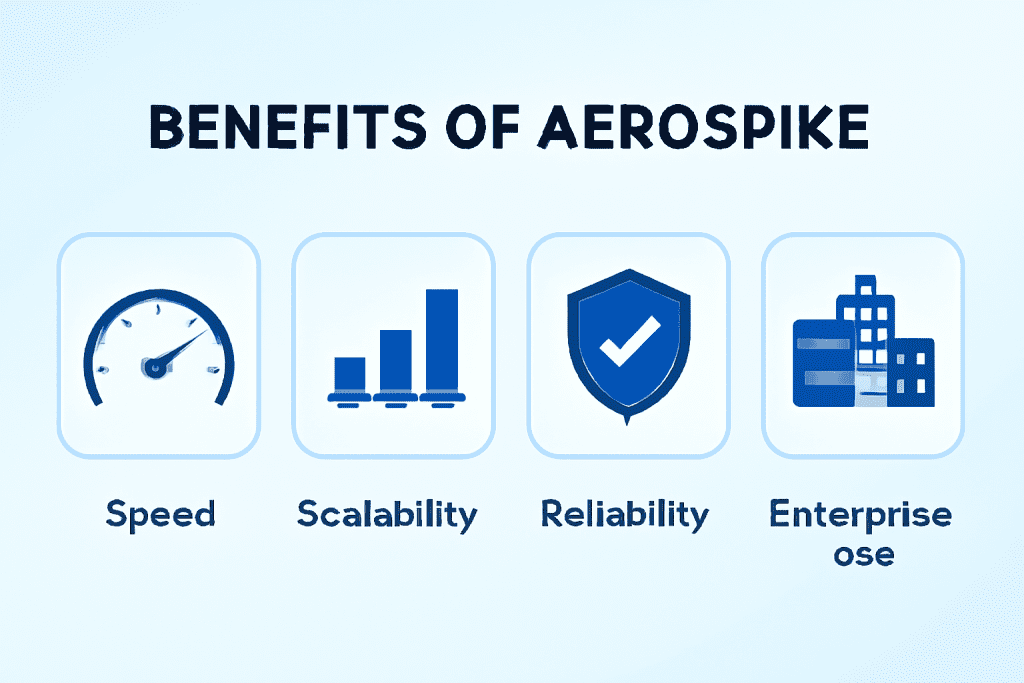
Introduction In today’s data-driven business landscape, organizations demand databases that deliver high performance, scalability, and reliability while processing vast volumes of real-time data. Aerospike, a modern NoSQL distributed database, excels in these areas, providing enterprises the foundation they need to innovate, optimize operations, and enhance customer experiences. This comprehensive blog explores the multifaceted business benefits of choosing Aerospike Database. It discusses key technical advantages, diverse industry use cases, and how Aerospike integrates with emerging technologies like AI, blockchain, and predictive analytics. Strategic backlinks to TechOTD AI Services and other relevant TechOTD content enrich the discussion for readers seeking to elevate their technology strategies. Why Aerospike? Key Business Advantages 1. Ultra-High Performance and Low Latency Aerospike is engineered for real-time, high-speed transactions at scale. Its Hybrid Memory Architecture leverages both RAM and persistent flash storage, dramatically reducing latency and enabling billions of transactions per day. Businesses can deliver instant personalization, fraud detection, and dynamic pricing, critical in sectors like retail, ad tech, and finance. Explore AI-driven real-time personalization and fraud prevention strategies at TechOTD AI Services. 2. Extreme Scalability and Reliability Aerospike’s distributed architecture supports automatic sharding and replication across multiple nodes and data centers, ensuring horizontal scalability and high availability without performance degradation. This reliability is vital for applications requiring 99.999% uptime such as telecom, gaming, and banking. Real-world case studies are available via TechOTD Blog. 3. Simplified Data Architecture By combining key-value and document store capabilities, Aerospike simplifies data models and reduces infrastructure complexity. This simplification accelerates development cycles and reduces operational costs and risks. Learn about lean and agile development in mobile apps at TechOTD Mobile Apps. 4. Enterprise-Grade Security and Compliance Aerospike includes multi-layer security features such as encryption at rest/in transit, access control, and audit logging, supporting regulatory requirements like GDPR and HIPAA. Enhanced data security integrates seamlessly with blockchain technologies to ensure immutable, secure transactions TechOTD Blockchain Integration. 5. Native Cloud and Hybrid Deployment Flexibility Aerospike supports deployment across public clouds, private clouds, and on-premises environments, providing flexibility aligned with IT strategy and regulatory mandates. Hybrid cloud architectures enable the best of scalability and control, a focus area covered extensively by TechOTD Cloud Blogs. Industry Use Cases Empowered by Aerospike   Retail & E-Commerce: Real-Time Personalization and Inventory Management Aerospike powers instant personalization at scale by managing user sessions and product catalogs with minimal latency. Faster inventory updates and order processing improve customer satisfaction and operational efficiency. Financial Services: Fraud Detection and Risk Analytics Aerospike enables ultra-fast transaction processing and real-time anomaly detection, reducing fraud and credit risks. AI-driven analytics running on Aerospike data accelerate decision-making TechOTD Large Language Models in Finance. Ad Tech: Real-Time Bidding and Audience Segmentation Aerospike’s capability to handle massive read/write loads supports real-time bidding platforms and audience analytics, increasing ad revenue and precision. Telecommunications: Session Management and Network Optimization High-availability and low-latency session data management improve call quality and subscriber experience. Gaming & Entertainment: Leaderboards and In-Game Analytics Real-time game state updates and analytics tracking enable responsive multiplayer experiences and personalized gameplay. Integration with AI, Blockchain, and Predictive Analytics Aerospike integrates seamlessly with AI and machine learning pipelines, enabling fast data ingestion and retrieval critical for training and inference at scale. For comprehensive AI integration strategies, see TechOTD AI Services. Blockchain enhances Aerospike’s secure data framework for use cases requiring transparency and trust TechOTD Blockchain Integration. Predictive analytics leverage Aerospike’s performance to deliver timely insights, enhancing operational decision-making TechOTD Predictive Analytics. Operational Excellence and Developer Productivity Aerospike comes with advanced management tools, monitoring, and automation features that reduce downtime and manual effort. Its powerful query language and APIs accelerate developer productivity, supporting agile methodologies TechOTD Mobile App Development. Challenges and Mitigation Learning Curve: Adopting new database technologies requires training, but developer-friendly resources and consulting can ease transition TechOTD How We Work. Integration Complexity: Aerospike integrates with popular data platforms and analytics tools to ease ecosystem compatibility. Future Outlook As edge computing and 5G expand, Aerospike’s low latency and edge adaptability position it for emerging workloads. Continued AI and blockchain feature integration will boost Aerospike’s role in next-gen applications. Stay updated with TechOTD insights on evolving technology at TechOTD Blog. Conclusion Choosing Aerospike Database offers enterprises a high-performance, scalable, and reliable platform crucial for modern data-intensive applications. Its unique architecture supports business agility, innovation, and operational excellence across sectors. Key Benefits Summary: Real-time, low-latency data processing Unmatched scalability and availability Simplified data models and reduced complexity Robust security compliance and blockchain synergy Hybrid and cloud deployment flexibility Proven multi-industry use cases and AI integration

Cloud

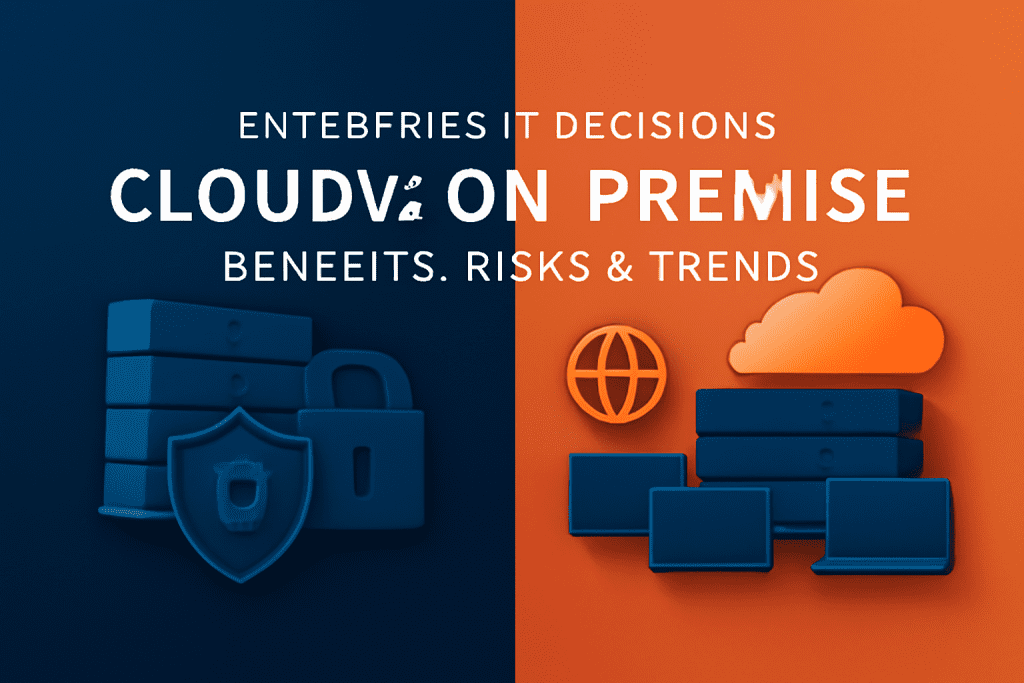
Enterprise IT Decisions: Comparing Cloud and On-Premise Benefits & Risks

Introduction In today’s era of digital acceleration, choosing the right IT infrastructure—cloud or on-premise—is a major strategic decision that can fuel your enterprise’s performance, security, and innovation. As market demands shift toward agility, scalability, and compliance, understanding the advantages, challenges, and modernization trends for each option is essential. This blog unpacks core differences, sector-specific examples, benefits, limitations, and real-world adoption trends—so you can make an informed, future-focused IT choice that propels your business forward. What Are Cloud and On-Premise IT Infrastructures? Cloud: IT services (servers, storage, databases, networking, analytics, and software) delivered over the internet by external providers. Explore Cloud Solutions On-Premise: Computing resources are installed and maintained on-site at your organization’s facility, with full direct control by your IT team. IT Consulting & On-Premises Solutions Key Differences: Cloud vs On-Premise Aspect Cloud On-Premise Deployment Off-site (third-party provider), accessed via internet. Cloud Services On-site (organization’s premises), your IT manages setup. IT Consulting Cost Low upfront investment (OpEx); subscription/pay-per-use billing. AI Solutions High upfront investment (CapEx); ongoing hardware/software costs. Scalability Elastic—scale up/down instantly. Data Analytics Scaling requires buying/installing new hardware—slower and costlier. Security & Control Provider-managed security and compliance certifications; some loss of direct control. Full direct data/control management; meets strict regulatory/industry needs. Accessibility Global access, ideal for hybrid/remote teams. Physical/campus access; remote requires extra configuration. Maintenance Provider manages updates, patches, disaster recovery. Your IT team maintains everything, from system updates to security. Vendor Lock-In Potential for dependency/migration challenges. No vendor lock, but older systems can be hard/expensive to integrate. Performance Flexible capacity, variable latency based on network quality. Direct control for ultra-low latency and critical workloads. Benefits & Risks: Cloud vs On-Premise Cloud Benefits Agility: Deploy new resources, apps, and sites quickly—supporting market expansion and innovation. Cost-Efficiency: Only pay for what you use; no expensive upfront hardware. Reduced IT Burden: Provider manages uptime, upgrades, and security. Business Continuity: Robust backup and disaster recovery. Remote-Ready: Enables global collaboration and hybrid teams. Cloud Risks Internet outages can cause downtime. Less direct control over sensitive data. Vendor lock-in risk if not planned for from the start. Ongoing operational costs. On-Premise Benefits Full Control: Customize security, compliance, hardware, and integrations for your needs. Regulatory Compliance: Simpler to meet industry/national data regulations (e.g., finance, healthcare). Performance: Low latency for mission-critical real-time operations. Customization: Tailor IT systems for unique or legacy workflows. On-Premise Risks Large upfront investment in hardware/facilities. All maintenance, upgrades, and support handled internally. Scaling and modernization can be slow and disruptive. Requires a larger, skilled IT team. Enterprise Use Cases & Industry Examples When Cloud Excels Retail: Instantly scale resources for sales peaks and geographic expansion. SaaS/Startups: Launch quickly, experiment safely, avoid infrastructure investment. Remote Collaboration: Enable global teams, file sharing, secure mobile and desktop access. Data Analytics/ML: Run big data or AI workloads dynamically. When On-Premise Is Ideal Banking/Finance: Regulatory oversight, data residency, high-frequency trading. Healthcare: HIPAA, medical record security, legacy system integration. Energy/Government: National security, control over access, strict privacy compliance. Modern Trends: Hybrid and Multi-Cloud Today’s enterprises often blend cloud and on-premise environments (“hybrid” or “multi-cloud”) to balance speed, compliance, and cost efficiency. Hybrid: Keep sensitive/regulated workloads on-premise and leverage cloud for agility, collaboration, and scale. Edge Computing: Combine on-premise/edge servers with cloud for ultra-fast operations (e.g., smart manufacturing, logistics). Stay ahead: Contact TechOTD’s experts for a custom roadmap Conclusion There’s no universal choice—your decision should reflect your unique business goals, industry requirements, and growth strategy. Choose cloud for agility, cost savings, and digital transformation. Choose on-premise for total control, compliance, and customized performance. For many, a hybrid strategy maximizes the advantages of both worlds. Ready to transform your IT? Visit TechOTD’s solutions hub or connect with our experts to shape the future of your enterprise IT. FAQ 1. Is cloud or on-premise more secure? Cloud vendors offer strong security, but on-premise gives you direct oversight. The safest path depends on compliance needs and your IT team’s expertise. 2. Which option costs less long-term? Cloud is cheaper up front and for dynamic workloads; on-premise may save money at scale, but needs careful management. 3. Can enterprises mix cloud with on-premise? Yes—the hybrid approach is powerful for balancing flexibility with control. 4. How do I avoid vendor lock-in with cloud? Choose platforms supporting open standards and plan migration strategies early. 5. Is on-premise IT outdated? No. It’s vital for compliance-heavy sectors and advanced when integrated with cloud or edge.

How would you like me to respond?

Select a personality for your AI assistant

Normal
Happy
Sad
Angry

Your selection will affect how the AI assistant responds to your messages

Chat Assistant

Let's discuss your project!

Hear from our clients and why 3000+ businesses trust TechOTD

Tell us what you need, and we'll get back with a cost and timeline estimate

Scroll to Top