
AWS Cost Optimization

Digital cloud representing Amazon Web Services and global cloud infrastructure.
aws, Cloud Computing and Technology

AWS Explained: How Amazon Web Services Powers the Cloud in 2025

Introduction In a world where every app, website, and business runs on the cloud, one name stands out — Amazon Web Services (AWS). From startups to global enterprises, AWS has become the foundation for innovation, scalability, and performance. As of 2025, AWS powers over 30% of the global cloud market, offering everything from basic storage to advanced artificial intelligence. This blog explores what AWS is, how it works, and why it continues to lead the cloud revolution. What is AWS (Amazon Web Services)? AWS is a cloud computing platform developed by Amazon, offering on-demand computing services such as servers, storage, databases, and machine learning — all accessible over the internet. Key Features: Scalability: Expand resources as your business grows. Pay-as-you-go: Pay only for what you use. Global Infrastructure: Data centers in 32 regions worldwide. Reliability: 99.99% uptime backed by Amazon’s global network. Core AWS Services You Should Know AWS provides over 200 services across computing, storage, databases, networking, and more. Here are the essentials: Category Service Description Compute EC2 Virtual servers for running applications Storage S3 Object storage for files, backups, and data lakes Database RDS Managed relational database service Networking VPC Isolated network for secure cloud deployment Serverless Lambda Run code without managing servers AI/ML SageMaker Build, train, and deploy machine learning models Security IAM Manage user access and permissions securely Why AWS Dominates the Cloud Market Here’s why AWS remains the top choice for developers and businesses: Massive Ecosystem: From gaming to AI to IoT, AWS supports every industry. Global Reach: 99 Availability Zones across 32 regions. Cost Efficiency: Pay-as-you-go model saves infrastructure costs. Innovation: Continuous updates with AI, blockchain, and edge computing. Security: End-to-end encryption, compliance, and monitoring tools. AWS Security and Compliance Security is AWS’s top priority. Identity & Access Management (IAM): Role-based control for users. Encryption: Protect data in transit and at rest. Compliance: Meets ISO, GDPR, HIPAA, and DPDP standards. Monitoring: Tools like CloudTrail and GuardDuty track activities in real time. The Future of AWS: Trends in 2025 and Beyond AWS continues to lead innovation in: AI and Generative Models Quantum Computing (Braket) Sustainability with Green Data Centers Edge Computing for Faster IoT Cloud-Native Development with Kubernetes (EKS) The next phase of AWS is all about intelligent automation, zero-latency networks, and sustainable innovation. Conclusion AWS is more than just cloud storage — it’s the backbone of digital transformation. With its unmatched scalability, security, and global reach, it enables businesses to innovate faster and smarter. As cloud computing evolves, AWS continues to redefine how we build, deploy, and manage technology — one click at a time. “Build the future in the cloud — powered by AWS.” FAQ Section Q1. What is AWS mainly used for?AWS provides cloud infrastructure for hosting, computing, storage, and app development. Q2. Is AWS free for beginners?Yes, AWS offers a Free Tier with limited services for 12 months. Q3. Which companies use AWS?Netflix, Adobe, NASA, Airbnb, and many startups rely on AWS for scalable cloud solutions. Q4. How is AWS different from Azure or Google Cloud?AWS offers broader service coverage, global infrastructure, and earlier market dominance. Q5. Can I learn AWS without coding?Absolutely — many AWS tools (like S3 and RDS) require little or no programming knowledge.
Cloud

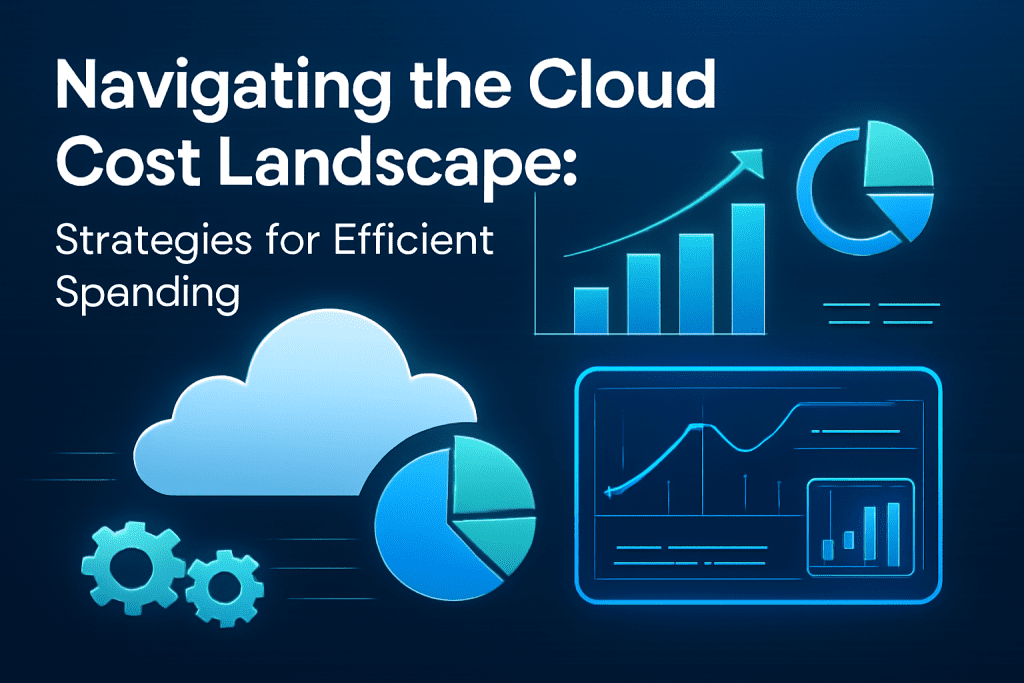
Navigating the Cloud Cost Landscape: Strategies for Efficient Spending

Introduction Cloud computing has become indispensable for businesses seeking scalability, agility, and innovation. However, while the cloud offers immense benefits, managing its costs effectively remains a significant challenge. Without a clear strategy, cloud expenses can quickly spiral out of control, leading to wasted resources and budget overruns. This blog explores the cloud cost landscape, common pitfalls, and practical strategies for businesses to optimize cloud spending without compromising performance or security. Leveraging smart management techniques and emerging AI-driven tools, organizations can make their cloud investments more efficient and aligned with business goals. Understanding the Cloud Cost Landscape Cloud costs vary widely depending on service models (IaaS, PaaS, SaaS), providers (AWS, Azure, Google Cloud), workloads, and usage patterns. Key areas influencing costs include: Compute Resources: Virtual machines, containers, serverless functions Storage: Block storage, object storage, backup solutions Data Transfer: Network egress and ingress charges Managed Services: Databases, AI/ML services, analytics platforms Support and Licensing: Premium support, third-party licenses Many organizations experience “cloud sprawl,” where unused or underutilized resources add unnecessary costs. Strategies for Efficient Cloud Spending 1. Adopt Cloud Cost Visibility and Monitoring Tools Real-time cost monitoring platforms and dashboards provide transparency across teams and projects. Tools like AWS Cost Explorer, Azure Cost Management, or third-party solutions enable cost attribution and anomaly detection. 2. Rightsize Resources Match service levels to actual workload demands. Continuously analyze compute and storage usage to downsize oversized instances or consolidate underused resources. 3. Leverage Reserved and Spot Instances For predictable workloads, reserved instances offer significant discounts over on-demand pricing. Spot instances provide cheaper compute capacity for flexible, fault-tolerant tasks. 4. Automate Resource Scheduling Use automation to shut down non-production resources during off-hours, reducing idle time charges. 5. Optimize Storage Costs Implement lifecycle policies to transition data to cheaper tiers (e.g., archive storage). Delete unused snapshots and backups. 6. Implement Governance and Budget Controls Define cloud spending budgets, policies, and approval workflows to prevent uncontrolled provisioning. Utilize tagging for cost allocation and accountability. 7. Utilize Multi-Cloud or Hybrid Strategies Wisely Choosing cost-effective services across providers can optimize spending but requires careful management to avoid complexity overhead. 8. Incorporate AI and Predictive Analytics Leverage AI-powered cloud management tools for forecasting, anomaly detection, and automated optimization (see AI-driven solutions). Benefits of Efficient Cloud Cost Management Significant cost savings and better budget predictability Improved operational efficiency and resource utilization Greater agility to innovate without financial constraints Enhanced security and compliance through structured resource governance Conclusion Navigating the complex cloud cost landscape requires proactive management, cross-functional collaboration, and smart technology adoption. Businesses embracing cost transparency, automation, and AI-driven insights are better positioned to maximize the value of their cloud investments while controlling expenses. For organizations seeking tailored cloud cost strategies, AI-driven optimization, and ongoing consultation, TechOTD AI Services offers expert guidance. Stay ahead with the latest tech insights on the TechOTD Blog.

How would you like me to respond?

Select a personality for your AI assistant

Normal
Happy
Sad
Angry

Your selection will affect how the AI assistant responds to your messages

Chat Assistant

Let's discuss your project!

Hear from our clients and why 3000+ businesses trust TechOTD

Tell us what you need, and we'll get back with a cost and timeline estimate

Scroll to Top