AI Governance in 2026: Balancing Innovation and Regulation
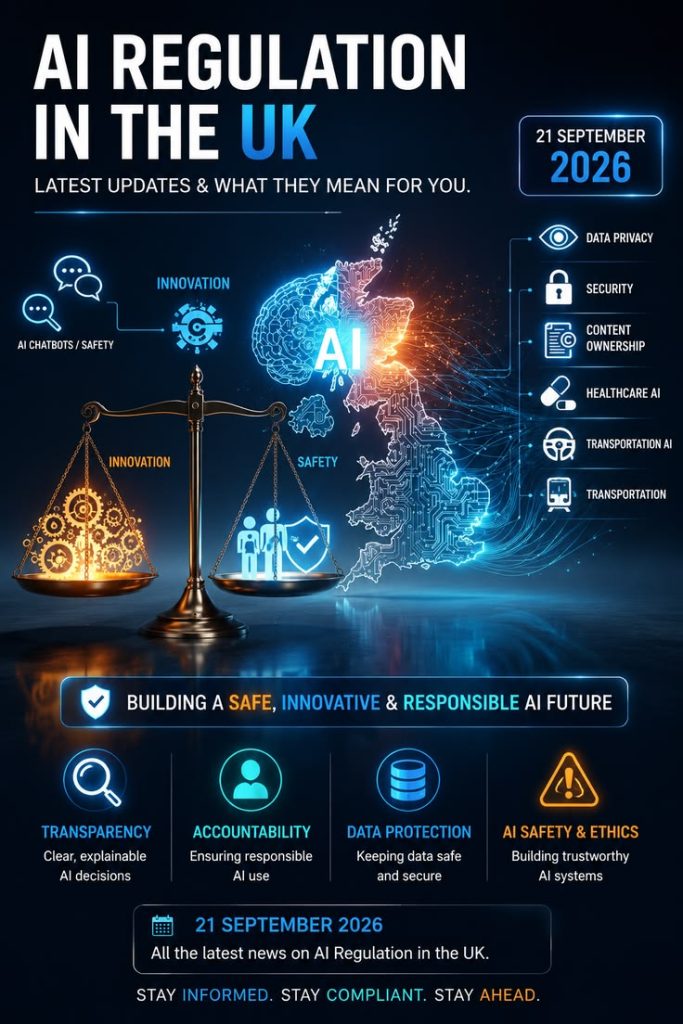
AI Governance in 2026: Balancing Innovation and Regulation Artificial intelligence has rapidly evolved from an emerging technology into a critical business and societal tool. From automating business operations and improving healthcare outcomes to powering advanced research and enhancing customer experiences, AI is transforming nearly every industry. However, as AI systems become more powerful and influential, concerns surrounding transparency, accountability, privacy, bias, and security continue to grow. In 2026, AI governance has become one of the most important topics in the technology landscape. Governments, regulators, technology companies, and enterprises are working together to create frameworks that encourage innovation while ensuring AI is developed and deployed responsibly. The challenge is clear: how can society unlock the enormous benefits of AI without exposing individuals, businesses, and governments to unnecessary risks? The answer lies in effective AI governance. What Is AI Governance? AI governance refers to the policies, standards, regulations, and organizational practices used to guide the development, deployment, and management of artificial intelligence systems. Its primary objectives include: Ensuring AI systems operate ethically Promoting transparency and accountability Protecting user privacy Reducing bias and discrimination Strengthening cybersecurity Maintaining regulatory compliance Building public trust Unlike traditional software governance, AI governance must address unique challenges associated with machine learning, generative AI, autonomous decision-making, and continuously evolving algorithms. As organizations increasingly rely on AI-powered systems for critical decisions, governance frameworks are becoming essential components of modern business operations. Why AI Governance Matters More Than Ever The rapid adoption of generative AI and autonomous systems has dramatically increased the importance of governance. Organizations are now using AI for: Financial decision-making Hiring and recruitment Healthcare diagnostics Customer service automation Cybersecurity monitoring Supply chain optimization Legal research Business intelligence While these applications offer significant benefits, they also introduce potential risks. An AI system that generates inaccurate information can damage a company’s reputation. A biased algorithm can lead to discrimination claims. Weak AI security controls can expose sensitive data to cybercriminals. Without proper governance, AI can become a liability instead of a competitive advantage. Businesses are realizing that governance is not merely about compliance—it is about creating sustainable and trustworthy AI ecosystems. The Global Push for AI Regulation One of the biggest developments in 2026 is the increasing focus on AI regulation worldwide. Governments recognize that artificial intelligence is reshaping economies, national security, labor markets, and public services. As a result, regulators are introducing policies designed to manage AI risks while encouraging innovation. Several key areas are receiving attention: Risk-Based AI Classification Many governments are adopting risk-based approaches to AI oversight. Under this model, AI applications are categorized according to their potential impact. Examples include: Low-Risk Systems Chatbots Recommendation engines Productivity assistants Medium-Risk Systems Customer service automation Business analytics platforms Educational AI tools High-Risk Systems Medical diagnosis systems Financial approval algorithms Law enforcement technologies Critical infrastructure management systems The higher the risk level, the stricter the governance requirements become. This approach helps regulators avoid unnecessary restrictions on innovation while focusing oversight where it is needed most. Transparency Requirements AI transparency has become a major regulatory priority. Users increasingly want to know: How AI systems make decisions What data is being used Whether content was AI-generated How organizations monitor AI outputs Transparency requirements are encouraging businesses to provide clearer explanations of AI-driven decisions and maintain detailed documentation of their AI models. Data Protection and Privacy AI systems require large amounts of data to function effectively. This has raised concerns about: User consent Data ownership Personal information protection Cross-border data transfers Governments are introducing stricter data governance rules to ensure AI systems respect privacy rights while still enabling innovation. Organizations that fail to comply may face significant financial penalties and reputational damage. Enterprise AI Governance Becomes a Strategic Priority In 2026, AI governance is no longer just the responsibility of compliance departments. It has become a boardroom issue. Executives recognize that poorly managed AI initiatives can create legal, financial, and operational risks. As a result, organizations are establishing dedicated AI governance programs that include: AI ethics committees Risk management teams Compliance officers Data governance specialists Cybersecurity professionals Legal advisors These teams work together to ensure AI projects align with business objectives, regulatory requirements, and ethical standards. Companies that implement robust governance frameworks are often able to deploy AI more confidently and at greater scale. Ethical AI Takes Center Stage Ethical AI has become one of the defining themes of AI governance. Businesses understand that compliance alone is not enough. Users expect AI systems to operate fairly, responsibly, and transparently. Ethical AI initiatives focus on several key principles. Fairness AI systems should treat all individuals fairly and avoid discriminatory outcomes. Organizations are investing in bias detection tools and model auditing processes to identify and mitigate unfair decision-making. Accountability There must be clear responsibility for AI-generated outcomes. Businesses are establishing governance structures that define who is accountable when AI systems make errors or produce harmful results. Human Oversight Despite significant advances in automation, human involvement remains critical. Many organizations require human review for high-impact decisions involving: Employment Healthcare Financial services Legal matters This ensures AI supports decision-making rather than replacing human judgment entirely. Transparency Users should understand when they are interacting with AI systems and how important decisions are made. Transparent AI helps build trust and reduces concerns about hidden algorithms influencing outcomes. The Rise of AI Audits Just as financial audits help ensure accountability in business operations, AI audits are becoming increasingly common. AI audits evaluate: Model performance Bias levels Security controls Regulatory compliance Data quality Decision-making processes Organizations are conducting regular assessments to verify that AI systems continue operating as intended. Independent third-party audits are also gaining popularity because they provide additional credibility and transparency. In many industries, AI auditing is becoming a standard governance practice. Managing Generative AI Risks Generative AI remains one of the most transformative technologies of the decade. Businesses are using AI tools to create: Marketing content Software code Product designs Business reports Customer communications Educational materials However, generative AI introduces unique governance challenges. Hallucinations AI models can