Technology & Innovation

App Development, Software development, Technology, Technology & Innovation

The Ultimate Mobile App Development Guide: From Napkin Sketch to App Store Success

The Ultimate Mobile App Development Guide: From Napkin Sketch to App Store Success In 2026, the mobile phone isn’t just a device; it’s an external organ. We use it to manage our health, our finances, our homes, and our social lives. For a creator or a business, building a mobile app is the ultimate way to stay “top of mind.” But with millions of apps already available, “just building it” isn’t enough. You have to build it right. This guide is designed to take you through the human side of Mobile App Development. We will look past the code and into the strategy, the psychology, and the long-term commitment required to turn an idea into a digital powerhouse. 1. Phase One: The Strategy (The “Why” Before the “How”) The most common mistake in App Development is starting with a feature list instead of a problem. A successful app is a solution. Market Research and Validation Before you write a single line of code, you must validate your idea. Identify the Pain Point: What is the specific “itch” your app is scratching? Competitor Analysis: If there are 10 other apps doing the same thing, what is your “Unfair Advantage”? Target Audience: Are you building for Gen Z (who value speed and aesthetics) or for corporate professionals (who value security and integration)? The MVP Approach (Minimum Viable Product) Don’t try to build the next Facebook on Day 1. Focus on the Core Value Proposition. If your app is a food delivery service, the “MVP” is just the ability to order food and have it delivered. You don’t need the AI-driven calorie tracker or the social sharing features yet. 2. Choosing Your Weapon: The Tech Stack This is where the Software development becomes technical. Your choice of tech stack will determine your app’s performance, cost, and time-to-market. Native Development iOS (Swift): Built specifically for Apple hardware. It offers the best performance and latest features (like Dynamic Island integration). Android (Kotlin): The gold standard for the Google ecosystem. It provides deep access to hardware and a massive global user base. Cross-Platform Development (The 2026 Favorite) Frameworks like Flutter and React Native allow you to write one codebase that works on both iOS and Android. This is often the best choice for startups because it slashes development costs by nearly 40%. 3. The Heart of the App: UI/UX Design In a humanized app, the interface should be invisible. If a user has to “think” about how to use your app, you have failed. User Experience (UX) Design UX is the “logic” of the app. It involves: Wireframing: Creating the skeletal structure of the app. User Journeys: Mapping out every tap a user takes to reach their goal. Accessibility: Making sure people with visual or motor impairments can still enjoy your product. User Interface (UI) Design UI is the “emotion” of the app. It’s about colors, typography, and “Juiciness.” 4. Development and Testing: The “Build” Phase Once the designs are locked, the developers move in. In modern Digital Transformation, this usually follows the Agile Methodology. The Iterative Cycle Instead of disappearing for six months, developers work in “Sprints” (usually 2 weeks). At the end of each sprint, you have a functional piece of the app to test. Quality Assurance (QA) Testing isn’t just about finding bugs. It’s about: Performance Testing: Does the app drain the battery? Security Testing: Is the user data safe? (A critical part of cybersecurity). User Acceptance Testing (UAT): Do real humans actually like using it? 5. Deployment and Beyond: The Long Game Hitting the “Publish” button in the App Store is not the finish line—it’s the starting gun. App Store Optimization (ASO) Think of this as SEO for apps. You need the right keywords, stunning screenshots, and a video preview that grabs attention in the first three seconds. Maintenance and Updates The mobile landscape changes every week. New OS versions, new screen sizes, and new security threats mean your app is a “living breathing” entity that requires constant care. Conclusion: Building for the Future Mobile app development is a journey of constant learning. As technologies like Artificial Intelligence and Data Science become more integrated into our phones, the possibilities are endless. The Art of the Instant Hook: How to Make Hyper Casual Games for iOS and Android

App Development, Software development, Technology & Innovation

The Art of the Instant Hook: How to Make Hyper Casual Games for iOS and Android

The Art of the Instant Hook: How to Make Hyper Casual Games for iOS and Android In the world of mobile gaming, there is a genre that defies the rules of complexity. While “AAA” titles boast hundreds of hours of gameplay and cinematic stories, Hyper-Casual Games demand only seconds of your time. They are the “snackable” content of the gaming world—designed to be played with one hand while waiting for the bus. But don’t let the simplicity fool you. Making a successful hyper-casual game is a masterclass in human psychology and precision engineering. 1. The Core Philosophy: “Tap and Play” The first thing to consider when learning how to make hyper casual games is the “5-second rule.” If a player can’t understand exactly how to play your game within five seconds of opening it, you’ve lost them. Minimalist Mechanics Hyper-casual games usually revolve around a single, satisfying mechanic: Rising/Falling: Think Flappy Bird or Helix Jump. Stacking: Perfectly timing a drop to build a tower. Swerve/Avoid: Using one finger to dodge obstacles in an infinite runner. The goal is to find a “Satisfying Loop”—an action that feels good to repeat a thousand times. 2. Choosing Your Development Engine While you could build a game from scratch, most developers use engines to speed up the process. In Software development, time-to-market is everything for this genre. Unity: The industry standard. It has the best support for mobile ads and analytics, which are the lifeblood of hyper-casual games. Buildbox: Often called the “No-Code” engine for games. It’s perfect for designers who want to focus on the “feel” of the game without getting bogged down in C# scripts. Godot: An open-source alternative that is gaining massive traction in 2026 for its lightweight performance. 3. The “Juiciness” Factor: Humanizing the Interaction In game design, “Juice” refers to the visual and auditory feedback the player gets for their actions. It’s what makes a game feel “premium” instead of “cheap.” Screen Shake: A subtle shake when the player hits a high score. Particle Effects: Little bursts of color when a block is destroyed. Sound Design: A satisfying “pop” or “ding” that triggers a dopamine hit. 4. The Data-Driven Launch: Kill Your Darlings The most unique part of the hyper-casual industry is the “Burn Rate.” Developers don’t spend a year making a game. They spend one week making a prototype. The CPI Test: You run a small ad campaign on Facebook or TikTok. Cost Per Install: If it costs more than $0.30 to get a user to download the game, you “kill” the project and move to the next idea. Iteration: Only if the data shows high retention do you add more levels and polish. 5. Monetization: The Ad-Based Economy Since these games are almost always free-to-play, your revenue comes from Digital Transformation of the user’s time. Rewarded Video Ads: “Watch an ad to get a second chance.” This is the most “human” form of advertising because it offers value in exchange for attention. Interstitial Ads: Full-screen ads between levels. Banner Ads: Low-impact ads at the bottom of the screen. Conclusion: Simplicity is the Ultimate Sophistication Making a hyper-casual game is about stripping away the ego. It’s not about your “vision” as a developer; it’s about the user’s “moment.” If you can create a game that provides a brief escape from the stress of the day, you’ve succeeded. The Blueprint for Success: 5 Critical Things to Consider Before Developing a Mobile App

App Development, Digital Transformation, Software development, Technology & Innovation

The Blueprint for Success: 5 Critical Things to Consider Before Developing a Mobile App

The Blueprint for Success: 5 Critical Things to Consider Before Developing a Mobile App The dream of “building an app” is often sparked by a single, brilliant idea. We imagine the interface, the viral downloads, and the impact it will have on users. However, in 2026, the app market is more crowded than ever. Success isn’t just about code; it’s about preparation. Developing a mobile app is a significant investment of time, money, and emotional energy. To ensure your project doesn’t just launch but thrives, here are the five foundational pillars you must consider. 1. Defining the “Problem-Solution” Fit Before you hire a developer or pick a color palette, you must ask: “What specific problem am I solving?” Many apps fail not because of bad code, but because they are “solutions in search of a problem.” Deep Market Research You need to understand your audience better than they understand themselves. User Personas: Who is your ideal user? Are they a busy professional looking for efficiency, or a student seeking entertainment? Competitor Gap Analysis: Look at the top three apps in your niche. Read their one-star reviews. What are they missing? That gap is your entry point. The “Jobs to Be Done” Framework: People don’t buy apps; they “hire” them to do a job. Make sure your app’s “job” is clear and essential. 2. Choosing the Right Technology Stack Your “tech stack” is the foundation of your house. If you choose the wrong one, scaling becomes an expensive nightmare. In Software development, this is one of the most debated topics. Native vs. Cross-Platform Native (Swift for iOS, Kotlin for Android): Best for high-performance apps, heavy graphic processing, or apps that need deep integration with phone hardware. Cross-Platform (Flutter, React Native): Ideal for startups that need to launch on both platforms quickly with a shared codebase. As we see in modern App Development, Flutter is increasingly popular for its beautiful, fast UI. Scalability and Backend Will your app crash if 10,000 people join at once? Consider using Cloud Computing and Technology like AWS or Google Cloud. A serverless architecture allows your app to grow automatically as your user base expands. 3. Prioritizing the “Humanized” UI/UX Design Design is not just how it looks; it’s how it works. A humanized app feels like an extension of the user’s hand. Reducing Cognitive Load The best apps don’t come with manuals. The 3-Click Rule: Can a user reach their goal in three taps or less? Micro-interactions: Those tiny animations when you “like” a post or pull-to-refresh make the app feel alive and responsive. Accessibility: Ensure your design is inclusive, with high-contrast modes and screen-reader compatibility. 4. Security and Data Privacy from Day One In an era of frequent data breaches, security cannot be an afterthought. If you are building in the Healthcare & Fitness or Fintech space, this is your #1 priority. The Trust Factor Data Encryption: Ensure all user data is encrypted both at rest and in transit. Compliance: Are you following GDPR, CCPA, or HIPAA regulations? Transparent Privacy Policies: Tell your users exactly what data you collect and why. In cybersecurity, transparency is the fastest way to build user loyalty. 5. Post-Launch Strategy: Marketing and Maintenance The “Launch” is only 10% of the journey. The remaining 90% is what happens after the app hits the store. App Store Optimization (ASO) If nobody can find your app, nobody can use it. Use relevant keywords, high-quality screenshots, and a compelling video preview to climb the rankings. The Feedback Loop Your first version (MVP) won’t be perfect. You need a system to collect user feedback and Data Analytics to track where users are dropping off. Regular updates and bug fixes show your audience that you are committed to their experience. Conclusion: Turning Vision into Reality Developing a mobile app is a marathon, not a sprint. By considering these five pillars—Problem Fit, Tech Stack, UX, Security, and Post-Launch Growth—you move from being an “ideator” to a “founder.”The Pedagogical Shift: Why E-Learning Design Left Flash Behind for Good

Digital Transformation, Software development, Technology, Technology & Innovation

The Pedagogical Shift: Why E-Learning Design Left Flash Behind for Good

The Pedagogical Shift: Why E-Learning Design Left Flash Behind for Good For over a decade, if you took an online course, you were likely interacting with Adobe Flash. It was the “magic wand” of instructional designers, allowing for clickable buttons, drag-and-drop interactions, and animations that made corporate training feel a little less like a chore. But the “Flash Era” of learning had a significant flaw: it was a walled garden. Today, we have moved into the era of E-Learning Design—a discipline that prioritizes the learner’s experience over flashy animations. The transition from Flash to HTML5-based design wasn’t just about code; it was about making education accessible to everyone, everywhere. 1. The “Aesthetic” Trap of the Flash Era In the early 2000s, E-learning was often about “The Wow Factor.” Designers used Flash to create complex, cinematic introductions and game-like interfaces. However, we soon realized that interactivity is not the same as engagement. A student might spend ten minutes clicking through a beautiful Flash animation but walk away without retaining the core lesson. Modern E-learning design focuses on Cognitive Load Theory—ensuring the “tech” stays out of the way so the “teaching” can happen. 2. Accessibility: The Human Right to Learn The biggest “human” failure of Flash was its lack of accessibility. Screen Readers: Flash was notoriously difficult for screen readers to interpret, effectively locking out visually impaired learners. Mobile Equity: When the “mobile revolution” happened, Flash couldn’t keep up. Learners who only had access to a smartphone or tablet (common in developing regions or for busy professionals) were left in the dark. Modern E-learning design uses HTML5 and Responsive Design. This means the course “flows” like water, fitting a 27-inch monitor just as comfortably as a 5-inch phone screen. This isn’t just a technical feature; it’s an act of inclusion. 3. Data-Driven Learning vs. The “Black Box” Flash was a “Black Box.” A teacher could see that a student “finished” a Flash module, but they couldn’t see how they struggled. The Flash Experience: Start -> Click Click -> Finish. The Modern Design Experience: Using xAPI and LRS (Learning Record Stores), modern E-learning design tracks every interaction. Did the student pause during the video? Did they struggle with the third question? This data allows us to humanize the support we give them, offering help exactly where they trip up. 4. The Rise of Microlearning Flash favored long, “heavy” modules that took minutes to load. In our modern, fast-paced world, we’ve pivoted to Microlearning. This is the art of breaking complex topics into 3-minute “bursts.” Modern design allows these modules to be searchable, bite-sized, and instantly available. It respects the learner’s time, which is the ultimate form of humanized design. 5. Conclusion: Designing for the Mind, Not the Browser The death of Flash was the birth of true Instructional Design. We stopped asking, “What can this software do?” and started asking, “What does the learner need?” As you continue to build out your blog on Software development, remember that the best technology is the one that disappears. HTML5 won because it became invisible, leaving only the knowledge behind.

App Development, Digital Transformation, Software development, Technology & Innovation

The Great Web Transition: Why HTML5 Won the War Against Flash

The Great Web Transition: Why HTML5 Won the War Against Flash If you spent any time on the internet in the early 2000s, you remember the “Loading…” bars. You remember the flashy intros, the interactive games on Newgrounds, and the specific frustration of being told your “Flash Player is out of date.” For over a decade, Adobe Flash was the king of the interactive web. But today, Flash is a ghost—a piece of digital archaeology. In its place stands HTML5, the open-standard backbone of the modern internet. The transition from Flash to HTML5 wasn’t just a technical upgrade; it was a fundamental shift in how we think about ownership, security, and the freedom of the web. 1. The Era of the Plugin: When Flash Was King To understand why HTML5 is so important, we have to remember what the web looked like before it. In the late 90s and early 2000s, HTML was “boring.” It was great for text and blue hyperlinks, but it couldn’t handle video or complex animations natively. The Flash Monopoly Adobe Flash (originally Macromedia Flash) solved this. It allowed developers to create “wrappers” that sat on top of the browser. Creative Freedom: For the first time, designers weren’t limited by grid layouts. Vector Graphics: It allowed for smooth animations that didn’t take up massive amounts of bandwidth. The Gaming Revolution: Flash gave birth to an entire generation of indie game developers who didn’t need a massive studio to publish their work. 2. The Turning Point: Steve Jobs and the “Thoughts on Flash” The death of Flash can be traced back to a specific moment in 2010. Steve Jobs, the then-CEO of Apple, published an open letter titled “Thoughts on Flash.” He famously refused to allow Flash on the iPhone and iPad, citing three major reasons that would eventually become Flash’s undoing: A. Battery Life and Performance Flash was a resource hog. It required heavy CPU processing, which drained mobile batteries in minutes. HTML5, being native to the browser, allowed for hardware acceleration, making it exponentially more efficient. B. Security Risks Because Flash was a “proprietary” plugin (owned entirely by Adobe), it was a black box. Hackers constantly found “zero-day” vulnerabilities in the Flash Player. Since the code wasn’t open-source, the world had to wait for Adobe to fix it, leaving millions of users at risk in the meantime. C. The Touch Interface Flash was built for the “PC Era.” It relied on rollovers and hover states that required a mouse cursor. HTML5 was built from the ground up for a Touch-First world, supporting gestures, swipes, and multi-touch interactions natively. 3. Why HTML5 is the Humanized Choice HTML5 isn’t owned by a single company. It belongs to the World Wide Web Consortium (W3C). This is why it “won.” It represents a democratic web where any browser—be it Chrome, Safari, or Firefox—can interpret the code the same way without needing a third-party download. The “No-Plugin” Experience From a user perspective, HTML5 is invisible. You don’t have to “install” the modern web. You just open a URL, and the video plays. The map interacts. The game loads. This reduction in friction is the ultimate “humanized” tech achievement. 4. Technical Comparison: Under the Hood Feature Adobe Flash HTML5 Ownership Proprietary (Adobe) Open Standard (W3C) Mobile Support Poor/Non-existent Excellent/Native Security Low (Frequent Patches) High (Browser-Level) SEO Hard to Index Search Engine Friendly Battery Impact High Drain Optimized 5. The Legacy: What We Lost and What We Gained While HTML5 is technically superior, the “death” of Flash was a bittersweet moment for digital culture. Preservation Efforts: Groups like The Internet Archive are working to preserve thousands of Flash games and animations that would otherwise be lost forever. The Rise of WebAssembly: As you explore Software development, you’ll see that HTML5 has now evolved into technologies like WebAssembly, which allow for even more complex, near-native performance in the browser. Conclusion: A Web Without Walls The victory of HTML5 over Flash was a victory for the Open Web. It proved that for technology to truly empower people, it must be accessible, secure, and shared. Today, as we build App Development projects and digital experiences, we stand on the shoulders of the HTML5 revolution. How Fleet Management Software Slashes Operational Costs

Automobile, Data Analytics, Real-Time Visibility, Technology & Innovation

How Fleet Management Software Slashes Operational Costs

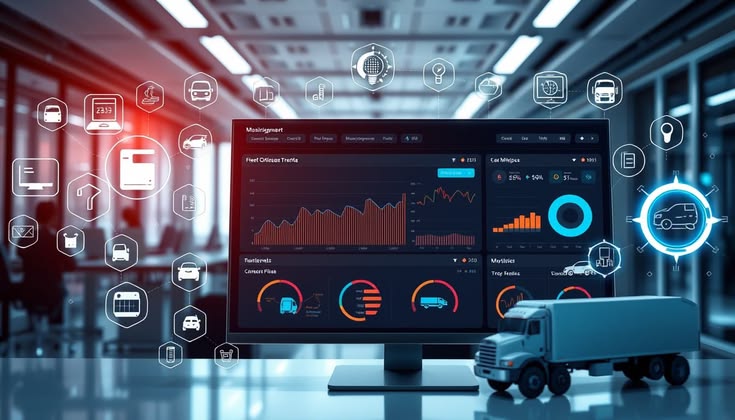
Driving Down the Bottom Line: How Fleet Management Software Slashes Operational Costs Managing a fleet is often described as trying to plug leaks in a sinking ship. Between fluctuating fuel prices, unexpected engine failures, and the rising cost of insurance, fleet managers are under constant pressure to do more with less. The introduction of Fleet Management Software (FMS) hasn’t just added a map to the dashboard; it has provided a financial scalpel. By turning raw data into actionable insights, FMS allows businesses to cut costs with surgical precision. 1. The Fuel Factor: Cutting Your Largest Expense Fuel usually accounts for nearly 30% of total fleet operating costs. FMS reduces this burden in three distinct ways: Eliminating Idling Did you know that a heavy-duty truck can burn roughly one gallon of fuel for every hour it idles? FMS tracks “dead time” and alerts managers when a driver leaves the engine running unnecessarily. By humanizing this data—explaining to drivers why idling matters—companies often see a 5–10% drop in fuel spend within the first month. Route Optimization It’s not just about getting from point A to point B; it’s about avoiding the traffic at point C. Innovative routing algorithms analyze historical traffic patterns and real-time accidents to ensure drivers take the most fuel-efficient path, reducing total mileage and wear on the tires. 2. Predictive Maintenance: Stopping the “Small” Problems A $50 sensor check is always cheaper than a $5,000 engine overhaul. FMS connects directly to the vehicle’s diagnostic port (OBD-II), allowing for Predictive Maintenance. Real-time Alerts: The software notifies the shop the moment a “Check Engine” light flickers, often before the driver even notices a change in performance. Scheduled Servicing: Instead of guessing when to change the oil based on a calendar, FMS uses actual mileage and engine hours to schedule service exactly when it’s needed—neither too early (wasting money) nor too late (risking damage). 3. The Humanized Side: Improving Driver Behavior We often forget that the most expensive part of a vehicle is the person behind the wheel. Aggressive driving—speeding, harsh braking, and rapid acceleration—can lower fuel economy by up to 33% at highway speeds. Gamification and Coaching Modern FMS provides “Driver Scorecards.” Instead of “spying” on drivers, managers can use this data to reward the safest, most efficient operators. This humanized approach reduces turnover and slashes the costs associated with accidents and insurance premiums. When drivers know their safety is being monitored for reward rather than punishment, the culture of the fleet shifts toward efficiency. 4. Total Cost of Ownership (TCO) and Lifecycle Management Every vehicle has a “sweet spot”—a point where it is most profitable before maintenance costs begin to outweigh its value. FMS tracks the lifecycle of every asset. It tells you exactly when to sell a van before it becomes a “money pit,” ensuring you always have the most cost-effective fleet on the road. 5. Reducing Administrative “Paper” Costs The hidden cost of fleet management is the hours spent on paperwork—IFTA fuel tax reporting, ELD compliance, and maintenance logs. FMS digitizes this entire process. Compliance: Automatically generating HOS (Hours of Service) reports prevents heavy fines. Labor Savings: By automating reports that used to take a manager 10 hours a week, you effectively “buy back” a quarter of their salary to focus on growth. Conclusion: Data as Your Most Valuable Asset Fleet management software isn’t just about “tracking trucks”; it’s about visibility. When you can see every drop of fuel, every minute of idling, and every harsh brake, you gain the power to control your destiny. In 2026, the most successful fleets aren’t the ones with the newest trucks; they are the ones with the best data.How to Develop an Innovative Social Commerce App: A Blueprint for Success

Big Data, Data Analytics, Digital Transformation, Technology & Innovation

More Than Just Numbers: Constructing the Human Importance of Big Data

More Than Just Numbers: Constructing the Human Importance of Big Data In the early days of the digital revolution, we viewed data as a byproduct—digital exhaust that was left behind as we browsed the web or swiped our cards. Fast forward to today, and that “exhaust” has become the fuel for the modern world. However, when we talk about the Importance of Big Data, we often get bogged down in the “Big” (the zettabytes, the speed, the variety) and forget about the “Data” (the stories, the people, and the solutions). Constructing the importance of Big Data isn’t just a technical exercise; it’s a human one. It’s about how we use information to understand our world better and make life just a little bit easier for everyone. The Three Pillars of Big Data Significance To understand why Big Data matters, we have to look past the servers and into three specific areas of impact: Empowerment, Prediction, and Personalization. 1. Empowerment: Giving a Voice to the Silent Big Data allows us to see patterns that were previously invisible. For a small business owner, it means having the same level of market insight that was once reserved for billion-dollar corporations. By analyzing localized trends, they can compete on a global scale. This “democratization of information” is perhaps the most humanized aspect of the data revolution. 2. Prediction: Moving from Hindsight to Foresight The true value of data lies not in telling us what happened, but in suggesting what will happen. Public Safety: Cities use data to predict traffic congestion before it happens, reducing commute times and lowering stress for millions. Crisis Management: By tracking environmental data, we can predict natural disasters with higher accuracy, saving lives through early evacuation. 3. Personalization: The End of “One Size Fits All” We live in a world of infinite choice. Big Data acts as a filter, helping us find what we actually need. Whether it’s a medical treatment tailored to your specific genetic makeup or a streaming service recommending a movie that perfectly matches your mood, data makes the world feel smaller and more attentive to our individual needs. The “Human” V’s of Big Data In academic circles, Big Data is defined by the “V’s” (Volume, Velocity, Variety). But to truly construct its importance, we need to add a few more human-centric V’s: Value (The “So What?” Factor) Data is worthless if it doesn’t solve a problem. The importance of Big Data is constructed when it creates value—like reducing food waste in supply chains or helping a student find a learning path that fits their unique pace. Veracity (The Trust Factor) In an era of deepfakes and misinformation, the veracity (truthfulness) of data is our most important shield. Constructing a reliable data infrastructure is about building a foundation of trust between technology and the people who use it. Vulnerability (The Protection Factor) We cannot discuss the importance of data without discussing its defense. Data Privacy & Security is the silent partner of Big Data. As we collect more information, the responsibility to protect the “human” behind that data grows exponentially. Big Data in Action: Solving Global Challenges To reach a deeper understanding of this topic, we must look at how Big Data tackles the “unsolvable” problems of our time. Fighting Climate Change with Precision We are currently using Big Data to build a “Digital Twin” of the Earth. By feeding billions of sensor readings into massive models, scientists can simulate the impact of policy changes in real-time. This allows us to move away from “guessing” at environmental solutions and toward data-backed strategies that actually work. The Healthcare Renaissance In Healthcare & Fitness, Big Data is the difference between a generic prescription and a cure. By analyzing the health data of millions, researchers can identify rare side effects or discover new uses for existing medications in days rather than decades. The Future: From Big Data to “Smart” Data As we move further into 2026, the focus is shifting. We no longer care just about having more data; we care about having better data. The next phase of Big Data importance will be defined by Context. AI is helping us move beyond raw numbers to understand the “Why” behind the “What.” When data starts to understand human emotion, culture, and intent, we will see a new level of innovation in Artificial Intelligence that feels less like a machine and more like a partner. Conclusion: Constructing a Better World The importance of Big Data is not found in the size of the hard drive, but in the breadth of the impact. It is a tool for empathy, a weapon against inefficiency, and a roadmap for the future. As digital farmers, home automation enthusiasts, and healthcare innovators, we are all part of the construction crew. By focusing on the humanized application of these technologies, we ensure that the “Big Data” of tomorrow leads to a “Better World” today. Beyond the Chart: How Innovative Technologies are Empowering Population Health Management

Big Data, data science, Digital Transformation, Internet of Things, Technology & Innovation

Digital Farmers: Why Data is the New Seed for Harvesting Superior Results

Digital Farmers: Why Data is the New Seed for Harvesting Superior Results For generations, farming was a game of intuition, tradition, and a fair bit of gambling with the weather. A farmer knew their land by the feel of the soil between their fingers and the color of the horizon at sunset. While that ancestral wisdom remains the heartbeat of agriculture, a new “crop” is being planted in fields across the globe: Data. The rise of the Digital Farmer isn’t about replacing the human element; it’s about empowering it. By harvesting billions of data points—from soil moisture levels to satellite imagery—modern growers are achieving results that were once considered impossible. The Dawn of the Data-Driven Acre In the past, if a field was thirsty, the whole field got water. If a pest was spotted in the north corner, the entire farm was sprayed with pesticides. This “blanket approach” was the only way to manage large-scale operations, but it was incredibly inefficient. Digital farming, or Precision Agriculture, changes the script. It allows farmers to treat every square meter of their land as an individual unit. By using sensors and GPS-guided machinery, a digital farmer can apply the exact amount of water, fertilizer, or seed needed for a specific spot. Why Data Matters More Than Ever We are currently facing a global challenge: feeding a population expected to reach 10 billion by 2050 while using less water and land than ever before. Data is the bridge. It allows for: Predictive Analysis: Knowing a drought is coming before the first leaf wilts. Resource Optimization: Reducing chemical runoff by only spraying where necessary. Yield Maximization: Finding the “sweet spot” for planting density. The Digital Toolkit: How Data is Collected To harvest results, you first have to harvest information. Digital farmers use a sophisticated ecosystem of tools to get a 360-degree view of their operations. 1. IoT Sensors (The Nervous System) Internet of Things (IoT) sensors are the “eyes and ears” on the ground. These small, rugged devices are buried in the soil or mounted on equipment to monitor: Soil Moisture: Preventing over-irrigation and saving millions of gallons of water. Nutrient Levels: Tracking Nitrogen, Phosphorus, and Potassium (NPK) in real-time. Temperature and Humidity: Predicting the risk of fungal outbreaks. 2. Satellite Imagery and Drones (The View From Above) High-resolution satellite data allows farmers to see “invisible” problems. Using Normalized Difference Vegetation Index (NDVI) imaging, farmers can spot areas where crops are stressed long before the human eye can detect a change in color. Drones take this a step further, providing centimeter-level accuracy for spot-spraying or counting livestock. 3. Telematics and Smart Machinery Modern tractors are essentially moving computers. They collect data on fuel consumption, engine health, and planting depth. When synced with the cloud, this data helps farm managers optimize their fleet’s performance and reduce downtime. From Big Data to Big Decisions: The Human Element Having data is one thing; knowing what to do with it is another. This is where the “humanized” side of digital farming shines. AI-driven platforms take the “noise” of raw data and turn it into Actionable Insights. Instead of looking at a spreadsheet of soil pH levels, a farmer receives a notification on their smartphone: “Zone B4 needs 5% more lime to reach peak yield potential. Schedule application for Tuesday before the rain?” This shift moves the farmer from a laborer to a Data Strategist. It reduces the crushing stress of uncertainty, allowing for a better work-life balance and more predictable financial outcomes. Overcoming the “Digital Divide” Transitioning to digital farming isn’t without its hurdles. For many, the “Data Harvest” feels out of reach due to: High Initial Costs: Smart machinery and sensor networks require significant upfront investment. Connectivity Issues: Many rural areas still lack the high-speed internet required to sync heavy data loads to the cloud. The Learning Curve: Farmers are experts in biology and mechanics, not necessarily data science. However, the industry is pivoting. Open-source data platforms and “as-a-service” models are making tech more accessible to small-scale farmers, ensuring that the digital revolution doesn’t leave the family farm behind. The Future: AI and Autonomous Harvests As we look toward the next decade, data will move from being a “tool” to being the “operator.” We are already seeing the rise of autonomous tractors and robotic weeders that identify and pluck weeds without a drop of herbicide. The goal isn’t a “farmer-less” world, but a world where the farmer is free to focus on the high-level health of the ecosystem, while the data handles the repetitive, granular tasks. Conclusion: Harvesting a Greener Tomorrow The digital farmer is a steward of both the land and the cloud. By embracing data, they are not just harvesting better results for their bank accounts; they are harvesting a more sustainable future for the planet. In the world of modern agriculture, the most valuable tool in the shed isn’t the plow—it’s the insight. When is the Best Time to Source On-Demand Developers? A Strategic 2026 Guide

App Development, startup, Technology, Technology & Innovation

I Have an Idea for an App, But I Don’t Know Where to Start: The 2026 Founder’s Roadmap

Introduction The “Million-Dollar” Dilemma We’ve all been there. You’re standing in line at a coffee shop, or perhaps you’re stuck in traffic, and suddenly—it hits you. A solution to a problem you’ve faced a dozen times. You think, “There should be an app for this.” By the time you get home, the excitement is bubbling over. But then, the reality of the “Blank Canvas” sets in. You aren’t a coder. You don’t have a million dollars in VC funding. You don’t even know if someone else has already built it. The gap between a great idea and a great app is where most dreams go to die. But in 2026, the barriers to entry have never been lower. You don’t need to be a technical genius to start; you just need a repeatable process. Here is how you bridge that gap. 1. Phase One: The Cold Hard Truth (Validation) Before you spend a single rupee or hour on development, you must prove that your idea solves a problem people are willing to pay for. The “Mom Test”: Don’t ask your friends if your idea is good—they’ll lie to be nice. Ask them about their problems. If they’ve already tried to solve the problem with a clunky workaround, you have a winner. Competitive Analysis: If there are other apps in the space, that’s actually good news. It proves there is a market. Your job is to find the “Gap.” Read the one-star reviews of your competitors. What are users complaining about? That complaint is your first feature. The Landing Page Test: Create a simple one-page website describing the app with a “Join the Waitlist” button. If you can get 100 strangers to give you their email address, you have validated demand. 2. Phase Two: Blueprinting the Experience (UX & Wireframing) An app isn’t a collection of code; it’s a collection of screens. You need to map out the journey. User Personas: Who is “Sarah”? Why is she opening your app at 8:00 PM? Is she stressed? Bored? In a rush? Defining the user’s emotional state dictates the design. Low-Fidelity Wireframes: Grab a piece of paper. Draw a rectangle. That’s your phone screen. Now, draw where the buttons go. Do this for the login, the home screen, and the primary action screen. The Power of No-Code Prototyping: In 2026, tools like Figma or even AI-assisted design prompts allow you to create a “clickable” version of your app without writing code. This allows you to feel the flow before building it. 3. Phase Three: The MVP (Minimum Viable Product) The biggest mistake new founders make is trying to build the “Final Version” first. You don’t need a social network with 50 features. You need one feature that works perfectly. The “Must-Have” vs. “Nice-to-Have”: If your app is a food delivery service, the “Must-Have” is ordering food. The “Nice-to-Have” is a dark mode or a loyalty points system. Cut everything that isn’t a “Must-Have.” Choosing Your Stack: In 2026, you have three main paths: Native Development: Best for high performance (iOS/Android). Cross-Platform (Flutter/React Native): One codebase for both stores. No-Code (Bubble/FlutterFlow): Best for rapid testing and non-technical founders. 4. Phase Four: Finding Your “Builders” Unless you are a developer, you will eventually need help. You have three options: The Technical Co-Founder: Someone who believes in the vision and works for equity. Hard to find, but best for long-term growth. Freelancers: Great for specific tasks, but requires you to act as the Project Manager. Development Agencies: The most expensive option, but provides a full team (Designer, Developer, QA) to ensure a professional launch. 5. Phase Five: The Launch and the Pivot Launch day is not the finish line; it’s the starting gun. Once your app is in the App Store, your real job begins: Listening. Analytics: Use tools to see where users are getting stuck. If 50% of people drop off at the “Sign Up” page, your sign-up process is too long. Feedback Loops: Talk to your first 100 users. Ask them what they hate. Be prepared to “Pivot”—changing a core feature based on how people actually use the app, not how you thought they would use it. Conclusion: The First Step is the Hardest The world doesn’t need another “good idea.” It needs people who are brave enough to execute them. Starting an app in 2026 isn’t about having the most features; it’s about having the most empathy for your user’s problems. Don’t wait for the “perfect time” or the “perfect developer.” Start with a piece of paper and a conversation. Every giant tech company you use today started exactly where you are right now: with a single idea and a lot of questions. Navigating the 7 Hidden Limitations of AI Programming

Healthcare & Fitness, Technology, Technology & Innovation

The Digital Vet: How Technology is Disrupting Veterinary Medicine and Practice Management

Introduction For decades, the local veterinary clinic looked much the same: a waiting room filled with anxious paws, a wall of paper files, and a stethoscope as the primary tool of the trade. But as we move through 2026, the “white coat” profession is undergoing a digital renaissance. Technology isn’t just making the job faster; it’s fundamentally changing how we understand the silent patients who cannot tell us where it hurts. From Artificial Intelligence that “reads” X-rays to wearable collars that act as 24/7 nurses, the disruption is real, humanized, and—most importantly—saving lives. The AI Radiologist: Beyond the Human Eye One of the most significant disruptions in modern veterinary medicine is the integration of AI-driven diagnostics. In the past, a vet might wait days for a specialist to review a complex set of radiographs. Today, AI algorithms trained on millions of clinical images can provide a preliminary analysis in under sixty seconds. These systems aren’t replacing veterinarians; they are providing a powerful “second set of eyes.” By highlighting subtle shadows in a lung lobe or detecting early-stage heart enlargement that might be missed by a tired human eye at the end of a long shift, AI is ensuring that “proactive care” isn’t just a buzzword. It allows the practitioner to discuss treatment options with the owner immediately, while the pet is still on the exam table. Wearable Tech: Giving a Voice to the Silent Patient The biggest challenge in veterinary medicine has always been the communication gap. Animals are masters at hiding pain—an evolutionary trait designed to protect them from predators. In 2026, wearable technology has finally closed this gap. Smart collars and harnesses now monitor much more than just GPS location. They track respiratory rates, sleep quality, scratching frequency, and even “pulse wave velocity” to detect early cardiac distress. When this data is synced with practice management software, it creates a “biometric baseline” for the pet. If a senior dog’s activity level drops by 15% over a week, the clinic’s system can automatically flag this for a follow-up, often catching arthritis or metabolic issues months before the owner notices a limp. Telemedicine and the “Hybrid Clinic” Model The pandemic-era pivot to Zoom calls has evolved into a sophisticated “Hybrid Clinic” model. We’ve moved past the clunky video calls of the early 2020s. Today’s veterinary telemedicine platforms integrate directly with home-use diagnostic kits. Owners can now use smartphone-connected otoscopes to show a vet the inside of an inflamed ear or use AI-powered urine analysis strips that send results directly to the clinic’s database. This disruption saves the “stress-sensitive” pets—like cats who loathe the carrier—from unnecessary travel, while allowing veterinarians to reserve their physical exam rooms for surgical cases and emergencies. It’s a win-win for clinic efficiency and animal welfare. Revolutionizing Practice Management: The Paperless Heart Behind the scenes, the “brain” of the clinic—the Practice Management Software (PMS)—has seen the most drastic overhaul. Gone are the days of clunky, on-premise servers. The 2026 veterinary practice is cloud-native and automated. Automated Workflow and Client Communication Modern PMS platforms now handle the “invisible work” that used to burn out veterinary staff. Automated systems handle appointment reminders, post-operative check-in texts, and even laboratory result deliveries. When a blood panel is completed by the lab, the software can automatically draft a summary for the vet to approve and send to the owner’s app instantly. This reduces the “phone tag” that has historically plagued the industry. Inventory Intelligence Inventory is often the largest expense for a vet practice. Disruptive technology now uses predictive analytics to manage pharmacy stocks. By analyzing local disease trends (like a spike in heartworm cases in a specific zip code), the software can automatically order the necessary medications before the clinic runs out, ensuring that life-saving treatments are always on the shelf. 3D Printing and Personalized Surgery We are entering an era where “one size fits all” no longer applies to surgery. 3D printing technology is being used to create patient-specific surgical guides and implants. If a dog has a complex bone fracture or a tumor, surgeons can now print a 3D model of that specific animal’s bone structure to practice the surgery before the first incision is made. This leads to shorter anesthesia times, smaller incisions, and significantly faster recovery periods. In 2026, we are even seeing the rise of 3D-printed prosthetic limbs that are custom-contoured to a pet’s gait, giving mobility back to animals that previously would have had no options. The Ethical Frontier: Data Privacy and the Human Touch With all this data comes a new responsibility. As veterinary clinics become data hubs, cybersecurity has become a top priority. Protecting the “digital identity” of the pet and the financial data of the owner is now a core part of practice management. However, the most important trend in 2026 is the “Humanization of Tech.” Developers have realized that the more tech we add, the more we need to preserve the human-animal bond. The best technologies are those that stay in the background—handling the data and the paperwork—so that the veterinarian can spend more time sitting on the floor with the patient, offering a treat and a comforting hand. Conclusion: A Future Focused on Longevity Technology in veterinary medicine is no longer about “gadgets.” It is about a fundamental shift from reactive medicine (fixing what is broken) to preventative medicine (keeping the pet healthy longer). As these disruptions become the standard, the role of the veterinarian is evolving into that of a “Data Interpreter” and a “Compassionate Guide.” By embracing AI, wearables, and cloud-based management, the veterinary profession is ensuring that our pets don’t just live longer, but that their extra years are filled with quality, comfort, and the best care that human (and machine) intelligence can provide. Unity 2D Game Development: The Ultimate Guide to Building Your Custom Games

How would you like me to respond?

Select a personality for your AI assistant

Normal
Happy
Sad
Angry

Your selection will affect how the AI assistant responds to your messages

Chat Assistant

Let's discuss your project!

Hear from our clients and why 3000+ businesses trust TechOTD

Tell us what you need, and we'll get back with a cost and timeline estimate

Scroll to Top