DEVOPs

DevOps workflows for faster and reliable delivery
DEVOPs

The Importance of Automation in DevOps Workflows: Boosting Efficiency and Reliability

Introduction In the fast-paced world of software development, automation is the engine that powers DevOps. It’s the secret ingredient that allows teams to move quickly, deliver consistently, and maintain reliability across the entire software lifecycle. Without automation, DevOps would be incomplete — manual interventions would slow processes and introduce human errors. From code integration to testing, deployment, and monitoring, automation ensures that every stage of development runs smoothly and predictably. What is DevOps Automation? DevOps automation refers to the use of technology and tools to perform repetitive, time-consuming tasks without manual intervention. The goal is to increase efficiency, consistency, and reliability in the software development and deployment process. Automation enables teams to focus on innovation and problem-solving instead of manual operations, while also ensuring that software updates are delivered faster and with higher quality. Why Automation Matters in DevOps 1. Faster Software Delivery Manual processes slow down the delivery pipeline. Automation eliminates delays by executing build, test, and deployment tasks continuously and without human intervention. 2. Fewer Human Errors Even experienced developers can make mistakes during manual deployments. Automation reduces this risk by applying consistent, repeatable scripts and configurations. 3. Better Collaboration Between Teams Automation bridges the gap between development and operations. When tasks are automated, developers and IT teams can work in harmony — leading to smoother deployments and fewer misunderstandings. 4. Improved Scalability Automation allows organizations to handle multiple deployments simultaneously. Whether it’s deploying across multiple regions or environments, automation makes scaling easy and error-free. 5. Consistent Results Automated workflows ensure that every build and deployment follows the same process, producing predictable outcomes every time. Key Areas of Automation in DevOps Continuous Integration and Continuous Delivery (CI/CD) CI/CD pipelines automate the process of integrating code, testing, and deploying it to production. Tools like Jenkins, GitLab CI, and CircleCI handle these steps automatically, reducing turnaround times. Infrastructure as Code (IaC) IaC tools like Terraform, Ansible, and AWS CloudFormation enable developers to create and manage infrastructure using code, ensuring consistency across environments. Automated Testing Testing is one of the most critical areas to automate. With tools like Selenium, JUnit, and TestNG, teams can automatically verify new code, reducing bugs before deployment. Configuration Management Configuration automation ensures that servers and environments are set up correctly every time. Tools like Chef, Puppet, and Ansible make this process fast and reliable. Monitoring and Alerts Automation in monitoring tools like Prometheus, Grafana, and ELK Stack helps track performance metrics and send real-time alerts to detect and fix issues early. Benefits of DevOps Automation Accelerated Delivery: Automating repetitive tasks speeds up releases. Enhanced Quality: Automated testing ensures each release meets quality standards. Reduced Downtime: Quick detection and rollback mechanisms prevent long outages. Cost Savings: Less manual work means reduced operational costs. Increased Productivity: Developers spend more time coding and innovating instead of handling repetitive tasks. Challenges in Implementing Automation Despite its advantages, implementing automation in DevOps can be challenging: Tool Overload: Choosing the right tools can be confusing with so many options. Initial Setup Costs: Automation requires time and resources to implement correctly. Skill Gaps: Teams may lack the technical expertise for advanced automation. Security Concerns: Automated scripts, if misconfigured, can expose vulnerabilities. To overcome these, businesses should start small, train teams, and gradually scale automation. Best Practices for DevOps Automation Automate Incrementally: Begin with the most repetitive and error-prone tasks. Use Version Control: Store all automation scripts in repositories like Git. Monitor Continuously: Track automation performance and fix issues proactively. Integrate Security Early: Combine automation with DevSecOps principles for secure pipelines. Keep Documentation Updated: Ensure that automated workflows are well-documented for easy maintenance. Real-World Example: Amazon’s DevOps Automation Amazon uses advanced automation in its DevOps pipelines to deploy thousands of updates daily. Through continuous delivery and infrastructure automation, the company achieves near-zero downtime and rapid innovation. This example proves that with proper automation, large-scale operations can maintain speed and reliability simultaneously. Conclusion Automation is the lifeblood of DevOps. It reduces human dependency, accelerates release cycles, and ensures that every deployment is consistent and reliable. By automating infrastructure, testing, and delivery, organizations can achieve the full potential of DevOps — delivering faster, smarter, and better-quality software to users around the world. In 2025 and beyond, automation will continue to evolve with AI, machine learning, and predictive analytics, making DevOps even more intelligent and efficient. FAQs 1. What is DevOps automation?It’s the use of tools and scripts to automate repetitive DevOps tasks like building, testing, and deploying software. 2. How does automation help in DevOps?Automation reduces manual work, speeds up deployment, and ensures consistency across environments. 3. What are the best tools for DevOps automation?Jenkins, Ansible, Terraform, Docker, and GitLab CI are some of the most popular automation tools. 4. Is automation suitable for small teams?Yes, small teams benefit greatly from automation because it saves time and reduces errors. 5. What is the difference between DevOps and automation?DevOps is a culture and methodology, while automation is a key practice that enables DevOps efficiency. 6. What is the future of automation in DevOps?The future lies in AI-driven automation (AIOps), where systems can self-correct and optimize without human intervention. Connect with us.


Continuous Integration and Continuous Delivery in DevOps
DEVOPs

Continuous Integration and Continuous Delivery (CI/CD): The Heart of DevOps Success

Introduction The core of any successful DevOps implementation lies in Continuous Integration (CI) and Continuous Delivery (CD) — collectively known as CI/CD. These practices automate the software lifecycle from code development to deployment, ensuring that new features reach users faster and with fewer errors. In today’s world, where software updates are expected weekly or even daily, CI/CD pipelines make it possible to release stable, high-quality applications continuously. What is Continuous Integration (CI)? Continuous Integration is the practice of merging all developers’ working copies to a shared mainline several times a day. It ensures that every code change is automatically built, tested, and verified before integration. This process helps detect bugs early, prevents integration conflicts, and maintains a high level of code quality. Key goals of CI include: Detecting integration issues early Automating build and testing Maintaining a consistent codebase Reducing manual testing time Popular CI tools include Jenkins, GitHub Actions, GitLab CI/CD, CircleCI, and Travis CI. What is Continuous Delivery (CD)? Continuous Delivery extends CI by automating the release process, ensuring that applications can be deployed to production at any time. Once code passes testing in CI, CD pipelines handle staging, deployment, and post-deployment verification. This makes deployment faster, more reliable, and less risky. Key goals of CD include: Automating deployment processes Maintaining a ready-to-release codebase Reducing manual intervention Ensuring smooth rollbacks when issues occur How CI/CD Works in a DevOps Pipeline Code Commit: Developers write and push code to a shared repository (like Git). Build Stage: The CI system automatically builds the code to check for errors. Automated Testing: The pipeline runs unit, integration, and regression tests. Artifact Creation: If the build and tests pass, the application artifact (Docker image, binary, etc.) is generated. Deployment Stage: The artifact is deployed to staging or production environments using CD tools. Monitoring: Logs and metrics are analyzed post-deployment to ensure stability. Benefits of CI/CD in DevOps Faster Development Cycles: Automated builds and tests reduce release times. Early Bug Detection: Problems are caught before they reach production. Improved Collaboration: Developers, testers, and operations work in sync. Consistent Quality: Automated testing ensures stability across releases. Reduced Deployment Risks: Incremental updates minimize large-scale failures. CI/CD Tools That Power DevOps Jenkins: Open-source automation server with thousands of plugins. GitLab CI/CD: Built-in CI/CD feature for GitLab users. CircleCI: Known for performance and scalability. Travis CI: Great for open-source projects. Azure DevOps: Microsoft’s end-to-end DevOps suite. AWS CodePipeline: Automates build, test, and deploy for AWS applications. Challenges in Implementing CI/CD While CI/CD improves speed and reliability, it also introduces challenges: Complex pipeline setup and maintenance Integration with legacy systems Security concerns during automated deployments Insufficient test coverage causing false positives or missed bugs To overcome these, teams must adopt proper automation strategies, security testing, and continuous monitoring practices. Best Practices for Successful CI/CD Implementation Start Small: Begin with automating builds and unit tests before full deployment automation. Use Version Control: Ensure all configurations and scripts are versioned. Automate Everything: From code commit to release validation. Integrate Security Early: Adopt “DevSecOps” for secure CI/CD pipelines. Monitor Continuously: Use dashboards and alerts for real-time insights. Real-World Example: Spotify’s CI/CD Culture Spotify’s engineering teams use CI/CD to deploy updates frequently — sometimes multiple times per day. The automation ensures that new features roll out seamlessly without affecting user experience. This DevOps-driven agility has been a key factor behind Spotify’s continuous innovation and reliability. Conclusion Continuous Integration and Continuous Delivery form the foundation of modern DevOps. They eliminate manual bottlenecks, ensure code quality, and enable rapid deployment — turning software delivery into a smooth, automated process. As businesses continue to evolve, mastering CI/CD will be crucial for maintaining agility, reliability, and innovation in 2025 and beyond. FAQs 1. What is the main difference between CI and CD?CI automates code integration and testing, while CD automates deployment and release to production. 2. Why is CI/CD important in DevOps?It ensures faster, reliable, and more frequent releases, improving collaboration and product quality. 3. Which CI/CD tool is best for beginners?Jenkins and GitHub Actions are ideal for beginners due to community support and easy setup. 4. What challenges can arise with CI/CD?Pipeline complexity, security risks, and maintenance overhead are common challenges. 5. Can small businesses implement CI/CD?Yes, cloud platforms like GitHub and GitLab provide affordable CI/CD solutions. 6. What’s next for CI/CD in the future?Integration with AI-driven DevOps (AIOps) will automate failure detection, optimize testing, and improve deployment accuracy. Connect with us.

DevOps lifecycle and workflow stages
DEVOPs

The DevOps Lifecycle Explained – Stages, Benefits, and Best Practices

Introduction The DevOps approach has become the foundation for modern software development. It’s not just a set of tools or techniques — it’s a continuous cycle of collaboration, automation, and delivery that bridges the gap between developers and operations teams. The DevOps lifecycle represents this entire journey — from writing code to deploying and maintaining applications in production. Each stage plays a crucial role in ensuring fast delivery, reliability, and continuous improvement. Let’s dive into the complete DevOps lifecycle, its stages, benefits, and best practices every developer should know in 2025. Understanding the DevOps Lifecycle The DevOps lifecycle is a circular process that emphasizes continuous integration, testing, deployment, and feedback. Unlike traditional development, which follows a linear model, DevOps relies on continuous loops that allow teams to iterate quickly and adapt to change. There are generally eight main stages in the DevOps lifecycle: plan, code, build, test, release, deploy, operate, and monitor. Together, these create a continuous feedback loop that drives innovation and efficiency. 1. Planning – Laying the Foundation The first stage of the DevOps lifecycle begins with planning. Teams define goals, outline project scope, and determine the technical requirements for development and deployment. Using tools like Jira, Trello, or Asana, developers and project managers collaborate to create a roadmap and assign responsibilities. A well-structured plan sets the tone for smooth collaboration and ensures that both development and operations teams work toward the same objectives. 2. Coding – Building the Core In the coding stage, developers start writing the application’s core functionality using programming languages and frameworks. Collaboration tools like Git and GitHub are used for version control, enabling developers to work together seamlessly on different parts of the codebase. Following best coding practices, code reviews, and maintaining proper documentation are key to ensuring quality and maintainability. This phase also emphasizes modularity and reusability, making it easier to integrate changes later. 3. Building – Continuous Integration Begins Once the code is ready, it moves to the build stage, where it’s compiled and packaged for testing and deployment. Using tools like Jenkins, Maven, or Gradle, teams automate the build process, ensuring faster delivery and error detection. Continuous Integration (CI) pipelines automatically merge and test new code to prevent conflicts. This stage ensures that every code change integrates smoothly into the main application, maintaining system stability and consistency. 4. Testing – Ensuring Quality and Reliability In this stage, testing is automated to validate the functionality, performance, and security of the code. Tools such as Selenium, JUnit, or TestNG are used to run automated test scripts that check for bugs or performance issues. Continuous Testing ensures that every update or new feature meets quality standards before deployment. The goal is to detect and fix issues early, reducing post-release problems and maintaining user satisfaction. 5. Release – Preparing for Deployment Once the code passes testing, it moves to the release stage, where it’s prepared for deployment. Configuration management tools like Ansible, Puppet, or Chef help automate this process by defining environments and dependencies. At this point, the team ensures version control and rollback mechanisms are in place, allowing safe and smooth transitions to production. 6. Deployment – Going Live Deployment marks the transition from development to production. Using CI/CD pipelines (Continuous Integration and Continuous Deployment), code is automatically deployed without human intervention. Tools like Docker and Kubernetes make this process seamless by managing containers and orchestrating deployments across multiple environments. This ensures faster releases and consistent delivery, regardless of the infrastructure. 7. Operation – Maintaining Stability Once deployed, the application moves into the operation phase, where it is actively managed and maintained. Operations teams ensure that the application is available, stable, and performing as expected. Tools like AWS CloudWatch, Nagios, or Datadog help monitor system resources and server health. Any performance degradation or anomalies are addressed immediately to minimize downtime. 8. Monitoring – Continuous Feedback and Improvement The final stage of the DevOps lifecycle focuses on monitoring performance, gathering user feedback, and identifying areas for improvement. Monitoring tools such as Prometheus, Grafana, or Splunk help visualize real-time data, giving teams actionable insights into system behavior. Continuous monitoring not only ensures reliability but also drives future innovation and system optimization. Key Benefits of the DevOps Lifecycle Implementing the DevOps lifecycle offers numerous advantages for organizations: Faster Delivery: Automation and continuous integration accelerate software releases. Improved Quality: Frequent testing ensures high-quality and bug-free releases. Enhanced Collaboration: Cross-functional teams work more efficiently together. Reduced Downtime: Automated monitoring minimizes disruptions and improves reliability. Scalability: DevOps supports dynamic scaling to handle changing workloads. These benefits make DevOps indispensable for modern software development. Best Practices for an Effective DevOps Lifecycle To maximize the value of DevOps, organizations should follow these best practices: Automate everything — from code integration to monitoring. Foster open communication between development and operations. Continuously measure performance using KPIs and metrics. Integrate security at every stage (DevSecOps). Encourage feedback loops for constant improvement. Following these guidelines ensures a stable, efficient, and scalable DevOps workflow. Conclusion The DevOps lifecycle is a continuous loop that connects development, testing, deployment, and feedback in an agile and automated way. Each stage plays a critical role in delivering quality software faster and more reliably. By adopting the DevOps lifecycle, organizations can bridge the gap between development and operations, reduce costs, and enhance innovation. In 2025 and beyond, companies that master these principles will stay ahead in the ever-evolving digital landscape. FAQs 1. What is the DevOps lifecycle?It’s a continuous process that includes planning, coding, building, testing, deploying, operating, and monitoring software applications. 2. Why is the DevOps lifecycle important?It enables faster, more reliable software delivery and promotes collaboration across teams. 3. What tools are used in the DevOps lifecycle?Popular tools include Jenkins, Docker, Kubernetes, Ansible, Git, and Prometheus. 4. What is Continuous Integration in DevOps?Continuous Integration automatically merges and tests code changes to detect issues early. 5. How does DevOps improve product quality?Through automation and continuous feedback, it ensures consistent performance and reliability. 6. Is DevOps suitable for all industries?Yes,

Computer screen showing code and DevOps automation tools
DEVOPs, Uncategorized

Top 10 DevOps Tools Every Developer Should Know.

Introduction The DevOps revolution continues to transform the software industry in 2025. Businesses across the world are shifting from traditional development methods to agile, automated, and collaborative DevOps workflows. At the heart of this transformation lie DevOps tools — powerful solutions that automate tasks, enhance collaboration, and streamline software delivery. Whether you’re a developer, tester, or system administrator, mastering these tools can significantly improve your efficiency and project outcomes. Let’s explore the top 10 DevOps tools that are shaping the future of modern software development. Jenkins – The Automation Powerhouse Jenkins remains one of the most widely used open-source automation servers for building, testing, and deploying software. With over 1,800 plugins, Jenkins integrates seamlessly with various technologies, making it perfect for continuous integration (CI) and continuous delivery (CD). Developers can automate everything—from code compilation to deployment—without manual intervention. Why it’s essential: Jenkins provides flexibility, scalability, and complete pipeline automation for DevOps teams. Docker – Simplifying Containerization Docker revolutionized software development by introducing lightweight, portable containers that work across different environments. With Docker, developers can package applications and dependencies into containers that run consistently across development, testing, and production environments. This ensures reliability and faster deployment cycles. Why it’s essential: Docker minimizes compatibility issues, improves scalability, and simplifies deployment processes. Kubernetes – The Container Orchestrator While Docker manages containers, Kubernetes (K8s) orchestrates them. It automates deployment, scaling, and management of containerized applications. Kubernetes ensures high availability by distributing workloads across clusters and automatically recovering failed containers. Why it’s essential: Kubernetes helps businesses manage complex, large-scale applications effortlessly in cloud and hybrid environments. Git and GitHub – Version Control and Collaboration No DevOps workflow is complete without Git and GitHub. Git provides a version control system that tracks code changes, while GitHub offers a collaborative platform for developers to manage projects and pull requests. Why it’s essential: These tools improve teamwork, maintain code quality, and make collaboration across distributed teams seamless. Terraform – Infrastructure as Code (IaC) Terraform, developed by HashiCorp, is a popular Infrastructure as Code (IaC) tool that allows developers to define infrastructure using configuration files. It supports multiple cloud providers like AWS, Azure, and Google Cloud, enabling consistent infrastructure setup across environments. Why it’s essential: Terraform simplifies cloud resource management and automates infrastructure provisioning efficiently. Ansible – Configuration Management Simplified Ansible, an open-source automation tool by Red Hat, is used for configuration management, application deployment, and task automation. It’s agentless, meaning it doesn’t require software to be installed on target nodes, making it simple and secure to manage large environments. Why it’s essential: Ansible improves deployment speed and ensures consistent configurations across multiple servers. Prometheus – Monitoring and Alerting Prometheus is a leading open-source monitoring tool that collects metrics, stores time-series data, and generates alerts for performance issues. It integrates easily with Grafana to visualize metrics through interactive dashboards. Why it’s essential: Prometheus helps DevOps teams track application health, performance, and uptime in real time. Nagios – System Monitoring and Incident Detection Nagios is a robust tool for monitoring networks, servers, and applications. It provides detailed reports on uptime, response time, and security vulnerabilities. Why it’s essential: Nagios ensures proactive incident detection and quick issue resolution, minimizing downtime. ELK Stack (Elasticsearch, Logstash, Kibana) – Centralized Logging The ELK Stack is a powerful combination of tools for log management. Elasticsearch stores and searches large volumes of data. Logstash processes and collects logs from multiple sources. Kibana visualizes the data through dashboards. Why it’s essential: ELK helps organizations gain real-time insights and troubleshoot system issues efficiently. Chef – Automating Infrastructure Management Chef uses code to manage and automate infrastructure. It helps DevOps teams define server configurations and ensure consistent deployment across environments. Why it’s essential: Chef enables continuous delivery of infrastructure, reducing manual effort and configuration drift. Benefits of Using DevOps Tools Adopting the right DevOps tools provides immense benefits: Automation: Reduces repetitive tasks and increases productivity. Speed: Enables faster delivery through CI/CD pipelines. Reliability: Ensures consistent environments and fewer deployment failures. Scalability: Supports dynamic scaling in cloud environments. Collaboration: Enhances communication between developers and operations teams. These tools empower businesses to innovate quickly while maintaining stability and efficiency. Choosing the Right Tool for Your Business There’s no one-size-fits-all approach to DevOps tools. The best combination depends on your project’s complexity, infrastructure, and team expertise. Start with essential tools like Git, Jenkins, and Docker. Gradually integrate advanced solutions such as Kubernetes, Terraform, and Prometheus to optimize automation and scalability. Conclusion The DevOps ecosystem is vast, but mastering the top 10 tools listed above can drastically improve your team’s agility, speed, and collaboration. In 2025, automation, cloud-native development, and continuous delivery are no longer luxuries—they are business necessities. By adopting these DevOps tools, developers and organizations can stay ahead of the curve and deliver reliable, scalable, and high-performing applications faster than ever. DevOps isn’t just a methodology; it’s a mindset. And these tools are the engines that power it. FAQs 1. What are DevOps tools used for?They help automate, monitor, and streamline the software development and deployment process. 2. Which DevOps tool is best for automation?Jenkins and Ansible are top choices for automation in DevOps workflows. 3. What is the difference between Docker and Kubernetes?Docker creates containers, while Kubernetes manages and orchestrates them. 4. Can small companies use DevOps tools?Yes, most tools like Git, Jenkins, and Docker are open source and ideal for startups too. 5. What is Infrastructure as Code (IaC)?IaC tools like Terraform manage infrastructure using code, ensuring consistent and automated setup. 6. Are DevOps tools difficult to learn?Some have a learning curve, but extensive documentation and community support make them beginner-friendly. Connect with us.

Team collaborating on DevOps workflow with automation tools
DEVOPs

What Is DevOps and Why It Matters in 2025

Introduction In the fast-paced world of software development, agility and reliability are critical for success. As businesses race to deliver software faster without compromising quality, a modern methodology called DevOps has become the cornerstone of innovation. DevOps combines “Development” and “Operations” — breaking the traditional silos between software engineers and IT teams. This collaboration allows organizations to deliver updates quickly, respond to user needs faster, and maintain high performance across systems. But what exactly is DevOps, and why has it become essential in 2025? Let’s explore. What Is DevOps? DevOps is a cultural and technical approach that unites software development and IT operations to achieve continuous integration, delivery, and improvement. The goal is simple: shorten the software development lifecycle while maintaining quality and stability. Instead of working separately, developers, testers, and system administrators collaborate using automation tools, shared metrics, and continuous feedback loops. This promotes faster releases, fewer bugs, and better customer satisfaction. In short, DevOps isn’t just about tools—it’s about teamwork, automation, and a culture of continuous improvement. The Core Principles of DevOps DevOps is built on a few key principles that guide how teams work together: Collaboration and Communication – DevOps breaks down barriers between developers and operations teams, promoting transparency and shared responsibility. Automation – From testing to deployment, automation reduces manual errors and speeds up delivery. Continuous Integration and Continuous Deployment (CI/CD) – Regularly merging and deploying code ensures faster releases and immediate bug detection. Monitoring and Feedback – Constant monitoring allows teams to detect issues early and improve system performance. Security Integration (DevSecOps) – Security is embedded into every stage of development rather than being added at the end. These principles enable organizations to innovate faster while maintaining system reliability and security. The DevOps Lifecycle The DevOps lifecycle represents the continuous loop of development, integration, deployment, and monitoring. It typically includes the following stages: Plan – Teams collaborate to define requirements and goals. Code – Developers write and review code collaboratively. Build – Code is compiled, tested, and packaged for deployment. Test – Automated testing ensures code quality and reliability. Release – Approved builds are deployed to production environments. Deploy – Software is automatically deployed using pipelines. Operate – Systems are monitored for performance and availability. Monitor – Real-time feedback is collected for continuous improvement. This cyclical process ensures faster delivery and consistent software quality. Benefits of Adopting DevOps Implementing DevOps brings a wide range of business and technical advantages: Faster Software Delivery – Automated workflows and CI/CD pipelines speed up deployment cycles. Improved Collaboration – Cross-functional teams communicate better, reducing bottlenecks. Higher Quality Software – Continuous testing ensures fewer bugs and more stable releases. Greater Customer Satisfaction – Quick updates and reliable performance improve user experience. Increased Efficiency – Automation reduces repetitive manual tasks. Scalability – DevOps practices enable businesses to scale applications quickly as demand grows. For modern organizations, these benefits translate into innovation, cost efficiency, and competitive advantage. Common DevOps Tools DevOps thrives on the right set of tools that support integration, automation, and monitoring. Some of the most popular tools include: Jenkins – Automates CI/CD pipelines. Docker – Simplifies containerization and application deployment. Kubernetes – Manages container orchestration. Git & GitHub – Enables version control and team collaboration. Ansible & Puppet – Automate infrastructure configuration. Prometheus & Grafana – Provide system monitoring and alerting. These tools empower teams to build, test, and deploy faster while maintaining reliability and visibility. DevOps in 2025: Emerging Trends As technology evolves, DevOps continues to adapt. Here are the top trends shaping DevOps in 2025: AI-Driven DevOps (AIOps) – Artificial intelligence helps automate decision-making, detect anomalies, and predict failures. GitOps – Managing infrastructure through Git repositories for versioned and auditable automation. Serverless Architectures – Enabling faster, cost-effective deployment without server management. DevSecOps Expansion – Integrating security into every step of development. Cloud-Native Development – Leveraging multi-cloud strategies for scalability and flexibility. These trends are transforming DevOps into a more intelligent, automated, and secure approach to software delivery. Challenges in Implementing DevOps While DevOps offers immense benefits, implementation isn’t without challenges: Cultural Resistance – Teams may struggle to adapt to new collaborative models. Tool Overload – Choosing and managing too many tools can cause confusion. Skill Gaps – DevOps requires multidisciplinary expertise. Security Concerns – Faster deployments can introduce vulnerabilities if not managed properly. Organizations overcome these challenges through training, leadership support, and adopting DevOps gradually across teams. Conclusion DevOps is more than just a buzzword—it’s a fundamental shift in how software is built and delivered. By merging development, operations, and automation, organizations achieve agility, reliability, and continuous innovation. In 2025 and beyond, DevOps remains the foundation of digital success. Businesses that embrace it gain the agility to deliver faster, adapt to market changes, and meet customer expectations effortlessly. Whether you’re a startup or an enterprise, adopting DevOps today ensures you’re prepared for the digital challenges of tomorrow. FAQs 1. What is the main purpose of DevOps?To improve collaboration between development and operations teams and speed up software delivery cycles. 2. What are the key stages of the DevOps lifecycle?Planning, coding, building, testing, releasing, deploying, operating, and monitoring. 3. How does DevOps improve efficiency?Automation and CI/CD pipelines reduce manual effort, minimize errors, and accelerate deployments. 4. What is the difference between Agile and DevOps?Agile focuses on iterative software development, while DevOps extends it to include deployment and operations. 5. What are common DevOps tools?Jenkins, Docker, Kubernetes, Git, Ansible, and Prometheus. 6. Is DevOps relevant for non-tech companies?Yes, any organization that develops or uses software can benefit from DevOps to improve delivery and performance. Connect with us.

DevOps process showing collaboration, automation, and CI/CD pipelines in modern software development.
DEVOPs

DevOps in 2025: Bridging Development and Operations for Smarter Software Delivery

Introduction In the fast-paced world of software, speed and reliability define success. That’s where DevOps comes in — a powerful approach that unites Development (Dev) and Operations (Ops) to deliver high-quality applications faster and more efficiently. By 2025, DevOps isn’t just a methodology; it’s a culture of collaboration, automation, and continuous improvement that drives digital transformation across industries. What Is DevOps? DevOps is a software engineering practice that integrates development and IT operations teams to shorten the software development lifecycle and ensure continuous delivery with high quality. It focuses on: Collaboration: Breaking silos between teams. Automation: Streamlining repetitive tasks. Continuous Integration/Continuous Deployment (CI/CD): Delivering updates frequently and reliably. Why DevOps Matters in 2025 As organizations scale digitally, agility and efficiency are more important than ever. Faster Releases: Frequent and automated deployments. Improved Quality: Automated testing reduces errors. Greater Collaboration: Developers and operations share responsibility. Business Agility: Quick adaptation to user feedback and market trends. Key Principles of DevOps Collaboration and Communication: Shared ownership between teams. Automation: From code integration to deployment. Continuous Testing: Detect bugs early with automated QA. Monitoring and Feedback: Real-time tracking of performance and issues. Security Integration (DevSecOps): Embedding security into every stage. Popular DevOps Tools in 2025 Category Tools Description Version Control Git, GitHub, GitLab Manage and track code versions CI/CD Jenkins, CircleCI, GitHub Actions Automate build, test, and deploy Containerization Docker, Kubernetes Deploy apps consistently across environments Monitoring Prometheus, Grafana Real-time tracking of app performance Infrastructure as Code (IaC) Terraform, Ansible Automate infrastructure management Cloud Integration AWS, Azure DevOps Host, scale, and manage pipelines The Future of DevOps The future of DevOps is powered by AI, automation, and cloud-native development. AI-Driven Monitoring: Predict system failures before they occur. Serverless Architecture: Deploy apps without managing servers. ChatOps: Real-time collaboration through chat platforms like Slack. Sustainable DevOps: Optimizing infrastructure for lower energy use. Conclusion DevOps represents the perfect balance between innovation and reliability. By combining collaboration, automation, and continuous feedback, it empowers teams to build, test, and deploy faster than ever before. In 2025 and beyond, DevOps will remain the foundation of agile, scalable, and secure software delivery — the key to digital success. “DevOps isn’t a tool or a team — it’s a mindset that builds better software, together.” FAQ Section Q1. What is DevOps in simple terms?It’s a collaboration between developers and operations teams to deliver software faster and more reliably. Q2. What tools are used in DevOps?Popular tools include Git, Jenkins, Docker, Kubernetes, and Terraform. Q3. How does DevOps differ from Agile?Agile focuses on development cycles; DevOps extends that to deployment and operations. Q4. What is CI/CD in DevOps?It’s a process of continuously integrating code and deploying updates automatically. Q5. Why is DevOps important?It enhances efficiency, reduces downtime, and improves product quality.

DEVOPs

DevOps at Scale: Strategies for Enterprise-Wide Modernization

Introduction In the fast-paced digital era, enterprises must evolve their software development and delivery models to remain competitive and responsive. DevOps at scale has emerged as an essential approach, enabling organizations to modernize their entire IT landscape, drive automation, foster collaboration, and accelerate innovation. This blog explores strategies and best practices for successfully implementing DevOps across large enterprises, tackling challenges while maximizing business value. Explore advanced AI-driven transformation capabilities at TechOTD AI Services. Understanding Enterprise DevOps at Scale What is DevOps at Scale? DevOps at scale refers to adopting and integrating DevOps principles—collaboration, automation, continuous integration, continuous delivery—across complex, distributed, and often global enterprise IT environments. Enterprises face unique challenges like legacy systems, multiple teams, regulatory demands, and extensive toolchains. Why Modernize with DevOps? Accelerated time to market for software products Improved software quality and reliability through automation Enhanced collaboration across development, operations, and security teams Scalable and repeatable deployment pipelines for global operations Better alignment between IT and business goals The TechOTD blog dives deeper into how organizations embrace such transformations. Core Strategies for Enterprise-Wide DevOps Modernization 1. Establish a Strong Foundation with Scalable CI/CD Pipelines Centralized, automated continuous integration and delivery pipelines are critical for managing complex software releases. Tools like Jenkins, Azure DevOps, and GitLab enable efficient build, test, and deployment workflows. Standardize coding, security, and compliance practices Automate pipeline monitoring and incident response Use pipeline-as-code for versioned and reproducible deployments 2. Cultivate a Collaborative and Transparent Culture Culture is the heart of DevOps success at scale. Break down silos to encourage communication and shared ownership Form cross-functional, self-service teams covering development, QA, operation, and security Adopt frameworks like CALMS (Culture, Automation, Lean, Measurement, Sharing) to assess maturity and guide improvements Use collaboration tools integrated with workflow management for transparency Learn more about AI’s role in enabling collaboration at TechOTD AI page. 3. Automate Infrastructure and Configuration Management In large enterprises, manual provisioning slows progress and introduces errors. Implement Infrastructure as Code (IaC) using Terraform, Ansible, or Puppet Use cloud-native services and container orchestration (Kubernetes) for scalable infrastructure Automate environment provisioning, configuration, and monitoring for consistency Explore DevOps automation tools at TechOTD’s resources. 4. Adopt Microservices and Modular Architectures Breaking monolithic applications into smaller, independently deployable services enables faster, parallel development and deployment, which fits well with scaled DevOps pipelines. Enables independent scaling and troubleshooting Facilitates incremental modernization of legacy apps Simplifies cross-team development and integration 5. Embed Security Using DevSecOps Principles Security is paramount in enterprise environments, especially with complex compliance requirements. Integrate continuous security testing into CI/CD pipelines Automate vulnerability scanning and compliance checks Establish governance frameworks for risk management Blockchain technology can enhance traceability and compliance auditing, as covered in TechOTD Blockchain blog. 6. Measure and Monitor Performance Continuously Continuous monitoring with tools like Grafana, Prometheus, and ELK stack helps detect anomalies, improve reliability, and optimize resource use. Implement logging, metrics collection, and alerting Use metrics like deployment frequency, mean time to recovery (MTTR), and error rates to measure success Leverage AI-powered analytics for predictive insights Further examples and best practices are detailed in TechOTD Predictive Analytics blog. 7. Invest in Skills Development and Change Management Train teams on new tools, practices, and cultural values regularly Foster a learning mindset encouraging experimentation and failure recovery Communicate benefits organization-wide to build buy-in and reduce resistance See TechOTD’s How We Work for insights on effective consulting and change management. Overcoming Common Challenges in Scaling DevOps Legacy Systems and Technical Debt Use incremental modernization and parallel DevOps adoption Containerize legacy apps selectively for easier integration Managing Complexity Across Distributed Teams Define clear roles and responsibilities Implement centralized DevOps management platforms Security and Compliance Across Regions Develop automated compliance pipeline checks Use policy-as-code and audit trails Discover more challenges and solutions in the detailed TechOTD Enterprise DevOps Guide. Real-World Examples and Use Cases Amazon Pioneered large-scale DevOps automation enabling multiple daily deployments, supporting rapid innovation and global scale. Netflix Uses advanced CI/CD, chaos engineering, and real-time monitoring to ensure high availability and rapid feature delivery. Future Trends: AI-Enabled DevOps at Scale AI and machine learning optimize automated testing, deployment decisions, and predictive maintenance, driving smarter, faster DevOps. Intelligent automation for environment provisioning AI-powered anomaly detection and incident management Natural language interfaces simplifying DevOps operations Discover the future of AI in DevOps at TechOTD AI and NLP. Conclusion Enterprise-wide DevOps modernization is a transformative journey that requires a balanced approach of strategy, culture, technology, and continuous improvement. By following the outlined strategies, enterprises can unlock agility, reliability, and innovation at scale. For detailed strategies, case studies, and consulting support, visit TechOTD and explore services like mobile app development.

DEVOPs

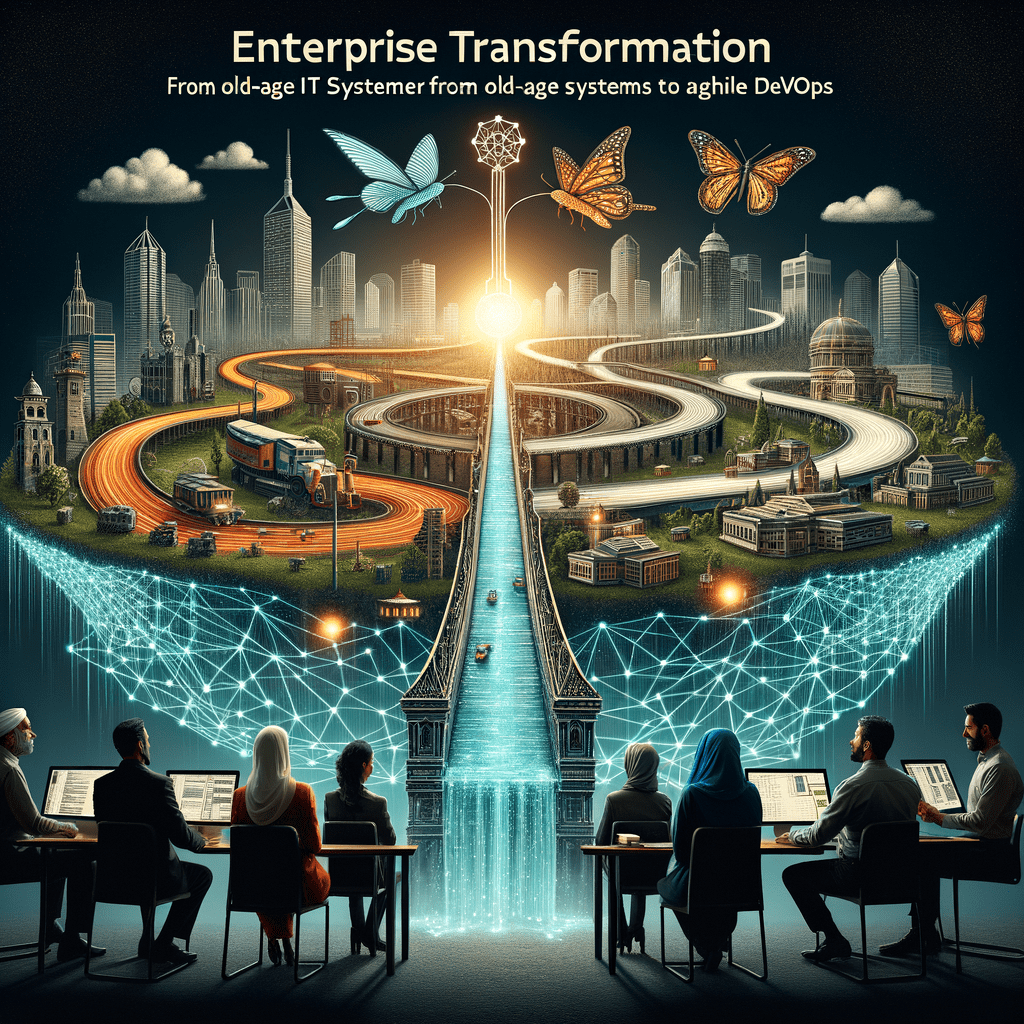
From Legacy to Agility: The Enterprise Roadmap to DevOps Transformation

Introduction In the rapidly evolving technology landscape, enterprises are compelled to shift from traditional legacy systems and processes to agile, efficient, and automated DevOps practices. This transformation is not merely a technological upgrade but a profound cultural and operational evolution, driving faster delivery, improved collaboration, and enhanced customer satisfaction. This blog explores a comprehensive roadmap for enterprises moving from legacy to agility through DevOps transformation, enriched with insights and best practices. Explore related AI-driven business transformation services at TechOTD AI Services. Legacy systems, often characterized by siloed teams, manual processes, and fragmented workflows, limit innovation and rapid delivery. Modern enterprises require integration, automation, and continuous feedback loops — hallmarks of DevOps. Challenges include: Rigid architectures Slow release cycles Understanding Legacy Systems and the Need for DevOps Transformation Risk of errors and downtime Communication gaps between development, operations, and security teams DevOps fosters agility by breaking down silos, automating workflows, and fostering a culture of collaboration and continuous improvement. For a deep dive into DevOps and digital transformation trends, visit the TechOTD Blog. The Enterprise DevOps Transformation Roadmap 1. Assess and Audit Current State Begin by thoroughly evaluating existing infrastructure, workflows, and organizational culture. Map current development and operations processes Identify bottlenecks, silos, and manual steps Understand team dynamics and toolchains This assessment provides a baseline for tailored transformation strategies. 2. Define Vision, Objectives, and KPIs Develop a clear vision and goals aligned with business outcomes. Establish measurable KPIs such as deployment frequency, lead time, and uptime Prioritize initiatives that deliver maximum value Build stakeholder consensus for change 3. Build the Right Team and Culture Culture and people are central to successful DevOps transformation. Form cross-functional DevOps teams including development, operations, QA, and security Promote collaboration, transparency, and shared ownership Invest in training and continuous learning Explore how AI can support team productivity and collaboration on TechOTD AI Integration. 4. Implement Automation and Toolchain Automation drives efficiency and quality. Automate testing, builds, deployments, and infrastructure provisioning Use CI/CD pipelines to enable rapid and reliable delivery Integrate security practices with DevSecOps for compliance and risk mitigation Discover advanced automation and predictive analytics at TechOTD Predictive Analytics. 5. Incremental Modernization and Migration Legacy systems can be modernized incrementally: Introduce containerization and microservices architecture Migrate applications and data gradually to cloud environments Use APIs and integrations to maintain interoperability Blockchain-based transparency and workflow optimization can complement DevOps processes; see insights at Blockchain Integration in Business. 6. Continuous Monitoring, Feedback, and Improvement Ongoing monitoring of performance and security metrics is essential. Deploy tools for logging, metrics, and alerting Enable rapid incident response and root cause analysis Foster continuous feedback loops for team and process improvement 7. Scale and Sustain Expand DevOps practices across teams and projects Refine workflows based on evolving needs and technology Maintain governance, compliance, and change management Learn about how TechOTD ensures smooth implementation through How We Work. Business Benefits of DevOps Transformation Cultural Shift: Enhanced collaboration and shared responsibility improve morale and productivity. Operational Efficiency: Automated pipelines reduce errors and accelerate releases. Agility: Rapid response to market demands and customer needs. Cost Savings: Reduced manual effort and optimized cloud resource usage. Improved Customer Experience: Faster delivery of features and improved uptime enhance satisfaction. Further advantages and implementation challenges are discussed in TechOTD’s Enterprise Technology Blogs. Overcoming Common Challenges Legacy inertia and resistance Use change management strategies to promote mindset shifts Foster open communication and leadership buy-in Tool and technology selection Evaluate scalability, integration capabilities, and team readiness Provide ongoing training and support Security and compliance concerns Adopt DevSecOps to embed security into pipelines Ensure adherence to regulations through automation and monitoring Learn more about navigating such challenges in the detailed TechOTD DevOps Guide and Seamless Customer Journeys with AI. Future Outlook: AI and Beyond in DevOps Artificial intelligence and machine learning play an increasing role in DevOps: Intelligent automation of testing and deployments Predictive analysis for system health and fault prediction Enhanced incident management through AI-driven insights Explore AI’s impact on IT and DevOps workflows in TechOTD’s comprehensive AI Solutions. Conclusion Shifting from legacy systems to an agile DevOps model is a strategic imperative for enterprises aiming to thrive in a digital-first world. By adopting a phased, measured, and culturally-aware approach, organizations unlock innovation, speed, and resilience. For more detailed resources and expert consulting, visit TechOTD and explore their offerings to support your DevOps transformation journey

DEVOPs

DevOps Maturity: Why It Matters and How Business Leaders Can Achieve It

Introduction DevOps maturity is no longer a luxury; it’s a strategic imperative for organizations competing in today’s fast-paced digital world. Achieving higher levels of DevOps maturity moves businesses from manual, error-prone deployments to automated, collaborative, and adaptive operations. For business leaders, understanding and investing in DevOps maturity means faster releases, more reliable software, and sustained innovation. Platforms like TechOTD offer guidance, tools, and proven practices to help enterprises accelerate this journey. What is DevOps Maturity and Why Does It Matter? DevOps maturity is a measure of how fully an organization has adopted and integrated DevOps practices across culture, automation, and measurement. The maturity model typically features five stages: Initial: Manual processes, siloed teams, minimal collaboration. Managed: Introduction of automation, some repeatability, and improved collaboration. Defined: Widespread automation, standardized processes, organization-wide DevOps adoption. Measured: Data-driven decision-making, performance tracked against key metrics, continuous improvement. Optimized: Full integration, ongoing innovation, and seamless, secure operations. Why It Matters Accelerated Delivery: Mature DevOps teams rapidly release software, shorten feedback loops, and respond faster to market changes. Enhanced Reliability: Automated testing, deployment, and monitoring reduce downtime, failures, and manual errors. Operational Efficiency: Streamlining workflows and boosting resource usage helps lower costs and maximize value. Innovation and Scalability: Organizations with mature DevOps are better positioned to try new ideas and scale both systems and teams. Cross-Functional Collaboration: Collaboration across development, operations, and security improves quality and agility while reducing bottlenecks. How Business Leaders Can Achieve DevOps Maturity Secure Executive Buy-In Leadership commitment is crucial for resource investment and company-wide alignment around DevOps principles. Assess Current State Conduct honest maturity assessments to pinpoint strengths, gaps, and the starting baseline. Involve engineers and stakeholders for a holistic view. Set Stage-Wise, Realistic Goals Don’t attempt “perfection” immediately. Set achievable milestones for each maturity stage: automation, CI/CD rollout, cultural transformation, etc.. Foster a Collaborative Culture Break down silos by encouraging collaboration, transparent communication, and a shared sense of ownership between teams. Prioritize Automation (But Iterate Wisely) Automate where it brings the most value—think CI/CD, infrastructure provisioning, and deployment pipelines. Document improvements, expand gradually, and address bottlenecks. Measure, Adapt, and Improve Use key metrics (like deployment frequency, change failure rate, lead time, and MTTR) to monitor progress and tie efforts back to business results. Scale & Standardize Best Practices Share successes across teams, create playbooks, and encourage feedback cycles that spread hard-won lessons throughout the organization. Conclusion DevOps maturity is a journey—not a final destination. As business leaders, driving this progression means delivering software faster, safer, and more reliably, which fuels innovation and competitive advantage. Invest in cultural shifts, automation, and continuous improvement—leveraging platforms like TechOTD for tailored solutions—so your organization can thrive in an always-evolving digital ecosystem. FAQ 1. What are the most important DevOps maturity metrics for leaders? Deployment frequency, lead time for changes, change failure rate, and mean time to recovery (MTTR) are industry benchmarks. 2. How do cultural changes affect DevOps maturity? Culture is foundational; transparency, trust, and collaboration are what break down silos and empower innovation. 3. Can small teams achieve high DevOps maturity? Absolutely! Smaller teams often move quickly and can be early adopters—maturity can then be scaled organization-wide. 4. What’s the biggest hurdle for most companies? Aligning culture and processes; technology can be adopted, but mindset change and cross-functional collaboration take conscious leadership. 5. Where do I start if my organization is at Level 1 or 2? Begin with foundational automation (like version control and CI), foster collaboration, and build feedback loops through measurement

How would you like me to respond?

Select a personality for your AI assistant

Normal
Happy
Sad
Angry

Your selection will affect how the AI assistant responds to your messages

Chat Assistant

Let's discuss your project!

Hear from our clients and why 3000+ businesses trust TechOTD

Tell us what you need, and we'll get back with a cost and timeline estimate

Scroll to Top