October 2025

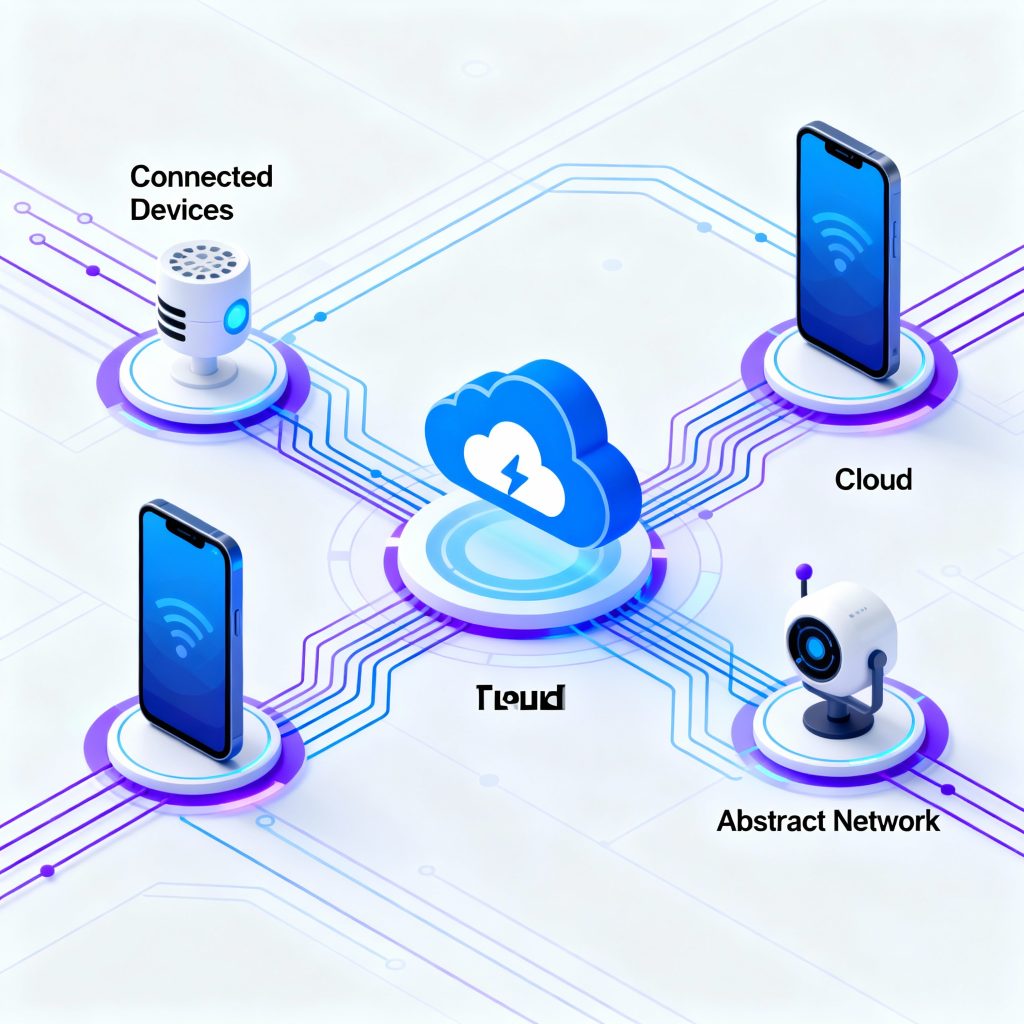
Digital transformation concept with business technology, AI data flow, and cloud computing network.
Uncategorized

Digital Transformation in 2025: How Technology Is Redefining Business and Innovation

Introduction The world is changing — and it’s happening at digital speed. Digital transformation has evolved from being a buzzword to a fundamental necessity for every business. It’s not just about adopting new technologies but about reimagining how organizations operate, deliver value, and connect with customers. In 2025, companies that embrace digital transformation are leading markets, while those that resist it risk falling behind. From cloud computing to AI-driven automation, digital innovation is redefining the global economy. What Is Digital Transformation? Digital transformation is the integration of digital technologies into all areas of business, changing how companies operate and deliver value. It involves adopting new tools, automating processes, and building a culture that embraces continuous innovation. Key aspects include: Technology Adoption: Using AI, cloud, and analytics. Process Optimization: Automating workflows and operations. Cultural Change: Encouraging adaptability and innovation. Core Technologies Powering Digital Transformation Artificial Intelligence (AI): Enables automation, predictions, and personalization. Cloud Computing: Offers scalability and remote accessibility. Internet of Things (IoT): Connects devices for real-time data exchange. Big Data Analytics: Transforms raw data into actionable insights. Blockchain: Adds transparency and security to transactions. 5G Networks: Enables faster, more reliable digital experiences. Benefits of Digital Transformation Speed & Agility: Faster decision-making and innovation. Customer Satisfaction: Real-time personalization and engagement. Cost Efficiency: Automation reduces operational expenses. Business Continuity: Cloud services ensure resilience and scalability. Sustainability: Digital solutions minimize resource waste and paper usage. Challenges in Digital Transformation While transformation offers benefits, it also brings challenges: Cybersecurity Risks: Increased digital exposure demands stronger protection. Legacy Systems: Outdated technology slows innovation. Cultural Resistance: Employees may fear change or automation. High Initial Costs: Digital tools require upfront investment. The Future of Digital Transformation The next phase of transformation focuses on AI-first ecosystems, automation, and sustainability. Hyper-Automation: Everything that can be automated will be. Green IT: Businesses are adopting eco-friendly digital solutions. AI-Driven Decision Making: Predictive insights guide leadership. Metaverse Integration: Blending digital and physical experiences. Conclusion Digital transformation is not just a technological upgrade — it’s a mindset shift. In 2025, success depends on how quickly businesses adapt to change, leverage data, and deliver value through innovation. As AI, cloud computing, and automation continue to evolve, one thing is clear: “Digital transformation is the bridge between today’s challenges and tomorrow’s possibilities.” FAQ Section Q1. What is digital transformation in simple terms?It’s the process of using technology to improve how businesses operate and serve customers. Q2. Which technologies drive digital transformation?AI, cloud computing, IoT, big data, and automation. Q3. Why is digital transformation important?It enhances efficiency, innovation, and customer satisfaction while reducing costs. Q4. What are common challenges?Cybersecurity, cost, and cultural resistance to change. Q5. Is digital transformation only for big companies?No — small and medium businesses also benefit from automation and cloud tools.

Earth surrounded by solar panels, wind turbines, and greenery representing sustainability and renewable energy.
Environment & Sustainability

Environment & Sustainability in 2025: Building a Greener and Smarter Planet

Introduction The planet is changing faster than ever. From melting glaciers to polluted air, environmental issues are no longer distant threats — they’re today’s reality. To secure our future, the world is turning toward sustainability — the balance between human progress and environmental preservation. In 2025, environmental sustainability isn’t just a trend; it’s a necessity. Governments, businesses, and individuals are embracing green innovation to fight climate change, conserve resources, and ensure a cleaner, healthier Earth. What Is Environment & Sustainability? Environment refers to everything around us — air, water, land, plants, and animals — that supports life on Earth.Sustainability means using these resources responsibly so that future generations can meet their needs too. It’s about creating harmony between economic growth, social well-being, and environmental protection — known as the three pillars of sustainability. The Role of Technology in Environmental Protection Modern technology plays a key role in solving environmental problems: Renewable Energy: Solar, wind, and hydro power reduce carbon footprints. AI & IoT: Smart sensors track pollution, waste, and energy use. Green Architecture: Eco-friendly buildings conserve water and energy. Electric Vehicles (EVs): Reduce dependency on fossil fuels and lower emissions. Major Environmental Challenges in 2025 Despite progress, several challenges persist: Climate Change: Global temperature rise causing extreme weather. Deforestation: Forest loss leading to habitat destruction. Plastic Pollution: Oceans filled with non-biodegradable waste. Air & Water Pollution: Affecting millions of lives every year. Overpopulation: Increasing pressure on limited natural resources. Green Living: What Individuals Can Do Every small action counts toward a sustainable future. Reduce, Reuse, and Recycle materials. Use energy-efficient appliances and LED lights. Avoid plastic bags and choose biodegradable products. Conserve water and plant trees. Support local and eco-friendly brands. The Future of Environmental Sustainability The future lies in green innovation and global cooperation. Circular Economy: Reusing waste as raw material for new products. Smart Cities: Using AI and IoT for cleaner, energy-efficient urban living. Climate Education: Teaching youth about sustainability from an early age. Conclusion Environment and Sustainability are no longer optional — they’re essential for the survival of humanity and our planet. Every decision we make today impacts tomorrow’s world. As we move through 2025, embracing green practices, renewable energy, and responsible lifestyles can create a cleaner, safer, and more sustainable Earth for generations to come. “There is no Planet B — protect what we have.” FAQ Section Q1. What is the main goal of sustainability?To meet present needs without compromising the ability of future generations to meet theirs. Q2. Why is environmental protection important?It maintains ecological balance and supports all life forms. Q3. How can technology help sustainability?Through renewable energy, AI-driven monitoring, and green innovation. Q4. What are examples of sustainable practices?Recycling, reducing waste, using clean energy, and eco-friendly transportation. Q5. What role can individuals play?Conserve resources, reduce pollution, and promote awareness in their communities.

Digital cloud representing Amazon Web Services and global cloud infrastructure.
aws, Cloud Computing and Technology

AWS Explained: How Amazon Web Services Powers the Cloud in 2025

Introduction In a world where every app, website, and business runs on the cloud, one name stands out — Amazon Web Services (AWS). From startups to global enterprises, AWS has become the foundation for innovation, scalability, and performance. As of 2025, AWS powers over 30% of the global cloud market, offering everything from basic storage to advanced artificial intelligence. This blog explores what AWS is, how it works, and why it continues to lead the cloud revolution. What is AWS (Amazon Web Services)? AWS is a cloud computing platform developed by Amazon, offering on-demand computing services such as servers, storage, databases, and machine learning — all accessible over the internet. Key Features: Scalability: Expand resources as your business grows. Pay-as-you-go: Pay only for what you use. Global Infrastructure: Data centers in 32 regions worldwide. Reliability: 99.99% uptime backed by Amazon’s global network. Core AWS Services You Should Know AWS provides over 200 services across computing, storage, databases, networking, and more. Here are the essentials: Category Service Description Compute EC2 Virtual servers for running applications Storage S3 Object storage for files, backups, and data lakes Database RDS Managed relational database service Networking VPC Isolated network for secure cloud deployment Serverless Lambda Run code without managing servers AI/ML SageMaker Build, train, and deploy machine learning models Security IAM Manage user access and permissions securely Why AWS Dominates the Cloud Market Here’s why AWS remains the top choice for developers and businesses: Massive Ecosystem: From gaming to AI to IoT, AWS supports every industry. Global Reach: 99 Availability Zones across 32 regions. Cost Efficiency: Pay-as-you-go model saves infrastructure costs. Innovation: Continuous updates with AI, blockchain, and edge computing. Security: End-to-end encryption, compliance, and monitoring tools. AWS Security and Compliance Security is AWS’s top priority. Identity & Access Management (IAM): Role-based control for users. Encryption: Protect data in transit and at rest. Compliance: Meets ISO, GDPR, HIPAA, and DPDP standards. Monitoring: Tools like CloudTrail and GuardDuty track activities in real time. The Future of AWS: Trends in 2025 and Beyond AWS continues to lead innovation in: AI and Generative Models Quantum Computing (Braket) Sustainability with Green Data Centers Edge Computing for Faster IoT Cloud-Native Development with Kubernetes (EKS) The next phase of AWS is all about intelligent automation, zero-latency networks, and sustainable innovation. Conclusion AWS is more than just cloud storage — it’s the backbone of digital transformation. With its unmatched scalability, security, and global reach, it enables businesses to innovate faster and smarter. As cloud computing evolves, AWS continues to redefine how we build, deploy, and manage technology — one click at a time. “Build the future in the cloud — powered by AWS.” FAQ Section Q1. What is AWS mainly used for?AWS provides cloud infrastructure for hosting, computing, storage, and app development. Q2. Is AWS free for beginners?Yes, AWS offers a Free Tier with limited services for 12 months. Q3. Which companies use AWS?Netflix, Adobe, NASA, Airbnb, and many startups rely on AWS for scalable cloud solutions. Q4. How is AWS different from Azure or Google Cloud?AWS offers broader service coverage, global infrastructure, and earlier market dominance. Q5. Can I learn AWS without coding?Absolutely — many AWS tools (like S3 and RDS) require little or no programming knowledge.

Symbolic image of digital data protection and cybersecurity.
Data Privacy & Security

Data Privacy & Security: Protecting Your Digital Footprint in the Age of AI

Introduction In today’s hyper-connected world, data is the new currency. Every click, login, and online purchase leaves behind a trail of information — your digital footprint. But as technology evolves, so do cyber threats. From phishing scams to ransomware, the fight for data privacy and security has become one of the biggest challenges of our digital age. This blog explores the importance of data privacy and security in 2025, the growing influence of AI in cybersecurity, and practical steps you can take to protect personal and business data. 1. What is Data Privacy and Security? Data Privacy refers to controlling who can access your personal information and how it’s used. Data Security focuses on protecting that data from unauthorized access, corruption, or theft. Together, they ensure that your personal, financial, and organizational information remains safe and confidential. 2. Why Data Privacy Matters More Than Ever With billions of people online, sensitive data — like bank details, passwords, and health records — can be easily exploited.Key reasons why privacy matters: Identity Protection: Prevents identity theft and fraud. Trust & Compliance: Businesses must comply with GDPR, CCPA, and India’s DPDP Act. Control Over Information: Gives individuals power over how their data is used. Did you know? Over 80% of consumers are more likely to trust brands that prioritize data transparency. 3. AI’s Role in Modern Cybersecurity Artificial Intelligence (AI) has become both a shield and a sword in the cybersecurity landscape. How AI Strengthens Security Threat Detection: AI can analyze millions of data points in real time to detect suspicious activity. Automated Response: Reduces human error by instantly isolating infected systems. Predictive Analysis: Identifies vulnerabilities before hackers exploit them. But Beware — AI Can Be Misused Hackers are also using AI to create deepfakes, phishing bots, and malware that can bypass traditional defenses. 4. Top Data Security Challenges in 2025 Cloud Vulnerabilities: As more businesses move to the cloud, weak configurations lead to data leaks. Ransomware Attacks: Criminals lock systems and demand payment in cryptocurrency. IoT Device Risks: Smart home devices can become entry points for hackers. Insider Threats: Employees can unintentionally or maliciously leak information. AI-Driven Cybercrime: Automated attacks powered by generative AI tools. 5. Best Practices to Protect Your Data Here are proven steps to strengthen your personal and organizational data security: Use Strong Passwords: Combine uppercase, lowercase, symbols, and numbers. Enable Multi-Factor Authentication (MFA): Adds an extra security layer. Encrypt Sensitive Files: Ensure data is unreadable without authorization. Regular Software Updates: Patch vulnerabilities frequently. Educate Employees: Conduct cybersecurity awareness training. Backup Regularly: Keep offline and cloud backups of crucial data. Limit Data Sharing: Share only what’s necessary and with trusted sources. 6. The Future of Data Privacy: Regulation & Ethics Governments across the globe are tightening data protection laws. Europe: GDPR continues to evolve with stricter AI governance. India: The Digital Personal Data Protection (DPDP) Act 2023 emphasizes user consent and accountability. Global Trend: Companies now appoint Data Protection Officers (DPOs) to ensure compliance. As we step into an AI-driven decade, ethical handling of data will determine brand reputation and customer loyalty. 7. Pro Tips for Individuals & Businesses Regularly review app permissions. Avoid connecting to public Wi-Fi for financial transactions. Use VPNs to secure browsing. For businesses — adopt Zero Trust Architecture, ensuring “never trust, always verify.” Remember: Data privacy isn’t a one-time effort — it’s a continuous process. Conclusion Data privacy and security aren’t just IT concerns — they’re human rights and business essentials. As AI and digital technologies evolve, protecting your digital footprint is no longer optional. It’s your strongest defense against cyber threats. Whether you’re an individual user or a global enterprise, the message is clear:                                             “Stay private. Stay secure. Stay aware.” FAQ Section Q1. Why is data privacy important in 2025?Because the amount of personal data collected by companies and AI systems is higher than ever, increasing the risk of misuse. Q2. What’s the difference between data privacy and data security?Privacy is about control and consent; security is about protection and prevention. Q3. How does AI help improve cybersecurity?AI helps detect threats faster, automates responses, and predicts future attacks. Q4. What are common threats to data security?Phishing, ransomware, insider leaks, and cloud misconfigurations. Q5. What’s the best way to secure personal data?Use strong passwords, enable MFA, encrypt files, and stay alert online.

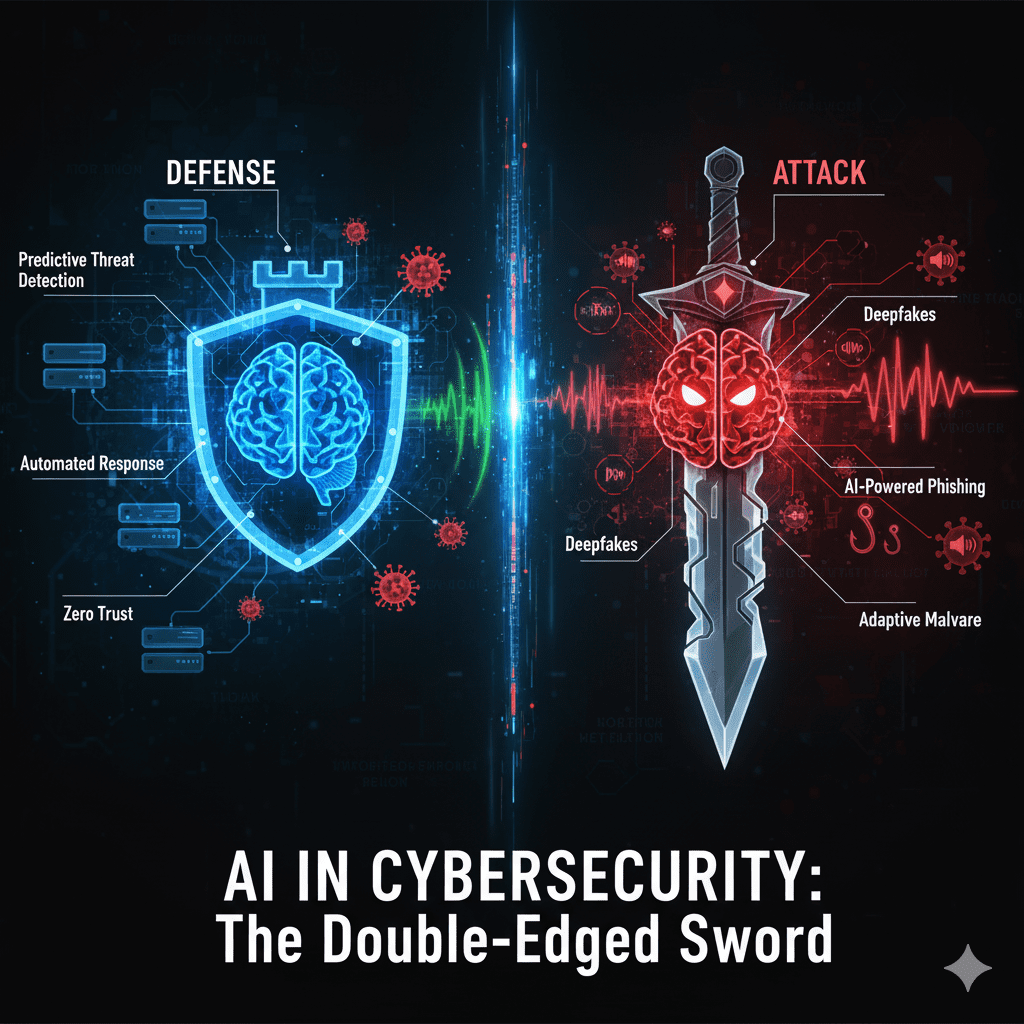
PREDICTIVE THREAT DETECTION and AUTOMATED RESPONSE
cybersecurity

Digital Armor: Defending Against Cyber Threats

Introduction For decades, the world of cybersecurity has been a high-stakes cat-and-mouse game. Security professionals build a wall, and hackers find a way over it. But today, this game is being fundamentally transformed by a powerful new player: Artificial Intelligence. AI is not just another tool; it’s a revolutionary force acting as both the strongest shield and the most dangerous new weapon. This article explores the dual role of AI in Cybersecurity, breaking down how it’s creating unprecedented defenses while simultaneously arming attackers with terrifying new capabilities The New Shield: AI as a Defensive Powerhouse The primary advantage of AI in a defensive role is its ability to process and analyze data at a scale and speed no human team could ever hope to match. While a human analyst sleeps, an AI security model is monitoring billions of events, looking for the one tiny anomaly that signals an attack. 1. Predictive Threat Detection Before AI, most security systems were reactive. They relied on “signatures”—the digital fingerprints of known malware. This meant a virus had to successfully attack someone first before it could be identified and blocked. AI, specifically machine learning, is predictive. It learns the normal, baseline behavior of your network, your users, and your devices. It can then spot suspicious deviations before a full-blown breach occurs. This includes: Behavioral Analysis: Is a user account that normally works from 9-to-5 suddenly trying to access sensitive files at 3:00 AM from a different country? AI flags this instantly. Anomaly Detection: Does a “smart” device like a thermostat suddenly start trying to communicate with an unknown server? AI can see this as a potential IoT (Internet of Things) attack. Pattern Recognition: AI can analyze global threat feeds and identify new attack patterns as they emerge, proactively blocking them before they even reach your network. 2. Automated Incident Response In a cyberattack, every second counts. A ransomware attack can encrypt an entire company’s files in minutes. AI doesn’t need to wait for approval; it can act in milliseconds. This is known as SOAR (Security Orchestration, Automation, and Response). Here’s a typical automated response scenario: Detect: An AI-powered sensor identifies a new, unknown program exhibiting ransomware-like behavior (e.g., rapidly encrypting files) on an employee’s laptop. Isolate: The AI immediately executes a predefined rule: it automatically disconnects that specific laptop from the company network, containing the threat. Investigate: The AI gathers all relevant data—what the program was, where it came from, what files it touched—and creates a report. Alert: It then sends an alert to a human security analyst, presenting the report and the action it took. The threat is neutralized before it could spread. The Future: An AI vs. AI Battleground This leads to an inevitable future: the front line of AI in Cybersecurity will be an AI-versus-AI battle. It will be a silent, high-speed war fought in milliseconds, with defensive AI models trying to detect and stop offensive AI-driven attacks. In this new era, the old security model of “trust but verify” is dead. The new model, which AI is perfect for, is Zero Trust. Zero Trust Architecture means you trust nothing and no one by default. It doesn’t matter if a login request comes from inside the office or outside; it must be verified. AI helps enforce this by continuously analyzing behavior. Just because you entered the right password doesn’t mean you are who you say you are. If your “logged-in” account suddenly starts acting suspiciously, the AI can force you to re-authenticate or block your access. Conclusion AI in Cybersecurity is a revolutionary, double-edged sword. It offers our most powerful hope for a secure digital future, capable of analyzing threats and responding at superhuman speeds. At the same time, it arms our adversaries with tools to create highly deceptive scams and intelligent malware. The key takeaway is that we can’t ignore it. For businesses, investing in modern, AI-powered defensive tools is no longer an option—it’s a necessity for survival. For individuals, it requires a new level of vigilance. In this new world, adaptability is everything. The future of security will be defined by who has the smarter, faster, and more adaptable AI. FAQ Q1: What is AI in Cybersecurity? AI in Cybersecurity refers to the use of artificial intelligence and machine learning to detect, predict, prevent, and respond to cyber threats. It moves beyond traditional, rule-based security by learning from data to identify new and unknown threats based on behavioral anomalies. Q2: Can AI replace human cybersecurity professionals? No, AI is a tool to augment human professionals, not replace them. AI can handle the massive, high-speed data analysis, but it still lacks human intuition, creativity, and strategic decision-making. AI flags the problem and contains it; the human analyst investigates the “why” and “how” to build a stronger long-term strategy. Q3: What is the biggest threat from AI in cyberattacks? Currently, the most accessible and dangerous threat is AI-powered social engineering, including deepfake audio and video. These attacks target the weakest link in any security system—human psychology—and are incredibly difficult to defend against with technology alone. Q4: How can a small business afford AI-powered security? While developing a custom AI model is expensive, most AI-powered security is now sold “as-a-service.” Many modern antivirus, firewall, and email security providers (like Microsoft, Google, and CrowdStrike) have already integrated AI and machine learning into their standard products, making it accessible and affordable for businesses of all sizes.

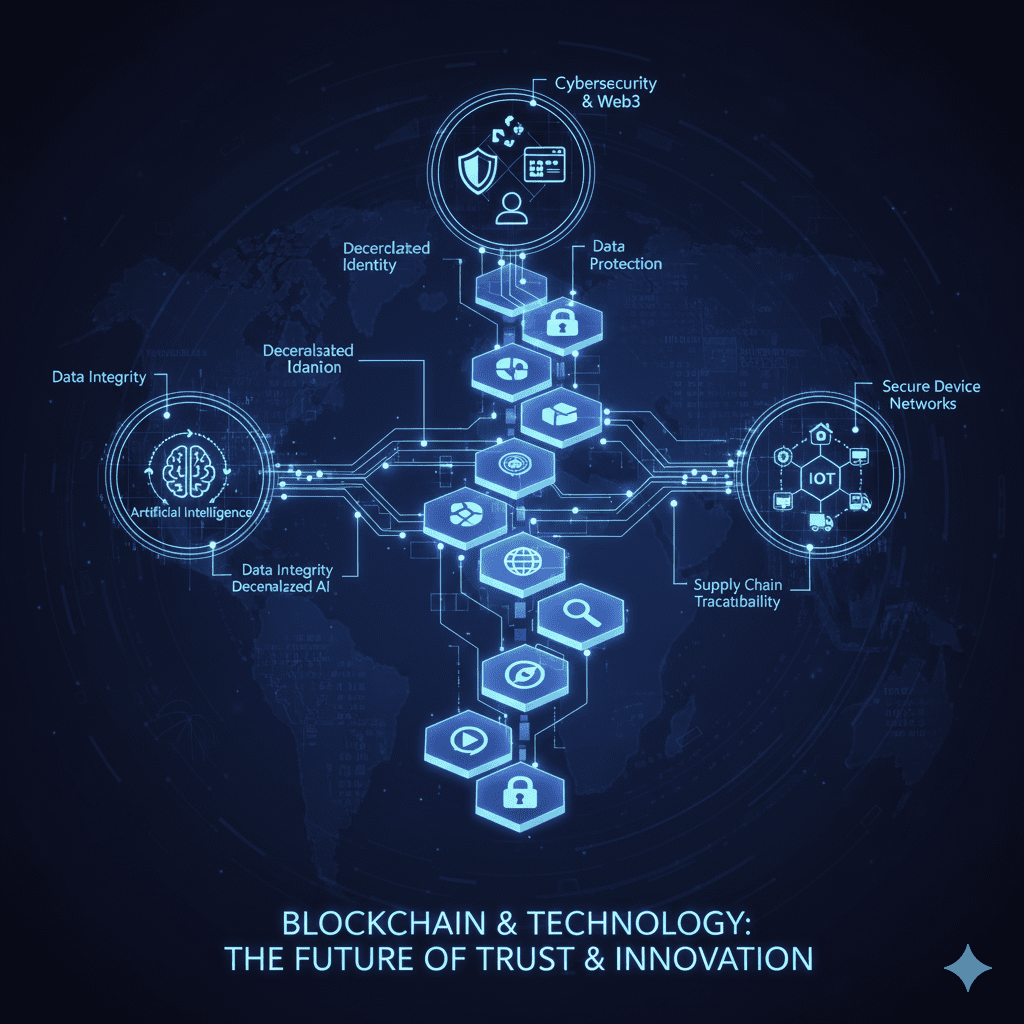
A futuristic infographic titled 'BLOCKCHAIN & TECHNOLOGY,' showing a central blockchain icon connected to other technologies like AI, IoT, Cybersecurity, DeFi, NFTs, and Web3.
Blockchain & Technology

Blockchain’s Role in Building Tomorrow’s Tech

Introduction What do AI, cybersecurity, and the future of the internet (Web3) have in common? They all have critical problems with trust, security, and centralization. Blockchain technology is emerging as the key solution to all three. It’s the invisible architecture that provides the security for our data, the transparency for our transactions, and the ownership of our digital assets. Let’s dive into the technology ecosystem that blockchain is building right now. What is Blockchain? At its simplest, a blockchain is a secure, digital ledger that is shared among many computers in a network. Once a piece of information (a “block”) is added to the ledger, it is linked to the previous block using cryptography, creating a “chain.” This structure makes it immutable, meaning once data is recorded, it is extremely difficult to change or remove. Core Components Decentralization: Instead of one person or company controlling the ledger (like a single bank), the ledger is copied and spread across many computers. This means no single entity has control, and there is no single point of failure. Cryptography: Every transaction is secured and verified using advanced math. This ensures that only the rightful owner can access their assets and that all records are authentic. Blocks: These are the “pages” of the ledger. Each block contains a batch of recent, verified transactions. Consensus Mechanism: This is the “rulebook” that the network follows to agree on which transactions are valid and can be added to the chain (e.g., Proof-of-Work or Proof-of-Stake). The Big Trends: Web3, DeFi, and NFTs Blockchain is the foundational technology for several major trends: Web3: This is the idea of a new, decentralized internet. Web1 was the “read-only” internet (static websites). Web2 is the “read-write” internet we use today (social media, user-generated content), but it’s controlled by large tech companies. Web3 aims to be a “read-write-own” internet, where users control their own data and identity using blockchain. DeFi (Decentralized Finance): This is an entire ecosystem of financial applications built on blockchain. It aims to recreate traditional financial systems (like lending, borrowing, and trading) without the need for intermediaries like banks. Users interact directly with smart contracts. NFTs (Non-Fungible Tokens): An NFT is a unique digital certificate of ownership for an asset (like a piece of digital art, a collectible, or even a real-world item). “Non-fungible” means it’s one-of-a-kind and cannot be replaced by another, unlike a dollar bill, which is fungible. This ownership is recorded and verifiable on the blockchain. Blockchain’s Integration with Other Technologies Blockchain doesn’t exist in a bubble. Its real power is unlocked when combined with other technologies. 1. Artificial Intelligence (AI) Data Integrity: AI models are only as good as the data they’re trained on. Blockchain can provide an immutable, verifiable audit trail for AI training data, ensuring it hasn’t been tampered with and proving its origin. Decentralized AI: It enables “Federated Learning,” where an AI model can be trained across multiple devices without the users’ private data ever leaving their device. The blockchain is used to log and verify the model’s updates, protecting user privacy. 2. Internet of Things (IoT) Security: IoT networks often have thousands of simple devices (like sensors) that are vulnerable to hacking. Blockchain can create a secure, decentralized network for these devices to communicate directly and verifiably, preventing a central server from being hacked. Traceability: For supply chains, an IoT sensor can log a package’s temperature and location to a blockchain at every step. This creates a tamper-proof record that all parties (the producer, the shipper, the customer) can trust. 3. Cybersecurity Decentralized Identity: Instead of relying on Google or Facebook to log in to websites, blockchain allows for Self-Sovereign Identity (SSI). You would control your own digital identity, stored securely, and grant specific, temporary access to services that need to verify it. Mitigating Attacks: By decentralizing data storage, blockchain can help prevent large-scale data breaches. It also makes systems more resilient to Distributed Denial of Service (DDoS) attacks, as there is no single central server to overwhelm Conclusion In conclusion, blockchain has evolved far beyond its origins in cryptocurrency. It is now the essential “trust layer” for the next generation of technology. By providing a decentralized, immutable, and transparent ledger, it solves the critical vulnerabilities in our current systems. It’s the thread that securely connects AI models to verifiable data, enables IoT devices to communicate without a central point of failure, and provides the very foundation for a user-owned internet in Web3, DeFi, and NFTs. As we move forward, it’s clear that blockchain isn’t just another technology in the stack; it’s the fundamental architecture the future is being built on. FAQ Q1: What is blockchain in the simplest terms? Blockchain is a digital ledger, like a shared notebook, that is duplicated and spread across many computers. Once a transaction (a “block”) is added to this notebook, it’s cryptographically linked to the one before it, creating a “chain.” This structure makes the data immutable, meaning it’s nearly impossible to change or tamper with. Q2: Isn’t blockchain just for Bitcoin and cryptocurrency? No. While Bitcoin was the first major application, it’s just one use case. Blockchain is the underlying technology that enables cryptocurrencies, but its core value is in providing a secure and decentralized way to record any kind of data. It’s now being used in supply chains, healthcare, voting systems, cybersecurity, and more. Q3: What’s the difference between Blockchain and Web3? Think of blockchain as the tool and Web3 as the movement. Blockchain is the specific technology (a decentralized ledger). Web3 is the broader vision for a new, decentralized internet built using tools like blockchain, crypto, and decentralized networks. Web3’s goal is to shift control from large tech companies to individual users. Q4: How does blockchain work with Artificial Intelligence (AI)? Blockchain can be seen as the “source of truth” for AI. Data Integrity: It provides a tamper-proof log of the data used to train an AI model, so you can verify its origin and quality. Privacy: It enables federated learning,

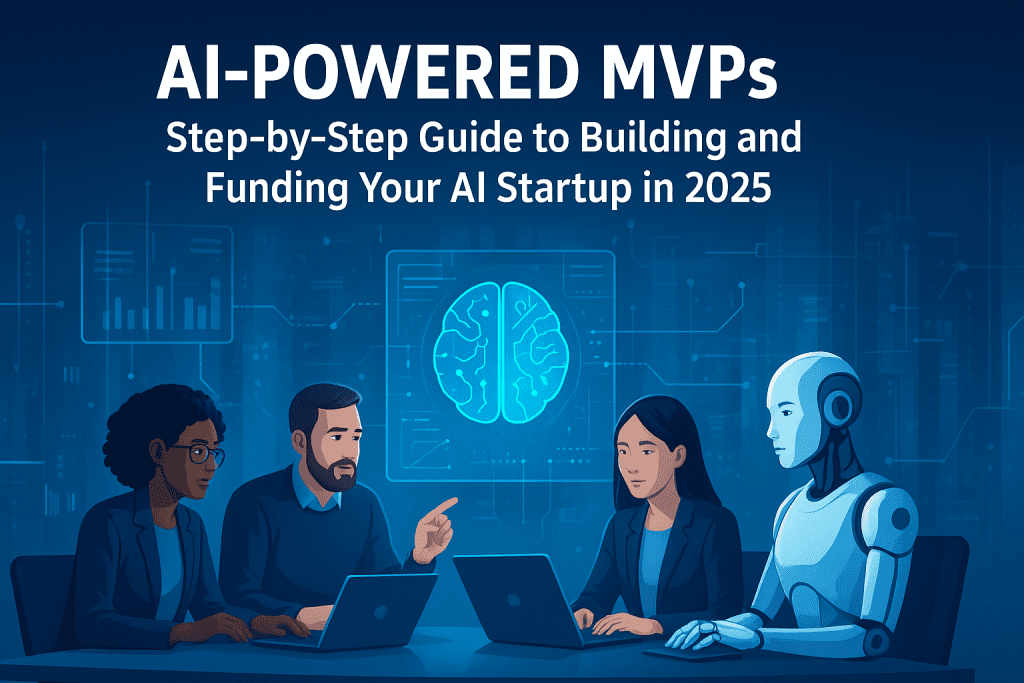
A diverse team of professionals and a humanoid robot collaborate in a futuristic office surrounded by holographic AI visuals and digital data charts, symbolizing innovation, technology, and AI-driven startup development.
Artificial Intelligence, startup

Step-by-Step Guide to Building and Funding Your AI Startup

Introduction Artificial Intelligence (AI) is the driving force behind the most exciting AI startup trends of 2025. From generative models to predictive analytics, AI is fueling a new generation of innovation across industries. For emerging startups, building an AI MVP (Minimum Viable Product) is the smartest way to test ideas and attract early investors. This guide will walk you through the step-by-step process of AI MVP development, explore AI funding strategies, and highlight artificial intelligence innovation that can turn your idea into a real-world business success. Step-by-Step Guide to Building Your MVP 1. Identify the Problem and Validate the IdeaStart with a real-world problem AI can solve. For example, automating resume screening, predicting health outcomes, or optimizing logistics. Conduct market research and user interviews to confirm demand before writing a single line of code. 2. Define Core Features (Keep It Lean)Focus on the one AI-driven feature that delivers the most value. Instead of building everything at once, design a prototype that showcases the core intelligence of your product — like a chatbot, image recognizer, or recommendation engine. 3. Choose the Right Tech StackSelect reliable tools for faster MVP development: Backend: Python (FastAPI, Flask) or Node.js Frontend: React.js or Next.js AI/ML Tools: TensorFlow, PyTorch, OpenAI API, Hugging Face Database: MongoDB, PostgreSQL Hosting: AWS, Google Cloud, or Azure 4. Build and Test IterativelyDevelop your MVP in short sprints. Gather feedback from beta testers and iterate quickly. Use analytics to understand user behavior and improve AI performance. 5. Launch and Collect DataOnce launched, track user engagement, model accuracy, and overall experience. The insights you gather will help refine your AI model and product roadmap. How to Raise Funding for Your MVP in 2025 1. Create a Compelling Pitch DeckHighlight your AI’s unique edge — what problem it solves and how it uses data intelligently. Investors want to see impact + scalability. 2. Showcase Early TractionEven small user metrics, pilot results, or demo videos can prove your MVP’s value. Show that your AI works and users love it. 3. Target the Right InvestorsReach out to AI-focused venture funds, tech accelerators, and angel investors who understand machine learning and automation potential. Examples: Sequoia India, Accel, Y Combinator, Techstars AI Track. 4. Emphasize Ethical AI and Data PrivacyIn 2025, investors are more cautious about AI ethics and compliance. Mention fairness, transparency, and responsible data handling in your pitch. 5. Use Funding PlatformsExplore modern fundraising options like: AngelList (for pre-seed rounds) Y Combinator’s Startup School PitchBook & Crunchbase (for investor connections) Crowdfunding with AI-based prototypes (Kickstarter, Indiegogo) Pro Tips  Start with No-Code or Low-Code AI Tools: Use platforms like Bubble, Builder.ai, or Lobe.ai to test MVP ideas quickly.  Focus on Data Quality: Your AI is only as smart as the data you train it on.  Leverage Open Source Models: Fine-tune pre-trained models instead of building from scratch.  Prioritize User Feedback: Iteration is your best teacher.  Integrate Ethics and Transparency: Build user trust through explainable AI features. Conclusion The AI boom of 2025 offers endless opportunities for innovative startups. Building a smart, efficient MVP is the best way to validate your idea and attract funding. By staying lean, focusing on real problems, and emphasizing responsible AI practices, you can turn your concept into a market-ready product. Remember — in AI startups, speed and adaptability matter more than perfection.   ❓ FAQ 1. What is an AI MVP?An AI MVP (Minimum Viable Product) is a lightweight version of an AI-based product built to test market demand and gather user feedback before full-scale development. 2. How long does it take to build an AI MVP?Typically 4–12 weeks, depending on complexity, data availability, and team size. 3. How much funding do AI startups usually raise initially?AI startups usually raise between $50,000 – $250,000 in seed or pre-seed rounds for MVP development. 4. What’s the best AI tech stack for startups in 2025?Python (for AI/ML), React (for frontend), and AWS or Google Cloud for deployment are the most popular combinations. 5. Can I build an AI MVP without coding?Yes! Tools like Lobe.ai, Peltarion, and Builder.ai allow non-technical founders to prototype AI solutions quickly. How to Build a Minimal Viable Product (MVP) and Raise Funding in 2025

Startup founders collaborating over digital MVP wireframes, with growth charts and investment icons in a modern business environment, representing MVP development and funding in 2025
Artificial Intelligence

How to Build a Minimal Viable Product (MVP) and Raise Funding in 2025

Introduction Building a Minimal Viable Product (MVP) has become the cornerstone for modern startups seeking validation and funding in the fast-paced 2025 tech landscape. With the integration of AI, automation, and no-code tools, launching an MVP is more accessible, but also more competitive. This blog will walk you through the practical steps to building a successful MVP and securing funding, drawing from current trends and investor expectations.​ Step-by-Step Guide to Building Your MVP Define the Problem Clearly Pinpoint the pain point your idea solves. Identify your target users and research current alternatives.​ Focus on Core Features Prioritise only must-have features for solving the core problem. Use a simple priority matrix: Must-have, Nice-to-have, Not-needed.​ Rapid Prototyping and Validation Create a prototype using no-code/low-code or traditional development, based on your skills and budget. Gather user feedback quickly through surveys, early tests, or beta access.​ Build, Test, and Iterate Develop the initial version and launch it to a small segment of your target market. Collect concrete feedback and track real usage data. Iterate—add improvements and remove what doesn’t work.​ Emphasise Usability and User Experience Your MVP doesn’t need to be fancy, but it must be stable and user-friendly. How to Raise Funding for Your MVP in 2025 Bootstrapping: Many founders use personal funds for early versions, preserving ownership but limiting resources.​ Angel Investors: Present your MVP and early traction. Angels value real usage and a clear solution.​ Venture Capital: VCs seek rapid growth potential. Stand out by demonstrating market fit and scalability with your MVP.​ Crowdfunding: Platforms like Kickstarter and Indiegogo can provide funding and validate demand at the same time.​ Grants & Incubators: Research regional government and private startup programs for non-dilutive capital and guidance.​ Friends and Family: This traditional route can help, but ensure clear terms and expectations.​ Pro Tips Highlight AI, automation, or impact-driven features—investors love innovation aligned with future trends.​ Use clear, data-driven storytelling about your traction, market validation, and vision. Network early—connect with investors, mentors, and communities before launching your MVP.​ Conclusion A minimal viable product is your launchpad—it reduces risk, tests demand, and attracts funding. Focus on solving real problems with a user-focused MVP, validate quickly, and leverage smart funding strategies for growth. In 2025, those who learn fast, build lean, and present a compelling story will find their place in the market and unlock the funding they need. Ready to build your MVP and raise capital? Start with laser focus, then network and pitch relentlessly to bring your vision to life. FAQ 1. Why is building an MVP important before fundraising? It allows you to prove your idea works and reduces investment risks.​ 2. What are the best tools for rapid MVP development in 2025? No-code/low-code platforms, AI-assisted builders, and cloud stacks accelerate MVP launches.​ 3. Can you raise VC funding before you have traction? Generally, early traction or a proven need for your solution is required, but strong teams and innovation can sometimes secure early backing.​ 4. What documentation do investors expect for an MVP? A working demo, user feedback, business plan, market size data, and a clear vision for growth.​ 5. How much should you spend on an MVP? Costs vary, but focus on delivering only essential features—AI, compliance, and analytics can impact your budget.​

Digital cloud kitchen management dashboard with staff interacting, food delivery icons, and modern technology elements in a business setting
Software development

How to Build a Cloud Kitchen Management Software

Introduction Cloud kitchen businesses are reshaping the food industry, offering delivery-first models driven by digital efficiency. For operators, effective management software is essential—it connects orders, tracks inventory, manages staff, and streamlines the entire kitchen operation from a single platform. This guide details everything you need to build robust cloud kitchen management software, ensuring you can deliver seamless customer experiences and scale effortlessly. ​ Core Features Every Cloud Kitchen Software Needs Order Management System: Centralise and automate order intake from multiple food delivery platforms, allowing the kitchen to efficiently handle high order volumes without confusion.​ Inventory & Procurement Management: Track ingredient usage, manage stock levels, generate auto-purchase orders, and predict supply needs with data-driven analytics.​ Staff Management: Assign shifts, track attendance, and optimise task allocation to keep your kitchen running smoothly during peak and off-peak hours.​ Customer Relationship Management (CRM): Store and analyse customer preferences, purchase history, and feedback to drive loyalty and run targeted marketing campaigns.​ Real-Time Analytics and Reporting: Gain insights into kitchen performance, order trends, inventory turnover, and customer satisfaction with live dashboards.​ Additional Must-Haves: Integration with POS systems Multi-location and menu management Secure user authentication Mobile, tablet, and web access Steps to Develop Cloud Kitchen Management Software Define Requirements: List your business goals, target audience, operational challenges, and essential features.​ Market Research: Study competitor solutions and find gaps or value-added opportunities.​ UI/UX Design: Design intuitive workflows for admin, kitchen staff, and delivery teams—focus on speed and clarity.​ Software Development: Build backend order processing, inventory modules, staff scheduling, reporting tools, and secure APIs for integration.​ Testing and Quality Assurance: Rigorously test features, usability, and reliability through real-world scenarios and feedback.​ Deployment and Go-Live: Launch with easy onboarding, staff training, and technical support to ensure smooth adoption.​ Benefits of Cloud Kitchen Management Software Operational Efficiency: Automated processes reduce manual errors and speed up kitchen operations.​ Cost Control: Real-time analytics help in resource planning, reducing food waste and overstocking.​ Enhanced Customer Experience: Accurate order tracking and personalised service drive loyalty and repeat business.​ Conclusion Developing custom cloud kitchen management software transforms how modern kitchens operate—enabling centralised control, data-driven decisions, and scalable growth. By focusing on the right features and following proven development steps, your business can thrive in the competitive delivery market. Now is the time to start building the foundation for operational excellence. Ready to create your own cloud kitchen management system? Partner with a software expert or explore platforms that offer custom development to turn your kitchen into a digital powerhouse. FAQ 1. What is a cloud kitchen management software? A digital platform that centralises order processing, inventory, staff, and customer management for delivery-first food businesses.​ 2. What technology stack is used? Popular choices include React Native or Flutter (front end), Node.js or Django (back end), and cloud hosting with AWS or Google Cloud.​ 3. How much does it cost to build such software? Costs depend on features, scalability requirements, and integration needs; expect development and ongoing maintenance expenses.​ 4. Can this software integrate with delivery apps? Yes, integration with leading delivery partners and POS systems is essential for streamlined operations.​ 5. How long does it take to develop? Depending on complexity, most custom projects take 4–6 months from design to deployment.​

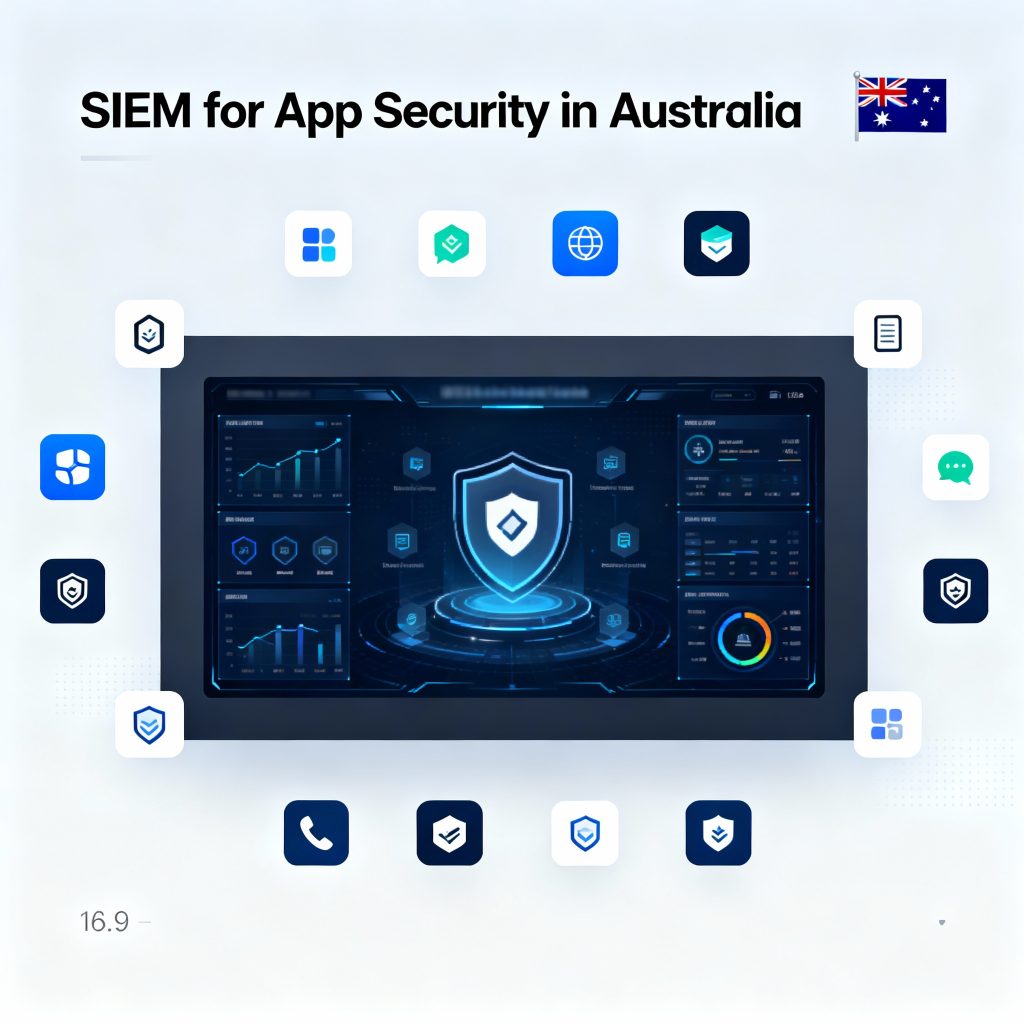
Futuristic SIEM dashboard interface overlayed with application security icons and the Australian flag, representing application security solutions for Australia
Artificial Intelligence

SIEM for App Security in Australia

Introduction Organisations in Australia are grappling with a rapidly evolving cyber threat landscape where application-layer attacks are more frequent and far-reaching than ever before. As digital infrastructures grow more complex and interconnected, security teams need efficient solutions to detect, investigate, and respond to threats targeting their applications. Security Information and Event Management (SIEM) platforms have emerged as a vital line of defense, providing both real-time visibility and advanced analytics to help businesses stay ahead of attackers. This blog explores why SIEM has become indispensable for Australian organisations seeking robust application security—and how it serves as a strategic weapon against the next generation of threats.​ SIEM for App Security in Australia How SIEM Protects Modern Applications Centralised Log Management: SIEM consolidates logs from across your entire stack—web apps, APIs, databases, and cloud services—transforming fragmented data into one coherent intelligence stream.​ Real-Time Threat Detection: Automated monitoring and correlation engines analyse events at scale, detecting suspicious behaviours and potential breaches before they escalate.​ Incident Response Enablement: SIEM alerts analysts to actionable threats, allowing them to prioritise and respond quickly, preventing damage and downtime.​ Compliance Support: With Australia’s data privacy regulations and the Security of Critical Infrastructure Act, SIEM helps organisations maintain auditable records and meet regulatory requirements efficiently.​ Key Benefits Early Breach Identification: By connecting seemingly minor events, SIEM unmasks coordinated attacks—like credential-stuffing or API abuse—that could remain undetected in siloed systems.​ Streamlined Security Operations: Automating event triage and investigation reduces the manual workload for security professionals and accelerates incident remediation.​ Integration with SOAR: Many SIEM platforms now work alongside Security Orchestration, Automation, and Response (SOAR) tools, further improving response times and consistency.​ SIEM in the Australian Security Landscape Australian businesses face increasingly complex and sophisticated attacks, prompting widespread adoption of SIEM solutions. According to recent market analysis:​ Growth Driven by Compliance and Threats: Demand for SIEM is surging as organisations strive to comply with the Australia Cyber Security Strategy and protect critical infrastructure, especially in sectors like BFSI, IT, and government.​ Rise of AI and Automation: Modern SIEM systems leverage artificial intelligence and machine learning to detect threats and automate responses, addressing the skills shortage and increasing detection accuracy.​ Operational Challenges: Integrating SIEM with legacy infrastructures, managing the volume of security data, and controlling costs remain significant hurdles for Australian businesses.​ Use Cases & Statistics Essential Eight Maturity: SIEM is a cornerstone for achieving the Australian Signals Directorate’s Essential Eight maturity model, translating to better preparedness and faster detection.​ Incident Response Uptake: 86% of Australian entities had an active incident response plan in 2024, showing a maturing industry that sees SIEM as critical to readiness.​ Market Outlook: The SIEM market in Australia is set for robust growth, fueled by both enterprise and SME adoption, as real-time detection and actionable security analytics become business imperatives.​ Conclusion SIEM has become a non-negotiable pillar for application security in Australia’s cyber threat environment. By centralising log data, delivering advanced analytics, and supporting compliance, SIEM empowers organisations to defend against evolving threats efficiently and confidently. Investing in SIEM today means not just meeting regulatory demands, but enabling your team to spot sophisticated attacks much earlier—and respond faster. As cyber risks grow, the question is not if, but how soon your organisation will face them. Make SIEM the cornerstone of your cyber strategy and stay a step ahead. Ready to take your application security to the next level? Explore advanced SIEM platforms or consult with a cybersecurity expert to start protecting your business today! FAQ 1. What is SIEM and why is it important for Australian businesses? SIEM stands for Security Information and Event Management—a platform to collect, analyse, and correlate security data in real-time, crucial for early threat detection and regulatory compliance.​ 2. How does SIEM help meet Australian compliance standards? SIEM provides auditable logs, automated reporting, and breach detection, helping organisations comply with regulations like the Privacy Act and Security of Critical Infrastructure Act.​ 3. What kinds of threats can SIEM detect in applications? SIEM detects credential stuffing, API abuse, insider threats, and targeted cyber-attacks by correlating anomalous events across application layers.​ 4. Are SIEM platforms suitable for both large enterprises and SMEs? Yes, both large enterprises and small-to-medium businesses are increasingly adopting SIEM to strengthen their security posture and compliance readiness.​ 5. What trends are shaping SIEM adoption in Australia? AI-powered analytics, automation, and integration with SOAR are top trends, addressing complexity and improving response speeds in the face of rising threats.

How would you like me to respond?

Select a personality for your AI assistant

Normal
Happy
Sad
Angry

Your selection will affect how the AI assistant responds to your messages

Chat Assistant

Let's discuss your project!

Hear from our clients and why 3000+ businesses trust TechOTD

Tell us what you need, and we'll get back with a cost and timeline estimate

Scroll to Top