
Low-Code Development

Software development

Low-Code vs No-Code vs Traditional Development: Which One Should Businesses Choose?

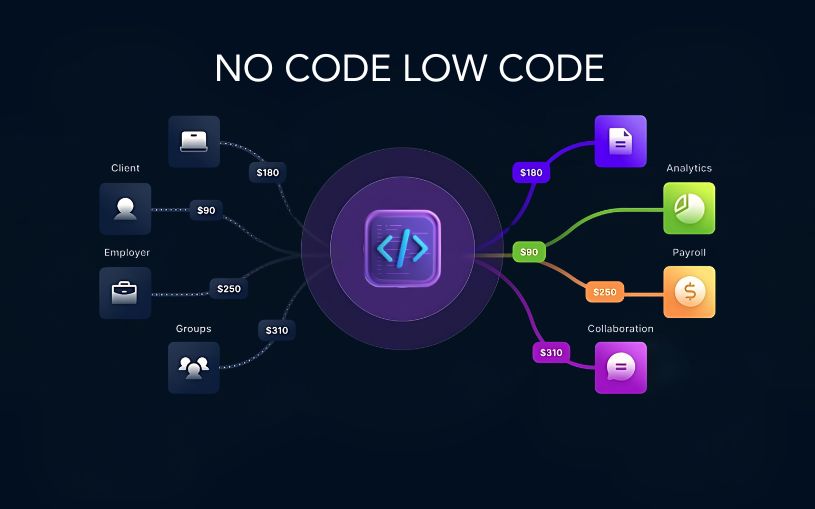
Low-Code vs No-Code vs Traditional Development: Which One Should Businesses Choose? Technology is evolving faster than ever, and businesses today have more options than ever when it comes to building software. Not long ago, developing an application meant hiring a team of developers and spending months writing code from scratch. Today, organizations can choose between traditional development, low-code platforms, and no-code solutions depending on their goals, budget, and technical expertise. As companies accelerate their digital transformation efforts in 2026, understanding these three development approaches has become essential. Each offers unique advantages, and selecting the right one can directly impact project success, operational efficiency, and long-term growth. Understanding Traditional Development Traditional software development remains the most powerful and flexible way to build applications. In this approach, developers write code manually using programming languages such as Python, Java, JavaScript, or C#. This method gives businesses complete control over every aspect of an application, from user experience and functionality to security and scalability. Organizations that require highly customized solutions, advanced integrations, or enterprise-grade systems often rely on traditional development because it can handle virtually any business requirement. However, this flexibility comes at a cost. Traditional development typically requires larger budgets, experienced developers, longer project timelines, and ongoing maintenance efforts. What is Low-Code Development? Low-code development bridges the gap between traditional coding and visual application building. Instead of writing every feature manually, developers can use drag-and-drop components, pre-built modules, and automated workflows to speed up the development process. The biggest advantage of low-code platforms is efficiency. Businesses can launch applications significantly faster while still retaining the ability to customize features through code whenever necessary. Many organizations use low-code platforms to create internal business applications, workflow automation systems, customer portals, and operational dashboards. This approach allows development teams to focus on solving business challenges rather than spending time on repetitive coding tasks. What is No-Code Development? No-code development takes simplicity to the next level by allowing users to create applications without writing any code at all. These platforms are designed for business users, entrepreneurs, marketers, and department managers who may have little or no programming experience. Through visual interfaces, templates, and drag-and-drop tools, users can create websites, mobile applications, forms, databases, and automated workflows. The growing popularity of no-code platforms reflects a larger trend toward democratizing technology. Businesses no longer need to depend entirely on software developers for every digital solution. For startups and small businesses, no-code tools offer an affordable and fast way to turn ideas into functional products. Comparing Speed and Development Time When speed is the primary concern, no-code platforms often come out on top. Applications can sometimes be built within days instead of months. Low-code platforms also provide impressive development speed by reducing the amount of manual coding required. Teams can quickly build prototypes, test ideas, and deploy solutions without lengthy development cycles. Traditional development generally requires more time because every feature must be designed, coded, tested, and optimized from the ground up. While slower, it provides unmatched flexibility and customization. Cost Considerations for Businesses Budget plays a major role in choosing a development approach. No-code solutions usually have the lowest initial costs because they eliminate the need for large development teams. Businesses can often create and manage applications using existing staff members. Low-code development offers a balance between affordability and flexibility. Organizations can reduce development costs while still creating sophisticated applications. Traditional development tends to involve the highest investment due to developer salaries, infrastructure requirements, quality assurance processes, and long-term maintenance expenses. Customization and Flexibility Customization is where traditional development shines. Businesses can create exactly what they need without being limited by platform restrictions. Whether it’s advanced analytics, complex integrations, or unique customer experiences, traditional coding provides complete freedom. Low-code platforms offer substantial customization capabilities and can handle many complex business requirements. Developers can extend functionality whenever needed through custom code. No-code platforms, while highly convenient, often have limitations. Users must work within the framework and capabilities provided by the platform, which can become challenging for more advanced projects. Scalability and Long-Term Growth As businesses grow, scalability becomes increasingly important. Traditional applications can be designed to handle large user bases, complex workflows, and significant data volumes. This makes them ideal for enterprises expecting substantial growth. Modern low-code platforms also support scalability and are increasingly being adopted by large organizations for mission-critical applications. No-code solutions can support growth to a certain extent, but highly complex or large-scale requirements may eventually require migration to more flexible platforms. The Impact of AI on Software Development Artificial intelligence is reshaping all three development approaches. Low-code and no-code platforms now include AI-powered features that can generate workflows, recommend automation processes, and simplify application design. These capabilities allow businesses to build solutions even faster than before. Traditional development is also benefiting from AI-assisted coding tools that help developers write cleaner code, identify errors, and accelerate project delivery. As AI technology continues to mature, the boundaries between traditional, low-code, and no-code development are becoming increasingly blurred. Which Option Should Your Business Choose? There is no universal answer because every organization has different needs. If your goal is rapid deployment with minimal technical involvement, no-code platforms may be the best choice. If you need a balance between speed, flexibility, and customization, low-code development can deliver excellent results. For businesses requiring complete control, advanced functionality, and enterprise-level scalability, traditional development remains the strongest option. Many successful organizations are now adopting a hybrid approach, using no-code tools for simple workflows, low-code platforms for internal applications, and traditional development for customer-facing products and mission-critical systems. Conclusion The debate between low-code, no-code, and traditional development is not about finding a single winner. Instead, it is about selecting the right tool for the right business challenge. As digital transformation continues to accelerate in 2026, organizations that understand the strengths and limitations of each approach will be better positioned to innovate faster, reduce costs, and remain competitive in an increasingly technology-driven world. The future of software development will not belong exclusively to traditional

Artificial Intelligence, Educational Technology, Software development

Vibe Coding: Can AI Really Build Software from Natural Language Prompts?

Vibe Coding: Can AI Really Build Software from Natural Language Prompts? Introduction Imagine building an entire software application simply by describing what you want in plain English. No complicated syntax. No hours spent debugging code. No need to memorize programming languages. Sounds like science fiction, right? Well, welcome to the world of Vibe Coding, one of the most talked-about trends in artificial intelligence and software development today. Over the past few years, AI-powered coding assistants have evolved from simple autocomplete tools into sophisticated development partners capable of generating entire applications from natural language instructions. This new approach to software creation is changing how developers, entrepreneurs, startups, and even non-technical professionals build digital products. But can AI truly create software from simple prompts? Is Vibe Coding the future of development, or is it just another tech buzzword riding the AI wave? In this article, we’ll explore what Vibe Coding is, how it works, its advantages, limitations, real-world applications, and what it means for the future of software engineering. What is Vibe Coding? Vibe Coding refers to the process of building software primarily through natural language prompts instead of manually writing every line of code. Rather than spending hours coding features, developers describe what they want: Create a user login system Build a dashboard for analytics Design a responsive e-commerce website Connect a payment gateway Generate a customer support chatbot The AI interprets these instructions and generates the required code automatically. The term gained popularity as AI coding tools became increasingly capable of understanding context, software architecture, user requirements, and development workflows. In simple words: Traditional Coding Human writes code → Computer executes Vibe Coding Human describes idea → AI writes code → Human reviews and refines The focus shifts from coding every detail to communicating intentions clearly. The Rise of AI-Powered Development Software development has always evolved alongside technology. First came assembly language. Then high-level programming languages like C, Java, and Python. After that, low-code and no-code platforms emerged. Now, AI-driven development is pushing automation even further. Modern AI models are trained on vast amounts of programming knowledge, enabling them to: Generate code Explain code Fix bugs Create documentation Build user interfaces Write test cases Suggest optimizations As a result, developers can move from idea to prototype significantly faster than ever before. This shift has laid the foundation for Vibe Coding. How Vibe Coding Actually Works At the heart of Vibe Coding lies Large Language Models (LLMs). These AI systems have been trained on billions of lines of code and programming-related content. When a user enters a prompt such as: “Create a task management web application with user authentication and dark mode.” The AI breaks down the request into smaller development tasks: Design database schema Create authentication system Build frontend interface Implement task management logic Add dark mode functionality Generate API endpoints Create responsive design The AI then produces the necessary code components and integrates them together. Developers review the output, make adjustments if necessary, and continue refining through additional prompts. This iterative workflow resembles a conversation rather than traditional programming. Why Vibe Coding is Becoming Popular 1. Faster Development One of the biggest advantages is speed. Tasks that once required days can now be completed in hours. Developers spend less time writing repetitive code and more time solving business problems. For startups, this speed can make a significant difference in launching products before competitors. 2. Lower Entry Barrier Many people have brilliant software ideas but lack programming knowledge. Vibe Coding helps bridge that gap. Entrepreneurs, marketers, designers, and business owners can create prototypes without deep technical expertise. This democratizes software development. 3. Increased Productivity Developers often spend large portions of their day writing boilerplate code. AI can automate: CRUD operations API integrations Form validation Database queries Documentation This allows developers to focus on architecture and innovation. 4. Rapid Prototyping Companies can test ideas quickly. Instead of investing months in development, teams can build MVPs in days and gather user feedback early. 5. Continuous Learning Developers can learn new frameworks and technologies faster by observing AI-generated solutions. The AI acts as both a coding assistant and an educational tool. Popular Tools Driving the Vibe Coding Movement Several AI-powered development platforms have contributed to this trend. GitHub Copilot One of the earliest mainstream AI coding assistants. It suggests code in real time and helps developers write faster. Cursor Cursor has become a favorite among developers because it combines coding, debugging, and AI-assisted development in a single environment. Replit AI Allows users to create applications directly from prompts while handling much of the setup automatically. Bolt Focused on creating full-stack applications using conversational instructions. Lovable Designed to turn ideas into web applications with minimal coding effort. Windsurf An AI-native development environment helping developers build software through collaborative interactions with AI. These platforms continue to push the boundaries of what AI-assisted development can achieve. Real-World Use Cases of Vibe Coding Startup MVP Development Startups frequently need to validate ideas quickly. Vibe Coding enables founders to: Build prototypes Test markets Gather user feedback Secure investors Without hiring large development teams initially. Internal Business Tools Companies often require custom dashboards, workflow systems, and reporting tools. AI-generated solutions can significantly reduce development costs. Educational Projects Students can transform concepts into working applications rapidly, helping them understand software architecture and functionality. E-commerce Websites Businesses can create: Product catalogs Shopping carts Checkout systems Inventory management tools Much faster than traditional development cycles. Automation Systems Organizations can build tools that automate repetitive tasks and improve operational efficiency. Can AI Really Build Complete Software? The answer is both yes and no. What AI Can Do Well AI excels at: Generating code quickly Creating standard application structures Building user interfaces Writing documentation Creating APIs Automating repetitive tasks For many common applications, AI can generate a surprisingly large percentage of the codebase. What AI Still Struggles With Complex software projects involve: Business logic Security requirements Scalability planning System architecture Regulatory compliance Performance optimization These areas still require human expertise. AI may generate

How would you like me to respond?

Select a personality for your AI assistant

Normal
Happy
Sad
Angry

Your selection will affect how the AI assistant responds to your messages

Chat Assistant

Let's discuss your project!

Hear from our clients and why 3000+ businesses trust TechOTD

Tell us what you need, and we'll get back with a cost and timeline estimate

Scroll to Top