
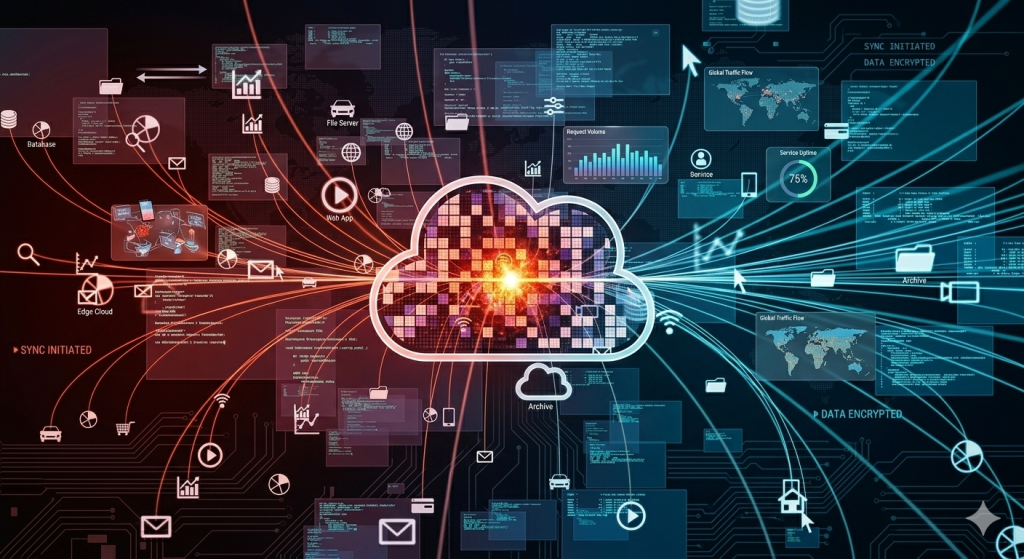
Cloud Scalability

Cloud Computing and Technology

Why Cloud Computing is the Future of IT

Introduction Cloud computing has evolved from a convenient option into the essential foundation powering modern IT infrastructure worldwide. As of April 2026, with AI workloads growing exponentially and global data creation reaching 181 zettabytes annually, businesses must embrace scalable, secure cloud platforms to remain competitive. Traditional on-premises servers demand massive upfront investments in hardware, maintenance, and cooling—costs that drain resources and limit agility in today’s fast-moving digital landscape. This fundamental shift delivers 30-70% cost savings through pay-as-you-go models, provides instant scalability to handle peak demands without overprovisioning, and offers native support for AI/ML workloads that on-premises setups simply can’t match. Whether through hybrid configurations blending private and public clouds or sophisticated multi-cloud strategies spanning AWS, Azure, and GCP, forward-thinking IT leaders recognize cloud computing as the resilient backbone of tomorrow’s digital economy. Companies ignoring this transformation risk falling behind in innovation speed, operational efficiency, and market responsiveness. Unmatched Scalability Cloud platforms eliminate traditional hardware bottlenecks, enabling applications to scale seamlessly from handling a handful of users to millions in seconds. Auto-scaling groups automatically detect demand spikes—such as during Black Friday sales or viral marketing campaigns—and provision additional compute resources without human intervention. Serverless functions like AWS Lambda or Azure Functions further revolutionize this by executing code only when needed, eliminating idle server costs and reducing deployment timelines from weeks of infrastructure setup to mere minutes. Traffic Spike Handling: E-commerce platforms can burst capacity by 10x during peak hours, then scale back instantly, avoiding the waste of permanently oversized on-premises clusters. Global Edge Networks: Deploy applications across 200+ edge locations worldwide, ensuring sub-50ms latency for users in Mumbai, New York, or rural Africa without building regional data centers. Developer Productivity: Teams focus on code rather than servers, with container orchestration tools like Kubernetes managing complexity automatically. This elasticity proves critical for startups testing market fit or enterprises supporting unpredictable workloads like real-time analytics or IoT data streams. Dramatic Cost Savings The cloud’s pay-as-you-go pricing model replaces crippling capital expenditures (CapEx) with predictable operational expenses (OpEx), often delivering 50%+ savings compared to maintaining on-premises data centers. Reserved instances lock in lower rates for predictable workloads, while spot pricing auctions unused capacity at discounts up to 90%. FinOps practices—combining financial accountability with engineering—use AI-driven tools to monitor usage patterns, right-size resources, and eliminate waste from idle virtual machines that plague traditional IT budgets. Enterprises reclaim millions annually by automating optimizations: auto-shutdown of dev/test environments after hours, intelligent workload migration to cheaper regions, and predictive scaling that matches supply to actual demand. A mid-sized retailer, for example, might save $2M yearly by moving batch processing to spot instances overnight while keeping customer-facing apps on premium capacity. AI-Native Infrastructure By 2026, cloud providers lead the AI revolution with purpose-built GPU clusters, tensor processing units (TPUs), and hyperscale training environments capable of handling trillion-parameter models. Agentic AI workflows—where systems autonomously orchestrate tasks across services—demand this infrastructure, with projections estimating $2 trillion in related spending by decade’s end. Multi-region orchestration ensures low-latency inferencing worldwide without vendor lock-in, as platforms like Google Cloud’s Vertex AI or AWS SageMaker integrate seamlessly across hybrid environments. Enterprise-Grade Security Modern cloud security surpasses on-premises through zero-trust architectures that verify every access request regardless of origin, end-to-end encryption for data in transit and at rest, and AI-powered threat detection scanning billions of events daily. Automated compliance tools handle GDPR, HIPAA, and SOC 2 audits continuously, generating reports in minutes rather than months. Hybrid clouds add flexibility by keeping highly regulated data—like patient records or financial transactions—on-premises under direct control, while bursting compute-intensive tasks to public clouds with encrypted tunnels. Unlike siloed on-prem firewalls vulnerable to insider threats, cloud shared responsibility models leverage providers’ massive security teams and global threat intelligence. Hybrid & Multi-Cloud Strategies With 93% of enterprises adopting multi-cloud for resilience, Kubernetes has emerged as the universal orchestrator unifying management across AWS, Azure, GCP, and private clusters. Hybrid setups shine in regulated industries: finance runs transaction processing on-premises for latency and compliance, then scales analytics to public clouds during quarter-end reporting. Benefits include development agility (test in cloud, deploy on-prem), consistent policy enforcement, and disaster recovery via workload migration—all while avoiding single-provider dependency. Edge Computing Boom Edge computing pushes processing to the network perimeter—5G towers, retail stores, factories—reducing latency to microseconds for AR/VR experiences, autonomous vehicles, and remote surgeries. IoT generates 79.4 zettabytes yearly by 2025; filtering this at the edge before cloud transmission cuts bandwidth costs 80% and enables real-time decisions impossible with centralized architectures. Sustainability Edge Cloud data centers achieve PUE ratings under 1.1 (90%+ efficiency vs. traditional IT’s 2.0+), powered by renewables and liquid cooling for AI GPUs. Major providers commit to carbon-neutral operations by 2030, helping enterprises meet ESG mandates without custom green retrofits. Conclusion Cloud computing isn’t just the future of IT—it’s the present reality enabling unprecedented agility, cost control, and AI innovation. No organization can thrive in 2026 without strategic migration to hybrid/multi-cloud architectures built for hyperscale resilience. Assess workloads today, prioritize quick wins like dev/test lift-and-shift, partner with certified experts, and position your business to lead the next digital wave. Ready to transform? Contact cloud specialists for your free infrastructure assessment and unlock 30-70% savings immediately. FAQ Why is cloud computing essential in 2026? Exploding AI demands, 181ZB data growth, and 30-70% savings make cloud mandatory—on-premises can’t deliver matching speed, scale, or security. What are the top 2026 cloud trends? AI-native platforms, hybrid/multi-cloud dominance, edge computing, sovereign clouds, serverless ubiquity, and FinOps maturity. Is cloud more secure than on-premises? Absolutely—zero-trust, AI threat hunting, and 24/7 global monitoring exceed siloed on-prem defenses, with hybrid adding granular control. How much do businesses save with cloud? 30-50% routinely via OpEx shift, spot pricing, and FinOps; many see ROI in 3-6 months after optimizing idle resources. What exactly is hybrid cloud? On-premises infrastructure for compliance/low-latency workloads + public cloud for elastic bursts, unified by Kubernetes for seamless management.
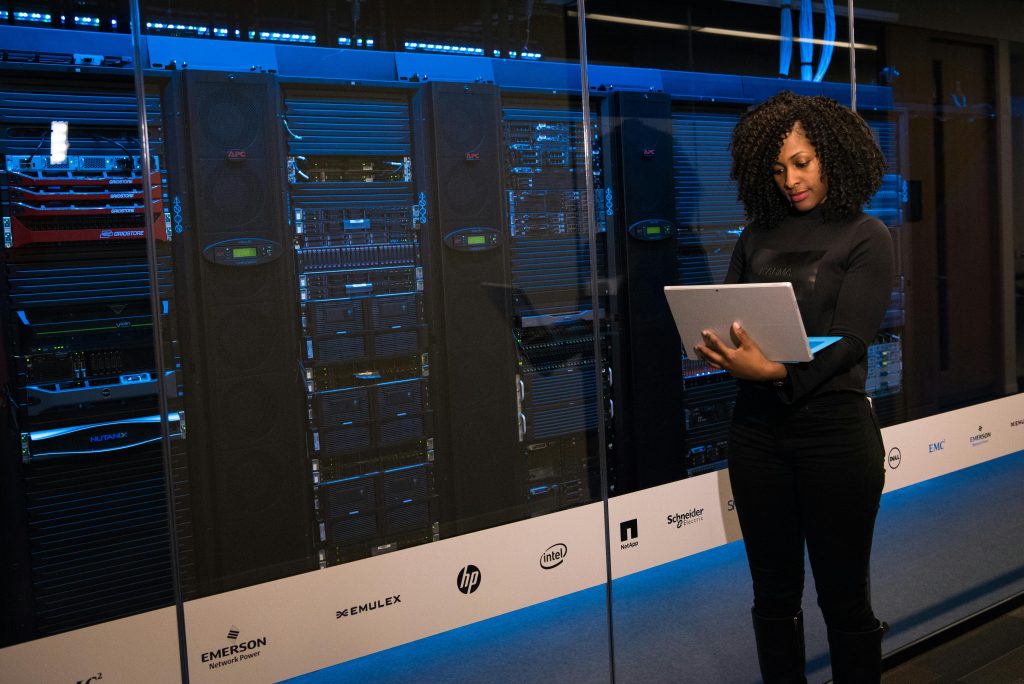
Digital cloud network symbolizing data storage and online connectivity.
Cloud Computing and Technology

The Role of Cloud Computing in Digital Transformation

Introduction In today’s rapidly evolving digital world, cloud computing has emerged as the foundation of transformation across industries. From startups to Fortune 500 companies, organizations are migrating their systems, applications, and data to the cloud to unlock agility, scalability, and innovation. Digital transformation is not merely about adopting technology — it’s about reimagining how a business operates, delivers value, and interacts with customers. Cloud computing makes this possible by providing on-demand access to computing resources that drive automation, data analytics, and artificial intelligence — without the constraints of physical infrastructure. This blog explores how cloud computing is shaping the digital era, its benefits, key technologies, challenges, and its indispensable role in driving business modernization. What is Cloud Computing? Cloud computing refers to the delivery of computing services — such as servers, storage, databases, networking, software, and analytics — over the internet (“the cloud”). Instead of owning and maintaining hardware, organizations rent access from cloud providers like Amazon Web Services (AWS), Microsoft Azure, and Google Cloud Platform (GCP). Cloud computing enables flexibility, cost-efficiency, and scalability, making it easier for companies to innovate and compete globally. The Three Main Types of Cloud Computing Infrastructure as a Service (IaaS):Provides virtualized computing resources like servers, storage, and networking.Example: AWS EC2, Google Compute Engine. Platform as a Service (PaaS):Offers a platform for developers to build, run, and manage applications without managing infrastructure.Example: Microsoft Azure App Service, Heroku. Software as a Service (SaaS):Delivers software applications via the internet on a subscription basis.Example: Google Workspace, Salesforce, Zoom. Cloud Deployment Models Public Cloud: Services offered over the internet, accessible to multiple users. (e.g., AWS, Azure) Private Cloud: Dedicated cloud infrastructure for a single organization, offering greater control and security. Hybrid Cloud: A combination of public and private clouds for flexibility and workload optimization. Multi-Cloud: Using multiple cloud providers to avoid vendor lock-in and improve resilience. The Role of Cloud Computing in Digital Transformation 1. Enabling Agility and Innovation Cloud platforms allow businesses to deploy and scale applications instantly. Developers can test new ideas faster without waiting for physical infrastructure, fostering a culture of innovation. 2. Empowering Data Analytics and AI Cloud computing provides scalable storage and computational power for big data analytics, machine learning, and AI-driven insights.Companies can analyze massive datasets in real-time to improve decision-making and customer personalization. 3. Enhancing Collaboration and Productivity Cloud tools like Google Workspace, Microsoft 365, and Slack enable real-time collaboration across teams worldwide, boosting productivity and connectivity. 4. Strengthening Cybersecurity Modern cloud platforms offer advanced encryption, identity management, and AI-powered threat detection to protect sensitive data.For example, Microsoft Azure Security Center continuously monitors cloud environments for vulnerabilities. 5. Cost Efficiency and Scalability Cloud computing eliminates the need for large upfront hardware investments. Businesses pay only for the resources they use, scaling up or down as demand changes. 6. Supporting Remote Work The pandemic accelerated the shift to remote work — and cloud-based tools made it possible. Employees can securely access applications and files from anywhere, anytime. 7. Business Continuity and Disaster Recovery Cloud providers offer redundancy and backup solutions, ensuring business continuity even in the face of system failures or disasters. Real-World Examples of Cloud-Driven Digital Transformation 1. Netflix Netflix uses AWS to stream video content globally. Cloud scalability allows it to handle millions of users simultaneously while analyzing viewing patterns for recommendations. 2. Airbnb Airbnb relies on cloud computing for hosting its marketplace, managing bookings, and processing real-time analytics to enhance user experiences. 3. NASA NASA uses the cloud to store and share space exploration data securely and efficiently across research teams worldwide. 4. Spotify Spotify leverages Google Cloud for AI-driven music recommendations, improving user engagement and retention. Benefits of Cloud Computing in Digital Transformation Scalability: Easily adjust computing resources based on demand. Flexibility: Deploy applications and services faster across multiple regions. Innovation: Accelerates AI, IoT, and data analytics capabilities. Reduced Costs: Cuts hardware and maintenance expenses. Security and Compliance: Offers robust security frameworks with global compliance standards. Sustainability: Cloud providers use energy-efficient data centers, reducing carbon footprints. Challenges in Cloud Adoption Data Privacy and Compliance: Handling sensitive information across borders can raise legal issues. Vendor Lock-In: Dependence on one provider may limit flexibility. Downtime and Service Reliability: Internet outages can disrupt access to cloud services. Security Risks: Misconfigurations or weak access controls may lead to breaches. Cost Management: Unmonitored usage can lead to unexpected expenses. Emerging Trends in Cloud Computing 1. Multi-Cloud Strategies Organizations are increasingly adopting multi-cloud environments to avoid dependence on a single provider and enhance resilience. 2. Edge Computing Integration Combining cloud and edge computing allows data to be processed closer to the source for faster response times. 3. Serverless Architecture Developers can deploy code without managing servers, improving scalability and reducing operational costs. 4. Cloud-Native Applications Microservices and containerization (via Docker and Kubernetes) enable faster, more agile software development. 5. AI-Driven Cloud Management AI helps optimize cloud performance, automate resource allocation, and detect security threats proactively. Cloud Computing and Sustainability Cloud computing is playing a crucial role in achieving green IT goals. Major providers are investing in renewable energy and energy-efficient data centers.For example, Google Cloud aims to run entirely on carbon-free energy by 2030, setting a benchmark for sustainable digital transformation. Conclusion Cloud computing is the backbone of digital transformation — enabling businesses to become more agile, data-driven, and customer-focused.It breaks traditional IT barriers, accelerates innovation, and empowers organizations to adapt to rapidly changing markets. As companies continue to embrace cloud-based ecosystems, the future will belong to those who combine the power of cloud, AI, and edge technologies to deliver smarter, faster, and more sustainable digital solutions. FAQs 1. What role does cloud computing play in digital transformation? Cloud computing provides flexible, scalable, and cost-effective IT infrastructure that enables digital transformation across industries. 2. How does cloud computing improve business efficiency? It automates operations, enhances collaboration, and allows rapid deployment of applications without large capital investment. 3. What are examples of cloud-based tools used in business? Google Workspace, AWS, Microsoft Azure, Salesforce, and Slack

How would you like me to respond?

Select a personality for your AI assistant

Normal
Happy
Sad
Angry

Your selection will affect how the AI assistant responds to your messages

Chat Assistant

Let's discuss your project!

Hear from our clients and why 3000+ businesses trust TechOTD

Tell us what you need, and we'll get back with a cost and timeline estimate

Scroll to Top