Introduction
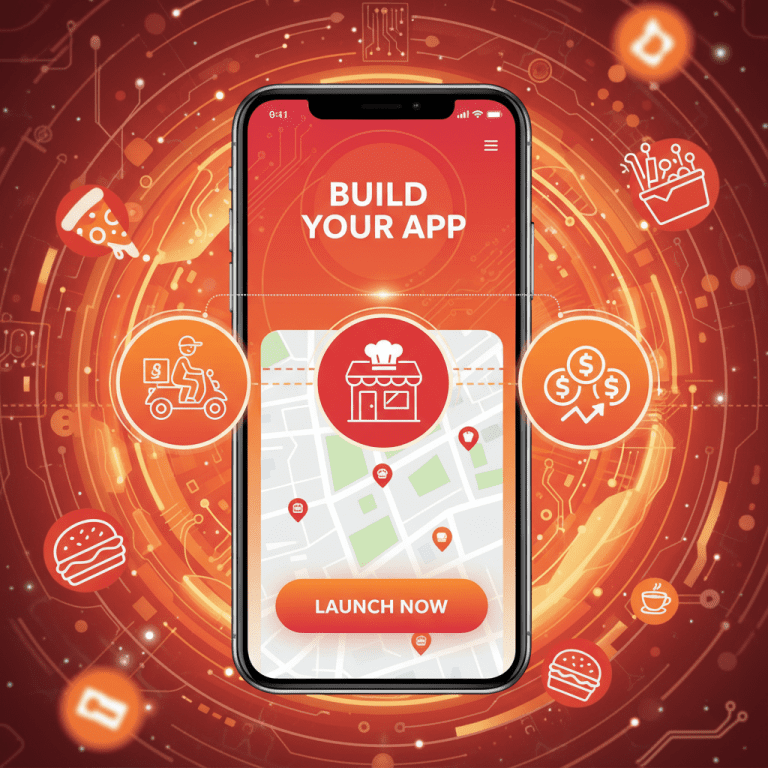
The booming on-demand food delivery market has made apps like DoorDash household names, offering convenience, choice, and speed. Building a comparable app means creating a multi-faceted system integrating customer ordering, real-time driver tracking, payment processing, restaurant management, and much more.
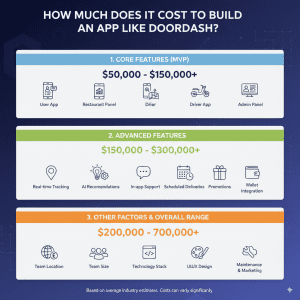
This blog breaks down the key features, development phases, technology stack, and estimated costs associated with building an on-demand food delivery app like DoorDash in 2025. It also highlights ways to optimize budget while delivering a robust, scalable solution.
Key Features of a DoorDash-like App
1. User App for Customers
-
Registration/login
-
Browse restaurants and menus
-
Real-time order tracking and notifications
-
Multiple payment gateway integrations
-
Ratings and reviews
2. Delivery Driver App
-
Profile management
-
Order acceptance/rejection
-
GPS navigation and route optimization
-
Earnings and payout tracking
-
Real-time status updates
3. Restaurant Partner App
-
Menu management
-
Order notifications and status updates
-
Sales and analytics dashboard
-
Promotional tools
4. Admin Panel
-
User, driver, and restaurant management
-
Order management and monitoring
-
Payment and commission management
-
Analytics and reports
-
Customer support and dispute handling
Technology Stack Recommendations
-
Front-end: React Native (for cross-platform mobile apps)
-
Back-end: Node.js, Python Django
-
Database: PostgreSQL, MongoDB
-
Cloud Hosting: AWS, Azure, or Google Cloud
-
APIs: Google Maps (for navigation), Payment gateways (Stripe, PayPal)
-
Push Notifications: Firebase Cloud Messaging
-
Real-time Updates: Socket.io or similar
-
AI Enhancements: Predictive delivery times, demand forecasting (see AI-driven solutions)
Development Timeline
-
Discovery & Planning: 2–4 weeks
-
UI/UX Design: 4–6 weeks
-
Backend & API Development: 8–12 weeks
-
Mobile App Development (iOS & Android): 8–10 weeks
-
Testing & Deployment: 4 weeks
-
Total: 5–7 months approximately
Cost Estimation
| App Component | Estimated Cost (USD) |
|---|---|
| Customer App | $40,000 – $70,000 |
| Delivery Driver App | $30,000 – $50,000 |
| Restaurant App | $25,000 – $45,000 |
| Admin Panel | $20,000 – $40,000 |
| Backend & API | $30,000 – $60,000 |
| Testing & QA | $15,000 – $30,000 |
| Project Management | $10,000 – $25,000 |
| Total | $170,000 – $320,000+ |
Cost Influencing Factors
-
Feature complexity and AI integration
-
Design sophistication and customization
-
Third-party integrations
-
Development team’s location and expertise
-
Ongoing maintenance and scaling needs
Tips to Optimize Development Cost
-
Start with an MVP focusing on core features
-
Use cross-platform frameworks like React Native
-
Outsource to cost-effective, yet experienced teams
-
Leverage cloud services to reduce infrastructure expenses
-
Incorporate AI-driven features after initial launch (Learn more)
Conclusion
Building an app like DoorDash requires a significant financial commitment, but with strategic planning, smart technology choices, and AI-powered optimizations (Explore AI solutions), it is achievable. A feature-rich, scalable app can capture the opportunities in the fast-growing food delivery marketplace.
For detailed guidance, development services, and ongoing innovation insights, consult TechOTD AI Services and stay updated with evolving trends via the TechOTD Blog.