
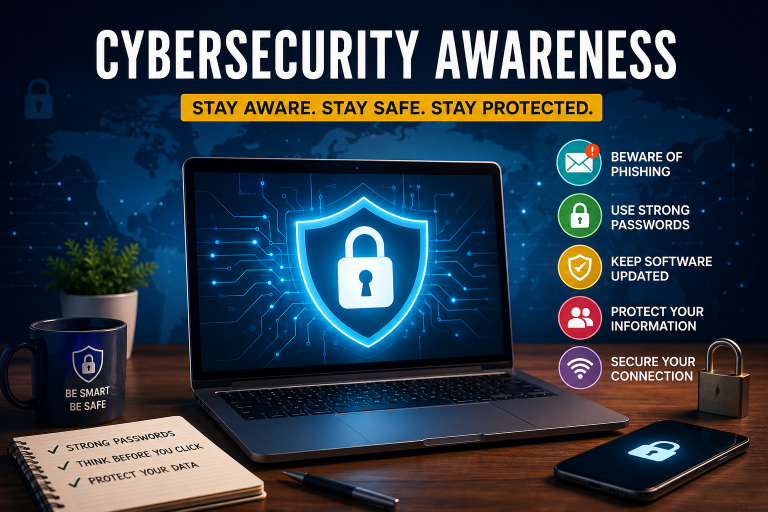
Introduction
Cybersecurity awareness has become increasingly important as people rely more on the internet for communication, education, banking, shopping, and work. Personal information and digital accounts can be exposed to risks when users are unaware of common cyber threats and unsafe online practices.
Cyber threats can include phishing attempts, fraudulent websites, weak passwords, social engineering, and other methods used to trick users or gain unauthorized access to information. Understanding these risks can help individuals recognize suspicious activity and make safer decisions online.
Cybersecurity awareness is not only important for technology professionals. Every internet user can benefit from learning basic digital safety practices, protecting personal information, and staying alert to potential online threats.

What Is Cybersecurity Awareness?
Cybersecurity awareness refers to understanding common online threats and knowing how to follow safe digital practices. It helps individuals recognize potential risks and take appropriate steps to protect their personal information, devices, and online accounts.
Understanding Common Cyber Threats
Common cyber threats can include phishing messages, fake websites, suspicious links, weak passwords, and social engineering attempts. Awareness helps users identify warning signs and avoid actions that could expose their information.
The Role of Safe Online Behavior
Safe online behavior includes using strong passwords, protecting personal information, verifying suspicious messages, and being careful when clicking links or downloading files. Small security habits can reduce the risk of many common online problems.
Why Awareness Matters
Technology alone cannot prevent every cybersecurity risk. Users also play an important role in protecting themselves because many cyber threats rely on deception or mistakes that encourage people to share information or take unsafe actions.
By understanding common cyber risks and following responsible digital practices, individuals can make more informed decisions and improve their overall online security.
Common Cyber Threats in the Digital Age
As digital technology becomes a larger part of everyday life, internet users may encounter different types of cyber threats. Understanding these common risks is an important part of cybersecurity awareness and can help people recognize suspicious situations before making unsafe decisions.
1. Phishing Scams
Phishing scams often use emails, messages, or websites that appear trustworthy to trick users into sharing sensitive information. Cybercriminals may impersonate banks, companies, or other organizations to create a sense of urgency and encourage users to act quickly.
2. Weak Passwords and Account Security
Weak or reused passwords can increase the risk of unauthorized access to online accounts. Using unique, strong passwords and enabling additional account security features can help protect important personal and professional information.
3. Suspicious Links and Websites
Some websites and links are designed to mislead users or collect personal information. Before entering passwords, payment details, or other sensitive data, users should carefully check whether a website is legitimate and trustworthy.
4. Social Engineering
Social engineering involves manipulating people into sharing information or taking actions that may create security risks. These attempts often rely on trust, fear, urgency, or curiosity rather than technical methods alone.
5. Unsafe Downloads
Downloading files or applications from untrusted sources can expose devices to security risks. Users should download software and files only from reliable sources and remain cautious about unexpected attachments or unfamiliar downloads.
How Cybersecurity Awareness Improves Digital Safety
Cybersecurity awareness helps people make safer decisions while using the internet and digital devices. By understanding common threats and warning signs, users can reduce the chances of becoming victims of scams, account theft, or other online security problems.
1. Helps Users Recognize Suspicious Activity
Awareness helps users identify unusual emails, messages, links, and websites before interacting with them. Recognizing warning signs can prevent users from sharing sensitive information with untrusted sources.
2. Encourages Stronger Account Protection
Cybersecurity awareness encourages people to use stronger and unique passwords for important accounts. It also promotes the use of additional security features, such as multi-factor authentication, to provide better protection.
3. Protects Personal Information
Understanding digital privacy helps users think carefully before sharing personal information online. Awareness can encourage people to review privacy settings and avoid sharing sensitive details unnecessarily.
4. Reduces the Risk of Online Scams
People who understand common scam techniques are more likely to question unexpected requests, urgent messages, and offers that seem too good to be true. Taking time to verify information can reduce the risk of falling for online scams.
5. Promotes Responsible Digital Habits
Cybersecurity awareness encourages regular software updates, safe browsing, careful downloading, and responsible use of online services. These habits can contribute to better long-term digital safety.
Best Practices for Cybersecurity Awareness
Developing good cybersecurity habits can help individuals reduce common online risks. Simple and consistent security practices are often an important part of protecting digital accounts, personal information, and devices.
Use Strong and Unique Passwords
Use a different password for each important account and avoid easily guessed information. Strong passwords can help reduce the risk that one compromised account will affect multiple services.
Enable Multi-Factor Authentication
Multi-factor authentication adds an extra layer of account protection by requiring an additional verification step. This can help protect accounts even if a password becomes known to someone else.
Verify Messages and Links
Be cautious when receiving unexpected emails, messages, or links. Before responding or entering personal information, verify the sender and check whether the request is legitimate.
Keep Software Updated
Regular software updates can improve security and fix known issues. Keeping operating systems, browsers, and important applications updated is an important part of maintaining digital safety.
Protect Personal Information
Share personal and sensitive information only when necessary and through trusted services. Reviewing privacy settings can also help users understand how their information is collected and shared online.
Challenges of Building Cybersecurity Awareness
Although cybersecurity awareness is important, developing safe digital habits can be challenging. Cyber threats continue to change, and users may not always recognize new scams or understand the risks associated with everyday online activities.
Rapidly Changing Cyber Threats
Cybercriminals continuously change their methods and may use new technologies or techniques to make scams appear more convincing. Staying informed about common threats can help users recognize changing risks.
Lack of Knowledge and Training
Many people use digital services without receiving formal cybersecurity education. A lack of basic knowledge can make it more difficult to identify suspicious activity and understand safe online practices.
Human Error
Even users who understand cybersecurity risks can sometimes make mistakes. Clicking an unfamiliar link, reusing a password, or sharing information without verification can create security problems.
Overconfidence in Technology
Security software and digital protection tools are useful, but they cannot prevent every risk. Users should combine technology with careful decision-making and responsible online behavior.
Balancing Security and Convenience
Some security practices may require additional time and effort, which can lead users to choose convenience over protection. Building simple and consistent habits can help make cybersecurity part of everyday digital life.
The Future of Cybersecurity Awareness
The importance of cybersecurity awareness will continue to grow as people become more connected through digital devices, online services, and emerging technologies. Future cyber threats may become more sophisticated, making education and responsible online behavior increasingly important.
Artificial intelligence and automation may also play a larger role in cybersecurity by helping identify suspicious activity and potential risks. At the same time, users will need to understand how new technologies can be used safely and responsibly.
Continuous Cybersecurity Education
Cybersecurity awareness is not a one-time activity. As technology and online threats continue to change, regular learning and updated guidance can help individuals stay informed about new risks and safer digital practices.
Shared Responsibility for Digital Safety
The future of digital safety will require shared responsibility between individuals, organizations, technology providers, and educational institutions. Building a strong culture of cybersecurity awareness can help create safer digital environments for everyone.
Conclusion
Cybersecurity awareness is an essential part of staying safe in the digital age. Understanding common cyber threats, recognizing suspicious activity, and following responsible online practices can help individuals protect their accounts, devices, and personal information.
As technology continues to evolve, cybersecurity will remain a shared responsibility. By developing strong digital habits and staying informed about changing risks, internet users can make safer decisions and contribute to a more secure online environment.
Frequently Asked Questions
What is cybersecurity awareness?
Cybersecurity awareness means understanding common online threats and following safe digital practices to protect personal information, devices, and online accounts.
Why is cybersecurity awareness important?
Cybersecurity awareness is important because it helps people recognize cyber threats, avoid common scams, protect sensitive information, and make safer decisions while using the internet.
What are common cyber threats?
Common cyber threats include phishing scams, suspicious links, fake websites, weak passwords, social engineering attempts, and unsafe downloads.
How can I improve my cybersecurity awareness?
You can improve cybersecurity awareness by learning about common online threats, using strong passwords, enabling multi-factor authentication, verifying suspicious messages, and keeping software updated.
Is cybersecurity only the responsibility of IT professionals?
No. Cybersecurity is a shared responsibility. While security professionals manage technical systems, every internet user can help reduce risks by following safe and responsible digital practices.
Connect With us:- https://www.facebook.com/profile.php?id=61555452386126