Introduction
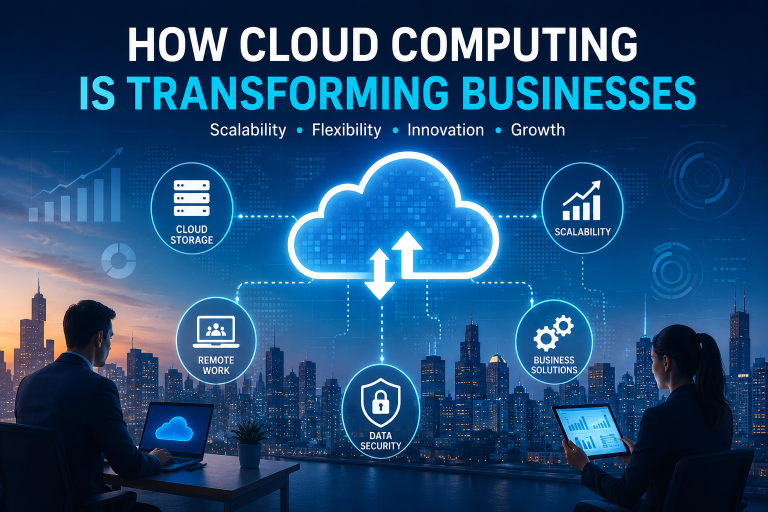
Cloud computing is transforming the way businesses store data, manage applications, and access technology. Instead of relying only on physical servers and local infrastructure, organizations can use cloud-based services to access computing resources through the internet.
Cloud computing for businesses can provide greater flexibility, scalability, and accessibility. Companies can use cloud services to support remote work, improve collaboration, manage data, and adapt technology resources according to changing business needs.
As digital transformation continues to influence modern industries, cloud computing has become an important technology for businesses of different sizes. When implemented effectively, cloud solutions can help organizations improve efficiency while supporting innovation and future growth.
What Is Cloud Computing?
Cloud computing refers to the delivery of computing services through the internet. Instead of owning and maintaining all technology infrastructure locally, businesses can access services such as storage, servers, databases, software, and computing power through cloud providers.
Cloud Storage
Cloud storage allows businesses to store and access data through online services rather than relying only on local devices or physical storage systems. This can make important files and information easier to access from different locations.
Cloud-Based Software
Cloud-based software allows users to access applications through the internet. Businesses can use these tools for communication, project management, customer relationships, accounting, and many other daily operations.
Cloud Infrastructure
Cloud infrastructure provides computing resources such as servers, networking, and processing power through online services. Businesses can use these resources without managing all physical hardware themselves.
By providing technology resources on demand, cloud computing can give businesses more flexibility in how they use, manage, and scale their digital systems.
How Cloud Computing Benefits Businesses
Cloud computing can provide businesses with greater flexibility and access to technology resources without requiring every system to be managed through local infrastructure. Cloud-based services can support changing business needs and make digital tools more accessible.
1. Scalability and Flexibility
Cloud computing allows businesses to adjust technology resources according to their needs. Organizations can increase or reduce storage, computing power, and other services as their requirements change.
2. Improved Collaboration
Cloud-based tools can help employees access shared files, communicate, and work together from different locations. This can support collaboration between teams and make remote or hybrid work more flexible.
3. Easier Access to Data
Cloud services can allow authorized users to access important files and business information through the internet. This can make data more accessible while supporting employees who work from different locations.
4. Reduced Infrastructure Management
Using cloud services can reduce the need for businesses to manage every physical server and technology resource internally. This can allow organizations to focus more on their business operations and strategic technology goals.
Key Business Uses of Cloud Computing
Cloud computing supports many different business activities by providing access to digital tools, storage, computing resources, and online services. Organizations can use cloud technology to improve daily operations and support long-term digital transformation.
Cloud Storage and Data Management
Businesses can use cloud storage to organize, store, and access important files and information. Centralized cloud-based systems can make it easier for authorized teams to work with shared business data.
Remote and Hybrid Work
Cloud-based applications can support employees who work from different locations. Teams can access shared documents, communication tools, and business systems through secure online platforms.
Business Software and Applications
Many organizations use cloud-based software for activities such as customer management, accounting, communication, project management, and data analysis. Online software services can provide businesses with flexible access to important tools.
Backup and Disaster Recovery
Cloud services can support data backup and recovery planning by storing copies of important information in separate digital environments. Effective backup strategies can help businesses recover information after certain technical problems or unexpected disruptions.
Supporting Business Growth
Cloud computing can help businesses scale their technology resources as their operations grow. Instead of making major infrastructure changes for every increase in demand, organizations can often adjust cloud services according to changing requirements.
Challenges of Cloud Computing for Businesses
Although cloud computing offers many advantages, businesses should also understand the challenges involved in moving systems and data to cloud-based environments. Successful cloud adoption requires careful planning, security practices, and effective management.
Data Security and Privacy
Businesses need to protect sensitive information when using cloud services. Strong access controls, secure configurations, and responsible data management can help reduce security and privacy risks.
Internet Dependency
Many cloud-based services depend on reliable internet access. Connectivity problems can affect access to important applications, files, and business systems.
Managing Cloud Costs
Cloud services can provide flexible pricing, but costs may increase if resources are not monitored and managed carefully. Businesses should understand how they use cloud services and review their technology expenses regularly.
Migration and Integration Challenges
Moving existing applications, data, and business processes to the cloud can require careful planning. Organizations may need to ensure that cloud services work effectively with their existing systems and workflows.
Vendor Dependence
Businesses can become dependent on specific cloud providers and their services. Understanding service agreements, data portability, and backup options can help organizations make more informed technology decisions.
The Future of Cloud Computing in Business
Cloud computing is expected to remain an important part of digital transformation as businesses continue to adopt more flexible and connected technologies. Future cloud services may provide greater automation, improved scalability, and more advanced tools for managing business operations.
Technologies such as artificial intelligence, data analytics, automation, and edge computing may become more closely connected with cloud platforms. This can help businesses process information more efficiently and develop new digital services.
Smarter Cloud Services
Future cloud platforms may use artificial intelligence and automation to help businesses manage resources, analyze data, and identify opportunities for improving operations. These technologies could make cloud environments more intelligent and responsive.
Greater Flexibility and Innovation
Cloud computing can continue to support innovation by giving businesses access to technology resources without requiring every organization to build and manage complex infrastructure. This flexibility can help companies experiment with new ideas and adapt to changing market needs.
Conclusion
Cloud computing is transforming businesses by providing flexible access to storage, software, infrastructure, and other technology resources. It can support collaboration, remote work, data management, business growth, and digital transformation.
However, successful cloud adoption requires careful planning and responsible management. Businesses need to consider security, privacy, costs, internet dependency, and integration challenges. When implemented effectively, cloud computing can help organizations become more flexible, efficient, and prepared for future technological change.
Frequently Asked Questions
What is cloud computing for businesses?
Cloud computing for businesses refers to using internet-based services for storage, software, servers, databases, and other computing resources instead of relying entirely on local infrastructure.
How does cloud computing benefit businesses?
Cloud computing can provide scalability, flexibility, improved collaboration, easier access to data, and reduced infrastructure management.
What are common business uses of cloud computing?
Common uses include cloud storage, remote work tools, business software, data management, backup and disaster recovery, and scalable technology resources.
What are the challenges of cloud computing?
Common challenges include data security, privacy concerns, internet dependency, cloud costs, migration difficulties, integration issues, and vendor dependence.
What is the future of cloud computing in business?
The future of cloud computing may include greater automation, artificial intelligence integration, advanced data analytics, smarter cloud services, and more flexible technology infrastructure.
Connect With us:- https://www.facebook.com/profile.php?id=61555452386126