How Generative AI Is Reshaping Software Development
Software development has always evolved alongside technological innovation. From the early days of manual coding to the rise of integrated development environments (IDEs), cloud computing, and DevOps practices, every advancement has aimed to make building software faster, more efficient, and less error-prone. Today, another major transformation is underway, driven by Generative Artificial Intelligence (AI).
Generative AI is no longer a futuristic concept limited to research labs or tech giants. It has become a practical tool that developers, businesses, and organizations are actively using to accelerate software creation, automate repetitive tasks, improve code quality, and streamline entire development lifecycles. What once required hours of manual effort can now be accomplished in minutes with the assistance of AI-powered tools.
As businesses continue their digital transformation journeys, Generative AI is emerging as one of the most influential technologies reshaping how software is designed, developed, tested, and maintained.
Understanding Generative AI in Software Development
Generative AI refers to artificial intelligence systems capable of creating new content based on patterns learned from large datasets. While many people associate Generative AI with text, images, and videos, its impact on software development is equally significant.
Modern AI coding assistants can understand natural language instructions and generate functional code snippets, entire functions, documentation, test cases, and even complete applications. Developers can describe what they want in plain English, and AI tools can suggest code that accomplishes the task.
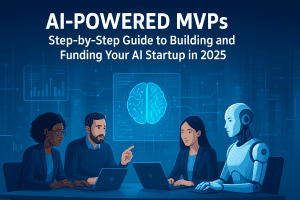
Rather than replacing developers, Generative AI acts as an intelligent collaborator that helps teams work faster and focus on higher-value problem-solving activities.
Accelerating Code Generation
One of the most visible impacts of Generative AI is its ability to generate code quickly.
Developers often spend a significant portion of their time writing repetitive code structures, configuring frameworks, or implementing common functionalities. AI-powered coding assistants can automate these tasks by generating code suggestions in real time.
For example, instead of manually creating API endpoints, authentication modules, or database queries, developers can provide a prompt and receive ready-to-use code within seconds. This dramatically reduces development time and allows teams to focus on innovation rather than repetitive implementation work.
The result is increased productivity, shorter development cycles, and faster delivery of software products.
Enhancing Developer Productivity
Software engineers frequently switch between coding, researching solutions, reviewing documentation, and troubleshooting issues. These context switches can impact efficiency and slow progress.
Generative AI helps reduce these interruptions by providing instant assistance directly within development environments. Developers can ask questions, request code explanations, generate examples, or seek alternative implementation approaches without leaving their workflow.
This immediate access to information enables developers to spend more time building solutions and less time searching for answers.
For junior developers, AI also serves as a valuable learning companion, helping them understand complex concepts and best practices while coding.
Improving Code Quality and Consistency
Maintaining code quality is essential for building reliable and scalable software applications. Poor coding practices can lead to technical debt, security vulnerabilities, and maintenance challenges.
Generative AI contributes to better software quality by identifying potential issues, suggesting improvements, and promoting coding standards. AI tools can analyze existing codebases and recommend cleaner, more efficient implementations.
Organizations can also use AI to enforce coding guidelines across development teams, ensuring consistency in naming conventions, architecture patterns, and documentation practices.
By reducing human errors and encouraging best practices, AI helps create more maintainable and robust software systems.
Revolutionizing Software Testing
Testing remains one of the most time-consuming phases of software development. Writing test cases, identifying edge cases, and validating application behavior often require extensive effort.
Generative AI is transforming this process by automatically generating test scenarios, unit tests, integration tests, and regression testing scripts. AI can analyze application logic and identify areas that require testing, reducing the likelihood of overlooked bugs.
Furthermore, AI-powered testing tools can predict potential failure points and suggest additional test coverage based on historical data and code changes.
This leads to faster testing cycles, improved software reliability, and reduced quality assurance costs.
Simplifying Debugging and Error Resolution
Debugging can consume countless hours, especially when dealing with large and complex applications.
Generative AI helps developers identify the root causes of errors more efficiently. By analyzing logs, error messages, and source code, AI systems can suggest likely solutions and explain why issues are occurring.
Instead of manually searching through documentation or forums, developers can receive contextual recommendations tailored to their specific problem.
This capability significantly reduces troubleshooting time and accelerates software maintenance activities.
Streamlining Documentation Creation
Documentation is critical for software success, yet it is often neglected due to time constraints.
Generative AI can automatically create technical documentation, API references, user guides, code comments, and onboarding materials. As developers write code, AI tools can generate accompanying explanations and documentation in real time.
This ensures that projects remain well-documented throughout their lifecycle rather than requiring documentation efforts at the end of development.
Better documentation improves collaboration, simplifies maintenance, and accelerates knowledge transfer within teams.
Supporting Low-Code and No-Code Development
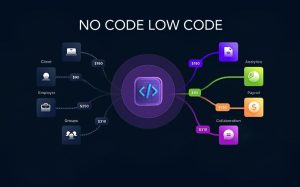
Generative AI is also contributing to the growth of low-code and no-code development platforms.
Business users who may not have extensive programming expertise can describe application requirements using natural language. AI-powered systems can then generate workflows, interfaces, databases, and business logic automatically.
This democratization of software development enables organizations to build applications faster while reducing dependency on specialized development resources.
Although professional developers remain essential for complex projects, Generative AI is making software creation more accessible than ever before.
Strengthening DevOps and Deployment Processes
Modern software development extends beyond writing code. Continuous integration, deployment, monitoring, and infrastructure management are equally important.
Generative AI is helping DevOps teams automate configuration management, deployment scripts, infrastructure provisioning, and incident response workflows.
AI can analyze deployment patterns, predict infrastructure requirements, and recommend optimizations for cloud environments. It can also identify anomalies before they become critical issues, improving system reliability and performance.
By automating operational tasks, organizations can achieve faster releases and more resilient software systems.
Enhancing Cybersecurity in Development
Security has become a top priority as cyber threats continue to evolve.
Generative AI is playing an important role in secure software development by identifying vulnerabilities during the coding process. AI tools can scan source code, detect insecure patterns, and recommend secure alternatives before software reaches production.
Developers can receive immediate feedback on potential risks such as authentication flaws, injection vulnerabilities, or insecure configurations.
This proactive approach helps organizations build more secure applications while reducing remediation costs later in the development lifecycle.
Transforming Team Collaboration
Software development is rarely an individual effort. Teams must collaborate across different functions, including development, testing, operations, and project management.
Generative AI enhances collaboration by simplifying communication, generating project summaries, creating meeting notes, and translating technical information into business-friendly language.
Project stakeholders can gain clearer visibility into development progress, while technical teams can spend less time on administrative tasks.
The result is improved alignment between business objectives and technical execution.
Challenges and Considerations
Despite its advantages, Generative AI introduces several challenges that organizations must address carefully.
One concern is the accuracy of AI-generated code. While AI can produce functional solutions, developers must validate outputs to ensure correctness, performance, and security.
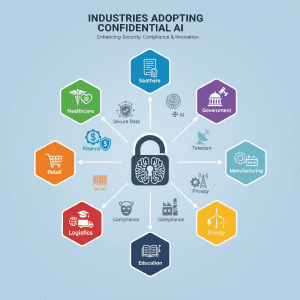
Data privacy is another important consideration. Organizations must ensure that proprietary code and sensitive information are protected when using AI-powered development tools.
Additionally, overreliance on AI may reduce opportunities for developers to strengthen fundamental programming skills. Maintaining a balance between AI assistance and human expertise is essential for long-term success.
Companies should also establish governance policies to ensure responsible AI usage and maintain compliance with industry regulations.
The Future of Software Development with Generative AI
The role of Generative AI in software development will continue to expand as models become more capable and specialized. Future AI systems may handle increasingly complex development tasks, including application architecture design, automated optimization, advanced testing strategies, and intelligent project planning.
Rather than replacing software engineers, these advancements are expected to redefine their responsibilities. Developers will spend less time on repetitive implementation tasks and more time focusing on creativity, innovation, strategic thinking, and solving complex business challenges.
Organizations that embrace AI-assisted development today will be better positioned to compete in a rapidly evolving digital landscape.
Conclusion
Generative AI is fundamentally reshaping software development by transforming how applications are designed, coded, tested, deployed, and maintained. From accelerating code generation and improving software quality to enhancing security and automating documentation, AI is helping development teams achieve greater efficiency and productivity.
As businesses continue adopting digital-first strategies, Generative AI will become an increasingly important component of modern software engineering. While challenges related to governance, security, and accuracy remain, the benefits far outweigh the risks when implemented responsibly.
The future of software development is not about humans versus AI. Instead, it is about developers and AI working together to build smarter, faster, and more innovative digital solutions that drive business growth and technological advancement.