Digital Farmers: Why Data is the New Seed for Harvesting Superior Results
For generations, farming was a game of intuition, tradition, and a fair bit of gambling with the weather. A farmer knew their land by the feel of the soil between their fingers and the color of the horizon at sunset. While that ancestral wisdom remains the heartbeat of agriculture, a new “crop” is being planted in fields across the globe: Data.
The rise of the Digital Farmer isn’t about replacing the human element; it’s about empowering it. By harvesting billions of data points—from soil moisture levels to satellite imagery—modern growers are achieving results that were once considered impossible.
The Dawn of the Data-Driven Acre
In the past, if a field was thirsty, the whole field got water. If a pest was spotted in the north corner, the entire farm was sprayed with pesticides. This “blanket approach” was the only way to manage large-scale operations, but it was incredibly inefficient.
Digital farming, or Precision Agriculture, changes the script. It allows farmers to treat every square meter of their land as an individual unit. By using sensors and GPS-guided machinery, a digital farmer can apply the exact amount of water, fertilizer, or seed needed for a specific spot.
Why Data Matters More Than Ever
We are currently facing a global challenge: feeding a population expected to reach 10 billion by 2050 while using less water and land than ever before. Data is the bridge. It allows for:
-
Predictive Analysis: Knowing a drought is coming before the first leaf wilts.
-
Resource Optimization: Reducing chemical runoff by only spraying where necessary.
-
Yield Maximization: Finding the “sweet spot” for planting density.
The Digital Toolkit: How Data is Collected
To harvest results, you first have to harvest information. Digital farmers use a sophisticated ecosystem of tools to get a 360-degree view of their operations.
1. IoT Sensors (The Nervous System)
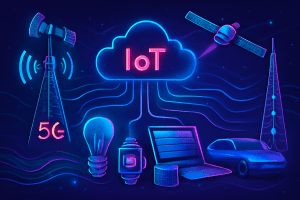
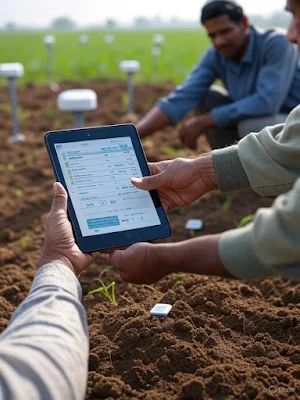
Internet of Things (IoT) sensors are the “eyes and ears” on the ground. These small, rugged devices are buried in the soil or mounted on equipment to monitor:
-
Soil Moisture: Preventing over-irrigation and saving millions of gallons of water.
-
Nutrient Levels: Tracking Nitrogen, Phosphorus, and Potassium (NPK) in real-time.
-
Temperature and Humidity: Predicting the risk of fungal outbreaks.
2. Satellite Imagery and Drones (The View From Above)
High-resolution satellite data allows farmers to see “invisible” problems. Using Normalized Difference Vegetation Index (NDVI) imaging, farmers can spot areas where crops are stressed long before the human eye can detect a change in color. Drones take this a step further, providing centimeter-level accuracy for spot-spraying or counting livestock.
3. Telematics and Smart Machinery
Modern tractors are essentially moving computers. They collect data on fuel consumption, engine health, and planting depth. When synced with the cloud, this data helps farm managers optimize their fleet’s performance and reduce downtime.
From Big Data to Big Decisions: The Human Element
Having data is one thing; knowing what to do with it is another. This is where the “humanized” side of digital farming shines. AI-driven platforms take the “noise” of raw data and turn it into Actionable Insights.
Instead of looking at a spreadsheet of soil pH levels, a farmer receives a notification on their smartphone: “Zone B4 needs 5% more lime to reach peak yield potential. Schedule application for Tuesday before the rain?” This shift moves the farmer from a laborer to a Data Strategist. It reduces the crushing stress of uncertainty, allowing for a better work-life balance and more predictable financial outcomes.
Overcoming the “Digital Divide”
Transitioning to digital farming isn’t without its hurdles. For many, the “Data Harvest” feels out of reach due to:
-
High Initial Costs: Smart machinery and sensor networks require significant upfront investment.
-
Connectivity Issues: Many rural areas still lack the high-speed internet required to sync heavy data loads to the cloud.
-
The Learning Curve: Farmers are experts in biology and mechanics, not necessarily data science.
However, the industry is pivoting. Open-source data platforms and “as-a-service” models are making tech more accessible to small-scale farmers, ensuring that the digital revolution doesn’t leave the family farm behind.
The Future: AI and Autonomous Harvests
As we look toward the next decade, data will move from being a “tool” to being the “operator.” We are already seeing the rise of autonomous tractors and robotic weeders that identify and pluck weeds without a drop of herbicide.
The goal isn’t a “farmer-less” world, but a world where the farmer is free to focus on the high-level health of the ecosystem, while the data handles the repetitive, granular tasks.
Conclusion: Harvesting a Greener Tomorrow
The digital farmer is a steward of both the land and the cloud. By embracing data, they are not just harvesting better results for their bank accounts; they are harvesting a more sustainable future for the planet.
In the world of modern agriculture, the most valuable tool in the shed isn’t the plow—it’s the insight.
When is the Best Time to Source On-Demand Developers? A Strategic 2026 Guide