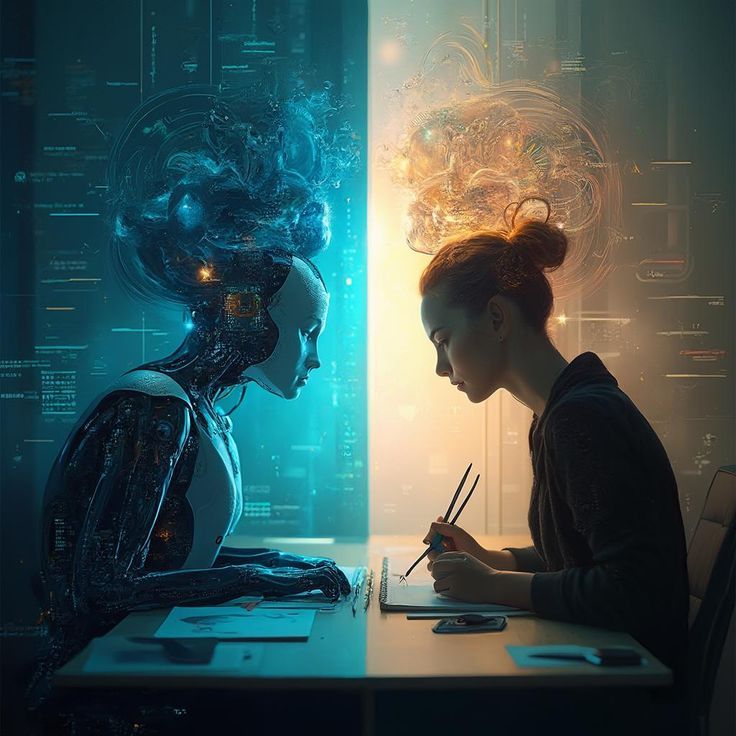
The Future of AI in Software Engineering: From Syntax to Systems
For decades, the life of a software engineer was defined by the struggle against syntax. We spent hours debugging missing semicolons, wrestling with library dependencies, and writing the same boilerplate CRUD (Create, Read, Update, Delete) operations over and over again. Software engineering was as much a craft of typing as it was a craft of thinking.
That world is ending.
As we look toward 2030, we are entering the era of AI-native software engineering. We are moving away from being “coders” who implement logic line-by-line and toward being “architects” who orchestrate intent. This isn’t just about autocomplete on steroids; it’s a fundamental restructuring of the Software Development Life Cycle (SDLC).
In this guide, we’ll explore the tangible trends, the data-backed shifts, and the roadmap for how AI will redefine what it means to build software.
1. The Death of Boilerplate: Why Syntax is No Longer the Barrier
The most immediate impact of AI—represented by tools like GitHub Copilot, Cursor, and ChatGPT—has been the near-total elimination of “toil.” These are the repetitive, non-creative tasks that used to eat up 40% of a developer’s day.
Current research from the 2024 DORA report suggests that developers already see a 70% reduction in time spent on boilerplate and documentation tasks when using generative AI. By 2028, Gartner predicts that 90% of enterprise software engineers will use AI coding assistants daily.
What does this mean for the future? It means the “barrier to entry” for building software is falling. When the AI can generate a React component or a Python FastAPI endpoint in seconds, the value of knowing the specific syntax of a language diminishes. The value shifts to knowing what to build and how it should connect to the rest of the system.
2. The Rise of the “Orchestrator” Persona
As AI takes over the “how,” humans must master the “why.” We are transitioning from Implementers to Orchestrators.
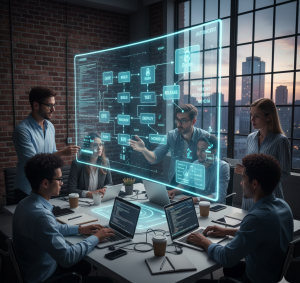
In the near future, an engineer’s primary workspace won’t just be an Integrated Development Environment (IDE); it will be an AI-Native Engineering Environment. Within this space, the engineer will manage “swarms” of autonomous agents.
-
One agent might be dedicated to real-time security auditing.
-
Another agent might handle documentation and unit test generation.
-
A third agent might continuously monitor production performance and suggest refactoring for a specific data pipeline.
The engineer’s role becomes one of Oversight and Architectural Reasoning. You won’t be checking if a loop is off-by-one; you’ll be checking if the AI’s architectural trade-offs align with the business’s long-term scalability goals.
3. Autonomous Agents and the End of “On-Call” Nightmares
One of the most exciting prospects is the evolution of AIOps (Artificial Intelligence for IT Operations). Traditionally, when a server goes down at 3 AM, a human engineer gets a page, wakes up, and spends two hours looking through logs to find the root cause.
By 2030, we expect “Self-Healing Systems” to be the norm. AI agents integrated into the DevOps pipeline will:
-
Detect the anomaly in milliseconds.
-
Diagnose the root cause (e.g., a memory leak in a new deployment).
-
Draft a Patch by looking at previous code commits.
-
Deploy a Canary Fix and monitor its success.
The human engineer will wake up to a report saying, “A memory leak was detected and patched at 3:14 AM. Click here to review the permanent fix.”
4. Legacy Modernization: Solving the “Cobol Problem”
The tech world is buried under mountains of “technical debt”—old code written in languages like COBOL or legacy Java that no one wants to touch because the original developers are long gone.
Generative AI is proving to be a miracle cure for legacy modernization. AI models can “read” legacy code, understand its underlying business logic, and “rewrite” it into modern, cloud-native architectures (like Go or Rust) while maintaining 100% feature parity. This will unlock trillions of dollars in value currently trapped in fragile, aging enterprise systems.
5. The Security Paradox: Protecting AI-Generated Code
There is a catch. As AI allows us to generate code faster, it also allows us to generate vulnerabilities faster.
The future of software engineering will require a “Security-First” mindset. AI-generated code often suffers from “uncritical adoption,” where developers accept suggestions without fully understanding the security implications. Future engineers must become experts in AI Oversight, ensuring that the “synthetic code” entering the codebase adheres to strict governance and compliance standards.
6. The 2030 Roadmap: What to Expect
-
2024-2025: Wide adoption of coding assistants; focus on productivity and boilerplate reduction.
-
2026-2027: Shift toward Agentic SDLC. AI agents start handling specialized parts of the lifecycle (QA, Docs, Security) autonomously.
-
2028-2029: Natural Language becomes a primary “programming language” for high-level system design.
-
2030: The role of “Software Engineer” is fully transformed into “System Architect & AI Supervisor.”
Summary: Thinking is the New Engineering
In the AI era, typing beautifully is nice, but thinking profoundly wins. The engineers who thrive will be those who can hold complex systems in their heads, sense emergent behaviors before they surface, and orchestrate the partnership between human creativity and machine efficiency.