The End of the Password? Why Passkeys and Biometrics are Taking Over in 2026
For years, we’ve been told the same thing: make your passwords longer, add a symbol, use a capital letter, and for heaven’s sake, don’t use “Password123.” We’ve struggled with password managers and panicked when we couldn’t remember our childhood pet’s middle name for a security question.
But as we settle into 2026, it feels like we’re finally turning a corner. The “password” as we know it is effectively on life support. In its place, Passkeys and Biometrics have teamed up to make our digital lives both lazier and significantly safer.
So, What’s the Big Deal with Passkeys?
If you’re still typing in a string of characters to log in, you’re using a “shared secret.” The problem? If a hacker steals that secret from a server, they are you.
Passkeys change the game by using something called cryptography. Think of it as a high-tech digital handshake:
-
The Public Part: You give a “lock” to the website you’re visiting.
-
The Private Part: Your phone or laptop keeps the “key.”
When you go to log in, the website asks, “Hey, do you have the key for this lock?” Your device proves it does without ever actually sending the key over the internet. Because there’s nothing to “type,” there’s nothing for a phisher to steal. Even the most convincing fake website in the world can’t trick your phone into giving up a passkey.
Biometrics: The Fingerprint (or Face) on the Trigger
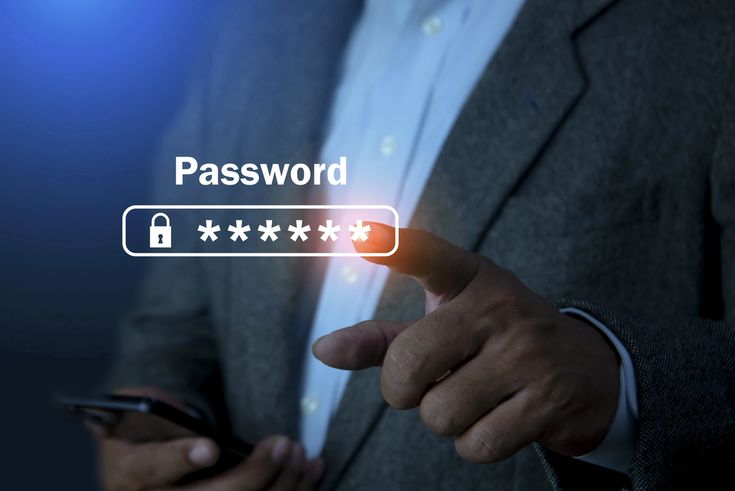
People often ask, “Are passkeys just a fancy word for FaceID?” Not exactly. Think of it this way: the Passkey is the actual security technology, while Biometrics (your face or fingerprint) is just the “OK” button.
In our current 2026 landscape, biometrics act as the local verification. You aren’t sending your face to your bank; you’re just telling your phone, “Yes, it’s really me, go ahead and use that passkey.” It’s the best of both worlds:
-
It’s faster: You can log in about 17 times quicker than typing a password.
-
It’s private: Your actual biometric data never leaves your device. It stays tucked away in a “secure enclave” that even the phone’s OS can’t easily peek into.
The 2026 Reality: Is the Password Actually Dead?
If you look at the stats, the transition is moving fast. The FIDO Alliance recently reported that nearly 87% of companies have moved toward passwordless systems. Even more telling is that 69% of us now have at least one active passkey—mostly because tech giants like Google and Microsoft have made them the default.
However, the password isn’t quite in the grave yet. We are living in a bit of a “Hybrid Era” for three main reasons:
-
Old Habits (and Old Tech): Some government and legacy systems are built on “dinosaur” code that doesn’t understand modern handshakes.
-
The “Lost Phone” Panic: If you lose your device and your keys aren’t backed up to a cloud vault (like iCloud or Google), you often still need a “fallback” password to get back into your life.
-
The Tech Gap: Not everyone has a smartphone with a high-end scanner, meaning the “digital divide” keeps passwords relevant for a significant portion of the global population.
“But Can My Face Be Hacked?”
It’s a valid fear. If someone steals your password, you change it. If someone “steals” your face… well, that’s a bigger problem.
The good news is that modern security doesn’t store a “photo” of you. It stores a complex mathematical “hash.” Even if a hacker broke into your phone’s hardware, they’d find a string of gibberish, not a picture of your iris.
The Bottom Line
Is the password dead? For those of us using modern devices, the answer is a resounding yes. We’ve moved from what we know (easily forgotten words) to who we are (biometrics) and what we have (our devices).
It’s a rare win-win in the world of cybersecurity: we get to be more secure while doing less work. The era of the “Login Screen” is fading, and honestly? We won’t miss it.
The Final Verdict: A Future Without Friction
So, is the password officially dead? If we’re looking at the trajectory of 2026, the answer is a resounding yes—at least as our primary way of moving through the digital world. We’ve finally moved past the era of “what you know” (those easily forgotten, easily stolen strings of text) and into the era of “who you are” (biometrics) combined with “what you have” (your device).
It’s a rare win-win in the world of cybersecurity. For us as users, it means a massive reduction in the daily annoyance of “Forgot Password” loops. For the platforms we use, it means a significant drop in data breaches and account takeovers.
The password might linger in the shadows of legacy systems for a few more years, but the era of the “Login Screen” as we once knew it is over. The passkey has arrived, and honestly? We won’t miss the old way one bit.