OpenAI vs. Claude vs. Gemini: The Ultimate Guide to Choosing the Best AI for Business (2026)
The corporate landscape has completely moved past the “Should we use AI?” phase. Today, the defining question is: “Which AI ecosystem will power our business infrastructure?” Choosing an enterprise AI partner isn’t like picking a productivity app; it’s closer to selecting your cloud infrastructure or ERP system. The AI engine you integrate into your workflows will dictate how you process data, automate customer service, generate code, and scale operations.
Three clear giants dominate the enterprise landscape: OpenAI, Anthropic (Claude), and Google (Gemini). Each has evolved distinct architectural strengths, compliance frameworks, and pricing models.
This comprehensive guide cuts through the marketing hype to help you decide which model suite is the right fit for your business applications.
1. Executive Summary: The Core Philosophy of Each Giant
To understand which AI fits your organization, you must first understand the core philosophical and architectural focus of the engineering teams behind them.
+-----------------------------------------------------------------------+ | ENTERPRISE AI LANDSCAPE | +-----------------------------------+-----------------------------------+ | OPENAI | ANTHROPIC | | "The Raw Power & Agentic | "The Secure, Analytical | | Innovator" | Deep Thinker" | | Best for: Autonomous workflows, | Best for: Legal, compliance, | | raw reasoning, ecosystem size. | massive document analysis. | +-----------------------------------+-----------------------------------+ | v +-------------------------------+ | GOOGLE GEMINI | | "The Native Multimodal | | & Ecosystem Giant" | | Best for: Video processing, | | Workspace integration, scale.| +-------------------------------+OpenAI: The Ecosystem Pioneer
OpenAI remains the market benchmark. Its philosophy centers on raw cognitive power, agentic frameworks (models that can take action), and maintaining a massive developer ecosystem. If your business needs cutting-edge reasoning, complex tool usage, or a vast marketplace of pre-built integrations, OpenAI is the default starting point.
Anthropic (Claude): The Safe Intellectual
Founded by former OpenAI researchers concerned with safety, Anthropic treats AI alignment and data safety as a primary feature, not a secondary checkbox. Claude is designed to be highly articulate, resistant to jailbreaks, and exceptionally skilled at processing vast quantities of nuanced text without losing the plot.
Google (Gemini): The Multimodal Infrastructure Giant
Google took its time, but its Gemini ecosystem is a technical marvel built on a massive scale. Gemini’s core differentiators are native multimodality (trained on audio, video, code, and text simultaneously) and an unprecedented context window. If your business relies on Google Workspace, needs to process hours of video at once, or requires massive data throughput, Gemini is a formidable contender.
2. Technical Performance & Reasoning Capabilities
When deploying AI into production, “reasoning” translates directly to accuracy, low hallucination rates, and the ability to follow complex logic (like financial auditing or code generation).
Coding and Structural Logic
-
OpenAI (GPT-4o / o1 series): Excel at complex logic and multi-step reasoning. OpenAI’s reasoning-focused models are built specifically to “think” before they respond, making them incredible for complex architecture planning and debugging.
-
Claude (Claude 3.5 Sonnet): Claude 3.5 Sonnet has set a historic benchmark for software engineering tasks. It doesn’t just write code; it understands how code architectures interact, making it the preferred engine for enterprise software development and automated refactoring.
-
Gemini (Gemini 1.5 Pro): Highly competent at coding, particularly when analyzing an entire, massive repository all at once due to its context window. However, for standalone, complex code logic, it occasionally falls just short of Claude’s precision.
Nuance, Tone, and Content Generation
-
Claude: The undisputed winner for human-like prose. It avoids the stereotypical, overly enthusiastic “AI voice” that OpenAI models often output. For marketing, complex PR drafts, legal briefs, and editorial work, Claude feels genuinely collaborative and highly professional.
-
OpenAI: Fast and efficient, but tends to produce text that requires heavier human editing to strip out corporate buzzwords and artificial transitions.
-
Gemini: Excellent for structured reports, translations, and summaries, leaning toward a clean, functional, and highly informative tone.
3. The Battle of the Context Window
The context window dictates how much data an AI can hold in its working memory during a single conversation session. This is a crucial metric for business applications dealing with large data sheets, legal code, or long audio/video recordings.
| Model / Metric | OpenAI (GPT-4o) | Claude (3.5 Sonnet) | Gemini (1.5 Pro) |
| Context Window (Tokens) | 128,000 | 200,000 | 2,000,000+ |
| Approximate Equivalent | ~96,000 words | ~150,000 words | ~1.5 million words |
| Best Used For | Dynamic chat, fast queries, tool switching | Multi-chapter book analysis, legal contract bundles | Hours of video, entire codebases, massive databases |
Why Gemini Dominates the Context Era
Gemini’s 2-million-token context window is a paradigm shift for enterprise applications.
Enterprise Example: A compliance department can upload an hour-long video of a board meeting, alongside a 500-page regulatory document, and ask Gemini: “At what timestamp did the discussion conflict with Section 4 of the uploaded regulations?” Gemini can parse this natively and instantly.
Claude’s Strategic Middle Ground
While Claude’s 200k window is smaller than Gemini’s, its “Needle in a Haystack” retrieval accuracy is nearly flawless. Claude excels at maintaining deep conceptual comprehension across an entire corporate knowledge base without hallucinating details.
4. Native Multimodality: Text, Audio, and Video
Modern enterprise data isn’t just text stored in databases; it’s sales calls (audio), product demonstrations (video), and design blueprints (images).
[Input Data: Text/Audio/Video] ---> [Native Multimodal Engine] ---> [Unified Business Insight]-
Google Gemini: Built from the ground up to process multiple mediums natively. It doesn’t transcribe audio to text before reading it; it hears the intonation. It reads video frame-by-frame, tracking movement, text-on-screen, and audio cues simultaneously. This makes it an elite tool for media companies, surveillance analytics, and customer call centers.
-
OpenAI: Features highly impressive, ultra-low-latency voice capabilities (GPT-4o audio mode). It is ideal for building conversational voice agents, customer support hotlines, and real-time translation tools. Its image understanding is superb for OCR (Optical Character Recognition) and scanning data sheets.
-
Claude: Possesses elite visual processing for charts, graphs, and technical schematics. If your business needs to turn financial PDF charts into clean Excel data, Claude handles it with extreme precision, though it lacks native audio/video processing.
5. Security, Compliance, and Data Privacy
For any enterprise, data privacy is non-negotiable. You cannot risk your proprietary company data or customer PII (Personally Identifiable Information) being used to train public models.
Anthropic’s “Constitutional AI” Approach
Anthropic has positioned itself as the enterprise gold standard for safety. They utilize a framework called Constitutional AI, hardcoding specific ethical and behavioral principles into the model’s training phase.
-
Data Retention: Zero retention options are readily available for enterprise API users.
-
Copyright Indemnity: Anthropic defends and indemnifies enterprise customers against intellectual property claims arising from model outputs.
OpenAI Enterprise
OpenAI has made massive strides with its Tier-1 compliance offerings.
-
SOC 2 Type II: Fully certified.
-
Data Ownership: Customer data passed through the API is never used for model training by default.
-
Custom Deployments: Through Microsoft Azure OpenAI Service, enterprises can run OpenAI models inside their isolated Azure cloud environment, satisfying strict healthcare (HIPAA) and financial regulations.
Google Cloud (Gemini via Vertex AI)
For established enterprises already running on Google Cloud Platform (GCP), Gemini via Vertex AI offers unmatched enterprise-grade isolation.
-
Your data never leaves your Google Cloud tenant.
-
It inherits all the existing IAM (Identity and Access Management) security policies, encryption keys, and residency compliances of your organization’s GCP infrastructure.
6. Enterprise Integration: Ecosystem & API Flexibility
An AI model is only as good as its connection to your business apps (Slack, Salesforce, Jira, internal databases).
+-------------------------------------------------------------------------+ | ENTERPRISE INTEGRATION MAP | +-------------------------------------------------------------------------+ | Ecosystem | Primary Enterprise Hub | +-------------+-----------------------------------------------------------+ | OpenAI | Microsoft Azure Infrastructure / Custom Agentic APIs | | Claude | AWS Bedrock / Independent Cloud Agnostic Integrations | | Gemini | Google Cloud Platform (GCP) / Workspace Ecosystem | +-------------------------------------------------------------------------+The Microsoft-OpenAI Alliance
Through Microsoft’s massive backing, OpenAI is deeply integrated into Microsoft 365 Copilot and Azure. If your company relies heavily on Windows, Azure, and Teams, OpenAI models are effectively native to your ecosystem. Furthermore, OpenAI’s Assistants API makes building custom internal workflows incredibly straightforward.
The AWS-Anthropic Alliance
Anthropic’s primary cloud partner is Amazon Web Services (AWS). Available via AWS Bedrock, Claude can be deployed seamlessly by any company whose infrastructure lives on Amazon’s cloud. This allows developers to use AWS security, serverless architecture, and data pipelines to feed Claude their enterprise knowledge.
The Google Workspace Native
Gemini is woven directly into Google Workspace (Docs, Sheets, Gmail, Meet). If your organization is a Google-first shop, Gemini’s ability to pull context straight from your drive, summarize unread emails, and build automated spreadsheet models provides a massive productivity boost without any custom API development.
7. Cost-Effectiveness and API Economics
Deploying AI at scale requires a deep understanding of token economics. Running millions of queries a day can quickly spiral in cost if your architecture isn’t optimized.
-
The Race to the Bottom: Across the board, API token costs have plummeted over the last two years.
-
High-Volume Value: For massive data processing, models like Claude 3.5 Sonnet offer an extraordinary performance-to-cost ratio, routinely beating older legacy models while costing a fraction of the price.
-
Caching Benefits: Both Anthropic and OpenAI offer Prompt Caching. If you are repeatedly sending the same massive context block (like a legal playbook or a large library of code) to the AI, you get a massive discount (up to 50–90%) on those cached tokens. This fundamentally shifts the ROI math for customer service bots and document reviewers.
8. Strategic Decision Framework: Which Should You Choose?
To make your final decision simple, map your primary business objective to one of the scenarios below:
Choose OpenAI if:
-
You want to build autonomous agents: Your application requires an AI that can use external tools, browse the web, execute code, and make multi-step decisions independently.
-
You are anchored in Azure: You want seamless deployment inside your pre-existing Microsoft enterprise agreement.
-
You need ultra-low latency voice: You are building real-time voice assistants for customer support or interactive learning.
Choose Claude:
-
Deep legal, financial, or literary analysis is required: You need to audit complex portfolios, analyze dense contracts, or draft highly sophisticated corporate copy.
-
Safety and compliance are top priorities: You operate in highly regulated sectors where hallucinations or unpredictable outputs carry massive liabilities.
-
Your infrastructure runs on AWS: You want to leverage AWS Bedrock for clean, managed deployment of top-tier models.
Choose Gemini (Google) if:
-
You have massive multimodal data requirements: You want to analyze corporate video footage, process hours of audio recordings, or scan massive code repositories natively.
-
You need the ultimate context window: Your application depends on loading millions of words or data points into a single prompt session.
-
Your team lives in Google Workspace: You want immediate, out-of-the-box productivity enhancements across Gmail, Docs, and Sheets.
Conclusion
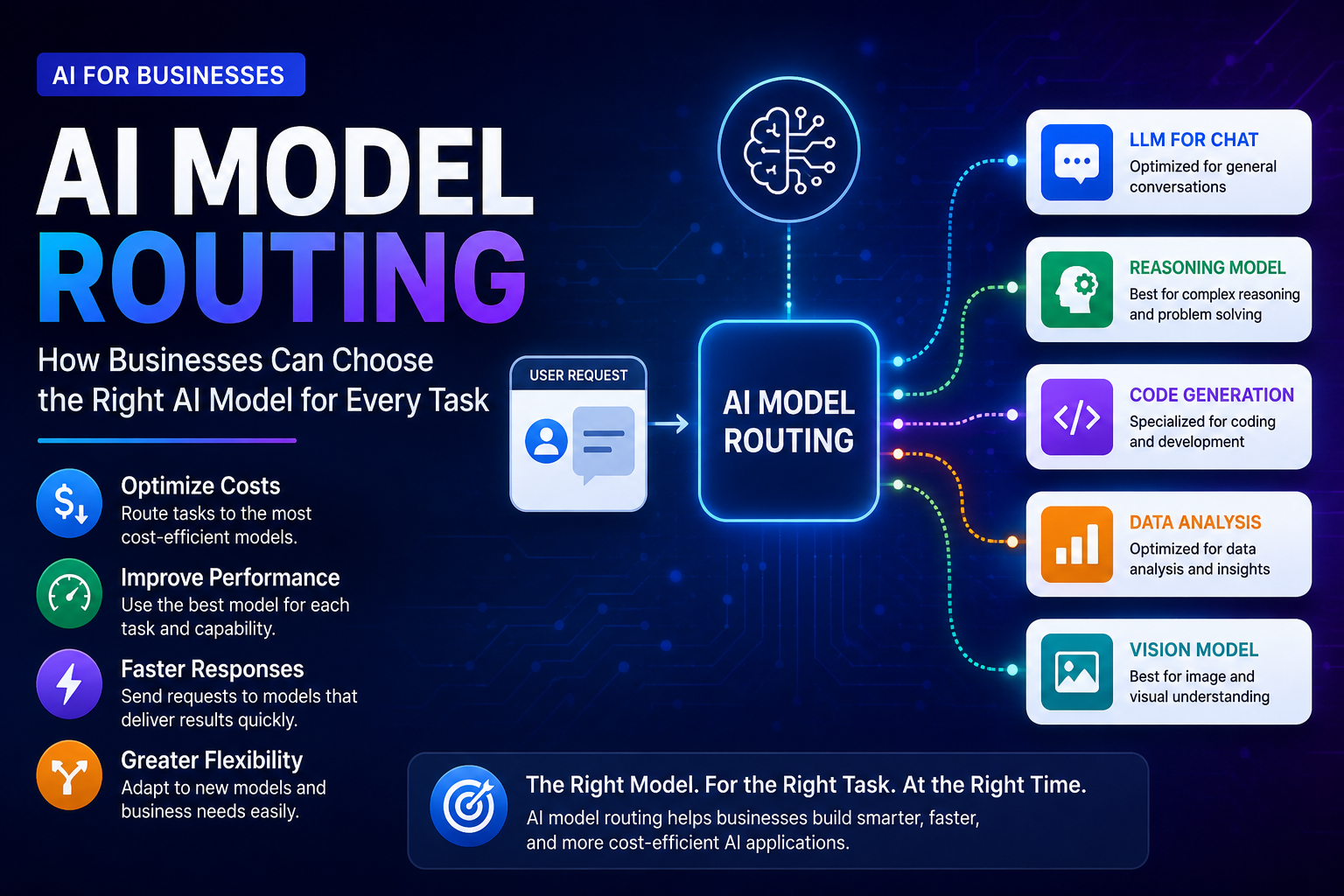
There is no singular “winner” in the enterprise AI wars. The smartest modern organizations are actually moving toward a multi-model approach.
They might use Claude for internal contract analysis and legal drafting, route their high-volume customer service voice lines through OpenAI’s real-time API, and leverage Gemini to process large media logs and video-based training data.
By analyzing your existing cloud infrastructure, data types, and compliance standards, you can choose the AI partner—or combination of partners—that will drive your company’s digital transformation.