Introduction
How to Build a Digital Wallet App
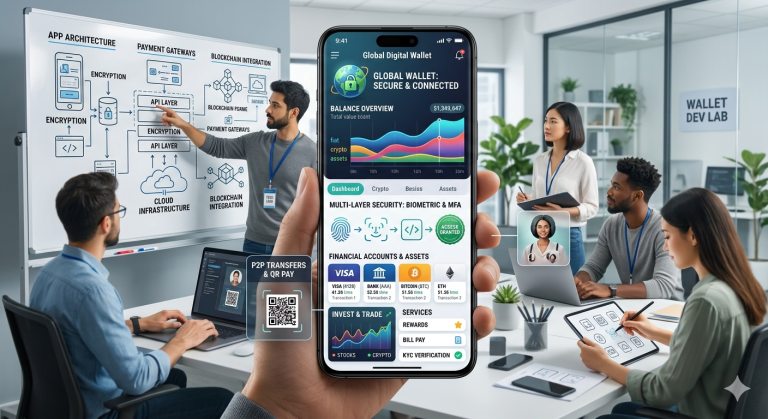
A digital wallet app lets users store payment methods, transfer money, and complete purchases without relying on physical cash or cards, which is a major reason these apps continue to grow in popularity. In 2026, digital wallets process over 65% of global mobile transactions, with the market valued at $22 trillion annually. Modern wallet apps are valued for speed, convenience, and strong security features such as tokenization, biometric login, and multifactor authentication.
If you want to build a successful digital wallet app, you need more than a clean interface; you also need the right feature set, security controls, compliance planning, and a clear product strategy from day one. This comprehensive 2026 guide reveals the exact technical roadmap, development costs, essential features, security best practices, and monetization strategies every fintech founder needs. From market research to app store launch, discover proven steps used by PayPal, Venmo, and Cash App to dominate mobile payments.
Market Opportunity
-
Global digital wallet market: $22T transaction volume (2026)
-
4.8B users worldwide (65% smartphone penetration)
-
India alone: 850M+ UPI users processing $2T annually
-
Average wallet app revenue: $15-45/user lifetime value
Why Now? 78% of consumers prefer tap-to-pay over cards, regulatory sandboxes are opening worldwide, and AI-powered fraud detection reduces chargebacks by 92%. This blog explains the basic building approach, why it matters, and what businesses should focus on before launch.
Core Features Checklist
How to Build Digital Wallet App: Step-by-Step
Step 1: Define Your Niche & Business Model
Successful digital wallets target specific use cases before expanding:
-
P2P Focus (Venmo): Friends/family transfers, social sharing
-
70% of Gen Z uses peer-to-peer weekly
-
Revenue: 1.5-3% transaction fees
-
-
Merchant POS (Apple Pay): In-store tap-to-pay, loyalty integration
-
Restaurants/retail: 45% checkout conversion boost
-
-
B2B Payments (Stripe Connect): Vendor payouts, gig economy
-
Freelancer platforms: 30% faster payouts = 25% retention
-
-
Cross-Border (Wise): Low-fee international transfers
-
Emerging markets: 12x cheaper than banks
-
Action Items:
-
Survey 100+ target users (Google Forms, Typeform)
-
Competitor matrix: features, pricing, ratings
-
Revenue model: % fees, subscriptions, premium features
-
MVP scope: 3-5 core screens maximum
Step 2: Technical Architecture
Frontend: React Native/Flutter (iOS + Android)
Backend: Node.js + Express (microservices)
Database: PostgreSQL + Redis (transactions + cache)
Payments: Stripe/PayPal/Razorpay APIs
Security: AES-256 + Tokenization + 3DS 2.0
Cloud: AWS/GCP (HIPAA/GDPR compliant)Introduction
A digital wallet app lets users store payment methods, transfer money, and complete purchases without relying on physical cash or cards, which is a major reason these apps continue to grow in popularity. In 2026, digital wallets process over 65% of global mobile transactions, with the market valued at $22 trillion annually. Modern wallet apps are valued for speed, convenience, and strong security features such as tokenization, biometric login, and multifactor authentication.If you want to build a successful digital wallet app, you need more than a clean interface; you also need the right feature set, security controls, compliance planning, and a clear product strategy from day one. This comprehensive 2026 guide reveals the exact technical roadmap, development costs, essential features, security best practices, and monetization strategies every fintech founder needs. From market research to app store launch, discover proven steps used by PayPal, Venmo, and Cash App to dominate mobile payments.
Market Opportunity
-
Global digital wallet market: $22T transaction volume (2026)
-
4.8B users worldwide (65% smartphone penetration)
-
India alone: 850M+ UPI users processing $2T annually
-
Average wallet app revenue: $15-45/user lifetime value
Why Now? 78% of consumers prefer tap-to-pay over cards, regulatory sandboxes are opening worldwide, and AI-powered fraud detection reduces chargebacks by 92%. This blog explains the basic building approach, why it matters, and what businesses should focus on before launch.
Core Features Checklist
How to Build Digital Wallet App: Step-by-StepStep 1: Define Your Niche & Business Model
Successful digital wallets target specific use cases before expanding:-
P2P Focus (Venmo): Friends/family transfers, social sharing
-
70% of Gen Z uses peer-to-peer weekly
-
Revenue: 1.5-3% transaction fees
-
-
Merchant POS (Apple Pay): In-store tap-to-pay, loyalty integration
-
Restaurants/retail: 45% checkout conversion boost
-
-
B2B Payments (Stripe Connect): Vendor payouts, gig economy
-
Freelancer platforms: 30% faster payouts = 25% retention
-
-
Cross-Border (Wise): Low-fee international transfers
-
Emerging markets: 12x cheaper than banks
-
Action Items:
-
Survey 100+ target users (Google Forms, Typeform)
-
Competitor matrix: features, pricing, ratings
-
Revenue model: % fees, subscriptions, premium features
-
MVP scope: 3-5 core screens maximum
Step 2: Technical Architecture
Tech Stack Comparison:
Step 3: Essential Features (MVP)
1. User Onboarding (KYC) – Phone/email OTP verification – Government ID scan (Aadhaar/PAN) – Selfie biometric capture2. Wallet Funding – Bank account linking (UPI/ACH) – Debit/credit card (3DS secure) – Partner cash-in (retail outlets)
3. Core Transactions – QR code scanning (POS) – P2P transfers (phone number) – Bill payments (utilities) – Transaction history + receipts
4. Security Layer – Biometric login (FaceID) – Transaction limits – Real-time notifications
Step 4: Security Implementation (Non-Negotiable)
Digital wallet apps face 300% more attacks than average fintech. Here’s enterprise-grade protection:Pro Tip: Partner with established PSPs (Stripe, Adyen) for instant compliance vs. building payment processing (18+ months, $2M+).
Monetization Models
-
Transaction Fees: 1-3% per transaction
-
Premium Features: $2.99/month (higher limits)
-
Merchant Partnerships: Revenue share
-
FX Fees: 0.5-1% cross-border
-
Interest on Balances: 2-4% APY
Regional Compliance Matrix
Common Pitfalls (Avoid These)
-
Embedded Finance: Wallet → full banking
-
Crypto Integration: Stablecoins + DeFi
-
AI Agents: Autonomous bill payments
-
Wearables: Smartwatch + ring payments
-
Biometrics 2.0: Vein pattern + behavioral
Conclusion
Building a digital wallet app requires a balance of user-friendly design, secure payment architecture, and compliance-ready development so the product can scale safely and earn user trust. The strongest apps combine fast onboarding (under 90 seconds), reliable payment flows (99.99% uptime), real-time transaction visibility, and layered security such as biometrics, encryption, and two-factor authentication.When these elements are planned properly, a digital wallet app can improve customer convenience, speed up transactions by 70%, and create a strong digital payments experience for both consumers and businesses. Start with a focused MVP (3-5 core features), validate the core use case with 1,000 beta users, and then expand features based on real user behavior and market demand.
Ready to launch your digital wallet? Download our free Digital Wallet Development Checklist (20-page PDF) or book a free 30-minute strategy call with our fintech team. Transform payments in 2026!
FAQ
1. What is a digital wallet app?
A digital wallet app is a mobile or web application that stores payment information digitally and allows users to make payments, transfers, and other financial transactions quickly without physical cards.https://img.freepik.com/free-vector/payment-gateway-ui-mobile-app-design_47987-1965.jpg?semt=ais_hybrid&w=740&q=80
[image:321]2. What features should a digital wallet app include?
Core features usually include user registration, card or bank linking, money transfers, bill payments, transaction history, notifications, and security tools like biometric login and tokenization.3. Is digital wallet app development secure?
Yes, it can be secure when the app uses encryption, tokenization, biometric authentication, multifactor authentication, and follows standards such as PCI DSS and EMVCo where relevant.4. Why do users prefer digital wallets?
Users prefer digital wallets because they make payments faster (3x checkout speed), reduce the need to carry physical cards, and provide better convenience with real-time payment tracking and notifications.5. What is the best way to start building a digital wallet app?
The best approach is to begin with a clear niche, define your unique value proposition, design wireframes and prototypes, test usability with 50+ users, and launch an MVP before adding advanced features.6. How much does it cost to build a digital wallet app?
MVP development costs $120K-$200K (outsourced) or $45K-$80K (DIY team of 2). Full production apps range $300K-$800K depending on features and compliance requirements.7. How long does digital wallet development take?
MVP: 3-5 months. Full production: 8-12 months. Add 2-3 months for compliance certification and app store approval. -