Introduction
Gamification is becoming an increasingly popular approach in education because it can make learning more interactive and engaging. By using game-like elements such as points, badges, levels, challenges, and rewards, educators can encourage students to participate more actively in the learning process.
Gamification in education does not mean turning every lesson into a video game. Instead, it involves applying selected game mechanics to educational activities in order to improve motivation, participation, and engagement.
When designed effectively, gamified learning can help students stay interested in their educational goals while encouraging problem-solving, collaboration, and continuous progress. However, successful gamification requires meaningful learning objectives and should support education rather than distract students from it.
What Is Gamification in Education?
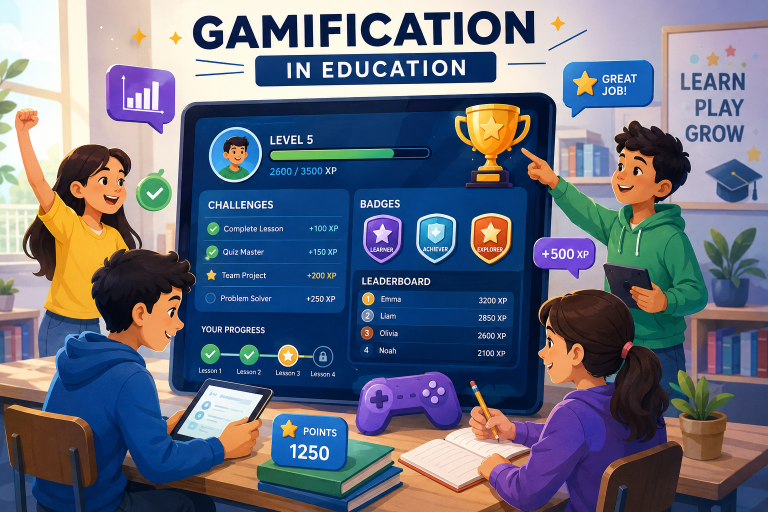
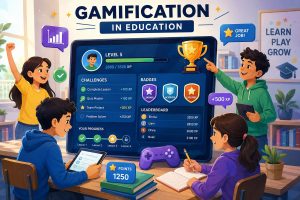
Gamification in education refers to the use of game-like elements and mechanics in learning activities. These elements can include points, badges, levels, challenges, rewards, leaderboards, and progress tracking to encourage students to participate and stay motivated.
Game Elements Used in Learning
Educational gamification can include different game elements depending on the learning goals. Points can reward progress, badges can recognize achievements, and levels can help students see their advancement through a course or learning activity.
Challenges and Rewards
Challenges can encourage students to apply their knowledge and complete specific learning tasks. Rewards and recognition can provide positive reinforcement when students achieve goals, complete activities, or demonstrate improvement.
Progress and Achievement Tracking
Gamified learning systems can show students how they are progressing through lessons and activities. Clear progress tracking can help learners understand their goals and encourage them to continue working toward the next level or achievement.
By combining educational objectives with selected game mechanics, gamification can create a more interactive learning experience while keeping the focus on meaningful knowledge and skill development.
How Gamification Improves Student Engagement
Gamification can improve student engagement by making learning activities more interactive, goal-oriented, and rewarding. When students can see their progress and work toward clear achievements, they may feel more motivated to participate actively in the learning process.
1. Increases Motivation
Points, rewards, badges, and achievements can provide students with additional motivation to complete learning activities. Clear goals and visible progress can encourage learners to continue working and improving their performance.
2. Encourages Active Participation
Gamified activities can encourage students to participate instead of remaining passive learners. Challenges, quizzes, interactive tasks, and team activities can create opportunities for students to engage directly with educational content.
3. Makes Learning More Enjoyable
Game-like elements can make educational activities feel more interesting and enjoyable. When learning experiences are engaging, students may be more willing to explore topics and spend time practicing new skills.
4. Provides Immediate Feedback
Gamified learning platforms can provide immediate feedback when students complete quizzes, challenges, or activities. Quick feedback helps learners understand their performance and identify areas where they need additional practice.
Benefits of Gamification in Education
When used effectively, gamification can provide several benefits for students and educators. It can make learning more engaging while encouraging motivation, participation, collaboration, and continuous improvement.
Improved Student Motivation
Gamified learning can give students clear goals and rewards for completing educational activities. Progress indicators and achievements can encourage learners to stay focused and continue working toward their objectives.
Better Learning Engagement
Interactive challenges and activities can encourage students to become more involved in lessons. Instead of only listening or reading, learners can actively participate and apply their knowledge.
Development of Problem-Solving Skills
Educational challenges and game-based activities can encourage students to think critically and solve problems. Learners may need to analyze situations, make decisions, and test different approaches to achieve their goals.
Encourages Collaboration
Team-based challenges and cooperative activities can help students work together toward shared goals. These experiences can support communication, teamwork, and collaboration skills.
Supports Continuous Learning
Levels, progress systems, and achievement tracking can encourage students to continue learning over time. Breaking larger educational goals into smaller challenges can make progress feel more manageable and rewarding.
Challenges of Gamification in Education
Although gamification can make learning more engaging, it also has certain limitations. Educational activities should be designed carefully so that game elements support meaningful learning instead of becoming distractions.
Overemphasis on Rewards
If students focus only on points, badges, or prizes, they may become more interested in rewards than in understanding the subject. Gamification should encourage genuine learning rather than only competition.
Competition and Pressure
Leaderboards and competitive activities may motivate some students but create pressure for others. Educators should use competition carefully and provide different ways for students to participate and succeed.
Poorly Designed Activities
Gamification is most effective when game elements are connected to clear learning objectives. Adding points or badges without meaningful educational activities may not improve student learning.
Technology and Accessibility
Digital gamification may require devices, internet access, and suitable learning platforms. Limited access to technology can create unequal opportunities for students.
Balancing Fun and Learning
The main purpose of educational gamification should remain learning and skill development. Game elements should make lessons more engaging without distracting students from important educational goals.
The Future of Gamification in Education
The use of gamification in education is likely to continue growing as digital learning platforms become more interactive and personalized. Future educational experiences may combine game mechanics with artificial intelligence, adaptive learning, virtual environments, and real-time feedback.
Technology can help educators create gamified learning experiences that respond to student progress and learning needs. Instead of using the same activities for every learner, future platforms may provide personalized challenges and learning paths.
Personalized Gamified Learning
Future gamified learning systems may use student progress and performance data to provide challenges that match individual learning levels. This could help students receive activities that are neither too easy nor unnecessarily difficult.
More Interactive Digital Learning
Advances in educational technology may introduce more immersive and interactive gamified experiences. Virtual environments, simulations, and collaborative challenges could create new ways for students to explore educational concepts.
Conclusion
Gamification in education can make learning more engaging, interactive, and motivating by using elements such as challenges, points, badges, progress tracking, and rewards. When connected to clear learning objectives, these elements can encourage students to participate actively and continue improving their knowledge and skills.
However, successful gamification requires a balance between fun and meaningful learning. Game elements should support educational goals rather than distract students from them. When designed thoughtfully, gamification can create more enjoyable and effective learning experiences for students.
Frequently Asked Questions
What is gamification in education?
Gamification in education refers to the use of game-like elements such as points, badges, levels, challenges, rewards, and progress tracking to make learning more interactive and engaging.
How does gamification improve student engagement?
Gamification can improve engagement by providing clear goals, interactive activities, visible progress, immediate feedback, and motivating challenges that encourage active participation.
What are the benefits of gamification in education?
Benefits can include improved motivation, better engagement, active participation, problem-solving, collaboration, and support for continuous learning.
What are the challenges of gamification in education?
Challenges can include overemphasis on rewards, excessive competition, poorly designed activities, limited technology access, and difficulty balancing entertainment with meaningful learning.
Is gamification suitable for all students?
Gamification can support many different learners, but activities should be designed carefully to provide inclusive and flexible ways for students to participate without creating unnecessary pressure or competition.
Connect With us:- https://www.facebook.com/profile.php?id=61555452386126