Introduction
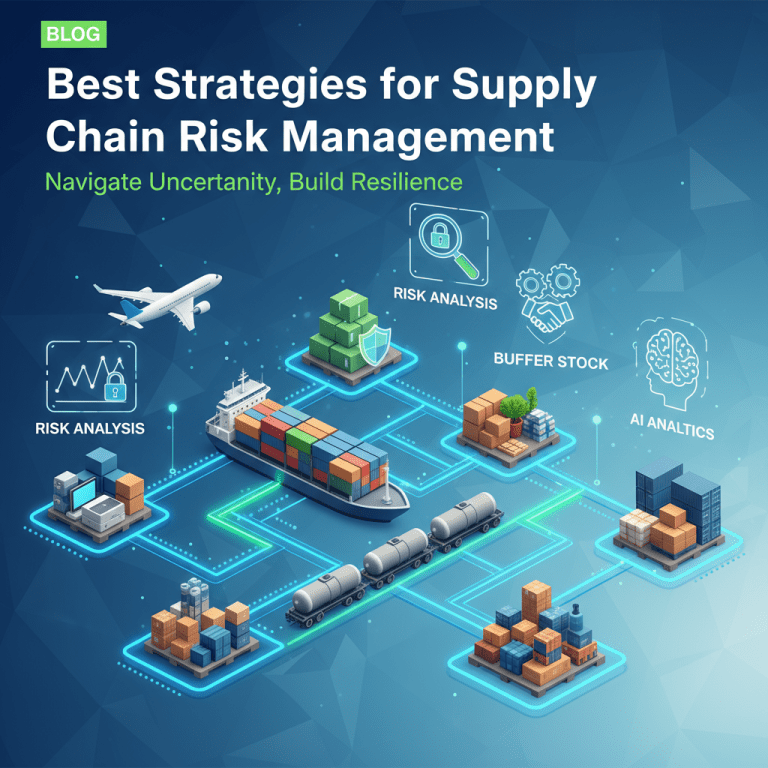
Supply chain risk management has become a top priority for organizations due to geopolitics, climate events, cyber threats, and unpredictable global disruptions. Businesses need robust frameworks and proactive strategies to secure continuity, minimize losses, and ensure long-term resilience in 2025.
Diversify the Supplier Base
Relying on a single supplier exposes companies to disruption risks. Multi-sourcing and geographic diversification reduce the impact of localized events and create backup capabilities for critical supplies.
Nearshoring and Regionalization
Locating suppliers closer to operations or markets shortens lead times and mitigates risks associated with global transport delays, tariffs, or geopolitical issues. Nearshoring also increases control and responsiveness in volatile scenarios.
Enhance Supply Chain Visibility
Leveraging digital tools (IoT, blockchain, real-time dashboards) provides transparency across supplier tiers, shipment status, and inventory levels. Visibility enables faster detection and mitigation of disruptions.
Scenario Planning and Stress Testing
Run regular scenario analyses and stress tests to reveal vulnerabilities in supply chain networks. Realistic modeling for natural disasters, cyber incidents, or supplier insolvency enables preparation and rapid response.
Safety Stock and Redundant Inventory
Maintain buffer inventory and safety stock for critical products to mitigate supply disruptions or demand spikes, protecting business continuity.
Strategic Supplier Relationships
Build partnerships and collaborate closely with suppliers—share forecasts, risk data, and contingency plans for mutual support during crises.
Invest in Digital and AI Tools
Adopt supply chain mapping, predictive analytics, and automation to sense early warnings, model risks, and automate risk response for greater resilience.
Cybersecurity Integration
Protect supply chains from escalating cyber threats by implementing end-to-end security protocols, monitoring supplier IT risk, and securing contracts and information exchanges.
Regular Risk Assessments and Training
Conduct frequent supply chain risk reviews and educate internal teams about risk awareness and mitigation, ensuring organizational preparedness for emerging threats.
Conclusion
Effective supply chain risk management requires a mix of prudent planning, technology adoption, supplier collaboration, and ongoing monitoring. By implementing these best strategies, organizations can handle disruption confidently, secure operations, and build lasting resilience against future challenges.
For advanced supply chain risk solutions and AI-powered analytics, explore TechOTD AI Services and learn more on the TechOTD Blog.
Would you like a checklist or template for supply chain risk management planning?