The Rise of Edge Computing: Why Processing Data Closer Matters
The digital world is generating more data than ever before. Every smartphone notification, smart home device, connected vehicle, industrial sensor, and online interaction contributes to an ever-growing stream of information. For years, businesses have relied on cloud computing to store, manage, and process this data. While cloud technology revolutionized the way organizations operate, the explosion of connected devices has revealed a critical challenge: speed.
Imagine a self-driving car traveling at high speed. If it encounters an obstacle, it cannot afford to send data to a distant cloud server, wait for processing, and then receive instructions. Even a delay of a few milliseconds could have serious consequences. The same challenge exists in manufacturing plants, healthcare facilities, smart cities, and countless other environments where immediate decisions are essential.
This is where edge computing enters the picture.
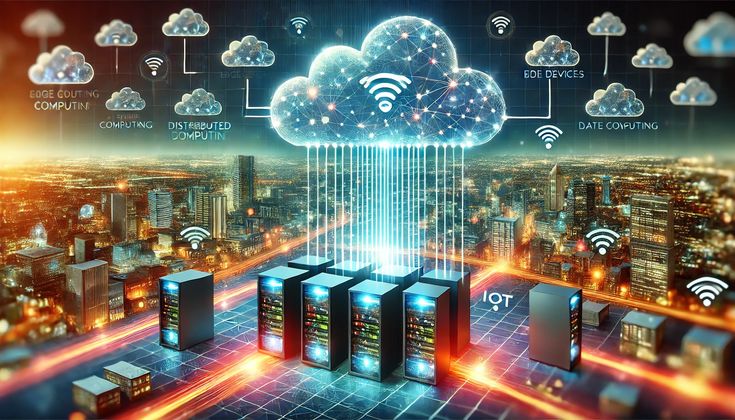
Edge computing is changing how organizations process information by bringing computing power closer to where data is created. Instead of sending every piece of information to a centralized cloud, data can be analyzed and acted upon near the source itself. This shift is helping businesses improve performance, reduce latency, enhance security, and unlock entirely new possibilities for innovation.
As technologies like artificial intelligence, the Internet of Things (IoT), and 5G continue to evolve, edge computing is rapidly becoming one of the most important pillars of modern digital infrastructure.
Understanding Edge Computing
At its core, edge computing refers to processing data near the device or location where it is generated rather than transmitting it to a centralized data center or cloud server.
Traditionally, data generated by devices would travel across networks to cloud servers where it would be processed and stored. The results would then be sent back to the device or application. While this approach works well for many scenarios, it introduces delays that can become problematic when immediate responses are required.
Edge computing addresses this challenge by moving computing resources closer to the “edge” of the network. The edge can be a local server, a gateway device, a factory machine, a retail system, or even the device itself.
Rather than depending entirely on distant cloud infrastructure, edge devices can analyze information in real time and make decisions instantly. The cloud still plays an important role, but it becomes part of a larger ecosystem where processing is distributed intelligently.
This approach significantly improves efficiency while enabling applications that would be difficult or impossible to support through cloud-only architectures.
Why the Need for Edge Computing Is Growing
The rise of edge computing is closely connected to the rapid growth of connected devices.
Industry experts estimate that billions of IoT devices are now generating massive volumes of data every day. From wearable fitness trackers and smart thermostats to industrial robots and connected vehicles, these devices continuously produce information that requires processing.
Sending every bit of this data to the cloud creates several challenges.
First, network congestion becomes a concern. The more data that travels across networks, the greater the strain on bandwidth resources.
Second, latency can negatively impact user experiences and operational efficiency. Applications requiring real-time responses cannot tolerate delays.
Third, transmitting large volumes of data to the cloud increases costs associated with bandwidth and storage.
Finally, organizations face growing concerns about privacy, security, and regulatory compliance.
Edge computing helps solve these issues by allowing data to be processed locally while only transmitting relevant information to the cloud when necessary.
As businesses continue to embrace digital transformation, the demand for faster and more intelligent processing is making edge computing increasingly valuable.
The Latency Advantage
One of the biggest reasons organizations invest in edge computing is latency reduction.
Latency refers to the time it takes for data to travel from its source to a processing location and back again. Even small delays can create significant problems in certain applications.
Consider a smart manufacturing facility where machines operate with incredible precision. Sensors continuously monitor temperature, pressure, vibration, and performance metrics. If a machine begins to malfunction, immediate action may be required to prevent costly downtime.
With cloud-based processing, the delay involved in transmitting data could slow down response times. Edge computing enables instant analysis directly within the facility, allowing maintenance teams to address issues before they escalate.
The same principle applies to autonomous vehicles, remote healthcare monitoring, financial trading systems, and augmented reality applications.
By processing data closer to where it originates, organizations can achieve near-instant decision-making capabilities.
Enhancing Real-Time Decision Making
Modern businesses increasingly rely on real-time insights to remain competitive.
Customers expect immediate responses. Operations demand continuous optimization. Systems need to adapt dynamically to changing conditions.
Edge computing supports these requirements by enabling faster decision-making at the source.
For example, a smart retail store can use edge-powered cameras and sensors to analyze customer behavior in real time. Store managers can monitor foot traffic, optimize product placement, and improve customer experiences without waiting for cloud-based analytics.
Similarly, healthcare providers can use edge-enabled monitoring devices to track patient vitals continuously. If a patient’s condition changes suddenly, alerts can be generated instantly, potentially saving lives.
The ability to process information in real time creates opportunities that extend far beyond simple efficiency improvements.
It enables businesses to become more proactive, responsive, and intelligent.
Edge Computing and the Internet of Things
The Internet of Things and edge computing are closely connected technologies.
IoT devices generate enormous amounts of data, much of which requires immediate analysis. Without edge computing, organizations would struggle to manage this growing information flow effectively.
Imagine a smart city equipped with thousands of connected sensors monitoring traffic, air quality, public transportation, and energy usage.
If every sensor continuously transmitted data to centralized cloud systems, network infrastructure could quickly become overwhelmed.
Edge computing allows local processing to occur near these sensors. Relevant insights can be generated instantly while only critical data is sent to the cloud for long-term analysis.
This approach improves performance, reduces network traffic, and enhances overall system reliability.
As IoT adoption continues to accelerate, edge computing will play a crucial role in ensuring these ecosystems remain scalable and efficient.
The Role of Edge Computing in Artificial Intelligence
Artificial intelligence applications often require rapid access to data and immediate processing capabilities.
Many AI-powered systems depend on real-time decision-making to function effectively.
For instance, facial recognition systems used in security environments need to identify individuals instantly. Smart cameras monitoring industrial facilities must detect anomalies as they occur. Autonomous vehicles must continuously interpret surroundings and make split-second decisions.
Running AI workloads solely in the cloud can introduce delays that reduce effectiveness.
Edge computing enables AI models to operate closer to the source of data generation, delivering faster insights and more responsive performance.
This combination of AI and edge computing is often referred to as “Edge AI.”
Edge AI allows organizations to deploy intelligent systems that can learn, analyze, and act without constant dependence on centralized infrastructure.
As AI adoption grows, Edge AI is expected to become a major driver of innovation across industries.
How 5G Is Accelerating Edge Adoption
The arrival of 5G networks is creating new opportunities for edge computing.
5G offers significantly faster speeds, lower latency, and greater connectivity compared to previous wireless technologies.
These capabilities complement edge computing perfectly.
While edge computing reduces the distance data must travel for processing, 5G enhances the speed and efficiency of communication between devices and edge infrastructure.
Together, these technologies enable advanced applications such as autonomous transportation, smart manufacturing, immersive virtual reality experiences, and connected healthcare systems.
Businesses investing in digital transformation strategies are increasingly viewing 5G and edge computing as complementary technologies that can unlock new levels of performance and innovation.
Security Benefits of Processing Data Locally
Data security remains a top priority for organizations across every industry.
While cloud providers invest heavily in security measures, transmitting sensitive information across networks can introduce additional risks.
Edge computing helps address these concerns by reducing the amount of data that must leave local environments.
Sensitive information can often be processed, filtered, or anonymized before being transmitted elsewhere.
For example, healthcare organizations handling patient information may choose to process certain data locally to comply with privacy regulations.
Similarly, industrial facilities can keep critical operational data within secure environments while sharing only necessary insights with external systems.
Although edge computing introduces new security considerations, such as protecting distributed devices, it can significantly reduce exposure to certain types of cyber threats.
Real-World Applications Across Industries
The impact of edge computing can already be seen across numerous industries.
In manufacturing, edge-enabled systems monitor equipment performance, predict failures, and improve operational efficiency.
In healthcare, wearable devices and remote monitoring solutions provide real-time patient insights.
In retail, smart shelves, inventory tracking systems, and customer analytics platforms rely on edge technologies to deliver immediate information.
Transportation companies use edge computing to support autonomous vehicles, fleet management systems, and traffic optimization solutions.
Energy providers leverage edge analytics to improve grid reliability and monitor infrastructure performance.
Even agriculture is benefiting from edge-powered sensors that help farmers monitor soil conditions, weather patterns, and crop health more effectively.
These examples demonstrate that edge computing is not a future concept—it is already delivering measurable value today.
Challenges That Organizations Must Consider
Despite its advantages, edge computing is not without challenges.
Managing distributed infrastructure can be more complex than maintaining centralized systems.
Organizations must deploy, monitor, and secure a larger number of devices across multiple locations.
Compatibility issues may arise when integrating edge systems with existing cloud platforms and enterprise applications.
Security strategies must also evolve to address the unique risks associated with distributed computing environments.
Additionally, organizations need skilled professionals capable of designing, implementing, and maintaining edge architectures.
Successful adoption requires careful planning, investment, and long-term strategy.
However, for many businesses, the benefits far outweigh the challenges.
The Future of Edge Computing
The future of edge computing looks exceptionally promising.
As connected devices continue to multiply, the need for faster and more efficient data processing will only increase.
Emerging technologies such as artificial intelligence, machine learning, autonomous systems, robotics, and smart infrastructure will further accelerate demand for edge-based architectures.
Organizations are increasingly recognizing that relying solely on centralized cloud computing may not be sufficient to meet future requirements.
Instead, the future will likely involve a hybrid model where cloud and edge environments work together seamlessly.
Cloud platforms will continue to provide large-scale storage, advanced analytics, and centralized management, while edge systems handle real-time processing and immediate decision-making.
This collaborative approach will enable businesses to build more resilient, intelligent, and responsive digital ecosystems.
Conclusion
The rise of edge computing represents a significant shift in how organizations process and manage data. As businesses generate larger volumes of information and demand faster responses, traditional cloud-only approaches are reaching their limits.
By bringing computing power closer to where data is created, edge computing reduces latency, improves performance, enhances security, and enables real-time decision-making. Whether powering smart cities, supporting autonomous vehicles, optimizing manufacturing operations, or driving AI innovation, edge computing is becoming a critical component of modern technology strategies.
The combination of edge computing, AI, IoT, and 5G is reshaping the digital landscape and creating opportunities that were once unimaginable. Organizations that embrace this transformation today will be better positioned to compete, innovate, and thrive in an increasingly connected world.
How Digital Twins Are Transforming Manufacturing and Smart Cities