Introduction
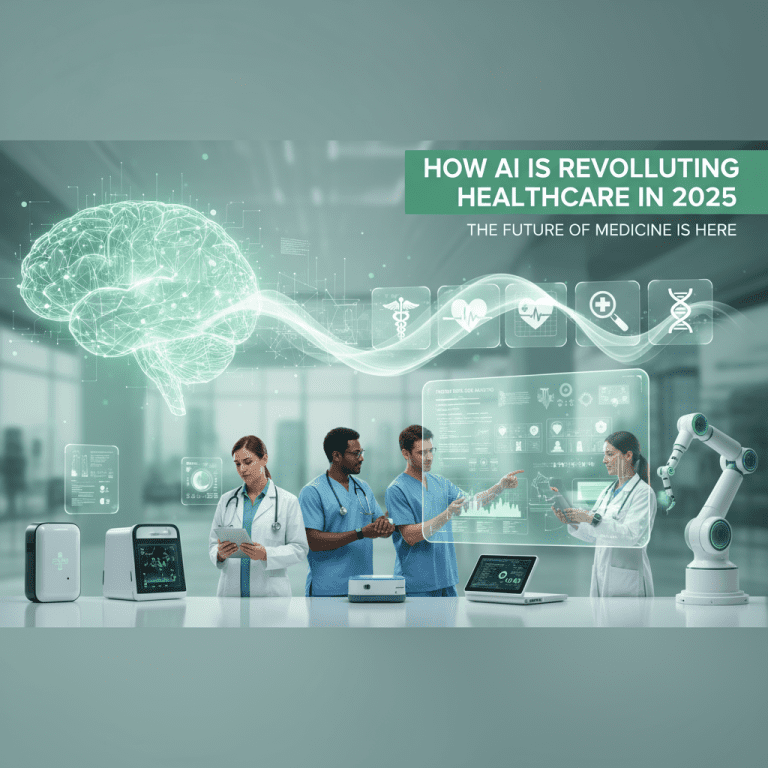
Artificial Intelligence is ushering in a new era of healthcare in 2025—boosting patient outcomes, accelerating innovation, and making care more precise and accessible than ever before. Here’s how AI is shaping the future of medicine across the globe.
Smarter, Faster Diagnostics
-
AI-Powered Medical Imaging: AI now analyzes X-rays, MRIs, and CT scans to detect anomalies like tumors, fractures, and infections faster and more accurately than ever. Early cancer and rare disease detection have been dramatically improved, with error rates and costs dropping significantly.
-
Predictive Diagnostics: AI uses data from patient histories, genetics, and wearables to anticipate the risk of diseases before symptoms occur, allowing for preventative care strategies—especially effective for chronic conditions like heart disease and diabetes.
Next-Gen Treatment: Personalized Medicine
-
Precision Treatments: AI integrates genetic, lifestyle, and clinical data to tailor therapies for individuals, especially in oncology and rare diseases, optimizing outcomes and reducing side effects.
-
Genomics and Profiling: Advanced AI systems rapidly interpret genomic data, enabling real-time profiling during surgeries and predicting individual responses to therapies, revolutionizing cancer and rare disease management.
Remote Care & Virtual Health Assistants
-
Wearable Monitoring: AI-powered devices track real-time vital signs, alerting both patients and clinicians to potential health issues before they escalate. Hospital-at-home models reduce readmissions and improve quality of life.
-
24/7 Virtual Support: Chatbots and AI-driven apps now answer medical questions, schedule appointments, provide medication reminders, and triage patients, all while reducing the workload of clinicians.
AI in Clinical Decision-Making
-
Real-time Decision Support: AI gives doctors evidence-based recommendations at the point of care by synthesizing global research, treatment guidelines, and patient information. This augments physician expertise, increases diagnostic accuracy, and improves confidence in treatment decisions.
-
Automating Admin Tasks: Intelligent agents automate medical documentation, billing, and coding. This lightens the administrative load and allows clinicians to spend more time with patients.
Accelerating Medical Research & Drug Discovery
-
Drug Development: AI can sift through millions of molecules, predict interactions, and simulate clinical trials—speeding up drug discovery, lowering development costs, and quickly identifying optimal candidates for new treatments.
-
Clinical Trials Optimization: By analyzing records and finding ideal trial participants, AI makes trials safer and more effective, accelerating new therapies to market.
Enhancing Equity and Population Health
-
Addressing Social Determinants: AI analyzes socioeconomic data alongside health records to identify at-risk populations, close care gaps, and optimize resource allocation—paving the way for fairer, more accessible healthcare.
-
Global Reach: AI extends expertise to remote areas, bridging geographic gaps and allowing global collaboration in tackling public health challenges.
Robotic Surgery and Assisted Procedures
-
Greater Precision: Robotic systems powered by AI help surgeons perform complex operations with greater dexterity and accuracy, resulting in fewer complications and quicker recovery times for patients.
Impact at a Glance
| Area | AI-Driven Transformation | Example/Impact |
|---|---|---|
| Diagnostics | More accurate, earlier detection | AI finds tumors in scans invisible to the eye |
| Personalized Care | Tailored therapies, reduced side effects | Precision oncology; rare disease management |
| Patient Monitoring | Continuous data analysis, proactive alerts | Wearables detect heart issues before symptoms |
| Administration | Automated records and workflows | Less clinician burnout, more patient care |
| Research | Faster drug discovery, smarter trials | Shortened time to new treatments |
| Access & Equity | AI bridges gaps for rural or vulnerable groups | Virtual care reaches more patients |
Challenges and the Road Ahead
-
Ethics & Trust: Ensuring privacy, reducing bias, and building transparent, explainable AI remain priorities as adoption expands.
-
Human-AI Partnership: AI isn’t replacing medical professionals but empowering them—successful healthcare systems will be those that blend human empathy with machine intelligence.
-
Scalability: With 90% of hospitals expected to use AI by 2025, broad access and workforce training are key for sustaining progress.
AI’s transformative role in healthcare is just beginning. As these technologies advance, expect faster diagnoses, more personalized care, and a health system that’s smarter, fairer, and more responsive to the needs of all. The revolution is well underway—and in 2025, AI is making healthcare better, one patient at a time.