Introduction
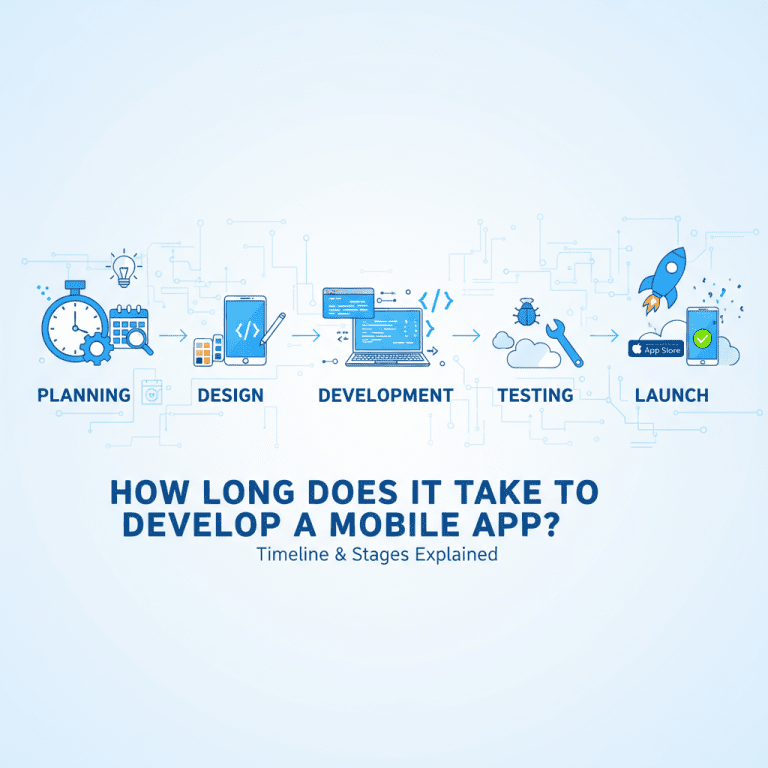
A common question for businesses and entrepreneurs planning mobile apps is: “How long will the development take?” The answer depends on many factors including app complexity, features, platforms, and team expertise. Understanding typical timeframes helps set the right expectations and plan budgets efficiently.
App Development Timelines Based on Complexity
Simple Apps (2 to 4 Months)
-
Basic functionality with limited features
-
Minimal backend or database integration
-
Examples: Calculator, basic informational app, simple utilities
Simple apps focus on core features with straightforward UI/UX and are ideal as MVPs or proof of concepts.
Medium Complexity Apps (4 to 8 Months)
-
Moderate feature set like user authentication, payment gateways
-
Some backend integration and APIs
-
Examples: Fitness trackers, food delivery apps, messaging platforms
These apps require more testing, UI design, and cross-platform compatibility, extending development time.
Complex Apps (8 to 12+ Months)
-
Advanced features such as real-time data sync, AI, AR, video streaming
-
Multiple user roles and third-party integrations
-
Examples: E-commerce marketplaces, social networks, fintech solutions
Complex apps often require scalable backend architecture, security compliance, and extensive QA cycles.
Factors Influencing Development Time
-
Feature Scope: More features mean longer development and testing periods.
-
Platform Choice: Native apps for iOS and Android may take longer than cross-platform development.
-
Design Complexity: Custom UI/UX design adds to project time.
-
Third-Party Integrations: Payments, social media, maps, or AI APIs affect timelines.
-
Team Size and Expertise: Larger or specialized teams can accelerate or delay schedules.
-
Testing and Revisions: Time allocated for QA and feedback cycles can vary.
Tips to Speed Up Development
-
Start with an MVP to validate core features quickly.
-
Use cross-platform frameworks like Flutter or React Native.
-
Prioritize features using MoSCoW method (Must-have, Should-have, Could-have, Won’t-have).
-
Automate testing and use CI/CD pipelines for faster releases.
-
Work with experienced developers or agencies to avoid rework.
Conclusion
Typically, app development ranges from 2 months for simple projects to over a year for complex applications. Planning, clear requirements, and choosing the right technology are key to hitting your timeline. Setting realistic expectations helps businesses launch products faster and adapt to market feedback effectively.
For expert mobile app development services and timeline consultation, explore TechOTD AI Services and follow industry trends on the TechOTD Blog.