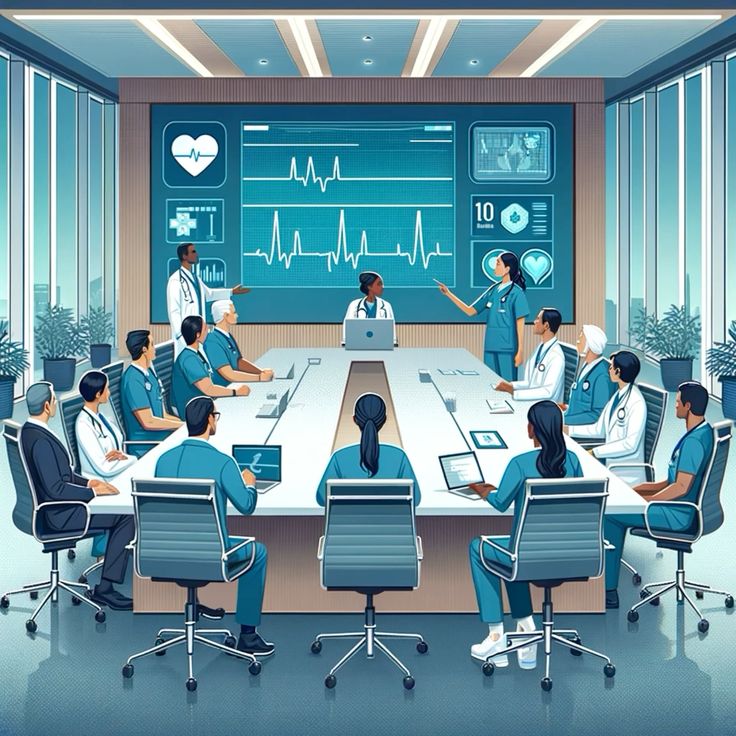
Beyond the Chart: How Innovative Technologies are Empowering Population Health Management
For decades, the healthcare system has been largely “reactive.” You get sick, you visit a doctor, and you receive a treatment. However, the tide is shifting toward a more holistic, proactive approach known as Population Health Management (PHM). At its core, PHM is about keeping people healthy before they ever need an ER visit. But managing the health of thousands—or millions—of individuals is a gargantuan task. This is where Innovative Technology steps in. We aren’t just talking about digital filing cabinets; we’re talking about an intelligent ecosystem that empowers providers to see the “whole person” behind the data point.
The Human Face of Population Health
When we discuss “population health,” it’s easy to get lost in spreadsheets and percentages. But population health is actually about the grandmother who avoids a hospital stay because a sensor caught her rising blood pressure early. It’s about the neighborhood with high asthma rates finally getting the air quality sensors and mobile clinics they need.
Technology is the “bridge” that allows doctors to extend their reach beyond the four walls of the clinic. It humanizes medicine by allowing for personalization at scale.
1. Predictive Analytics: Seeing the Future Today
The most powerful tool in the PHM arsenal is Predictive Analytics. By leveraging Machine Learning, healthcare systems can analyze historical data to identify which patients are at the highest risk for chronic diseases.
Identifying the “Rising Risk”
In a traditional model, resources are often focused on the “high-cost” patients who are already very ill. Predictive technology allows us to find the “Rising Risk” group—individuals who are currently stable but whose data signatures (missed appointments, fluctuating glucose, or even socio-economic factors) suggest they are headed for a crisis.
-
Proactive Intervention: Instead of a surgery, the patient gets a call from a health coach.
-
Resource Allocation: Hospitals can predict “surge” times for respiratory illnesses based on weather and pollution data.
2. The Internet of Medical Things (IoMT) and RPM
Remote Patient Monitoring (RPM) has completely redefined the patient-provider relationship. Handheld devices and wearables have turned the home into a continuous stream of health insights.
Continuous Care, Not Episodic Care
With IoMT, a doctor doesn’t have to wait for a 6-month checkup to know how a patient is doing.
-
Smart Scales: For heart failure patients, a sudden weight gain (fluid retention) can trigger an immediate medication adjustment.
-
Wearable ECGs: Detecting arrhythmias in real-time while the patient goes about their daily life.
-
Handheld Integration: Patients can sync their devices to their smartphones, giving them a sense of agency and “ownership” over their own health journey.
3. Artificial Intelligence and Social Determinants of Health (SDOH)
We now know that clinical care only accounts for about 20% of a person’s health outcomes. The other 80% is determined by where they live, what they eat, and their access to transportation—the Social Determinants of Health.
AI as a Social Advocate
Innovative AI platforms are now being used to scan non-clinical data to help providers understand these barriers.
-
Zip Code Analysis: AI can flag that a patient lives in a “food desert,” prompting the healthcare team to connect them with local food security programs.
-
Natural Language Processing (NLP): AI can “read” a doctor’s typed notes to pick up on social cues—like a patient mentioning they can’t afford their bus pass—and automatically trigger a referral to a social worker.
4. Telehealth and the End of Geographic Barriers
Technology & Innovation in telecommunications has made “distance” irrelevant. In population health, this is critical for reaching rural or underserved communities.
Virtual Care Teams
Telehealth isn’t just a video call; it’s a collaborative platform. A primary care doctor in a small town can instantly share data and video with a specialist in a major city. This ensures that the “population” being managed isn’t limited by their proximity to a skyscraper hospital.
The Challenge: Data Silos and Privacy
While the potential is infinite, the biggest hurdle is the Silo. Patient data is often trapped in different systems that don’t talk to each other.
-
Interoperability: The future of PHM relies on Blockchain & Technology and unified API standards (like FHIR) to ensure that a patient’s data follows them wherever they go.
-
Trust: To humanize this tech, we must ensure absolute Data Privacy & Security. Patients must feel that their data is being used to help them, not just track them.
Conclusion: Empowering the Healers
Ultimately, leveraging technology in population health management isn’t about replacing doctors with algorithms. It’s about removing the administrative noise so that healers can focus on healing.
When we empower population health with data, we move from a world of “fixing what’s broken” to a world of “nurturing what’s whole.” That is the true promise of digital health transformation.
The Command Center in Your Pocket: Mastering Home Automation and Security via Handheld Devices