Introduction
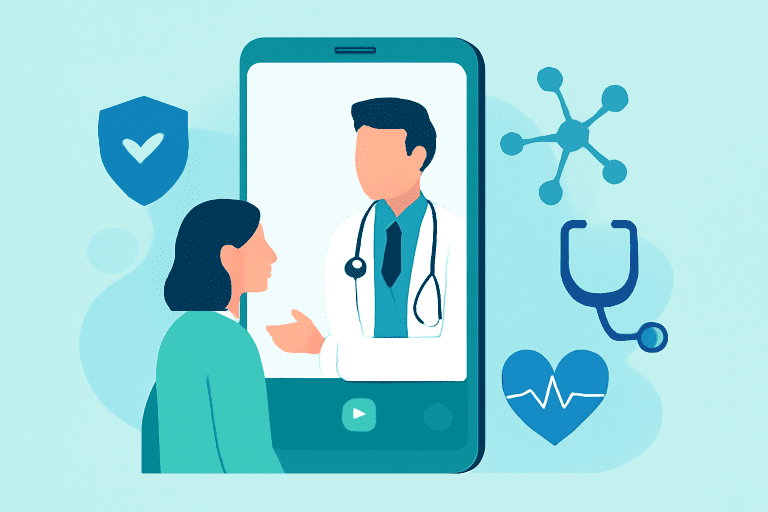
As healthcare rapidly digitizes, telemedicine has evolved from a niche offering to an indispensable service connecting patients and providers anywhere, anytime. An effective telemedicine app solves challenges of accessibility, convenience, and real-time care—while navigating complex regulations and security concerns. Building a secure and scalable telehealth platform demands technical innovation, rigorous compliance, and a patient-centered design approach. This blog provides a comprehensive guide for building modern telemedicine apps, packed with insights, feature checklists, technology recommendations, and best practices—plus direct backlinks to TechOTD AI Services, the TechOTD Blog, and other expert resources.
1. Market Research and Defining Your Telemedicine Use Case
Successful telemedicine projects start with a clear understanding of real user needs and market gaps. Analyze providers’ workflows and patients’ pain points, leveraging competitor reviews for actionable feedback. Address both acute and chronic care while considering unique regulatory requirements for different specialties and geographies. Plan for compliance early—HIPAA, GDPR, and regional regulations can dramatically affect architecture and timeline.
2. Choose the Right Technology Stack
A future-ready telemedicine platform balances security, flexibility, and scale:
| Layer | Examples (2025) | Purpose |
|---|---|---|
| Frontend | React Native, Flutter, Swift, Kotlin | Cross-platform UI, responsive on all devices |
| Backend | Node.js, Python, Java, .NET | Fast, scalable API server, handles business logic |
| Database | PostgreSQL, MongoDB | Secure, reliable storage of health records |
| Cloud | AWS, Azure, Google Cloud | HIPAA-ready hosting, scalable infrastructure |
| APIs | Twilio (video), Stripe/PayPal (payments), Redox/FHIR (EHR) | Real-time features, payments, interoperability |
| Security | OAuth 2.0, SSL/TLS, JWT | Auth, encrypted data, safe transactions |
AI and predictive analytics integration increase platform value—see TechOTD AI Services and the Predictive Analytics Blog.
3. Design for Security & Compliance
Protecting sensitive PHI is paramount. Best practices include:
-
End-to-end encryption for data in transit and at rest
-
Multi-factor authentication
-
Secure role-based access and audit logging
-
Consent management and clear data privacy policies
-
Alignment with HIPAA, GDPR, and local healthcare regulations
Blockchain solutions can further secure records and patient consents—explore this in TechOTD Blockchain Integration.
4. Build Core Features for Patients and Providers
Modern telehealth platforms deliver an engaging clinical experience:
-
User authentication & onboarding (AI-driven KYC for security)
-
Appointment scheduling & reminders
-
HD video consultations with low-latency streaming
-
Secure chat and document sharing
-
E-prescriptions & digital consents
-
Integrated e-payments & billing, insurance processing
-
EMR/EHR integration for provider continuity
-
AI symptom checkers and post-visit care bots (learn more in AI & LLMs in Healthcare)
-
Accessible UX (voice, large fonts, multi-language)
-
Push notifications and patient engagement tools
5. Ensure Scalability and High Availability
App performance should seamlessly support spikes in demand, regional expansion, and new services. Embrace cloud-native, microservices architectures. Implement autoscaling, load balancing, and robust CI/CD pipelines. Plan for future integrations using open APIs and modular software principles. Agile delivery and regular user feedback keep deployment efficient—see how TechOTD’s process optimizes outcomes at How We Work.
6. Testing, Launch, and Post-Launch Strategies
-
Conduct comprehensive unit, integration, UAT, and security tests (HIPAA-aware/penetration testing)
-
Validate cross-platform device and browser compatibility
-
Deploy to app stores/enterprise distribution with rollback and monitoring tools
-
Offer continuous technical support, updates, and user education
-
Monitor app health, collect analytics, and release features iteratively
Find guides on process and optimization at the TechOTD Blog.
7. Advanced Innovations: AI, Analytics, and Automation
Embed AI to drive smarter care and better outcomes:
-
AI chatbots for triage and 24/7 support (Service Excellence)
-
Predictive risk assessment, personalized content
-
NLP-powered automated documentation and speech-to-text
-
Real-time data dashboards for providers and patients
-
Integration with wearables and IoT for remote monitoring
8. Illustrative Budget and Timeline
Telemedicine app costs in 2025 range widely:
-
MVP: $30,000–$75,000 (core video/scheduling/chat)
-
Full scale: $150,000–$250,000+ (AI, cloud, EHR integration, security, automation)
-
Timeline: MVPs in 3–6 months; enterprise solutions 9–18+ months
Offshore, onshore, and hybrid teams have different benefits—choose according to compliance needs and project complexity. For more, see:
Mobile Apps Services.
9. Key Challenges (and Solutions)
-
Complex multi-jurisdictional compliance—Plan regulatory alignment early
-
User trust and adoption—Transparent privacy, simple UI/UX, clear support
-
Technical integration—Robust APIs and partnerships with labs, pharmacies, and billing platforms
-
Continuous quality—Agile feedback loops, analytics monitoring, rapid update cycles
Conclusion
Secure, scalable telemedicine platforms are at the heart of digital healthcare’s next decade. With thoughtful planning, a robust technical foundation, airtight security, and user-centric design, organizations can deliver outstanding digital health services at scale. Integrate AI, analytics, and blockchain to future-proof your product, and work with trusted partners for best results.
For consulting, custom solutions, and end-to-end app development, partner with TechOTD AI Services, explore real-world results on the TechOTD Blog, and discover streamlined development at How We Work.