The Importance of Cybersecurity for Growing Businesses
There is an old, comfortable illusion that many growing business owners quietly cling to: “We are too small to be a target.” It’s an understandable mindset. When you are focused on scaling your operations, hiring new talent, hitting your quarterly revenue targets, and expanding your market footprint, cybersecurity can feel like an insurance policy you’ll get around to buying “later.” You assume that cybercriminals are only interested in launching complex, movie-style digital heists against massive multinational banks or Fortune 500 tech giants.
But if you look at the actual telemetry of modern digital threats, the reality is starkly different.
Hackers don’t just target the giants; in fact, they actively look for mid-sized, growing enterprises. Why? Because growing businesses possess valuable corporate data, financial resources, and customer records, but they rarely have the enterprise-grade digital defenses or dedicated security teams that larger corporations use to lock their digital doors. To a cybercriminal, a scaling business is the ultimate sweet spot: high value, low resistance.
In today’s interconnected ecosystem, cybersecurity isn’t an IT problem—it is a core business continuity strategy. Let’s look at the true impact of digital threats on growing enterprises and how you can safeguard your scaling engine without paralyzing your operational velocity.
1. The Real Cost of a Breach: Beyond the Ransom Note
When most leaders think about a cyberattack, they picture a dramatic ransomware screen demanding a bitcoin payment to unlock their files. While the direct financial extortion is terrifying, it is often just the tip of a very large, destructive iceberg.
For a growing business, the secondary, cascading consequences of a security breach are what truly threaten its survival:
The Crushing Weight of Operational Downtime
When a network is compromised, your business stops. Your sales team can’t access the CRM, your warehouse can’t track shipments, your billing department can’t process payments, and your employees are left sitting at their desks unable to perform basic tasks. For a scaling business operating on tight margins, even three to four days of complete operational paralysis can cause devastating cash flow blockages.
The Irreparable Erosion of Brand Trust
It takes years of flawless service, execution, and genuine care to build a stellar corporate reputation. It takes a single afternoon to destroy it. If you have to send an email to your hard-earned clients explaining that their personal details, financial records, or proprietary project blueprints were exposed to the dark web because your systems lacked basic protections, a significant percentage of those clients will immediately pivot to a competitor who guarantees data safety.
The Regulatory and Legal Legal Minefield
Data privacy regulations are no longer optional guidelines. Frameworks like GDPR, CCPA, and regional data protection acts carry heavy statutory fines for organizations that fail to implement reasonable security safeguards. Additionally, class-action lawsuits from compromised users or breach-of-contract penalties from your major B2B enterprise clients can result in legal fees that drain your expansion capital entirely.
2. The Anatomy of Modern Threats Facing Scaling Enterprises
Cyber threats have evolved past simple automated viruses. Today’s attack vectors are highly social, coordinated, and designed to exploit the natural gaps that appear when an organization is growing rapidly.
┌────────────────────────────────────────────────────────────────────────┐ │ THE TRIPLE-THREAT MATRIX │ ├────────────────────────────────────────────────────────────────────────┤ │ 1. Business Email Compromise (BEC) ➔ Socially engineering wire transfers │ │ 2. Ransomware & Double Extortion ➔ Encrypting and leaking sensitive data│ │ 3. Soft Supply Chain Infiltration ➔ Weaponizing third-party integrations │ └────────────────────────────────────────────────────────────────────────┘Business Email Compromise (BEC) & Spear-Phishing
Hackers are excellent researchers. They monitor LinkedIn to see who your new accounting hires are. They will spoof the email address of the CEO or an established vendor, waiting for a chaotic Friday afternoon to send an urgent, convincing email: “We need to update the routing details for this vendor invoice immediately before the weekend shipment goes out.” Because the company is scaling fast and lacks strict payment verification guardrails, the money is wired away—never to be recovered.
Ransomware and Double Extortion
Modern ransomware doesn’t just lock your systems; it uses a technique called Double Extortion. First, the hackers quietly exfiltrate your private corporate records, financial models, and customer agreements over several weeks. Then, they encrypt your live local systems. If you refuse to pay the ransom because you have clean off-site system backups, they threaten to leak your most sensitive corporate data directly onto public forums, forcing your hand through reputational blackmail.
Infiltration via the Supply Chain
As your business grows, you naturally start integrating your digital systems with third-party vendors, logistics partners, and freelance contractors. Hackers often target these smaller, external entities to find a backdoor path into your core network. If an external marketing agency with access to your primary cloud storage uses weak, unmonitored passwords, your entire enterprise database is put at risk.
3. Shifting Focus: The Zero Trust Security Blueprint
The traditional way of thinking about network security was the “Castle and Moat” strategy. You built a strong firewall (the moat) around your office network. Anyone inside the building was automatically trusted, while everyone outside was viewed with suspicion.
In a modern business world defined by remote workforces, cloud-hosted SaaS platforms, and mobile devices, the physical office perimeter has effectively dissolved.
[Old Strategy: Castle & Moat] Firewall Perimeter ──> Trust Everyone Inside (High Internal Risk) [Modern Strategy: Zero Trust] Continuous Verification ──> Never Trust, Always Verify (Every Device/User)Growing businesses must shift to a Zero Trust Architecture. The foundational guiding principle of Zero Trust is simple: Never trust, always verify. It assumes that threats can originate from anywhere, meaning every single user, device, and application session must be continuously authenticated, authorized, and validated before accessing corporate resources.
4. Operational Comparison: Reactive vs. Proactive Protection
| Security Dimension | Reactive Cybersecurity (Legacy Approach) | Proactive Cyber Resilience (Growth-Minded) |
| Identity Protection | Simple static passwords changed once a year. | Multi-Factor Authentication (MFA) + Biometrics. |
| Data Accessibility | Broad access permissions across all employees. | Principle of Least Privilege (Strict role-based limits). |
| Employee Training | A single onboarding video during hiring week. | Continuous phishing simulations & security culture. |
| System Visibility | Checking system logs only after an issue occurs. | 24/7 endpoint monitoring and anomaly detection. |
5. Building an Actionable Cybersecurity Strategy on a Budget
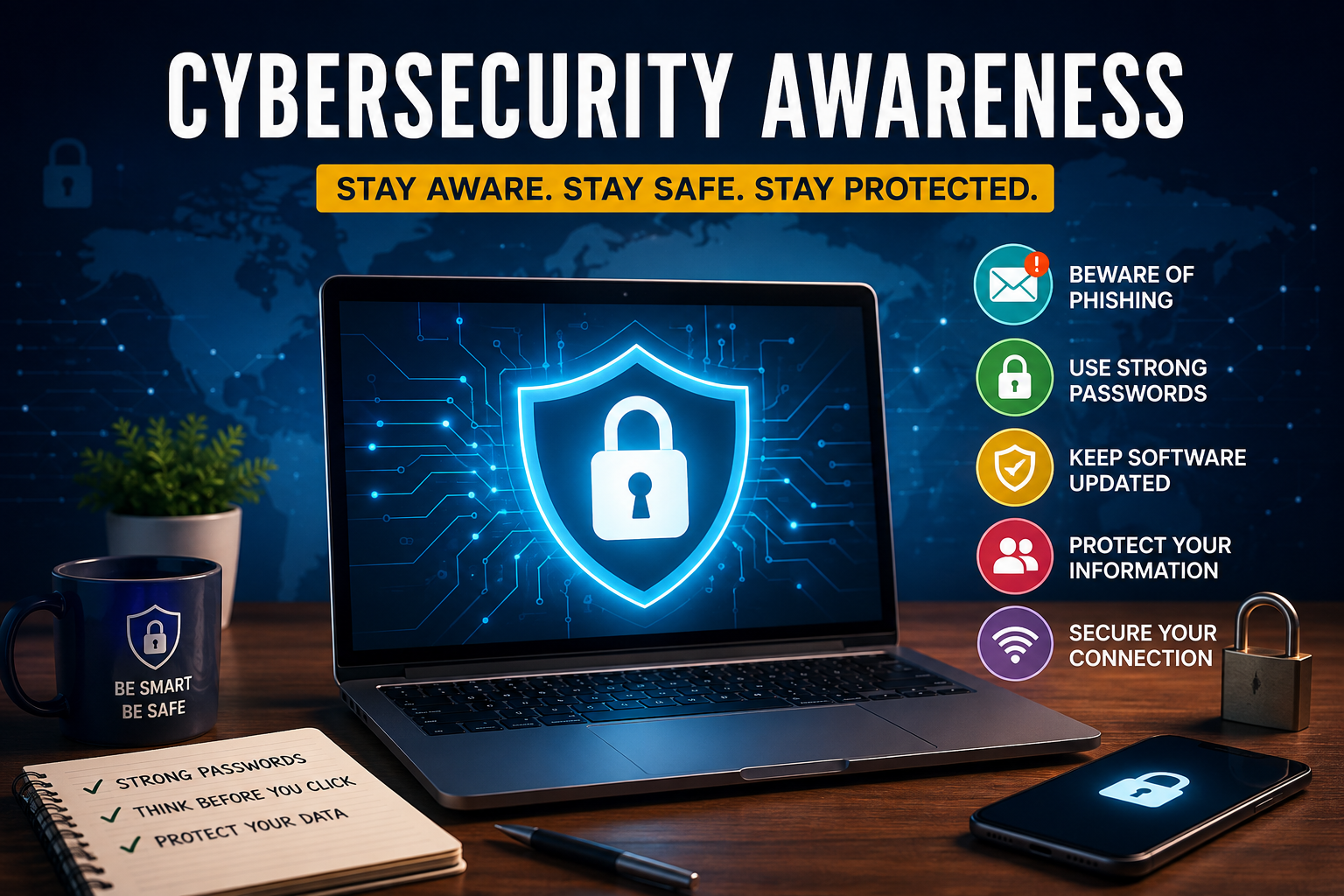
Protecting your scaling business doesn’t require deploying a multi-million dollar security operations center overnight. You can drastically lower your threat profile by implementing four highly practical, cost-effective structural guardrails:
Guardrail 1: Enforce Multi-Factor Authentication (MFA) Across the Board
Turning on Multi-Factor Authentication (MFA) on your corporate email, cloud storage accounts, accounting software, and password managers is the single most effective security step you can take. MFA blocks over 99% of automated credential stuffing and basic account takeover attempts, rendering stolen passwords useless on their own.
Guardrail 2: Implement the Principle of Least Privilege (PoLP)
When a business is small, it’s common for everyone to have master administrator access to every digital tool out of pure convenience. As you scale, this practice becomes an immense liability. Implement strict role-based access control. A content writer does not need access to the payroll portal; a sales representative does not need access to core database configurations. Limit information access exclusively to what an individual requires to fulfill their specific daily tasks.
Guardrail 3: Build a Continuous Security Culture
The most sophisticated firewall in the world cannot stop an employee from clicking on a malicious link if they haven’t been trained to recognize it. Invest time in building an open security culture. Conduct regular, friendly phishing simulations, teach your team how to spot sophisticated social engineering signals, and create a blame-free environment where employees feel encouraged to immediately report an accidental click rather than hiding it out of fear.
Guardrail 4: Secure Your Endpoints with EDR Software
As your team expands to use personal laptops, tablets, and smartphones to log into corporate portals, your potential point-of-attack surface grows. Deploy modern Endpoint Detection and Response (EDR) software across all company-issued and employee-used devices. Unlike basic legacy antivirus programs, EDR uses behavioral analytics to detect, isolate, and block strange, anomalous software activity before it spreads deep into your corporate network.
Conclusion: Securing Your Legacy and Tomorrow’s Growth
Ultimately, investing in a robust, deliberate cybersecurity strategy isn’t about letting fear dictate your business choices. It is a fundamental act of respect for your hard work, your employees’ livelihoods, and the sacred trust your clients place in your brand.
By taking the time to build strong digital guardrails, clear verification workflows, and an alert, security-conscious corporate culture today, you ensure that your business isn’t just scaling quickly—it is scaling safely. You lay a bulletproof operational foundation that allows your enterprise to confidently seize new market opportunities, handle enterprise-level clients, and thrive securely in a digital landscape.
How Cloud Computing Helps Businesses Reduce Costs and Improve Efficiency