Introduction
Online job portals are at the forefront of modern recruitment, connecting millions of job seekers and employers globally. Building a platform like Bayt requires thorough planning, robust technology, and investment. This blog explores key factors affecting development cost, feature requirements, budgeting strategies, and how businesses can future-proof their portal by leveraging AI, analytics, and process automation—drawing on industry expertise and resources from TechOTD AI Services and the TechOTD Blog.
What Influences the Cost of a Job Portal Like Bayt?
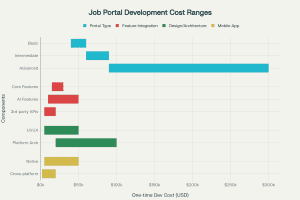
The cost of developing a job portal like Bayt depends on several factors. First, the features and functionality play a big role—basic portals with job listings cost less, while advanced ones with AI-driven matching, resume builders, and analytics cost more. Second, the design and user experience influence cost, as a modern, responsive, and secure interface requires more investment. Third, technology stack and development team location matter—hiring developers in different regions affects pricing. Additionally, third-party integrations (payment gateways, email, SMS) and scalability requirements raise expenses. Lastly, ongoing maintenance, hosting, and security updates also add to the overall cost.
Key Factors Influencing Cost
1. Features and Functionality
-
Basic Features: User registration, job posting, resume upload, search filters, notifications.
-
Advanced Features: AI-powered job matching, video interviews, real-time chat, social logins, analytics dashboard.
-
Security: Data encryption, secure payment gateways, GDPR compliance.
2. Platform Type
-
Web portal only or including mobile applications for iOS and Android.
3. Design Complexity
-
Custom UI/UX vs. templates.
4. Development Team
-
Location and expertise affect hourly rates.
5. Technology Stack
-
Choice between open-source or proprietary technologies, cloud hosting solutions, and integrations.
6. Maintenance and Scalability
-
Ongoing updates, server costs, user support.
Estimated Cost Ranges
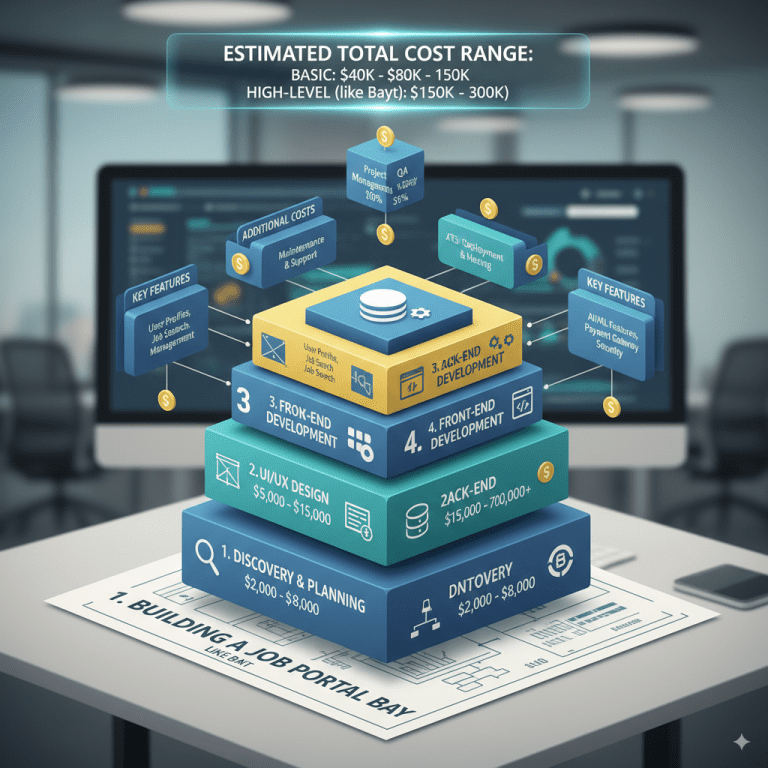
| Project Complexity | Approximate Cost Range (USD) | Development Timeframe |
|---|---|---|
| Basic Job Portal | $40,000 – $60,000 | 2 – 3 months |
| Mid-Level Portal | $60,000 – $120,000 | 3 – 6 months |
| Advanced Portal | $120,000 – $300,000+ | 6 – 12 months or more |
Cost Optimization Tips
-
Start with an MVP focusing on core functionality.
-
Use cross-platform frameworks.
-
Outsource development strategically.
-
Leverage AI and automation for recruitment processes.
For expert assistance integrating AI, blockchain, and advanced analytics into your job portal, explore services at TechOTD AI Services and gain insights from the TechOTD Blog.
1. Project Scope and Platform Type
-
Web-only vs. Web + Mobile: Building both website and apps (iOS/Android) increases timeline and cost.
-
Basic, Intermediate, or Advanced: Feature complexity is the single biggest cost driver.
2. Feature Set
Must-have and advanced features include:
-
Job posting and management
-
Resume upload and parsing
-
User profiles (job seekers, employers, administrators)
-
Advanced search and filters
-
Secure payment integration
-
AI-powered job matching and recommendations (see AI-powered matching)
-
Video interview tools
-
Real-time notifications & alerts
-
Analytics dashboards for recruiters & applicants
-
Data security, compliance checks (GDPR)
-
Social login
-
Chat and communication tools.
3. UI/UX and Branding
Custom, intuitive design for both users and admins adds cost, but enhances retention and engagement.
4. Technology Stack
-
Back end: Node.js, Python/Django, Java, PHP
-
Front end: React, Angular, Vue
-
Database: PostgreSQL, MongoDB
-
Cloud hosting, DevOps, API integrations
Modern stacks and scalable cloud infra (e.g., AWS, Azure) speed up deployment and lower long-term costs (TechOTD Services).
5. Team Location & Structure
-
North America/Europe: $100–$300/hr for agencies
-
India/South Asia: $20–$50/hr for skilled teams (potential savings, but requires strong management)
6. Third-party Integrations & Add-ons
-
Payment gateways, resume parsing APIs, video hosting—each adds cost.
7. Maintenance and Scaling
-
Ongoing hosting, bug-fixes, updates, and user support ($1,000–$10,000+ per month for high-traffic portals)
Cost Breakdown Table
| Level | Features | Estimated Cost | Typical Timeline |
|---|---|---|---|
| Basic | Core features, simple UI, web only | $40,000–$60,000 | 2–3 months |
| Intermediate | Web + mobile, analytics, notifications, secure payments | $60,000–$90,000 | 3–6 months |
| Advanced | All above, AI-matching, video, onboarding automation, scalability | $90,000–$300,000+ | 9+ months |
Essential Job Portal Features (2025 & Beyond)
-
AI-driven job recommendations (LLMs and AI in Recruitment)
-
Mobile-first, responsive design
-
One-tap applications
-
Employer branding, reviews, and video profiles
-
Social sharing and referrals
-
Real-time analytics dashboards and reporting
-
Integrated video interviews and chatbots (Seamless AI Customer Journeys)
-
Robust data protection, 2FA, compliance modules
-
Blockchain-based credential verification (see blockchain integration benefits)
-
Data-driven insights for employers and job seekers
-
Gamification and engagement modules.
How to Optimize Job Portal Development Costs
-
Build an MVP with core features first, then iterate
-
Choose cross-platform frameworks to reduce mobile dev time
-
Outsource to reliable development partners with a track record in EdTech, HRTech, or similar SaaS (view TechOTD’s process)
-
Use open-source libraries and scalable clouds to minimize license fees
-
Automate workflows and leverage AI for screening, support, and analytics (Predictive Analytics in Recruitment)
Real-World Cost Example
A mid-tier job portal with web and mobile apps, core job-matching, video chat, analytics, and secure payments is likely to cost $70,000–$120,000 and take 6–9 months with an experienced development partner. Scaling globally, adding blockchain verification, or advanced LLM-powered recommendations can increase costs but offers a major competitive edge.
Future-Proofing Your Job Portal Investment
-
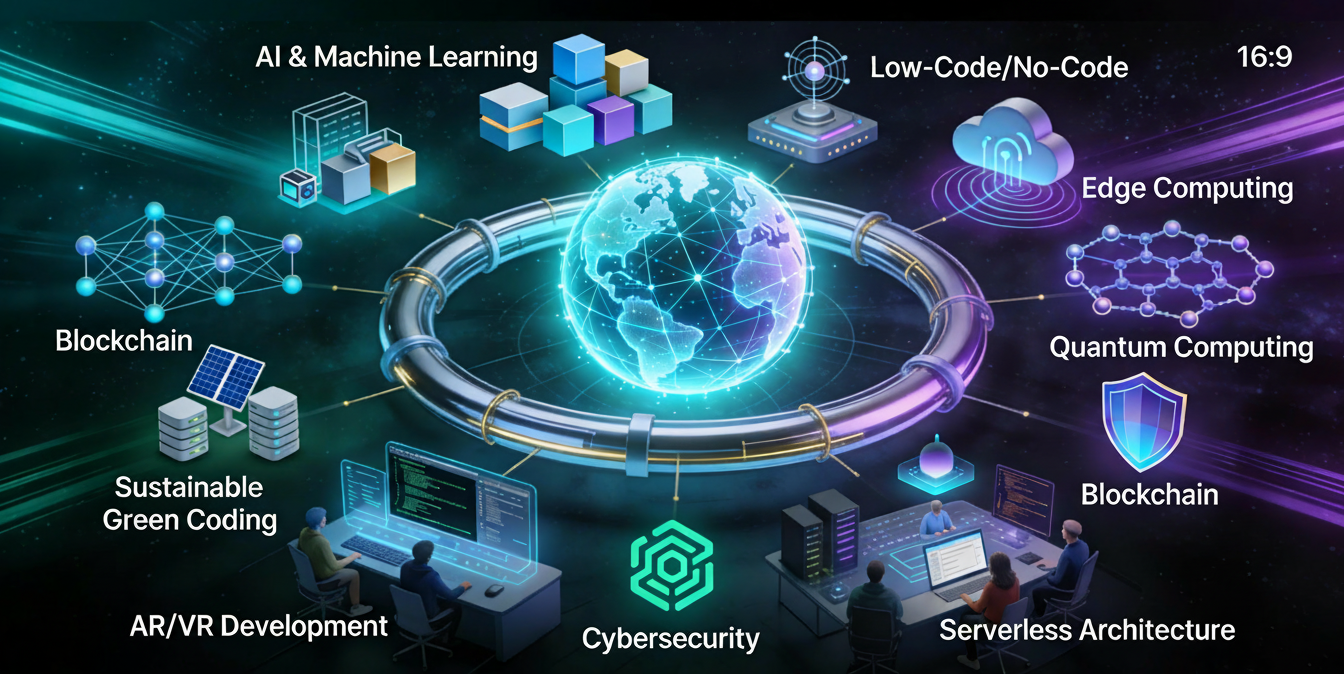
Prioritize modular, scalable architectures—plan for integrations (AI, blockchain, third-party APIs)
-
Regularly update features to retain talent and recruiter users
-
Invest in continuous QA, user support, and iterative UX improvements
-
Analyze industry trends and emerging user expectations via TechOTD Blog
Conclusion
Building a robust job portal like Bayt is a strategic investment with lasting business impact. Budgeting $60,000–$120,000 for a feature-rich platform—and more for large-scale, AI-powered solutions—is realistic in 2025. Focus on scalability, user experience, and smart integrations to maximize ROI and future growth potential.
For detailed consulting, AI-powered feature design, and secure, scalable recruitment platforms, partner with TechOTD AI Services and discover digital transformation insights on the TechOTD Blog.