Introduction
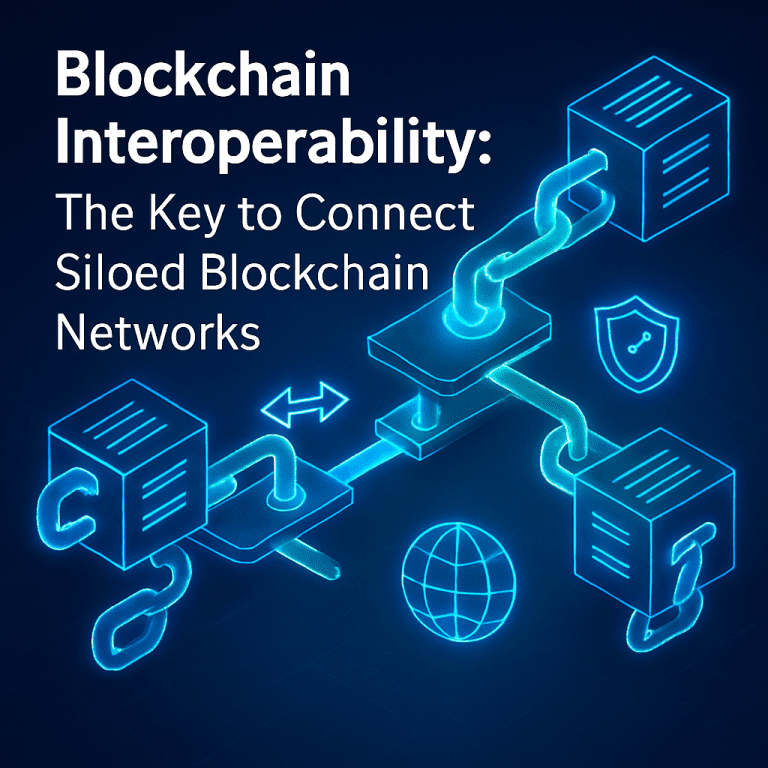
As blockchain technology matures, its widespread adoption faces a persistent obstacle: interoperability. Most blockchains today are siloed “islands”—unable to seamlessly communicate, share data, or transfer assets across networks. This lack of interoperability restricts innovation and limits the blockchain ecosystem’s full potential.Blockchain Interoperability: The Key to Connect Siloed Blockchain Networks
This blog explores the critical role of blockchain interoperability, current challenges, leading solutions, and real-world use cases. It also integrates insights and expert guidance from TechOTD AI Services, the TechOTD Blog, in-depth blockchain integration best practices at TechOTD Blockchain Integration, and more.
What is Blockchain Interoperability?
Blockchain interoperability is the ability of different blockchain networks to exchange data, value, and instructions—directly and efficiently. Rather than being limited to their own ecosystem, interoperable blockchains can connect, communicate, and even execute cross-chain smart contracts or asset transfers without intermediaries.
Why Is Interoperability Important?
-
Unlocks Ecosystem Synergy: Different blockchains have unique advantages (e.g., Bitcoin’s security, Ethereum’s smart contracts, Solana’s speed). Interoperability enables combining these strengths.
-
Prevents Fragmentation: Interoperability breaks down the siloed nature of blockchains, accelerating mainstream adoption and seamless user experiences.
-
Enables Cross-Chain DeFi & NFTs: Users can swap assets or move NFTs across chains, bringing liquidity and flexibility to decentralized applications.
-
Drives Innovation: Developers can leverage multiple networks for complex, real-world solutions versus being locked into a single architecture.
-
Improves Compliance & Regulation: Organizations can streamline compliance by allowing controlled data sharing between permissioned and public blockchains.
Main Challenges to Interoperability
-
Technical Barriers
-
Differing consensus mechanisms, data structures, and smart contract languages make seamless communication difficult.
-
-
Security Risks
-
Bridges and oracles, vital for interoperability, can be attack vectors if not properly secured.
-
-
Scalability Tradeoffs
-
Cross-chain protocols can introduce latency, reduce throughput, or require additional trust assumptions.
-
-
Governance and Standards
-
Network upgrades, tokenomic designs, and regulatory requirements complicate universal protocols.
-
Leading Approaches and Protocols
Atomic Swaps
Enables two parties to swap assets on different blockchains without intermediaries—crucial for decentralized trading.
Sidechains and Pegged Chains
Independent chains that “peg” assets by locking them on one chain and releasing them on another, e.g., Polygon (Ethereum).
Bridges
Specialized dApps and protocols that enable movement of assets/data between blockchains. Examples: Wormhole, Polygon Bridge, Binance Bridge.
Cross-Chain Messaging
Protocols like Polkadot’s XCMP or Cosmos’s IBC enable networks to send messages, transfer tokens, and orchestrate smart contracts across chains.
Oracles
Trusted data feeds (like Chainlink) facilitate relaying information from external sources or between chains.
Notable Interoperability Projects
| Protocol | Core Function | Key Features |
|---|---|---|
| Polkadot | Multi-chain interconnectivity | Parachains, XCMP |
| Cosmos | Inter-Blockchain Communication (IBC) | Zones, Hubs |
| Chainlink | Cross-chain data and smart contract execution | CCIP, oracles |
| Avalanche | Customizable, interoperable blockchains | Subnets, bridges |
| Wanchain | Universal bridges for diverse blockchains | Direct cross-chain |
Real-World Use Cases
-
Cross-Chain DeFi (Decentralized Finance): Users deposit collateral on one chain to borrow on another—unlocking efficiency and liquidity.
-
NFT Portability: Move NFTs between marketplaces (e.g., Ethereum and Flow), expanding reach and creativity.
-
Supply Chain Transparency: Integrate permissioned ledgers (for compliance) with public chains (for auditability), ensuring privacy and public trust.
-
Stablecoins and Payments: Interoperable stablecoins (e.g., USDC) work across multiple blockchains for frictionless global payments.
-
Enterprise Collaboration: Organizations streamline multi-blockchain operations, connecting siloed enterprise and public ledgers, as described in TechOTD Blockchain Integration.
Benefits of Blockchain Interoperability
-
Enhanced Utility: Asset and data flows across networks amplify the value and use cases for blockchain users.
-
Increased Liquidity: Capital and tokens move freely, unlocking new DeFi and trading opportunities.
-
Innovation Acceleration: Developers build richer, more sophisticated dApps leveraging features from multiple blockchains.
-
Cost and Efficiency Gains: Interoperable blockchains minimize redundant infrastructure and lower operational friction.
-
Security and Redundancy: Transfer data or assets to more secure chains or distribute risk.
Future Trends & Innovations
-
Generalized Cross-Chain Smart Contracts: Write apps that execute logic and asset transfers across multiple blockchains seamlessly.
-
Automated Compliance Solutions: Smart contracts manage regulatory obligations across jurisdictions.
-
AI-Powered Routing and Analytics: AI helps optimize which chains to use for specific transactions based on real-time costs, latency, or compliance. Read more about AI-powered blockchain advancements at TechOTD AI Services.
-
Standardization and Protocol Upgrades: Open-source and industry-wide standards will further streamline interoperability, as seen in the ongoing work of major protocol teams.
Implementing Interoperability: Best Practices
-
Conduct system audits for secure bridge and oracle design.
-
Embrace modular blockchain architectures leveraging established cross-chain protocols.
-
Prioritize regulatory compliance and robust off-chain governance.
-
Work with technology partners that offer proven blockchain integration and AI-driven optimization, such as TechOTD AI Services.
For stepwise approaches and expert insights, review processes on How We Work.
Conclusion
Blockchain interoperability is essential for transitioning from siloed platforms to a thriving, interconnected Web3 economy. It unlocks new use cases, accelerates growth, enhances user experience, and drives cost efficiencies. As standards and technology advance, seamlessly connected blockchains will be the backbone of global decentralized systems.
For hands-on support, tools, and the latest innovations in multi-chain integration, explore the TechOTD Blog, AI Services, and in-depth Blockchain Integration Case Studies.