Introduction
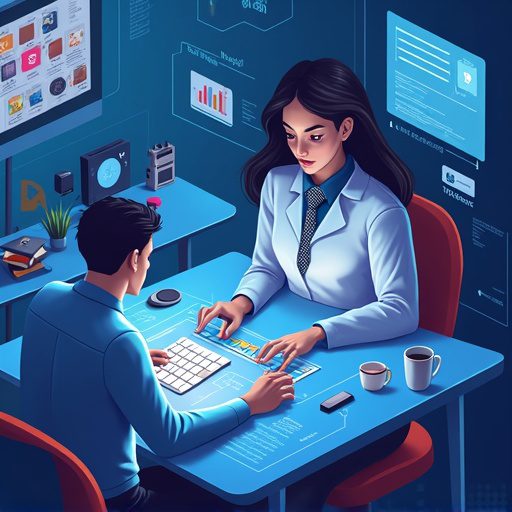
The rapid shift toward remote and hybrid education has transformed the way learners engage with knowledge, educators deliver lessons, and institutions provide resources. A Learning Management System (LMS) plays a central role in this transformation, serving as the backbone of online education. However, not all LMS platforms are designed with the complexities of remote education in mind. To build an LMS that truly supports remote education, one must focus not only on technical functionalities but also on usability, inclusivity, scalability, and long-term adaptability.
This blog explores the key aspects of designing a remote education-ready LMS, examining critical features, challenges, best practices, and forward-looking trends. We will also integrate examples from global practices and link to insightful resources such as AI innovations, blockchain applications in business, and technology’s impact on education.
1. Understanding the Needs of Remote Learners
Remote learners differ from traditional classroom students in several ways. They face challenges like reduced face-to-face interaction, distractions at home, and varying levels of digital literacy. A strong LMS should:

- Offer intuitive navigation to reduce the learning curve.
- Provide offline access to materials.
- Ensure compatibility with multiple devices, including smartphones, tablets, and laptops.
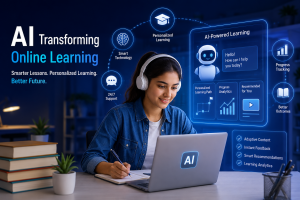
- Deliver personalized learning experiences using tools like AI recommendations (AI innovations page).
By addressing these needs, the LMS becomes more than a digital repository—it becomes an ecosystem that supports continuous learning.
2. Core Features of a Remote-Friendly LMS
When designing an LMS for remote education, certain features are non-negotiable:
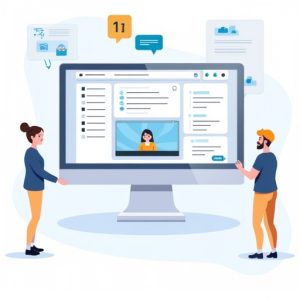
a. Seamless User Experience (UX)
- Simple dashboards with role-based views (students, teachers, admins).
- Easy access to assignments, deadlines, and grades.
- Clear pathways for navigation.
b. Interactive Learning Tools
- Video conferencing integration.
- Discussion forums and chat options.
- Gamification features such as badges, leaderboards, and rewards.
c. Assessment and Feedback Mechanisms
- Auto-graded quizzes.
- Peer-to-peer review systems.
- AI-driven feedback systems (customer journey with AI).
d. Scalability and Reliability
- Cloud-based architecture to handle spikes in traffic.
- Data security using technologies like blockchain (blockchain in business).
- High uptime guarantees.
e. Analytics and Reporting
- Tracking learner engagement.
- Predictive analytics for performance improvement (predictive analytics blog).
- Personalized dashboards for both learners and educators.
3. Inclusivity and Accessibility
A well-designed LMS must cater to diverse learners, including those with disabilities or limited internet connectivity.

- Accessibility Features: Screen reader compatibility, closed captions, adjustable text sizes.
- Language Options: Multi-language support for global accessibility.
- Low Bandwidth Solutions: Optimized video formats, text-based alternatives.
Remote learning is only successful if it bridges gaps, not creates them. Technology’s impact on education shows how inclusive systems create equitable learning environments.
4. Leveraging Emerging Technologies
The future of LMS design lies in integrating advanced technologies:
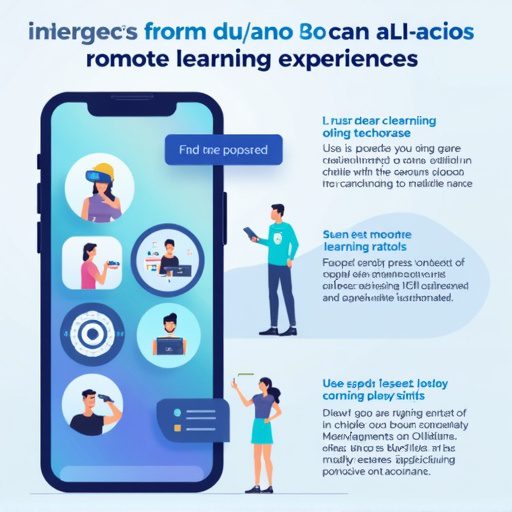
- AI and Machine Learning: Personalized recommendations, automated grading, predictive analytics (AI in finance).
- Blockchain: Secure credentialing, verifiable certificates.
- AR/VR: Immersive learning experiences for subjects like science, history, or engineering.
- Mobile-first Approach: Leveraging mobile app development services ensures accessibility anywhere.
5. Addressing Challenges in Remote Education
Despite its benefits, remote education faces challenges:
- Digital Divide: Not all learners have equal access to devices or internet.
- Engagement Issues: Remote settings may reduce participation.
- Assessment Integrity: Preventing cheating in online exams.
- Teacher Training: Instructors must adapt to digital teaching methods.
Solutions include:
- Providing affordable gadgets (best gadgets for programmers 2025).
- Integrating AI-driven proctoring tools.
- Offering teacher workshops and support.
6. Design Best Practices for a Remote-Ready LMS
To create an LMS that excels in remote education, follow these principles:

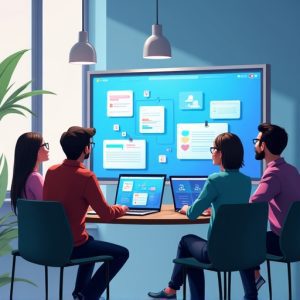
- User-Centric Design: Involve students and teachers in the design process.
- Modular Architecture: Add features gradually as needs evolve.
- Mobile Optimization: Prioritize smartphone usability.
- Security First: Incorporate multi-factor authentication and encrypted data.
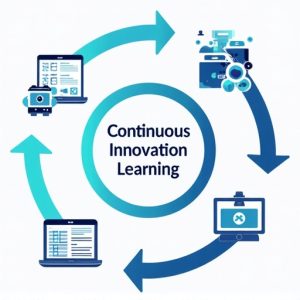
- Continuous Improvement: Use analytics to upgrade features over time.
7. Case Studies and Global Practices
Case 1: University-Based LMS
A major university redesigned its LMS to include predictive analytics and AI recommendations. This led to a 30% improvement in student retention rates.
Case 2: Corporate Training
A multinational corporation built a blockchain-enabled LMS for employee training. This secured credential validation and reduced compliance issues by 40%.
Both examples show how tailoring LMS features to unique contexts makes remote education stronger.
8. The Role of Continuous Innovation
The tech industry is continuously evolving, and LMS platforms must adapt. By exploring framework comparisons like React Native vs Swift, organizations can ensure that their LMS apps remain future-proof.
Further, innovations in customer-centric AI (customer journeys with AI) can be replicated in education, enhancing personalization and learner satisfaction.
9. Future of LMS in Remote Education
In the next decade, we can expect:

- AI-driven tutors that provide real-time assistance.
- Global collaborative classrooms connecting learners across countries.
- Integration with IoT devices for hands-on skill learning.
- Adaptive content delivery based on learning pace and style.
These advancements align with the broader tech evolution in industries (TechOTD insights).
Conclusion
Designing an LMS that truly supports remote education requires a balance between technical innovation, learner-centric features, inclusivity, and adaptability. By integrating advanced tools such as AI, blockchain, and mobile-first designs, institutions can empower both educators and learners. Moreover, continuous improvement, guided by analytics and user feedback, ensures that the LMS evolves alongside educational needs.
Ultimately, a well-designed LMS is not just software—it is a bridge that connects knowledge to learners worldwide, making education accessible, interactive, and future-ready.
For organizations and institutions looking to build or upgrade their LMS, collaboration with forward-thinking partners like TechOTD ensures staying ahead of the curve.
References and Backlinks