Introduction
Predictive analytics has rapidly become one of the most transformative technologies reshaping industries in 2025. Businesses across sectors — from healthcare and finance to manufacturing and retail — are leveraging predictive insights to stay competitive. Yet, despite its immense potential, many misconceptions cloud the true value of predictive analytics. Some assume it’s only for tech giants; others believe it’s just about forecasting numbers. The reality is far more nuanced. In this blog, we’ll break down the myths vs. reality of predictive analytics in 2025, explore its benefits, and highlight how organizations can adopt it for sustainable growth.
.
🔗 For a deeper dive into how predictive models work with AI, check out AI Page at TechOTD.
What is Predictive Analytics?
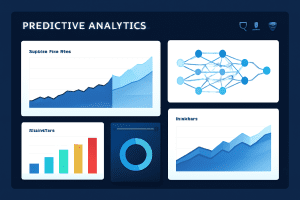
Predictive analytics refers to the use of historical data, statistical models, AI, and machine learning to forecast future outcomes. In 2025, predictive analytics is not only about predicting consumer behavior but also about optimizing operations, identifying risks, and enabling smarter decision-making.
For example, predictive analytics now plays a key role in finance (fraud detection), healthcare (disease prediction), and manufacturing (machine maintenance). With advancements in AI and large language models, predictive analytics has become more accurate and accessible.
Common Myths About Predictive Analytics
-
Myth: Predictive Analytics is only for large enterprises.
Many small businesses think predictive analytics is out of reach. -
Myth: It replaces human decision-making.
The reality: It enhances decision-making by providing insights. -
Myth: Predictive models are always 100% accurate.
Predictive analytics gives probabilities, not certainties. -
Myth: Predictive analytics is only about sales forecasting.
It’s widely used in healthcare, manufacturing, finance, and education. -
Myth: It requires highly advanced coding knowledge.
Thanks to modern tools, even non-technical professionals can leverage it.
The Growing Importance of Predictive Analytics in 2025
In 2025, predictive analytics is no longer optional—it’s becoming a strategic differentiator.

-
📈 Businesses are leveraging it for real-time decision-making.
-
⚡ AI-powered predictive analytics models are improving accuracy and efficiency.
-
🌍 Adoption is spreading across every industry, from education to e-commerce.
🔗 Learn more about its impact across industries on TechOTD Industry Insights.
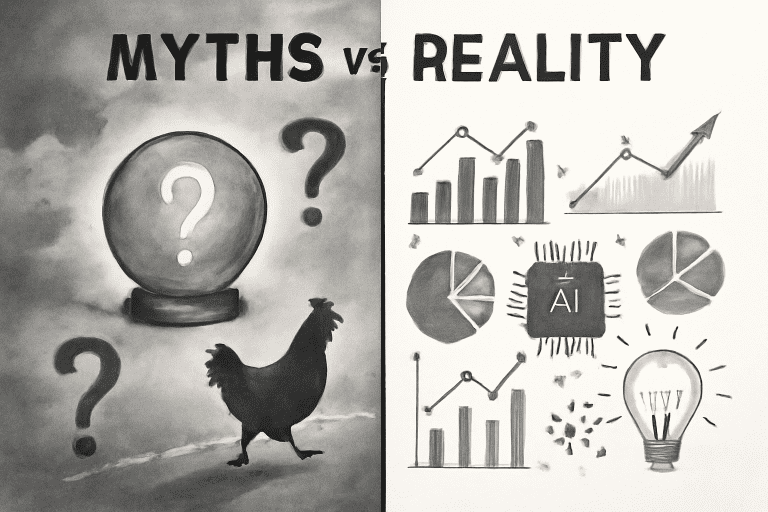
Myths vs Reality in Predictive Analytics
Myth 1: Predictive Analytics Can 100% Accurately Predict the Future

Reality: Predictive analytics is not fortune-telling. It provides probabilistic forecasts based on data patterns—not guaranteed results. Models evolve with new data and must be continuously updated.
Myth 2: Only Big Enterprises Can Use Predictive Analytics
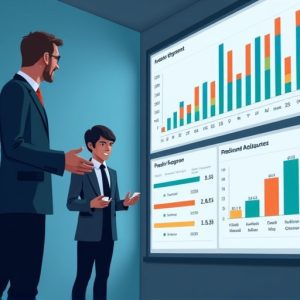
Reality: With the rise of cloud-based tools and affordable platforms, even small and medium businesses can implement predictive analytics today. Startups and SMEs use it for marketing campaigns, sales forecasting, and customer behavior analysis.
Myth 3: Predictive Analytics Replaces Human Decision-Making

Reality: Predictive analytics supports decision-making, but it doesn’t replace human intuition and expertise. Leaders still need to interpret results in the context of strategy and ethics.
Myth 4: Predictive Analytics Requires Only AI & ML Experts

Reality: While technical knowledge is valuable, modern platforms offer user-friendly dashboards and low-code/no-code solutions, making predictive analytics accessible to non-technical professionals.
Myth 5: Predictive Analytics is Only About Sales Forecasting
Reality: It goes far beyond sales—it improves supply chains, healthcare treatments, fraud detection, customer loyalty, education outcomes, and operational efficiency.
Myth 6: Data Quantity Matters More Than Data Quality
Reality: Poor-quality data produces misleading insights. In predictive analytics, data quality > data volume. Clean, reliable datasets are essential.
Real-World Applications in 2025
-
Retail: Personalized recommendations, inventory optimization.
-
Finance: Fraud detection, investment risk assessment.
-
Healthcare: Predicting patient risks, treatment plans.
-
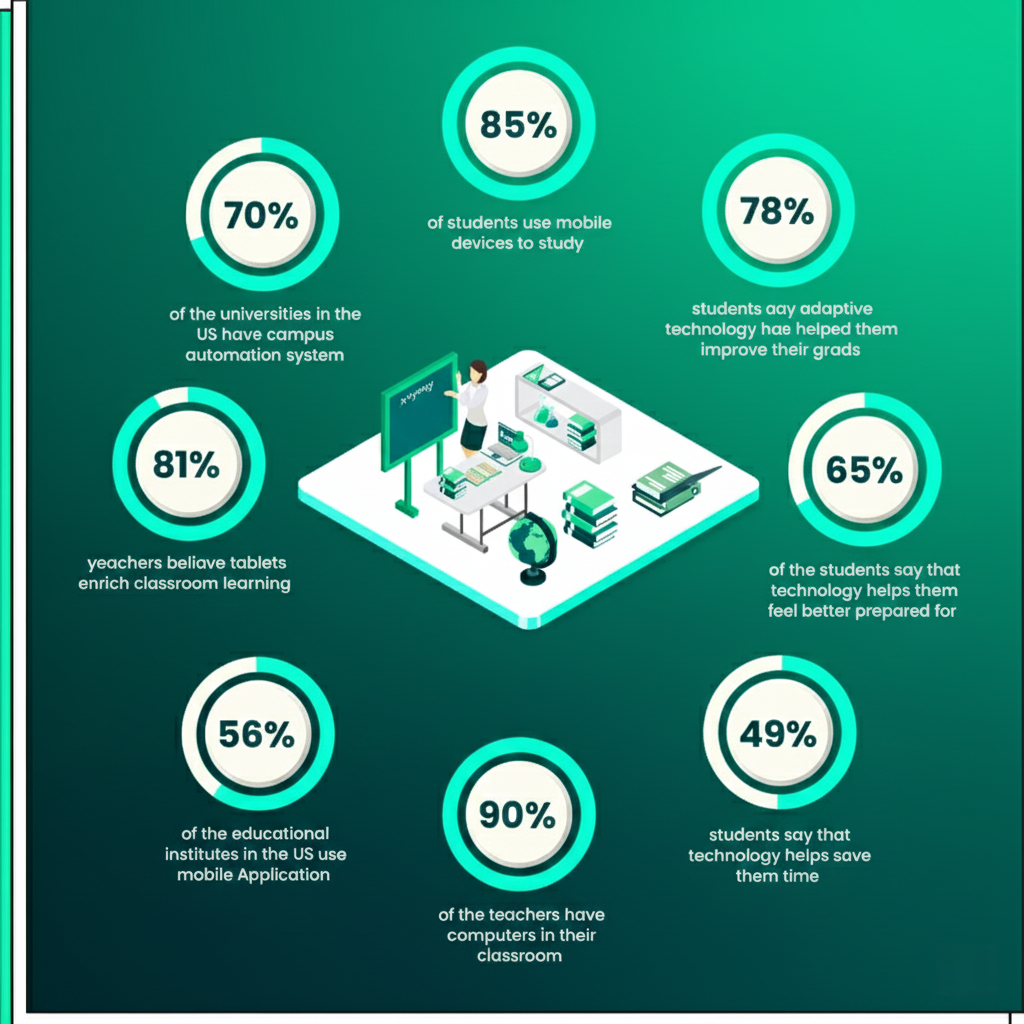
Education: Improving student performance using data.
🔗 Read TechOTD on Tech’s Impact on Education.

-
Logistics: Predicting delivery delays and optimizing routes.
-
Hospitality: Guest personalization, loyalty programs.
-
Manufacturing: Predictive maintenance and demand forecasting.
-
Customer Service: AI-powered predictive assistance.
🔗 Learn more about this in Seamless Customer Journeys with AI.

Benefits of Predictive Analytics in 2025
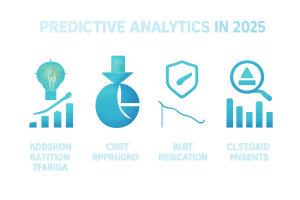
| Benefit | Impact in Business |
|---|---|
| Improved Forecast Accuracy | Better demand planning |
| Cost Reduction | Reduced operational inefficiencies |
| Risk Management | Fraud prevention & compliance |
| Customer Personalization | Enhanced customer experience |
| Competitive Advantage | Faster, data-driven decisions |
| Operational Efficiency | Streamlined processes |
| Innovation Enablement | New product and service design |
Predictive Analytics & AI in 2025
Predictive analytics is closely tied to AI and ML models. Large Language Models (LLMs), for example, are being applied in finance to predict risks and automate insights.
🔗 Check out this detailed blog: LLMs in Finance.
Predictive Analytics Myths That Still Persist
Even in 2025, businesses are held back by:
-
Fear of high costs (though cloud tools make it affordable).
-
Concerns about data privacy (solved with stricter regulations and security frameworks).
-
Belief that it’s a one-time setup (in reality, models need continuous learning).
🔗 Learn how businesses integrate it with emerging technologies like blockchain: Blockchain in Business.
Predictive Analytics & Mobile App Development
Today, predictive analytics isn’t limited to enterprise dashboards. It’s embedded in mobile applications to deliver real-time insights directly to users.
🔗 Explore how apps are transforming industries at Mobile Apps Development Services.
Key Points Summary
-
Predictive analytics is about probabilities, not certainties.
-
Businesses of all sizes can implement predictive analytics in 2025.
-
Clean, reliable data is more important than large amounts of data.
-
Predictive analytics complements human decision-making—it doesn’t replace it.
-
It has wide applications: healthcare, finance, education, manufacturing, retail, and more.
FAQs
Q1. Is predictive analytics expensive for small businesses?
Not anymore. With cloud-based solutions and SaaS tools, even startups can access predictive analytics affordably.
Q2. Can predictive analytics ensure 100% accurate predictions?
No—it provides probabilistic forecasts. Accuracy improves with high-quality data and refined models.
Q3. What skills are required to use predictive analytics?
While technical skills help, modern no-code platforms allow non-technical users to access predictive insights.
Q4. How is predictive analytics different from AI?
Predictive analytics is a subset of AI focused on forecasts. AI covers a wider scope including decision-making, automation, and generative models.
Q5. Where can I learn more about predictive analytics software and its features?
Conclusion
In 2025, predictive analytics is no longer futuristic—it’s an essential business capability. However, separating myths from reality is crucial for businesses to unlock its real potential. By focusing on quality data, continuous model refinement, and human judgment, organizations can use predictive analytics to achieve innovation, efficiency, and long-term growth.
For businesses aiming to stay ahead, the time to embrace predictive analytics is now.