Introduction
Education has evolved significantly over the past few decades. While traditional classroom education has been the standard for centuries, online learning has rapidly emerged as a powerful alternative. The advancement of digital technology, widespread internet access, and the demand for flexible learning have driven this shift.
Both online learning and traditional education aim to provide knowledge and skills, but they differ in delivery methods, learning experiences, and accessibility. Understanding these differences helps students, parents, educators, and professionals make informed decisions.
In this blog, we will explore online learning vs traditional education, comparing their advantages, limitations, costs, and effectiveness.
What Is Online Learning?
Online learning, also known as e-learning or distance education, involves delivering educational content through digital platforms. Students can attend virtual classes, watch recorded lectures, complete assignments, and interact with instructors online.
Key Features of Online Learning
-
Internet-based access
-
Flexible schedules
-
Self-paced learning
-
Digital resources
Online learning is widely used in academic education, professional training, and skill development.
What Is Traditional Education?
Traditional education takes place in physical classrooms where students and teachers interact face-to-face. It follows a structured schedule and curriculum set by educational institutions.
Key Features of Traditional Education
-
In-person instruction
-
Fixed schedules
-
Classroom-based interaction
-
Physical learning materials
Traditional education remains a preferred choice for many learners, especially at the early education level.
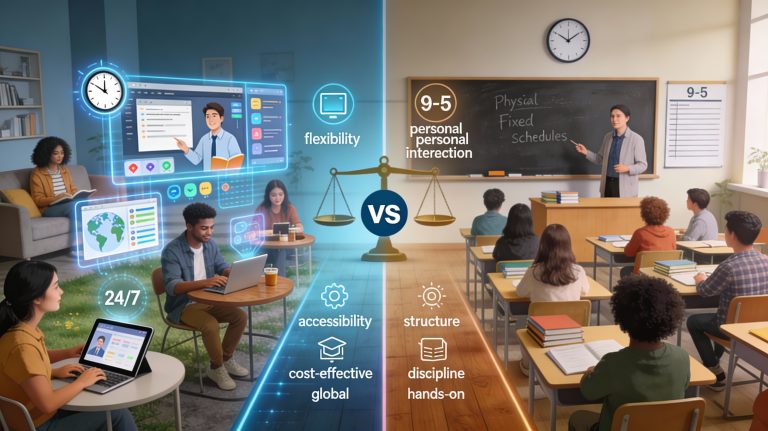
Online Learning vs Traditional Education: Key Differences
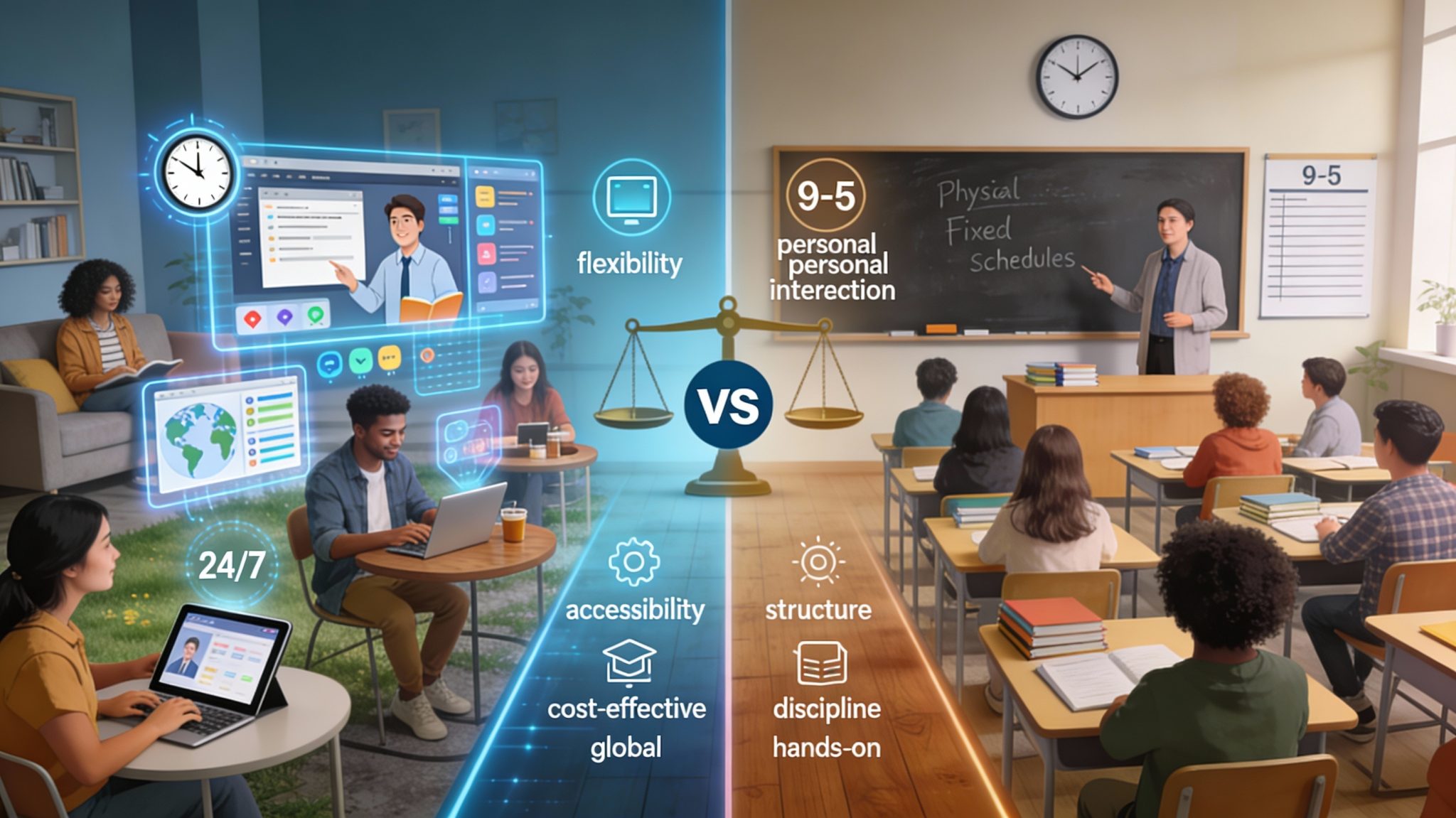
| Aspect | Online Learning | Traditional Education |
|---|---|---|
| Flexibility | High | Low |
| Accessibility | Global | Location-based |
| Cost | Often lower | Higher |
| Interaction | Virtual | Face-to-face |
| Learning Pace | Self-paced | Fixed |
Advantages of Online Learning
1. Flexibility and Convenience
Students can learn anytime and anywhere.
2. Cost-Effective
Online courses reduce travel and accommodation costs.
3. Wide Course Availability
Access to global courses and instructors.
4. Personalized Learning
Learners can progress at their own pace.
Disadvantages of Online Learning
-
Requires self-discipline
-
Limited face-to-face interaction
-
Dependence on technology
Advantages of Traditional Education
1. Structured Learning Environment
Provides routine and discipline.
2. Social Interaction
Encourages teamwork and communication skills.
3. Immediate Feedback
Students can interact directly with teachers.
Disadvantages of Traditional Education
-
Less flexible
-
Higher costs
-
Limited accessibility
Which Learning Method Is More Effective?
Effectiveness depends on:
-
Learning style
-
Age group
-
Subject matter
-
Personal goals
Many learners benefit from a hybrid approach combining both methods.
Role of Hybrid Learning
Hybrid learning blends online and traditional education, offering flexibility while maintaining personal interaction. It is becoming increasingly popular in schools and universities.
Impact on Career and Skill Development
Online learning supports:
-
Skill-based education
-
Career transitions
-
Lifelong learning
Traditional education provides:
-
Foundational knowledge
-
Networking opportunities
Future of Learning Methods
The future will focus on:
-
Hybrid education models
-
AI-driven personalization
-
Skill-based learning
Conclusion
Online learning and traditional education both have unique advantages and limitations. The right choice depends on individual learning needs, goals, and circumstances. As education continues to evolve, flexible and blended learning models will play a crucial role.
Frequently Asked Questions (FAQs)
1. Is online learning better than traditional education?
It depends on individual learning preferences and goals.
2. Can online learning replace traditional education?
Online learning complements but does not fully replace traditional education.
3. Are online degrees recognized?
Many online degrees are recognized if offered by accredited institutions.
4. What is hybrid learning?
Hybrid learning combines online and in-person education.
5. Is online learning suitable for children?
Yes, with proper guidance and supervision.
6. Which is more cost-effective?
Online learning is generally more affordable.
Connect With Us: https://www.facebook.com/profile.php?id=61555452386126