Introduction
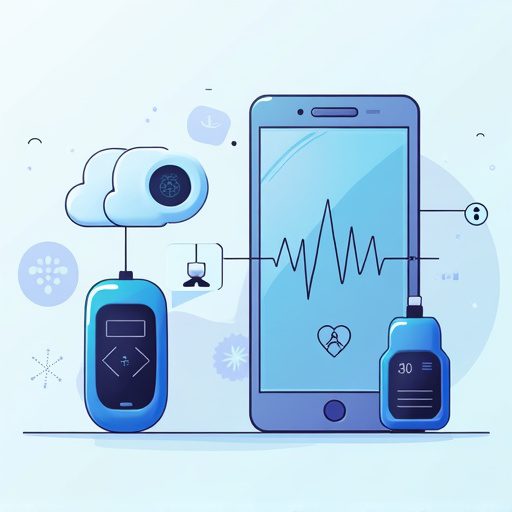
The convergence of the Internet of Things (IoT) and wearable technologies is redefining healthcare accessibility, monitoring, and personalization. Among these innovations, wearable ECG patches and continuous glucose monitors (CGMs) stand out as life-changing tools for patients managing cardiovascular and metabolic conditions.
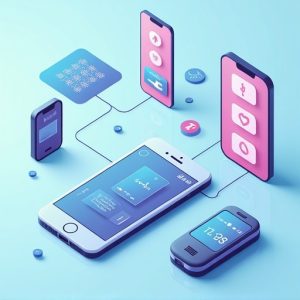
These IoT-enabled wearables continuously collect real-time physiological data, transmitting vital insights to caregivers, cloud platforms, and AI-powered healthcare analytics systems. Whether you’re a clinician, health-tech entrepreneur, or a patient eager to understand modern medical tools, learning about these integrations is critical.
This comprehensive blog dives into IoT-based wearable integration, exploring use cases, technological breakthroughs, industry applications, challenges, and future trends. Along the way, we’ll highlight how tools like TechOTD’s AI services, predictive analytics, and mobile applications are shaping the broader digital transformation in healthcare.
1. Understanding Wearable IoT for Healthcare
What Defines IoT Wearables?
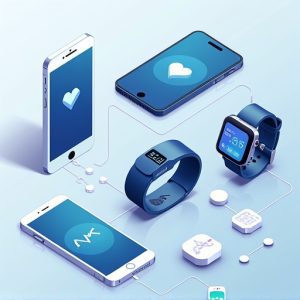
IoT-based wearables are sensor-embedded devices that collect health data—such as heart rhythms or glucose levels—and transmit it wirelessly via BLE, Wi-Fi, or cellular networks to apps or cloud platforms. These systems enable real-time, remote patient monitoring and advanced analytics.
For a deeper dive into how digital ecosystems are structured, check out TechOTD’s detailed framework: How We Work.
Continuous Glucose Monitoring (CGM)
CGMs revolutionize diabetes care by providing continuous glucose data. Devices like FreeStyle Libre and Eversense are FDA-approved and deliver real-time blood sugar insights directly to mobile apps.
Injectable and Patch-Based Glucose Sensors
Newer non-invasive solutions such as lab-on-a-patch and optical glucose sensors are emerging, minimizing or eliminating the need for finger-stick tests.
Wearable ECG Patches
Modern ambulatory ECG patches are:
-
Compact & lightweight for patient comfort.
-
Water-resistant for daily activities.
-
Multi-lead capable, giving cardiologists richer data.
-
Cloud-integrated for real-time analytics.
2. Use Cases & Benefits of ECG Patches and CGMs
Real-Time Cardiac Monitoring
ECG patches continuously record cardiac activity, detect arrhythmias, and enable early intervention. Their integration with predictive AI algorithms enhances risk detection.
Accurate Glucose Management
CGMs reduce reliance on finger pricks and allow patients to track and adjust lifestyles in real time. Alerts warn about hypo/hyperglycemia, preventing hospitalizations.
Preventive Healthcare & Predictive Insights
When paired with predictive analytics tools (see TechOTD’s blog), wearables anticipate health risks, giving doctors the chance to act before an emergency arises.
ICU & Critical Care Applications
Advanced skin patches can now monitor multiple biomarkers—helping ICU teams optimize drug dosages and monitor sepsis patients in real time.
Edge & 5G-Enabled Monitoring
Integration with 5G and edge computing ensures ultra-low-latency alerts, critical for conditions like cardiac arrest or sudden diabetic events.
3. Technical Infrastructure & Integration
Connectivity & Gateways
-
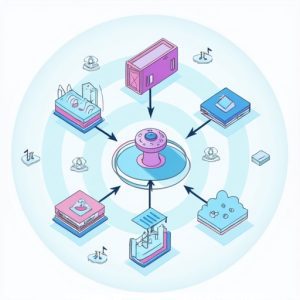
BLE, Wi-Fi, and IoT-enabled modules connect devices to smartphones.
-
Gateways push data into cloud platforms where analytics engines run.
For companies planning mobile-first healthcare platforms, explore TechOTD’s Mobile App Services.
Security & Privacy
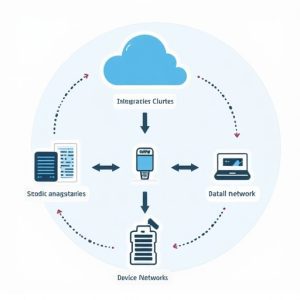
Data encryption and blockchain-powered infrastructures (see here) are crucial for compliance with HIPAA, GDPR, and FDA regulations.
Analytics with AI & Predictive Tools
AI detects anomalies like arrhythmias or abnormal glucose trends. More advanced systems integrate Large Language Models (LLMs) for contextual alerts (LLMs in Finance blog).
Personalized Health Insights
Integration with AI-driven analytics dashboards transforms wearables into tools for personalized, preventive healthcare.
4. Industry Applications & Broader Trends

-
Consumer Health → Smartwatches integrating ECG and glucose monitoring for wellness.
-
Diabetes Management → CGMs helping reduce ER visits by real-time alerts.
-
Cardiology → ECG patches used for remote diagnostics.
-
Remote Patient Monitoring (RPM) → Patients monitored outside hospitals, reducing strain on facilities.
For additional insights into digital health strategies, check out TechOTD’s Technology Impact on Education for CEOs—many lessons also apply to healthcare leadership.
5. Challenges & Mitigation Strategies
-
Sensor Accuracy & Reliability → Adopt medical-grade calibration.
-
Connectivity Constraints → Use offline caching with low-power BLE.
-
Regulatory Compliance → Ensure HIPAA, GDPR, and FDA approvals.
-
Data Overload → Implement AI and edge computing filters.
-
User Adoption → Prioritize comfort and usability in design.
For businesses designing these solutions, TechOTD’s blog hub has resources across AI, IoT, and app development.
6. Future Trends in Wearable IoT Health
-
Multi-marker Smart Patches: Monitoring lactate, troponin, and more.
-
Edge AI Detection: Running anomaly detection directly on-device.
-
Spectroscopy-based Non-Invasive Sensors: Pain-free glucose tracking.
-
Preventive Health Tools: Predicting disease before symptoms.
-
5G-Driven Wearable Ecosystems: Near-instant alerts for emergencies.
For real-world parallels, see TechOTD’s Best Gadgets for Programmers 2025—showing how wearables and smart devices intersect across industries.
7. Leveraging TechOTD’s Ecosystem
To harness the full potential of wearable IoT integration, businesses need a robust digital backbone. TechOTD provides:
-
AI Analytics & Predictive Tools → AI Page.
-
Mobile Application Development → Mobile Apps Services.
-
IoT & Blockchain Strategy → Blockchain Blog.
-
Proven Delivery Models → How We Work.
-
Knowledge Leadership → Industry Insights.
8. Summary Table: Benefits & Use Cases
| Use Case / Feature | Benefit / Impact |
|---|---|
| ECG Patches | Arrhythmia detection & continuous monitoring |
| Continuous Glucose Monitors | Real-time diabetes management & alerts |
| Multi-marker Biosensor Patches | ICU biomarker monitoring for critical care |
| AI Analytics Integration | Predictive alerts & anomaly detection |
| Edge Computing + 5G | Near-instant emergency detection |
| Non-invasive CGM | Pain-free, patient-friendly glucose tracking |
9. FAQs
Q1: How do ECG patches differ from Holter monitors?
ECG patches are smaller, multi-lead, water-resistant, and integrate with smartphones—making them more comfortable and efficient.
Q2: Can CGMs replace finger-prick tests?
Yes, FDA-approved CGMs provide highly accurate real-time glucose monitoring, minimizing traditional tests.
Q3: Is wearable data secure?
Yes, provided end-to-end encryption and blockchain-based protections are applied.
Q4: What’s next for wearable health technology?
Expect multi-biomarker smart patches, edge AI, spectroscopy sensors, and fully integrated IoT health ecosystems.
Conclusion
IoT-based wearables—especially ECG patches and continuous glucose monitors—are transforming healthcare by enabling real-time, personalized, and predictive care. With the power of AI analytics, blockchain security, mobile apps, and 5G integration, healthcare providers can scale remote patient monitoring, improve outcomes, and reduce costs.
As digital health ecosystems mature, organizations that embrace IoT-enabled wearable integration will be leaders in preventive care and chronic disease management. By partnering with innovation leaders like TechOTD, healthcare providers and businesses can build next-gen platforms that connect patients, caregivers, and data into a seamless, life-saving ecosystem.